

P0344 on 2017-2024 Chrysler Pacifica 3.6L: Intermittent Cam Sensor Causes and Fixes
This code indicates an intermittent signal from the camshaft position sensor on the rear cylinder bank (Bank 1). The most common cause is a failing sensor, but the repair is labor-intensive as it requires removing the intake manifold. A shop repair can cost between $350 and $650. Before replacing parts, check with a dealer for required PCM software updates, as Chrysler issued TSBs to fix overly sensitive fault detection.
- P0344 on a Pacifica points to an intermittent signal from the rear (Bank 1) intake camshaft sensor.
- The most dangerous symptom is unexpected engine stalling, which makes the vehicle unsafe to drive.
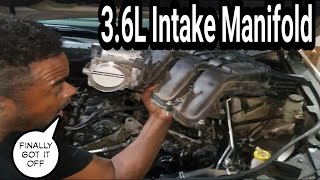
- The repair is difficult and labor-intensive because the sensor is located under the upper intake manifold.
- Always replace the intake manifold gaskets when replacing the sensor to prevent vacuum leaks.
- Before performing an expensive repair, check with a dealer to see if a simple PCM software update applies to your vehicle, as it could be the true cause of the fault.
What's Unique About the 2017-2024 Chrysler Pacifica
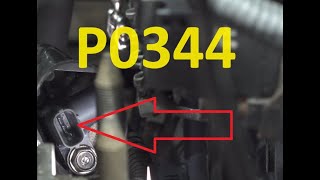
On the Chrysler Pacifica's 3.6L Pentastar V6, the P0344 code is particularly challenging due to the location of the Bank 1 camshaft sensors. They are on the rear cylinder head against the firewall, and accessing them requires the complete removal of the upper intake manifold. This turns what would be a simple sensor swap on many other engines into a significantly more labor-intensive job, increasing repair costs and DIY difficulty. Because of this, misdiagnosing the issue can be costly and time-consuming. Furthermore, Chrysler has specifically addressed this and related codes with software updates (TSBs) to change the fault logic from a one-trip to a two-trip fault, acknowledging the system's tendency to set false codes.
Symptoms You May Notice
- Engine stalling unexpectedly, especially at idle or low speeds.
- Difficulty starting the engine (long crank) or a no-start condition.
- Rough, erratic idle.
- Hesitation or stumbling during acceleration.
- Illuminated Check Engine Light.
- Traction control warning light may illuminate simultaneously, often with code C121C.
- Auto Start/Stop system may be disabled.
- Engine may die and not restart until it has cooled down.
- Replacing the wrong camshaft sensor. P0344 is for the rear bank (Bank 1), which is difficult to access. Technicians may mistakenly replace the much easier front sensor (Bank 2), which will not fix the code.
- Replacing the crankshaft position sensor. This is a different part of the timing system and is not indicated by P0344.
- Ignoring the possibility of a software issue and replacing the sensor multiple times, only for the code to return. This is a common theme in owner forums.
Most Likely Causes
- Failing Bank 1 Camshaft Position Sensor 🔴 High Probability The sensor is an electronic component that can fail over time due to extreme heat cycles and vibration. It is the most frequently cited cause for this intermittent code, though software issues should be ruled out first.
How to confirm: A professional scan tool can monitor the live data from the sensor. Dropouts in the signal while the engine is running confirm an intermittent failure. The four cam sensors on the 3.6L are identical, so swapping the suspect sensor with an easier-to-access one (e.g., from Bank 2) and seeing if the code changes to P0349 is a valid diagnostic step.
Typical fix: Replace the Bank 1 intake camshaft position sensor. This requires removing the upper intake manifold, so the intake gaskets must also be replaced. It is highly recommended to use an OEM Mopar sensor to avoid repeat failures. - Damaged Wiring or Poor Connection 🟡 Medium Probability The engine wiring harness is exposed to heat and vibration, which can cause wires to fray or the connector pins to become loose or corroded over time, leading to an intermittent signal. On related platforms like the Jeep Wrangler, chafing of the harness on the cylinder head is a known cause.
How to confirm: Visually inspect the wiring harness leading to the Bank 1 cam sensor for any signs of damage, chafing, or melting. Unplug the connector and check for corrosion or pushed-out pins. Wiggle the harness while the engine is running to see if it triggers the stall or code. Use a multimeter to check for a consistent 5-volt reference and ground at the connector.
Typical fix: Repair the damaged section of the harness. Clean the connector terminals with electrical contact cleaner and apply dielectric grease. In some cases, replacing the connector pigtail is necessary. - Outdated Powertrain Control Module (PCM) Software 🟡 Medium Probability Chrysler has issued Technical Service Bulletins (TSBs) because the original PCM software was too sensitive and could falsely trigger cam sensor codes from minor, non-critical signal glitches.
How to confirm: A Chrysler dealership or a properly equipped independent shop can check your vehicle's VIN to see if any software updates are available. TSBs #18-069-17 and #18-002-19 REV A are directly related to this issue.
Typical fix: The dealer reprograms or 'flashes' the PCM with the latest software calibration. This changes the code to a 'two-trip fault,' making it less likely to trigger the check engine light. This should be a primary diagnostic step before replacing hardware.
Rare But Worth Checking
- Damaged Camshaft Tone Ring: The tone ring is a toothed wheel on the camshaft that the sensor reads. If it is damaged, loose, or has debris on it, it can cause an erratic signal. This is less common but should be considered if a new sensor and good wiring don't solve the problem.
- Failing Powertrain Control Module (PCM): In rare cases, the fault can be internal to the PCM itself. If the sensor, wiring, and software have all been verified as good, the PCM's input circuit may be failing.
Diagnosis Steps
- Contact a Chrysler dealer with your VIN to check if TSB #18-069-17 or #18-002-19 REV A are open for your vehicle. A PCM software update is a very common fix and should be performed before replacing parts.
- Scan for any other stored trouble codes. Address other codes first, especially any related to the crankshaft or other timing components.
- Using a scan tool with live data, monitor the signal from the 'Camshaft Position Sensor Bank 1'. Watch for dropouts or erratic readings, especially while wiggling the wiring harness.
- If no scan tool is available, turn the ignition off. Inspect the wiring harness and connector for the Bank 1 camshaft sensor. Look for obvious damage, corrosion, or loose pins.
- If the wiring looks good and software is up-to-date, the next logical step is to replace the Bank 1 camshaft position sensor. Given the labor involved, it's often more practical to replace the sensor than to perform extensive electrical testing.
- IMPORTANT: Since the intake manifold must be removed to access the sensor, you MUST replace the upper and lower intake manifold gaskets to prevent future vacuum leaks.
- If a new OEM sensor does not fix the issue, a more in-depth diagnosis of the tone ring or the PCM itself may be necessary.
Parts You'll Likely Need
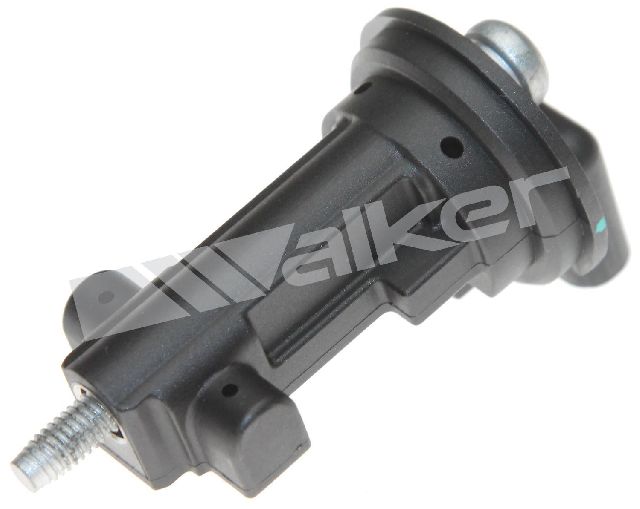
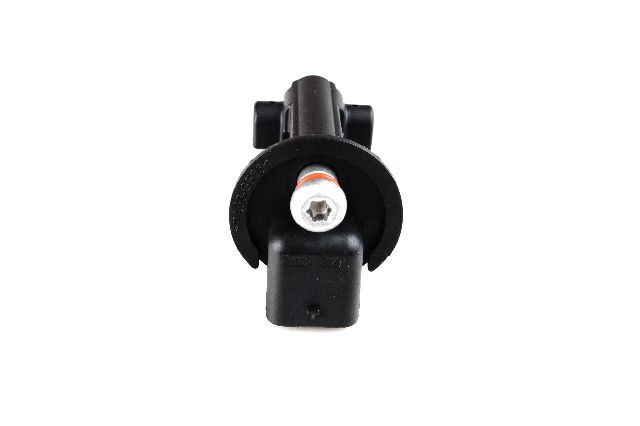
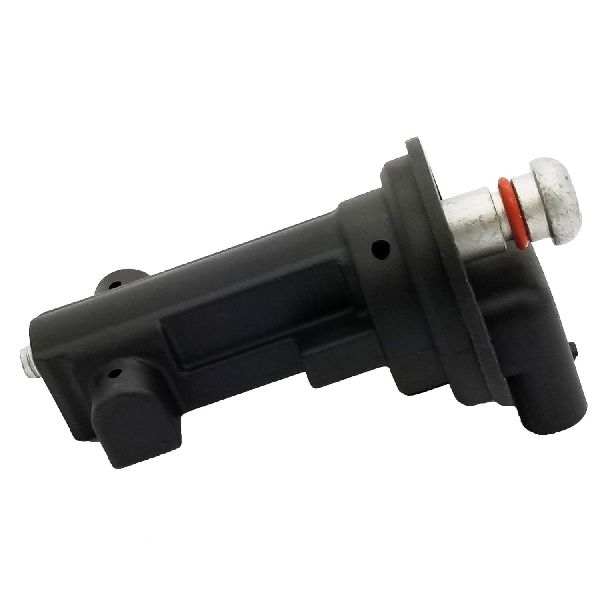
- Camshaft Position Sensor
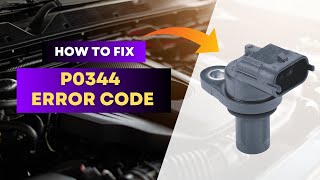
(OEM #5149141AF)— This is the most common component to fail and cause the intermittent signal for code P0344. Using an OEM Mopar part is strongly recommended to prevent repeat failures.
Trusted brands: Mopar, NGK/NTK, Delphi, Standard Motor Products (SMP)
OEM price range: $40-$70
Aftermarket price range: $25-$50 - Upper and Lower Intake Manifold Gaskets
(OEM #Mopar 5184562AC (Upper), Mopar 5184331AC (Lower))— These are mandatory to replace whenever the intake manifold is removed to access the Bank 1 sensor. Reusing old gaskets will cause vacuum leaks and other engine problems.
Trusted brands: Fel-Pro (e.g., MS 97204), Mopar, Mahle
OEM price range: $40-$70
Aftermarket price range: $20-$40
Related Codes That Often Appear With This One
- P0340 — P0340 indicates a general malfunction in the same sensor circuit, while P0344 specifies an intermittent fault. They often appear together or sequentially.
- P0016 — This code indicates a correlation problem between the crankshaft and camshaft. If seen with P0344, it could point towards a more serious mechanical timing issue (like a stretched timing chain) that is causing the sensor signal to appear erratic.
- C121C — This is a 'Torque Request Signal Denied' code from the ABS/traction control module. The system sets this code when the PCM reports an engine fault (like P0344) that makes its data unreliable, causing the traction control light to illuminate.
Technical Service Bulletins (TSBs) & Recalls
- TSB #18-069-17: For 2017 Pacificas built on or before June 29, 2017, this TSB reprograms the PCM to change P0344 (and other cam/crank codes) from a one-trip fault to a two-trip fault. This makes the system less sensitive to minor, momentary signal dropouts that don't affect engine operation, thus preventing false Check Engine Lights.
- TSB #18-002-19 REV A: A broader PCM software update for 2017 models that also changes the fault logic for P0344 to a two-trip fault and includes general improvements to drivability during a cam/crank sensor malfunction.
Platform-Specific Known Issues
- A real-world owner experience on a Jeep Wrangler forum (platform mate) details a frustrating chase of code P0344. The owner had the Bank 1 sensor replaced at a dealer, but the code returned. A second dealer then replaced both Bank 1 and Bank 2 sensors, but the code still came back intermittently, highlighting the difficulty in diagnosing this intermittent electrical fault and the importance of checking wiring and software before repeatedly replacing parts.
Mechanic-Grade Diagnostic Values
- Camshaft Position Sensor Connector Voltage (Hall-Effect Sensor Test) — expected: With the key on, engine off, and sensor unplugged: one pin should have a 5-volt supply, and another should have a good ground (near 0V). The third pin is the signal wire.. Failure: No 5V supply or a poor ground indicates a wiring or PCM issue, not a sensor failure.
- Camshaft Position Sensor Signal Test (Dynamic) — expected: Using a voltmeter or oscilloscope on the signal wire, the voltage should toggle between 5V and 0V as the engine is cranked or a magnet is passed over the sensor tip.. Failure: A signal that does not switch, or switches erratically, points to a faulty sensor.
- Sensor Circuit Ground Resistance — expected: Less than 3 ohms between the ground pin on the connector and a known good chassis ground.. Failure: High resistance indicates a corroded or broken ground wire, which can cause intermittent sensor signals.
Scan Tool Commands That Help
- wiTECH (Chrysler Dealer Tool) or equivalent professional scanner: PCM Flash / Reprogramming — Used to apply software updates from TSBs #18-069-17 and #18-002-19 REV A, which change the fault logic to be less sensitive. This should be done before extensive hardware replacement on applicable vehicles.
- Advanced OBD-II Scanner (Autel, Snap-on, etc.): Cam/Crank Relearn (or CASE Relearn) — After replacing a camshaft sensor, this function recalibrates the precise positioning between the cam and crankshaft sensors for the PCM. It can resolve running issues or codes that persist after a sensor swap.
Wiring & Ground Locations
- Bank 1 Camshaft Position Sensor Connector — On the rear cylinder head (Bank 1), against the firewall. Access requires removing the upper intake manifold. It is a 3-pin connector.. This is the primary connection point for the sensor. The pins can become contaminated with oil, corrode, or back out, causing an intermittent signal.
- G103 (Ground) — On the right side (passenger side) of the engine block itself.. This is a main grounding point for the engine wiring harness. A loose or corroded connection here can cause floating grounds and erratic signals for multiple sensors, including the camshaft sensor.
- G102 (Ground) — Near the passenger side (right) headlight assembly.. This is another critical ground point for the engine harness. A poor connection can lead to difficult-to-diagnose electrical issues and sensor fault codes.
Real Owner Repair Stories
- MotorCityMechanic YouTube Channel (2015 Chrysler with 3.6L Pentastar engine, over 200,000 miles (principles apply directly to Pacifica)) — Check Engine Light with camshaft position sensor codes (P0340 in this case, but same diagnostic principle as P0344).
❌ Tried (didn't work) Initial diagnosis focused only on the electrical circuit (sensor and wiring).
✅ What actually fixed it The root cause was a mechanically failed exhaust camshaft phaser. The internal lock pin failed, allowing the camshaft to move independently of the phaser sprocket. This created a signal discrepancy that the PCM interpreted as a sensor circuit fault. The fix was to replace the faulty camshaft phaser.
"I Checked Everything" — The Actual Cause
- In cases where P0344 persists after a new OEM sensor is installed and the wiring tests perfectly (good 5V supply, ground, and signal continuity), the root cause can be mechanical. A failed camshaft phaser, where the internal lock pin is broken, will not be detected by electrical tests or a smoke test for vacuum leaks. The phaser's failure to lock the camshaft in the correct base position causes the sensor to report a signal that is out of sync with the crankshaft, which the PCM flags as an intermittent sensor fault.
OEM Part Supersession History
05149141AE (and earlier versions)→5149141AF— Part revision and reliability improvement by the manufacturer.
Heads up: None. The 5149141AF is the correct, direct replacement. Using the latest OEM revision is strongly advised for this critical sensor.
Model Year Variations Within This Range
- 2017: Models built on or before June 29, 2017, are specifically targeted by TSB #18-069-17 for a PCM software update. Later models likely received the updated, less sensitive fault logic from the factory, making a false P0344 code less probable.
- 2020-2024: All-Wheel Drive (AWD) became an available option starting with the 2020 model year. This adds a transfer case and other drivetrain components but does not fundamentally change the 3.6L engine or the diagnosis for the P0344 code.
Diagnostic Flowchart
Other Known Issues on This Vehicle
Issues unrelated to this code that are worth knowing about as an owner of this generation:
- Cracked Oil Filter/Cooler Housing 🔴 High — Extremely common, often occurs between 60,000 and 100,000 miles. The plastic housing becomes brittle from heat cycles and can crack, causing a major oil leak into the engine valley.
- Rocker Arm Bearing Failure ('Pentastar Tick') 🔴 High — Common across all Pentastar applications, can occur at various mileages (some as early as 30k, others over 150k). Needle bearings in the rocker arm fail, causing a distinct ticking noise, misfires (P0300), and potential camshaft damage if ignored.
- Engine Stalling (Software/Wiring Related) 🟠 Medium — Common on 2017-2019 models. Can be caused by faulty PCM software or a loose battery ground connection. (Ref: NHTSA Recall 19V348 (V53) for loose battery ground; NHTSA Recall 18V-049 (U01) for PCM software.)
- Transmission Shudder/Rough Shifting 🟠 Medium — Reported by owners throughout the generation, often related to software or internal transmission issues with the 9-speed automatic. (Ref: Multiple software update TSBs exist. A recall for 2017-2023 Pacifica Hybrids was issued for internal wiring potentially causing shutdown.)
Used vs. New Parts: Buying Guide for This Vehicle
When a used part is the smart pick: A used part is NOT recommended for this repair. The camshaft position sensor is a relatively inexpensive electronic component, and the labor required to access the Bank 1 sensor is significant. The risk of a used sensor failing prematurely far outweighs the small cost savings.
OEM-only on this vehicle (don't cheap out):
- Camshaft Position Sensor: Owner and mechanic forums consistently report high failure rates with non-OEM, 'white-box' sensors for this application. Using an OEM Mopar sensor (5149141AF) is critical to avoid repeat repairs.
- Intake Manifold Gaskets: While not strictly OEM-only, high-quality gaskets from Mopar or a top-tier brand like Fel-Pro are essential to prevent vacuum leaks after the manifold is reinstalled.
Aftermarket brands forum-validated for this vehicle:
- For sensors, if Mopar is unavailable, NGK/NTK and Delphi are generally considered reliable OEM-equivalent alternatives.
- For gaskets, Fel-Pro is a widely trusted aftermarket brand.
Brands owners have reported issues with on this vehicle:
- Unbranded, low-cost sensors from online marketplaces are frequently cited as being unreliable and failing shortly after installation.
Real Owner Stories
Aggregated from forums and TSBs cited above. Mileages and costs reflect what owners reported in those sources.
Jeep Wrangler 3.6L (Platform Mate)
Symptoms: The P0344 code kept returning intermittently even after professional repairs.
What fixed it: Replacing the Bank 1 sensor, and later both Bank 1 and Bank 2 sensors, did not resolve the intermittent code. The experience highlights the importance of first checking for software updates and inspecting the wiring harness for damage before repeatedly replacing sensors.
Source hint: Jeep Wrangler forum experience cited in vehicle_specific_issues
Related OBD-II Codes
Frequently Asked Questions
My 2017 Chrysler Pacifica has a P0344 code. Are there any TSBs or software updates I should know about?
What else must be replaced when changing the Bank 1 camshaft sensor on the 3.6L Pentastar?
Why did my traction control light come on at the same time as the check engine light for P0344?
Is there a recommended brand for the replacement camshaft position sensor?
How can I test the camshaft position sensor on my Pacifica if I suspect it's failing intermittently?
My Pacifica is stalling and has a long crank time. Could this be caused by P0344?
Helpful Videos

Used OEM Parts in Stock


New Aftermarket Parts Available


The information in this article is provided for general reference and educational purposes only. Vehicle specifications, procedures, and part compatibility can vary by production date, trim level, and region. Always consult your vehicle's factory service manual and verify part numbers before purchasing or performing repairs. Safety-critical components such as airbags, seat belts, and braking systems should be installed by a qualified professional.
- Chrysler Pacifica:
- 🎬 Helpful Videos
- 🛍️ Shop This Part
- What's Unique About the 2017-2024 Chrysler Pacifica
- Symptoms You May Notice
- Most Likely Causes
- Rare But Worth Checking
- Diagnosis Steps
- Parts You'll Likely Need
- Related Codes That Often Appear With This One
- Technical Service Bulletins (TSBs) & Recalls
- Platform-Specific Known Issues
- Mechanic-Grade Diagnostic Values
- Scan Tool Commands That Help
- Wiring & Ground Locations
- Real Owner Repair Stories
- "I Checked Everything" — The Actual Cause
- OEM Part Supersession History
- Model Year Variations Within This Range
- Diagnostic Flowchart
- Other Known Issues on This Vehicle
- Used vs. New Parts: Buying Guide for This Vehicle
- Real Owner Stories
- Jeep Wrangler 3.6L (Platform Mate)
- Related OBD-II Codes
- Frequently Asked Questions
- 🎟️ Get 5% Off