

P0340 on 2000-2005 Mitsubishi Eclipse 2.4L: Cam Sensor Causes and Fixes
On a 2000-2005 Eclipse with the 2.4L 4G64 engine, code P0340 is most often a failed camshaft position sensor. However, it can also indicate a serious timing belt problem. Always inspect the timing belt's condition before replacing the sensor, as a failure can destroy the engine because the 4G64 is an interference design.
- P0340 on a 2.4L Eclipse points to a problem with the camshaft position sensor circuit.
- Before replacing the sensor, ALWAYS inspect the timing belt. This is an interference engine, and a belt failure will cause severe damage.
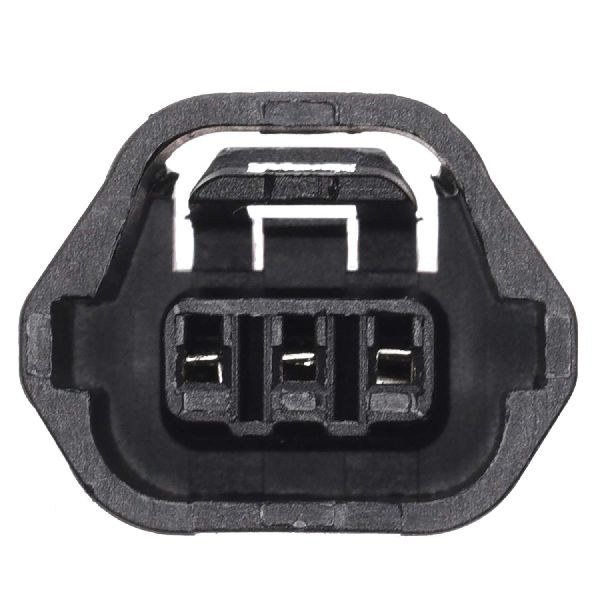
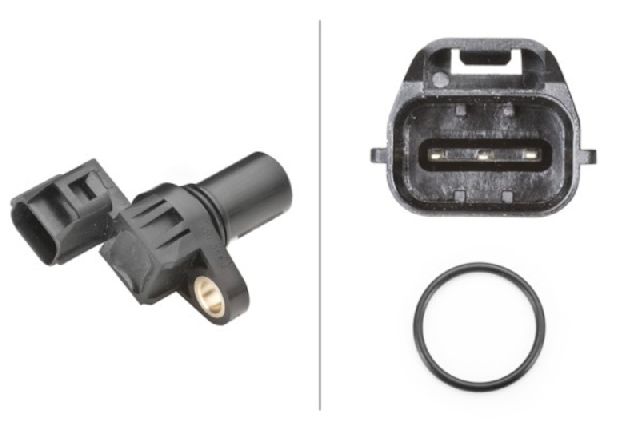
- The most common fixes are replacing the camshaft position sensor (OEM part MD327107) or its connector.
- If the code is accompanied by P0335, a timing belt or tensioner issue is highly probable.
- Do not drive the vehicle if possible, as it could stall unexpectedly or suffer catastrophic engine failure if the timing belt breaks.
What's Unique About the 2000-2005 Mitsubishi Eclipse
For the third-generation Eclipse with the 2.4L 4G64 engine, this code requires careful diagnosis. While a faulty sensor is common, the 16-valve SOHC 4G64 used in this generation is an interference engine with a timing belt. A P0340 code can be the first warning of a failing, stretched, or slipped timing belt or a bad tensioner. Ignoring this and simply replacing the sensor without checking the timing components can lead to catastrophic engine failure if the belt breaks or slips significantly, causing pistons and valves to collide.
Symptoms You May Notice
- Check Engine Light is on
- Engine is hard to start or cranks but won't start
- Engine stalls unexpectedly while driving or at idle
- Rough idle or unstable engine speed
- Noticeable loss of power and poor acceleration
- Engine hesitation or misfiring
- Engine turns over but sounds unusual or 'gasps for life' if timing has jumped.
- Replacing the crankshaft position sensor. While related, a P0340 code specifically points to the camshaft sensor circuit. A crankshaft sensor issue would typically set a P0335 code. However, if the timing belt has slipped, both codes may appear together.
- Replacing spark plugs or fuel pump. While symptoms like misfiring or stalling might suggest a fuel or spark issue, P0340 is an electronic or mechanical timing code and should be diagnosed first.
- Using a cheap, poor-quality aftermarket sensor. Owners often report that the P0340 code returns shortly after replacing the sensor with a low-grade part. Using an OEM or reputable brand like Denso or NGK/NTK is highly recommended.
Most Likely Causes
- Failed Camshaft Position Sensor 🔴 High Probability Heat and vibration in the engine bay lead to electronic failure of the sensor over time. Oil leaks from the valve cover gasket, a common issue on the 4G64, can also contaminate the sensor and its connector, causing failure.
How to confirm: After confirming wiring is intact, test the sensor's output with a multimeter or oscilloscope. The simplest confirmation is often replacing the sensor, as it is relatively inexpensive and accessible. A known good OEM or high-quality aftermarket sensor is recommended.
Typical fix: Replace the camshaft position sensor.
Est. part cost: $25-$75 - Damaged Wiring or Connector 🟡 Medium Probability The wiring harness in the engine bay is exposed to heat, oil, and vibration, which can cause wires to become brittle, frayed, or corroded over 20+ years. A user on a Mitsubishi forum noted that wiggling the wires near the sensor temporarily fixed the issue, pointing to a harness problem.
How to confirm: Visually inspect the wiring harness and the connector at the camshaft position sensor for any signs of damage, corrosion, or loose pins. Check for 5V reference, ground, and signal continuity from the sensor connector to the ECM. Shorting the positive battery terminal to the chassis by accident can also blow fuses or damage sensor circuits.
Typical fix: Repair the damaged section of wire or replace the connector pigtail.
Est. part cost: $10-$30 - Timing Belt Stretched, Slipped, or Damaged ⚪ Low Probability The 4G64 engine uses a timing belt that has a finite service life (typically 60,000-100,000 miles). As the belt ages, it can stretch or lose teeth, causing the camshaft and crankshaft to go out of sync. A failed hydraulic tensioner is also a known failure point, which can cause the belt to become slack and jump time. One owner reported a belt failure at just 55,000 miles and 6 years of age, leading to bent valves.
How to confirm: Remove the upper timing cover and inspect the timing belt for slack, missing teeth, or damage. Manually rotate the engine to verify the timing marks on the cam and crank pulleys align correctly. If there is slack in the belt, suspect a failed tensioner. A wobbling crankshaft pulley can also be an indicator of a serious underlying issue.
Typical fix: Replace the timing belt, balance shaft belt, tensioners, and water pump. 🎬 Watch: Complete 4G64 timing belt and water pump replacement walkthrough If the belt has broken or slipped, the cylinder head must be removed to inspect for bent valves and damaged pistons, which is a costly repair.
Est. part cost: $100-$250 for a complete timing kit
Rare But Worth Checking
- Failed Engine Control Module (ECM): This is very uncommon. The ECM should only be considered after all other possibilities, including the sensor, wiring, and mechanical timing, have been definitively ruled out.
- Damaged Reluctor Wheel: The reluctor wheel (a toothed ring) on the camshaft, which the sensor reads, can be damaged or sheared off, though this is rare. This would typically require camshaft replacement.
Diagnosis Steps
- Read the code: Use an OBD-II scanner to confirm P0340 is the primary code present.
- Inspect the Wiring: Carefully inspect the camshaft position sensor's electrical connector and wiring harness. Look for any broken wires, corrosion, or oil contamination from valve cover leaks. Ensure the connector is securely plugged in.
- Inspect the Timing Belt: This is a critical step for the 4G64 engine. Remove the upper timing cover and visually inspect the timing belt. Check for excessive slack, fraying, glazing, or missing teeth. A Reddit user's experience showed a belt snapping at only 55k miles, reinforcing the need for this check regardless of perceived mileage.
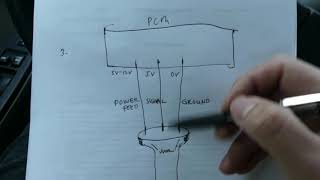
- Test the Sensor Circuit: If the wiring and timing belt appear okay, test the sensor's circuit. Using a multimeter with the key on, check for a 5-volt reference and a good ground at the sensor connector. The signal wire should also be checked for continuity back to the ECM.
- Test/Replace the Sensor: If the circuit tests okay, the sensor itself is the most likely culprit. You can test its signal with an oscilloscope or simply replace it. Given the frequency of issues with aftermarket parts, it is strongly advised to use an OEM (MD327107) or a high-quality OE-equivalent sensor.
- Check Mechanical Timing: If a new, quality sensor does not fix the code, you must perform a more thorough mechanical check. Verify that the engine's timing marks on the camshaft and crankshaft pulleys are perfectly aligned.
- Clear Code and Test Drive: After any repair, clear the trouble code with a scanner and perform a test drive to ensure the issue is resolved.
Parts You'll Likely Need
- Camshaft Position Sensor
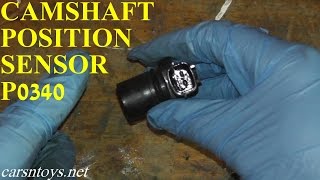
(OEM #MD327107)— This sensor is the most frequent cause of a P0340 code when mechanical timing is correct. Oil contamination from valve cover leaks is a common reason for its failure.
Trusted brands: Mitsubishi (OEM), Denso, NGK/NTK, Hitachi
OEM price range: $60-$90
Aftermarket price range: $25-$50 - Timing Belt Kit — If the code is caused by a stretched, slipped, or failing timing belt or tensioner, a complete kit is required. This is a critical maintenance item on the 4G64 interference engine.
Trusted brands: Aisin, Gates, Continental
OEM price range: $200-$300
Aftermarket price range: $100-$180
Related Codes That Often Appear With This One
- P0335 — Crankshaft Position Sensor Circuit Malfunction. This code often appears with P0340 when there is a serious mechanical timing issue, like a slipped timing belt, causing the signals from both sensors to be out of sync with what the ECM expects.
Technical Service Bulletins (TSBs) & Recalls
- While no specific TSB for P0340 on the 3G Eclipse was found, Mitsubishi issued TSB-01-13-004 for a similar issue on Lancer models with the 4G94 engine, where wear in the sensor's mounting housing caused the code. While a different engine, it highlights Mitsubishi's history of sensor-related TSBs.
Platform-Specific Known Issues
- The 16-valve SOHC 4G64 is an interference engine. A broken or slipped timing belt will cause the pistons to hit the valves, resulting in major and expensive engine damage. Any P0340 code should prompt an immediate inspection of the timing belt's condition and tension.
- Valve cover gasket oil leaks are common and can seep down onto belts and sensors, including the camshaft position sensor, accelerating their failure.
- A failed timing belt tensioner can cause a rattling noise and lead to the belt jumping time, which may initially present as a P0340 code.
Mechanic-Grade Diagnostic Values
- Sensor Supply Voltage at Connector — expected: 4.9 - 5.1 VDC with key on, engine off.. Failure: Voltage below 4.9V or above 5.1V indicates a problem with the ECM or wiring.
- Sensor Signal Voltage (Oscilloscope) — expected: A square wave pattern that switches between approximately 0V and 5V as the engine is cranked or running.. Failure: A flat line at 0V or 5V, or a distorted/noisy pattern, indicates a failed sensor or a problem with the reluctor wheel.
- Sensor Signal Voltage (Multimeter) — expected: When back-probing the signal wire and manually rotating the engine, the voltage should switch cleanly between ~0.3-0.5V and 5V.. Failure: No voltage switch, or a slow/sweeping voltage change, indicates a faulty sensor.
- Battery/Charging System Voltage — expected: ~12.4V+ with engine off, 13.8V - 14.8V with engine running.. Failure: Low voltage can cause the ECM to misread sensor pulses, indirectly triggering a P0340 code.
Scan Tool Commands That Help
- Mitsubishi M.U.T.-III: Data List Item 23: Camshaft-position sensor — This allows a technician to view the raw signal from the camshaft position sensor as interpreted by the ECM. It can help differentiate between a sensor that is completely dead (no signal) versus one that is providing an erratic signal, which might point towards a wiring or reluctor issue.
Wiring & Ground Locations
- Sensor Connector B-106 (Outlander, similar to Eclipse) — On the camshaft position sensor itself, located on the cylinder head near the timing belt cover.. This is the primary connection point. Corrosion, oil contamination, or loose pins here are a common cause of the P0340 code.
- ECM Connector B-108 / B-26 — At the Engine Control Module (ECM), typically located in the passenger compartment near the center console or behind the glove box.. The sensor circuit terminates here. Testing for voltage and continuity at these pins (specifically Pin 9 for power, Pin 14 for signal, and Pin 30 for ground) confirms the integrity of the entire circuit.
- Engine Block Ground — A primary ground strap typically connects from the engine block or transmission bellhousing to the chassis/firewall.. A poor engine ground can create electrical noise and voltage discrepancies across all engine sensors, including the camshaft position sensor, leading to erratic behavior and fault codes.
Real Owner Repair Stories
- Reddit user u/WheyTooMuchWeight (2007 Mitsubishi Eclipse (4G model, but same engine family and issue pattern)) — Car shut off on the highway at 75 MPH, code P0340 logged.
❌ Tried (didn't work) Replacing the Camshaft Position Sensor (CPS)
✅ What actually fixed it The timing belt had snapped. The repair required resurfacing the cylinder head and replacing 4 bent valves in piston #1. The failed belt was a name-brand Aisin belt that was only 6 years old with 55,000 miles on it, well short of the typical service interval. - YouTube video (Pine Hollow Auto Diagnostics) (2004 Mitsubishi Galant 2.4L (Same 4G64 engine)) — Crank no-start condition, code P0340 stored.
❌ Tried (didn't work) Initial diagnosis pointed towards a simple sensor failure.
✅ What actually fixed it Diagnosis using an oscilloscope showed a flatline 5V signal from the cam sensor, indicating no rotation. Further inspection revealed a broken timing belt. The sensor was not sending a signal because the camshaft was not turning at all.
OEM Part Supersession History
MD327107→MD327107 is the most current and widely referenced number, though it is often sold under the interchange part number J5T23071A.— N/A - Part numbers appear to be used interchangeably by manufacturers.
Heads up: While many aftermarket brands exist, forum discussions and mechanic testimonials frequently warn against using low-cost, unbranded sensors. These can be dead-on-arrival or fail within a short period, causing the P0340 code to return. Sticking to OEM, Denso, or NGK/NTK is highly recommended.
Diagnostic Flowchart
Other Known Issues on This Vehicle
Issues unrelated to this code that are worth knowing about as an owner of this generation:
- Failing Clear Coat / Paint Oxidation 🟠 Medium — Extremely common, especially on dark-colored cars. The clear coat begins to peel or fade on horizontal surfaces (roof, hood, trunk) due to UV exposure and potentially poor paint materials from the factory. (Ref: No official recall, but widespread owner complaints exist. Some owners in the past attempted to get goodwill repairs from Mitsubishi with mixed success.)
- Automatic Transmission Failure 🔴 High — The 4-speed automatic transmission (F4A4B/F4A51) is a known weak point, with failures reported. Issues include harsh shifting, slipping, or complete failure, sometimes related to internal components like wave springs.
- Valve Cover and Oil Pan Gasket Leaks 🟡 Low — Very common as the vehicle ages. The valve cover gasket becomes hard and brittle, allowing oil to leak onto the exhaust manifold (causing a burning smell) and down onto belts and sensors.
- Manual Transmission Shifting Difficulty 🟠 Medium — Commonly reported issue where shifting becomes difficult, particularly due to synchronizer wear or binding in the manual transmission.
- Failing Ignition Coils 🟠 Medium — The 2.4L engine uses two coil packs that can fail, leading to misfires (Codes P0300-P0304), rough idle, and loss of power.
Used vs. New Parts: Buying Guide for This Vehicle
When a used part is the smart pick: For this specific repair, buying used parts is generally not recommended. The primary failure components are a low-cost electronic sensor and a wear-item timing belt, neither of which are suitable for used purchase.
What to inspect on the donor part:
- If sourcing a non-engine part like a wiring harness pigtail, ensure the donor vehicle shows no signs of engine fire or major front-end collision.
- Check for brittle plastic and uncracked connector tabs on any used wiring component.
OEM-only on this vehicle (don't cheap out):
- While not strictly 'OEM-only', the Camshaft Position Sensor is a part where using the Mitsubishi OEM (MD327107) or a reputable OE supplier like Denso or NGK/NTK is strongly advised to avoid repeat failures.
- Timing Belt Kit components (belt, tensioner, pulleys, water pump) should ALWAYS be purchased new from a quality brand like Aisin, Gates, or Continental.
Aftermarket brands forum-validated for this vehicle:
- Aisin (for timing belt kits)
- Gates (for timing belt kits)
- Continental (for timing belt kits)
- Denso (for sensors)
- NGK/NTK (for sensors)
Brands owners have reported issues with on this vehicle:
- Unbranded, low-cost sensors from online marketplaces are frequently cited as unreliable and a common cause for the code returning shortly after repair.
Real Owner Stories
Aggregated from forums and TSBs cited above. Mileages and costs reflect what owners reported in those sources.
2000-2005 Mitsubishi Eclipse 4G64 2.4L — 55000 miles
Symptoms: Lost power on highway, P0340 Cam shaft position sensor code, engine would not restart.
What fixed it: The timing belt had snapped. The repair required removing the cylinder head to fix 4 bent valves caused by the belt failure.
Source hint: r/MitsubishiEclipse - Thread titled 'Lost power on highway, P0340 Cam shaft position sensor code' (Jan 2026)
2000-2005 Mitsubishi Eclipse 4G64 2.4L
Symptoms: P0340 code, stalling issues, and a wobbling crankshaft pulley.
What fixed it: Investigation into the wobbling crankshaft pulley which indicated a serious underlying mechanical timing issue.
Source hint: r/MitsubishiEclipse - Thread titled 'Mechanic can't figure out what is wrong with my car and its p0340 code' (Dec 2025)
Related OBD-II Codes
Frequently Asked Questions
Does TSB-01-13-004 apply to my 2000-2005 Mitsubishi Eclipse with the 4G64 engine?
Can an oil leak from my valve cover gasket cause the P0340 code on my Eclipse?
Is the 2.4L 4G64 an interference engine, and why does that matter for a P0340 code?
What is the recommended replacement part for a failed camshaft position sensor?
My Eclipse is stalling and has a P0340 code; could the timing belt tensioner be the problem?
Are the Dodge Stratus or Chrysler Sebring Coupes prone to this same 4G64 P0340 issue?
Helpful Videos

We Have This Part in Stock



The information in this article is provided for general reference and educational purposes only. Vehicle specifications, procedures, and part compatibility can vary by production date, trim level, and region. Always consult your vehicle's factory service manual and verify part numbers before purchasing or performing repairs. Safety-critical components such as airbags, seat belts, and braking systems should be installed by a qualified professional.
- Mitsubishi Eclipse:
- 🎬 Helpful Videos
- 🛍️ Shop This Part
- What's Unique About the 2000-2005 Mitsubishi Eclipse
- Symptoms You May Notice
- Most Likely Causes
- Rare But Worth Checking
- Diagnosis Steps
- Parts You'll Likely Need
- Related Codes That Often Appear With This One
- Technical Service Bulletins (TSBs) & Recalls
- Platform-Specific Known Issues
- Mechanic-Grade Diagnostic Values
- Scan Tool Commands That Help
- Wiring & Ground Locations
- Real Owner Repair Stories
- OEM Part Supersession History
- Diagnostic Flowchart
- Other Known Issues on This Vehicle
- Used vs. New Parts: Buying Guide for This Vehicle
- Real Owner Stories
- 2000-2005 Mitsubishi Eclipse 4G64 2.4L — 55000 miles
- 2000-2005 Mitsubishi Eclipse 4G64 2.4L
- Related OBD-II Codes
- Frequently Asked Questions
- 🎟️ Get 5% Off