

P0340 on 2020-2024 Ford Explorer Hybrid: Camshaft Sensor Causes and Fixes
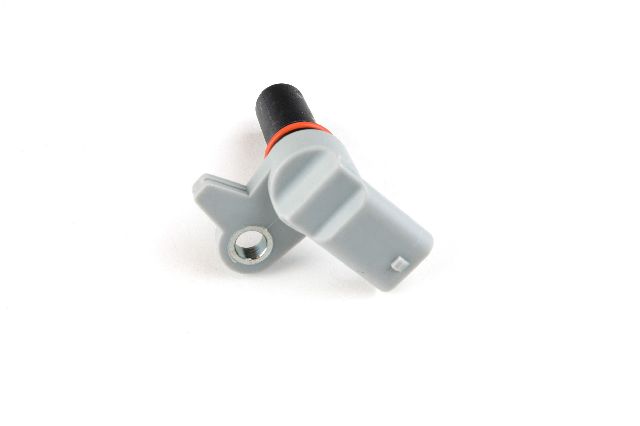
P0340 on a 2020-2024 Ford Explorer Hybrid indicates a fault in the Camshaft Position Sensor 'A' circuit for Bank 1. The most common fix is replacing the faulty sensor, which is a relatively inexpensive part (OEM Part #BL3Z-6B288-C) and accessible for DIY repair.
- P0340 on your Explorer Hybrid points to the intake camshaft sensor on Bank 1 (the cylinder head near the firewall).
- Symptoms typically include a check engine light, rough running, and difficulty starting.
- The most likely cause is a failed camshaft position sensor, which is a DIY-friendly and relatively inexpensive fix.
- A simple way to confirm a bad sensor is to swap it with the sensor from the other bank and see if the trouble code follows the sensor.
- Before replacing the sensor, always check its electrical connector and wiring for visible damage, as this can also cause the code.
What's Unique About the 2020-2024 Ford Explorer Hybrid
The 3.3L Cyclone V6 in the Explorer Hybrid uses a dual overhead cam (DOHC) design with four camshaft position sensors in total (an intake and exhaust sensor for each bank). The P0340 code specifically points to the intake sensor on Bank 1. While the code itself is common across many vehicles, the specific location and diagnostic procedure are key. On this transverse-mounted engine, all four sensors are located on the driver's side of the engine, making access somewhat tight but manageable. There are no major recalls or widespread, unique issues for this specific code on the 2020-2024 Hybrid models, suggesting failures are typically due to normal component wear. However, manufacturer service bulletins for other Ford hybrids, such as Bulletin #20B14-S2, note that P0340 can sometimes be triggered by signal quality issues during startup, potentially resulting in a "Stop Safely Now" message.
Symptoms You May Notice
- Check Engine Light is on
- Difficulty starting the engine or a no-start condition
- Engine runs rough, misfires, or idles erratically
- Unexpected stalling
- Sluggish acceleration and loss of power
- Reduced fuel economy
- Noticeable transmission shifting problems or hesitation 🎬 Watch a breakdown of common bad camshaft sensor symptoms.
- Replacing the crankshaft position sensor (CKP) instead of the camshaft position sensor (CMP).
- Replacing the wrong camshaft sensor. P0340 is for Bank 1, Sensor 'A' (Intake).
Most Likely Causes
- Faulty Camshaft Position Sensor (CMP) 🔴 High Probability Sensors can fail over time due to heat cycles and internal electronic degradation. It's the most common reason for a P0340 code.
How to confirm: The most effective method is to swap the Bank 1 intake sensor (Sensor 'A') with the Bank 2 intake sensor. If the code changes to P0345 (Camshaft Position Sensor 'A' Circuit / Bank 2), the sensor is confirmed bad. 🎬 See how to troubleshoot and fix the P0340 code. The sensor can also be tested with a multimeter for resistance.
Typical fix: Replace the faulty camshaft position sensor. All four sensors on this engine are located on the driver's side of the engine block. The replacement typically involves removing a single 8mm bolt and the electrical connector.
Est. part cost: $25-$70 - Damaged Wiring or Loose Connector 🟡 Medium Probability The wiring harness can be susceptible to damage from heat, vibration, or rodents. Manufacturer Bulletin #SSM 50245 highlights that a wiring harness located directly above the steering shaft u-joint can become damaged, leading to an open fuse and setting DTC P0340.
How to confirm: Visually inspect the wiring harness and connector leading to the Bank 1 intake camshaft position sensor for any signs of damage, fraying, or corrosion. Ensure the connector is securely plugged in. Wiggle the harness with the engine running to see if it induces a stall or stumble.
Typical fix: Repair the damaged section of the wiring harness or clean/replace the connector.
Est. part cost: $5-$50 - Failing Alternator ⚪ Low Probability On some older Ford models, a failing alternator could introduce electrical noise (AC ripple) that interfered with the CMP sensor signal, triggering a P0340 code. While less common on modern vehicles with sophisticated electronics, it's a known Ford-specific quirk worth considering if other diagnoses fail.
How to confirm: With the engine running, use a multimeter with a frequency function to test for AC voltage at the battery terminals. A reading above 0.5V AC could indicate a failing diode in the alternator.
Typical fix: Replace the alternator.
Est. part cost: $300-$600
Rare But Worth Checking
- Timing Chain Issue: While very rare on a newer vehicle, a stretched timing chain or a problem with the phaser/reluctor wheel on the camshaft could cause the sensor to report incorrect data. This is usually accompanied by other codes (like P0016) or rattling engine noises.
- Powertrain Control Module (PCM) Fault: This is extremely rare. The PCM is the last component to suspect after all other possibilities (sensor, wiring, timing) have been exhaustively ruled out.
- Blown Fuse: The camshaft position sensor circuit is protected by a fuse. If this fuse blows, the sensor will lose power and trigger a P0340 code. This is an uncommon but simple-to-check cause.
- Moisture in Engine Oil: According to Bulletin #SSM 48598, some Ford hybrid vehicles may exhibit P0340 due to excessive moisture build-up in the engine oil, which can occur when the vehicle is driven only short distances.
Diagnosis Steps
- Read the codes with an OBD-II scanner to confirm P0340 is present and check for any other related codes.
- Turn the engine off. Locate the camshaft position sensors on the driver's side of the engine. Bank 1 is the cylinder head closer to the firewall on this transverse engine.
- Carefully inspect the wiring and electrical connector for the Bank 1 intake camshaft sensor ('Sensor A'). Look for any signs of damage, corrosion, or loose pins. As noted in Bulletin #SSM 50245, check the harness near steering components for potential chafing.
- If the wiring looks good, a simple and effective test is to swap the Bank 1 intake sensor with the Bank 2 intake sensor (located on the cylinder head closer to the radiator).
- Clear the codes with the scanner and start the engine. Drive the vehicle until the check engine light comes back on.
- Re-scan for codes. If the code has changed to P0345 (Camshaft Position Sensor 'A' Circuit / Bank 2), the sensor you moved is faulty and needs to be replaced.
- If the P0340 code returns after the swap, the problem is likely in the wiring, fuse panel, or the PCM circuit for Bank 1, not the sensor itself.
- If no code returns immediately, the issue might be intermittent. Wiggle the wiring harness while the engine is running to see if it triggers the fault.
Parts You'll Likely Need
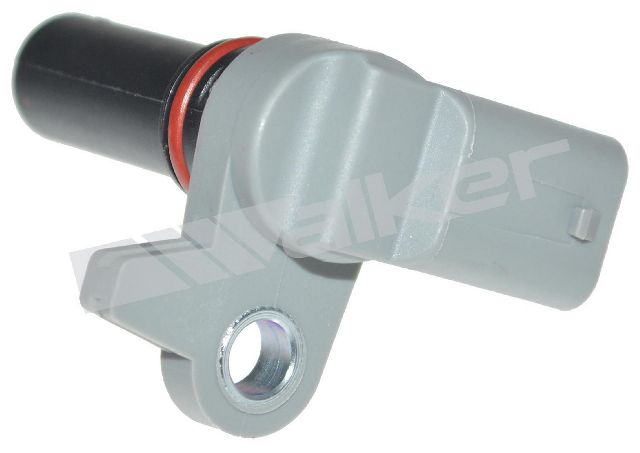
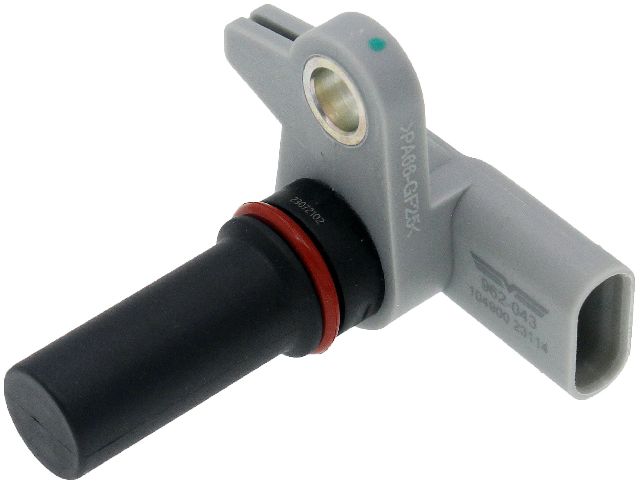
- Camshaft Position Sensor
(OEM #BL3Z-6B288-C (supersedes BL3Z-6B288-A, DU-95))— This is the most common cause of a P0340 code. The sensor's internal electronics fail over time. The Motorcraft service part is DU-102. 🎬 Watch this Ford-specific camshaft sensor replacement guide. Another compatible part number may be JX6Z-6B288-B.
Trusted brands: Motorcraft, Bosch, Delphi, NTK/NGK
OEM price range: $35-$70
Aftermarket price range: $25-$60
Related Codes That Often Appear With This One
- P0344 — P0344 ('Camshaft Position Sensor 'A' Circuit Intermittent') indicates the signal from the sensor is cutting in and out, which often precedes a complete failure that logs P0340.
- P0300-P0306 — Misfire codes (like P0301, P0302, etc.) can occur because the incorrect camshaft timing data from the bad sensor causes the PCM to improperly time the spark and fuel, leading to misfires on one or more cylinders.
- P0016 — This code indicates a 'Crankshaft Position - Camshaft Position Correlation (Bank 1 Sensor A)' error. It means the timing reported by the camshaft sensor doesn't align with the timing from the crankshaft sensor, often pointing to a bad sensor or a more serious mechanical timing issue.
- P1A0C — As noted in Bulletin #20B14-S2, this code may appear alongside P0340 during startup if there are signal quality issues between the crankshaft and camshaft.
Technical Service Bulletins (TSBs) & Recalls
- TSB 06-19-12: While for older models, this TSB notes that a failing alternator can cause P0340/P0344 codes on Ford vehicles, which is a useful, though less likely, diagnostic consideration for modern vehicles.
- TSB 20-2249: Not for P0340, but relevant to the 2020 3.3L Hybrid powertrain. It addresses customer complaints of harsh shifting and engagement by reprogramming the PCM, showing a history of software fixes for this platform.
- TSB 24-2019: For 2020-2023 Explorer Hybrids, this TSB addresses DTC P084B with a PCM reprogram, further establishing a pattern of software updates being used to resolve powertrain faults on this vehicle.
- Bulletin #20B14-S2: Notes that P0340 can be present due to crankshaft and camshaft signal quality during start up, sometimes accompanied by a "Stop Safely Now" message.
- Bulletin #SSM 50245: Describes a condition where the 14290 harness directly above the steering shaft u-joint can cause an open fuse and trigger P0340.
- Bulletin #SSM 48598: Indicates that Ford hybrids may exhibit P0340 due to excessive moisture build up in the engine oil from short-distance driving.
Mechanic-Grade Diagnostic Values
- CMP Sensor Power Supply Wire Voltage — expected: 5 Volts DC with key on, engine off (KOEO).. Failure: 0 Volts indicates an open in the power supply circuit or a blown fuse. Voltage significantly different from 5V could indicate a PCM or wiring issue.
- CMP Sensor Ground Wire Continuity — expected: Near 0 Ohms or continuity beep when testing between the ground pin on the connector and a known good chassis ground.. Failure: High or infinite resistance (OL) indicates an open ground circuit, which is a common point of failure.
- CMP Sensor Signal Wire Voltage (Static) — expected: Approximately 4 to 5 Volts DC with the sensor connected and KOEO.. Failure: 0 Volts or a voltage that doesn't change when the engine is cranked suggests a faulty sensor or a short in the signal wire.
- CMP Sensor Signal (Dynamic) — expected: When testing a Hall-effect sensor, the signal voltage should drop to near 0V momentarily when a metal object is passed in front of it. When cranking, a multimeter set to AC Volts or Frequency (Hz) should show a changing reading, indicating the sensor is generating a signal.. Failure: No change in voltage or frequency while cranking indicates a dead sensor or a problem with the reluctor wheel.
Scan Tool Commands That Help
- Ford IDS / High-End Scanners: Cam/Crank Relearn Procedure — After replacing a camshaft position sensor, some Ford vehicles may require a relearn procedure for the PCM to recognize the new sensor and synchronize timing correctly. While not always required, running this function can prevent lingering drivability issues if the code does not clear on its own after a drive cycle.
Wiring & Ground Locations
- Under-Hood Fuse Box (Power Distribution Box) — Located on the driver's side of the engine bay, near the battery.. This box contains fuses critical for the powertrain. Specifically, fuse F71 (10A) for 'Powertrain control module power' and F70 (5A) for 'Powertrain control module keep alive power' are essential for the CMP circuit's operation. A blown fuse here would cut power to the sensor.
- CMP Sensor Connector (C139 for Bank 1 Intake) — On the driver's side of the engine, on the cylinder head closer to the firewall. It's a 3-pin connector.. This is the direct connection point for the sensor. Pin 1 is the Signal, Pin 2 is the Ground, and Pin 3 is the 5V Supply. All voltage and resistance tests are performed at this connector.
- G110 — A ground point located on the left (driver's) side frame in the engine compartment.. Wiring diagrams show the sensor ground circuit for the CMP sensor ties into a splice (S108) that eventually leads to ground G110. A loose or corroded connection at this primary ground point can cause intermittent and hard-to-diagnose sensor circuit faults.
- PCM Connector C175B — At the Powertrain Control Module, which is typically located in the engine bay.. The signal from the Bank 1 Intake CMP sensor (CMP 1/1) travels to pin 57 of this connector. If the sensor and wiring at the sensor are good, a pin-fit test or continuity check to this pin is the next step to rule out a wiring break between the sensor and the PCM.
Real Owner Repair Stories
- YouTube Repair Channel (2015 Ford Ranger 2.2L TDCI (Similar 3-wire sensor and diagnostic principle)) — Engine cranks but will not start when hot. After cooling down, it starts normally. P0340 code is present.
❌ Tried (didn't work) The owner initially suspected a fuel or heat-related issue due to the symptoms.
✅ What actually fixed it The technician tested the 3-wire CMP sensor circuit and found power and ground to be good. The sensor itself was failing when it reached operating temperature. Replacing the camshaft position sensor resolved the no-start condition and cleared the P0340 code. - Ford Truck Enthusiasts Forum (Ford Aerostar with 3.0L V6 (Older model but illustrates a common Ford diagnostic path)) — Rough/lumpy idle, surging, and MIL on with codes P0340 and P1131.
❌ Tried (didn't work) Clearing the code without repair resulted in it returning immediately.
✅ What actually fixed it The user replaced the entire camshaft position synchronizer assembly, not just the sensor. This fixed the lumpy idle and poor fuel economy, and the P0340 code did not return. The post emphasizes the need to install the new synchronizer in the exact same orientation as the old one. - NHTSA ODI #11065568 — An owner reported the check engine light came on with codes P0340 and P0344. After replacing the cam sensor and clearing codes, the check engine light began flashing again within three days.
- NHTSA ODI #11035325 — A report describes a situation where grease was thrown onto a sensor, causing a check engine light with multiple codes including P0340 and P0344.
OEM Part Supersession History
BL3Z-6B288-A→BL3Z-6B288-C— Standard part revision for improved durability or manufacturing process change.JX6Z-6B288-B→P2GZ-6B288-C— Part number update. JX6Z-6B288-B is listed as compatible with the 3.3L Hybrid, but has been superseded for other applications like the 2.0L EcoBoost.
Heads up: While multiple part numbers may physically fit, it is critical to use the part specified for the 3.3L Hybrid engine. Using a sensor designed for a different engine family (e.g., EcoBoost) could result in incorrect signal characteristics even if it plugs in and mounts correctly.
Diagnostic Flowchart
Other Known Issues on This Vehicle
Issues unrelated to this code that are worth knowing about as an owner of this generation:
- Rear Axle Mounting Bolt Fracture 🔴 High — Widespread enough to trigger multiple recalls affecting over 250,000 Explorer and Aviator models from 2020-2022. Can occur under hard acceleration. (Ref: NHTSA Recall #22V255 / Ford #22S27. Initial software fix was superseded by a physical bolt and bushing replacement.)
- Harsh or Erratic 10-Speed Transmission Shifting 🟠 Medium — A very common complaint among owners of the 6th generation Explorer platform, including the Hybrid. Symptoms include jerky/harsh shifts at low speeds, hesitation, and delayed engagement. (Ref: TSB 20-2249 was released for some 2020 models to address these issues via a PCM reprogram.)
- 360-Degree Camera System Failure 🟡 Low — Frequently reported by owners. The system may display a blue or black screen, disabling the camera views and related driver-assist features.
- Premature 12-Volt Battery Failure 🟡 Low — Some owners of 2020-2021 models have reported the standard 12-volt battery failing unexpectedly, causing no-start conditions.
Used vs. New Parts: Buying Guide for This Vehicle
When a used part is the smart pick: For this repair, buying a used camshaft position sensor is generally not recommended. It is a relatively low-cost electronic component that fails due to internal wear and heat cycles. The savings from a used part are minimal and do not justify the risk of premature failure.
Donor-vehicle mileage cap: roughly under 30000 miles for the part to have meaningful remaining life.
What to inspect on the donor part:
- Ensure the connector pins are straight and free of corrosion.
- Check for any cracks or physical damage to the sensor housing.
- Verify the O-ring is present and not brittle, although it should be replaced with a new one regardless.
OEM-only on this vehicle (don't cheap out):
- While not strictly 'OEM-only', using a genuine Motorcraft sensor or a high-quality OE-equivalent brand (Bosch, NTK, Delphi) is strongly advised. Cheap, unbranded aftermarket sensors are a common source of repeat failures and intermittent issues.
Aftermarket brands forum-validated for this vehicle:
- Motorcraft
- Bosch
- NTK/NGK
- Delphi
Brands owners have reported issues with on this vehicle:
- Unbranded, 'white-box' parts from online marketplaces are frequently cited in forums as being unreliable or failing shortly after installation.
Real Owner Stories
Aggregated from forums and TSBs cited above. Mileages and costs reflect what owners reported in those sources.
2016 Ford Explorer 3.7L (Similar Layout)
Symptoms: The owner needed to locate the camshaft sensors to diagnose a circuit fault and confirmed the physical layout of the sensors on the engine block.
What fixed it: Confirmed all four camshaft sensors are located on the driver's side of the engine, allowing for proper identification and replacement of the faulty unit.
Source hint: 2CarPros Forum
2020 Ford Explorer Hybrid 3.3L
Symptoms: Owner experienced harsh shifting, jerky movements at low speeds, and delayed engagement.
What fixed it: Reprogramming the Powertrain Control Module (PCM) as per TSB 20-2249.
Source hint: TSB 20-2249
Related OBD-II Codes
Frequently Asked Questions
Where are the camshaft position sensors located on my 3.3L Cyclone V6 Hybrid engine?
Could my Explorer's harsh shifting be related to the P0340 code?
Is there a simple way to test if the sensor is actually bad before I buy a new one?
I heard older Fords had alternator issues causing this code; does that apply to the 2020-2024 Hybrid?
Which brands should I look for when replacing the CMP sensor?
Does TSB 24-2019 address the P0340 code on my Explorer Hybrid?
Can moisture in the oil cause a P0340 code on my Ford Hybrid?
Helpful Videos
Used OEM Parts in Stock
New Aftermarket Parts Available


The information in this article is provided for general reference and educational purposes only. Vehicle specifications, procedures, and part compatibility can vary by production date, trim level, and region. Always consult your vehicle's factory service manual and verify part numbers before purchasing or performing repairs. Safety-critical components such as airbags, seat belts, and braking systems should be installed by a qualified professional.
- Ford Explorer Hybrid:
- 🎬 Helpful Videos
- 🛍️ Shop This Part
- What's Unique About the 2020-2024 Ford Explorer Hybrid
- Symptoms You May Notice
- Most Likely Causes
- Rare But Worth Checking
- Diagnosis Steps
- Parts You'll Likely Need
- Related Codes That Often Appear With This One
- Technical Service Bulletins (TSBs) & Recalls
- Mechanic-Grade Diagnostic Values
- Scan Tool Commands That Help
- Wiring & Ground Locations
- Real Owner Repair Stories
- OEM Part Supersession History
- Diagnostic Flowchart
- Other Known Issues on This Vehicle
- Used vs. New Parts: Buying Guide for This Vehicle
- Real Owner Stories
- 2016 Ford Explorer 3.7L (Similar Layout)
- 2020 Ford Explorer Hybrid 3.3L
- Related OBD-II Codes
- Frequently Asked Questions
- 🎟️ Get 5% Off