

P0340 on 2013-2018 Ford C-MAX: Camshaft Sensor Circuit Causes and Fixes
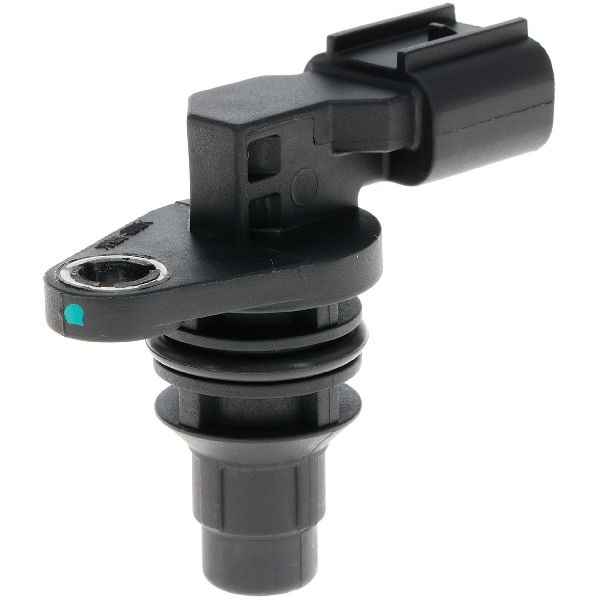
For a 2013-2018 Ford C-MAX, code P0340 is most often caused by a faulty camshaft position sensor or moisture in the engine oil from frequent short trips, a known issue covered by a Ford TSB. Replacing the sensor (part # DU-110) and changing the oil is the common fix, with the sensor costing around $25-$75.
- On a 2013-2018 Ford C-MAX Hybrid, P0340 is strongly linked to moisture in the engine oil from short-trip driving, per Ford TSB SSM 48598.
- The most common fix is to replace the camshaft position sensor and perform an engine oil and filter change.
- Symptoms include a check engine light, difficulty starting, stalling, and poor engine performance.
- Before replacing parts, always inspect the sensor's wiring and connector for damage and check the oil for a milky appearance.
- Replacing the sensor is a simple DIY job, requiring basic tools and costing under $75 for the part.
What's Unique About the 2013-2018 Ford C-MAX

On the Ford C-MAX Hybrid, a unique factor can trigger the P0340 code. According to Ford Technical Service Bulletin (TSB) SSM 48598, frequent short-distance driving (less than 6,000 miles per year) can cause excessive moisture to build up in the engine oil. This is because the gasoline engine doesn't run long enough to reach full operating temperature and burn off condensation. This contaminated, milky oil can interfere with the camshaft position sensor's operation, leading to a P0340 or P0344 code, an issue not commonly seen on non-hybrid vehicles with different driving patterns. This issue is also shared with its platform mates, the Ford Fusion Hybrid and Lincoln MKZ Hybrid.
🎬 Watch: How to replace the sensor on Ford hybrid models.Diagnostic Flowchart
Tap your situation to follow the diagnostic path that matches what you're seeing on this vehicle.
Symptoms You May Notice
- Check Engine Light is on
- Difficulty starting the engine, or a longer-than-usual crank time before starting.
- Engine cranks but won't start
- Engine stalls unexpectedly, especially at idle.
- Rough idling or engine misfiring
- Noticeable loss of power and sluggish acceleration.
- Reduced fuel economy.
- Replacing the crankshaft position sensor instead of the camshaft position sensor.
- Replacing the PCM before thoroughly testing the sensor circuit and mechanical timing.
- Replacing the sensor without addressing the underlying cause, such as oil contamination or a faulty wiring connector.
Most Likely Causes

- Excessive Moisture in Engine Oil 🔴 High Probability As a hybrid, the gasoline engine may not run long enough during short trips to burn off condensation, leading to moisture buildup in the oil. Ford issued TSB SSM 48598 specifically for this issue on the C-MAX Hybrid, Fusion Hybrid, and MKZ Hybrid.
How to confirm: Check the engine oil dipstick and oil cap for a milky, white, or foamy residue, which indicates water contamination. The TSB notes this is common for vehicles driven short distances or less than 6,000 miles per year.
Typical fix: Change the engine oil and filter, and replace the camshaft position sensor as recommended by TSB SSM 48598. Advise the owner to ensure the gasoline engine reaches full operating temperature more frequently or perform more frequent oil changes.
Est. part cost: $25 - $75 - Faulty Camshaft Position Sensor 🔴 High Probability The sensor can fail due to internal electronics or become fouled by contaminated oil as described in the TSB. It is the most common point of failure for this code.
How to confirm: After checking wiring and oil condition, testing the sensor's signal with a multimeter is possible. However, due to the part's low cost and accessibility, direct replacement is often the most practical diagnostic step.
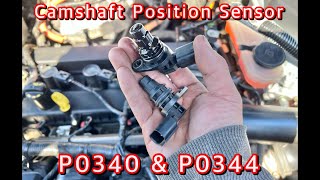
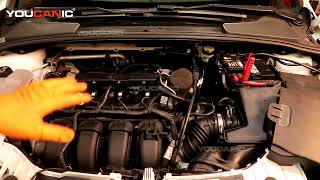
Typical fix: Replace the camshaft position sensor. It is located on the top of the valve cover, accessible after removing the engine cover and intake tube, and is held by a single 8mm bolt. 🎬 See this walkthrough for replacing the Camshaft Position Sensor A.
Est. part cost: $25 - $75 - Wiring or Connector Issue 🟡 Medium Probability The wiring harness leading to the sensor is in a high-heat area, which can make insulation brittle over time. Oil leaks from the valve cover can also contaminate the connector.
How to confirm: Visually inspect the sensor's connector and wiring harness for damage, corrosion, oil saturation, or loose connections. A user on a Ford forum noted that unplugging and replugging the connector would temporarily resolve their P0340 issue, pointing to a bad connection. Check for continuity and correct voltage at the connector with a multimeter.
Typical fix: Repair the damaged section of wiring or clean/replace the connector pigtail.
Est. part cost: $5 - $50
Rare But Worth Checking
- Worn Timing Chain or Components: While less common, excessive slack in the timing chain can cause the camshaft and crankshaft signals to be out of sync, potentially triggering a P0340 code. This would likely be accompanied by other timing-related codes (like P0016) or rattling noises from the engine.
- Faulty Powertrain Control Module (PCM): This is a very rare cause. The PCM should only be considered after all other possibilities, including sensors, wiring, and mechanical timing, have been thoroughly ruled out.
Diagnosis Steps
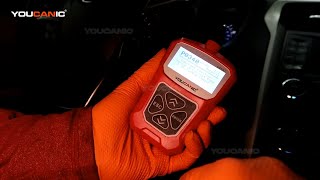
- Read the trouble codes with an OBD-II scanner and note any other codes present, especially P0344.
- Check the engine oil level and condition. Look for a milky or foamy appearance on the dipstick or under the oil cap, which indicates moisture.
- Inspect the camshaft position sensor's electrical connector and wiring for any signs of damage, corrosion, or looseness. The connector is located on top of the valve cover.
- If oil moisture is present, the official Ford fix is to perform an oil and filter change AND replace the camshaft position sensor.
- If oil is clean, test the sensor circuit. Use a multimeter to check for the correct voltage (typically 5V reference), ground, and signal at the connector.
- If the circuit is good, replace the camshaft position sensor. It is an accessible part held by one 8mm bolt. Apply a small amount of lubricant to the new sensor's O-ring before installation.
- Clear the trouble codes with the scanner and perform a drive cycle, including allowing the engine to reach full operating temperature, to see if the code returns.
Parts You'll Likely Need

- Camshaft Position Sensor
(OEM #DU-110)— This sensor is the most frequent point of failure for this code, either due to internal failure or oil contamination as described in Ford's TSB.
Trusted brands: Motorcraft, Bosch, Delphi, NTK
OEM price range: $50-$90
Aftermarket price range: $25-$60 - Engine Oil and Filter — Required if the P0340 code is caused by moisture contamination in the oil, a known issue for this vehicle per TSB SSM 48598.
Trusted brands: Motorcraft, Mobil 1, Castrol
OEM price range: $40-$70
Aftermarket price range: $30-$50
Related Codes That Often Appear With This One
- P0344 — P0344 indicates an intermittent signal from the same sensor ('Camshaft Position Sensor 'A' Circuit Intermittent'). Ford's TSB SSM 48598 lists both P0340 and P0344 as potential codes resulting from the same oil moisture issue.
Technical Service Bulletins (TSBs) & Recalls
- SSM 48598: Addresses an illuminated Malfunction Indicator Lamp (MIL) with DTC P0340 and/or P0344 due to moisture in the engine oil on C-Max, Fusion Hybrid, and MKZ Hybrid vehicles.
Platform-Specific Known Issues
- TSB SSM 48598: Oil Moisture Causing P0340/P0344: Ford states that 2013-2018 C-MAX Hybrids (as well as Fusion/MKZ Hybrids) may get code P0340 or P0344 due to excessive moisture in the engine oil from short-distance driving. The official fix is to replace the camshaft position sensor and change the engine oil and filter.
- Owner Experience: Intermittent Issue on Cold Mornings: A Reddit user with a 2019 Ford Fusion Hybrid reported intermittent P0340 codes, primarily on colder mornings, that would cause a no-start or rough start condition. The issue would sometimes clear after driving for a few miles, highlighting the intermittent nature of sensor or wiring faults.
Mechanic-Grade Diagnostic Values
- 5V Reference Voltage at Sensor Connector — expected: Approximately 5.0 volts, should be above 4.5 volts.. Failure: A reading below 4.5V or 0V indicates an open or short in the reference circuit from the PCM.
- Ground Circuit Integrity at Sensor Connector — expected: Approximately 12.6V (battery voltage).. Failure: A reading significantly lower than battery voltage indicates high resistance or an open in the ground circuit.
Wiring & Ground Locations

- G104 — Located at the rear of the transmission.. A poor ground connection at the transmission, which is bolted to the engine, can cause electrical noise and intermittent signal loss for engine sensors, including the camshaft position sensor.
- G105 — Located on the left side of the engine compartment.. This is a primary chassis ground point for the engine compartment. Corrosion or a loose connection here can affect multiple sensor circuits that rely on a clean ground path.
- G108 — Located on the top of the transmission.. Similar to G104, this ground point is critical for ensuring the engine and transmission assembly have a solid ground reference for all attached sensors.
- Powertrain Control Module (PCM) — Located at the front of the left front wheelwell.. This is the destination for the camshaft position sensor's signal. All circuit tests (continuity, shorts) will be performed on the wiring between the sensor connector and this module.
Real Owner Repair Stories
- Reddit user on r/MechanicAdvice (2017 Ford Focus ST (shares engine architecture)) — Intermittent P0340/P0344, poor acceleration, rough starting.
❌ Tried (didn't work) Replacing the camshaft position sensor., Adding an extra chassis ground wire.
✅ What actually fixed it The issue was temporarily resolved by unplugging and replugging the sensor connector multiple times. This strongly indicates the root cause was a poor connection at the connector or a faulty wiring pigtail, not the sensor itself. - YouTube video (Minute Maintenance) (2007 Ford Expedition 5.4L V8) — P0340 code appeared after a -12°F cold start, slight hesitation on crank but then ran smoothly.
❌ Tried (didn't work) The owner considered replacing the camshaft sensor but diagnosed further first.
✅ What actually fixed it The owner identified that the extreme cold and a slightly weak battery caused a voltage drop during cranking, which triggered a false P0340 code. The fix was to clear the code, recognizing that the sensor and wiring were fine and the issue was electrical supply during crank.
When the Usual Fixes Don't Work
- While the official TSB for the C-MAX Hybrid points to oil moisture as a primary cause for P0340, real-world cases show other significant possibilities. In multiple instances across Ford vehicles, a weak battery or excessive voltage drop during cold cranking was the true cause, triggering a false P0340 code that required no sensor replacement. In another documented case, the sensor and oil were fine, but the wiring connector pigtail to the sensor had a poor connection, making replacement of the pigtail—not the sensor—the correct fix. Furthermore, electrical noise from a failing alternator can also induce a false P0340 code, meaning the root cause is in the charging system, not the timing circuit.
OEM Part Supersession History
6M8Z-6B288-D→DU-110— Standard part number update and consolidation by Motorcraft.
Heads up: DU-110 is the correct service part and is backward compatible with vehicles originally using 6M8Z-6B288-D.
Model Year Variations Within This Range
- 2013-2018: No significant variations within the 2013-2018 Ford C-MAX model years are known to affect the causes or diagnosis of code P0340. The 2.0L Atkinson-cycle hybrid powertrain and associated sensors remained consistent.
Helpful Videos
Used OEM Parts in Stock

New Aftermarket Parts Available


The information in this article is provided for general reference and educational purposes only. Vehicle specifications, procedures, and part compatibility can vary by production date, trim level, and region. Always consult your vehicle's factory service manual and verify part numbers before purchasing or performing repairs. Safety-critical components such as airbags, seat belts, and braking systems should be installed by a qualified professional.
- Ford C-MAX:
- 🎬 Helpful Videos
- 🛍️ Shop This Part
- What's Unique About the 2013-2018 Ford C-MAX
- Diagnostic Flowchart
- Symptoms You May Notice
- Most Likely Causes
- Rare But Worth Checking
- Diagnosis Steps
- Parts You'll Likely Need
- Related Codes That Often Appear With This One
- Technical Service Bulletins (TSBs) & Recalls
- Platform-Specific Known Issues
- Mechanic-Grade Diagnostic Values
- Wiring & Ground Locations
- Real Owner Repair Stories
- When the Usual Fixes Don't Work
- OEM Part Supersession History
- Model Year Variations Within This Range
- 🎟️ Get 5% Off