

P0339 on 2017-2022 Jeep Compass 2.4L: Crank Sensor Intermittent Causes and Fixes
On a 2017-2022 Jeep Compass, code P0339 is almost always caused by a failing crankshaft position sensor, leading to dangerous engine stalling. The second most likely cause is heat-damaged wiring near the exhaust. Replacing the sensor with an OEM Mopar part (around $60-$95) is the most common fix, as aftermarket sensors are known to cause repeat failures on this platform. A crank relearn procedure is often required after replacement.
- P0339 on a 2017-2022 Compass is a critical code that should be addressed immediately due to the risk of the engine stalling while driving.
- The most likely cause is a failed crankshaft position sensor, followed by heat-damaged wiring near the exhaust.
- When replacing the sensor, it is highly recommended to use an OEM Mopar part to avoid repeat failures common with aftermarket alternatives on this engine.
- A 'crank relearn' procedure is often necessary after sensor replacement to ensure the PCM recognizes the new part correctly.
What's Unique About the 2017-2022 Jeep Compass
The 2.4L MultiAir "Tigershark" engine in the second-generation (MP) Compass places the crankshaft position sensor and its wiring harness very close to the hot exhaust manifold. This design makes the wiring particularly vulnerable to melting, chafing, and heat damage, which can mimic the symptoms of a failed sensor. While no specific TSB exists for the 2017-2022 models for this code, a safety recall (S89 / NHTSA 16V-907) was issued for the previous generation (2016 model year) with the same engine platform for faulty sensor connectors causing stalling, highlighting a known weakness in this area. Owners and mechanics strongly recommend using only OEM Mopar sensors, as aftermarket versions have a high rate of premature failure for this specific application.
Symptoms You May Notice
- Engine stalling intermittently while driving, often without warning, especially when the engine is hot.
- Engine cranks but will not start, or requires multiple attempts.
- Extended cranking time before the engine starts.
- Tachometer needle drops to zero erratically while driving.
- Rough or uneven idle.
- Engine hesitation or stumbling during acceleration.
- Check Engine Light illuminated.
- Traction control light may illuminate simultaneously when the signal is lost.
- Replacing the camshaft position sensor. While related to timing, P0339 specifically points to the crankshaft sensor circuit.
- Replacing ignition coils or spark plugs to fix a misfire without first addressing the P0339 code, which is the likely root cause of the timing-related misfire.
- Assuming a no-start is a bad starter motor. A P0339 code combined with a no-start and a single click can be caused by the faulty crank sensor, not the starter.
Most Likely Causes
- Failing Crankshaft Position Sensor 🔴 High Probability The sensor is located in a high-heat area at the rear of the engine block, leading to electronic failure over time due to constant heat cycles and vibration. Aftermarket sensors are widely reported to fail quickly or not work at all.
How to confirm: Use a scan tool to monitor RPMs while cranking; a reading of zero or an erratic signal points to a bad sensor or circuit. You can also test the sensor's internal resistance with a multimeter (expect 200-1,000 Ohms), though this may not catch an intermittent failure that only occurs when hot.
Typical fix: Replace the crankshaft position sensor with an OEM Mopar part. A 'crank relearn' procedure with a capable scan tool is often required afterward to synchronize the new sensor with the PCM.
Est. part cost: $20-$95 - Damaged Wiring Harness or Connector 🟡 Medium Probability The sensor's wiring is routed very close to the exhaust manifold, making it highly susceptible to melting, chafing, or becoming brittle from heat exposure. The connector's plastic locking tab can also break, leading to a poor connection.
How to confirm: Perform a close visual inspection of the wiring harness leading to the crankshaft position sensor. Look for any signs of melted plastic loom, exposed wires, or corrosion on the connector pins. Wiggle the harness with the engine running (if possible) to see if it induces a stall.
Typical fix: Repair the damaged section of the harness and secure it away from the heat source, often using high-temperature protective sleeving. If the connector is damaged, it will need to be replaced with a new pigtail.
Est. part cost: $10-$50
Rare But Worth Checking
- Damaged Reluctor Wheel: The reluctor wheel (or tone ring) on the crankshaft, which the sensor reads, can be damaged, have debris on it, or develop runout, causing an erratic signal. This is uncommon but possible, especially if other engine work has been performed recently.
- Faulty Powertrain Control Module (PCM): In very rare cases, the internal circuitry of the PCM that processes the crankshaft sensor signal can fail. This should only be considered after all other possibilities have been exhaustively ruled out.
- PCM Software Calibration Issue: On the related Jeep Renegade platform, a TSB was issued for a PCM software update that makes the computer less sensitive to minor signal variations that could trigger a false P0339. While not specifically for the Compass, it's a possibility if a new OEM sensor and good wiring don't solve the issue.
Diagnosis Steps
- Scan for Codes: Confirm P0339 is the primary code. Note any other codes, such as P0335, P0300, or U1428.
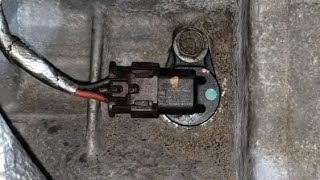
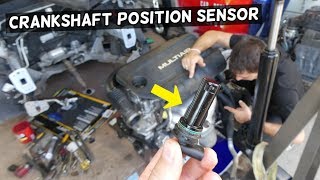
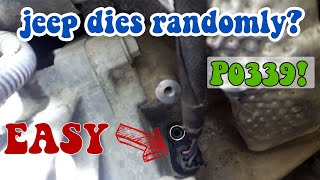
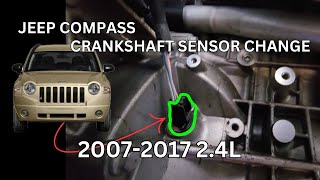
- Inspect the Wiring: Visually inspect the crankshaft position sensor's wiring harness, which is located on the rear of the engine block, accessible from underneath. 🎬 See exactly where the sensor is located on the engine block. Pay close attention to the area near the exhaust for any signs of melting or heat damage. Check that the connector is secure and its locking tab isn't broken.
- Monitor Live Data: Using an OBD-II scanner with live data capabilities, monitor the engine RPM signal while cranking the engine. A stable RPM reading suggests the sensor is working at that moment. A reading of 0 RPM or an erratic, jumping signal strongly indicates a problem in the crank sensor circuit.
- Test the Sensor: If the wiring appears good, the sensor itself is the next suspect. You can test its resistance with a multimeter, but this may not identify an intermittent failure that only occurs when hot. Given the high failure rate and strong recommendations from other owners, replacing the sensor with an OEM Mopar part is the most practical next step. 🎬 Watch this step-by-step guide to diagnose and replace the sensor.
- Perform Crank Relearn: After replacing the sensor, use a capable scan tool to perform the 'Crankshaft Position Variation Relearn' procedure. This synchronizes the sensor to the PCM and is often necessary to clear the code permanently. 🎬 Follow this DIY guide to fix stalling and clear your codes. Some owners report success by driving at highway speed and decelerating multiple times to force a relearn.
- Inspect Reluctor Wheel: If a new OEM sensor and good wiring do not resolve the issue, the reluctor wheel on the crankshaft may be damaged. This is an advanced, labor-intensive inspection.
Parts You'll Likely Need
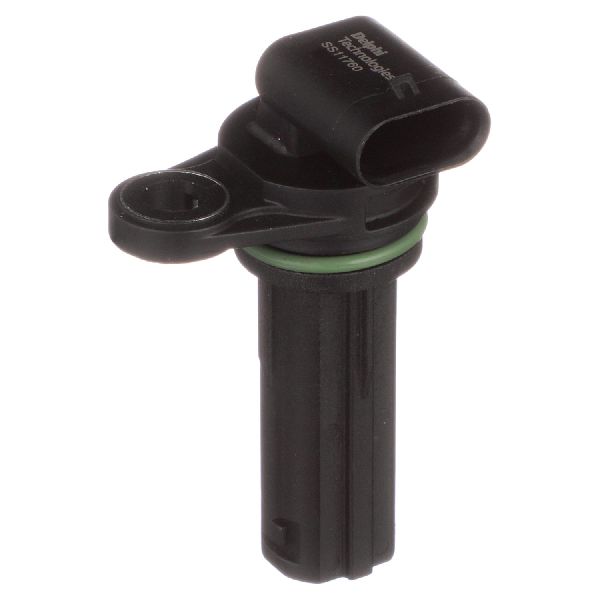
- Crankshaft Position Sensor
(OEM #68079375AC)— This sensor is the most frequent point of failure for code P0339, causing intermittent signal dropouts that lead to stalling and no-start conditions. OEM Mopar is strongly recommended.
Trusted brands: Mopar, NGK/NTK, Delphi
OEM price range: $60-$95
Aftermarket price range: $20-$55
Related Codes That Often Appear With This One
- P0335 — P0335 indicates a complete loss of the crankshaft sensor signal, whereas P0339 indicates an intermittent loss. They often point to the same failing component or wiring issue.
- P0300 — This code for a random/multiple cylinder misfire is a direct result of the PCM not having a stable crank signal to properly time the ignition spark.
- U1428 — A code for 'Implausible Engine Torque Signal' can appear alongside P0339 because the Transmission Control Module loses the necessary engine data from the PCM to operate correctly.
Technical Service Bulletins (TSBs) & Recalls
- While not for the Compass directly, TSB #S2108000027 for the platform-mate Jeep Renegade addresses P0339 with a PCM software update, indicating a potential software sensitivity issue on the 2.4L MultiAir platform.
- TSB Bulletin #18-075-20 notes that customers may experience P0339 (Crankshaft Position Sensor Intermittent) along with P0335 and P0340, potentially affecting vehicle performance when using adaptive cruise control.
Platform-Specific Known Issues
- Recall S89 / NHTSA 16V-907 for the previous generation (2016 model year) noted that improperly manufactured sensor connectors on the 2.4L engine could cause an intermittent connection, leading to stalling. This indicates a historical weakness in the wiring and connectors for this sensor on this engine platform.
- There is a strong consensus in owner forums and among mechanics that aftermarket crankshaft position sensors have a very high failure rate on this engine. Using an OEM Mopar sensor is critical to avoiding a repeat failure.
- The close proximity of the sensor wiring to the exhaust manifold is a design flaw that makes heat shielding or careful routing of the harness a wise preventative measure during repair.
Mechanic-Grade Diagnostic Values
- Crankshaft Position Sensor Internal Resistance — expected: 200 - 1,000 Ohms. Failure: A reading of zero indicates a short circuit; an infinite (OL) reading indicates an open circuit. This test may not catch a heat-related intermittent failure.
- CKP Sensor Connector Voltage Test (Key On, Engine Off) — expected: Pin 1: 5-volt supply from PCM. Pin 2: Signal wire (may also show ~5V). Pin 3: Sensor ground.. Failure: Absence of the 5V supply or a bad ground points to a wiring or PCM issue, not a sensor failure.
- CKP Sensor AC Voltage (Engine Cranking) — expected: A fluctuating reading around 200 millivolts (mV) that increases with RPM.. Failure: No AC voltage reading while the engine is cranking indicates a failed sensor.
Scan Tool Commands That Help
- wiTECH (Dealer Tool) or capable aftermarket (Autel, Appcar DiagFCA): Cam/Crank Relearn / Phonic Wheel Relearn — This procedure is mandatory after replacing the crankshaft position sensor. It synchronizes the PCM with the new sensor's signal to ensure accurate timing and prevent the code from returning.
Wiring & Ground Locations
- Crankshaft Position Sensor Connector — On the rear of the engine block, accessible from underneath the vehicle, located below/near the exhaust manifold.. This connector and its wiring are the most common failure points due to extreme heat exposure from the exhaust, leading to melting, brittleness, and intermittent signal loss.
- G100 — Located on the left (driver's side) front frame rail.. This is a primary engine compartment ground point. A loose or corroded connection at G100 can cause a wide range of difficult-to-diagnose electrical issues, including intermittent sensor signals that could trigger P0339.
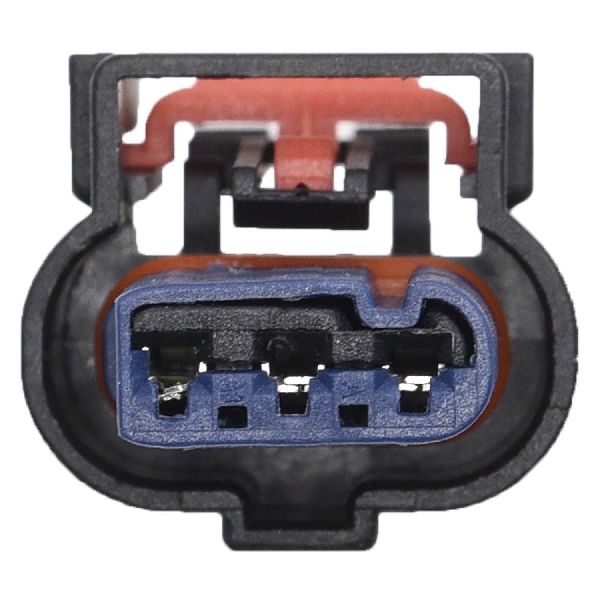
- CKP Sensor Pinout (at sensor) — On the 3-pin sensor connector.. For manual testing: Pin 1 is the 5-volt supply from the PCM, Pin 2 is the signal wire, and Pin 3 is the sensor ground. This allows for precise testing of the circuit to isolate a fault between the sensor, wiring, or PCM.
Real Owner Repair Stories
- YouTube User Comment (2012 Jeep Compass 2.0L (platform mate)) — Stalling, loss of power, engine stuttering, P0339 code.
❌ Tried (didn't work) A mechanic replaced the battery, which did not solve the problem.
✅ What actually fixed it The owner replaced the crankshaft position sensor themselves. The first attempt failed because the new sensor was not fully seated in the block. After taking it apart and re-installing, ensuring the sensor was pushed in firmly before tightening the bolt, the car started and the code was resolved. - NHTSA ODI #11120914 — An owner reported that while driving, the engine shut off and the car coasted to a stop. It would not restart for 10 minutes, and subsequent scans showed codes P0339 and P0335.
- NHTSA ODI #11196503 — One owner described a recurring issue where the engine would shut off and slowly stop moving; despite having the crankshaft position sensor replaced, the P0335 and P0339 codes returned within the same week.
- NHTSA ODI #11507266 — A driver experienced a loss of power steering assist and found code P0339 illuminated upon self-inspection.
OEM Part Supersession History
68079375AB→68079375AC— Standard part revision and update by the manufacturer.68079375AC→68079375AD— Standard part revision and update by the manufacturer.
Heads up: 68079375AD is the latest known revision. When ordering, any of these part numbers will likely auto-convert to the latest available version.
Model Year Variations Within This Range
- 2017-2021 vs 2022: The 2.4L Tigershark engine's horsepower rating dropped slightly from 180 hp in 2021 to 177 hp in 2022. This change is due to tuning and does not affect the diagnosis or repair of a P0339 code.
- 2022: The 2022 model year received a significant interior and exterior refresh, including new infotainment systems (Uconnect 5) and updated driver displays. These changes are unrelated to the engine powertrain and do not alter the P0339 diagnostic process.
Diagnostic Flowchart
Other Known Issues on This Vehicle
Issues unrelated to this code that are worth knowing about as an owner of this generation:
- Excessive Oil Consumption 🔴 High — Very common on 2017-2022 models. Can start early in the vehicle's life. Has been the subject of class-action lawsuits. (Ref: TSB #09-003-23 was issued to address oil consumption.)
- Auto Start-Stop (ESS) System Failure 🟠 Medium — Common failure item, often appears as 'Start/Stop Unavailable, Service System' message. Typically occurs after 3-5 years.
- Failing Auxiliary Battery for ESS System 🟠 Medium — The most common cause of ESS system failure. The small auxiliary battery often fails before the main battery, causing electrical gremlins and start-stop issues.
- Electronic Parking Brake Malfunctions 🔴 High — Multiple owner reports of the parking brake engaging while driving or causing no-start conditions with a 'Service Electronic Parking Brake' warning.
- Low Oil Level Causing Stalling/Misfires 🔴 High — Directly related to oil consumption. The MultiAir system requires proper oil pressure to function; low oil can starve the valvetrain, causing stalling and misfire-like symptoms that can be confused with other issues.
Used vs. New Parts: Buying Guide for This Vehicle
When a used part is the smart pick: For this specific repair, a used part is almost never a smart choice. The crankshaft position sensor is a high-failure-rate electronic component exposed to extreme heat. A used sensor from a junkyard carries a very high risk of being near the end of its life or failing intermittently in the same way as the part you are replacing.
What to inspect on the donor part:
- Not applicable. Do not use a salvaged crankshaft position sensor for this repair.
OEM-only on this vehicle (don't cheap out):
- Crankshaft Position Sensor
Aftermarket brands forum-validated for this vehicle:
- While OEM Mopar is strongly preferred, some professional technicians report success with NGK/NTK or Delphi as higher-quality aftermarket alternatives if OEM is unavailable.
Brands owners have reported issues with on this vehicle:
- Avoid generic, no-name, or 'white-box' sensors from online marketplaces. Forum and mechanic consensus indicates these have an extremely high rate of out-of-box failure or premature failure on this specific engine platform.
Real Owner Stories
Aggregated from forums and TSBs cited above. Mileages and costs reflect what owners reported in those sources.
Jeep Cherokee (2.4L)
Symptoms: Persistent stalling issues that continued even after replacing the crankshaft position sensor.
What fixed it: The owner discovered the sensor wires were chafing against the hot engine. Securing the wires away from the heat source with zip ties resolved the problem.
Source hint: https://www.jeeps.net/threads/p0339-cam-and-crankshaft-sensor-problems.5015/page-3
Related OBD-II Codes
Frequently Asked Questions
Do I really need to buy the expensive Mopar crankshaft sensor for my Jeep Compass, or will a cheaper aftermarket one work?
My mechanic replaced the crankshaft sensor on my 2018 Compass, but the P0339 code came back. What could be the issue?
Why does my Jeep Compass stall intermittently, especially when the engine gets hot?
Is there a software update or TSB for the P0339 code on my 2.4L Compass?
I heard about Recall S89 for stalling on the 2.4L engine. Does it apply to my 2019 Jeep Compass?
Where is the crankshaft position sensor located on the 2.4L MultiAir engine in my Compass?
Helpful Videos
We Have This Part in Stock


The information in this article is provided for general reference and educational purposes only. Vehicle specifications, procedures, and part compatibility can vary by production date, trim level, and region. Always consult your vehicle's factory service manual and verify part numbers before purchasing or performing repairs. Safety-critical components such as airbags, seat belts, and braking systems should be installed by a qualified professional.
- Jeep Compass:
- 🎬 Helpful Videos
- 🛍️ Shop This Part
- What's Unique About the 2017-2022 Jeep Compass
- Symptoms You May Notice
- Most Likely Causes
- Rare But Worth Checking
- Diagnosis Steps
- Parts You'll Likely Need
- Related Codes That Often Appear With This One
- Technical Service Bulletins (TSBs) & Recalls
- Platform-Specific Known Issues
- Mechanic-Grade Diagnostic Values
- Scan Tool Commands That Help
- Wiring & Ground Locations
- Real Owner Repair Stories
- OEM Part Supersession History
- Model Year Variations Within This Range
- Diagnostic Flowchart
- Other Known Issues on This Vehicle
- Used vs. New Parts: Buying Guide for This Vehicle
- Real Owner Stories
- Jeep Cherokee (2.4L)
- Related OBD-II Codes
- Frequently Asked Questions
- 🎟️ Get 5% Off