

P0316 on 2017 Lincoln Continental: Startup Misfire Causes and Serious Engine Warnings
P0316 indicates a misfire on startup. On the 2017 Continental, especially with the 2.7L or 3.0L V6 engines, this code is a serious warning. Manufacturer bulletins link it to internal engine problems like cylinder head failure due to worn valve guides or excessive oil consumption, which could require major repairs beyond simple spark plugs or coils.
- P0316 on a 2017 Lincoln Continental is a serious code that should not be ignored.
- Check your engine oil level immediately if you see this code.
- Be aware that this code is linked by Lincoln to major engine problems, especially if codes P0524 or P06DD are also present.
- Do not simply replace spark plugs and coils and assume the problem is fixed; the underlying cause could be much more severe.
- Professional diagnosis is strongly recommended to rule out the serious issues identified in manufacturer service bulletins.
What's Unique About the 2017-2017 Lincoln CONTINENTAL
For the 2017 Lincoln Continental, particularly with the 2.7L and 3.0L twin-turbo V6 engines, P0316 should be taken very seriously. While it can indicate common ignition issues, Lincoln has issued Technical Service Bulletins (TSBs) that connect this specific code to significant internal engine problems. These bulletins suggest that a startup misfire can be a symptom of premature valve guide wear within the cylinder heads, leading to excessive oil consumption and potentially requiring cylinder head or long block engine replacement. Ignoring this code could lead to catastrophic engine failure.
Diagnostic Flowchart
Tap your situation to follow the diagnostic path that matches what you're seeing on this vehicle.
Symptoms You May Notice
- Check Engine Light is on or flashing
- Rough, shaky idle, especially on a cold start
- Engine hesitation or stumbling upon acceleration
- Noticeable loss of power
- Excessive oil consumption (e.g., 1 quart in less than 3,000 miles)
- White or blue smoke from the exhaust, especially after a hot restart or at idle
- Replacing only spark plugs and ignition coils without investigating the root cause. If the TSB-related valve guide issue is present, new plugs will quickly become oil-fouled, and the misfire will return.
Most Likely Causes
- Internal Engine Mechanical Failure (Cylinder Head or Long Block) 🔴 High Probability Manufacturer TSB 19-2243 explicitly states that for 2017 Continentals built from 4/1/2016 to 1/1/2017, symptoms including P0316 may be due to worn valve guides. This allows oil to leak into the cylinders, fouling plugs and causing a startup misfire. This is a known issue across the Ford/Lincoln 2.7L/3.0L 'Nano' engine family.
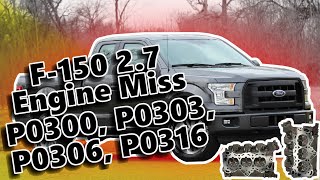
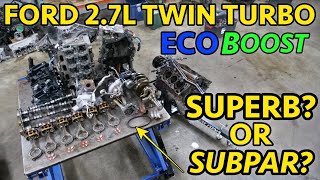
How to confirm: A professional technician must perform an engine oil consumption test. A compression test and cylinder leak-down test are necessary. The ultimate confirmation is often visual inspection of the valve 🎬 Watch: Full teardown of a failed 2.7L engine stems and guides during cylinder head disassembly.
Typical fix: Per TSB 19-2243, the official fix is the replacement of both cylinder heads. If codes P0524/P06DD are also present, older TSBs suggest a complete long block replacement may be necessary.
Est. part cost: $2000-$8000 - Worn or Fouled Spark Plugs 🟡 Medium Probability While a common failure, on this platform, a fouled plug is often a *symptom* of the more serious valve guide issue, as oil leaks into the cylinder and contaminates the plug.
How to confirm: Remove the spark plugs from the misfiring cylinder(s) (identified by P030x codes) and inspect for wear, carbon buildup, or oil fouling. An oil-fouled plug is a strong indicator of the TSB-related issue.
Typical fix: Replace all spark plugs as a set. Use OEM-spec Motorcraft SP578 plugs for best results. Note that this may be a temporary fix if the underlying oil leak is not addressed.
Est. part cost: $90-$150 - Faulty Ignition Coil 🟡 Medium Probability
How to confirm: Swap the ignition coil from the misfiring cylinder with a coil from a cylinder that is firing correctly. Clear the codes and run the engine. If the misfire code 'moves' to the new cylinder, the ignition coil is faulty.
Typical fix: Replace the faulty ignition coil. The OEM part is a Motorcraft DG558. It is often wise to replace the corresponding spark plug at the same time.
Est. part cost: $50-$100 - Leaking Fuel Injector ⚪ Low Probability
How to confirm: A fuel injector can leak fuel into the cylinder after the engine is shut off, causing a rich misfire on startup. This requires professional diagnosis, often involving monitoring fuel pressure bleed-down and inspecting the spark plug for signs of being wet with fuel.
Typical fix: Replace the faulty fuel injector and its seals.
Est. part cost: $100-$250
Rare But Worth Checking
- Crankshaft Position (CKP) Sensor Relearn Issue: In some cases, after other repairs, the PCM may require a CKP sensor relearn procedure to properly identify engine revolutions at startup, otherwise it may falsely set a P0316.
Diagnosis Steps
- Read all diagnostic trouble codes (DTCs) with an OBD-II scanner. Pay close attention to any codes accompanying P0316, especially P0301-P0306, P0524, and P06DD.
- Check the engine oil level and condition immediately. A low oil level is a critical clue, given the TSBs related to excessive oil consumption.
- If a specific cylinder misfire is identified (e.g., P0304), inspect the spark plug for that cylinder. Look for heavy carbon or wet oil fouling, which points to the TSB issue.
- As a basic diagnostic step, swap the ignition coil from the misfiring cylinder to another known good cylinder. Clear codes and see if the misfire follows the coil.
- If plugs are oil-fouled or codes P0524/P06DD are present, the vehicle should be taken to a professional. Reference TSB 19-2243.
- A professional should perform an oil consumption test to verify the rate of oil loss.
- To confirm mechanical failure, a cylinder compression test and a cylinder leak-down test are required to verify the engine's mechanical integrity and pinpoint the failure (e.g., bad rings vs. leaking valves/guides).
Parts You'll Likely Need
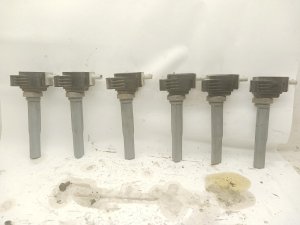
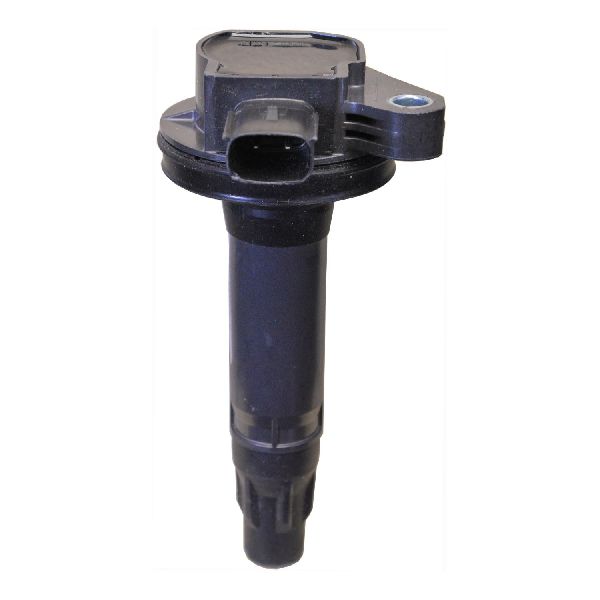
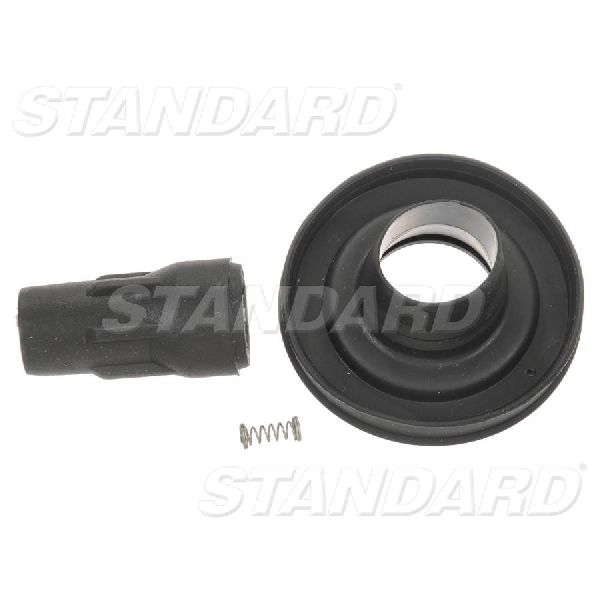
- Ignition Coil
(OEM #DG558)— A common cause for any misfire code. Relatively easy to diagnose and replace.
Trusted brands: Motorcraft, Bosch, NGK
OEM price range: $70-$120
Aftermarket price range: $40-$80 - Spark Plugs
(OEM #SP578)— Standard maintenance items that wear out and can cause misfires. On this engine, they are often fouled by oil due to the valve guide issue.
Trusted brands: Motorcraft, NGK, Denso
OEM price range: $15-$25 per plug
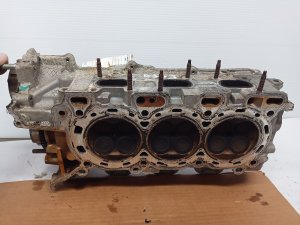
Aftermarket price range: $8-$15 per plug - Cylinder Head Assembly
(OEM #GB8Z-6049-G (Left, 3.0L), GB8Z-6049-F (Right, 3.0L))— The official fix recommended in TSB 19-2243 for vehicles exhibiting P0316 with excessive oil consumption due to worn valve guides.
Trusted brands: Motorcraft
OEM price range: $1500-$2500 per head - Engine Long Block — The fix recommended in older TSBs for vehicles exhibiting P0316 with oil pressure codes, or if cylinder wall damage has occurred as a result of the initial failure.
Trusted brands: Motorcraft
OEM price range: $6000-$9000
Related Codes That Often Appear With This One
- P0300-P0306 — These codes specify which cylinder is misfiring (e.g., P0301 for cylinder 1). P0316 tells you the misfire happened at startup, while P0301-P0306 tells you where.
- P0524 — Indicates 'Engine Oil Pressure Too Low'. According to TSBs 19-2243 and 46364, seeing this code with P0316 strongly suggests the severe internal engine problems described in the bulletins.
- P06DD — Indicates 'Engine Oil Pressure Control Circuit Stuck Off'. Like P0524, TSBs warn that this code, when paired with P0316, points towards a probable need for major engine repair.
Technical Service Bulletins (TSBs) & Recalls
- SSM 54504: Links P0316, misfires, and oil pressure codes to excessive oil consumption.
- SSM 46364: Links P0316 and misfires to cylinder head or long block issues, especially when oil pressure codes are also stored.
- TSB 19-2243: Supersedes older bulletins and directly identifies worn valve guides as the cause for oil consumption and misfires on 2017 Continentals (and platform mates), recommending cylinder head replacement as the fix.
Platform-Specific Known Issues
- TSB 19-2243: The Definitive Cause: This TSB supersedes previous versions and clearly states that on some 2017 Continentals with the 2.7L/3.0L engine, a combination of misfire codes (including P0316), oil pressure codes, rough idle, and blue/white smoke may be due to worn valve guides. The prescribed repair is to replace the cylinder heads.
- Real-World Owner Experience (Platform Mate): A user on the Lincoln MKZ Forum with a 2017 3.0T reported getting codes P0304 and P0316. The dealer performed a compression test which revealed a 7% loss on cylinder 4, leading to further investigation for a serious internal engine issue, demonstrating how these codes trigger a specific and serious diagnostic path for technicians.
Mechanic-Grade Diagnostic Values
- Ignition Coil Resistance (Aftermarket Spec) — expected: Primary: 0.52-0.64 Ω; Secondary: 6.6-7.9 kΩ. Failure: Readings outside of this range, or an open circuit (OL) reading, indicate a faulty coil.
- Variable Camshaft Timing (VCT) Solenoid Resistance — expected: 5.0 - 15.0 Ω. Failure: A reading outside this range suggests the solenoid's internal coil is failing. However, a solenoid can still be mechanically stuck even with correct resistance.
- High-Pressure Fuel Rail Leak-Down Test (Related 2.7L Engine) — expected: Pressure should not drop more than 10 PSI (69 kPa) within 30 seconds after engine shutdown.. Failure: A faster pressure drop indicates one or more leaking direct fuel injectors, which can cause a rich misfire on startup. This test is specified in TSB 18-2310 for the Gen 2 2.7L engine but is a valid diagnostic principle.
Hidden / Shadow Codes Worth Checking
- Mode $06, TID $53: Provides raw misfire count data for each cylinder during the current and last 10 driving cycles. This allows a technician to see which cylinder is misfiring, even if the count isn't high enough to set a P030x code yet. (see via A professional scan tool with Mode $06 capability, such as Ford's IDS or high-end consumer models.)
Scan Tool Commands That Help
- Ford IDS (or equivalent professional scanner): Power Balance Test — To graphically display the RPM contribution of each cylinder in real-time. A cylinder that shows a significant drop compared to others is the source of the misfire. This is a primary diagnostic step for any Ford misfire.
- Ford IDS (or equivalent professional scanner): Crankshaft Position (CKP) Variation Learn — This procedure is required after replacing a crankshaft position sensor, PCM, or major timing components. Failure to perform the relearn can cause the PCM to misinterpret crankshaft speed variations and falsely set a P0316 code.
- Ford IDS (or equivalent professional scanner): VCT Solenoid Command On/Off — To test the mechanical function of a VCT solenoid. A technician can command the solenoid to cycle; if the engine tone does not change or runs rough, it may indicate the solenoid is stuck. This helps differentiate a mechanical solenoid issue from a wiring problem.
Wiring & Ground Locations
- Engine Compartment Power Distribution Box — Located in the engine compartment, on the driver's side.. This box contains the primary fuses and relays for the PCM, ignition coils, and fuel injectors. A poor connection or corroded terminal in this box can cause intermittent power loss to critical ignition components, leading to misfires.
- Passenger Compartment Fuse Panel — Located under the instrument panel, to the left of the steering column.. Contains fuses for various control modules that communicate with the PCM. While less likely to be the direct cause, a fault here can create communication issues that may manifest in unexpected ways.
Real Owner Repair Stories
- Reddit user on r/f150 (2018 Ford F-150 with 2.7L EcoBoost (Gen 2 engine, platform mate)) — Started with only a P0316 code at 70,000 miles. Later progressed to a persistent P0305 (Cylinder 5 misfire) at 85,000 miles. Misfire was worst at hot idle.
❌ Tried (didn't work) Replacing spark plugs, Swapping ignition coils, Replacing port fuel injectors
✅ What actually fixed it The user did not post a final repair, but the diagnosis was definitive: a dry and wet compression test revealed extremely low compression in cylinder 5 (85 PSI) and cylinder 4 (97 PSI), while healthy cylinders were 140-155 PSI. This confirmed a major internal mechanical failure (likely valves or piston rings), demonstrating that P0316 was the first symptom of a problem that required engine replacement or a major rebuild. - Reddit user on r/MechanicAdvice (2018 Ford F-150 with 2.7L EcoBoost) — P0316 and a cylinder 5 misfire.
❌ Tried (didn't work) Replacing spark plugs, Swapping ignition coils (misfire stayed on cylinder 5), Mechanic replaced direct and port injectors on one bank ($2,000 repair), which did not fix the misfire.
✅ What actually fixed it The issue was not resolved by the owner at the time of posting, but two separate mechanics confirmed a mechanical engine failure after the injector replacement failed. One mechanic performed a leak-down test and found leaking exhaust valves. Another confirmed bad compression at 55 PSI. This story highlights how P0316 can lead to an expensive and incorrect diagnosis of fuel injectors when the root cause is mechanical.
OEM Part Supersession History
Unknown (Original-fitment cylinder heads on 2017 models)→FL3Z-6049-J (Left Head), FL3Z-6049-K (Right Head) for 2.7L— The original cylinder heads were prone to premature valve guide wear, causing oil consumption and misfires. The updated parts listed in TSB 19-2384 are the official remedy.
Model Year Variations Within This Range
- 2017 (Gen 1 2.7L EcoBoost): The 2017 model year uses the 'Gen 1' 2.7L EcoBoost. For this engine, TSBs strongly link P0316 to oil consumption caused by faulty cylinder head valve guides. Later models (2018+) use a 'Gen 2' 2.7L with a different fuel injection system, where P0316 is more commonly associated with leaking direct fuel injectors per TSB 18-2310.
Helpful Videos
Used OEM Parts in Stock



New Aftermarket Parts Available



The information in this article is provided for general reference and educational purposes only. Vehicle specifications, procedures, and part compatibility can vary by production date, trim level, and region. Always consult your vehicle's factory service manual and verify part numbers before purchasing or performing repairs. Safety-critical components such as airbags, seat belts, and braking systems should be installed by a qualified professional.
- Lincoln CONTINENTAL:
- 🎬 Helpful Videos
- 🛍️ Shop This Part
- What's Unique About the 2017-2017 Lincoln CONTINENTAL
- Diagnostic Flowchart
- Symptoms You May Notice
- Most Likely Causes
- Rare But Worth Checking
- Diagnosis Steps
- Parts You'll Likely Need
- Related Codes That Often Appear With This One
- Technical Service Bulletins (TSBs) & Recalls
- Platform-Specific Known Issues
- Mechanic-Grade Diagnostic Values
- Hidden / Shadow Codes Worth Checking
- Scan Tool Commands That Help
- Wiring & Ground Locations
- Real Owner Repair Stories
- OEM Part Supersession History
- Model Year Variations Within This Range
- 🎟️ Get 5% Off