

P0316 on 2014-2019 Ford Fusion: Startup Misfire and Coolant Intrusion Guide
On a 2014-2019 Ford Fusion with an EcoBoost engine, P0316 often signals a severe engine problem: coolant leaking into the cylinders. While it can be a simple ignition issue, it's a known precursor to engine failure requiring a short or long block replacement. Do not ignore this code, especially if accompanied by coolant loss.
- On a 2014-2019 Ford Fusion with an EcoBoost engine, P0316 is a serious code that should be investigated immediately.
- The most likely and severe cause is a cracked engine block allowing coolant to leak into the cylinders.
- Symptoms to watch for are coolant loss without visible leaks, white exhaust smoke on startup, and a rough idle.
- Do not use stop-leak additives; they will not fix the problem and can cause further damage to the cooling system.
- The only correct repair for coolant intrusion is an engine short block or long block replacement with Ford's redesigned parts. Check with a dealer about potential warranty or customer satisfaction program coverage.
What's Unique About the 2014-2019 Ford FUSION

For most cars, P0316 points to a tune-up need like spark plugs or coils. However, on the 2014-2019 Fusion with the 1.5L and 2.0L EcoBoost engines, this code is a notorious early warning for a catastrophic engine design flaw. 🎬 See a breakdown of why these EcoBoost engines consume coolant. These engines use an 'open-deck' block design, which has unsupported space between the cylinder liners and the block wall for coolant flow. A design flaw allows a crack to form in the thin material between cylinders, letting coolant leak directly into the combustion chamber. This issue is so common that Ford has issued multiple Technical Service Bulletins (TSBs) and a customer satisfaction program to address it.
Diagnostic Flowchart

Tap your situation to follow the diagnostic path that matches what you're seeing on this vehicle.
Symptoms You May Notice

- Check Engine Light is on or flashing
- Rough, shaky idle, especially on a cold start, that may smooth out after 10-30 seconds
- White smoke from the exhaust, which may have a sweet smell (burning coolant)
- Noticeable loss of engine coolant with no visible external leaks
- Hesitation or stumbling on acceleration
- Engine overheating or temperature gauge running high
- Engine may sound like it's running poorly, which can sometimes be mistaken for a transmission issue
- Replacing only spark plugs and ignition coils without checking for coolant intrusion. Many owners spend money on a tune-up only to find the real problem is the engine block itself.
Most Likely Causes

- Engine Coolant Intrusion (Cracked Engine Block) 🔴 High Probability The 1.5L and 2.0L EcoBoost engines used in this Fusion have an 'open-deck' block design with thin walls between cylinders. A design flaw can cause a crack to form, allowing coolant to seep into the cylinders, often between cylinders 2 and 3. This is a widely documented failure, confirmed by owner complaints and Ford's own TSBs.
How to confirm: A mechanic will perform a cooling system pressure test to see if it holds pressure; a drop of more than 3-4 PSI in 5 hours is a strong indicator. They will also use a borescope (a small camera) to look inside the cylinders for evidence of coolant pooling on the piston tops. 🎬 Watch: 2.0L EcoBoost coolant intrusion diagnosis and TSB details. Coolant-fouled spark plugs are another key indicator. A DIY method involves adding UV dye to the coolant, removing the spark plug from the suspect cylinder, placing a white paper towel over the hole, and cranking the engine to see if dyed coolant splatters onto the paper.
Typical fix: The only permanent fix is to replace the engine short block (for the 1.5L) or the entire long block assembly (for the 2.0L) with a redesigned part from Ford that has improved cooling passages.
Est. part cost: $2000-$5000+ - Worn Spark Plugs 🟡 Medium Probability Turbocharged engines like the EcoBoost are harder on spark plugs than naturally aspirated engines. Worn or fouled plugs are a common cause for any misfire. However, this is often a misdiagnosis of the larger coolant intrusion problem.
How to confirm: Remove the spark plugs and inspect them. Look for worn electrodes, carbon fouling, or a white, ashy deposit indicating coolant contamination (which points back to the first cause).
Typical fix: Replace all four spark plugs. Use only the OEM-specified Motorcraft plugs to avoid further issues.
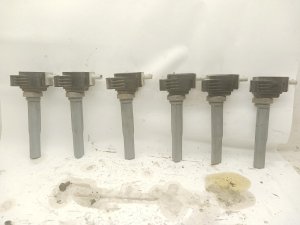
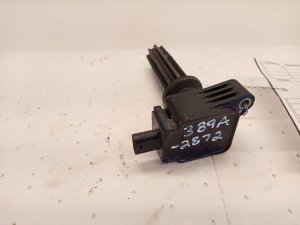
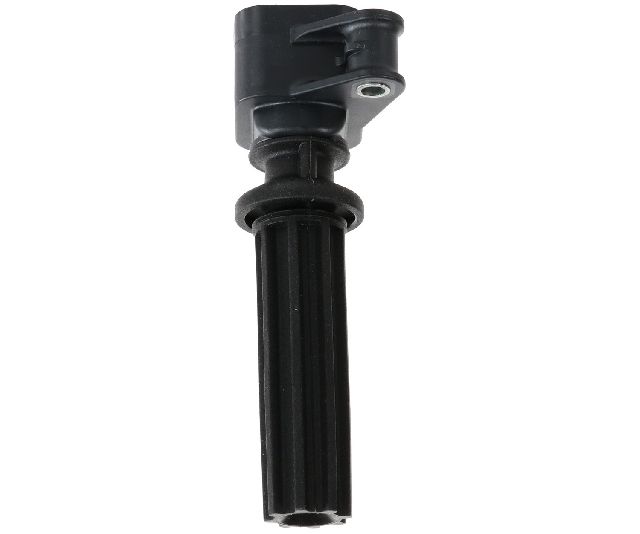
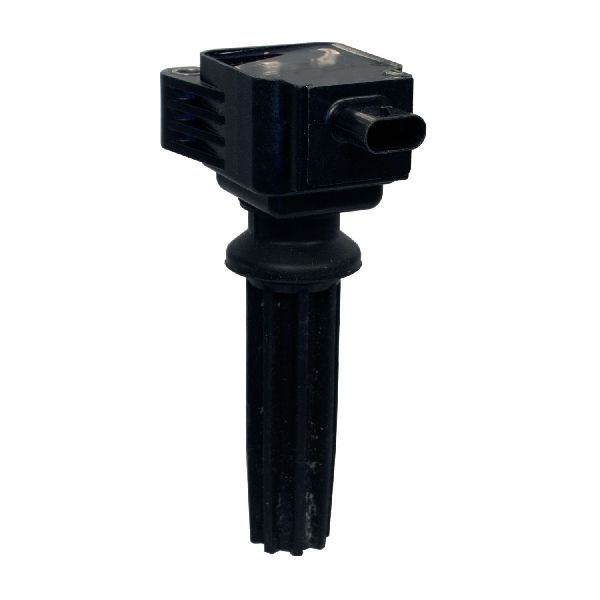
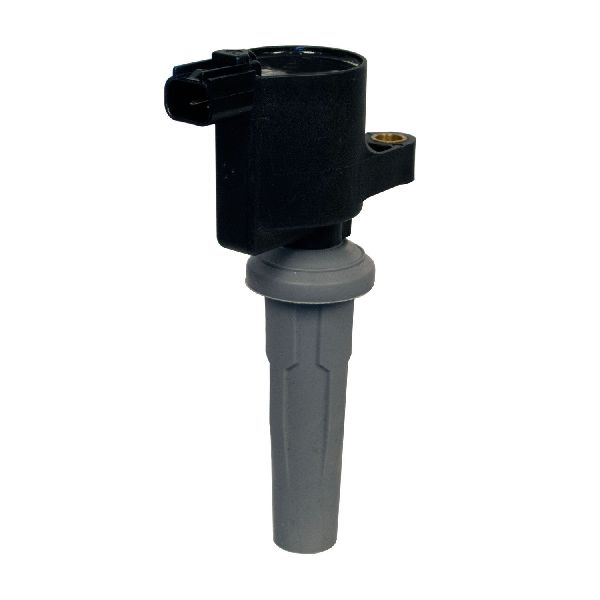
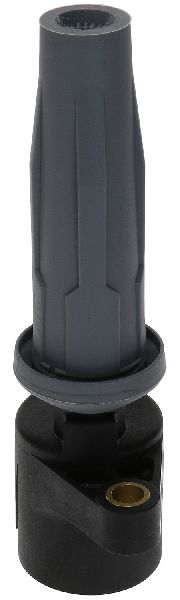
Est. part cost: $40-$100 - Failing Ignition Coil(s) 🟡 Medium Probability
How to confirm: If you have a specific cylinder misfire code (e.g., P0302), swap the ignition coil from that cylinder with one from a known good cylinder. Clear the codes and see if the misfire code follows the coil to the new cylinder.
Typical fix: Replace the faulty ignition coil. It is often recommended to replace all coils at the same time if they are original.
Est. part cost: $50-$150 per coil
Rare But Worth Checking
- Leaking Fuel Injector: An injector can leak fuel into the cylinder overnight, causing a rich misfire on startup. This can mimic other symptoms but won't cause coolant loss.
- Crankshaft Position Sensor (CKP) Fault: A failing CKP sensor can send erratic signals on startup, causing the PCM to incorrectly report a misfire.
Diagnosis Steps
- Scan the PCM for all stored trouble codes. Note any specific cylinder misfire codes (P0301-P0304) or overheat codes (P0217, P1285) that accompany P0316.
- Check the coolant level in the reservoir. If it is low with no visible external leaks, this is a major red flag for coolant intrusion.
- Inspect the spark plugs from the misfiring cylinders. Look for signs of coolant (a white, ashy deposit or being physically wet) or heavy carbon fouling.
- Perform a cooling system pressure test. The system should hold a specified pressure (e.g., 15-20 PSI). A drop of more than 3-4 PSI over 5 hours indicates a leak.
- If a leak is confirmed by the pressure test, use a borescope to visually inspect the inside of the cylinders for coolant pooling on top of the pistons. This is the definitive confirmation.
- As an alternative to a borescope, add UV dye to the coolant, pressurize the system, let it sit, then crank the engine with the spark plug removed and a white paper towel over the hole to check for dyed coolant spray.
- If no coolant intrusion is found, proceed with standard misfire diagnostics: swap ignition coils between cylinders to see if the misfire follows the coil.
- Test fuel injectors and check fuel pressure to rule out a fuel delivery problem.
- If all else fails, inspect the crankshaft position sensor and its wiring.
Parts You'll Likely Need
- Engine Short Block Assembly (1.5L)
(OEM #DS7Z-6009-G)— This is the official Ford-mandated repair for coolant intrusion on the 1.5L EcoBoost engine. It includes the redesigned engine block that corrects the cracking issue.
Trusted brands: Motorcraft
OEM price range: $2000-$3000
Aftermarket price range: N/A - Engine Long Block Assembly (2.0L)
(OEM #J2GZ-6006-E (example of a revised part number))— This is the official Ford-mandated repair for coolant intrusion on the 2.0L EcoBoost engine. It is critical to get a revised engine manufactured after mid-2019 to avoid a repeat failure.
Trusted brands: Motorcraft
OEM price range: $4000-$6000
Aftermarket price range: $3000-$5000 (Remanufactured) - Ignition Coil
(OEM #DG-549)— A common cause for a simple misfire if coolant intrusion has been ruled out.
Trusted brands: Motorcraft, NGK, Bosch
OEM price range: $70-$100
Aftermarket price range: $40-$70 - Spark Plugs
(OEM #SP-537 (CYFS-12Y-2))— Standard maintenance item and the first part to check for any misfire code. They can also provide diagnostic clues if fouled by coolant.
Trusted brands: Motorcraft, NGK
OEM price range: $15-$25 per plug
Aftermarket price range: $8-$15 per plug
Related Codes That Often Appear With This One
- P0300 — Random/Multiple Cylinder Misfire Detected. This code often appears with P0316 when the misfire is not isolated to a single cylinder.
- P0301, P0302, P0303, P0304 — These codes pinpoint the specific cylinder that is misfiring (e.g., P0302 for Cylinder 2). This is extremely common with P0316 and helps a technician narrow down the physical location of the fault.
- P0217 — Engine Overheat Condition. This code can be triggered when coolant intrusion leads to a loss of coolant and subsequent overheating.
- P1285 — Cylinder Head Over Temperature Sensed. This is another code related to overheating that is often seen with the coolant intrusion issue.
Technical Service Bulletins (TSBs) & Recalls
- TSB 20-2100 (1.5L Engine): 🎬 Watch: How to diagnose 1.5L misfires and coolant loss per the TSB. Supersedes earlier versions. Applies to 2014-2019 Fusion built on or before June 10, 2019. Outlines symptoms (low coolant, white smoke, rough run) and DTCs (P0316, P030x, etc.) caused by coolant intrusion, and instructs technicians to replace the short block.
- TSB 19-2346 / 22-2229 (2.0L Engine): TSB 22-2229 supersedes 19-2346. Applies to 2017-2019 Fusion built on or before April 8, 2019. Details the same symptoms and codes as the 1.5L TSB but mandates a full long block replacement for the 2.0L engine.
- Customer Satisfaction Program 21N12 (1.5L Engine): Provides a one-time, no-cost short block replacement for eligible vehicles experiencing coolant intrusion within 7 years/84,000 miles. It requires a prior PCM update (from program 19B37) to be completed first.
Platform-Specific Known Issues
- Coolant Intrusion into Cylinders: This is the most significant issue. It affects 2014-2019 Fusions with the 1.5L EcoBoost and 2017-2019 Fusions with the 2.0L EcoBoost. Owner complaints repeatedly cite coolant loss, white smoke, and P0316 leading to an engine replacement diagnosis.
- Ford Customer Satisfaction Program 21N12: For the 1.5L engine, Ford initiated a program extending the warranty for this specific failure to 7 years or 84,000 miles. Owners should check with a Ford dealer to see if their vehicle is covered. The program had a deadline of Nov 30, 2022 for vehicles already outside the age/mileage limits, causing confusion for some owners.
- Misdiagnosis is Common: Many owners report dealers or independent shops replacing spark plugs and coils, only for the P0316 code and symptoms to return, eventually leading to the correct diagnosis of engine block failure.
Mechanic-Grade Diagnostic Values
- Low-Side Fuel Pressure (Key On, Engine Off) — expected: 45-70 PSI. Failure: Pressure below 45 PSI can indicate a weak in-tank fuel pump, which could cause a startup misfire.
- Spark Plug Gap (1.5L EcoBoost) — expected: 0.025-0.029 in. (0.65-0.75 mm). Failure: Incorrect gap can lead to inefficient spark and misfires.
- Spark Plug Gap (2.0L EcoBoost) — expected: 0.027-0.031 in. (0.70-0.80 mm). Failure: Incorrect gap can lead to inefficient spark and misfires.
Scan Tool Commands That Help
- Ford IDS (or equivalent high-end scanner): Power Balance Test — This test graphically displays the power contribution of each cylinder by monitoring crankshaft speed. It allows a technician to selectively disable individual fuel injectors to see the effect on engine smoothness. A cylinder that shows no change when disabled is the one misfiring. This is extremely useful for confirming a misfire location without swapping parts.
- Ford IDS (or equivalent high-end scanner): Relative Compression Test — This test uses the starter motor to crank the engine and measures the electrical current draw as each cylinder goes through its compression stroke. A cylinder with low compression (which could be caused by coolant intrusion washing out the rings) will show a lower current draw. This can quickly point to a mechanical engine problem before performing a manual compression test.
Wiring & Ground Locations
- G103 — Left front of the engine compartment.. This is a primary engine bay ground. A poor connection here can cause erratic behavior from various sensors, including the crankshaft position sensor, leading to false misfire detection.
- G104 / G105 — Right front/side of the engine compartment, often near the strut tower or PCM.. Another critical engine and PCM ground point. A corroded or loose connection here can disrupt the PCM's ability to get clean signals from ignition and fuel system components.
- Crankshaft Position Sensor (CKP) Connector — Located on the engine block, reading teeth on the crankshaft pulley or flywheel.. The P0316 code is entirely dependent on the signal from this sensor. The 3-wire connector pigtail can become brittle from heat or contaminated with oil, causing an intermittent signal on startup.
Real Owner Repair Stories
- Reddit user obnoxygen (2016 Ford Fusion Titanium 2.0L Turbo, 82,000 miles) — Not specified, but implied to be coolant intrusion.
✅ What actually fixed it The engine was replaced due to coolant intrusion. The user notes the dealer stated that 2020 and newer engines were good, implying a redesigned part was used.
OEM Part Supersession History
N/A (Pre-2019 2.0L EcoBoost Blocks)→Post mid-2019 2.0L EcoBoost Long Block (e.g., J2GZ-6006-E)— The original block design featured a slot cast between the cylinders for coolant flow. This created a weak point with insufficient surface area for the head gasket to seal properly. The redesigned block, introduced mid-2019 for the 2020 model year, eliminates this slot and uses a cross-drilled passage for coolant instead, providing more sealing surface.
Heads up: When replacing a failed 2017-2019 2.0L engine, it is critical to use the updated long block design to prevent a repeat failure. Ford TSB 22-2229 specifies this repair.
Model Year Variations Within This Range
- 2017-2019 (2.0L EcoBoost): These model years used a 2.0L EcoBoost engine block with a design flaw (a slot between cylinders) that made them highly susceptible to coolant intrusion. Models from 2014-2016 used a different 2.0L block design that was less prone to this specific failure mode, though not entirely immune to other head gasket issues. The 1.5L EcoBoost was prone to a similar coolant intrusion issue across the 2014-2019 range.
Helpful Videos
Used OEM Parts in Stock




New Aftermarket Parts Available

The information in this article is provided for general reference and educational purposes only. Vehicle specifications, procedures, and part compatibility can vary by production date, trim level, and region. Always consult your vehicle's factory service manual and verify part numbers before purchasing or performing repairs. Safety-critical components such as airbags, seat belts, and braking systems should be installed by a qualified professional.
- Ford FUSION:
- 🎬 Helpful Videos
- 🛍️ Shop This Part
- What's Unique About the 2014-2019 Ford FUSION
- Diagnostic Flowchart
- Symptoms You May Notice
- Most Likely Causes
- Rare But Worth Checking
- Diagnosis Steps
- Parts You'll Likely Need
- Related Codes That Often Appear With This One
- Technical Service Bulletins (TSBs) & Recalls
- Platform-Specific Known Issues
- Mechanic-Grade Diagnostic Values
- Scan Tool Commands That Help
- Wiring & Ground Locations
- Real Owner Repair Stories
- OEM Part Supersession History
- Model Year Variations Within This Range
- 🎟️ Get 5% Off