

P0306 on 2000-2006 Toyota Tundra 4.7L V8: Cylinder 6 Misfire Causes and Fixes
P0306 on a first-generation Tundra with the 4.7L V8 is most often caused by a failed ignition coil on cylinder 6. A worn spark plug is the next most likely culprit. Swapping the coil with an adjacent cylinder is the fastest way to confirm the diagnosis. Use of OEM Denso parts is highly recommended by owners for longevity.
- P0306 specifically points to a misfire in cylinder 6, which is the third cylinder back on the passenger side.
- The most likely cause is a bad ignition coil, which can be easily diagnosed by swapping it with a neighboring coil.
- The second most likely cause is a worn spark plug. It's best to replace all eight at once if they are due.
- Do not drive if the check engine light is flashing, as this can cause expensive damage to the catalytic converter.
- This is a very common and typically straightforward DIY repair for this vehicle.
What's Unique About the 2000-2006 Toyota Tundra

The 2UZ-FE engine in the first-generation Tundra is legendary for its reliability, often called a "million-mile engine". However, with age and high mileage, the individual coil-on-plug ignition coils are a common failure point. While many components can cause a misfire, the coils are a frequent culprit on these trucks after 15-20 years of heat cycles. The issue is almost always a simple ignition component and rarely a more serious internal engine problem on this robust V8, provided regular maintenance has been performed.
Symptoms You May Notice
- Rough idle or shaking at a stop
- Hesitation or stumbling during acceleration
- Noticeable loss of engine power
- Flashing or solid Check Engine Light
- Decreased fuel economy
- Smell of gasoline from the exhaust
- Engine stutter on cold starts that may smooth out as it warms up
- Replacing the fuel pump when only one cylinder is misfiring.
- Replacing oxygen sensors, which would typically trigger other codes (e.g., P0174) and affect an entire engine bank, not just one cylinder.
- Assuming a cheap aftermarket ignition coil will perform like the OEM Denso part. Many forum users report chasing misfires after using low-quality aftermarket coils.
Most Likely Causes

- Failed Ignition Coil 🔴 High Probability The coil-on-plug design is reliable, but after many years and hundreds of thousands of heat cycles, the epoxy potting can crack, allowing moisture in and causing failure. It's the most common cause for a single-cylinder misfire on this engine.
How to confirm: Swap the ignition coil from cylinder 6 with another cylinder on the same bank, such as cylinder 4 (the one in front of it). Clear the codes and run the engine. If the code changes to P0304, the coil is definitively faulty.
Typical fix: Replace the failed ignition coil. Many owners on forums like Tundras.com choose to replace all 8 coils if they are original and high-mileage, especially if another one fails soon after the first. Sticking with the OEM Denso brand is strongly recommended to avoid premature failure of aftermarket parts.
Est. part cost: $40-$95 per coil - Worn or Fouled Spark Plug 🟡 Medium Probability Spark plugs are a regular maintenance item with a service life of around 80-100k miles. If they haven't been changed according to the service interval, the electrode can wear out or become fouled with carbon or oil, leading to a weak or non-existent spark.
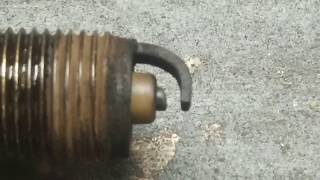
How to confirm: After confirming the coil is good, remove the spark plug from cylinder 6. Inspect it for a worn-down center electrode, heavy carbon buildup, oil, or coolant fouling (a whitish-pink residue). The recommended gap is 0.043" (1.1mm).
Typical fix: Replace the spark plug. It is highly recommended to replace all 8 spark plugs at the same time with the specified Denso or NGK Iridium plugs to ensure consistent performance and avoid repeated labor.
Est. part cost: $8-$15 per plug - Failed Fuel Injector ⚪ Low Probability Denso injectors used by Toyota are very reliable, but can become clogged with debris or fail electrically after 200,000+ miles. This is much less common than an ignition issue.
How to confirm: Listen to the injector with a mechanic's stethoscope; it should have a regular, audible clicking sound. Compare it to an adjacent injector. A more definitive test is to swap the injector with another cylinder, but this is labor-intensive as it requires removing the fuel rail.
Typical fix: Replace the faulty fuel injector. If one injector fails due to age or contamination, it's often recommended to have the full set cleaned and flow-tested by a professional service.
Est. part cost: $100-$220 per injector
Rare But Worth Checking
- Vacuum Leak: A leak in a vacuum hose or the intake manifold gasket near cylinder 6 can lean out the air/fuel mixture and cause a misfire. This is less common for a single-cylinder misfire and would more likely cause a bank-wide lean code (like P0174).
- Low Engine Compression: Though very rare on the famously durable 2UZ-FE, a burnt valve, worn piston rings, or a leaking head gasket could cause a loss of compression, leading to a misfire. A forum user with a similar Toyota V6 (1GR-FE) noted a P0306 was caused by a known head gasket issue on that engine where coolant would leak into cylinder 6 on cold starts. A compression test is required for diagnosis.
- Damaged Wiring Harness: The plastic connectors for the ignition coil or fuel injector can become brittle with age and break when handled. Rodent damage is also a possibility. Inspect the wiring to cylinder 6 for any breaks, chafing, or a loose connection at the connector.
Diagnosis Steps

- Confirm the code P0306 with an OBD-II scanner. 🎬 Watch this step-by-step diagnosis of a Tundra misfire. Note and clear any other codes.
- Note if the Check Engine Light is solid or flashing. A flashing light indicates a severe, catalyst-damaging misfire; avoid driving.
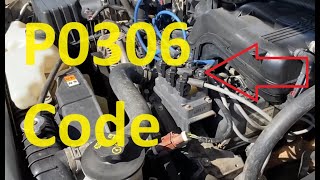
- Locate cylinder 6. On the 4.7L V8, it is the third cylinder from the front (radiator) on the passenger side.
- Swap the ignition coil from cylinder 6 with the coil from cylinder 4 (the cylinder in front of it on the same bank). This requires a 10mm socket.
- Clear the trouble codes with the scanner and start the engine. Let it idle or drive for a few minutes until the check engine light returns.
- Re-scan for codes. If the code is now P0304, the ignition coil is the problem. Replace the bad coil (now on cylinder 4) with a new Denso coil.
- If the code remains P0306, the coil is likely good. Turn off the engine and move the coil back to its original position. Now remove the coil from cylinder 6 again to access the spark plug.
- Using a 5/8" spark plug socket with an extension, remove and inspect the spark plug from cylinder 6. If it is worn, damaged, or fouled, replace it. It is best practice to replace all 8 plugs at once with Denso SK20R11 Iridium plugs. Torque new plugs to 13 ft-lbs. 🎬 Watch this walkthrough on how to replace your spark plugs.
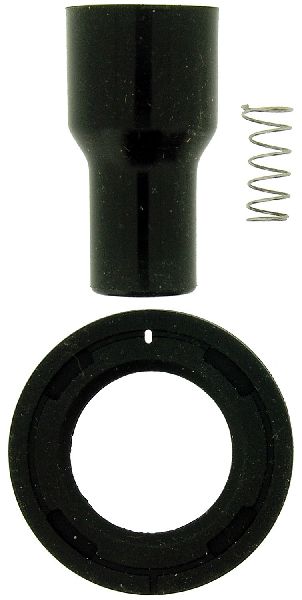
- When reinstalling the ignition coil, apply a small amount of dielectric grease to the inside of the boot to prevent moisture intrusion and ensure a good seal.
- If the plug and coil are confirmed good but P0306 returns, the next logical steps are to check the fuel injector wiring and listen to the injector itself with a stethoscope.
- If the injector seems fine, a professional diagnosis may be needed to check for vacuum leaks, wiring issues, or perform a compression test to check the mechanical health of the engine.
Parts You'll Likely Need

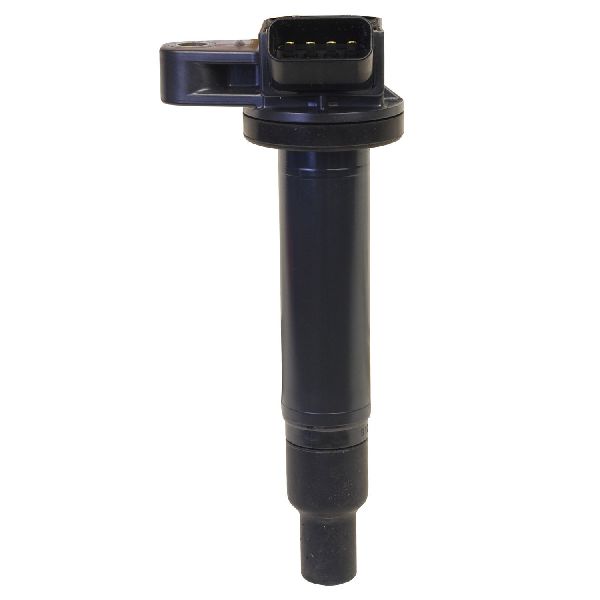
- Ignition Coil
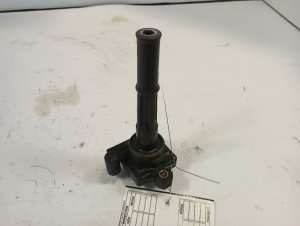
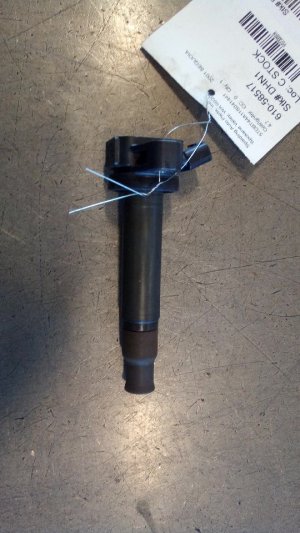
(OEM #90919-02230)— This is the most common failure item for a single-cylinder misfire on the 2UZ-FE engine. Aftermarket equivalent is Denso 673-1303.
Trusted brands: Denso (OEM), NGK
OEM price range: $90-$127
Aftermarket price range: $40-$80 - Spark Plug
(OEM #SK20R11)— A worn or fouled spark plug is the second most likely cause. They are a routine maintenance item, typically replaced every 80-100k miles.
Trusted brands: Denso (OEM), NGK
OEM price range: $10-$15
Aftermarket price range: $5-$10 - Fuel Injector
(OEM #23209-50040)— If the ignition system checks out, a clogged or failed fuel injector is the next logical component to investigate. Much less common than ignition parts.
Trusted brands: Denso (OEM), Aisin
OEM price range: $180-$220
Aftermarket price range: $50-$120
Related Codes That Often Appear With This One
- P0300 — If the misfire is intermittent or other cylinders begin to misfire, a P0300 (Random Misfire Detected) code may appear alongside P0306.
- P0302, P0304, P0308 — If multiple ignition coils or spark plugs are failing around the same time, you may see misfire codes for other cylinders as well. The even-numbered cylinders (2, 4, 6, 8) are all on the passenger side bank.
Technical Service Bulletins (TSBs) & Recalls
- No specific Technical Service Bulletins (TSBs) from Toyota were found that directly address a single-cylinder misfire code P0306 on the 2000-2006 Tundra. The diagnostic path is considered standard procedure.
- Manufacturer TSB Bulletin #T-SB-0148-19 for other Toyota models (Highlander) confirms that P0306 is a specific cylinder 6 misfire detection that requires following a specific repair procedure to address the condition.
Platform-Specific Known Issues
- Component Reliability and OEM Preference: The 2UZ-FE engine and its components are extremely durable, but owners and technicians on forums strongly advise against using non-OEM (Original Equipment Manufacturer) ignition coils. Many threads describe situations where cheap aftermarket coils fail quickly, causing the misfire to return and leading to more diagnostic time. Sticking with Denso-branded coils and spark plugs is the most reliable path to a lasting repair.
- Real-World Repair Story: A user on TundraTalk.net with a 2002 Sequoia (same 2UZ-FE engine) experienced a P0306 code along with other misfires on the same bank. After confirming the plugs were good, they swapped the cylinder 6 coil with cylinder 1 (across the engine) and the code followed, changing to P0301. This confirmed a bad coil was the root cause.
- VVT Gear Issues: While rare, an owner reported in NHTSA ODI #11228871 that a P0306 code, alongside P0300, P0302, and P0304, was caused by the three bolts holding the Variable-Valve Timing (VVT) gear to the intake cam coming loose.
Mechanic-Grade Diagnostic Values
- Fuel Pressure — expected: 265 - 304 kPa (38 - 44 psi) at idle. Failure: Pressure below 38 psi can indicate a weak fuel pump, clogged filter, or faulty regulator. Pressure should hold steady after the engine is shut off.
- Fuel Injector Resistance — expected: 13.4 - 14.2 Ω at 20°C (68°F) for non-VVT-i engines. Some sources state 11.6 - 12.4 Ω for similar Denso injectors.. Failure: A reading significantly outside this range, or an open circuit, indicates a failed injector coil. Resistance can vary slightly with temperature.
- Ignition Coil Primary Resistance (Non-VVT-i) — expected: 0.36 - 0.55 Ω (Cold). Failure: A reading outside this range indicates a faulty primary winding in the coil.
- Ignition Coil Secondary Resistance (Non-VVT-i) — expected: 9.0 - 15.4 kΩ (Cold). Failure: An open circuit (infinite resistance) or a reading outside this range points to a failure in the secondary winding.
- Ignition Coil IGT Signal (at ECU) — expected: Pulsing waveform on an oscilloscope during cranking or idle.. Failure: No signal or a flat line indicates a problem with the ECU or the wiring between the ECU and the igniter.
Hidden / Shadow Codes Worth Checking
- Mode $06, TID $53, SID $06: This refers to the raw misfire count data for cylinder #6. While not a 'code' in the traditional sense, it shows the number of misfire events detected by the ECU for that specific cylinder during the current and previous driving cycles. (see via A professional scan tool or an app like Torque Pro that can access OBD-II Mode $06 data. In Toyota's Techstream software, this is found under the 'Misfire' monitor details, listed as 'Misfire Rate' for the specific cylinder.)
Scan Tool Commands That Help
- Toyota Techstream: Active Test: Cylinder Power Balance / Fuel Cut — This function allows a technician to individually disable the fuel injector for each cylinder. If disabling cylinder 6 causes little or no drop in engine RPM compared to other cylinders, it confirms that cylinder 6 was not contributing power, pinpointing the misfire.
- Toyota Techstream: Active Test: Check the Cylinder Compression — This is a quick, non-invasive way to perform a relative compression test. The tool cranks the engine with fuel and ignition cut and measures the RPM variation for each cylinder. A cylinder with significantly different RPM during its compression stroke may have a mechanical issue (low compression).
- Toyota Techstream: Misfire Monitor Data — To view historical (EWMA) and current (Rate) misfire counts for each cylinder. This is more accurate than the live data list, especially for detecting intermittent misfires that occur under load, as it provides a snapshot of recorded events.
Wiring & Ground Locations
- EC / ED — Ground points located on the rear of the right (EC) and left (ED) cylinder heads.. The ignition coils and injectors are grounded through the engine harness, which ultimately relies on these main engine-to-chassis ground points. A loose or corroded ground at 'EC' (passenger side head) could potentially cause intermittent issues for the entire bank, including cylinder 6.
- Cylinder 6 Ignition Coil Connector — On the ignition coil for the third cylinder from the front on the passenger side.. Pin 1 is 12V+ power (Black/Red wire), Pin 4 is Ground (White/Black wire). The trigger signal (IGT6) from the ECU is on a different pin. Checking for 12V at Pin 1 with key-on is a critical diagnostic step.
- Cylinder 6 Fuel Injector Connector — On the fuel injector for the third cylinder from the front on the passenger side, under the intake manifold cover.. The ECU sends a ground pulse to fire the injector. One pin will have 12V+ with key-on, the other is the control wire from the ECU (e.g., terminal #60 on some ECU models). A break in this wire will disable the injector.
Documented NHTSA Reports
- Coolant Intrusion: NHTSA ODI #10820687 describes a P0306 code where a borescope video of the cylinder showed small amounts of coolant entering the cylinder. Similarly, NHTSA ODI #10816381 reports an engine running rough for a few seconds after start due to coolant seeping into the #6 cylinder.
- Multiple Misfire Diagnostics: An owner reported in NHTSA ODI #11534554 that a service department diagnosed P0300, P0301, P0302, P0303, and P0306 misfire codes, which were accompanied by codes P1603 (engine stalls), P1604 (stability malfunction), and P1605 (rough idle).
Real Owner Repair Stories
- TundraTalk.net Forum User (2002 Toyota Sequoia 4.7L 2UZ-FE) — P0306 along with other misfires on the same bank (P0302, P0304, P0308).
❌ Tried (didn't work) Initial inspection of spark plugs showed they were okay.
✅ What actually fixed it The owner swapped the ignition coil from cylinder 6 with the coil from cylinder 1 (on the opposite bank). The misfire code changed to P0301, confirming the ignition coil was the faulty component. Replacing the coil resolved the issue. - Toyota Tundra Forum User (2006 Toyota Tundra 4.7L V8, 160k miles) — Multiple misfire codes including P0300, P0306, P0307, P0308. Rough running, white smoke with sulfur smell.
❌ Tried (didn't work) Professionally cleaned fuel injectors, all new spark plugs, all new ignition coils.
✅ What actually fixed it The owner discovered a foreign object (a bolt) had fallen into the intake manifold runner for cylinder #7 during a previous repair. Although the primary code was not P0306, this demonstrates how a foreign object can cause multiple, difficult-to-diagnose misfires on this engine. The fix was to remove the object from the intake.
OEM Part Supersession History
90919-02230→This part number is still the current valid OEM number for many applications in this year range.— N/A
Heads up: This part is specified for the non-VVT-i (2000-2004) and early VVT-i (2005+) 2UZ-FE engines. While physically similar, later model year engines may have different coil specifications. Always verify fitment with the vehicle's VIN.
Model Year Variations Within This Range
- 2005-2006: For the 2005 model year, the 2UZ-FE engine was updated with Variable Valve Timing with intelligence (VVT-i). This added oil control valves (OCVs), different cylinder heads, camshafts, and a new ECU. While a faulty OCV typically causes bank-wide timing codes (e.g., P0022), a severe malfunction could theoretically contribute to misfires on one bank. The diagnostic process for a 2005-2006 model should consider the VVT-i system as a potential, albeit rare, factor.
- 2000-2004 vs 2005-2006: The block casting itself has minor differences. The oil passages for the VVT-i system exist in the non-VVT-i blocks but were not drilled out from the factory. This is critical information for anyone considering swapping heads or blocks between the early and late engine versions.
Diagnostic Flowchart
Real Owner Stories
Aggregated from forums and TSBs cited above. Mileages and costs reflect what owners reported in those sources.
2002 Toyota Sequoia 2UZ-FE 4.7L V8
Symptoms: Experienced a P0306 code along with other misfires on the same bank.
What fixed it: Confirmed a bad coil was the root cause by swapping the cylinder 6 coil with cylinder 1 (across the engine), which caused the code to follow the coil and change to P0301.
Source hint: TundraTalk.net forum user cited in Vehicle Specific Issues
2005 Toyota Tundra 2UZ-FE 4.7L V8
Symptoms: Chasing a persistent P0306 misfire code.
What fixed it: Initially replaced plugs and coils; forum discussion pointed towards potential injector or head gasket issues requiring further diagnosis.
Source hint: Tundras.com thread titled 'P0306!!'
Lexus LX470 2UZ-FE 4.7L V8
Symptoms: Experienced a recurring P0306 misfire even after replacing the spark plugs and ignition coil.
What fixed it: Forum members suggested performing a compression check to diagnose potential head gasket issues as the root cause.
Source hint: IH8MUD.com thread titled 'P0306 - Cylinder 6 misfire'
Gen 1 Toyota Tundra 2UZ-FE 4.7L V8
Symptoms: Complex misfire issue across multiple cylinders (6, 7, and 8) after a previous repair.
What fixed it: Diagnostic process highlighted the importance of checking for foreign objects in the cylinders or intake.
Source hint: Tundras.com thread titled 'Gen 1 V8 Misfire P0300, P0306, 7 and 8'
Related OBD-II Codes
Frequently Asked Questions
Where is cylinder 6 located on the 2000-2006 Tundra 4.7L V8?
Are there any specific Toyota TSBs for the P0306 code on this generation Tundra?
What brand of ignition coils should I use to replace a failed one on my 2UZ-FE?
What is the correct spark plug gap and torque spec for the 4.7L V8 Tundra?
How can I easily test if the ignition coil on cylinder 6 is bad?
Should I replace all 8 spark plugs if only cylinder 6 is misfiring?
Helpful Videos


Used OEM Parts in Stock


New Aftermarket Parts Available


The information in this article is provided for general reference and educational purposes only. Vehicle specifications, procedures, and part compatibility can vary by production date, trim level, and region. Always consult your vehicle's factory service manual and verify part numbers before purchasing or performing repairs. Safety-critical components such as airbags, seat belts, and braking systems should be installed by a qualified professional.
- Toyota Tundra:
- 🎬 Helpful Videos
- 🛍️ Shop This Part
- What's Unique About the 2000-2006 Toyota Tundra
- Symptoms You May Notice
- Most Likely Causes
- Rare But Worth Checking
- Diagnosis Steps
- Parts You'll Likely Need
- Related Codes That Often Appear With This One
- Technical Service Bulletins (TSBs) & Recalls
- Platform-Specific Known Issues
- Mechanic-Grade Diagnostic Values
- Hidden / Shadow Codes Worth Checking
- Scan Tool Commands That Help
- Wiring & Ground Locations
- Documented NHTSA Reports
- Real Owner Repair Stories
- OEM Part Supersession History
- Model Year Variations Within This Range
- Diagnostic Flowchart
- Real Owner Stories
- 2002 Toyota Sequoia 2UZ-FE 4.7L V8
- 2005 Toyota Tundra 2UZ-FE 4.7L V8
- Lexus LX470 2UZ-FE 4.7L V8
- Gen 1 Toyota Tundra 2UZ-FE 4.7L V8
- Related OBD-II Codes
- Frequently Asked Questions
- 🎟️ Get 5% Off