

P0306 on 1997-2004 Porsche Boxster: Cylinder 6 Misfire Causes and Fixes
On a 1997-2004 Porsche Boxster, code P0306 is most often caused by a failed ignition coil or a worn spark plug on cylinder 6. Cylinder 6 is located on the driver's side (LHD), closest to the rear bumper. A leaking spark plug tube O-ring that allows oil to foul the plug and coil is also a very common cause. Expect to pay $50-$100 for a new coil and plug.
- P0306 on a Boxster means cylinder 6 is misfiring.
- The most likely cause is a bad ignition coil or spark plug, often complicated by an oil leak from a failed spark plug tube seal.
- Start your diagnosis by swapping the cylinder 6 coil with another cylinder to see if the misfire code follows the coil.
- If the Check Engine Light is flashing, stop driving immediately to prevent expensive damage to the catalytic converter.
- While rare, a persistent P0306 after fixing ignition/fuel issues could indicate a more serious mechanical problem like bore scoring.
What's Unique About the 1997-2004 Porsche Boxster
The M96 flat-six engine in the 986-generation Boxster is known for specific issues that lead to misfires. Ignition coils are prone to developing cracks from heat and age, and the spark plug tubes have seals that can fail, allowing engine oil to leak into the tube. This oil can damage the ignition coil and foul the spark plug, causing a misfire. Cylinder 6 is on the US driver's side, closest to the rear of the car. While a simple ignition component is the most likely cause, any P0306 code on an M96 engine warrants a closer look, as it can, in rare cases, be an early symptom of a more serious issue like cylinder bore scoring, which is known to sometimes affect cylinder 6.
Symptoms You May Notice
- Rough or vibrating idle
- Hesitation or stumbling during acceleration
- Loss of engine power
- Flashing or solid Check Engine Light
- Popping or sputtering sounds from the exhaust
- Engine shaking or feeling unbalanced
- Replacing only the spark plug when the spark plug tube is full of oil. The new plug will quickly become fouled, and the oil will damage the new ignition coil.
- Replacing the Mass Airflow (MAF) sensor. While a faulty MAF can cause misfires, it typically affects multiple cylinders or an entire bank (P0300) and often throws its own codes, rather than a single cylinder like P0306.
- Assuming a new coil or plug is good. It's possible for new parts to be faulty, which is why swapping components to a different cylinder is a crucial diagnostic step.
Most Likely Causes
- Failed Ignition Coil 🔴 High Probability The ignition coils on the M96 engine are a well-documented failure point. They are subject to intense heat cycles which can cause the plastic housings to crack, allowing spark to arc to the cylinder head instead of the spark plug. Many owners consider them a wear item to be replaced proactively.
How to confirm: Swap the ignition coil from cylinder 6 with an adjacent cylinder (e.g., cylinder 5). Clear the codes and drive the car. If the code changes to P0305, the coil is faulty. Also, visually inspect the removed coil for fine cracks or white/carbon traces.
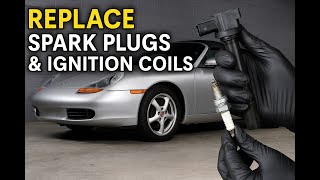
Typical fix: Replace the failed ignition coil. Many owners choose to replace all three coils on that bank (Bank 2: cylinders 4-5-6) or all six at the same time as a preventative measure. 🎬 See how to replace your Boxster's coils and plugs. Use the updated coil design if available.
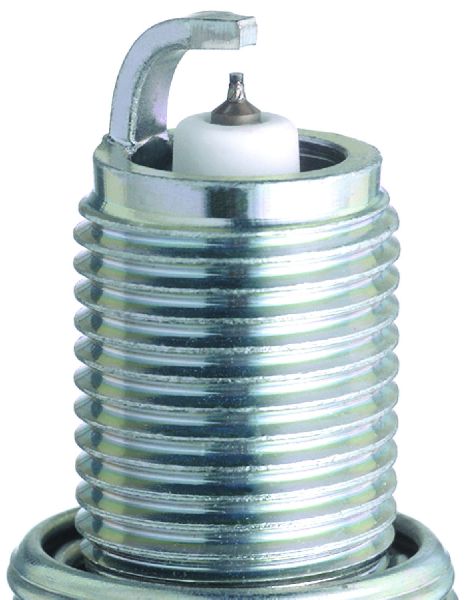
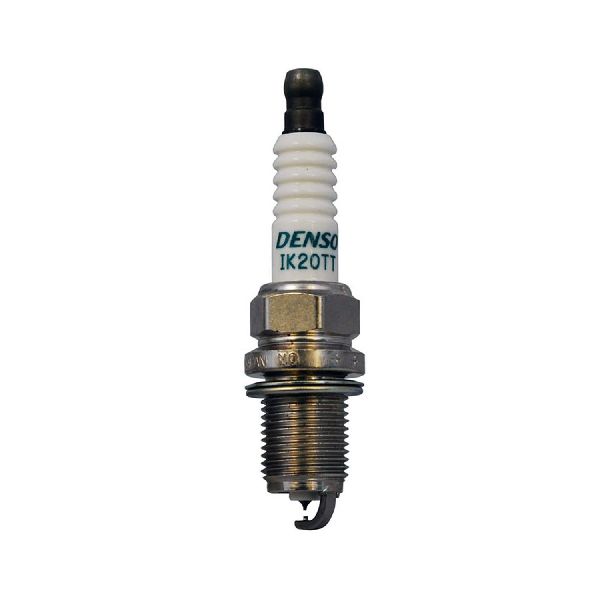
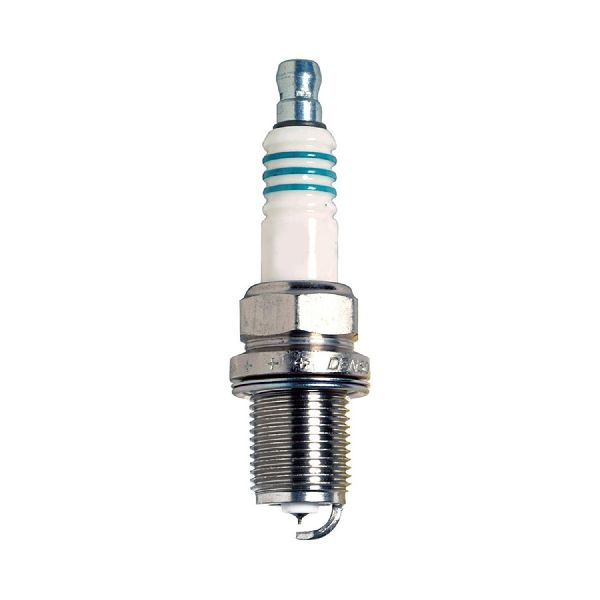
Est. part cost: $50-$90 - Worn or Fouled Spark Plug 🔴 High Probability Spark plugs are a regular maintenance item with a defined service life. More specific to the M96, oil from a leaking spark plug tube can foul the plug, causing a misfire. A plug can also fail internally, breaking down under load at higher RPMs.
How to confirm: After confirming the coil is good, remove the spark plug from cylinder 6. Inspect for wear (worn electrode), damage (cracked porcelain), or fouling from oil (wet and black) or carbon (dry and sooty).
Typical fix: Replace the spark plug. If oil is present, the spark plug tube and its seals must also be replaced to prevent a repeat failure. It is best practice to replace all six spark plugs at once to maintain consistent performance.
Est. part cost: $10-$25 - Leaking Spark Plug Tube & O-Rings 🟡 Medium Probability This is one of the most common oil leaks on the 986 Boxster. The plastic tubes and their rubber O-rings become brittle from age and heat, losing their seal and allowing engine oil to fill the spark plug well. This oil saturates and ruins the ignition coil boot and fouls the spark plug.
How to confirm: When removing the ignition coil for cylinder 6, check for the presence of liquid engine oil in the tube and on the coil boot.
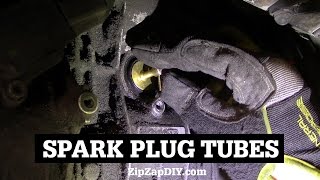
Typical fix: The old tube must be pulled out. A 1-inch boat transom drain plug is a commonly used tool by DIYers for this. 🎬 Watch a walkthrough on replacing leaking spark plug tubes. Replace the plastic tube and both of its O-rings. It is critical to address this leak before or during the replacement of the coil and plug.
Est. part cost: $15-$30 - Clogged or Failed Fuel Injector ⚪ Low Probability
How to confirm: If ignition components are confirmed to be good, the fuel injector is a possible suspect. A loose electrical connector to the injector can also cause this. A professional can test the injector's flow rate. The DIY method is to swap the injector with another cylinder to see if the misfire follows, but this is more labor-intensive than an ignition coil swap.
Typical fix: Replace the faulty fuel injector. It's often recommended to have all injectors professionally cleaned and balanced at the same time for optimal performance. Always replace the injector O-rings when servicing.
Est. part cost: $70-$150
Rare But Worth Checking
- Cylinder Bore Scoring: This is a serious and expensive internal engine problem known to affect M96 engines, sometimes starting on Bank 2 (cylinders 4-6). Symptoms include a ticking or 'piston slap' noise, increased oil consumption, and a sooty left-side exhaust tip. A borescope inspection through the spark plug hole is required for diagnosis.
- Vacuum Leak: A cracked hose, a failed Air-Oil Separator (AOS), or a failed intake manifold gasket near cylinder 6 can lean out the air-fuel mixture and cause a misfire. A smoke test is the best way to diagnose this. A failing AOS often causes a large cloud of white smoke on startup and a strong vacuum at the oil filler cap when the engine is running.
- Low Engine Compression: A mechanical issue like a burnt valve, worn piston rings, or a failing valve lifter can cause a loss of compression, leading to a persistent misfire. A compression test and leak-down test will confirm this.
- Variocam Solenoid/Actuator Failure: A failing Variocam solenoid or actuator on Bank 2 can cause timing-related misfires across that entire bank (P0304, P0305, P0306). This may manifest as a misfire only at a specific RPM range, for example, around 2,700-3,000 RPM when the system is supposed to activate.
Diagnosis Steps
- Read the trouble codes with an OBD-II scanner to confirm P0306 and any other related codes. 🎬 Watch this guide on diagnosing P0301-P0306 misfire codes.
- Note the cylinder location: Bank 1 is cylinders 1-2-3 (US passenger side), Bank 2 is cylinders 4-5-6 (US driver's side). Cylinder 6 is at the rearmost position on the driver's side.
- Visually inspect the wiring and connector for the cylinder 6 ignition coil for any damage or loose connections. Ensure the connector is fully seated and 'clicks' into place.
- Swap the ignition coil from cylinder 6 with the coil from cylinder 5. Clear the codes, run the engine, and re-scan. If the code is now P0305, the ignition coil is bad and needs replacement.
- If the misfire remains on cylinder 6, remove the ignition coil and check for oil inside the spark plug tube. If oil is present, the tube and its seals must be replaced.
- Remove the spark plug from cylinder 6. Inspect its condition for wear, fouling, or damage. Replace as needed. It's best practice to replace all six.
- If the misfire persists with a new plug and coil (and no oil leaks), the next step is to suspect the fuel injector. A loose electrical connector is a possibility. Swapping the injector to another cylinder is a valid test but is more involved.
- If ignition and fuel components check out, perform a compression test and a leak-down test on cylinder 6 to rule out mechanical engine problems.
- As a final, worst-case scenario check, use a borescope to inspect the cylinder wall for scoring.
Parts You'll Likely Need
- Ignition Coil
(OEM #997-602-104-06 (latest revision, supersedes earlier numbers like 996-602-104-00))— This is the most common failure part for a single-cylinder misfire on the M96 engine due to a tendency to crack from heat.
Trusted brands: Bosch, Beru
OEM price range: $70-$100
Aftermarket price range: $45-$70 - Spark Plug
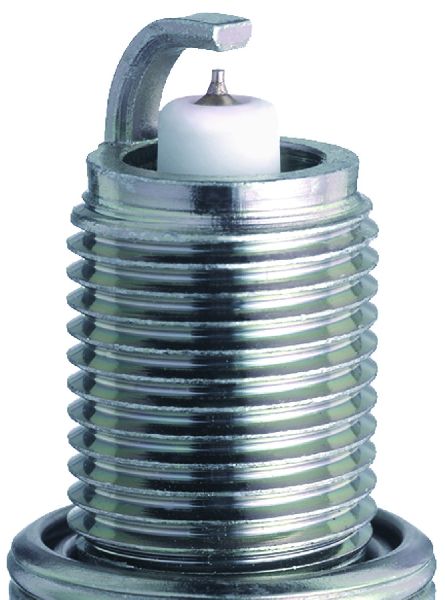
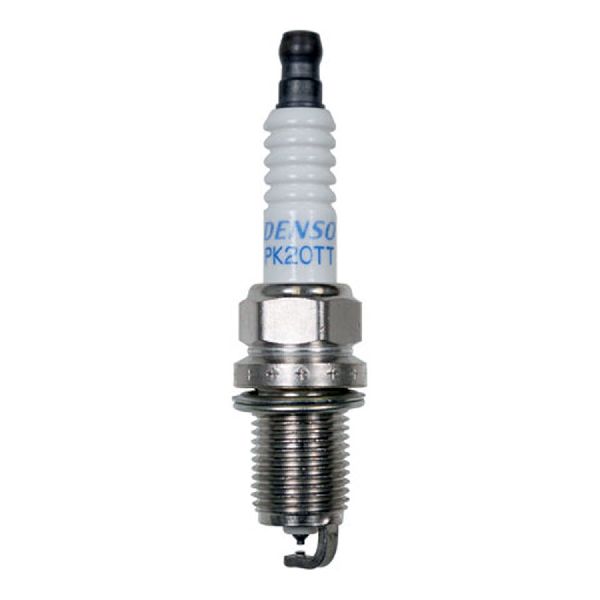
(OEM #999-170-224-90 (Bosch FR6LDC+ or NGK BKR6EKU))— A standard wear item that is often replaced along with the ignition coil. It can also be fouled by oil from a leaking tube seal.
Trusted brands: Bosch, NGK
OEM price range: $15-$25
Aftermarket price range: $8-$15 - Spark Plug Tube
(OEM #996-105-325-52)— Required if oil is found in the spark plug well. The leaking oil will ruin the new plug and coil if not addressed. Note that new O-rings are often sold separately.
Trusted brands: Porsche (OEM), URO Parts
OEM price range: $20-$30
Aftermarket price range: $10-$15
Related Codes That Often Appear With This One
- P0300 — This is a code for 'Random/Multiple Cylinder Misfire'. It may appear alongside P0306 if the misfire is intermittent, severe, or starting to affect other cylinders.
- P0304, P0305 — These codes indicate misfires on cylinders 4 and 5, which are on the same bank as cylinder 6 (Bank 2). Seeing all three codes together (P0304, P0305, P0306) strongly points to a problem affecting the entire bank, such as a failing catalytic converter, a major vacuum leak on that side, a bad Bank 2 oxygen sensor, or a Variocam solenoid issue.
Platform-Specific Known Issues
- The M96 engines used in 1997-2004 Boxsters are known for ignition coil failures and spark plug tube oil leaks, making these the primary suspects for a P0306 code.
- While less common on the 2.7L and 3.2L Boxster engines compared to the larger 3.4L/3.6L/3.8L 911 engines, cylinder bore scoring is a known M96 engine issue. A persistent P0306 after addressing ignition and fuel systems could be an early warning sign.
- A special tool, often cited as a 1-inch expandable boat drain plug, is commonly used by DIYers to extract the spark plug tubes from the cylinder head.
Mechanic-Grade Diagnostic Values
- Fuel Pressure (at fuel rail test port) — expected: Engine Off (system primed): 3.8 ± 0.2 bar (~55 psi). Engine Idling: 3.3 ± 0.2 bar (~48 psi).. Failure: Significantly lower pressure indicates a weak fuel pump, clogged filter, or faulty regulator.
- Ignition Coil Primary Resistance — expected: ~0.4 to 0.7 Ohms (based on similar Bosch Motronic systems).. Failure: A reading of infinity (OL) indicates an open circuit. A reading near zero indicates a short. Any significant deviation from the expected range suggests a faulty coil.
- Ignition Coil Secondary Resistance — expected: ~5.0 to 8.7 kOhms (based on similar Bosch Motronic systems).. Failure: A reading of infinity (OL) indicates an open circuit. A reading far outside the specified range points to an internal coil failure.
- Fuel Injector Resistance (High-Impedance Type) — expected: Approximately 12.0 Ohms for common Bosch Gen 3 upgrades. Generally, 10-15 Ohms is a typical range for this type of injector.. Failure: A reading of infinity (OL) means the injector's internal coil is broken. A very low reading suggests a shorted coil. Compare the reading from cylinder 6 to a known good cylinder.
Hidden / Shadow Codes Worth Checking
- Misfire Counts (Mode 6 Data): While not a 'hidden code,' Porsche-specific scanners like the PIWIS or advanced tools like Durametric can display live misfire counts for each individual cylinder before they reach the threshold to trigger a CEL. This is invaluable for diagnosing intermittent misfires. (see via Use a Porsche-specific scan tool (PIWIS, Durametric) and navigate to the live data or actual values for the DME module. Look for parameters like 'misfire counter cylinder 1, 2, 3...')
Scan Tool Commands That Help
- PIWIS or Durametric: Actuator Tests / Component Activations — After confirming ignition is good, you can use this function to individually trigger the fuel injector for cylinder 6. You should hear a distinct 'click' if the injector is activating electronically. This can also be used to test the Variocam solenoid on Bank 2 if a bank-wide issue is suspected.
- PIWIS or Durametric: View Misfire Counters — Essential for diagnosing subtle or intermittent misfires. Watching the counters in real-time while driving under specific conditions (e.g., under load, at certain RPMs) can help pinpoint when the P0306 event is occurring, even if the CEL is not flashing.
Wiring & Ground Locations
- Main Engine Ground — A large ground strap typically connects the engine block or bell housing to the chassis in the engine bay.. A poor main engine ground can cause a host of erratic electronic issues, including weak spark and incorrect sensor readings, which can lead to misfires.
- Battery Compartment Ground Point — Located on the body inside the front trunk (frunk) battery compartment.. This is a primary chassis ground point. Corrosion here can affect the entire vehicle's electrical system.
- Driver's Footwell Ground Point — Located under the dashboard, adjacent to the main fuse panel. The carpeted trim piece around the fuse panel must be removed to see it.. This ground is used by multiple interior electronic modules. While less likely to cause a single cylinder misfire, a fault here can contribute to strange electrical behavior.
Real Owner Repair Stories
- 986forum.com user 'aczyzewski' (Porsche Boxster with 44k miles) — Intermittent flashing CEL for P0306, sometimes smooth running, sometimes rough.
❌ Tried (didn't work) Initial diagnosis pointed towards common coil/plug issues.
✅ What actually fixed it The owner removed all fuel injectors and had them professionally cleaned and calibrated. Upon reinstallation, they noted the electrical connector for the cylinder 6 injector had felt loose. Ensuring a tight connection on the cleaned injector resolved the P0306 code and the car ran 'like new'. - RennTech.org user 'timbo' (Porsche Boxster 986) — Engine ticking noise and a misfire code.
❌ Tried (didn't work) The owner initially suspected a serious internal issue like a noisy/failed hydraulic lifter.
✅ What actually fixed it While removing the coil pack to investigate, the owner discovered that the spark plug in the misfiring cylinder was loose. After tightening the spark plug to the correct torque, the ticking noise and the misfire were both resolved.
When the Usual Fixes Don't Work
- While the standard diagnostic path for a P0306 code correctly prioritizes swapping the ignition coil and spark plug, a confirmed repair story shows this is not always the cause. A persistent P0306 was ultimately traced to a loose electrical connector on the fuel injector for cylinder 6. This highlights the importance of physically checking the security of all relevant connectors before replacing parts.
- A ticking or tapping noise accompanying a misfire code on an M96 engine often leads to fears of severe mechanical damage like bore scoring or a failed lifter. However, a documented case shows these exact symptoms were caused by a simple loose spark plug. The noise was combustion escaping past the threads. This serves as a crucial reminder to check the simple, inexpensive possibilities before assuming the worst-case scenario.
OEM Part Supersession History
Bosch 0290150455 (pintle-style)→Bosch 0280155890 (4-hole disc)— The newer 4-hole design provides better fuel atomization for improved combustion efficiency compared to the older pintle-style injector.
Heads up: A further updated part, 0280156211, may exist but is rated for a different fuel pressure (300 kPa vs 400 kPa). Using the wrong injector can cause fuel trim issues. Always verify the part number and specs for your specific application.996.105.041.50→996.105.041.72— Suspected internal design update to the hydraulic lifter (tappet) to prevent it from jamming in the lifter body, which could cause a misfire.
Model Year Variations Within This Range
- 1997-1999: These early cars used a 2.5L engine with a cable-operated throttle and a Bosch DME M5.2.2 engine computer. This DME may require special tools/procedures for reprogramming compared to later versions.
- 2000-2002: Base engine size increased to 2.7L. All models switched to an electronic throttle ('E-Gas') and the Bosch Motronic ME7.2 DME. This change is significant for engine swaps and diagnostics, as the throttle and DME are not backward compatible with earlier cars.
- 2003-2004: The engine management system was updated again to Bosch Motronic ME7.8. This was necessary to control a more advanced, vane-cell type Variocam system. Engines and DMEs from this era are not plug-and-play with 1997-2002 models.
Diagnostic Flowchart
Real Owner Stories
Aggregated from forums and TSBs cited above. Mileages and costs reflect what owners reported in those sources.
Porsche Boxster — 44000 miles
Symptoms: CEL P0306 would flash intermittently then go steady. Sometimes runs smooth, other times has rough, misfire-like running.
What fixed it: The owner suspected a loose electrical clip on the #6 cylinder injector. They had the injectors cleaned and calibrated, replaced spark plugs, and re-secured the clip. The car ran 'like new' afterwards.
Source hint: 986forum.com - 'CEL (P0306) intermittent flash at start' (2014-01-11)
Porsche Boxster
Symptoms: Poor idle and popping or sputtering sounds coming from the exhaust.
What fixed it: Worked through diagnosing P0306 via a process of elimination of the ignition components.
Source hint: Rennlist - 'Diagnosing P0306' (2013-03-22)
Porsche 911 Carrera 996 (Shared M96 Engine)
Symptoms: P0306 misfire code that only triggered at high RPM under load.
What fixed it: Diagnosed as a spark plug/coil failing under specific high-load conditions.
Source hint: RennTech.org - 'P0306 problem' (2013-03-18)
Related OBD-II Codes
Frequently Asked Questions
Where exactly is cylinder 6 located on my Boxster's M96 engine?
Why is there oil on the ignition coil and spark plug when I pulled them out of cylinder 6?
How do I remove the leaking spark plug tube from the cylinder head?
Should I replace just the cylinder 6 ignition coil or all of them?
I've replaced the coil, plug, and tube, but P0306 is still there. What else could it be?
Can a bad ignition coil or spark plug cause P0306 only at high RPMs?
Helpful Videos
We Have This Part in Stock


The information in this article is provided for general reference and educational purposes only. Vehicle specifications, procedures, and part compatibility can vary by production date, trim level, and region. Always consult your vehicle's factory service manual and verify part numbers before purchasing or performing repairs. Safety-critical components such as airbags, seat belts, and braking systems should be installed by a qualified professional.
- Porsche Boxster:
- 🎬 Helpful Videos
- 🛍️ Shop This Part
- What's Unique About the 1997-2004 Porsche Boxster
- Symptoms You May Notice
- Most Likely Causes
- Rare But Worth Checking
- Diagnosis Steps
- Parts You'll Likely Need
- Related Codes That Often Appear With This One
- Platform-Specific Known Issues
- Mechanic-Grade Diagnostic Values
- Hidden / Shadow Codes Worth Checking
- Scan Tool Commands That Help
- Wiring & Ground Locations
- Real Owner Repair Stories
- When the Usual Fixes Don't Work
- OEM Part Supersession History
- Model Year Variations Within This Range
- Diagnostic Flowchart
- Real Owner Stories
- Porsche Boxster — 44000 miles
- Porsche Boxster
- Porsche 911 Carrera 996 (Shared M96 Engine)
- Related OBD-II Codes
- Frequently Asked Questions
- 🎟️ Get 5% Off