

P0305 on 2007-2015 Lincoln MKX: Cylinder 5 Misfire Causes and Fixes
P0305 indicates a misfire on cylinder #5. For the 3.5L and 3.7L V6 engines in the Lincoln MKX, the most common cause is a failed ignition coil or a worn spark plug. Both are a relatively easy and inexpensive DIY fix, especially since cylinder #5 is on the easy-to-access front bank of the engine.
- P0305 on a 2007-2015 Lincoln MKX means cylinder #5 is misfiring.
- The most likely cause is a bad ignition coil or a worn-out spark plug.
- Cylinder #5 is located in the front of the engine bay, making it easy to access for a DIY repair.
- A simple diagnostic test is to swap the ignition coil from cylinder #5 with a neighboring cylinder (like #4 or #6) and see if the trouble code follows the coil.
- Do not drive with a flashing Check Engine Light, as this can quickly cause expensive damage to the catalytic converter.
What's Unique About the 2007-2015 Lincoln MKX

The 3.5L and 3.7L Cyclone V6 engines used in the 2007-2015 Lincoln MKX are generally reliable, but a P0305 code is typically a straightforward ignition system issue. A key advantage for DIY repair is the location of cylinder #5. On these transverse-mounted engines, the cylinders are numbered 1-2-3 on the rear bank (near the firewall) and 4-5-6 on the front bank (near the radiator). Cylinder #5 is the middle cylinder in the front, making its ignition coil and spark plug much easier to access than the rear cylinders which require removing the intake manifold.
Generation note: The 2007-2015 range covers two versions of the first-generation Lincoln MKX. The 2007-2010 models used the 3.5L V6, while the 2011-2015 models received a facelift and the 3.7L V6. While the engines are different displacements, they are both from the Ford Cyclone family and share the same architecture, cylinder layout, and ignition system design. The common causes and diagnostic procedures for a P0305 code are nearly identical.
Symptoms You May Notice
- Rough or vibrating idle
- Hesitation or stumbling during acceleration
- Noticeable loss of engine power
- Flashing or solid Check Engine Light
- Potential smell of fuel from the exhaust
- Reduced fuel economy
- Replacing the catalytic converter when it has been damaged by a persistent misfire, without fixing the root cause of the misfire first.
- Replacing fuel system components before properly diagnosing a simple ignition coil or spark plug failure.
- Assuming a rough idle is a misfire when it could be a failing electronic throttle body, a separate common issue on this platform.
Most Likely Causes

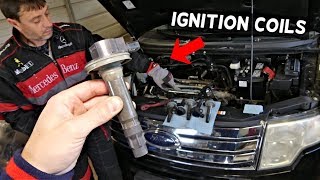
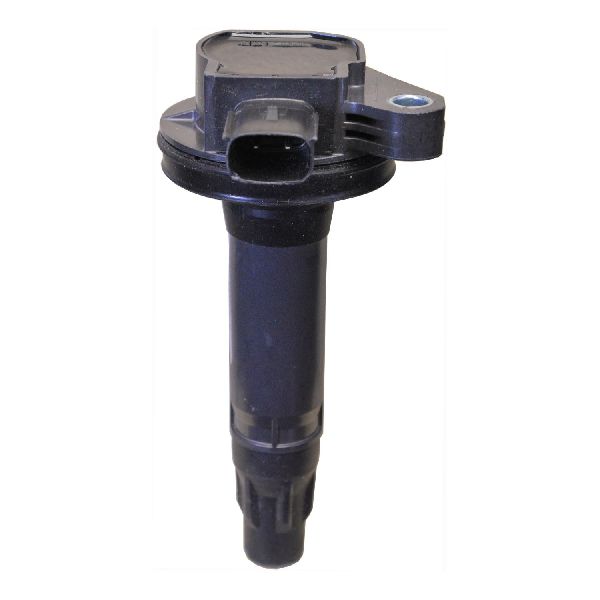
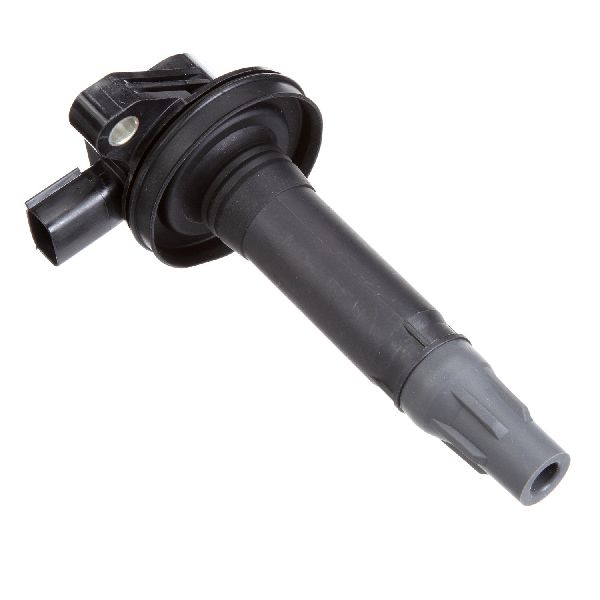
- Faulty Ignition Coil 🔴 High Probability Coil-on-plug ignition systems are a common failure point on most modern engines due to constant exposure to heat and vibration. The Motorcraft DG520 coils used on this engine are known to fail over time.
How to confirm: Swap the ignition coil from cylinder #5 with an adjacent cylinder (like #4 or #6). Clear the codes and drive the vehicle. If the code changes to P0304 or P0306, the ignition coil is faulty.
Typical fix: Replace the failed ignition coil. It is best practice to replace the spark plug at the same time. Many owners recommend replacing all three front coils at once due to the ease of access.
Est. part cost: $40-$90 per coil (Motorcraft) - Worn or Fouled Spark Plug 🔴 High Probability Spark plugs are a regular maintenance item with a service life of around 100,000 miles. If they are past their service life, the electrode can wear down, or they can become fouled with carbon or oil, preventing a strong spark.
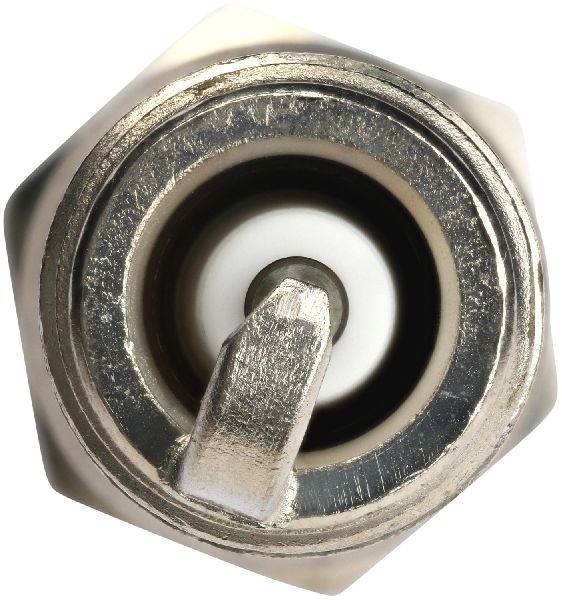
How to confirm: After testing the ignition coil, remove the spark plug from cylinder #5. Inspect it for a worn electrode, carbon buildup, oil fouling, or a cracked insulator. The spark plug gap should be between 1.25mm and 1.35mm (0.049-0.053 in).
Typical fix: Replace the spark plug. If one is worn, it's often recommended to replace all six, especially if they are near the end of their service interval. The rear plugs are labor-intensive, 🎬 See this step-by-step guide for replacing all six spark plugs so this is often done at the same time.
Est. part cost: $10-$20 per plug - Faulty Fuel Injector ⚪ Low Probability While less common than ignition issues, fuel injectors can become clogged with deposits or fail electrically over time, preventing proper fuel delivery to the cylinder.
How to confirm: If the coil and plug are good, the injector is the next suspect. A noid light can test for an electrical signal at the injector harness. A more definitive but labor-intensive test is to swap the injector with an adjacent one (similar to the coil test).
Typical fix: Replace the faulty fuel injector. This is more involved as it requires depressurizing the fuel rail.
Est. part cost: $55-$90
Rare But Worth Checking
- Vacuum Leak: A vacuum leak from a cracked hose or a faulty intake manifold gasket near the runner for cylinder #5 can lean out the mixture and cause a misfire. This would typically be accompanied by lean codes like P0171 or P0174.
- Low Engine Compression: This is a more serious mechanical issue, such as a worn piston ring, a burnt valve, or a head gasket failure. A compression test is required to diagnose this and should be performed if ignition and fuel system checks do not reveal the cause.
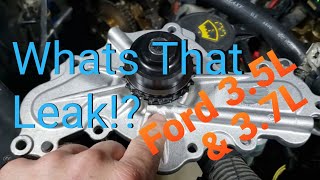
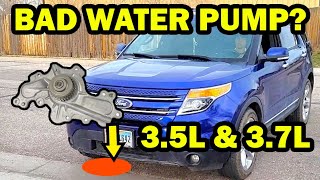
- Internal Water Pump Failure (Coolant Contamination): A catastrophic failure of the internal water pump can leak coolant into the crankcase. This contaminates the oil, leading to widespread engine damage, which can manifest as a misfire. Check the oil dipstick for a milky, 🎬 Watch: How to identify a failing internal water pump 'milkshake' appearance. This is a major, engine-destroying failure specific to this engine design.
Diagnosis Steps

- Read the trouble codes with an OBD-II scanner to confirm P0305 and note any other codes.
- Check the freeze frame data to see the engine conditions when the misfire was detected.
- Locate cylinder #5. On the 3.5L/3.7L V6, it is the middle cylinder on the bank closest to the radiator.
- Swap the ignition coil from cylinder #5 with the coil from cylinder #4 (the cylinder to its left).
- Clear the codes and test drive the vehicle. If the code returns as P0304, the ignition coil is bad and needs to be replaced.
- If the code remains P0305, swap the spark plug from cylinder #5 with cylinder #4. Clear codes and re-test. If the code is now P0304, the spark plug is the issue.
- If the code still remains P0305, check the oil for any signs of coolant contamination (milky appearance), which would indicate a severe internal water pump failure.
- If oil is clean, the problem is likely the fuel injector or a mechanical issue. Test the fuel injector circuit with a noid light or listen for its operation with a mechanic's stethoscope.
- If ignition and fuel systems appear to be working, perform a compression test on cylinder #5 to check for mechanical engine problems.
Parts You'll Likely Need

- Ignition Coil
(OEM #DG520 (Motorcraft))— This is the most common failure part for a single-cylinder misfire on the Cyclone V6 engine.
Trusted brands: Motorcraft, NGK, Denso, Duralast
OEM price range: $60-$90
Aftermarket price range: $40-$70 - Spark Plug
(OEM #SP-580 (Motorcraft, for 3.7L) / SP-534 (Motorcraft, for 3.5L))— Spark plugs are a routine wear item and a frequent cause of misfires. It's recommended to replace them with the ignition coil.
Trusted brands: Motorcraft, NGK, Bosch
OEM price range: $15-$25
Aftermarket price range: $10-$20
Related Codes That Often Appear With This One
- P0300 — If the misfire becomes more widespread or intermittent, a P0300 (Random Misfire) code may appear alongside P0305.
- P0205 — This code for 'Injector Circuit / Open - Cylinder 5' points directly to an electrical fault with the fuel injector. If you see P0205 with P0305, the fuel injector is almost certainly the cause of the misfire.
- P0304, P0306 — Misfire codes for the other front-bank cylinders. It's not uncommon for multiple coils or plugs on the same bank to fail around the same time.
Technical Service Bulletins (TSBs) & Recalls
- TSB 13-8-1: Addresses intermittent misfires on the related 3.5L EcoBoost engine under specific humid conditions, not directly applicable to the naturally aspirated engine but shows manufacturer focus on misfire issues.
- TSB 14-0017: A later TSB for the 3.5L EcoBoost misfire, involving a PCM calibration.
- TSB 19-2243: While for the later 2.7L engine, this TSB shows a precedent for Ford linking misfire codes (P0305/P0306) to serious internal engine problems like faulty valve guides.
Platform-Specific Known Issues
- While not a direct cause of a simple P0305, owners must be aware of the internally-mounted, timing-chain-driven water pump. Its failure is a well-documented, high-cost repair that can destroy the engine by mixing coolant with oil. An early warning sign can be a coolant leak from a 'weep hole' below the alternator.
Mechanic-Grade Diagnostic Values
- Ignition Coil Primary Resistance — expected: 0.5 to 0.7 ohms. Failure: A reading significantly outside this range, especially an open circuit (infinite resistance) or a dead short (zero resistance), indicates a failed coil.
- Ignition Coil Secondary Resistance — expected: 5,500 to 10,000 ohms (5.5kΩ to 10kΩ). Failure: A reading outside this range indicates a failure in the secondary windings.
- Mode $06 Misfire Counts — expected: Near zero counts for cylinder 5 (Component ID will vary by specific tool, but will be labeled for Cyl 5).. Failure: A steadily increasing count of misfires for cylinder 5, even if a P0305 has not been set yet. This can confirm an intermittent issue.
- VCT Solenoid Internal Resistance — expected: 5.0 to 15.0 Ohms. A more precise range is often cited as 6.9 to 7.9 Ohms at 68°F (20°C).. Failure: A reading of 0 Ohms (short) or infinite/OL (open) indicates a failed solenoid. While not a primary cause of a single-cylinder misfire, a sticking VCT solenoid can cause rough running and misfires that may be isolated to one bank.
Hidden / Shadow Codes Worth Checking
- Mode $06, Test ID $A2-$AC, Component ID $01-$0C: Ford uses Mode $06 to store non-continuous monitor test results, including misfire counts per cylinder. Before a P030x code is officially triggered, the raw misfire count for each cylinder can be viewed here. For a 6-cylinder, the Test ID for misfires is often $A2, with Component IDs $01 through $06 representing each cylinder. Cylinder 5 would be Component ID $05. These values can vary slightly by model year and software. (see via A professional scan tool or an advanced OBD-II app like FORScan that can access and interpret Mode $06 data.)
Scan Tool Commands That Help
- Ford IDS, FORScan, or high-end Snap-on/Autel scanners: Power Balance Test — This is the definitive test to confirm a live misfire. The tool displays a real-time bar graph of the power contribution from each cylinder. A cylinder with a P0305 code will show a significant, consistent drop on the graph compared to the others. It's invaluable for confirming the misfire is real and currently happening, especially for intermittent issues.
- Ford IDS or equivalent: VCT Solenoid On/Off Cycle Test — If a rough idle accompanies the P0305 and you suspect an oiling or VCT issue, this bidirectional command manually cycles the VCT solenoids. If cycling the solenoid temporarily smooths the idle, it points to a sticking solenoid, possibly due to debris or oil sludge, which could be a contributing factor to poor performance and misfires on that bank.
Wiring & Ground Locations
- Cylinder 5 Ignition Coil Connector — On the ignition coil for the middle cylinder on the front bank (closest to the radiator).. The PCM sends a ground signal to this connector to fire the coil. If the wiring is damaged or the connector is loose/corroded, it can cause a P0305. Check for battery voltage (approx. 12V) on the power supply wire with the key on, and check for a pulsing ground signal on the other wire with the engine running using a noid light or oscilloscope.
- Cylinder 5 Fuel Injector Connector — On the fuel injector for the middle cylinder on the front bank, below the ignition coil area on the intake manifold.. Similar to the coil, the PCM pulses the ground to this connector to operate the fuel injector. A wiring fault here will cause a fuel starvation misfire. A noid light is the best tool to quickly check for the presence of this pulse.
- Main Engine Harness Grounds (e.g., G104, G105) — Typically located on the firewall or inner fenders in the engine bay.. While not specific to one cylinder, a poor main engine ground can introduce electrical noise and resistance, leading to weak spark, inconsistent injector performance, and other phantom electronic issues that could manifest as an intermittent misfire.
Real Owner Repair Stories
- Ford Truck Enthusiasts Forums (2005 Ford F-150 5.4L (similar ignition system logic)) — P0305 code and loss of power only during hard acceleration on the highway.
❌ Tried (didn't work) Swapped spark plug from cylinder 5 to 6, Swapped ignition coil from cylinder 5 to 6, Swapped fuel injector from cylinder 5 to 6, Performed a compression test (which passed)
✅ What actually fixed it The problem was not a component but the signal to the components. The user was advised to check the electrical signal (pulse) to the #5 coil and injector using a noid light or oscilloscope, as the next logical step was a wiring fault or a failing PCM driver for that cylinder. - YouTube - Auto Repair Guys (Lincoln MKX / Ford Edge (3.5L)) — Constant misfire on one cylinder, rough idle, vibration.
❌ Tried (didn't work) Replacing the spark plug on the affected cylinder, Replacing the ignition coil with a new one, Swapping coils with a known-good cylinder
✅ What actually fixed it The Powertrain Control Module (PCM/ECU) had a failed internal ignition coil driver for that specific cylinder. The computer was sent out for repair, where the faulty chip was replaced. After reinstalling the repaired ECU, the misfire was resolved. This is a rare but critical diagnosis when all common parts have been replaced and the misfire persists on the same cylinder.
OEM Part Supersession History
7T4Z-12029-E→DG520— Standard part number evolution and branding. DG520 is the common service part number for the coil specified by 7T4Z12029E.
Model Year Variations Within This Range
- 2007-2010: These models used the 3.5L Cyclone V6. The OEM spark plug is typically Motorcraft SP-534.
- 2011-2015: These models used the updated 3.7L Cyclone V6, which has a larger displacement and slightly more power. The OEM spark plug is typically Motorcraft SP-580. While the ignition coils (DG520) are the same, diagnostic procedures and other engine components may have slight variations.
- 2008 and later: Unlike the 2007 model which had a Schrader valve test port on the fuel rail, 2008 and later models do not. Checking fuel pressure on these later models requires a special adapter to 'T' into the fuel line at the quick-connect fitting near the fuel rail.
Diagnostic Flowchart
Other Known Issues on This Vehicle
Issues unrelated to this code that are worth knowing about as an owner of this generation:
- Internal Timing-Chain-Driven Water Pump Failure 🔴 High — Considered an inevitable failure point, often occurring between 80,000 and 150,000 miles, but failures have been reported as early as 50,000 miles. When it fails, it can leak coolant internally into the engine oil, causing catastrophic engine damage with little warning.
- Electronic Throttle Body (ETB) Failure 🟠 Medium — Extremely common across the model years, causing the vehicle to suddenly enter a low-power 'limp mode'. The issue was so widespread that Ford issued multiple Customer Satisfaction Programs (e.g., 16B23, 16B32) and TSBs (e.g., 10-21-6) to address it. (Ref: CSP 16B23, TSB 10-21-6)
- Door Ajar Sensor Failure 🟡 Low — A very common annoyance where a faulty microswitch inside the door latch assembly reports a door is open when it is not. This prevents doors from locking, leaves interior lights on (draining the battery), and can cause the alarm to go off randomly. (Ref: Customer Satisfaction Program 19N09 (for front door))
Used vs. New Parts: Buying Guide for This Vehicle
When a used part is the smart pick: For this repair, used parts are generally not recommended. The primary causes (ignition coils, spark plugs) are wear items that are inexpensive to buy new. A used fuel injector could be considered if it is from a low-mileage donor and you have the ability to clean and test it before installation.
Donor-vehicle mileage cap: roughly under 50000 miles for the part to have meaningful remaining life.
What to inspect on the donor part:
- For a fuel injector, check for any signs of rust, corrosion, or damage to the electrical connector.
- Ensure the O-rings are intact, though they should always be replaced before installation.
- Avoid parts from engines that show signs of heavy sludge or coolant contamination.
OEM-only on this vehicle (don't cheap out):
- While not a direct cause, if the internal water pump needs replacement, using an OEM Motorcraft pump is highly recommended by the community due to the catastrophic consequences of a repeat failure.
Aftermarket brands forum-validated for this vehicle:
- Ignition Coils: Motorcraft (OEM), NGK, Denso.
- Spark Plugs: Motorcraft (OEM), NGK, Bosch.
Brands owners have reported issues with on this vehicle:
- Unnamed, no-brand ignition coils from online marketplaces. While cheap, they have a very high failure rate and can cause more diagnostic headaches.
Real Owner Stories
Aggregated from forums and TSBs cited above. Mileages and costs reflect what owners reported in those sources.
2011 Lincoln MKX 3.7L
Symptoms: The vehicle displayed an overheat warning which led to a total engine failure.
What fixed it: The failure was attributed to the internal water pump, a well-known issue on the 3.5/3.7 series engines.
Source hint: Ford Edge Forum - 'MKX Blown Engine'
2011 Lincoln MKX
Symptoms: Owner described a water pump failure, noting it as a known design flaw.
What fixed it: The source discusses the need for expensive repairs or engine replacement due to the internal water pump design.
Source hint: Reddit r/lincolnmotorco - '2011 Lincoln MKX - Water Pump Failure Issues'
2016 Lincoln MKX
Symptoms: Catastrophic engine failure due to the internal water pump design flaw.
What fixed it: Complete engine replacement.
Cost: $11,000-$11,000
Source hint: Reddit r/lincolnmotorco - '2011 Lincoln MKX - Water Pump Failure Issues'
Related OBD-II Codes
Frequently Asked Questions
Does TSB 13-8-1 or TSB 14-0017 apply to my 3.5L naturally aspirated Lincoln MKX?
Which ignition coils should I use for my MKX to fix a P0305 code?
I have a P0305 code; should I be worried about my water pump?
Where is cylinder #5 located on the 2007-2015 Lincoln MKX 3.5L/3.7L?
Is there a TSB that links misfire codes like P0305 to internal engine mechanical issues?
What is the correct spark plug gap for my 3.7L Lincoln MKX?
Helpful Videos
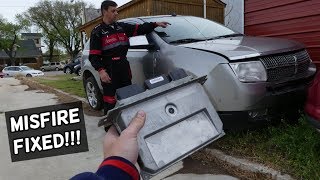
Used OEM Parts in Stock

New Aftermarket Parts Available


The information in this article is provided for general reference and educational purposes only. Vehicle specifications, procedures, and part compatibility can vary by production date, trim level, and region. Always consult your vehicle's factory service manual and verify part numbers before purchasing or performing repairs. Safety-critical components such as airbags, seat belts, and braking systems should be installed by a qualified professional.
- Lincoln MKX:
- 🎬 Helpful Videos
- 🛍️ Shop This Part
- What's Unique About the 2007-2015 Lincoln MKX
- Symptoms You May Notice
- Most Likely Causes
- Rare But Worth Checking
- Diagnosis Steps
- Parts You'll Likely Need
- Related Codes That Often Appear With This One
- Technical Service Bulletins (TSBs) & Recalls
- Platform-Specific Known Issues
- Mechanic-Grade Diagnostic Values
- Hidden / Shadow Codes Worth Checking
- Scan Tool Commands That Help
- Wiring & Ground Locations
- Real Owner Repair Stories
- OEM Part Supersession History
- Model Year Variations Within This Range
- Diagnostic Flowchart
- Other Known Issues on This Vehicle
- Used vs. New Parts: Buying Guide for This Vehicle
- Real Owner Stories
- 2011 Lincoln MKX 3.7L
- 2011 Lincoln MKX
- 2016 Lincoln MKX
- Related OBD-II Codes
- Frequently Asked Questions
- 🎟️ Get 5% Off