

P0305 on 2006-2010 Lexus IS 250: Cylinder 5 Misfire Causes and Fixes
P0305 on a 2006-2010 IS 250 is most often caused by severe carbon buildup on the intake valves and pistons, a known issue with its direct-injection engine. While you should check the ignition coil and spark plug first as they are common failure points, the ultimate fix is often a professional engine carbon cleaning service like walnut blasting. This issue was so prevalent that Lexus created a Customer Support Program (CSP) to address it.
- P0305 on a 2006-2010 IS 250 is a misfire on cylinder 5, which is located on the passenger side of the engine, closest to the firewall.
- The most likely cause is not a simple bad spark plug or coil, but rather significant carbon buildup on the intake valves, a known design issue with this engine.
- Always perform basic diagnostics first: swap the ignition coil and then the spark plug with a neighboring cylinder to rule them out.
- If the misfire code does not move, the next step is to have the engine inspected for carbon buildup, likely requiring a professional cleaning service (e.g., walnut blasting).
- Ignoring this code can lead to a damaged catalytic converter, a much more expensive repair.
What's Unique About the 2006-2010 Lexus IS 250
The 2006-2010 Lexus IS 250 is equipped with the 4GR-FSE engine, which uses a direct-injection fuel system. Unlike port-injection systems that spray fuel over the intake valves and naturally clean them, direct injection sprays fuel directly into the cylinder. This design, combined with the engine's PCV (Positive Crankcase Ventilation) system routing oil and combustion vapors back into the intake, allows these byproducts to bake onto the hot intake valves and piston tops. This leads to excessive carbon buildup, which can restrict airflow or cause valves to not seat properly, causing misfires. This buildup is the single most common cause of misfire codes like P0305 on this specific vehicle, an issue so prevalent that Lexus issued Technical Service Bulletins (TSBs) and a Customer Support Program (CSP), internally coded as ZLD, to address it.
Diagnostic Flowchart
Tap your situation to follow the diagnostic path that matches what you're seeing on this vehicle.
Symptoms You May Notice
- Rough or shaky idle, especially when the engine is warm or after coming to a stop in Drive.
- Hesitation or stumbling during acceleration.
- Flashing or solid Check Engine Light, 🎬 Watch: How to diagnose and fix common Lexus misfire codes. often accompanied by the VSC/traction control light.
- Noticeable loss of engine power.
- Poor fuel economy.
- A rotten egg or sulfur smell from the exhaust, indicating unburnt fuel entering the catalytic converter.
- Replacing only the ignition coil or spark plug without investigating the root cause. If significant carbon buildup is present, the new parts will soon become fouled, and the misfire will return.
- Assuming the issue is a simple tune-up without being aware of the platform-specific carbon buildup problem.
- Performing a chemical 'top clean' service (like Seafoam) and expecting it to solve heavy carbon deposits. While it may help slightly, it is not a substitute for mechanical cleaning like walnut blasting for this specific issue.
Most Likely Causes
- Carbon Buildup on Intake Valves and/or Pistons 🔴 High Probability The 4GR-FSE engine's direct-injection-only design does not wash the intake valves with fuel, leading to a high rate of carbon accumulation from the PCV system. This is a widely documented factory design issue that affects many early direct-injection engines across various manufacturers.
How to confirm: After ruling out ignition issues, a technician can use a borescope to visually inspect the intake valves and piston tops for heavy carbon deposits. A compression test may also show lower-than-normal readings on the affected cylinder due to valves not seating correctly.
Typical fix: Professional carbon cleaning is required. This is typically done by 'walnut blasting,' where crushed walnut shells are used to safely blast the carbon off the valves. Some owners opt for chemical or hydrogen cleaning services, though walnut blasting is considered more thorough. In severe cases 🎬 See how to walnut blast intake valves to remove carbon. covered by Lexus's expired warranty extension program (CSP ZLD), the fix involved replacing pistons and rings with an updated design.
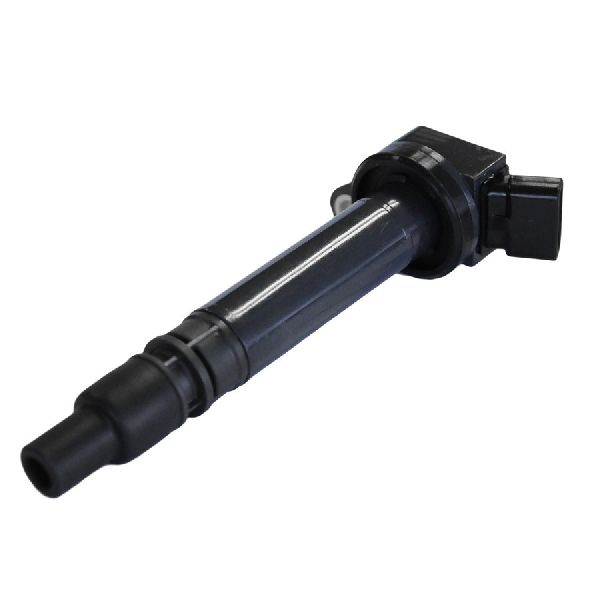
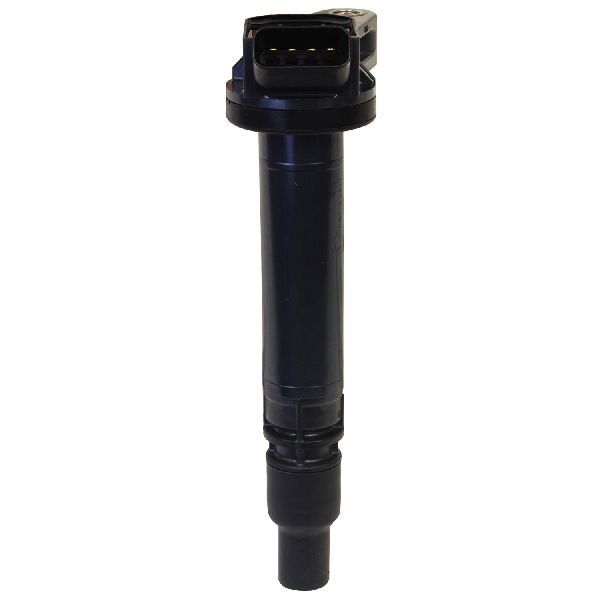
Est. part cost: $400-$1600 for a professional cleaning service. Forum users report quotes ranging from $500 to over $1500 depending on the shop and location. - Failed Ignition Coil 🟡 Medium Probability Ignition coils are a common wear-and-tear item on most modern vehicles. While OEM Denso coils are robust, they can fail with age and heat cycles.
How to confirm: Swap the ignition coil from cylinder 5 with another cylinder (e.g., cylinder 3, which is on the same easy-to-access bank). Clear the codes and drive the car. If the code changes to P0303, the ignition coil is faulty.
Typical fix: Replace the faulty ignition coil. It is often recommended to replace them as a set if they are original and high-mileage, though many owners successfully replace only the failed unit. Using OEM Denso coils is highly recommended as some aftermarket brands have high failure rates.
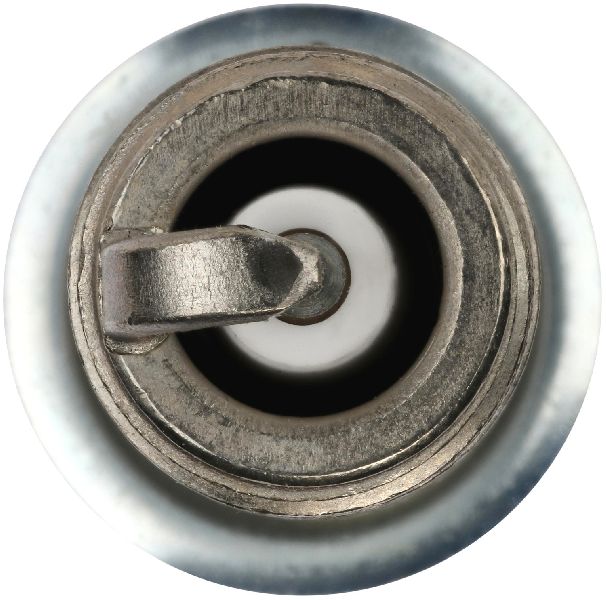
Est. part cost: $50-$150 per coil - Worn or Fouled Spark Plug 🟡 Medium Probability Spark plugs are a routine maintenance item. If the engine has a carbon or oil consumption issue, the plug in the affected cylinder can become fouled. Plugs should be replaced at regular intervals.
How to confirm: Remove the spark plug from cylinder 5 and inspect it. Look for heavy carbon deposits, oil fouling, or a worn electrode. You can also swap the plug with another cylinder to see if the misfire code follows.
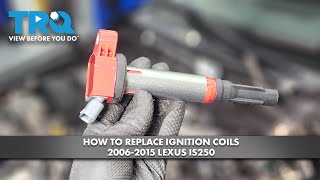
Typical fix: Replace the spark plug. It is best practice to replace all six spark plugs at the same time with high-quality Iridium plugs as specified by the manufacturer. 🎬 Watch this complete walkthrough for replacing spark plugs and coils.
Est. part cost: $15-$35 per plug
Rare But Worth Checking
- Clogged or Failed Fuel Injector: While less common than carbon buildup or ignition faults, a direct injector can become clogged or fail, preventing proper fueling of cylinder 5. In some forum-documented cases, a faulty injector was the root cause after ignition parts and carbon cleaning did not solve the issue.
- Vacuum Leak: A leak in the intake manifold gasket near cylinder 5 could lean out the air/fuel mixture and cause a misfire. This can be diagnosed by spraying brake cleaner or starter fluid near the intake manifold gaskets with the engine running and listening for a change in idle speed.
- Engine Mechanical Issues: In very rare cases, a persistent P0305 could be caused by more severe mechanical problems like low compression from worn piston rings or a burnt valve, issues that were sometimes addressed by the official Lexus piston and ring replacement program.
Diagnosis Steps
- Read the trouble codes with an OBD-II scanner to confirm P0305 and check for any other codes. Note if the check engine light is solid or flashing.
- Identify cylinder 5. On the 4GR-FSE V6, the passenger side bank (Bank 1) of cylinders is 1-3-5, from front (radiator) to back (firewall). Cylinder 5 is the one closest to the firewall on the passenger side.
- Swap the ignition coil from cylinder 5 with the coil from cylinder 3 (middle cylinder, same bank). This is the easiest diagnostic step. Clear the codes, run the engine, and see if the misfire code changes to P0303. If it does, the coil is bad.
- If the code remains P0305, swap the spark plug from cylinder 5 with the plug from cylinder 1 (front cylinder, same bank). If the code changes to P0301, the spark plug is bad.
- If the misfire remains on cylinder 5 after swapping the coil and plug, the problem is likely specific to that cylinder and not a simple ignition component. The next most likely cause is carbon buildup.
- Visually inspect the intake valves and piston for cylinder 5 using a borescope. Heavy, thick black deposits confirm the diagnosis. This is the definitive way to confirm carbon buildup.
- If a borescope is unavailable, a compression test can be performed. A low reading on cylinder 5 compared to the others points towards a mechanical issue, most likely related to poor valve seating due to carbon.
- If all else fails, consider a faulty fuel injector. This is harder to diagnose and may require a professional shop to test injector flow and spray pattern.
Parts You'll Likely Need
- Ignition Coil
(OEM #90919-02250)— A common failure point for misfires. It's a primary diagnostic step to swap or replace this part. OEM Denso is highly recommended over aftermarket alternatives.
Trusted brands: Denso (OEM), NGK, Delphi
OEM price range: $99
Aftermarket price range: $45-$90 - Iridium Spark Plug
(OEM #90919-01249 (Denso FK20HBR11))— A routine maintenance item and a potential cause of a misfire if worn or fouled by carbon.
Trusted brands: Denso (OEM), NGK
OEM price range: $15-$20
Aftermarket price range: $10-$18 - Intake Valve Cleaning Service — This is not a part, but a service to fix the most probable root cause of the misfire on this specific engine: carbon buildup. Costs can vary widely.
OEM price range: $800-$1600
Aftermarket price range: $500-$900
Related Codes That Often Appear With This One
- P0300 — This is a 'Random Misfire' code. It often appears alongside P0305 when the carbon buildup issue begins to affect multiple cylinders.
- P0301, P0302, P0303, P0304, P0306 — As the carbon problem is not isolated, it's common to see misfire codes for other cylinders appear at the same time or intermittently, especially P0301 and P0303 on the same bank. The provided TSBs list all cylinder misfire codes as related symptoms.
- P030x + VSC Light — On this vehicle, a check engine light for a misfire will almost always trigger the Vehicle Stability Control (VSC) light as a precaution, disabling traction and stability control systems.
Technical Service Bulletins (TSBs) & Recalls
- L-TT-0192-15: Notes that IS250 and GS300 vehicles may exhibit a MIL ON with DTCs P0300-P0306 and run rough intermittently, especially after stopping with the engine at operating temperature.
- L-SB-0029-10 & L-SB-0068-11: These TSBs are referenced by owners in forums as relating to the misfire and carbon buildup issue, outlining the repair procedure that dealers were to follow.
Platform-Specific Known Issues
- Carbon Buildup Warranty Enhancement/CSP (ZLD): Lexus acknowledged the carbon buildup problem by issuing a Customer Support Program (CSP) under the code ZLD. This extended the warranty coverage for this specific issue to 9 years with unlimited mileage. The program covered the cost of disassembling the engine to clean or replace the pistons and piston rings with redesigned parts. This program has since expired for all affected model years, but its existence confirms the widespread nature of the problem.
Mechanic-Grade Diagnostic Values
- Low-Pressure Fuel System at Idle — expected: 196 to 588 kPa (28 to 85 psi). Failure: Pressure lower than specified can indicate a weak in-tank fuel pump.
- High-Pressure Fuel System (via Techstream Data List) — expected: 3.5 to 4.5 MPa (508 to 653 psi). Failure: Pressure outside this range can indicate issues with the high-pressure fuel pump, sensor, or wiring.
- Ignition Coil Primary Resistance (Cold) — expected: Not specified for this modern coil-on-plug design; resistance checks are often inconclusive.. Failure: N/A - Swapping the coil to another cylinder is the preferred diagnostic method.
- Crankshaft Position Sensor Resistance (Cold) — expected: 1,630 - 2,740 Ω. Failure: Resistance outside this range can cause misfire detection issues.
Hidden / Shadow Codes Worth Checking
- Mode 6 Misfire Data (e.g., Monitor ID $A2, Component ID $0C): Provides raw misfire counts per cylinder for the current and last 10 driving cycles. This is extremely useful for identifying intermittent misfires that haven't yet triggered a CEL. (see via A professional scan tool like Toyota Techstream or an advanced OBD-II scanner with Mode 6 capability is required. In Techstream, this is found under the 'Monitor' screen.)
Scan Tool Commands That Help
- Toyota Techstream: Active Test: Power Balance — This test allows a technician to individually disable fuel injectors one by one while monitoring the RPM drop for each cylinder. If disabling cylinder 5 causes little or no change in RPM, it confirms that cylinder is not contributing power, helping to isolate the fault.
- Toyota Techstream: Data List: Misfire Count (EWMA / Rate) — To see a live count of misfires on each cylinder. The 'Rate' shows current misfires, while 'EWMA' (Exponentially Weighted Moving Average) shows a historical trend. This helps confirm if the misfire is active.
- Toyota Techstream: Utility: Reset Memory — After a repair (like carbon cleaning or injector replacement), this function should be used to clear all learned fuel trim and air-to-fuel ratio values, forcing the ECU to relearn with the new clean components.
Wiring & Ground Locations
- A1, A2, A3, A4, A5 — Located on the left rear and sides of the engine compartment.. These are the primary ground points for the engine assembly. A corroded or loose ground at these locations can cause erratic behavior in sensors and ignition components, leading to misfires.
- Ignition Coil Connector (Cylinder 5) — Passenger side of the engine, rearmost coil closest to the firewall.. This connector provides power and the trigger signal from the ECM to the coil. Technicians test for battery voltage on the power wire and check for a pulsed signal on the IGT (Ignition Timing) wire during cranking to verify wiring integrity.
Real Owner Repair Stories
- YouTube channel 'Tuner with Kids' (Lexus IS250 (specific year not mentioned, but same engine family)) — Engine making unbalanced sounds, sluggishness above 3,000 RPM, P0301 code (same diagnostic principle as P0305).
❌ Tried (didn't work) Initially suspected a bad ignition coil.
✅ What actually fixed it The spark plugs were found to be hand-tight and loose. After removing, cleaning, and properly tightening the spark plugs, the misfire count on the scan tool went to zero and the issue was resolved. - Reddit user in r/LexusIS (2010 Lexus IS250 AWD with 160k miles) — Severe idling issues, blinking check engine light, codes P0300, P0305, P0306.
❌ Tried (didn't work) Swapped coil packs (codes did not follow the coil)., Replaced all spark plugs., Performed a manual carbon cleaning of the upper and lower intake manifold.
✅ What actually fixed it The user's post ends after the manual carbon cleaning made the idle *worse*. This is a classic example where an incomplete or improper cleaning dislodged carbon chunks that then got stuck in a valve, exacerbating the problem. The likely required fix, though not confirmed by the user, would be a professional cleaning (walnut blasting) or engine disassembly to properly clear the debris.
OEM Part Supersession History
90919-02250→90919-A2005— Standard revision, likely for minor internal improvements or change in supplier.
Heads up: The new part number is a direct, compatible replacement for the original.13011-31120, 13011-31121, etc.→13011-31140, 13011-31141, etc.— Redesigned piston rings to combat carbon buildup and oil consumption issues as part of the ZLD Customer Support Program.
Heads up: These are the improved parts that were installed during the warranty campaign to provide a long-term fix for the carbon issue.
Model Year Variations Within This Range
- 2010+: Some forum discussions suggest that engine changes were made around 2010 or 2011 to help mitigate carbon buildup. These changes may have included updated pistons/rings from the factory and a switch in recommended oil viscosity from 5W-30 to 0W-20. While not a complete fix, later models in this range may experience the issue less severely or at higher mileage.
Helpful Videos
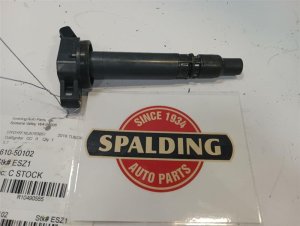
Used OEM Parts in Stock
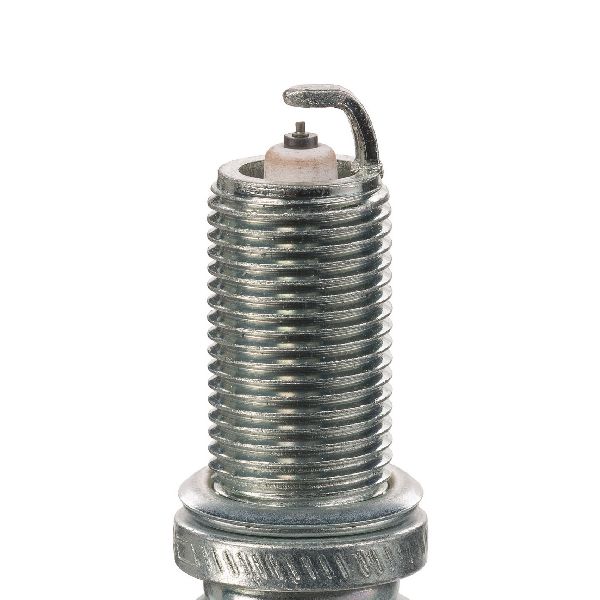
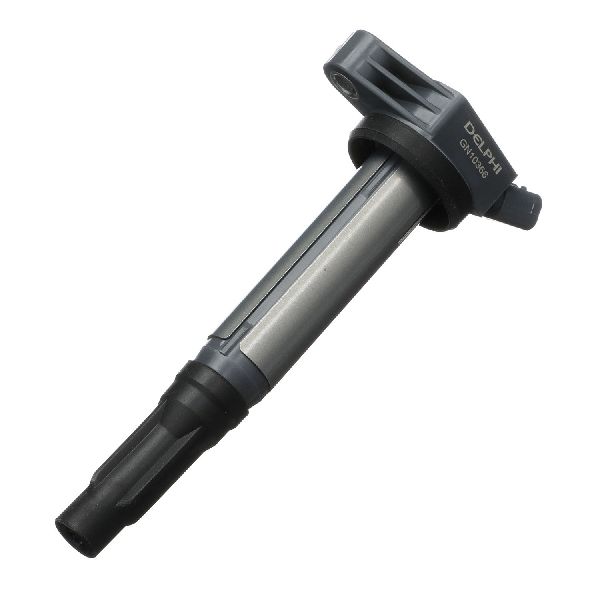
New Aftermarket Parts Available


The information in this article is provided for general reference and educational purposes only. Vehicle specifications, procedures, and part compatibility can vary by production date, trim level, and region. Always consult your vehicle's factory service manual and verify part numbers before purchasing or performing repairs. Safety-critical components such as airbags, seat belts, and braking systems should be installed by a qualified professional.
- Lexus IS 250:
- 🎬 Helpful Videos
- 🛍️ Shop This Part
- What's Unique About the 2006-2010 Lexus IS 250
- Diagnostic Flowchart
- Symptoms You May Notice
- Most Likely Causes
- Rare But Worth Checking
- Diagnosis Steps
- Parts You'll Likely Need
- Related Codes That Often Appear With This One
- Technical Service Bulletins (TSBs) & Recalls
- Platform-Specific Known Issues
- Mechanic-Grade Diagnostic Values
- Hidden / Shadow Codes Worth Checking
- Scan Tool Commands That Help
- Wiring & Ground Locations
- Real Owner Repair Stories
- OEM Part Supersession History
- Model Year Variations Within This Range
- 🎟️ Get 5% Off