

P0305 on 2016-2017 Ford F-150 2.7L EcoBoost: Cylinder 5 Misfire Causes and Fixes
P0305 means cylinder 5 is misfiring. On the 2.7L EcoBoost, this is most often caused by a faulty ignition coil or a worn/cracked spark plug. A DIY fix for these parts usually costs between $50 and $150. However, be aware of a known issue with cylinder heads on some trucks built between April 2016 and January 2017, which can cause this code along with excessive oil consumption.
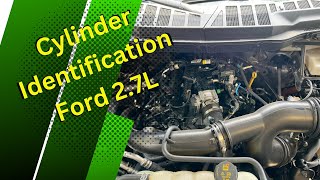
- P0305 is a misfire on cylinder 5, which is the middle cylinder on the driver's side of the 2.7L EcoBoost engine.
- Always start diagnosis by swapping the cylinder 5 ignition coil with another cylinder. This is a fast, free, and effective way to identify a bad coil.
- If the coil is good, inspect and likely replace the spark plugs. Use a quality plug gapped to 0.028-0.031 inches.
- If your truck was built between April 2016 and January 2017 and is consuming oil, a P0305 code is a strong indicator of the serious cylinder head issue covered by Ford's TSB 19-2384.
- Do not drive if the Check Engine Light is flashing, as this can cause rapid and expensive damage to the catalytic converter.
What's Unique About the 2016-2017 Ford F-150
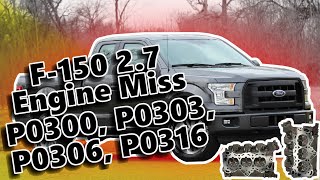
For the 2016-2017 F-150 with the 2.7L EcoBoost engine, a P0305 code requires careful diagnosis. While common ignition parts are the usual suspects, a significant number of these trucks built between April 1, 2016, and January 1, 2017, are subject to a Technical Service Bulletin (TSB 19-2384) for a serious internal engine problem. This issue involves faulty cylinder head valve guides that can cause excessive oil consumption, leading to fouled spark plugs and persistent misfires. Therefore, a simple misfire code on these specific trucks could be an early warning of a much larger repair. This condition may also present with other codes like P0300, P0316 (misfire on startup), P0524 (low oil pressure), and/or P06DD.
Symptoms You May Notice
- Rough or shaky idle.
- Hesitation or stumbling during acceleration.
- Noticeable loss of engine power.
- Flashing Check Engine Light, especially under load.
- Reduced fuel economy.
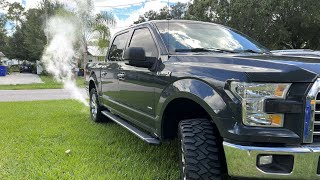
- In some cases, blue or white smoke from the exhaust, particularly on a hot restart 🎬 Watch: See how to handle the TSB smoke on startup issue. (a key symptom of TSB 19-2384).
- A vibration or popping feeling in the gas pedal during misfire events.
- Replacing only the spark plug when the ignition coil was the actual cause, or when the plug was simply fouled by oil from the TSB-related cylinder head issue.
- Replacing fuel injectors or other parts before performing a simple ignition coil swap test.
- Ignoring symptoms of oil consumption on affected 2016-2017 models, leading to repeated misfires from fouled plugs when the root cause is the cylinder head.
Most Likely Causes
- Faulty Ignition Coil 🔴 High Probability Coil-on-plug systems are a common failure point on many modern engines, and the high cylinder pressures and heat from the turbochargers on the EcoBoost may contribute to a shorter lifespan.
How to confirm: Swap the ignition coil from cylinder 5 with an adjacent cylinder (e.g., cylinder 4 or 6). Clear the codes and drive the truck. If the code changes to P0304 or P0306, the coil is bad. Cylinder 5 is the middle cylinder on the driver's side.
Typical fix: Replace the faulty ignition coil. Many owners choose to replace all six coils at the same time as preventative maintenance, especially on higher mileage vehicles.
Est. part cost: $25-$75 for a single aftermarket coil, $150-$250 for a set of six. - Worn or Fouled Spark Plug 🔴 High Probability Turbocharged direct-injection (EcoBoost) engines are harder on spark plugs than naturally aspirated engines, leading to shorter service life. Incorrect spark plug gap is also a very common cause of misfires on these engines. A cracked porcelain insulator is a frequent failure point found during diagnosis.
How to confirm: After ruling out the coil, remove the spark plug from cylinder 5. Inspect it for wear, carbon/oil fouling, or cracks in the porcelain insulator. Check the gap; for the 2.7L EcoBoost, it should be between 0.028-0.031 inches.
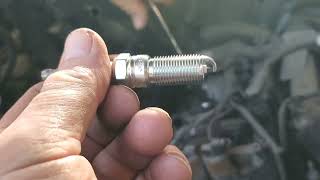
Typical fix: Replace the spark plug. It is highly recommended to replace all six spark plugs at the same time using OEM-spec plugs to ensure 🎬 See this walkthrough for replacing spark plugs on your 2.7L. consistent performance.
Est. part cost: $8-$15 per plug, so $48-$90 for a set of six. - Damaged Ignition Coil Wiring/Connector 🟡 Medium Probability Engine vibrations and heat can cause wiring harnesses to chafe against engine components or brackets, leading to exposed wires and electrical shorts.
How to confirm: Visually inspect the wiring harness and connector leading to the cylinder 5 ignition coil. Look for any signs of rubbing, melting, or bare wires. One owner found chafed wires on the coil pack causing a short and misfire.
Typical fix: Repair the damaged section of the wiring harness and secure it away from any sharp edges or hot surfaces. Replace the connector pigtail if it is damaged.
Est. part cost: $15-$40 for a new pigtail connector. - Clogged or Faulty Fuel Injector 🟡 Medium Probability
How to confirm: This is more difficult to diagnose. A professional can perform a fuel injector balance test. A DIY method involves listening to the injector with a mechanic's stethoscope to ensure it's clicking. Swapping injectors between cylinders is possible but more labor-intensive than swapping coils.
Typical fix: Replace the faulty fuel injector. The 2016-2017 2.7L EcoBoost has only direct injectors (port injection was added in 2018), so diagnosis is slightly simpler than on later models.
Est. part cost: $50-$150 per injector, depending on whether it is a port or direct injector.
Rare But Worth Checking
- Cylinder Head Valve Guide Failure: This is a significant known issue for 2.7L EcoBoost engines built from April 1, 2016, through January 1, 2017. Ford TSB 19-2384 (superseding 18-2237 and 17-2077) addresses this. Symptoms include excessive oil consumption (over 1 quart in 3,000 miles), rough idle, and misfire codes, including P0305. The fix is a major engine repair involving replacement of both cylinder heads (Parts FL3Z-6049-J and FL3Z-6049-K).
- Low Cylinder Compression: If ignition and fuel components are good, a compression test should be performed. A wet and dry compression test can help determine if the issue is with piston rings or valves. In a documented case for a 2.7L F-150, a persistent P0305 was ultimately diagnosed as a burnt exhaust valve in cylinder 5, requiring engine replacement.
Diagnosis Steps
- Read the code with an OBD-II scanner to confirm P0305 and check for any other codes, such as P0300 or oil-pressure related codes.
- CORRECTED LOCATION: Determine the location of cylinder 5. On the 2.7L V6, the cylinders are numbered 1-2-3 on the passenger side (front to back) and 4-5-6 on the driver's side (front to back). Therefore, cylinder 5 is the middle cylinder on the DRIVER'S side.
- Perform an ignition coil swap. Switch the ignition coil from cylinder 5 with the coil from cylinder 4 (front cylinder, driver's side). Clear the codes and drive the vehicle to see if the misfire code returns as P0304. If it does, the ignition coil is faulty and needs replacement.
- If the code remains P0305, inspect the spark plug. Remove the plug from cylinder 5 and check for signs of wear, oil/carbon fouling, or cracks in the white porcelain insulator. A cracked insulator is a common failure.
- While the coil is out, inspect the wiring and connector for the cylinder 5 ignition coil for any damage, chafing, or corrosion. Repair as needed.
- If steps 1-5 do not resolve the issue, the problem may be a faulty fuel injector or a mechanical engine issue like low compression.
- For vehicles built between April 2016 and January 2017, check for excessive oil consumption. If the truck is using more than a quart of oil every 3,000 miles, the issue is likely the cylinder head problem described in TSB 19-2384 and requires professional diagnosis via compression and leak-down testing.
Parts You'll Likely Need
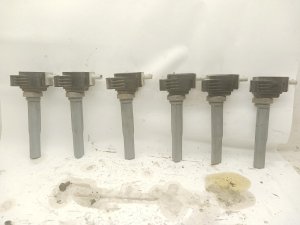
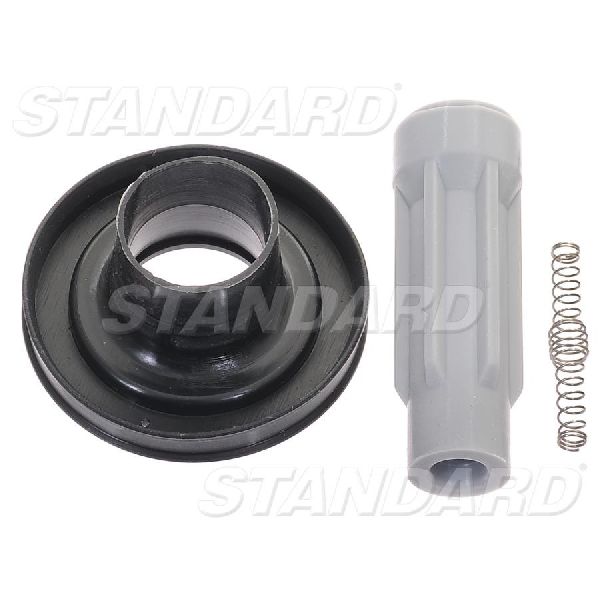
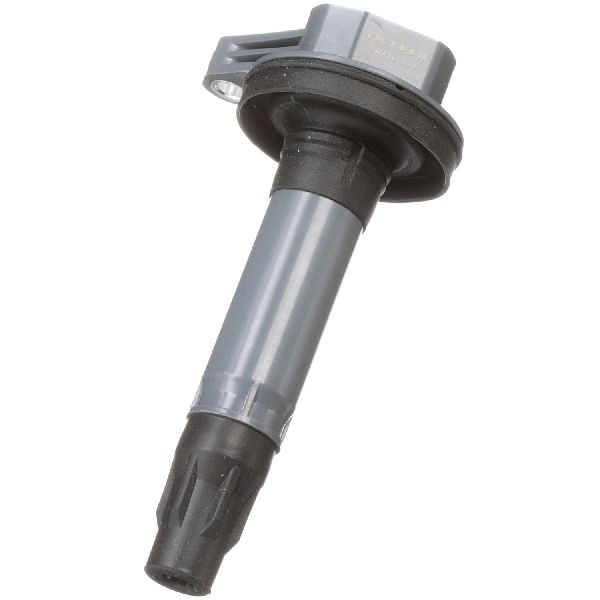
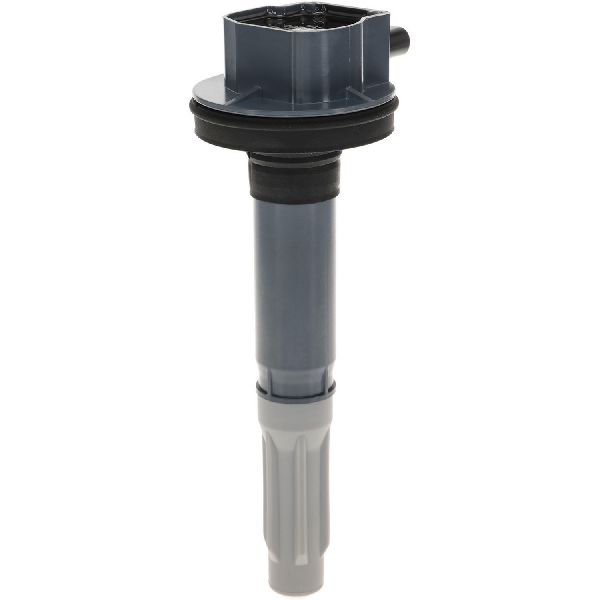
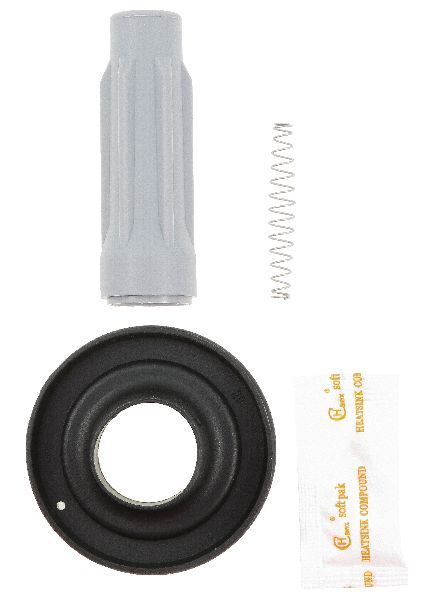
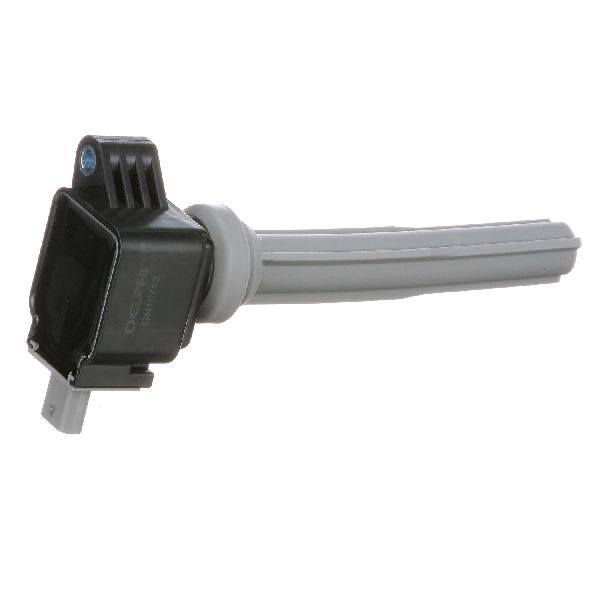
- Ignition Coil
(OEM #DG-549 (Motorcraft))— This is one of the most common failure items causing a single-cylinder misfire. Heat and vibration cause the coil's internal components to fail over time.
Trusted brands: Motorcraft, NGK, Denso, MSD
OEM price range: $60-$90
Aftermarket price range: $40-$70 - Spark Plug
(OEM #SP-578 (Motorcraft, supersedes SP-542))— EcoBoost engines are known to be hard on spark plugs, which are a critical maintenance item. A worn, fouled, or cracked plug cannot produce a strong enough spark.
Trusted brands: Motorcraft, NGK, Bosch, Autolite
OEM price range: $10-$25
Aftermarket price range: $8-$20
Related Codes That Often Appear With This One
- P0300 — If multiple cylinders are misfiring, you will see a P0300 (Random/Multiple Cylinder Misfire) along with specific cylinder codes like P0305. This often points to a systemic issue like a vacuum leak, low fuel pressure, or the TSB-related cylinder head issue affecting multiple cylinders.
- P0301, P0302, P0303, P0304, P0306 — Seeing other specific cylinder misfire codes alongside P0305 indicates the problem is not isolated. This could be due to a bad batch of fuel, widespread carbon buildup, or the TSB-related cylinder head issue.
- P0524, P06DD — These codes for 'Engine Oil Pressure Too Low' can appear alongside misfire codes in vehicles affected by TSB 19-2384, indicating the problem is related to the excessive oil consumption caused by the faulty cylinder heads.
Technical Service Bulletins (TSBs) & Recalls
- TSB 19-2384: '2.7L EcoBoost - Oil Consumption, Rough Idle, Misfire With Or Without Blue Exhaust Smoke'.
- TSB 18-2237 (Superseded by 19-2384).
- TSB 17-2077 (Superseded by 18-2237).
Platform-Specific Known Issues
- TSB 19-2384 (supersedes 18-2237 & 17-2077): Affects some 2016-2017 F-150s with the 2.7L EcoBoost built between April 1, 2016, and January 1, 2017. It identifies faulty cylinder head valve guides as the cause for excessive oil consumption, rough idle, and misfires. The repair involves replacing both cylinder heads.
Mechanic-Grade Diagnostic Values
- Ignition Coil Primary Resistance — expected: 0.52 - 0.64 Ohms. Failure: A reading outside of this range indicates a faulty coil winding.
- Ignition Coil Secondary Resistance — expected: 6.6k - 7.9k Ohms. Failure: A reading outside of this range indicates a fault in the secondary coil winding.
- Long-Term Fuel Trim (LTFT) — expected: -5% to +5% at idle. Failure: Consistent values above +10% or below -10% indicate a vacuum leak, fuel delivery problem, or sensor issue that the PCM is trying to compensate for.
- Mode $06 Misfire Count (Cylinder 5) — expected: Value of 0. Failure: A non-zero value indicates the number of misfire events counted during the last drive cycle, even if not enough to set a CEL.
Hidden / Shadow Codes Worth Checking
- Mode $06, Test ID $A6: This is not a standard DTC, but a specific monitor ID within the PCM that tracks the raw misfire count for cylinder 5. It can show misfires occurring before they are frequent enough to trigger the P0305 code and turn on the Check Engine Light. (see via Requires a scan tool capable of reading Mode $06 data, such as FORScan or professional-grade scanners.)
Scan Tool Commands That Help
- Ford IDS (or FORScan): Power Balance Test — This is a powerful bidirectional test to use when a misfire is felt but the cause isn't obvious. The tool commands the PCM to sequentially shut off fuel to each cylinder while the engine is running. A good cylinder will cause a noticeable drop in RPM when disabled. If disabling cylinder 5 causes little or no RPM drop, it confirms that cylinder is not contributing power, isolating the fault.
Wiring & Ground Locations
- C1580 (Ignition Coil 5 Connector) — On the cylinder 5 ignition coil, which is the middle coil on the driver's side of the engine.. This is the connector to inspect for damage, corrosion, or poor pin fitment. Pin 1 (typically a Green/Blue wire) is the control signal from the PCM, and Pin 2 (typically a Brown/Green wire) is the 12V+ power feed. A voltage check here can confirm if the coil is receiving power.
- Engine-to-Firewall Ground Strap — Typically a braided strap on the driver's side, running from the firewall near the brake master cylinder to a stud on the engine or cylinder head.. A corroded or loose main ground can cause a weak spark on one or more cylinders, leading to intermittent misfires that are hard to diagnose. The PCM and ignition system rely on solid grounding for proper operation.
Real Owner Repair Stories
- Reddit user in /r/MechanicAdvice (2018 F-150 2.7L EcoBoost (2nd Gen, but relevant failure mode)) — Persistent P0305 misfire only at idle, long crank startups, good power throughout the rev range.
❌ Tried (didn't work) All new injectors (port and direct), Swapping coil packs, Multiple new, correctly gapped spark plugs
✅ What actually fixed it The issue was never truly fixed. After extensive diagnosis, a dealership performed a manual compression and leak-down test and found a burnt exhaust valve in cylinder 5. The owner was quoted $19,000 for a new engine and sold the truck instead.
OEM Part Supersession History
SP-542 (Motorcraft)→SP-578 (Motorcraft)— Ford updated the spark plug specification for this engine. The newer plug may have a different heat range or material composition to improve longevity and performance.
Heads up: While SP-542 was original equipment, using the latest superseded part (currently SP-578 or SP-594) is recommended as it reflects Ford's latest engineering revisions for the engine.SP-578 (Motorcraft)→SP-594 (Motorcraft)— Continued engineering revision and parts consolidation by Ford.
Heads up: SP-594 is the current recommended service part. Forum discussions indicate Ford may have specified a slightly hotter plug over time to potentially reduce fouling or misfires.
Model Year Variations Within This Range
- 2016-2017: The 1st generation 2.7L EcoBoost in these model years uses direct injection ONLY. The 2nd generation, starting in 2018, added a secondary port injection system to help clean intake valves. This makes diagnosing fuel issues on the 2016-2017 slightly simpler as there is only one set of injectors.
- 2017 vs 2016: For the 2017 model year, the 3.5L EcoBoost received a major update (2nd gen engine and 10-speed transmission), but the 2.7L EcoBoost and 5.0L V8 remained largely unchanged from 2016, still using the 6-speed automatic transmission. The major update for the 2.7L came in the 2018 model year.
Diagnostic Flowchart
Other Known Issues on This Vehicle
Issues unrelated to this code that are worth knowing about as an owner of this generation:
- Leaking Plastic Oil Pan 🔴 High — Very common on 2015-2017 models. The original composite pan used an RTV sealant that was prone to degradation from heat cycles, causing leaks. Many fail before 50,000 miles. (Ref: TSB 19-2205 (F-150) and TSB 19-2219 describe the repair, which involves replacing the original pan with an updated version that uses a more reliable press-in-place gasket.)
- Intake Valve Carbon Buildup 🟠 Medium — Common on first-generation (2015-2017) 2.7L EcoBoost engines due to their direct-injection-only design. Symptoms like rough idle, hesitation, and misfires can appear after 60,000-80,000 miles. The issue was largely mitigated in 2018+ models with the addition of port injection.
- Timing Chain Rattle 🟠 Medium — Some 2.7L EcoBoost engines can develop a rattle from the timing chain system, often due to tensioner issues. While more famously associated with the 3.5L EcoBoost, it is a known potential problem on the 2.7L as well. (Ref: TSB 20-2315 is for the 3.5L but indicates the type of issue that can affect these engines.)
Used vs. New Parts: Buying Guide for This Vehicle
When a used part is the smart pick: A used engine wiring harness could be a cost-effective option if a section is found to be damaged and a simple pigtail repair is not feasible. A used intake manifold could also be considered if the original is cracked, though this is rare.
Donor-vehicle mileage cap: roughly under 80000 miles for the part to have meaningful remaining life.
What to inspect on the donor part:
- For a wiring harness, inspect thoroughly for any signs of brittleness, previous repairs, melted connectors, or chafing on the loom.
- Ensure the donor vehicle was not in a front-end collision that could have stressed the harness.
- Verify part numbers match exactly, as harness configurations can change based on trim and options.
OEM-only on this vehicle (don't cheap out):
- Spark Plugs: Given the sensitivity of EcoBoost engines to plug gap and heat range, and the low cost of OEM plugs, it is strongly recommended to use only new Motorcraft plugs.
- Cylinder Head: If the vehicle falls under TSB 19-2384, only new, updated OEM cylinder heads should be used for the repair to be effective.
Aftermarket brands forum-validated for this vehicle:
- Ignition Coils: MSD, Accel, and PerTronix are often cited in forums as performance-oriented aftermarket options that are considered reliable.
- Spark Plugs: NGK is a highly respected alternative, and was the original manufacturer for some OEM Motorcraft plugs.
Brands owners have reported issues with on this vehicle:
- Unbranded, no-name ignition coils and spark plugs from online marketplaces. These often have a high failure rate and may not meet the voltage or resistance specifications required by the EcoBoost engine, leading to persistent or new misfires.
Real Owner Stories
Aggregated from forums and TSBs cited above. Mileages and costs reflect what owners reported in those sources.
2016 Ford F-150 2.7L EcoBoost — 65000 miles
Symptoms: Owner was diagnosed with the TSB 19-2384 issue involving oil consumption and misfires.
What fixed it: The dealer quoted a full engine rebuild/replacement due to the cylinder head issues.
Cost: $14,000
Source hint: fordforums.com - '2016 f150 tsb 19-2384'
2016 Ford F-150 2.7L EcoBoost
Symptoms: Flashing Check Engine Light followed by a Wrench Light.
What fixed it: Identified as the oil consumption issue related to TSB 18-2237 (now 19-2384).
Source hint: f150forum.com - '2016 2.7 Flashing Check Engine Light Then Wrench Light'
2017 Ford Fusion Sport 2.7L EcoBoost
Symptoms: Persistent P0305 misfire code.
What fixed it: Diagnosis revealed a burnt exhaust valve, which required a full engine replacement.
Source hint: Reddit r/MechanicAdvice - 'P0305 on 2017 Ford Fusion Sport'
Ford F-150 2.7L EcoBoost
Symptoms: P0305 code appeared immediately after a spark plug change.
What fixed it: Found and replaced a newly installed spark plug that had a cracked porcelain insulator.
Source hint: CarKiller.com - '[Solved] Ford F-150 EcoBoost Misfire after spark plug change'
Ford F-150 2.7L EcoBoost
Symptoms: Severe misfire occurring specifically under load.
What fixed it: Traced the issue to ignition coil wires that were chafing and shorting out.
Source hint: Reddit - User comment on a Lincoln MKX thread
Related OBD-II Codes
Frequently Asked Questions
Where is cylinder 5 located on my 2016-2017 F-150 2.7L EcoBoost?
My 2016 F-150 has a P0305 and blue smoke on startup; is there a specific TSB for this?
What is the correct spark plug gap for the 2.7L EcoBoost to prevent misfires?
Can a faulty wiring harness cause a P0305 on my truck?
How can I tell if my P0305 is a bad coil or a mechanical failure like TSB 19-2384?
Does the 2016 2.7L EcoBoost have both port and direct injection?
Helpful Videos
Used OEM Parts in Stock




New Aftermarket Parts Available


The information in this article is provided for general reference and educational purposes only. Vehicle specifications, procedures, and part compatibility can vary by production date, trim level, and region. Always consult your vehicle's factory service manual and verify part numbers before purchasing or performing repairs. Safety-critical components such as airbags, seat belts, and braking systems should be installed by a qualified professional.
- Ford F-150:
- 🎬 Helpful Videos
- 🛍️ Shop This Part
- What's Unique About the 2016-2017 Ford F-150
- Symptoms You May Notice
- Most Likely Causes
- Rare But Worth Checking
- Diagnosis Steps
- Parts You'll Likely Need
- Related Codes That Often Appear With This One
- Technical Service Bulletins (TSBs) & Recalls
- Platform-Specific Known Issues
- Mechanic-Grade Diagnostic Values
- Hidden / Shadow Codes Worth Checking
- Scan Tool Commands That Help
- Wiring & Ground Locations
- Real Owner Repair Stories
- OEM Part Supersession History
- Model Year Variations Within This Range
- Diagnostic Flowchart
- Other Known Issues on This Vehicle
- Used vs. New Parts: Buying Guide for This Vehicle
- Real Owner Stories
- 2016 Ford F-150 2.7L EcoBoost — 65000 miles
- 2016 Ford F-150 2.7L EcoBoost
- 2017 Ford Fusion Sport 2.7L EcoBoost
- Ford F-150 2.7L EcoBoost
- Ford F-150 2.7L EcoBoost
- Related OBD-II Codes
- Frequently Asked Questions
- 🎟️ Get 5% Off