

P0305 on 2006-2013 BMW 3-Series (E90/E92): N52 Cylinder 5 Misfire Causes and Fixes
P0305 indicates a misfire on cylinder 5. On the N52 engine, this is most often caused by a failed ignition coil, followed by a worn or oil-fouled spark plug. A very common root cause is a leaking valve cover gasket that allows oil to contaminate the coil and plug. Replacing a single ignition coil is a simple DIY fix costing between $30 and $70.
- P0305 is a misfire on cylinder 5, the second cylinder from the windshield.
- The most likely cause is a bad ignition coil, which can be diagnosed by swapping it with another cylinder's coil.
- The second most likely cause is a bad spark plug. It's recommended to replace all six at once.
- Before replacing parts, check the cylinder 5 spark plug well for oil. If oil is present, the valve cover gasket is leaking and must be replaced to prevent future misfires.
- Do not drive the vehicle if the check engine light is flashing, as this can quickly destroy the catalytic converter.
What's Unique About the 2006-2013 BMW 3-Series (E90/E91/E92/E93)
The BMW N52 engine is generally reliable, but it is known for ignition-related misfires as it ages. A very common issue specific to this platform is a leaking valve cover gasket, which allows engine oil to seep into the spark plug wells. This oil can foul the spark plug and damage the ignition coil, directly causing a misfire code like P0305. Because of this, a visual inspection for oil in the spark plug tube is a critical first step when diagnosing this code on an N52 engine. The plastic valve cover itself can also crack or warp over time, causing both oil leaks and vacuum leaks that contribute to misfires.
Symptoms You May Notice
- Rough or vibrating idle
- Hesitation or stumbling during acceleration
- Noticeable loss of engine power
- Solid or flashing Check Engine Light
- Smell of unburned fuel from the exhaust
- Reduced fuel economy
- Engine shaking that is more pronounced under load
- Replacing only the spark plug when the ignition coil is also bad or oil-fouled.
- Replacing fuel injectors before properly diagnosing the ignition system (coils and plugs), which are far more common failure points.
- Replacing the valve cover gasket but not the valve cover itself when it is cracked, leading to continued leaks and misfires.
- Assuming a misfire after a valve cover gasket job is a bad sensor, when it could be a disconnected ground wire or a folded gasket.
Most Likely Causes
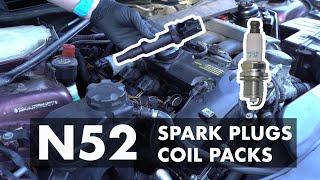
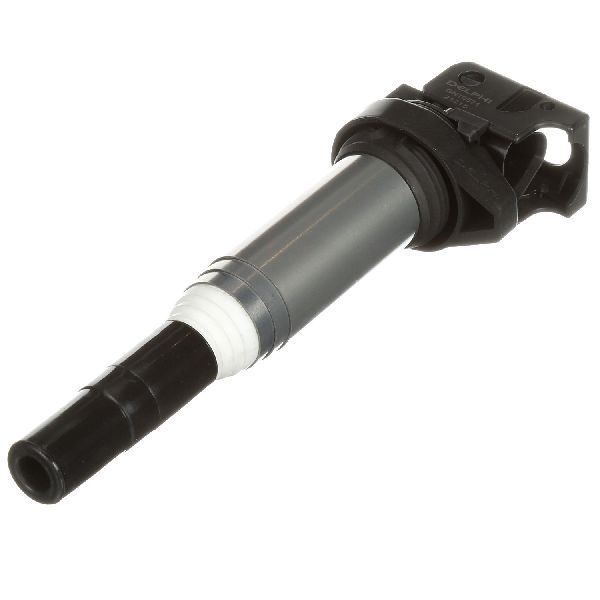
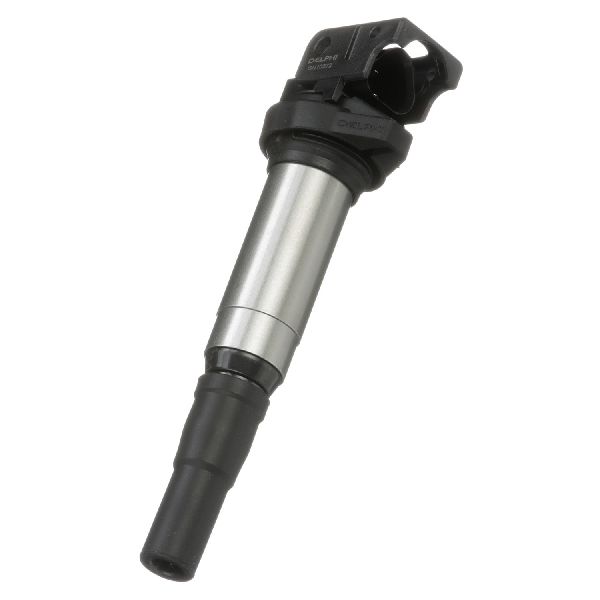
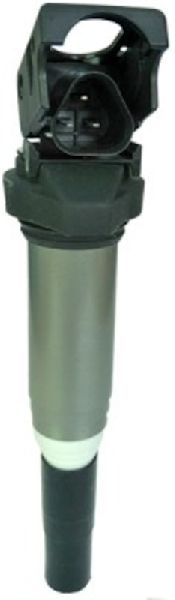
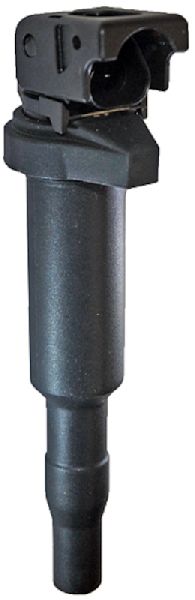
- Faulty Ignition Coil 🔴 High Probability Ignition coils on the N52 are a frequent failure item, often due to age, heat, or oil contamination from a leaking valve cover gasket. Failures typically occur between 80,000 and 140,000 kilometers. The original equipment manufacturer (OEM) for these coils has changed over the years, with Bosch, Delphi, and Eldor being common suppliers.
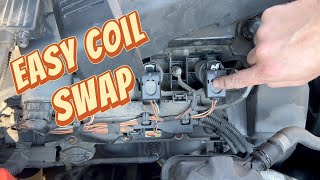
How to confirm: Swap the ignition coil from cylinder 5 with another cylinder (e.g., cylinder 4). Clear the codes and run the engine. If the misfire code changes to P0304, the coil is faulty. This is the standard community-accepted first diagnostic step.
Typical fix: Replace the failed ignition coil. Many owners choose to replace all six coils at once as a preventative measure if they are original or high-mileage, especially since they tend to fail around the same time.
Est. part cost: $30-$70 per coil - Worn or Fouled Spark Plug 🔴 High Probability While the official replacement interval is long (up to 100,000 miles), oil from a common valve cover gasket leak can foul the plugs, causing premature failure. Even without leaks, spark plugs are a regular maintenance item that can cause misfires when worn.
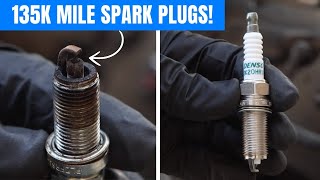
How to confirm: After confirming the coil is good, swap the spark plug from cylinder 5 with another cylinder. If the misfire code follows the plug, the plug is the issue. Visually inspect the plug for wear on the electrode, carbon buildup, or oil fouling. An oil-soaked plug is a clear sign of a leaking valve cover gasket.
Typical fix: Replace the spark plug. It is best practice to replace all six spark plugs at the same time to ensure consistent performance and avoid future misfires. Ensure they are gapped correctly if not pre-gapped.
Est. part cost: $15-$25 per plug - Leaking or Clogged Fuel Injector 🟡 Medium Probability While less common than ignition issues, fuel injectors on the N52 can fail or become clogged over time, leading to an improper fuel mixture in the cylinder. This can sometimes be intermittent and may be temporarily resolved with a fuel system cleaner.
How to confirm: If the coil and plug swap do not isolate the problem, the next step is to swap the fuel injector from cylinder 5 to another cylinder and see if the misfire code follows. This is a more involved job than swapping ignition components. A resistance test can also be performed; a healthy injector should measure between 10-16 ohms.
Typical fix: Replace the faulty fuel injector. It's also recommended to replace the small O-rings and seals for any injectors that are removed to prevent fuel leaks.
Est. part cost: $40-$200 per injector
Rare But Worth Checking
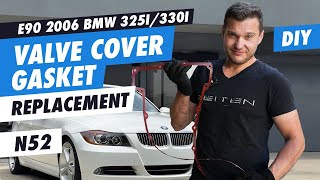
- Leaking Valve Cover Gasket: This is a very common N52 problem and is often the root cause of coil and plug failure. If you find oil in the spark plug well, the valve cover gasket must be replaced to prevent repeat failures. Sometimes the plastic valve cover itself cracks and must be replaced along with the gasket.
- Valvetronic System Malfunction: An issue with the Valvetronic eccentric shaft sensor or motor can cause misfires, sometimes isolated to one cylinder or bank. This is often accompanied by other specific Valvetronic fault codes and can sometimes be triggered after a valve cover gasket replacement if not handled correctly.
- Low Engine Compression: Internal engine problems like a burnt valve, damaged piston, or worn piston rings can cause a persistent misfire that is not resolved by replacing ignition or fuel parts. A compression test is needed to diagnose this.
- Clogged or Faulty DISA Valve: The N52 has two DISA valves that adjust the intake manifold runner length. If one fails or its seal degrades, it can cause vacuum leaks, rattling noises, and rough running or misfires, though this usually affects multiple cylinders or causes lean codes.
- Clogged Catalytic Converter: A clogged catalytic converter can cause excessive backpressure, leading to misfires, especially in cylinders closer to the converter (like cylinder 5). This is often a consequence of long-term misfires dumping unburned fuel, rather than an initial cause.
Diagnosis Steps
- Read the fault codes with an OBD-II scanner to confirm P0305 and check for any other codes. Note freeze frame data if available.
- Visually inspect the cylinder 5 spark plug well for any signs of oil. Oil presence strongly suggests a leaking valve cover gasket is the root cause.
- Swap the ignition coil from cylinder 5 to a different cylinder (e.g., cylinder 4). This is the most common and effective first step.
- Clear the fault codes and drive the vehicle until the check engine light returns.
- Re-scan the codes. If the code has moved to P0304, the ignition coil is faulty and needs replacement.
- If the code remains P0305, the coil is likely good. Move the spark plug from cylinder 5 to a different cylinder (e.g., cylinder 1).
- Clear codes and drive again. If the code moves to P0301, the spark plug is faulty.
- If the code still remains P0305, the issue is likely with the fuel injector or, more rarely, engine compression.
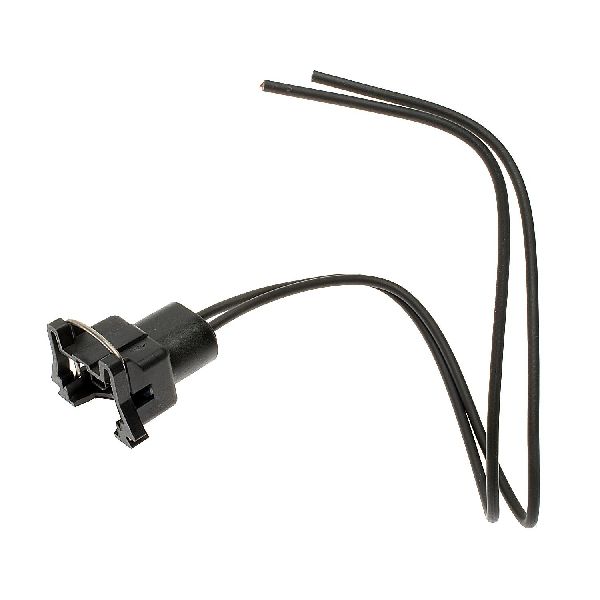
- Inspect the wiring and connector for the cylinder 5 ignition coil and fuel injector for any damage, looseness, or corrosion.
- If ignition and wiring are confirmed good, consider swapping the fuel injector to another cylinder to see if the fault follows. This is more labor-intensive.
- If all else fails, a compression test and a cylinder leak-down test should be performed to check for mechanical engine problems like a bad valve or piston rings.
Parts You'll Likely Need
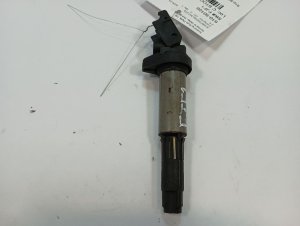
- Ignition Coil
(OEM #12138616153)— This is the most common failure part for a P0305 code on the N52 engine.
Trusted brands: Bosch, Delphi, Eldor
OEM price range: $50-$80
Aftermarket price range: $30-$60 - Spark Plug
(OEM #12122158253)— This is the second most likely cause, either from normal wear or from being fouled by an oil leak.
Trusted brands: NGK (PLZFR6A11S), Bosch (FR7NPP332)
OEM price range: $20-$30
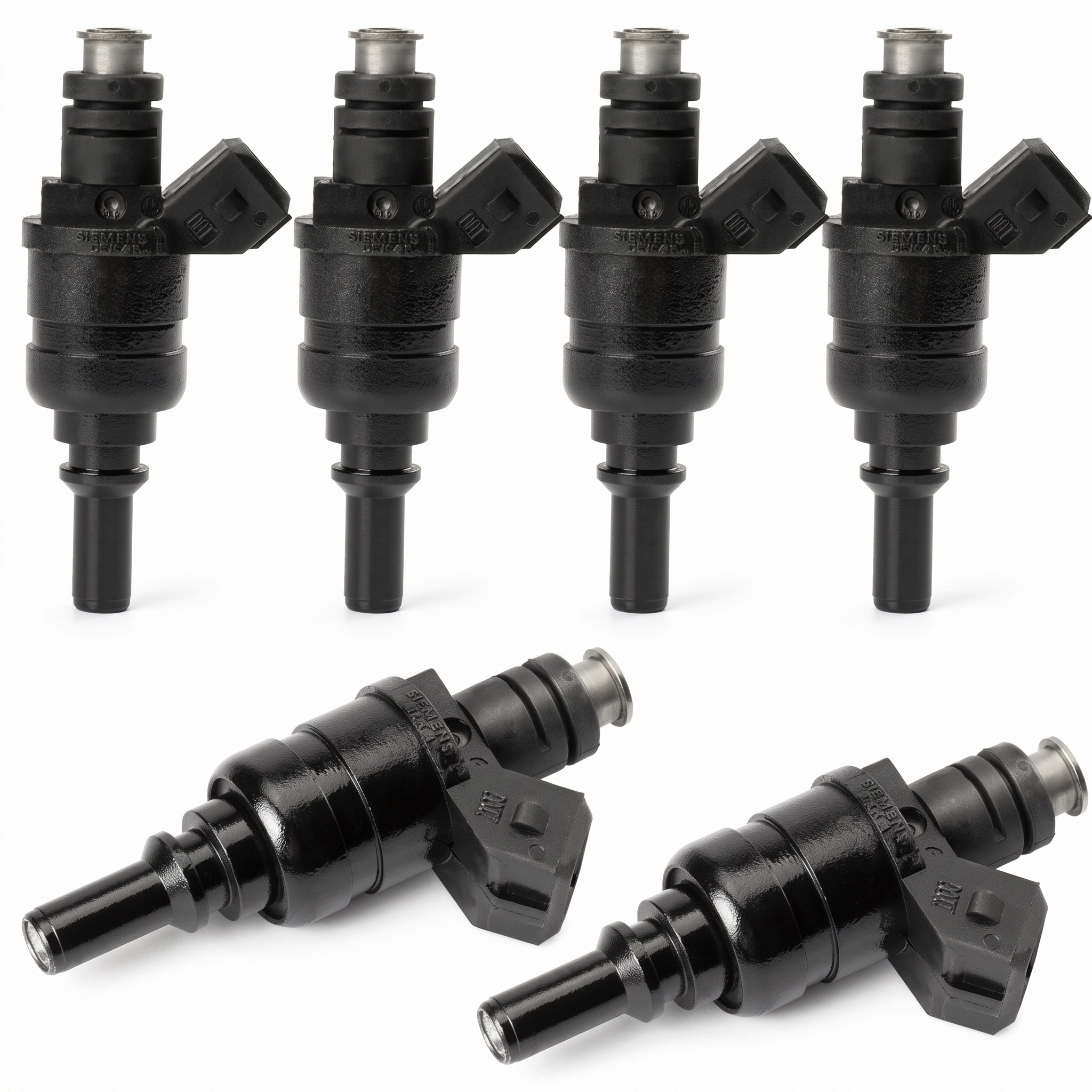
Aftermarket price range: $15-$25 - Fuel Injector
(OEM #13537531634)— A less common but possible cause if ignition components are confirmed to be good.
Trusted brands: VDO, Bosch
OEM price range: $180-$250
Aftermarket price range: $40-$150
Related Codes That Often Appear With This One
- P0300 — If the misfire is intermittent or affects multiple cylinders, a P0300 (Random/Multiple Cylinder Misfire) may be stored alongside P0305.
- P0301, P0302, P0303, P0304, P0306 — If other cylinders are also misfiring due to a systemic issue like a bad batch of fuel, failing DISA valve, or major vacuum leak, their respective codes will appear. It's also common to see other P030x codes as other original coils and plugs begin to fail.
- 2A39 — This BMW-specific code for 'Valvetronic, adjustment range' can indicate a problem with the Valvetronic system, which can be a rare cause of misfires.
- 2A82, 2A87 — These BMW-specific codes relate to VANOS solenoid function. While not a direct cause of a single-cylinder misfire, a failing VANOS system can cause rough running and misfires that might be diagnosed alongside P0305.
- 29D1 — This is the BMW-specific fault code for 'Combustion misfires, cylinder 5'. It is the manufacturer's equivalent to the generic P0305 and will be found when using BMW-specific diagnostic software like ISTA.
Platform-Specific Known Issues
- A leaking valve cover gasket is extremely common and is a primary cause of misfires by allowing oil to contaminate the spark plug wells, damaging coils and plugs.
- The plastic valve cover itself can crack or warp with age, causing vacuum leaks that can lead to misfires and lean codes. It is often recommended to replace the entire cover on high-mileage vehicles, not just the gasket.
- The engine's DME will actively shut off the fuel injector to a cylinder with a persistent misfire to protect the catalytic converter. This makes the misfire feel constant and severe until the engine is shut off and restarted.
Mechanic-Grade Diagnostic Values
- Fuel Injector Resistance — expected: 10 - 16 Ohms. Some sources cite a range of 8.7 - 17.5 Ohms. The key is consistency across all injectors.. Failure: An open circuit (infinite resistance) or a reading significantly different from the other injectors indicates a faulty injector.
- Low-Pressure Fuel System Pressure (at idle) — expected: Approximately 5.0 Bar (72.5 PSI).. Failure: The N52 does not have a stock fuel pressure sensor, so an external gauge is required. Pressure that is significantly low (e.g., below 4.0 Bar) or fluctuates wildly can indicate a failing fuel pump or regulator.
- INPA/ISTA Smooth Running Values — expected: Values close to 0 for all cylinders at idle. A small amount of fluctuation is normal.. Failure: A cylinder showing a consistently high positive or negative value compared to the others is the misfiring cylinder. This is a live data reading that helps confirm which cylinder is having a combustion problem.
Hidden / Shadow Codes Worth Checking
- 29D1: DME: Combustion misfire, cylinder 5. This is the direct BMW-specific equivalent of the generic P0305 code. (see via BMW-specific diagnostic software like ISTA, INPA, or advanced handheld scanners.)
- 29CC: DME: Combustion misfires, several cylinders. This is the BMW equivalent of P0300 and often appears with single cylinder misfire codes if the problem is severe or intermittent across cylinders. (see via BMW-specific diagnostic software like ISTA, INPA.)
- 29D9: DME: Misfire at low tank fill level. This can indicate a fuel delivery problem (weak pump) that is exacerbated when the fuel level is low. (see via BMW-specific diagnostic software like ISTA, INPA.)
Scan Tool Commands That Help
- ISTA/INPA: Smooth Running Test (Analog Values 2) — To get a real-time graphical representation of how smoothly each cylinder is running. This is extremely useful for identifying intermittent or subtle misfires that may not consistently set a hard code. A cylinder with a combustion issue will have a value that deviates significantly from the others.
- ISTA: Misfire Test Plan — When a misfire code is present, ISTA provides a guided diagnostic plan. However, some service bulletins note that this test plan can be lengthy and may not be the most efficient way to diagnose a simple coil failure.
- ISTA/INPA: Reset All Engine Adaptations — After replacing components like fuel injectors, VANOS solenoids, or addressing a major vacuum leak, it's crucial to reset engine adaptations so the DME can relearn fuel trims and other parameters with the new parts.
- ISTA: Fuel Injector Activation Test — To test the mechanical operation of a fuel injector. The software commands the injector to open and close, and the technician listens for an audible 'click'. The absence of a click can indicate a failed injector or a wiring issue.
Wiring & Ground Locations
- Main Engine Ground Strap — Located on the driver's side (left side for LHD cars) of the engine, connecting the engine mount arm to the chassis, underneath the car near the footwell.. This is a critical ground for the entire engine. Over time, it corrodes and frays, causing high resistance. This can lead to a host of bizarre electrical issues, including weak spark, sensor errors, and misfires that are difficult to trace. A visual inspection for corrosion (green or black buildup) is recommended.
- Ignition Coil Ground Wires — A small ground strap (sometimes called an 'interference-suppression band') is located on the valve cover, typically grounding the ignition coil harness to a stud on the cylinder head.. A loose or corroded ground connection here can directly affect the performance of the ignition coils, leading to weak spark and misfires, often on multiple cylinders. It's often handled during a valve cover gasket job and can be forgotten or improperly reconnected.
- DME Injector Control Pin — The DME (engine computer) grounds each fuel injector individually to fire it. For cylinder 5, this is a specific pin on the main DME connector.. In very rare cases of a persistent misfire where the injector itself is good, a wiring fault between the DME and the injector connector, or an internal failure of the DME's injector driver circuit, could be the cause. This requires advanced probing of the wiring harness.
Real Owner Repair Stories
- e90post.com user (2006 E90 330i) — Continuous, very bad misfires at idle and under load. P0301 code present.
❌ Tried (didn't work) Adding fuel injector cleaner, Replacing all spark plugs, Swapping ignition coil from cylinder 1 to 2 (code did not move), Cleaning MAF sensor
✅ What actually fixed it The user's issue was ultimately resolved by replacing the entire CCV (Crankcase Ventilation) system. Although this is a more complex repair, a failed CCV system can cause significant vacuum leaks and oil consumption issues leading to misfires. - Reddit r/E90 user (BMW E90 N52) — Cylinder 4 misfire.
❌ Tried (didn't work) Replacing ignition coil, Replacing spark plug, Replacing fuel injector
✅ What actually fixed it The owner replaced the upper engine wiring harness with a used one from eBay, which finally resolved the persistent misfire, indicating a break or short in the original wiring that was not visually apparent. - e90post.com user (2006 330xi) — Rough idle, hiccups and surges at idle, no specific misfire code but general poor running.
❌ Tried (didn't work) Replacing fuel injector #4, Swapping VANOS solenoids
✅ What actually fixed it After a smoke test revealed no vacuum leaks, the user removed and cleaned the throttle body. At the same time, they replaced a leaking Valvetronic motor gasket. The combination of these two actions resulted in a steady idle and resolved the issue.
"I Checked Everything" — The Actual Cause
- A user on e90post.com reported chasing a rough idle and misfire-like symptoms. A smoke test came back clean, ruling out common vacuum leaks. The final fix was cleaning a dirty throttle body and replacing a leaking Valvetronic motor gasket, which is located on top of the engine and would not be found by a traditional smoke test of the intake system.
When the Usual Fixes Don't Work
- While the vast majority of P0305 codes on the N52 are caused by a faulty ignition coil or spark plug, there are documented cases where these common fixes do not work. In one instance, a user on the r/E90 subreddit chased a persistent cylinder 4 misfire by replacing the coil, plug, and injector with no success. The ultimate solution was to replace the entire upper engine wiring harness, which had an internal fault that wasn't visible. In another case, a user with multiple misfire codes (29CD, 29CE, 29CF) on cylinders 1, 2, and 3 tried new plugs, new coils, and even swapped injectors. The problem ended up being a massively leaking valve cover gasket that was flooding the spark plug wells with so much oil that it was overwhelming the new components. These stories highlight the importance of checking for root causes like oil intrusion and considering less common possibilities like wiring faults when the standard parts swap doesn't resolve the issue.
OEM Part Supersession History
12137594937 (Bosch)→12138616153 (Delphi/Eldor)— Early Bosch coils had a higher-than-normal failure rate. BMW issued a technical service bulletin (TSB SI B12 18 14) instructing technicians to replace all Bosch coils with updated Delphi coils on vehicles in for misfire service.
Heads up: While Bosch, Delphi, and Eldor coils are now generally interchangeable, many enthusiasts and shops prefer the later Delphi or Eldor designs for reliability.12137594936 (Specific to early N52)→Requires update to newer connector 12527519996 and coil 12138616153.— BMW used a unique ignition coil and connector for N52 engines built before 04/2006. This early coil was discontinued.
Heads up: If you have an N52 built before 04/2006 with original coils, you cannot use a modern replacement coil without also replacing the electrical connector housing on the wiring harness. This requires de-pinning the old connector and inserting the wires into the new one.
Model Year Variations Within This Range
- 2006 (Before 04/2006 production): These very early N52 engines used a unique ignition coil (p/n 12137594936) with a different electrical connector design. Since this part was discontinued, replacing a coil on one of these cars requires updating the connector housing on the wiring harness to the newer, standard style.
- 2007+: Engines produced from late 2006/early 2007 onward are often designated N52N or N52K. These engines feature a revised valve cover with an integrated CCV system, different camshafts, and other minor changes compared to the earliest N52s. The fundamental diagnosis for a P0305 misfire remains the same, but parts like the valve cover and CCV system are not interchangeable with the early design.
Diagnostic Flowchart
Other Known Issues on This Vehicle
Issues unrelated to this code that are worth knowing about as an owner of this generation:
- Electric Water Pump and Thermostat Failure 🔴 High — Very common failure, typically between 60,000 and 100,000 miles. Failure is often sudden and can cause overheating, leading to engine damage if not addressed immediately.
- Oil Filter Housing Gasket (OFHG) Leak 🔴 High — Extremely common leak. The gasket hardens and fails, leaking oil onto the serpentine belt. This can cause the belt to slip, shred, and get sucked into the engine's front main seal, leading to catastrophic engine failure.
- Valve Cover and Gasket Leak 🟠 Medium — Almost a guaranteed failure on all N52 engines. The gasket hardens and leaks oil externally and into the spark plug wells, causing misfires. The plastic cover itself can also crack.
- Hydraulic Valve Lifter (HVA) Ticking 🟡 Low — Common on earlier N52 engines (pre-2009), especially those used for short trips. Causes a 'ticking' sound from the top of the engine, particularly when cold. Generally considered not harmful to the engine. BMW released an updated cylinder head design to fix this. (Ref: SI B11 09 07)
- VANOS Solenoid Failure 🟠 Medium — Solenoids can become clogged with oil sludge or fail electronically, causing rough idle, poor performance, and VANOS-specific fault codes. Often, cleaning them can temporarily restore function, but replacement is the long-term fix.
- DISA Valve Failure 🟠 Medium — The plastic components of the two DISA valves can wear out or break, causing a rattling noise, lean codes, and loss of power. In a worst-case scenario, broken pieces could enter the engine, though this is less common than on the older M54 engine.
Used vs. New Parts: Buying Guide for This Vehicle
When a used part is the smart pick: For P0305, used parts are generally not recommended for the primary failure items (coils, plugs, injectors). However, if a larger component is diagnosed as the root cause, a used part can be a viable option. This includes items like the intake manifold (if a DISA valve is the issue and it's integrated), the engine wiring harness, or a complete valve cover assembly. These are typically durable components where a used part from a low-mileage donor car offers significant savings.
Donor-vehicle mileage cap: roughly under 100000 miles for the part to have meaningful remaining life.
What to inspect on the donor part:
- Check for a clean oil filler cap on the donor engine, avoiding any with milky or sludgy residue.
- Inspect plastic components for brittleness, cracking, or heat discoloration.
- For wiring harnesses, ensure all connectors are intact, not cracked, and that the wiring insulation is still flexible and not hardened or frayed.
OEM-only on this vehicle (don't cheap out):
- Eccentric Shaft Sensor
- Valvetronic Motor
- Crankshaft Position Sensor
- Camshaft Position Sensors
Aftermarket brands forum-validated for this vehicle:
- Ignition Coils: Bosch, Delphi, Eldor (all are OEM suppliers at different times)
- Spark Plugs: NGK, Bosch
- Fuel Injectors: VDO (OEM supplier)
- Gaskets: Elring, Victor Reinz
Brands owners have reported issues with on this vehicle:
- Unbranded ignition coils and sensors from online marketplaces (e.g., eBay, Amazon).
- URO Parts (some forum members report premature failures, though quality may vary by part).
Real Owner Stories
Aggregated from forums and TSBs cited above. Mileages and costs reflect what owners reported in those sources.
BMW 3-Series (E90) N52
Symptoms: The misfire gets into a constant state where it feels like the cylinder is completely dead.
What fixed it: The owner discussed the DME's protective measure of shutting down the fuel injector; the root cause of such misfires is typically addressed by the standard coil/plug diagnostic hierarchy.
Source hint: e90post.com - '[p0305]: why does it get into constant misfire state?'
BMW 3-Series (E90) N52
Symptoms: P0305 code triggered, but upon inspection, the spark plug in cylinder 2 was found soaked in oil.
What fixed it: Identification of a pervasive valve cover gasket leak that was contaminating multiple spark plug wells.
Source hint: e90post.com - 'Confused?? Cylinder 5 misfire with spark plug 2 soaked in oil.'
Related OBD-II Codes
Frequently Asked Questions
Why does my BMW 3-Series misfire feel constant and severe until I restart the engine?
I found oil in my spark plug wells while checking code P0305; is this common for the E90?
Should I replace just the ignition coil for cylinder 5 or all of them?
What brand of ignition coils should I use for my 2006-2013 3-Series?
Can a cracked valve cover cause a P0305 misfire on my N52 engine?
Is there a specific diagnostic trick for P0305 on the E90 platform?
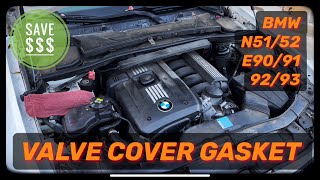
Helpful Videos
Used OEM Parts in Stock



New Aftermarket Parts Available


The information in this article is provided for general reference and educational purposes only. Vehicle specifications, procedures, and part compatibility can vary by production date, trim level, and region. Always consult your vehicle's factory service manual and verify part numbers before purchasing or performing repairs. Safety-critical components such as airbags, seat belts, and braking systems should be installed by a qualified professional.
- BMW 3-Series (E90/E91/E92/E93):
- 🎬 Helpful Videos
- 🛍️ Shop This Part
- What's Unique About the 2006-2013 BMW 3-Series (E90/E91/E92/E93)
- Symptoms You May Notice
- Most Likely Causes
- Rare But Worth Checking
- Diagnosis Steps
- Parts You'll Likely Need
- Related Codes That Often Appear With This One
- Platform-Specific Known Issues
- Mechanic-Grade Diagnostic Values
- Hidden / Shadow Codes Worth Checking
- Scan Tool Commands That Help
- Wiring & Ground Locations
- Real Owner Repair Stories
- "I Checked Everything" — The Actual Cause
- When the Usual Fixes Don't Work
- OEM Part Supersession History
- Model Year Variations Within This Range
- Diagnostic Flowchart
- Other Known Issues on This Vehicle
- Used vs. New Parts: Buying Guide for This Vehicle
- Real Owner Stories
- BMW 3-Series (E90) N52
- BMW 3-Series (E90) N52
- Related OBD-II Codes
- Frequently Asked Questions
- 🎟️ Get 5% Off