

P0305 on 2007-2012 Audi S5 4.2L V8: Cylinder 5 Misfire Causes and Fixes
P0305 indicates a misfire on cylinder 5. For the Audi S5 4.2L V8, this is most often caused by a failed ignition coil or a worn spark plug. If replacing those doesn't fix it, the cause is very likely carbon buildup on the intake valves, a common issue with this direct-injection engine that requires professional cleaning. Less common but possible causes include a failed fuel injector or a vacuum leak from a component like the PCV valve.
- P0305 means cylinder 5 (front, driver's side) is misfiring.
- Always start diagnosis by swapping the ignition coil from cylinder 5 to cylinder 6. This is a fast, free, and highly effective test.
- If coils and plugs are good, the cause is almost certainly carbon buildup on the intake valves, a known weakness of this engine requiring professional service.
- Do not drive if the check engine light is flashing, as you risk destroying your catalytic converters, a very expensive repair.
What's Unique About the 2007-2012 Audi S5
The 4.2L V8 (engine code: CAUA) in the B8 generation Audi S5 is a Fuel Stratified Injection (FSI) engine. This direct-injection design is highly susceptible to heavy carbon buildup on the intake valves. Unlike older port-injected engines where fuel would wash over and clean the valves, this design allows oil vapor and combustion byproducts from the PCV system to bake onto the hot valves, restricting airflow. This carbon accumulation is a primary cause of persistent misfires like P0305, especially after common ignition parts have been ruled out and on vehicles with over 60,000 miles.
Symptoms You May Notice
- Rough or shaking idle
- Flashing Check Engine Light, especially during acceleration
- Hesitation or stumbling when accelerating
- Noticeable loss of engine power
- A smell of raw fuel from the exhaust
- Engine runs rough under load, but may smooth out at higher RPM or steady cruise
- Slower than usual engine cranking on startup
- Replacing only the spark plug when the ignition coil was the actual problem.
- Replacing ignition and fuel parts multiple times when the root cause is severe carbon buildup on the intake valves.
- Assuming a catalytic converter is bad due to misfires, when the misfires are actually what damaged the converter in the first place.
Most Likely Causes
- Faulty Ignition Coil 🔴 High Probability Ignition coil failure is a very common maintenance item on Audi/VW engines of this era, often failing due to heat and age. Aftermarket performance coils are available, but OEM-spec replacements are generally reliable.
How to confirm: Swap the ignition coil from cylinder 5 with another cylinder (e.g., cylinder 6). Clear the codes and drive the car. If the code changes to P0306, the ignition coil is faulty. Cylinder 5 is the front-most cylinder on the driver's side (left side of the vehicle).
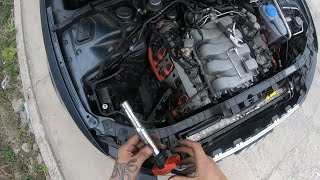
Typical fix: Replace the faulty ignition coil. 🎬 Watch: Step-by-step guide to replacing your S5 ignition coils. It is highly recommended to replace all eight coils at the same time, especially on a higher mileage vehicle, to prevent future failures. Use the latest OEM revision for best results.
Est. part cost: $30-$60 per coil for OEM-spec (Bosch, NGK), up to $150 per coil for performance versions. - Worn or Fouled Spark Plug 🔴 High Probability
How to confirm: After ruling out the ignition coil, swap the spark plug from cylinder 5 with another cylinder. If the misfire code moves, the spark plug is the cause. Visually inspect the plug for wear, oil fouling, or damage. A plug that smells strongly of gasoline can indicate a fuel delivery issue.
Typical fix: Replace the spark plug. It is best practice to replace all eight spark plugs at once to ensure even performance and to align with the service interval. NGK Laser Platinum plugs are a common OEM choice.
Est. part cost: $15-$30 per plug. - Intake Valve Carbon Buildup 🟡 Medium Probability This is a well-documented, widespread issue on Audi's FSI direct-injection engines, including the 4.2L V8. The lack of fuel washing over the intake valves allows carbon to accumulate, restricting airflow and causing misfires. This typically becomes a problem after 60,000-80,000 miles.
How to confirm: This requires a visual inspection using a borescope inserted into the intake ports after removing the intake manifold. The valves will be visibly coated in thick, black carbon deposits. Misfires across multiple cylinders are also a strong indicator.
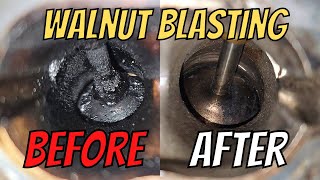
Typical fix: A professional 'carbon cleaning' service is required. The most effective method is walnut shell blasting, which uses crushed walnut shells to safely blast the carbon off the valves without damaging the engine. 🎬 See how to perform a DIY walnut shell carbon cleaning. This is a labor-intensive job.
Est. part cost: $50-$100 for intake manifold gaskets, which must be replaced. - Faulty Fuel Injector ⚪ Low Probability Direct injectors operate under high pressure and can become clogged by carbon deposits or fail electronically. Leaking injectors are also a known issue, which can cause a rich condition or, more dangerously, dilute the engine oil with fuel.
How to confirm: Diagnosis is more complex. A technician can perform tests to check fuel pressure and injector pulse. Swapping the injector with another cylinder (similar to a coil swap) can confirm the fault, but this is a much more labor-intensive job requiring intake manifold removal. A strong smell of fuel on the spark plug from cylinder 5 is a good indicator.
Typical fix: Replace the faulty fuel injector. It is often recommended to replace all injectors on the same bank, or all eight, if the vehicle has high mileage, as others may soon fail. Injector cleaning and flow testing is also an option.
Est. part cost: $100-$250 per injector.
Rare But Worth Checking
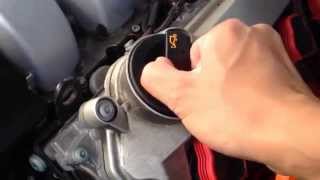
- Vacuum Leak: A leak in a vacuum hose or intake manifold gasket can introduce unmetered air, leaning out the air/fuel mixture and causing a misfire. A common but often overlooked source is a torn diaphragm in the PCV valve (oil separator), which creates an internal vacuum leak from the crankcase. A sign of a bad PCV is a strong vacuum at the oil filler cap when the engine is running. 🎬 Watch: How to diagnose a failing PCV valve on this engine. This may be accompanied by a lean code (e.g., P0171/P0174).
- Low Compression: A mechanical engine issue, such as a worn piston ring, a failing valve, a bad head gasket, or damage from timing chain failure, can cause a loss of compression in cylinder 5, leading to a misfire. A compression and/or leak-down test is needed to diagnose this.
- Intake Manifold Runner Flap Issue: The intake manifold has runner flaps that adjust airflow. If the actuator motor or the flaps themselves become stuck or fail, it can disrupt airflow and cause misfires and performance issues. This may be accompanied by codes for the intake manifold runner control.
Diagnosis Steps
- Read the fault codes with an OBD-II scanner. Confirm P0305 is present and note any other codes, such as P0300 or lean codes.
- If the Check Engine Light is flashing, avoid hard acceleration to protect the catalytic converters.
- Locate Cylinder 5. On the Audi 4.2L V8, the cylinders are numbered 1-4 on the passenger side (right side, front to back) and 5-8 on the driver's side (left side, front to back). Cylinder 5 is the front-most cylinder on the driver's side.
- Swap the ignition coil from cylinder 5 with the coil from cylinder 6 (the one behind it).
- Clear the codes and perform a test drive. Re-scan the codes. If the code is now P0306, the ignition coil is bad and needs replacement.
- If the code remains P0305, swap the spark plug from cylinder 5 with cylinder 6. Clear codes and test drive again. If the code is now P0306, the spark plug is bad.
- If the misfire still remains on cylinder 5, inspect the wiring and connector for the ignition coil and fuel injector on cylinder 5 for any damage or corrosion.
- Check for vacuum leaks. A common culprit is the PCV valve (oil separator). With the engine running, carefully try to remove the oil filler cap. If there is a very strong vacuum holding it down, the PCV diaphragm is likely torn.
- The next most probable cause is significant carbon buildup on the intake valves. This requires removing the intake manifold and inspecting the intake ports with a borescope. This is a common issue on cars over 60k miles.
- If valves are clean, the issue could be a faulty fuel injector. This is a more involved diagnosis and repair, often requiring professional tools to confirm.
- If all else fails, a mechanical problem is possible. A professional diagnosis involving a compression and leak-down test is recommended to check for internal engine damage.
Parts You'll Likely Need
- Ignition Coil
(OEM #06E905115G)— This is the most common failure point for a single-cylinder misfire on this engine. The part number has been revised multiple times; 06E905115G is the latest common revision, superseding F and E versions.
Related Codes That Often Appear With This One
- P0300 — If multiple cylinders are misfiring intermittently due to a common cause like carbon buildup or a vacuum leak, a P0300 (Random/Multiple Cylinder Misfire) code may be stored alongside P0305.
- P0301, P0302, P0303, P0304, P0306, P0307, P0308 — Codes for other specific cylinders may appear if the cause (like widespread carbon buildup or a failing PCV valve) affects more than just cylinder 5.
- P0171 / P0174 — These codes indicate the engine is running too lean on Bank 1 or Bank 2. A vacuum leak is a common cause for both lean conditions and misfires.
Technical Service Bulletins (TSBs) & Recalls
- TSB 2026747/11 - While not directly cited with full text, this TSB is frequently mentioned in forums in relation to misfires (P030x) on FSI engines caused by carbon accumulation on intake valves.
- TSB 2024492 - Often referenced regarding issues with the PCV / oil separator, which can cause lean conditions and misfires if the diaphragm fails.
- TSB Bulletin #A0124212069038_5 - This manufacturer bulletin provides information for cases where the MIL is illuminated specifically with cylinder misfire codes including P0300 through P0306.
- TSB Bulletin #A0123912069038_5 - A manufacturer service bulletin noting that the MIL may illuminate with DTCs P0300, P0301, P0302, P0303, P0304, P0305, and P0306.
Platform-Specific Known Issues
- The CAUA 4.2L FSI V8 engine is notorious for carbon buildup on the intake valves, which is a very common cause of misfire codes once the vehicle exceeds 60,000 miles. Many specialist shops consider carbon cleaning a routine maintenance item for these engines.
- A user on Audizine with a supercharged 2011 S5 experienced persistent misfires on one bank. After replacing nearly every component, the issue was traced back to clogged catalytic converters, which were likely damaged by a previous unresolved misfire condition caused by failed motor mounts.
- An AudiWorld forum member with a 2008 S5 had misfires on cylinders 3 & 6. After replacing plugs and a coil, the dealer recommended a carbon clean and injector replacement for $3800. This highlights how quickly diagnoses can escalate to the most common major issue (carbon) after basic ignition parts are ruled out.
Mechanic-Grade Diagnostic Values
- Fuel Injector Resistance — expected: Max 1.5 ohms. Failure: Resistance reading higher than 1.5 ohms indicates a faulty injector.
- Low-Side Fuel Pressure (Key On, Engine Off) — expected: ~6 bar. Failure: Significantly lower pressure (e.g., 1.6 bar) indicates a failing low-pressure fuel pump or sensor issue.
- Compression (PSI) — expected: 150-160 PSI per cylinder, with minimal variation between cylinders.. Failure: Significantly higher readings (e.g., 210-225 PSI) can indicate severe carbon buildup in the combustion chamber, while low readings suggest mechanical issues.
Scan Tool Commands That Help
- VCDS (VAG-COM): Misfire Counter - Measuring Blocks 015 & 016 — To monitor live misfire counts for each individual cylinder while the engine is running. Block 015 shows cylinders 1-3 and Block 016 shows cylinders 4-6. For the V8, additional blocks (like 19 & 20 in some older models) show the remaining cylinders. This helps confirm if the misfire is constant or intermittent and if it moves after swapping components.
- VCDS (VAG-COM): Advanced Measuring Blocks - Misfire Search — On newer UDS protocol ECUs, you can search for 'mis' in Advanced Measuring Blocks to find all misfire-related counters for each cylinder in one place. This is more efficient than searching through individual measuring block groups.
- VCDS (VAG-COM): Output Test - Intake Manifold Runner — To functionally test the intake manifold runner flap motors. This test cycles the flaps, allowing you to visually inspect the actuator linkages for movement and listen for operation. It helps diagnose if a flap is stuck, which can cause misfires at certain RPMs.
- VCDS (VAG-COM): Basic Setting - Intake Manifold Runner Adaptation — After replacing the intake manifold or servicing the runner flaps, this procedure is used to relearn the flap end-stops. It requires holding the brake and throttle pedals to activate.
Wiring & Ground Locations
- Engine/Chassis Ground — A primary grounding point is located on the left (driver's side) lower front long member of the chassis.. A poor engine or chassis ground can cause erratic behavior in various electronic components, including the ECU, ignition coils, and fuel injectors. This can lead to weak spark or incorrect injector timing, resulting in misfires that are difficult to diagnose as they may appear intermittent and not tied to a specific component failure.
Real Owner Repair Stories
- Audi Owners Club UK Forum (2008 Audi S5 4.2L V8 (B8)) — Rough idle and misfires on cylinders 5-8 (all of Bank 2).
❌ Tried (didn't work) Replacing spark plugs, Replacing ignition coils, Carbon cleaning intake valves, Swapping sensors from Bank 1 to Bank 2
✅ What actually fixed it The owner diagnosed low fuel rail pressure using VCDS (reading only 6 bar at idle). Replacing both High-Pressure Fuel Pumps (HPFP) resolved the misfires and the car ran correctly. - Reddit r/Audi (2008 Audi S5 4.2L V8, 100k miles) — Misfires on cylinders 1, 2, and 4. After replacing injectors for those cylinders, the misfires moved to cylinder 5 and a lean code appeared.
❌ Tried (didn't work) Replacing only the injectors for the misfiring cylinders (1, 2, 4).
✅ What actually fixed it The user created a new problem. By not replacing the intake manifold gaskets and the O-rings on the other injectors, a vacuum/unmetered air leak was likely created on Bank 2, causing the new misfire on cylinder 5 and the lean code. The implied fix is to re-do the job and replace all gaskets and injector seals.
"I Checked Everything" — The Actual Cause
- A common scenario on the 4.2L V8 is having random misfires (P0300) or a single cylinder misfire (like P0305) with lean codes, yet a smoke test reveals no external vacuum leaks. The actual cause is often a torn diaphragm in the PCV valve (oil separator). This creates a massive, unmetered air leak internally from the crankcase directly into the intake manifold. The tell-tale sign is an extremely strong vacuum at the oil filler cap when the engine is running, making the cap difficult to remove.
OEM Part Supersession History
06E905115, 06E905115A, B, C, D, E, F→06E905115G— Progressive updates by the manufacturer to improve reliability and performance and address premature failure issues related to heat and vibration.
Heads up: While older revisions may physically fit, it is highly recommended to use the latest available revision (currently 'G') for the best longevity and performance. Mixing old and new revisions on the same engine is not advised.
Model Year Variations Within This Range
- 2007-2012 (Coupe): The S5 Coupe used the 4.2L V8 for this entire period. However, starting in 2010, the S5 Cabriolet (convertible) model was introduced with the 3.0L supercharged V6. From model year 2013 onward, the facelifted S5 Coupe also switched to this V6 engine. Therefore, this guide is specific to the V8-equipped coupes.
Diagnostic Flowchart
Other Known Issues on This Vehicle
Issues unrelated to this code that are worth knowing about as an owner of this generation:
- Timing Chain Guide Failure 🔴 High — Less common on the S5's CAUA V8 than the earlier B6/B7 S4's 40-valve V8, but still a potential issue at higher mileage (100k+ miles). The failure of plastic guides can cause chain rattle on startup or, in worst cases, catastrophic engine damage.
- Thermostat Failure 🟠 Medium — The electronically controlled thermostat can fail, typically getting stuck open or closed. A stuck-open thermostat leads to a cold-running engine and poor fuel economy, while a stuck-closed thermostat will cause rapid overheating. Replacement is labor-intensive.
- Intake Manifold Runner Flap / Motor Failure 🟠 Medium — The plastic gears in the actuator motors for the intake manifold runner flaps can wear out, or the flaps can get stuck (often due to carbon buildup). This causes rough running, power loss, and specific fault codes.
- Coolant Leaks 🟠 Medium — Leaks from the water pump, thermostat housing, and various plastic coolant pipes are common as the car ages and plastic components become brittle from heat cycles.
- Leaking Fuel Injectors 🔴 High — Beyond causing misfires, injectors can leak fuel externally (fire hazard) or internally, dripping fuel into the cylinder. An internal leak can wash oil from the cylinder walls and dilute the engine oil, leading to severe engine bearing damage.
Used vs. New Parts: Buying Guide for This Vehicle
When a used part is the smart pick: For this repair, obtaining a used ignition coil or fuel injector from a reputable salvage yard can be a cost-effective diagnostic step, especially for confirming a fault by swapping a part. If the used part resolves the code, you can then decide to purchase a new replacement for long-term reliability. Major components like the intake manifold or engine wiring harness are also reasonable used purchases if damaged.
Donor-vehicle mileage cap: roughly under 80000 miles for the part to have meaningful remaining life.
What to inspect on the donor part:
- For ignition coils, check the plastic housing for cracks or signs of overheating (discoloration).
- For fuel injectors, inspect the tip for heavy carbon buildup and ensure the O-rings are intact (though they should always be replaced).
- Verify the donor vehicle was not in a front-end collision, which could damage engine components.
- Ask for the VIN to check the donor vehicle's service history if possible.
OEM-only on this vehicle (don't cheap out):
- PCV Valve / Oil Separator: Aftermarket versions are known to have poor quality diaphragms that fail quickly, recreating the original problem.
- Engine Sensors (Camshaft/Crankshaft): Critical for engine timing; aftermarket sensors have a high failure rate on German vehicles, leading to repeat diagnostics.
- Intake Manifold Gaskets and Fuel Injector Seals: These are single-use items and are inexpensive; always buy new OEM or OEM-supplier (e.g., Elring, Victor Reinz) parts to prevent leaks.
Aftermarket brands forum-validated for this vehicle:
- Ignition Coils: Bosch, NGK, Eldor (often the OEM supplier).
- Spark Plugs: NGK, Bosch.
- Fuel Injectors: Hitachi (OEM supplier). A professionally reconditioned OEM injector is often superior to a new, non-OEM part.
Brands owners have reported issues with on this vehicle:
- Unnamed/white-box ignition coils and injectors from online marketplaces. These often have a very high failure rate, sometimes within weeks of installation, and can perform worse than the original faulty part.
Real Owner Stories
Aggregated from forums and TSBs cited above. Mileages and costs reflect what owners reported in those sources.
2008 Audi S5 4.2L V8 — 62000 miles
Symptoms: Misfires on cylinders 3 and 6. After replacing plugs and a coil, the issue returned.
What fixed it: The dealer recommended a carbon clean and injector replacement.
Cost: $3800
Source hint: AudiWorld Forums thread titled '08 S5 Misfire Woes Please Help'
2011 Audi S5 4.2L V8 — ~75000 miles
Symptoms: Persistent misfires on one bank of the engine.
What fixed it: Clogged catalytic converters, which were damaged by a previous unresolved misfire condition caused by failed motor mounts.
Source hint: Audizine thread titled 'Audi S5 4.2L V8 misfiring on Bank 1 only'
2008 Audi S5 4.2L V8 — ~85000 miles
Symptoms: Misfires moved from cylinders 1, 2, and 4 to cylinder 5 after replacing injectors but failing to replace intake gaskets, resulting in a lean code.
What fixed it: Replacing fuel injectors and ensuring intake gaskets are properly handled.
Source hint: AudiWorld Forums thread titled 'Misfire Diagnosing on my S5'
Related OBD-II Codes
Frequently Asked Questions
Where is Cylinder 5 located on my Audi 4.2L V8 engine?
Is there a TSB for carbon buildup causing misfires on the S5?
Can a faulty PCV valve cause a P0305 code on my 2008 S5?
What is the recommended method for cleaning carbon off the intake valves?
Should I replace just the one faulty ignition coil or all eight?
What spark plugs should I use for my Audi S5 4.2L?
Helpful Videos

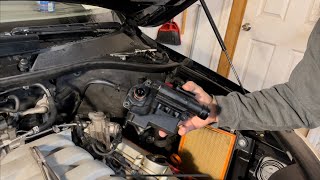
We Have This Part in Stock


The information in this article is provided for general reference and educational purposes only. Vehicle specifications, procedures, and part compatibility can vary by production date, trim level, and region. Always consult your vehicle's factory service manual and verify part numbers before purchasing or performing repairs. Safety-critical components such as airbags, seat belts, and braking systems should be installed by a qualified professional.
- Audi S5:
- 🎬 Helpful Videos
- 🛍️ Shop This Part
- What's Unique About the 2007-2012 Audi S5
- Symptoms You May Notice
- Most Likely Causes
- Rare But Worth Checking
- Diagnosis Steps
- Parts You'll Likely Need
- Related Codes That Often Appear With This One
- Technical Service Bulletins (TSBs) & Recalls
- Platform-Specific Known Issues
- Mechanic-Grade Diagnostic Values
- Scan Tool Commands That Help
- Wiring & Ground Locations
- Real Owner Repair Stories
- "I Checked Everything" — The Actual Cause
- OEM Part Supersession History
- Model Year Variations Within This Range
- Diagnostic Flowchart
- Other Known Issues on This Vehicle
- Used vs. New Parts: Buying Guide for This Vehicle
- Real Owner Stories
- 2008 Audi S5 4.2L V8 — 62000 miles
- 2011 Audi S5 4.2L V8 — ~75000 miles
- 2008 Audi S5 4.2L V8 — ~85000 miles
- Related OBD-II Codes
- Frequently Asked Questions
- 🎟️ Get 5% Off