

P0304 on 2014-2017 Mazda 6: Cylinder 4 Misfire Causes and Fixes
On a 2014-2017 Mazda 6, P0304 is almost always a failed ignition coil on cylinder 4. A Mazda TSB (01-014/16) addresses this known issue with faulty YUMEBISHI-supplied coils on 2014-2016 models. A new, updated MITSUBISHI coil (Part No. PE20-18-100B) costs $40-$150 and is a very simple 10-minute DIY replacement. If not the coil, the next most likely cause is a worn spark plug, especially over 75,000 miles.
- For a P0304 code on a 2014-2017 Mazda 6, the most likely cause is a bad ignition coil on cylinder 4.
- A specific Mazda TSB (01-014/16) addresses this common failure point for 2014-2016 models.
- The easiest way to diagnose the problem is to swap the ignition coil from cylinder 4 with another cylinder and see if the code follows.
- Do not drive for extended periods with a flashing check engine light, as this can cause expensive damage to the catalytic converter.
- If new coils and plugs do not fix the misfire, the next most likely cause is carbon buildup on the intake valves, a known issue for direct-injection engines.
What's Unique About the 2014-2017 Mazda 6
The 2014-2017 Mazda 6 with the 2.5L Skyactiv-G engine has a well-documented issue with ignition coils that leads to misfire codes like P0304. Mazda issued a Technical Service Bulletin (TSB 01-014/16) for 2014-2016 models because ignition coils from a specific supplier, YUMEBISHI, were prone to premature failure due to internal breakdown from temperature swings. The bulletin advises identifying and replacing these with the more robust MITSUBISHI-made coils. As a direct injection engine, this platform is also susceptible to carbon buildup on the intake valves, which can cause misfires that are often mistaken for ignition or fuel system faults, typically after 60,000-80,000 miles.
Symptoms You May Notice
- Check engine light is on (solid or flashing)
- Rough or shaky idle, sometimes worse with A/C on
- Engine hesitation or stumbling during acceleration
- Noticeable loss of engine power
- Reduced fuel economy
- Smell of unburned fuel from the exhaust
- Car enters 'limp mode' under heavy acceleration
- Replacing spark plugs when the true cause is a faulty ignition coil, which is a known TSB-documented issue on this specific vehicle.
- Replacing ignition and fuel components when the underlying issue is heavy carbon buildup on the intake valves, a common trait of GDI engines that is often overlooked.
- Assuming a bad fuel pump when only a single cylinder is misfiring. A fuel pump issue would typically affect all cylinders and cause different codes (e.g., P0087 Fuel Rail/System Pressure - Too Low).
Most Likely Causes
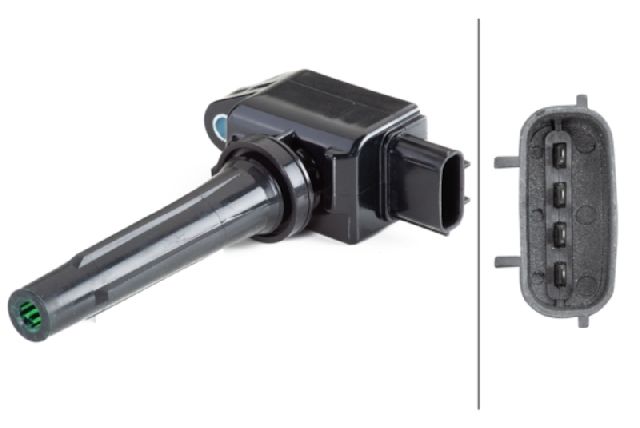
- Faulty Ignition Coil 🔴 High Probability Mazda TSB 01-014/16 identified a batch of ignition coils from supplier YUMEBISHI on 2014-2016 models that were prone to internal failure. The TSB notes this is due to large temperature fluctuations. The recommended replacement is the more reliable MITSUBISHI-made coil.
How to confirm: Swap the ignition coil from cylinder 4 (closest to the driver's side) with another cylinder (e.g., cylinder 3). Clear the codes and drive. If the code changes to P0303, the coil is the confirmed problem. The faulty YUMEBISHI coils can sometimes be identified by a 4-digit lot number, whereas the good MITSUBISHI coils have a 5-digit lot number.
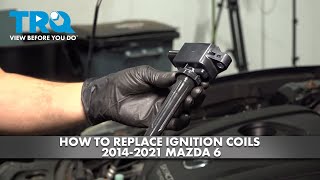
Typical fix: Replace the faulty ignition coil. It is often recommended to replace all four if they are original and the vehicle has high mileage, though only the failed one is necessary. The updated part is PE20-18-100B. 🎬 Watch: How to replace your ignition coils in minutes.
Est. part cost: $40-$150 - Worn or Fouled Spark Plug 🔴 High Probability The recommended service interval for the original NGK Iridium spark plugs is 75,000 miles. Many misfires occur simply because this maintenance has been neglected. A worn plug puts extra strain on the ignition coil, potentially causing it to fail sooner.
How to confirm: After ruling out the ignition coil, remove the spark plug from cylinder 4. Inspect it for wear (rounded electrode), carbon fouling, or oil contamination. A healthy plug should be clean with a light tan color. You can also swap it with another cylinder's plug to see if the misfire code follows.
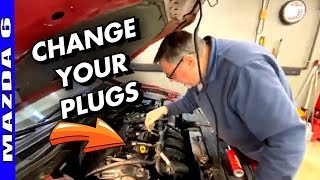
Typical fix: Replace the spark plug in cylinder 4. It is best practice to replace all four spark plugs at the same time 🎬 See this step-by-step guide for replacing your spark plugs. to ensure balanced performance.
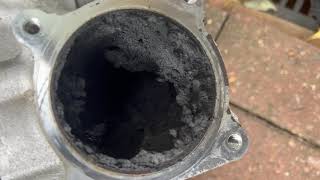
Est. part cost: $15-$30 per plug - Intake Valve Carbon Buildup 🟡 Medium Probability Like most Gasoline Direct Injection (GDI) engines, the Skyactiv-G sprays fuel directly into the cylinder, meaning no fuel washes over the intake valves. Oil vapors from the PCV system can bake onto the hot valves, forming carbon deposits that disrupt airflow and cause misfires, especially on cold starts or at idle. This typically becomes a concern after 60,000-80,000 miles.
How to confirm: This requires a visual inspection using a borescope inserted into the intake manifold runners. This is typically done after ignition and fuel delivery issues have been ruled out.
Typical fix: Professional intake valve cleaning, most commonly done via walnut shell blasting. This service typically costs between $400 and $800.
Est. part cost: $0 (service-based) - Clogged or Faulty Fuel Injector ⚪ Low Probability
How to confirm: This is more difficult to diagnose. A technician can perform a fuel injector balance test. Sometimes, this code is accompanied by a P0204 (Injector Circuit) code, which points more directly to the injector or its wiring. An owner on a forum reported replacing the injector after coils and plugs didn't solve the issue.
Typical fix: Replace the fuel injector for cylinder 4. This is more involved on a direct-injection engine and may require special tools and new seals.
Est. part cost: $150-$300
Rare But Worth Checking
- Restricted Exhaust (Frozen Muffler): In freezing climates, Mazda TSB 01-007/19 notes that water from condensation can accumulate and freeze in the muffler, creating an exhaust restriction that can cause misfires (P0300-P0304) on a cold start. Manufacturer service bulletin #01-006-18-3429 also confirms that frozen water in the main silencer can restrict exhaust flow and trigger P0304.
- Low Engine Compression: If all ignition and fuel-related causes are ruled out, a mechanical issue like a worn piston ring, leaking head gasket, or a problem with a valve could be the cause. A compression test is the definitive diagnostic step for this.
Diagnosis Steps
- Check for other DTCs. The presence of other codes (like P0204 or P0300) can provide important clues. Manufacturer service bulletin #SA-022-19 notes that P0304 may be stored alongside codes like P0340:00, P3400:00, or P349B:00, which may be accompanied by engine noise or a lack of power.
- Perform an ignition coil swap. Move the ignition coil from cylinder 4 to cylinder 3. Clear the codes and test drive. If the code changes to P0303, you have found the faulty coil. This is the most important and effective diagnostic step for this vehicle.
- Inspect the ignition coil connector and wiring for any signs of damage or corrosion.
- Inspect the spark plug. If the coil swap doesn't move the misfire, remove and inspect the spark plug from cylinder 4. Look for signs of wear, fouling, or damage. Replace if it is worn or past its 75,000-mile service life.
- Check the fuel injector. Listen to the injector with a mechanic's stethoscope; it should have a consistent clicking sound. This step is less definitive and may require professional tools for a proper diagnosis.
- Inspect for carbon buildup. If the car has over 60,000 miles and the misfire is most noticeable on cold starts, use a borescope to inspect the intake valves for carbon deposits.
- Perform a compression test. If all other tests fail, a compression test will identify any mechanical engine problems within cylinder 4.
Parts You'll Likely Need
- Ignition Coil
(OEM #PE20-18-100B (Supersedes PE20-18-100A))— This is the most common cause of P0304 on this vehicle due to a known issue with the original supplier's parts, as documented in Mazda TSB 01-014/16. The 'B' revision is the updated, more reliable part.
Trusted brands: Mazda (Mitsubishi), NGK, Delphi, Denso
OEM price range: $140-$180
Aftermarket price range: $40-$90 - Iridium Spark Plug
(OEM #PE5R-18-110 (NGK ILKAR7L11))— Spark plugs are a primary wear item and a common cause of misfires if they are past their 75,000-mile replacement interval.
Trusted brands: NGK, Denso
OEM price range: $25-$40
Aftermarket price range: $15-$25 - Fuel Injector
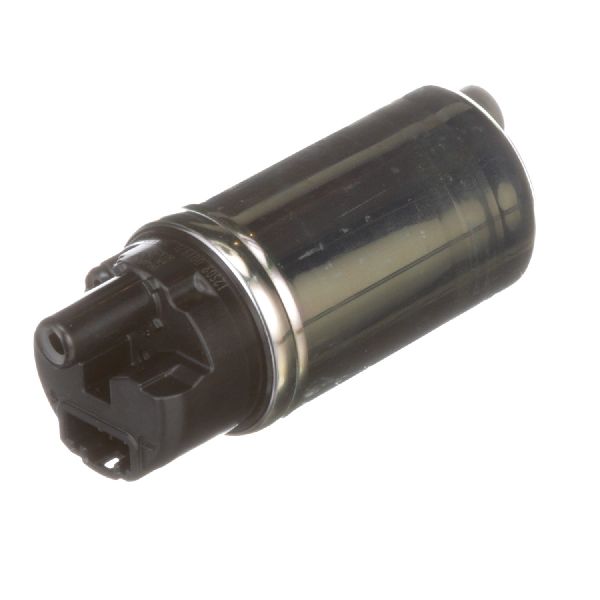
(OEM #PY01-13-250)— Less common than ignition issues, but a clogged or failing injector can cause a persistent misfire in a single cylinder that isn't resolved by new plugs and coils.
Trusted brands: Mazda (OEM), Bosch
OEM price range: $250-$310
Aftermarket price range: $100-$180
Related Codes That Often Appear With This One
- P0300 — This is a 'Random/Multiple Cylinder Misfire' code. It may appear alongside P0304 if the misfire is intermittent, severe, or if the underlying cause (like a vacuum leak or bad fuel) is starting to affect other cylinders.
- P0204 — This code means 'Injector Circuit/Open - Cylinder 4'. Mazda TSBs note that misfire codes and injector circuit codes are often stored together, pointing towards a fuel injector or wiring harness issue.
- P0301, P0302, P0303 — If other cylinder-specific misfire codes are present, it suggests a problem affecting the entire engine, such as a large vacuum leak, low fuel pressure, or a restricted exhaust. Manufacturer service bulletin #01-001-23a notes that for turbo engines, customers may complain of poor acceleration and rough idling with DTCs P0301:00 through P0304:00.
Technical Service Bulletins (TSBs) & Recalls
- 01-014/16 (superseded by 01-014-16-3208A) — Addresses lack of power, rough idle, and misfire DTCs P0300-P0304. It identifies that ignition coils from the supplier YUMEBISHI are prone to internal failure due to large temperature differences. The fix is to replace them with MITSUBISHI-produced coils. The bulletin explicitly covers 2014-2016 Mazda 6, 2014-2016 Mazda 3, and 2013-2016 CX-5 models.
- 01-007/19 (supersedes 01-006/18) — For vehicles in freezing climates, this TSB notes that a rough idle and misfire codes (P0300-P0304) can be caused by water accumulating and freezing in the main silencer (muffler), creating an exhaust restriction. This applies to the 2014-2017 Mazda 6 among other models.
- Bulletin #01-007-19-3541 — This manufacturer bulletin further documents that P0300 through P0304 can be caused by frozen water accumulated in the main silencer, which restricts exhaust flow.
- Bulletin #SA-022-19 — This bulletin addresses customer complaints of lack of power, rough idle, or engine noise with stored DTCs including P0304:00 and P0340:00.
Platform-Specific Known Issues
- TSB 01-014/16: For 2014-2016 models, Mazda identified a batch of faulty ignition coils from supplier YUMEBISHI that were prone to internal failure. The bulletin advises replacing them with the more reliable MITSUBISHI-produced coils (Part No. PE20-18-100A, now superseded by PE20-18-100B).
Mechanic-Grade Diagnostic Values
- Engine Compression — expected: 160-170 PSI per cylinder, with minimal variation between cylinders.. Failure: A reading on cylinder 4 that is significantly lower (e.g., below 125 PSI) than the others indicates a mechanical engine issue.
- High-Pressure Fuel System (Direct Injection) — expected: Up to 200 bar (approx. 2900 PSI).. Failure: Pressure readings that are significantly low or erratic can cause misfires, though this usually affects multiple cylinders.
- Short-Term/Long-Term Fuel Trims (STFT/LTFT) — expected: Close to 0%, typically within +/- 10%.. Failure: Strongly negative fuel trims (e.g., -20%) alongside a P0304 suggest the PCM is subtracting fuel to compensate for a leak, very likely from a faulty fuel injector on cylinder 4.
Hidden / Shadow Codes Worth Checking
- Mode $06, TID $A5: This is not a typical DTC, but a raw data monitor for 'Misfire counts for cylinder 4'. It tracks the number of misfires detected during the current or last 10 driving cycles, even if the count isn't high enough to trigger a P0304 code. (see via Use an advanced OBD-II scan tool or software (like FORScan) that can access Mode $06 test results. Seeing a high or climbing count on TID $A5 confirms the misfire is on cylinder 4.)
Scan Tool Commands That Help
- Advanced Scan Tool (e.g., Autel, FORScan): Cylinder Power Balance Test — This function individually disables each cylinder's fuel injector or ignition coil to measure the RPM drop. A cylinder with a smaller RPM drop than the others is not contributing as much power, helping to pinpoint the misfire location without swapping parts.
- Advanced Scan Tool (e.g., Autel): Fuel Injector Cut-Off — A technician can use a bidirectional command to shut off the fuel injector to a specific cylinder (e.g., cylinder 4) to see if it induces a misfire count in Mode $06. This helps verify that the PCM's misfire detection system is working correctly before chasing a phantom problem.
Wiring & Ground Locations
- Ignition Coil Connector (C1-04) — On top of the valve cover, plugged into the ignition coil for cylinder 4 (the cylinder closest to the driver's side/transmission).. Damage to the connector or its wiring can interrupt the signal from the PCM, preventing the coil from firing. Check for 12V power, ground, and the trigger signal from the PCM at the connector pins.
- Main Engine Ground — Typically a thick cable bolted from the engine block or transmission housing directly to the vehicle's chassis or battery negative terminal.. A loose or corroded main engine ground can cause a weak spark across all cylinders, but it can sometimes manifest as an intermittent misfire on a single cylinder under certain load conditions before affecting the others.
Real Owner Repair Stories
- YouTube channel 'Repairs and Stuff' (Mazda with 2.5L Skyactiv-G engine) — P0304 and P0172 (System Too Rich), rough running, smoke from exhaust.
❌ Tried (didn't work) Initial diagnosis might point to ignition, but the P0172 code was the key.
✅ What actually fixed it The spark plug in cylinder 4 was wet with fuel. A scan tool showed fuel trims at -20%. This indicated a leaking fuel injector. Replacing the fuel injector for cylinder 4 resolved both the misfire and the rich condition. - Mazdas247 forum user (2013 Mazda CX-5 2.0L with 130k miles (engine technology is directly comparable)) — P0304 and sometimes P0300, hesitation only under load at lower RPM.
❌ Tried (didn't work) Replaced all 4 spark plugs, Swapped coil #4 with #3 (misfire did not move), Cleaned MAF sensor, Replaced all 4 ignition coils
✅ What actually fixed it The user noted that Long Term Fuel Trims were maxed out. The final fix was replacing the front wideband O2 sensor (Air-Fuel Ratio Sensor). The faulty sensor was providing incorrect data, causing the PCM to create a poor fuel mixture that led to the misfire under load. - Reddit user in r/CarRepair (2016 Mazda CX-5 with 178k miles) — Recurring P0304, smell of unburnt gas.
❌ Tried (didn't work) Replaced spark plugs (multiple times), Replaced all four ignition coils
✅ What actually fixed it After replacing ignition and spark components failed to solve the recurring issue, the user replaced the fuel/gas cap. This seemingly resolved the code and the smell of fuel. - NHTSA ODI #11675874 — An owner reported that after various lights and messages were activated, a scan revealed P0300 and P0304. The owner noted there was a recall on the particular vehicle make and model, though their vehicle was out of the coverage range.
"I Checked Everything" — The Actual Cause
- A common diagnostic path for misfires is a smoke test to find vacuum leaks. However, in one documented case, the root cause was a faulty front Air-Fuel Ratio (O2) sensor. A smoke test would have come back clean, leading a technician to suspect more complex issues. The faulty sensor was sending bad data to the computer, causing an incorrect air-fuel mixture and a misfire only under specific load conditions, which would not be found with a smoke test at idle.
OEM Part Supersession History
PE01-18-100, PE01-18-100A, P51B-18-100, PE20-18-100A→PE20-18-100B— Standard part evolution for improved reliability. The key change was moving from the failure-prone YUMEBISHI supplier (often identified by a 4-digit lot number) to the more robust MITSUBISHI supplier (5-digit lot number).
Model Year Variations Within This Range
- 2016-2017: The 2016 model year marked a mid-cycle refresh (GL series) which included a significantly updated interior with a new dashboard layout and infotainment system. However, for the purposes of diagnosing P0304, the core PY-VPS engine, ignition system, and fuel system remained unchanged from the 2014-2015 models.
Diagnostic Flowchart
Other Known Issues on This Vehicle
Issues unrelated to this code that are worth knowing about as an owner of this generation:
- Infotainment Screen 'Ghost Touch' & Delamination 🟠 Medium — Very common, especially on 2016-2017 models. Often triggered by heat. The screen registers phantom touches, making the system unusable. (Ref: Mazda issued a warranty extension for this issue on some models. A common DIY fix is to disconnect the touchscreen digitizer ribbon cable, disabling touch but restoring usability via the commander knob.)
- Premature Wheel Bearing Failure 🟠 Medium — A notable number of owners report noisy wheel bearings requiring replacement at lower-than-expected mileage (as low as 40k-60k miles).
- Transmission Whine (Early 2014 Models) 🔴 High — Some early 2014 models with automatic transmissions developed a whining noise, diagnosed as a bad transmission requiring replacement. This seems to be isolated to the first model year.
- Engine Front/Timing Cover Oil Seepage 🟡 Low — A minor oil seep or leak can develop from the engine front cover, becoming visible as dust and grime accumulate on the area. It is generally a slow leak that does not cause a significant loss of oil. (Ref: Mazda has issued service bulletins regarding the proper resealing procedure for this cover during service.)
- Abnormal Ticking/Clicking from Engine on Cold Start 🟡 Low — Many owners report a ticking sound from the engine, particularly when cold. This is often attributed to noisy hydraulic valve lash adjusters. It is generally considered a characteristic of the engine and not a sign of imminent failure, though it can be more pronounced on high-mileage vehicles.
Used vs. New Parts: Buying Guide for This Vehicle
When a used part is the smart pick: An ignition coil is a reasonable part to buy used, but only if you can verify it is the updated MITSUBISHI-made part (often has a 5-digit lot number) from a low-mileage donor vehicle. Given the low cost of a new aftermarket coil, buying used is often not worth the risk unless it's an OEM part in excellent condition.
Donor-vehicle mileage cap: roughly under 60000 miles for the part to have meaningful remaining life.
What to inspect on the donor part:
- For an ignition coil, check for the MITSUBISHI branding or a 5-digit lot number.
- Avoid coils that are visibly cracked, melted, or have corrosion on the electrical connector pins.
- Ensure the rubber boot is pliable and not dry-rotted or torn.
OEM-only on this vehicle (don't cheap out):
- Fuel Injector: Direct injection fuel injectors are high-precision components. While aftermarket options exist, forums and mechanics often recommend sticking with OEM (Mazda or Bosch) to avoid issues with flow rates, spray patterns, and sealing that can cause persistent problems.
Aftermarket brands forum-validated for this vehicle:
- NGK and Denso are consistently recommended for both spark plugs and ignition coils, often being the original equipment manufacturer.
Brands owners have reported issues with on this vehicle:
- While not definitively bad, be cautious with no-name or generic 'white box' ignition coils from online marketplaces. Their failure rates are often higher than established brands.
Real Owner Stories
Aggregated from forums and TSBs cited above. Mileages and costs reflect what owners reported in those sources.
2015 Mazda 3 2.5L
Symptoms: Engine hesitation or stumbling during acceleration and the car entering 'limp mode' under heavy acceleration.
What fixed it: The owner suspected a fuel injector issue after swapping plugs and coils did not move the misfire from cylinder 4.
Source hint: Reddit r/mazda3 - Cylinder 4 misfire (P0304)
2013-2016 Mazda CX-5 2.5L
Symptoms: P0304 code present; dealer recommended replacing all four coils based on the TSB.
What fixed it: Replacing all four ignition coils with the updated MITSUBISHI versions.
Source hint: Mazdas247 Forum - CX-5 2.0L - P0304 P0171 - Help needed please
2014-2017 Mazda 6 2.5L — ~70000 miles
Symptoms: Misfire most noticeable on cold starts or at idle.
What fixed it: Professional intake valve cleaning via walnut shell blasting to remove carbon deposits.
Source hint: Article Context - Intake Valve Carbon Buildup section
Related OBD-II Codes
Frequently Asked Questions
Does TSB 01-014/16 apply to my 2014-2016 Mazda 6?
How can I tell if I have the 'bad' ignition coils mentioned in the TSB?
My Mazda 6 has a rough idle and P0304 in freezing weather; could it be the muffler?
When should I replace the spark plugs on my 2.5L Skyactiv-G to prevent misfires?
I've replaced my coils and plugs but still have a P0304; what is the next likely cause?
Is there a specific diagnostic trick for the P0304 code on this car?
Helpful Videos
Used OEM Parts in Stock

New Aftermarket Parts Available


The information in this article is provided for general reference and educational purposes only. Vehicle specifications, procedures, and part compatibility can vary by production date, trim level, and region. Always consult your vehicle's factory service manual and verify part numbers before purchasing or performing repairs. Safety-critical components such as airbags, seat belts, and braking systems should be installed by a qualified professional.
- Mazda 6:
- 🎬 Helpful Videos
- 🛍️ Shop This Part
- What's Unique About the 2014-2017 Mazda 6
- Symptoms You May Notice
- Most Likely Causes
- Rare But Worth Checking
- Diagnosis Steps
- Parts You'll Likely Need
- Related Codes That Often Appear With This One
- Technical Service Bulletins (TSBs) & Recalls
- Platform-Specific Known Issues
- Mechanic-Grade Diagnostic Values
- Hidden / Shadow Codes Worth Checking
- Scan Tool Commands That Help
- Wiring & Ground Locations
- Real Owner Repair Stories
- "I Checked Everything" — The Actual Cause
- OEM Part Supersession History
- Model Year Variations Within This Range
- Diagnostic Flowchart
- Other Known Issues on This Vehicle
- Used vs. New Parts: Buying Guide for This Vehicle
- Real Owner Stories
- 2015 Mazda 3 2.5L
- 2013-2016 Mazda CX-5 2.5L
- 2014-2017 Mazda 6 2.5L — ~70000 miles
- Related OBD-II Codes
- Frequently Asked Questions
- 🎟️ Get 5% Off