

P0304 on 2025-2026 Jeep Compass: Cylinder 4 Misfire Causes and Fixes
P0304 on a Jeep Compass is a cylinder 4 misfire, most often caused by a bad ignition coil or a fouled spark plug. For models with the 2.4L engine, the root cause is frequently a leaking valve cover gasket that damages the coil. The 2025-2026 models primarily use the 2.0L Turbo engine, where causes are more typical wear or potential carbon buildup. Expect to pay $20-$75 for a coil or plug, or $150-$300 for a valve cover gasket replacement.
- P0304 means cylinder 4 is misfiring. Do not ignore a flashing check engine light, as it can lead to costly catalytic converter damage.
- The most effective first step in diagnosis is to swap the ignition coil and then the spark plug from cylinder 4 to another cylinder to see if the misfire code follows the part.
- If your Compass has the 2.4L engine, inspect the spark plug well for oil when you remove the coil. Oil presence confirms a leaking valve cover gasket is the likely root cause.
- When replacing an oil-damaged ignition coil, you must also replace the valve cover gasket to prevent the new part from failing for the same reason.
What's Unique About the 2025-2026 Jeep COMPASS
While P0304 is a generic misfire code, its diagnosis on the Jeep Compass 🎬 Watch: This breakdown helps you find the real cause fast. is often specific to the engine. The 2025-2026 models primarily feature the 2.0L Turbo GME T4 engine, where misfires are typically due to standard component wear (plugs, coils) or, less commonly, carbon buildup on intake valves due to its GDI design. In contrast, many previous generation Compasses (2017-2022) used the 2.4L 'Tigershark' engine, which is notorious for valve cover gaskets that leak oil directly into the spark plug tubes. This oil saturation is a very common root cause of ignition coil and spark plug failure, making it a primary suspect for a P0304 code on that specific powertrain.
🎬 See common misfire causes for the 2.4L engine.Diagnostic Flowchart
Tap your situation to follow the diagnostic path that matches what you're seeing on this vehicle.
Generation note: The 2025-2026 model years primarily use the 2.0L Turbo GME T4 engine. However, many previous model years (approx. 2017-2022) used the 2.4L 'Tigershark' engine, and the causes for P0304 can differ significantly between them. Issues on the 2.4L often trace back to oil leaks from the valve cover gasket, while the 2.0L Turbo issues are more typically standard wear or potential GDI-related carbon buildup.
Symptoms You May Notice
- Check engine light is on (solid or flashing).
- Unstable or rough idle.
- Abnormal engine noise or tapping. [TSB #14-003-26, 37]
- Reduced engine power and poor acceleration.
- Engine hesitation or stumbling.
- Poor fuel economy.
- Smell of unburned fuel from the exhaust.
- Replacing only the ignition coil on a 2.4L engine without addressing the leaking valve cover gasket that caused it to fail. The new coil will soon fail from the same oil contamination.
Most Likely Causes
- Faulty Ignition Coil 🔴 High Probability On 2.4L engines, the spark plug tube seals in the valve cover gasket are prone to leaking oil, which pools in the spark plug well and saturates the ignition coil boot, causing it to fail. On the 2.0L Turbo, it's a standard wear item.
How to confirm: Swap the ignition coil from cylinder 4 with another cylinder (e.g., cylinder 3). Clear the codes and drive. If the code changes to P0303, the ignition coil is faulty. When you remove the coil, inspect it and the spark plug well for any signs of oil, which points to a leaking valve cover gasket as the root cause.
Typical fix: Replace the faulty ignition coil. If oil was present on the 2.4L engine, you MUST also replace the valve cover gasket and spark plug tube seals to prevent the new coil from failing.
Est. part cost: $40-$75 - Worn or Fouled Spark Plug 🔴 High Probability On the 2.4L engine, known oil consumption issues and leaking valve cover gaskets can cause spark plugs to become fouled with carbon and oil deposits, leading to a weak or non-existent spark. On both engines, spark plugs are a routine maintenance item that eventually wears out.
How to confirm: After confirming the coil is good, swap the spark plug from cylinder 4 with another cylinder (e.g., cylinder 2). If the code moves to P0302, the spark plug is bad. Inspect the plug for heavy carbon buildup, oil, or a worn electrode.
Typical fix: Replace the spark plug. It is best practice to replace all four spark plugs at the same time. If the old plug was fouled with oil, the underlying cause (like a leaking valve cover gasket on the 2.4L) must also be addressed.
Est. part cost: $15-$40 for a set of four - Leaking Valve Cover Gasket (2.4L Engine) 🔴 High Probability This is a well-documented, extremely common issue on the 2.4L 'Tigershark' engine used in many Jeep Compass models. The seals for the spark plug tubes are integrated into the gasket and frequently fail, allowing oil to destroy the coil and plug.
How to confirm: When you remove the ignition coil from cylinder 4, use a flashlight to look deep into the spark plug well. The presence of liquid oil is a definitive sign that the gasket has failed.
Typical fix: Replace the valve cover gasket along with the integrated spark plug tube seals and grommets. This is often done at the same time as replacing the oil-damaged ignition coil and spark plugs.
Est. part cost: $30-$80 - Faulty Fuel Injector ⚪ Low Probability
How to confirm: If swapping the coil and spark plug does not move the misfire, the injector is a possible cause. You can test this by swapping the fuel injector between cylinders, but this is a more involved job. A simpler first step is to listen to the injector with a mechanic's stethoscope to ensure it is clicking consistently.
Typical fix: Replace the faulty fuel injector.
Est. part cost: $50-$120
Rare But Worth Checking
- Low Engine Compression: If ignition and fuel systems check out, a mechanical issue could be the cause. This is rare but serious, potentially involving worn piston rings, a failing head gasket, or a problem with the cylinder head valves. A compression test is the definitive way to diagnose this.
- Vacuum Leak: A leak in a vacuum hose or the intake manifold gasket can introduce unmetered air and disrupt the air/fuel ratio enough to cause a misfire.
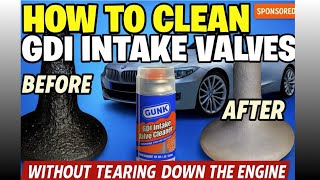
- Carbon Buildup on Intake Valves (2.0L Turbo): The 2.0L Turbo is a Gasoline Direct Injection (GDI) engine. In GDI engines, fuel is injected directly into the cylinder, so it doesn't wash over and clean the intake valves. Over time, oil vapors from the PCV system can bake onto the valves, restricting airflow and causing misfires. This requires physical cleaning, like walnut blasting, or specialized chemical treatments. 🎬 Watch: An easy way to clean GDI intake valves.
Diagnosis Steps
- Check for other stored trouble codes to see if the problem is isolated to cylinder 4.
- Move the ignition coil from cylinder 4 to cylinder 3. Clear the codes and run the engine to see if the misfire code changes to P0303. If it does, the coil is bad.
- While the coil is out (especially on a 2.4L engine), use a flashlight to inspect the spark plug tube for pooled oil. If oil is present, the valve cover gasket is leaking and is the root cause.
- If the code remains P0304 after the coil swap, move the spark plug from cylinder 4 to cylinder 2. If the code changes to P0302, the spark plug is bad.
- If the misfire is still on cylinder 4, inspect the wiring and connector for the fuel injector on cylinder 4 for any damage or loose connections.
- Listen to the fuel injector with a stethoscope or long screwdriver to confirm it is making a consistent clicking sound.
- If all of the above steps fail to find the issue, consider a fuel pressure test or a mechanical engine compression test to check for more serious problems like a bad fuel pump or internal engine damage.
Parts You'll Likely Need
- Ignition Coil
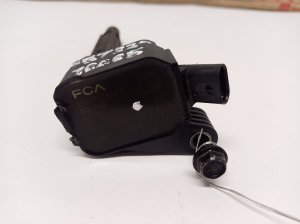
(OEM #Mopar 68242285AA (For 2.0L Turbo))— This is one of the most common failure points for a P0304 code. On 2.4L engines, it is often damaged by leaking oil.
Trusted brands: Mopar, NGK, Delphi
OEM price range: $60-$90
Aftermarket price range: $40-$75 - Spark Plug
(OEM #Mopar SP149125AE (For 2.0L Turbo, Iridium))— Spark plugs are a regular maintenance item and can become worn or fouled by oil/carbon, causing a misfire.
Trusted brands: Champion, NGK, Denso
OEM price range: $15-$25 per plug
Aftermarket price range: $8-$18 per plug - Valve Cover Gasket Set (For 2.4L Engine)
(OEM #Mopar 4884762AA, Fel-Pro VS50698R)— On the 2.4L engine, the spark plug tube seals within this gasket are a common failure point, leading to oil leaks that destroy the ignition coils. It's the root cause of many P0304 codes on this platform.
Trusted brands: Mopar, Fel-Pro, Mahle
OEM price range: $60-$100
Aftermarket price range: $30-$80
Related Codes That Often Appear With This One
- P0300 — This code for a random/multiple cylinder misfire can appear if the underlying issue, like a vacuum leak, low fuel pressure, or severe carbon buildup, begins to affect other cylinders. [1, TSB #14-003-26]
- P0301, P0302, P0303 — Misfire codes for other cylinders may appear if the root cause affects the entire engine. [1, TSB #14-003-26]
- P006C — This code for 'MAP - Turbocharger Inlet Pressure Correlation' is cited along with misfire codes in a manufacturer TSB, suggesting a potential related diagnostic path. [TSB #14-009-25 REV. D, TSB #09-016-25]
- P1336 — This manufacturer-specific code for 'Combustion misfiring (impact on catalytic converter)' is directly linked to misfire codes like P0304 in a TSB. [TSB #09-026-25]
- P016F — A TSB for other Jeep models (TSB 18-158-22) links misfire codes with P016F 'Closed Loop Fuel Pressure Control At Limit - Pressure Too Low', indicating a fuel delivery issue could be the root cause.
Technical Service Bulletins (TSBs) & Recalls
- 14-003-26
- 14-009-25 REV. D
- 09-026-25
- 09-016-25
- 18-158-22
Platform-Specific Known Issues
- The 2.4L 'Tigershark' engine, used in many Compass models, has a wi
Mechanic-Grade Diagnostic Values
- High-Pressure Fuel System (2.0L Turbo) — expected: Ranges from 500-2,500 PSI, increasing with engine load.. Failure: Actual pressure shown on a scan tool does not match the commanded pressure, especially during acceleration.
- Low-Pressure Fuel System (All Engines) — expected: 50-65 PSI at idle.. Failure: Pressure drops below 50 PSI at idle or significantly under load.
- Spark Plug Gap (2.0L Turbo GME-T4) — expected: ~0.026 inches for OEM NGK Iridium plugs.. Failure: An incorrect gap can cause immediate misfires.
- Cylinder Leak-Down Test — expected: Less than 25% leakage per cylinder.. Failure: Leakage greater than 25% indicates a mechanical sealing problem with rings, valves, or head gasket.
- Engine Oil Viscosity (2.0L Turbo) — expected: 5W-30 full synthetic oil.. Failure: Using incorrect oil weight can lead to damage of turbo bearings or other engine components.
Hidden / Shadow Codes Worth Checking
- Misfire Counter Live Data: This is not a stored code but real-time data accessible via a professional scan tool. It shows the exact number of misfire events per cylinder as they happen, allowing a technician to confirm the misfire is isolated to cylinder 4 and observe its frequency under different engine loads (idle vs. acceleration). (see via Use a scan tool with live data capability, such as the dealer-level Witech. The specific monitor in Witech is often found under PCM > OBD II Monitors > 'Which cylinder is misfiring'.)
Scan Tool Commands That Help
- Witech or equivalent bidirectional scan tool: Cylinder Power Balance Test / Fuel Injector Kill Test — This is a crucial diagnostic step when a P0304 is present but the cause is not obvious. The tool electronically disables the fuel injector for cylinder 4 while the engine is idling. If there is little or no drop in RPM, it confirms cylinder 4 was not contributing power. A significant RPM drop indicates the cylinder was working. Comparing the RPM drop of cylinder 4 to other cylinders helps quantify the severity of the misfire.
Real Owner Repair Stories
- Reddit user on r/Jeep (Jeep Wrangler (JL) with 2.0L Turbo engine, 46,000 miles) — Cylinder 3 misfire codes in the morning, followed by random overheating.
❌ Tried (didn't work) Swapping spark plugs and ignition coils around.
✅ What actually fixed it The misfire was an early symptom of a failing head gasket. The vehicle required a head gasket replacement to resolve both the overheating and the misfire. - Go-Parts.com citing JLWranglerForums.com (Jeep Wrangler with 3.6L V6 engine) — P0300 (Random Misfire) and rough idle.
❌ Tried (didn't work) Initial diagnosis likely focused on common ignition or fuel system faults.
✅ What actually fixed it The root cause was a mechanical failure. An exhaust rocker arm on cylinder #4 had become misaligned and was caught. Loosening the rocker shaft, realigning the arm, and re-torquing the bolts resolved the misfire. This is a valuable example of a purely mechanical cause for a misfire code.
OEM Part Supersession History
Mopar 68242285AA→Mopar 68319145AC— Part number update.
Heads up: CRITICAL CORRECTION: The part number 68242285AA, listed in Pass 2 for the ignition coil, appears to be for an 'Auxiliary Air Conditioning Suction Line'. This is not an ignition coil. The correct part number for the 2.0L Turbo ignition coil must be verified with a dealer or trusted parts supplier before ordering.
Model Year Variations Within This Range
- 2025-2026: The 2025 model year marks the debut of the third-generation (J4U) Jeep Compass, built on the new STLA Medium platform. While no major component changes are expected between 2025 and 2026, it is the start of a new generation, and minor running changes or software updates are possible.
Helpful Videos
We Have This Part in Stock


The information in this article is provided for general reference and educational purposes only. Vehicle specifications, procedures, and part compatibility can vary by production date, trim level, and region. Always consult your vehicle's factory service manual and verify part numbers before purchasing or performing repairs. Safety-critical components such as airbags, seat belts, and braking systems should be installed by a qualified professional.
- Jeep COMPASS:
- 🎬 Helpful Videos
- 🛍️ Shop This Part
- What's Unique About the 2025-2026 Jeep COMPASS
- Diagnostic Flowchart
- Symptoms You May Notice
- Most Likely Causes
- Rare But Worth Checking
- Diagnosis Steps
- Parts You'll Likely Need
- Related Codes That Often Appear With This One
- Technical Service Bulletins (TSBs) & Recalls
- Platform-Specific Known Issues
- Mechanic-Grade Diagnostic Values
- Hidden / Shadow Codes Worth Checking
- Scan Tool Commands That Help
- Real Owner Repair Stories
- OEM Part Supersession History
- Model Year Variations Within This Range
- 🎟️ Get 5% Off