

P0304 on 2016-2019 Ford Explorer 2.3L EcoBoost: Cylinder 4 Misfire Causes and Fixes
P0304 means cylinder 4 is misfiring. On the 2.3L EcoBoost, this is most often caused by a bad spark plug or ignition coil. A DIY fix is often possible by swapping parts between cylinders for diagnosis, with parts costing between $20 for a spark plug and $50 for an ignition coil.
- P0304 on a 2016-2019 Explorer 2.3L EcoBoost means cylinder 4 (closest to the firewall) is misfiring.
- The most likely culprits are a bad ignition coil or a worn/fouled spark plug.
- A simple DIY diagnostic is to swap the coil and/or spark plug from cylinder 4 to another cylinder to see if the misfire code follows the part.
- Do not ignore a flashing check engine light, as this indicates a severe misfire that can quickly destroy your catalytic converter.
- When replacing spark plugs, use high-quality parts gapped correctly (0.027-0.031 inches) and consider replacing all four at once.
What's Unique About the 2016-2019 Ford Explorer

The 2.3L EcoBoost is a direct-injection, turbocharged engine. While generally reliable, this design makes it prone to specific issues that can lead to a P0304 code. Carbon buildup on intake valves, a common trait of direct-injection engines, can impede airflow and cause misfires. Additionally, the high pressures and temperatures generated by the turbocharger place greater stress on ignition components like spark plugs and coils, leading to a shorter service life compared to naturally aspirated engines. Some owners of EcoBoost Mustangs, a platform mate, report misfires specifically under high-load, wide-open-throttle (WOT) conditions, such as at a race track, which may not be apparent in normal driving. Furthermore, reports across the Ford EcoBoost lineup, such as NHTSA ODI #11642051, indicate that misfire codes can sometimes be precursors to severe internal damage like a melted piston, which may force the vehicle into a "limp home" mode.
Symptoms You May Notice
- Check engine light is on or flashing
- Rough or vibrating idle
- Hesitation or stumbling during acceleration
- Noticeable loss of engine power
- Reduced fuel economy
- Smell of unburned fuel from the exhaust
- In some cases, especially with coolant intrusion, you may see white, sweet-smelling smoke from the exhaust.
- Replacing only the spark plug when the ignition coil is the actual point of failure.
- Assuming a major engine problem before performing simple diagnostic swaps of the coil and plug.
- Replacing a fuel injector before confirming it is faulty through testing, as it is an expensive and labor-intensive job.
Most Likely Causes

- Faulty Ignition Coil 🔴 High Probability The coil-on-plug ignition system is a very common failure point on many modern engines, including the EcoBoost, due to constant heat and vibration.
How to confirm: Swap the ignition coil from cylinder 4 with another cylinder (e.g., cylinder 3). Clear the codes and drive the vehicle. If the code changes to P0303, the ignition coil is faulty. This is the most common and effective DIY diagnostic step.
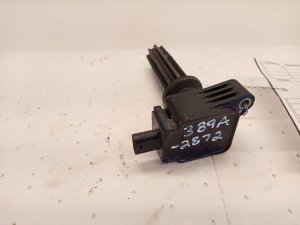
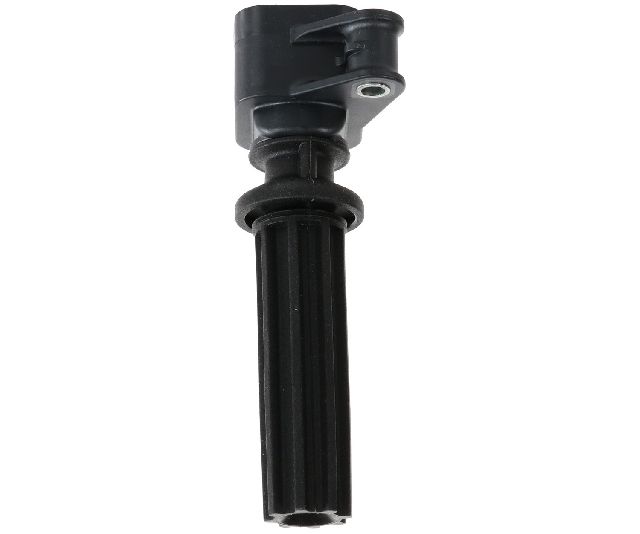
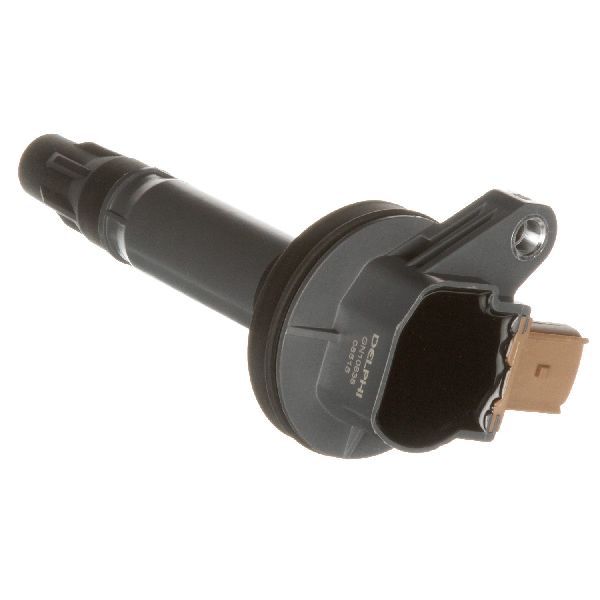
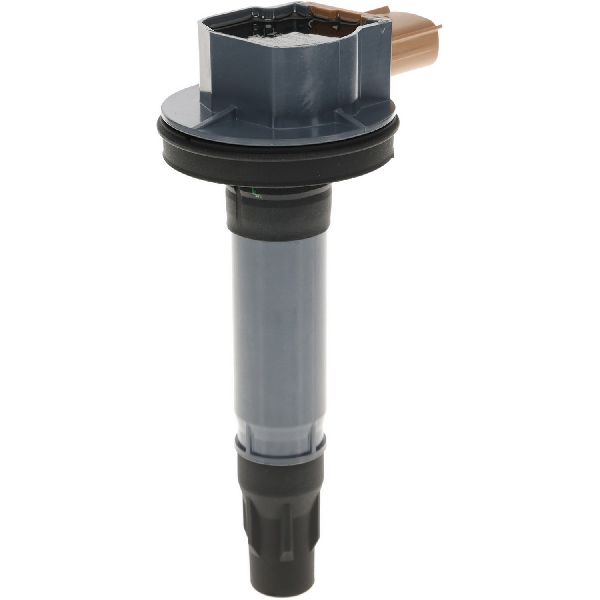
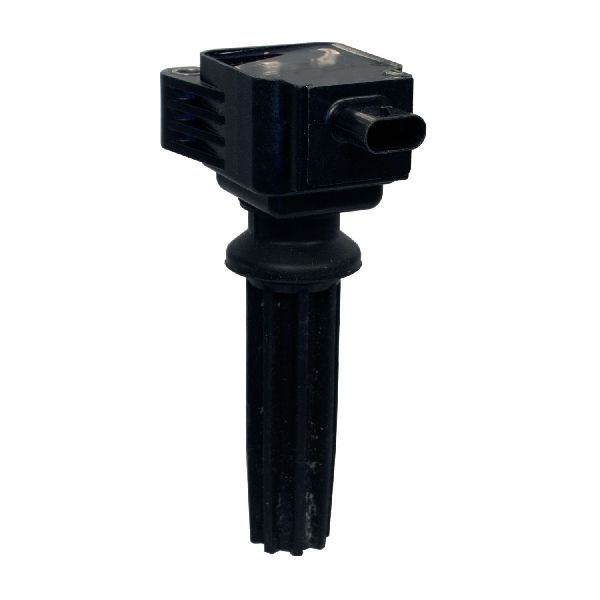
Typical fix: Replace the faulty ignition coil. The OEM Motorcraft part number is generally DG-529 for this application. It is often recommended to replace all four coils at the same time for preventative maintenance.
Est. part cost: $40-$80 per coil - Worn or Fouled Spark Plug 🔴 High Probability Turbocharged engines like the EcoBoost are harder on spark plugs, and incorrect plug gap or wear can easily cause a misfire under boost. Carbon or oil fouling is also common. NHTSA ODI #11716439 notes an instance where spark plugs were found completely worn out, leading to misfire codes including P0304.
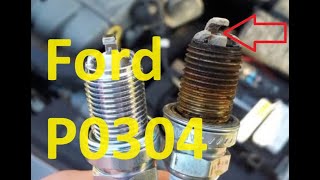
How to confirm: Remove the spark plug from cylinder 4 and inspect it for wear, carbon buildup, oil fouling, or damage to the electrode or ceramic. The correct gap is critical; for the 2.3L EcoBoost, it should be between 0.027-0.031 inches. The OEM plug is typically a Motorcraft SP-537 or the replacement SP-550.
Typical fix: Replace the spark plug. It is best practice to replace all four spark plugs at the same time with high-quality OEM-spec plugs (e.g., Motorcraft SP-537 or SP-550). Ensure they are gapped correctly before installation.
Est. part cost: $15-$30 per plug - Clogged or Faulty Fuel Injector 🟡 Medium Probability Direct injection fuel systems operate at very high pressures and can be sensitive to fuel quality. Injectors can become clogged or fail electronically.
How to confirm: This is more difficult to diagnose. A professional may use a scan tool to perform a fuel injector balance test. A DIY method involves swapping injectors between cylinders, similar to an ignition coil, but this is a much more labor-intensive job requiring fuel system depressurization.
Typical fix: Replace the faulty fuel injector. This often requires removing the fuel rail.
Est. part cost: $100-$200 - Carbon Buildup on Intake Valves ⚪ Low Probability As a direct-injection engine, fuel is sprayed directly into the cylinder, not over the intake valves. This allows oil vapor from the PCV system to bake onto the hot valves, forming carbon deposits that can restrict airflow and cause misfires, especially on cold starts. 🎬 See this guide on diagnosing common cold start misfire issues.
How to confirm: Requires a borescope inspection of the intake ports and valves, which usually involves removing the intake manifold.
Typical fix: The intake valves need to be cleaned, typically through a process called walnut blasting. This is a professional-level job with costs primarily in labor.
Est. part cost: $0 (service cost is labor, typically $500-$1000)
Rare But Worth Checking
- Low Engine Compression: If ignition and fuel systems are confirmed to be working, a mechanical issue could be the cause. This can be due to a leaking head gasket, worn piston rings, or a problem with the valves. A compression test is needed to verify. A Reddit user with a similar EcoBoost engine reported a P0304 that ultimately required a head gasket replacement costing several thousand dollars.
- Vacuum Leak: A leak in the intake manifold gasket or a vacuum hose near cylinder 4 can lean out the air-fuel mixture and cause a misfire. This would typically be accompanied by other codes or symptoms. A smoke test is the most effective way to find the source of a vacuum leak.
- Coolant Intrusion: A known issue with some Ford EcoBoost engines is coolant leaking into the cylinders due to a flaw in the engine block design or a failed head gasket. This will cause misfires, white exhaust smoke, and unexplained coolant loss. Ford issued TSB 19-2346 for the related 2.0L EcoBoost engine for this issue, which often requires a long block replacement. While the TSB doesn't cover the 2.3L, the symptoms and failure mode are very similar across the engine family. NHTSA ODI #11650523 describes this failure mode as including white exhaust smoke and a rough running engine, especially during cold starts.
Diagnosis Steps

- Read the trouble codes with an OBD-II scanner. Confirm P0304 is present and note any other codes, especially P0316 or P0300.
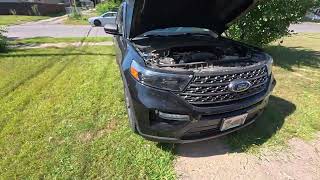
- Locate cylinder 4. On the 2.3L EcoBoost, the cylinders are numbered 1-2-3-4 from the front (belt side) of the engine to the back (firewall/transmission side). Cylinder 4 is the one closest to the firewall. 🎬 Watch: A quick breakdown to find the misfire cause fast.
- Swap the ignition coil from cylinder 4 to cylinder 3. Clear the codes with the scanner and go for a short drive, trying to replicate the conditions that caused the code (e.g., hard acceleration).
- Re-scan the vehicle. If the code has moved to P0303 (Cylinder 3 Misfire), the ignition coil is the faulty part and needs to be replaced.
- If the code remains P0304, the coil is likely good. Move the spark plug from cylinder 4 to cylinder 3 (keeping the coils in their new positions). Clear codes and drive again.
- Re-scan. If the code is now P0303, the spark plug is faulty. Replace it.
- If the code is still P0304 after swapping both the coil and plug, the problem is likely with the fuel injector or a mechanical issue with the cylinder.
- Check for coolant loss. Monitor the coolant reservoir over several days. If the level is dropping with no visible leaks, and you notice white exhaust smoke, suspect a head gasket or coolant intrusion issue. NHTSA ODI #11716439 highlights that a loss of coolant with no visible leaks can be associated with P0304.
- At this point, further diagnosis may require professional tools, such as checking the fuel injector circuit, performing a fuel pressure test, or doing an engine compression and leak-down test to check for mechanical integrity.
Parts You'll Likely Need

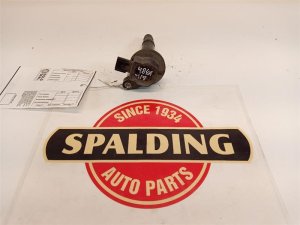
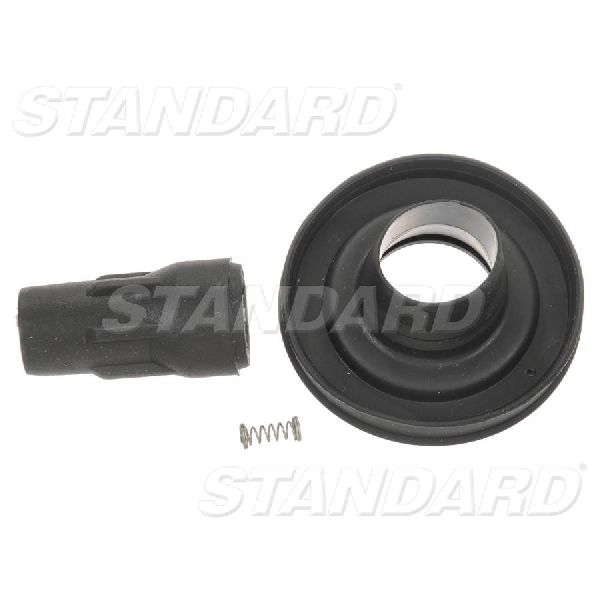
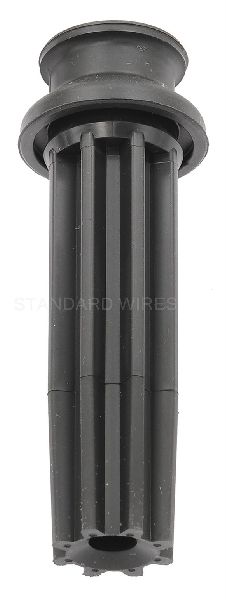
- Ignition Coil
(OEM #DG-529)— This is one of the most common failure items causing a single-cylinder misfire on the 2.3L EcoBoost engine.
Trusted brands: Motorcraft, NGK, Bosch
OEM price range: $60-$90
Aftermarket price range: $40-$70 - Spark Plug
(OEM #SP-537 (or SP-550))— As a routine maintenance item that is under high stress in a turbocharged engine, a worn or fouled spark plug is a very frequent cause of P0304.
Trusted brands: Motorcraft, NGK, Denso
OEM price range: $20-$30
Aftermarket price range: $15-$25
Related Codes That Often Appear With This One
- P0316 — This code indicates a misfire was detected within the first 1,000 engine revolutions after startup. It is very common to see this with a specific cylinder misfire code like P0304, as the misfire is present from the moment the engine starts.
- P0300 — This indicates a random/multiple cylinder misfire. If you see this along with P0304, it could mean other cylinders are also misfiring intermittently, pointing to a more systemic issue like a vacuum leak, fuel delivery problem, or carbon buildup affecting all cylinders.
Technical Service Bulletins (TSBs) & Recalls
- TSB 19-2346: While officially for the 2.0L EcoBoost, this TSB details the diagnosis and rep
Platform-Specific Known Issues
- A known issue with some 2.3L EcoBoost engines is coolant intrusion into the cylinders, which can cause misfires and eventually catastrophic engine damage. While more common on other models like the Focus RS, the underlying engine architecture is similar. Symptoms include coolant loss with no visible leak and white exhaust smoke. A class-action lawsuit has been filed regarding this issue on several models including the Explorer.
- Ford issued TSB 20-2271 for some 2016-2019 Explorers with the 2.3L engine for a rough idle and lack of acceleration, which could be mistaken for a misfire but was related to the torque converter.
Mechanic-Grade Diagnostic Values
- Spark Plug Gap — expected: 0.027–0.031 in (0.7–0.8 mm). Failure: An incorrect gap can cause weak spark and misfires under boost.
- Low-Pressure Fuel System (In-Tank Fuel Pump) — expected: 50-60 psi. Failure: Pressure below this range can starve the high-pressure pump, leading to misfires under load.
- High-Pressure Fuel System (Direct Injection) — expected: Up to 1600+ psi. Failure: Low high-side pressure, often indicated by other codes like P0087, will cause misfires.
- Mode $06, TID $53 (Misfire Monitor) — expected: A professional scan tool can read the raw misfire counts for each cylinder. The count for cylinder 4 should be near zero.. Failure: A high or rapidly increasing count for cylinder 4 confirms the misfire, even before the CEL is triggered.
Scan Tool Commands That Help
- Ford IDS (Integrated Diagnostic System): Power Balance Test — This is a primary professional diagnostic step to graphically view the power contribution of each cylinder. It can instantly confirm a misfire on cylinder 4 without needing to physically swap components like coils or plugs, saving significant diagnostic time.
- Ford IDS or high-level scan tool: Misfire Counter Live Data (Mode $06) — To see real-time misfire events on each cylinder. This is useful for confirming the misfire is isolated to cylinder 4 and for checking if the issue is resolved after a repair by watching to see if the counter for cylinder 4 stops incrementing.
Wiring & Ground Locations
- Ignition Coil Connector (Cylinder 4) — On top of the valve cover, connected to the ignition coil for the rearmost cylinder (closest to the firewall/driver).. This connector and its wiring are a potential point of failure. Check for corrosion, pushed-out pins, or harness damage from heat and vibration before replacing expensive components.
- Fuel Injector Connector (Cylinder 4) — On the cylinder head, connected to the fuel injector for the rearmost cylinder, often under the intake manifold.. If ignition components are good, a wiring fault to the injector could cause the P0304 code. This would typically be diagnosed after ignition system checks have passed.
Real Owner Repair Stories
- Ford F150 Forum user (2012 F-150 5.0 (similar PCM logic for misfire detection)) — P0304 and P0316, occurring only on a cold start after sitting for over 8 hours.
❌ Tried (didn't work) Swapping the spark plug to a different cylinder., Swapping the ignition coil to a different cylinder., Swapping the fuel injector to a different cylinder.
✅ What actually fixed it The user's problem remained on cylinder 4 despite swapping all common components, pointing towards a mechanical or intermittent wiring issue. Another user explained that a coil with shorted internal turns can fail under specific high-voltage demand conditions (like lean mixture on startup) without setting a hard coil fault code, which can only be seen with advanced diagnostics like Mode 6, Test 53. - Reddit user r/MechanicAdvice (2018 Explorer Limited 2.3L EcoBoost) — Check engine light with codes P0304 and P0316.
❌ Tried (didn't work) Replacing all four spark plugs with new NGK Ruthenium plugs.
✅ What actually fixed it The misfire returned two weeks after replacing the spark plugs. The final resolution was replacing the ignition coil on cylinder 4, which solved the problem. This highlights a common misdiagnosis where only the plug is changed when the coil was the root cause. - Ford Owner Report (NHTSA ODI #11433129) — An owner reported a P0304 cylinder 4 misfire that required a tow to the dealer.
✅ What actually fixed it The technician replaced all four spark plugs and used a specific cleaner (446676) to clean the fuel system. - Ford Owner Report (NHTSA ODI #11726862) — An owner was given a P0304 code and told the vehicle needed a "tune up," but was later informed the engine required replacement. This underscores the importance of verifying if the misfire is a simple ignition fault or a symptom of internal engine failure.
"I Checked Everything" — The Actual Cause
- A faulty PCV (Positive Crankcase Ventilation) valve can cause a P0304 misfire. If the valve sticks open, it creates a vacuum leak, leaning out the air-fuel mixture and causing misfires that can be isolated to a single cylinder under certain conditions. If it sticks closed, it can lead to oil leaks and sludge. This is often missed because technicians focus on ignition and fuel, but a rough idle and misfires are key symptoms of a bad PCV valve.
OEM Part Supersession History
Motorcraft SP-537 (CYFS-12Y-2)→Motorcraft SP-550 (CYFS12YPCT)— Standard part lifecycle update by Ford. The SP-550 is an iridium center electrode with a platinum ground strap.
Heads up: The parts are interchangeable. Owners may become confused when the original SP-537 is no longer available, but the SP-550 is the correct replacement.
Model Year Variations Within This Range
- 2016-2018: These model years were equipped with a 6-speed automatic transmission.
- 2019: The 2019 model year may have received minor engine and transmission refinements for slight MPG improvements over the earlier years.
Diagnostic Flowchart

Other Known Issues on This Vehicle
Issues unrelated to this code that are worth knowing about as an owner of this generation:
- Power Takeoff Unit (PTU) Failure 🔴 High — Common on AWD models, typically after 60,000 miles. The 'lifetime' fluid overheats due to proximity to the exhaust, breaks down, and causes gear failure. (Ref: TSB 19-2017 (for fluid leak))
- Internal Water Pump Failure (3.5L V6) 🔴 High — While this article is for the 2.3L, a major issue on the V6 Explorer is the timing-chain driven internal water pump. When it fails, it leaks coolant directly into the oil pan, leading to catastrophic engine failure if not caught immediately. The 2.3L has a conventional, external water pump.
- Exhaust Fumes / Carbon Monoxide in Cabin 🟠 Medium — Widespread complaints on 2011-2017 models led to a major NHTSA investigation. Ford initiated a free service program to seal rear body seams and reprogram HVAC, but no official recall was issued as NHTSA did not find CO levels exceeding standards in non-modified vehicles. (Ref: Ford Field Service Action 17B25)
- Coolant Intrusion into Cylinders 🔴 High — A known defect in the engine block or head/gasket design can allow coolant to leak into the cylinders, causing misfires, white smoke, and eventual engine failure. This has led to a class-action lawsuit covering the 2.3L EcoBoost in the Explorer. (Ref: SSM 51754 (for 2023 models))
Used vs. New Parts: Buying Guide for This Vehicle
When a used part is the smart pick: Used parts are generally not recommended for this repair due to the low cost and high wear nature of the primary culprits (spark plugs and ignition coils). A used engine wiring harness or fuel rail could be a cost-effective option if a wiring or injector issue is confirmed by a professional and the new OEM part is prohibitively expensive.
Donor-vehicle mileage cap: roughly under 50000 miles for the part to have meaningful remaining life.
What to inspect on the donor part:
- For an ignition coil, check for cracks in the plastic housing or corrosion on the electrical connector.
- For a wiring harness, inspect for any signs of brittle plastic, cut wires, or previous repairs (splices, tape).
- Ensure the donor vehicle was not in a front-end collision that could have stressed engine components.
OEM-only on this vehicle (don't cheap out):
- Spark Plugs
- Fuel Injectors
Aftermarket brands forum-validated for this vehicle:
- NGK, Bosch, or Delphi for ignition coils.
- NGK or Denso for spark plugs (ensure they are the correct heat range and material for EcoBoost).
Brands owners have reported issues with on this vehicle:
- Unbranded, no-name ignition coils and spark plugs from online marketplaces. These often have a high failure rate and may not meet the performance requirements of a turbocharged direct-injection engine, leading to repeat failures.
Real Owner Stories
Aggregated from forums and TSBs cited above. Mileages and costs reflect what owners reported in those sources.
2016-2019 Ford Explorer 2.3L EcoBoost
Symptoms: Rough idle and lack of acceleration that felt like a misfire.
What fixed it: Diagnosis revealed the issue was related to the torque converter as described in TSB 20-2271, rather than a standard ignition failure.
Source hint: vehicle_specific_issues section citing TSB 20-2271
2015-2023 Ford Mustang EcoBoost (2.3L)
Symptoms: P0300 and P0304 misfire codes occurring specifically under high RPM conditions.
What fixed it: Performing a crankshaft position sensor relearn procedure after a flywheel replacement.
Source hint: mustang6g.com/forums/threads/p0300-p0304-misfires-help.94107/
2015-2023 Ford Mustang EcoBoost (2.3L)
Symptoms: Constant cylinder 4 misfire and startup misfire; owner replaced plugs, coils, purge valve, and fuel sensor but the code persisted.
What fixed it: Head gasket replacement at a Ford dealer to resolve a suspected coolant leak into the cylinder.
Source hint: reddit.com/r/ecoboostmustang/comments/qg6h7y/constant_cylinder_4_and_startup_misfire/
2015-2023 Ford Mustang EcoBoost (2.3L)
Symptoms: P0304 Cylinder 4 misfire occurring only during wide-open-throttle (WOT) at a race track.
What fixed it: Diagnostic process involved swapping coils and plugs and checking wiring harnesses to identify failure under extreme use.
Source hint: mustang6g.com/forums/threads/p0304-cylinder-4-misfire-during-wot-at-track.190184/
Related OBD-II Codes
Frequently Asked Questions
Where is cylinder 4 located on my 2016-2019 Ford Explorer 2.3L EcoBoost?
Could my P0304 code be related to the torque converter issue mentioned in TSB 20-2271?
What spark plugs should I use for my 2.3L EcoBoost to fix a P0304?
I see white smoke and have a P0304 code; is this a known issue for the Explorer?
Which ignition coil part number do I need for my 2017 Explorer 2.3L?
Is there a TSB that explains how to diagnose this misfire?
Helpful Videos
![How to Fix P0304 Engine Code in 3 Minutes [2 DIY Methods / Only $4.33]](https://img.youtube.com/vi/i7ubv6oYJlI/mqdefault.jpg)
Used OEM Parts in Stock


New Aftermarket Parts Available

The information in this article is provided for general reference and educational purposes only. Vehicle specifications, procedures, and part compatibility can vary by production date, trim level, and region. Always consult your vehicle's factory service manual and verify part numbers before purchasing or performing repairs. Safety-critical components such as airbags, seat belts, and braking systems should be installed by a qualified professional.
- Ford Explorer:
- 🎬 Helpful Videos
- 🛍️ Shop This Part
- What's Unique About the 2016-2019 Ford Explorer
- Symptoms You May Notice
- Most Likely Causes
- Rare But Worth Checking
- Diagnosis Steps
- Parts You'll Likely Need
- Related Codes That Often Appear With This One
- Technical Service Bulletins (TSBs) & Recalls
- Platform-Specific Known Issues
- Mechanic-Grade Diagnostic Values
- Scan Tool Commands That Help
- Wiring & Ground Locations
- Real Owner Repair Stories
- "I Checked Everything" — The Actual Cause
- OEM Part Supersession History
- Model Year Variations Within This Range
- Diagnostic Flowchart
- Other Known Issues on This Vehicle
- Used vs. New Parts: Buying Guide for This Vehicle
- Real Owner Stories
- 2016-2019 Ford Explorer 2.3L EcoBoost
- 2015-2023 Ford Mustang EcoBoost (2.3L)
- 2015-2023 Ford Mustang EcoBoost (2.3L)
- 2015-2023 Ford Mustang EcoBoost (2.3L)
- Related OBD-II Codes
- Frequently Asked Questions
- 🎟️ Get 5% Off