

P0303 on 2015-2018 Lincoln MKZ: Cylinder 3 Misfire Causes and Fixes
P0303 signifies a misfire in cylinder 3. On 2.0L EcoBoost models, this is a critical warning for potential coolant intrusion requiring engine replacement, as documented in TSB 22-2229. For all engines, it can also be caused by a bad ignition coil or spark plug, which are simpler fixes costing $75-$250.
- For 2.0L EcoBoost engines, P0303 is a potential sign of catastrophic engine failure due to a known coolant intrusion defect.
- Key warning signs of the major defect are coolant loss without external leaks and white exhaust smoke.
- Always diagnose in order: check for coolant loss first, then inspect basic ignition components like spark plugs and coils.
- Do not ignore this code. Driving with a misfire can damage other expensive components like the catalytic converter.
- The only permanent fix for the coolant intrusion issue is a complete engine replacement with an updated block design.
What's Unique About the 2015-2018 Lincoln MKZ
For the 2015-2018 Lincoln MKZ, particularly models with the 2.0L EcoBoost engine, a P0303 code is far more serious than on a typical vehicle. Ford and Lincoln have acknowledged a significant engine block design flaw that allows coolant to leak directly into the cylinders, causing this specific misfire code. The original block design has a slot between the cylinders that creates an insufficient sealing surface, leading to coolant intrusion. This issue is documented in a series of Technical Service Bulletins, with TSB 22-2229 being the most current, which supersedes older bulletins like TSB 19-2346 and SSM 47204. The official fix is a complete long block engine replacement.
Diagnostic Flowchart
Tap your situation to follow the diagnostic path that matches what you're seeing on this vehicle.
Symptoms You May Notice
- Flashing or steady Check Engine Light
- Rough or shaking idle, especially on cold start
- Engine hesitation or stumbling during acceleration
- Reduced engine power and poor acceleration
- Poor fuel economy
- White smoke from the exhaust with a sweet coolant smell, especially on startup
- Unexplained loss of engine coolant with no visible external leaks
- Replacing only the spark plug and/or coil when the underlying cause is coolant intrusion. The new plug will quickly become fouled by coolant, and the misfire will return, as reported by owners on forums.
- Replacing an oxygen sensor. While a misfire can affect O2 sensor readings, the sensor is rarely the root cause of a single-cylinder misfire code.
- Mistaking coolant intrusion symptoms (white smoke, rough run) for a failed turbocharger, which can lead to an expensive and unnecessary repair.
Most Likely Causes
- Coolant Intrusion into Cylinder (2.0L EcoBoost Engine) 🔴 High Probability A known engine block design defect allows coolant to seep into the cylinders through a flawed casting between the cylinder walls. This is documented in a series of TSBs, culminating in TSB 22-2229, which supersedes earlier bulletins (SSM 47204, TSB 19-2346). The issue most commonly affects cylinders 2 and 3.
How to confirm: Perform a coolant system pressure test; TSB 22-2229 specifies a failure if it loses more than 4 PSI in 5 hours. Use a borescope to inspect the cylinder for coolant (may appear unusually clean or wet). A chemical block tester can detect combustion gases in the coolant reservoir, confirming an internal leak. Also, check for white exhaust smoke and a dropping coolant level.
Typical fix: The only official, permanent fix is to replace the entire long block engine assembly with an updated part that has a revised block design.
Est. part cost: $4000-$7000+ - Failed Ignition Coil 🟡 Medium Probability Coil-on-plug systems are common failure points on many modern vehicles due to heat and vibration. Oil leaks from the valve cover gasket can also drip onto the coils and cause premature failure, a common issue noted by mechanics.
How to confirm: Swap the ignition coil from cylinder 3 with another cylinder (e.g., cylinder 2). Clear the codes and run the engine. If the misfire code moves to the new cylinder (e.g., P0302), the coil is bad.
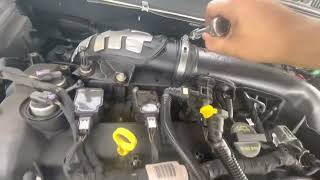
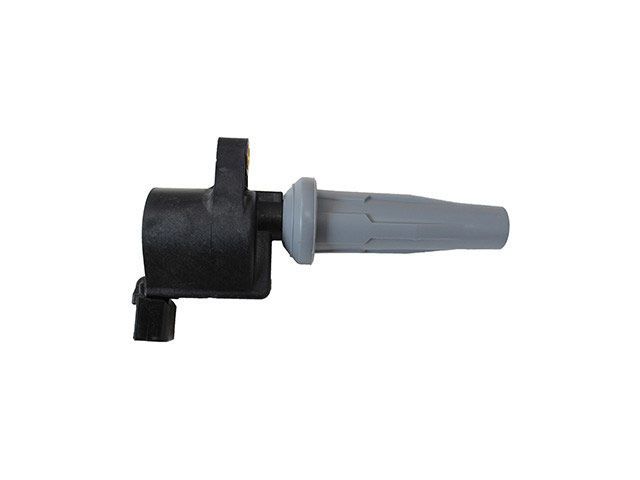
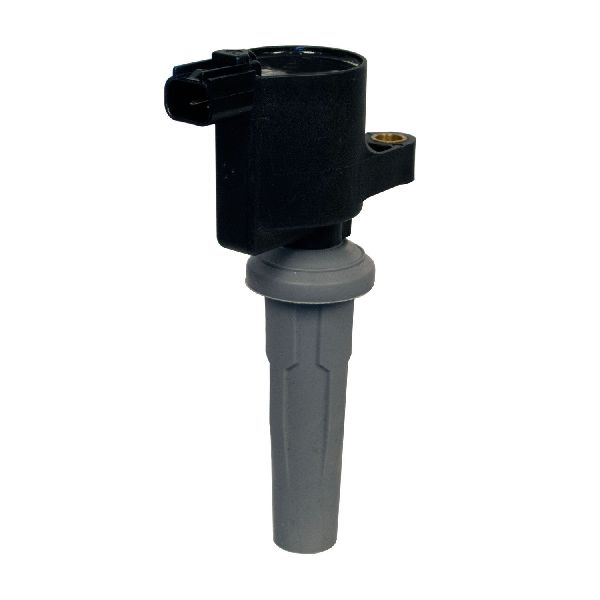
Typical fix: Replace the faulty ignition coil (Motorcraft DG-562). 🎬 See this walkthrough for replacing MKZ spark plugs and coils. It is often recommended to replace all spark plugs at the same time. For V6 engines, it's wise to replace all coils on the same bank due to high labor costs.
Est. part cost: $50-$100 - Worn or Fouled Spark Plug 🟡 Medium Probability
How to confirm: Remove the spark plug from cylinder 3 and inspect it. Look for a cracked insulator, heavy carbon buildup, oil fouling, or a wet, sweet-smelling coolant residue (a key sign of the more serious engine issue). Compare it to a plug from a healthy cylinder.
Typical fix: Replace the spark plug. Use OEM-recommended Iridium plugs (Motorcraft SP-550 or SP-530). It's best practice to replace all plugs at once. Do not use anti-seize on modern plated plugs.
Est. part cost: $15-$30 - Faulty Fuel Injector ⚪ Low Probability
How to confirm: This is more difficult to diagnose. A professional can perform a fuel injector balance test. You can also listen to the injector with a mechanic's stethoscope to check if it's clicking like the others. Another method is to swap the injector with another cylinder and see if the misfire code follows, though this is labor-intensive.
Typical fix: Replace the faulty fuel injector. This often requires removing the fuel rail.
Est. part cost: $50-$150
Rare But Worth Checking
- PCM Calibration Issue: TSB 16-0113 mentions that a rough idle with P030x codes could be resolved by reprogramming the PCM to the latest calibration. This is a software fix that a dealer would perform.
- Internal Engine Damage (Cylinder Head): TSB #SSM 46364 suggests that excessive oil consumption and P030x codes could be caused by a faulty cylinder head, which is a major repair.
Diagnosis Steps
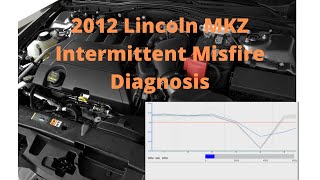
- Check for other stored DTCs with an OBD-II scanner. Note if codes like P0300, P0316, or P0302 are present. 🎬 Watch: Diagnosing an intermittent cylinder 3 misfire on a Lincoln.
- If the vehicle has a 2.0L EcoBoost engine, immediately check the coolant level in the overflow reservoir. Note if it is low or if the exhaust has a sweet smell or appears white.
- Perform a basic ignition system check. Swap the ignition coil from cylinder 3 to another cylinder (e.g., cylinder 1). Clear codes and drive. If the code changes to P0301, the coil is faulty.
- If the coil is good, inspect the spark plug for cylinder 3. Look for wear, damage, or fouling from oil or coolant. A coolant-fouled plug will appear wet or unusually clean.
- If ignition parts are good and you have a 2.0L engine with coolant loss, a professional diagnosis is required. This involves a coolant system pressure test and a borescope inspection of the cylinders to visually confirm coolant.
- A chemical block test can also be used to detect exhaust gases in the coolant, which confirms an internal leak.
- For V6 models or if no coolant intrusion is suspected, perform a compression test on cylinder 3 to check for mechanical engine problems (e.g., bad valve, worn piston rings).
- If compression is good, the issue may be related to the fuel injector or its wiring, which requires more advanced diagnostics.
Parts You'll Likely Need
- Engine Long Block Assembly (2.0L EcoBoost)
(OEM #Base part number is 6006, but it is VIN-specific. Example: J2GZ-6006-E)— This is the only permanent fix for the common coolant intrusion issue on the 2.0L EcoBoost engine, as specified by TSB 22-2229.
Trusted brands: Motorcraft
OEM price range: $4000-$7000
Aftermarket price range: $3500-$5500 - Ignition Coil
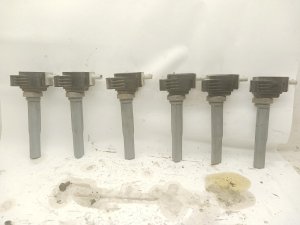
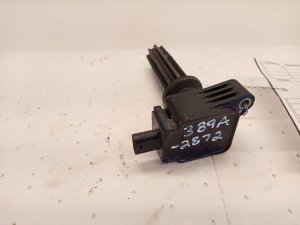
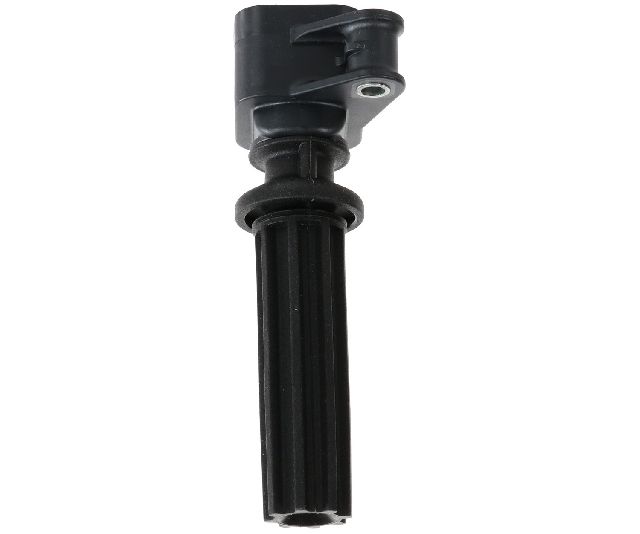
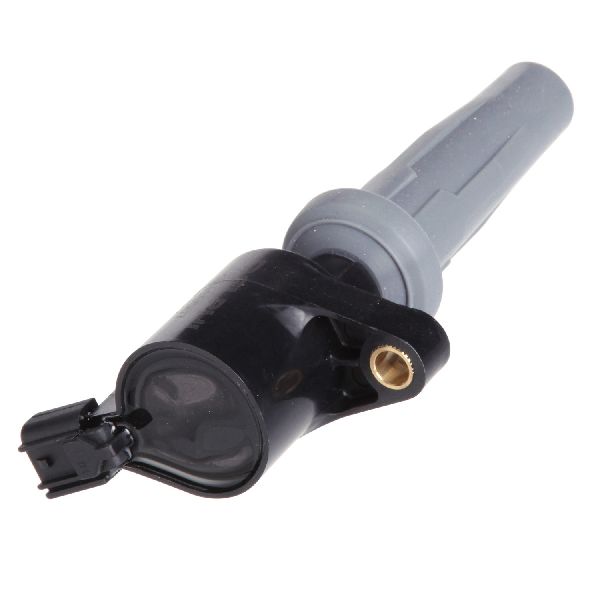
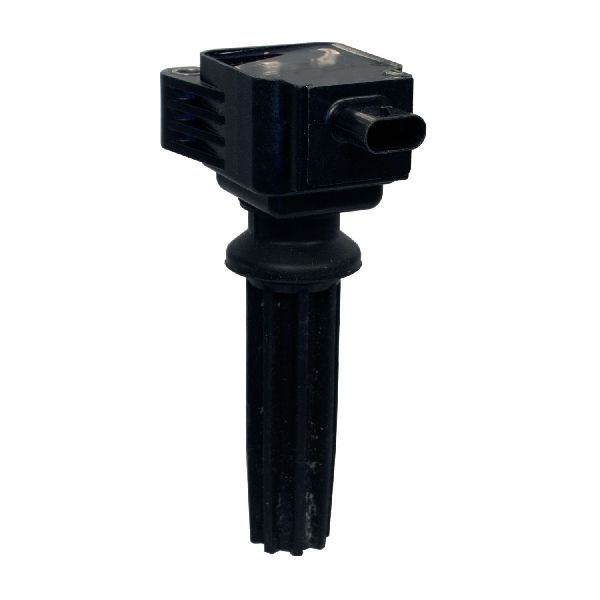
(OEM #Motorcraft DG-562 (Supersedes CM5Z-12029-K))— A common failure item for any misfire code. Relatively inexpensive and easy to replace on I-4 engines.
Trusted brands: Motorcraft, NGK, Carquest Premium
OEM price range: $70-$100
Aftermarket price range: $40-$80 - Iridium Spark Plug
(OEM #SP-550 / SP-530 (Motorcraft))— Spark plugs are a routine maintenance item and can cause misfires when worn. They can also be fouled by coolant or oil, indicating a larger problem. SP-550 and SP-530 are often interchangeable, with minor gap differences.
Trusted brands: Motorcraft, NGK
OEM price range: $15-$25
Aftermarket price range: $10-$20
Related Codes That Often Appear With This One
- P0300 — This is a 'Random/Multiple Cylinder Misfire' code. It often appears with P0303 if the misfire is severe or if the underlying coolant issue begins to affect other cylinders.
- P0316 — This code means 'Misfire Detected on Startup (First 1000 Revolutions)'. It's commonly seen with specific cylinder misfire codes and is a strong indicator of the coolant intrusion issue, which is often most pronounced on a cold start.
- P0302 — Misfire on Cylinder 2. The coolant intrusion issue on the 2.0L EcoBoost most commonly affects cylinders 2 and 3, so seeing these codes together is a major red flag for engine failure.
Technical Service Bulletins (TSBs) & Recalls
- TSB 22-2229: The most current bulletin, superseding all previous versions. It covers 2017-2019 MKZ models with the 2.0L EcoBoost. It explicitly identifies coolant intrusion into the cylinders as the cause for misfire codes (P030x, P0316) and other symptoms, and mandates a full long block engine replacement as the only approved repair.
- SSM 47204 / TSB 19-2346: Earlier versions of the coolant intrusion bulletin. They described the same issue on the same set of vehicles, confirming this has been a known problem for several years. These are now superseded by TSB 22-2229.
- TSB 16-0113: Addresses a rough idle condition that may or may not be accompanied by P030x codes. The fix is a PCM software update, which is a much less severe issue than coolant intrusion.
Platform-Specific Known Issues
- TSB 22-2229 / SSM 47204: The most critical issue for the 2017-2019 MKZ with the 2.0L EcoBoost is the engine block defect causing coolant intrusion. TSB 22-2229 is the final word from Ford, superseding all prior bulletins and confirming that a long block replacement is the only fix. This issue also affects the Ford Fusion, Edge, Escape, and MKC with the same engine.
Mechanic-Grade Diagnostic Values
- High-Pressure Fuel System Pressure — expected: 65 to 2,150 psi, depending on engine load and demand.. Failure: Pressure that is consistently low may indicate a failing high-pressure fuel pump, while erratic readings could point to a sensor issue.
- Ignition Coil Primary Resistance — expected: 0.4 - 2.0 ohms. Failure: Readings outside this range suggest a failing coil winding.
- Ignition Coil Secondary Resistance — expected: 8 - 12 kΩ (kilohms). Failure: Readings significantly outside this range indicate a breakdown in the secondary coil winding.
- Spark Plug Gap (2.0L EcoBoost) — expected: 0.027 - 0.031 in.. Failure: An incorrect gap can cause a weak spark and lead to incomplete combustion.
Hidden / Shadow Codes Worth Checking
- Mode $06, TID $53: This is not a DTC, but a monitor within the PCM that tracks misfire counts per cylinder. TID $53 corresponds to the misfire monitor. Component IDs (CID) $01, $02, $03, etc., correspond to cylinders 1, 2, 3. A high count on CID $03 can indicate a pending P0303 before the MIL is triggered. (see via A professional scan tool with Mode $06 capability (like Autel, Snap-on) or advanced DIY apps like Torque Pro or FORScan.)
Scan Tool Commands That Help
- Ford IDS (Integrated Diagnostic System) or equivalent professional scanner (OTC, Autel, Snap-on): Power Balance Test — This graphical test displays the relative power contribution of each cylinder in real-time. A cylinder with a significant drop on the graph (like cylinder 3) confirms a misfire and helps differentiate between ignition, fuel, or mechanical causes without swapping parts.
- Ford IDS or equivalent (Snap-on): Misfire Monitor Neutral Profile Correction — This relearn procedure must be performed after any major engine repair or if the PCM's Keep Alive Memory (KAM) has been cleared. It allows the PCM to learn the mechanical variations of the crankshaft reluctor wheel, which is essential for the misfire monitor to function accurately. Failure to perform this can lead to false misfire detection.
Wiring & Ground Locations
- Fuse F12 (Engine Compartment Fuse Box) — In the under-hood fuse box.. This fuse supplies power to the ignition coils. A fault with this fuse would typically affect all cylinders, but it's a crucial first check for any ignition-related issue.
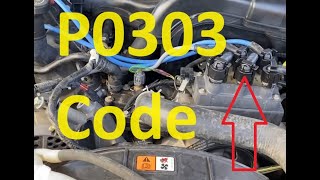
- Ignition Coil Connector — On top of the valve cover, plugging into the ignition coil for cylinder 3 (third from the left when facing the engine).. The connector or its wiring can become brittle from heat cycles, leading to a poor connection and an intermittent misfire on that specific cylinder. The locking tab can also break, causing it to back out.
- PCM (Powertrain Control Module) — Typically located in the engine bay, often near the firewall or inner fender.. The PCM contains the driver circuit that fires the ignition coil for cylinder 3. While rare, a failed driver can cause a persistent P0303 that isn't resolved by replacing ignition components. This requires advanced pin-out testing of the PCM connectors.
Real Owner Repair Stories
- Reddit user on r/fordescape (2017 Ford Escape 2.0L EcoBoost (mechanically similar to MKZ)) — Check engine light with misfire codes on cylinders 2 and 3.
❌ Tried (didn't work) Initial diagnosis pointed to standard misfire causes.
✅ What actually fixed it The dealer confirmed coolant intrusion into the cylinders. The user presented TSB 22-2229 to the dealer, and the final repair was a complete long block engine replacement, which was covered under warranty.
OEM Part Supersession History
Various earlier versions (e.g., JS7Z-6006-A, JS7Z-6006-C)→J2GZ-6006-E (and potentially newer revisions)— The original 2.0L EcoBoost long block engine assemblies had a design flaw in the block casting (a slit between cylinders) that led to coolant intrusion. The newer part numbers represent a redesigned engine block with revised, more robust coolant passages to permanently fix the issue.
Heads up: Installing an older-design engine will result in a repeat failure. It is critical to source a long block manufactured after mid-2019 or use the latest superseding part number from Ford to ensure the corrected design is used.CM5Z-12029-A / CM5Z-12029-K→Motorcraft DG-562— Standard part evolution for improved reliability, materials, and performance.
Heads up: DG-562 is the current recommended replacement and is fully compatible with the specified model years.
Model Year Variations Within This Range
- 2017-2019 (pre-facelift and early facelift): Per TSB 22-2229, Lincoln MKZ models with the 2.0L EcoBoost built on or before April 8, 2019, are equipped with the engine block design prone to coolant intrusion. Models built after this date should have the revised engine block from the factory, making them not susceptible to this specific, common cause of P0303.
- 2017: 2017 was a facelift year that introduced the 3.0L EcoBoost V6 as an option, replacing the previous 3.7L V6. Diagnostic approaches for a P0303 on a V6 model are different, as they are not affected by the 2.0L's coolant intrusion issue and have different engine layouts (e.g., accessing the rear bank of cylinders is more difficult).
Helpful Videos
Used OEM Parts in Stock



New Aftermarket Parts Available

The information in this article is provided for general reference and educational purposes only. Vehicle specifications, procedures, and part compatibility can vary by production date, trim level, and region. Always consult your vehicle's factory service manual and verify part numbers before purchasing or performing repairs. Safety-critical components such as airbags, seat belts, and braking systems should be installed by a qualified professional.
- Lincoln MKZ:
- 🎬 Helpful Videos
- 🛍️ Shop This Part
- What's Unique About the 2015-2018 Lincoln MKZ
- Diagnostic Flowchart
- Symptoms You May Notice
- Most Likely Causes
- Rare But Worth Checking
- Diagnosis Steps
- Parts You'll Likely Need
- Related Codes That Often Appear With This One
- Technical Service Bulletins (TSBs) & Recalls
- Platform-Specific Known Issues
- Mechanic-Grade Diagnostic Values
- Hidden / Shadow Codes Worth Checking
- Scan Tool Commands That Help
- Wiring & Ground Locations
- Real Owner Repair Stories
- OEM Part Supersession History
- Model Year Variations Within This Range
- 🎟️ Get 5% Off