

P0303 on 2014-2018 Ford Fusion: Misfire Causes and Coolant Intrusion Fixes
P0303 on a 2014-2018 Ford Fusion is a cylinder 3 misfire. While it can be a simple fix like a spark plug or ignition coil, it is often a symptom of a serious engine defect, particularly on 1.5L and 2.0L EcoBoost engines. This defect allows coolant to leak into the cylinders, causing persistent misfires and requiring an expensive engine replacement to fix permanently.
- P0303 on a 2014-2018 Fusion, especially with a 1.5L or 2.0L EcoBoost engine, should be treated as a potentially severe issue.
- The first and most important diagnostic step is to check the coolant level. If it's low with no visible leaks, do not continue to drive the vehicle.
- While standard ignition parts like spark plugs and coils can cause P0303, the root cause on this platform is often a well-documented engine block defect requiring engine replacement.
- Ford has issued multiple Technical Service Bulletins (TSBs) acknowledging the coolant intrusion problem (SSM 47204, TSB 19-2346, TSB 20-2100).
- Ignoring the symptoms can lead to complete, catastrophic engine failure.
What's Unique About the 2014-2018 Ford FUSION

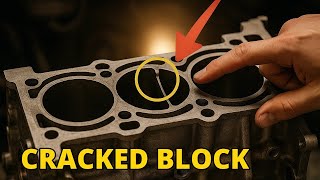
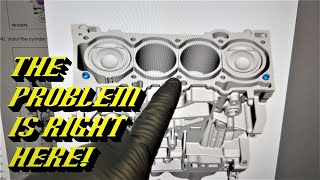
While any vehicle can experience a misfire from a bad spark plug, the 2014-2018 Ford Fusion with the 1.5L and 2.0L EcoBoost engines is notorious for a specific design flaw in its 'open-deck' engine block. The block was designed with a thin coolant passage or slot between the cylinders to improve cooling. 🎬 Watch: Why these EcoBoost engines are prone to gulping coolant Over time, this thin wall can crack, allowing coolant to leak directly into the cylinders, most commonly cylinders 2 and 3. This issue is so prevalent that Ford has issued multiple Technical Service Bulletins (TSBs) and it has resulted in class-action lawsuits.
Diagnostic Flowchart

Tap your situation to follow the diagnostic path that matches what you're seeing on this vehicle.
Symptoms You May Notice
- Check Engine Light is on or flashing
- Rough idle or engine vibration, especially on cold start
- Hesitation or lack of power during acceleration
- Noticeable loss of fuel economy
- White, sweet-smelling smoke from the exhaust, especially on startup
- Smell of raw fuel from the exhaust
- Engine stalling
- Low coolant level in the reservoir with no visible external leaks
- Replacing only the spark plugs and ignition coils without checking for coolant loss. Multiple owner complaints and forum threads describe replacing these parts, only for the P0303 code to return because the underlying cause was coolant intrusion. One owner on a Reddit forum experienced this twice in 80k miles, with the second time requiring an engine replacement.
Most Likely Causes

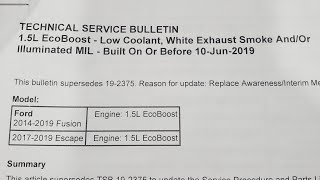
- Coolant Intrusion into Cylinder 🔴 High Probability A known design flaw in the 1.5L and 2.0L EcoBoost engine blocks can cause cracks to form between cylinders, allowing coolant to leak into the combustion chamber. This is documented in multiple Ford TSBs (SSM 47204, TSB 19-2346, TSB 20-2100). TSB 19-2346 supersedes earlier versions for the 2.0L, and TSB 20-2100 supersedes earlier versions for the 1.5L.
How to confirm: Check for a steadily dropping coolant level with no external leaks. Use a borescope to look for coolant (a shiny, clean piston top) inside cylinder 3. A cooling system pressure test that shows a pressure drop of more than 4 PSI in 5 hours confirms an internal leak. The spark plug may appear 'steam-cleaned' or have white deposits.
Typical fix: The only permanent fix is to replace the engine with a redesigned short block (for 1.5L) or long block (for 2.0L) assembly as specified by Ford's TSBs. Using stop-leak products is not recommended as it can clog the radiator and heater core.
Est. part cost: $3000-$7000 - Faulty Ignition Coil 🟡 Medium Probability
How to confirm: Swap the ignition coil from cylinder 3 with another cylinder (e.g., cylinder 2). Clear the codes and run the engine. If the code changes to P0302, the ignition coil is bad.
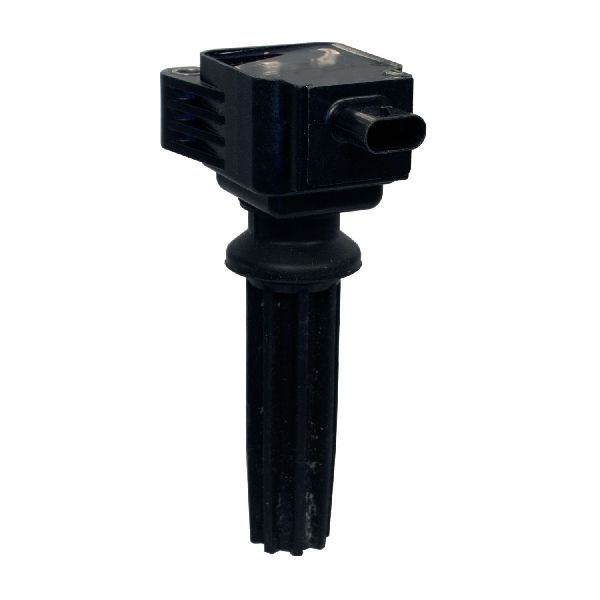
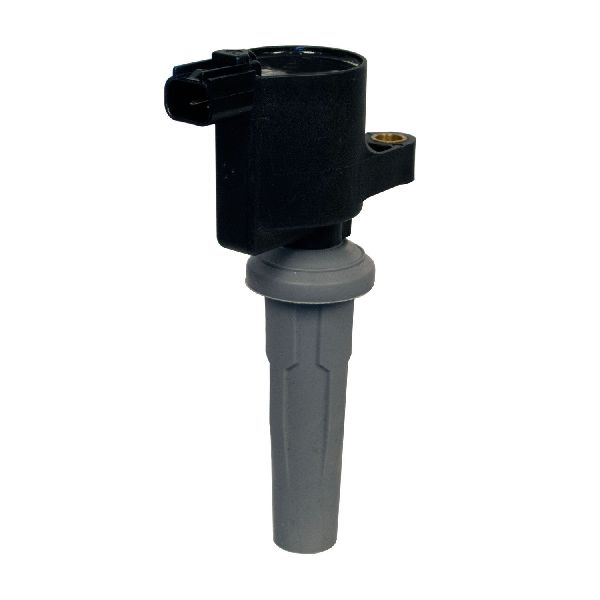
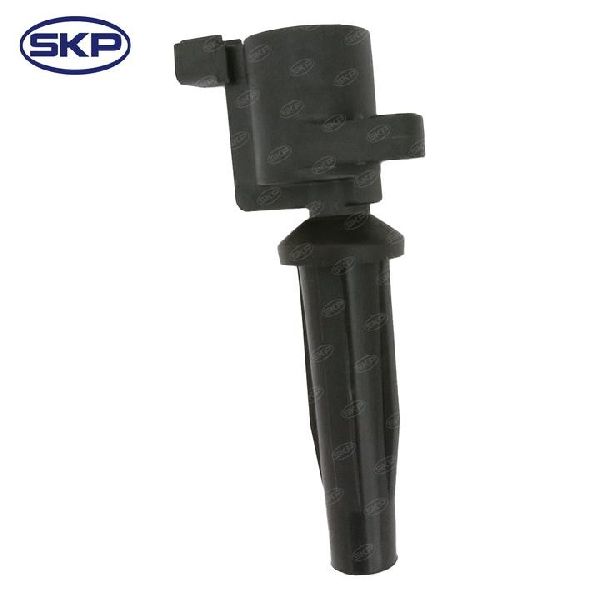
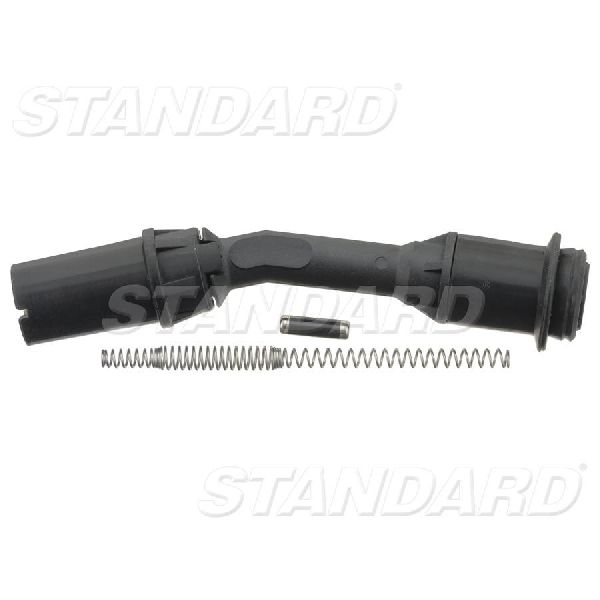
Typical fix: Replace the faulty ignition coil (OEM part number DG549). It is often recommended to replace all coils at the same time.
Est. part cost: $40-$80 - Worn or Fouled Spark Plug 🟡 Medium Probability If coolant is leaking into the cylinder, it will quickly foul the spark plug, causing a misfire. Normal wear can also cause misfires.
How to confirm: Remove the spark plug from cylinder 3 and inspect it. Look for wear, damage, or fouling (black, oily, or white, crusty deposits). A cracked ceramic insulator is also a possibility. You can swap the plug with another cylinder to see if the misfire follows.
Typical fix: Replace the spark plug (OEM part number SP-537). It is best practice to replace all spark plugs at the same time.
Est. part cost: $10-$25 - Clogged or Faulty Fuel Injector ⚪ Low Probability While less common than coolant intrusion or ignition issues on this platform, a fuel injector can still fail.
How to confirm: This is more difficult to diagnose. A professional can perform a fuel injector balance test. A DIY method is to swap the injector with another cylinder to see if the misfire code follows, though this is more labor-intensive. Sometimes this will be accompanied by a P0203 code (Injector Circuit/Open - Cylinder 3).
Typical fix: Replace the faulty fuel injector.
Est. part cost: $50-$150
Rare But Worth Checking
- Damaged Charge Air Cooler (CAC): According to TSB 17-0028, an intake manifold bolt can back out and damage the CAC, leading to misfire codes including P0303, low coolant, and white exhaust smoke. This is specific to some 2014 models with the 1.5L engine.
- Cracked Exhaust Manifold: Some earlier 2.0L EcoBoost engines were prone to exhaust manifold cracking, which can affect turbo performance and potentially lead to misfire codes.
Diagnosis Steps
- Read all stored trouble codes with an OBD-II scanner. Pay close attention to P0316, P0300, P0302, and any engine temperature codes like P1299.
- Check the engine coolant level in the overflow reservoir. If it is low and there are no visible puddles under the car, suspect an internal leak.
- Swap the ignition coil from cylinder 3 to a different cylinder (e.g., cylinder 4). Clear the codes and drive the vehicle. If the code changes to P0304, the coil is the problem.
- If the code remains P0303, swap the spark plug from cylinder 3 to a different cylinder. If the code follows the plug, the spark plug is faulty.
- Inspect the old spark plug from cylinder 3. If it appears white and exceptionally clean ('steam-cleaned'), this is a strong indicator that coolant is burning in that cylinder.
- If ignition parts are not the cause, perform a cooling system pressure test. A loss of more than 4 PSI over 5 hours indicates an internal leak.
- Use a borescope to visually inspect the inside of cylinder 3. Look for signs of coolant, such as a piston top that is unusually clean compared to other cylinders.
- If an internal coolant leak is confirmed, the engine will require replacement as per Ford's technical service bulletins (TSB 19-2346 for 2.0L, TSB 20-2100 for 1.5L).
Parts You'll Likely Need
- Engine Long Block Assembly (2.0L)
(OEM #J2GZ-6006-E (example of redesigned part))— This is the official Ford-recommended repair for the coolant intrusion issue on the 2.0L EcoBoost, as per TSB 19-2346. It uses a redesigned engine block to prevent future failure.
Trusted brands: Motorcraft
OEM price range: $4000-$7000
Aftermarket price range: $3000-$5000 - Engine Short Block Assembly (1.5L)
(OEM #DS7G-6006-JB (example part number))— This is the official Ford-recommended repair for the coolant intrusion issue on the 1.5L EcoBoost, as per TSB 20-2100.
Trusted brands: Motorcraft
OEM price range: $3500-$6000
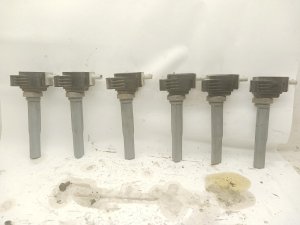
Aftermarket price range: $2500-$4500 - Ignition Coil
(OEM #DG549)— A common failure point for any misfire code and a primary diagnostic step.
Trusted brands: Motorcraft, NGK, Bosch
OEM price range: $60-$80
Aftermarket price range: $30-$50 - Iridium Spark Plug
(OEM #SP-537)— A standard maintenance item and a common cause of misfires. It will also be fouled by coolant if the primary engine defect is present.
Trusted brands: Motorcraft, NGK, Denso
OEM price range: $10-$20
Aftermarket price range: $8-$15
Related Codes That Often Appear With This One
- P0300 — Indicates a random misfire. Often appears with P0303 as the coolant intrusion problem begins to affect multiple cylinders.
- P0316 — Indicates a misfire detected on startup (first 1000 revolutions). This is very common with coolant intrusion, as coolant pools in the cylinder overnight and causes an immediate misfire when the engine is started.
- P0302 — Indicates a misfire in cylinder 2. The engine block flaw is a crack that often forms between cylinders 2 and 3, so it is very common to see misfires on both.
- P0217, P1299 — These are engine overheat codes. They are often triggered by the significant loss of coolant from the internal leak, as noted in TSB 19-2346 and TSB 20-2100.
Technical Service Bulletins (TSBs) & Recalls

- SSM 47204: Notes that 2015-2018 2.0L EcoBoost engines can have a rough run condition with P030x codes due to coolant intrusion from block corrosion.
- TSB 17-0028: Mentions that 2014 models may exhibit low coolant, white smoke, and P030x codes due to a loose intake manifold bolt damaging the charge air cooler.
- TSB 19-2346: Supersedes earlier bulletins for the 2.0L EcoBoost, confirming coolant intrusion as the cause for misfires and recommending a long block engine replacement.
- TSB 20-2100: Addresses coolant intrusion for the 1.5L EcoBoost engine, recommending a short block and head gasket replacement.
Platform-Specific Known Issues
- Coolant Intrusion on 2.0L EcoBoost: TSB 19-2346 (which supersedes SSM 47204 and TSB 19-2208) confirms that 2017-2019 Fusions with the 2.0L EcoBoost built on or before April 8, 2019, may exhibit rough running and P030x codes due to coolant leaking into the cylinders. The fix is a complete long block engine replacement.
- Coolant Intrusion on 1.5L EcoBoost: TSB 20-2100 (which supersedes TSB 19-2375) addresses the same coolant intrusion issue for 2014-2019 Fusions with the 1.5L EcoBoost. The fix is a new short block assembly.
Mechanic-Grade Diagnostic Values
- Ignition Coil Primary Resistance (OEM-style) — expected: 0.52 - 0.64 Ohms. Failure: A reading outside of this range, or an open circuit (infinite resistance).
- Ignition Coil Secondary Resistance (OEM-style) — expected: 6.6k - 7.9k Ohms. Failure: A reading outside of this range, or an open circuit.
- Ignition Coil Connector - Power Pin (Key On, Engine Off) — expected: 12 Volts. Failure: No voltage indicates a problem with the fuse, relay, or wiring from the battery junction box.
- Ignition Coil Connector - Signal Pin (Engine Cranking/Running) — expected: Fluctuating 0-5 Volt square wave signal. Failure: No signal or a static voltage indicates a problem with the PCM or the signal wire.
Hidden / Shadow Codes Worth Checking
- Mode 6 Misfire Data: The PCM tracks misfire events per cylinder even if they are not frequent enough to set a P0303 code. This data shows the raw misfire count for the current and last 10 drive cycles for each cylinder. (see via Use a capable scan tool or software like FORScan with an OBD2 adapter. Navigate to the Mode 6 tests and find the misfire monitor data (e.g., Test ID $A2 to $AB). A non-zero value for cylinder 3 indicates it has misfired.)
Scan Tool Commands That Help
- Ford IDS, FORScan, or high-end bidirectional scanner: Power Balance Test — This is a definitive test to confirm a misfire and pinpoint the cylinder. The test disables one fuel injector at a time and displays the resulting RPM drop for each cylinder on a graph. If disabling the cylinder 3 injector causes little or no change in RPM, it confirms cylinder 3 is not contributing power and is the source of the misfire.
Wiring & Ground Locations
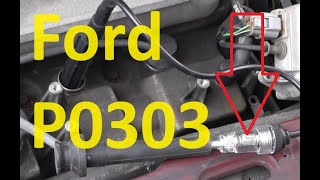
- Cylinder 3 Ignition Coil Connector — On top of the engine, plugged into the third ignition coil from the timing belt side.. This is the primary connection for the cylinder 3 ignition system. Testing for 12V power on PIN A and a switching signal on PIN B can diagnose a wiring or PCM issue, ruling out the coil itself.
- Main Engine/Chassis Ground — Often located near the battery and engine compartment fuse box. A large cable connecting the battery negative terminal to the chassis.. A poor main ground can cause a wide range of intermittent electrical issues, including weak spark that can lead to misfires. While less likely to affect only one cylinder, it should be checked for corrosion and tightness.
- PCM Connector — Typically located in the engine bay, often near the firewall or inner fender.. If the signal wire (PIN B) at the coil connector shows no activity, a continuity test between this pin and the corresponding pin at the PCM connector is necessary to check for a broken wire in the harness.
Real Owner Repair Stories
- Reddit user svyjoe on r/fordfusion (2017 Ford Fusion 2.0T, 40,000 miles) — P0303 code
❌ Tried (didn't work) Swapping ignition coils, Replacing all ignition coils and spark plugs
✅ What actually fixed it The dealership confirmed coolant intrusion into cylinder 3. The final fix was a complete engine block replacement. Another user noted that after dealer confirmation, they contacted Ford corporate and received assistance covering 60% of the $9,000-$10,000 repair cost.
"I Checked Everything" — The Actual Cause
- A cooling system pressure test may initially show no leak, leading a technician to rule out coolant intrusion. However, the leak can be very slow. A master technician's advice is to pressurize the system and let it sit for several hours or even overnight. If the pressure drops significantly over that extended period, or if cranking the engine with the spark plug removed ejects coolant, the internal leak is confirmed even if it wasn't immediately obvious.
OEM Part Supersession History
Engine block with coolant slot between cylinders→Redesigned engine block with cross-drilled coolant passages— The original open-deck design with a slot between cylinders provided insufficient head gasket sealing area, leading to gasket failure and coolant intrusion.
Heads up: Repairing a coolant-intruded engine requires replacing the entire long block (2.0L) or short block (1.5L) with the new design per Ford's TSBs (e.g., TSB 19-2346, superseded by TSB 22-2133). A simple head gasket replacement on the old block design is not a permanent fix.
Model Year Variations Within This Range
- 2017-2019: Per TSB 19-2346, 2.0L Fusions built on or before April 8, 2019, are specifically called out as being prone to the coolant intrusion issue due to the engine block design.
- 2014-2016: While the TSB for the 2.0L Fusion focuses on 2017-2019, the problematic engine design was introduced around 2015. Owner complaints and other reports indicate that 2015-2016 models are also at high risk for the same failure, even if not explicitly listed in that specific Fusion TSB.
- 2014: First-generation 2.0L EcoBoost engines, generally found in models before 2015, do not have the open-deck design with the coolant slot and are not prone to this specific type of coolant intrusion failure.
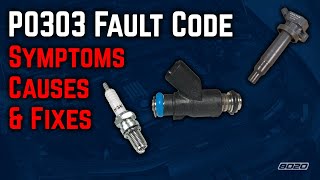
Helpful Videos




Used OEM Parts in Stock




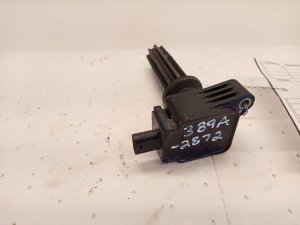
New Aftermarket Parts Available

The information in this article is provided for general reference and educational purposes only. Vehicle specifications, procedures, and part compatibility can vary by production date, trim level, and region. Always consult your vehicle's factory service manual and verify part numbers before purchasing or performing repairs. Safety-critical components such as airbags, seat belts, and braking systems should be installed by a qualified professional.
- Ford FUSION:
- 🎬 Helpful Videos
- 🛍️ Shop This Part
- What's Unique About the 2014-2018 Ford FUSION
- Diagnostic Flowchart
- Symptoms You May Notice
- Most Likely Causes
- Rare But Worth Checking
- Diagnosis Steps
- Parts You'll Likely Need
- Related Codes That Often Appear With This One
- Technical Service Bulletins (TSBs) & Recalls
- Platform-Specific Known Issues
- Mechanic-Grade Diagnostic Values
- Hidden / Shadow Codes Worth Checking
- Scan Tool Commands That Help
- Wiring & Ground Locations
- Real Owner Repair Stories
- "I Checked Everything" — The Actual Cause
- OEM Part Supersession History
- Model Year Variations Within This Range
- 🎟️ Get 5% Off