

P0303 on 2015-2018 Ford Edge: Cylinder 3 Misfire Causes and Fixes
P0303 on a 2015-2018 Ford Edge indicates a misfire in cylinder 3. While this is often caused by a bad spark plug or ignition coil, owners of the 2.0L EcoBoost engine should be aware of a serious, well-documented issue where coolant leaks into the cylinders due to a defect in the engine block, often requiring complete engine replacement.
- P0303 means cylinder 3 is misfiring.
- For the 2.0L EcoBoost engine, this code is a major red flag for a known coolant leak defect that may require engine replacement. Check coolant levels immediately.
- For all engines, the most common, simple fixes are replacing the cylinder 3 spark plug and/or ignition coil.
- A flashing check engine light indicates a severe misfire that can damage the catalytic converter; avoid driving if possible.
- Always diagnose before replacing parts. A simple coil swap can save you from buying unnecessary components.
What's Unique About the 2015-2018 Ford EDGE

For the 2015-2018 Ford Edge equipped with the 2.0L EcoBoost engine, a P0303 code is uniquely alarming. Unlike a typical misfire, it is a primary symptom of a known engine design flaw where coolant intrudes into the cylinders. This issue stems from an open-deck design of the engine block that has insufficient support between the cylinders, allowing a crack to form and coolant to leak. This problem is detailed in Ford's Technical Service Bulletin (TSB) 22-2229, which supersedes several earlier bulletins. This makes P0303 a potentially catastrophic code on this specific engine, often leading to a complete long block engine replacement rather than a simple ignition component fix.
Diagnostic Flowchart

Tap your situation to follow the diagnostic path that matches what you're seeing on this vehicle.
Symptoms You May Notice
- Rough or shaking idle
- Hesitation or stumbling during acceleration
- Flashing or solid Check Engine Light
- Reduced engine power
- Unexplained coolant loss (coolant level in reservoir drops with no visible external leaks)
- White smoke from the exhaust, especially on cold starts (indicative of coolant intrusion)
- Noticeable fuel smell from the exhaust
- Replacing only spark plugs and ignition coils without testing for coolant intrusion on a 2.0L EcoBoost engine. Many owners replace these parts only for the P0303 code to return, as the root cause was the engine block defect.
Most Likely Causes

- Coolant Intrusion into Cylinder (2.0L EcoBoost Only) 🔴 High Probability A design flaw in the open-deck engine block between the cylinders creates a weak point. Ford has issued multiple TSBs (the latest being 22-2229) acknowledging this issue, which is also the subject of a class-action lawsuit. 🎬 Learn more about why these EcoBoost engines consume so much coolant.
How to confirm: First, check for gradual coolant loss in the reservoir. A technician can perform a cooling system pressure test to see if it holds pressure. A definitive diagnosis involves using a borescope to look for coolant (or steam-cleaned pistons) inside cylinder 3 or testing the coolant for the presence of combustion gases.
Typical fix: The only official Ford-recommended repair is the replacement of the long block engine assembly with a redesigned part.
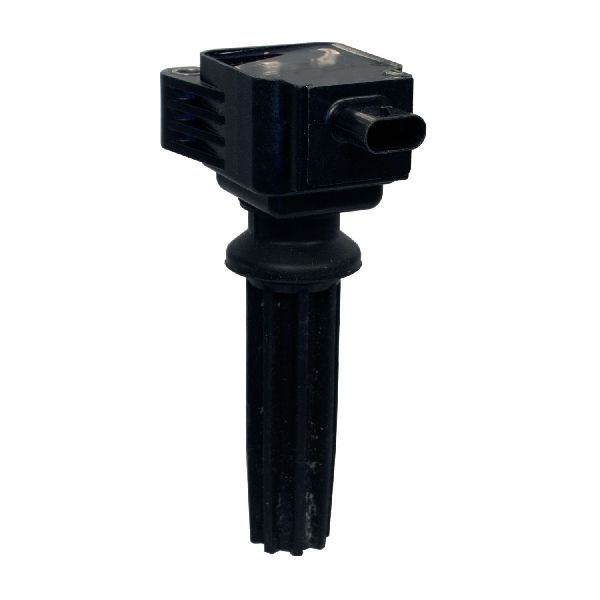
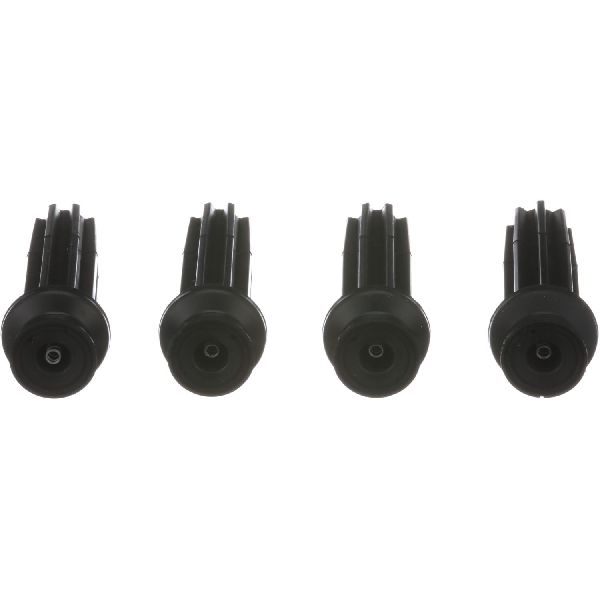
Est. part cost: $4000-$7000 - Faulty Ignition Coil 🔴 High Probability Coil-on-plug ignition coils are a common failure point on most modern vehicles as they age and are exposed to heat cycles.
How to confirm: Swap the ignition coil from cylinder 3 with another cylinder (e.g., cylinder 2). Clear the codes and drive the vehicle. If the code changes to P0302, the ignition coil is faulty.
Typical fix: Replace the faulty ignition coil. It is often recommended to replace all coils at the same time, especially if they are original.
Est. part cost: $40-$90 - Worn or Faulty Spark Plug 🔴 High Probability Spark plugs are a regular maintenance item. A cracked insulator, excessive electrode wear, or fouling from oil or coolant can cause a misfire. A plug fouled by coolant will appear wet or unusually clean ('steam-cleaned').
How to confirm: Remove the spark plug from cylinder 3 and inspect it for wear, damage, or fouling. Compare it to a plug from a working cylinder. A plug that appears steam-cleaned is a strong indicator of a coolant leak into that cylinder.
Typical fix: Replace the spark plug. It is best practice to replace all spark plugs at the same time.
Est. part cost: $10-$25 - Clogged or Faulty Fuel Injector 🟡 Medium Probability Gasoline direct injection (GDI) injectors can be prone to carbon buildup over time, which can affect their spray pattern and lead to a misfire.
How to confirm: This is more difficult to diagnose. A professional can perform a fuel injector balance test. A DIY method is to swap the cylinder 3 injector with another cylinder and see if the misfire code follows, similar to the coil swap test, though this is a much more involved job.
Typical fix: Replace the faulty fuel injector.
Est. part cost: $50-$150
Rare But Worth Checking
- Low Engine Compression: While rare on its own, low compression can be a result of the coolant intrusion issue 'washing' the cylinder walls, which reduces the seal of the piston rings. Other causes include burnt valves or worn piston rings. A mechanical compression test is needed to confirm.
- Faulty Powertrain Control Module (PCM): In rare cases, the driver transistor within the PCM that controls the ignition coil for cylinder 3 can fail. This can cause a constant misfire that doesn't resolve with a new coil or plug. Diagnosis involves checking for the control signal at the coil connector with a multimeter or oscilloscope.
Diagnosis Steps

- Read the code with an OBD-II scanner and confirm P0303 is present, noting any other codes like P0300, P0316, or P1299.
- If the vehicle has a 2.0L EcoBoost engine, immediately check the coolant level in the overflow reservoir. If it is low, this is a major red flag for the known coolant intrusion issue. Proceed with the assumption of coolant intrusion until proven otherwise.
- Identify Cylinder 3. On the 2.0L I4, cylinders are numbered 1-2-3-4 from front (belt side) to back. Cylinder 3 is the third from the front. On the 2.7L/3.5L V6, the rear bank (near firewall) is cylinders 1-2-3 (passenger to driver side). Cylinder 3 is on the driver's side against the firewall.
- Swap the ignition coil from cylinder 3 to another cylinder (e.g., cylinder 2). Clear the codes and run the engine. If the code changes to P0302, the coil is bad and needs replacement.
- If the code remains P0303, inspect the spark plug from cylinder 3. Look for damage, wear, or fouling. A 'steam-cleaned' or wet appearance strongly suggests coolant intrusion. If the plug is bad, replace it (preferably all of them) and see if the code returns.
- If ignition components are good and you have a 2.0L engine with any signs of coolant loss, a professional diagnosis is required. This will involve a cooling system pressure test and a borescope inspection to confirm coolant in the cylinder, as per TSB 22-2229.
- For non-2.0L engines, or if coolant intrusion is ruled out, the next steps involve testing the fuel injector and performing a mechanical compression test to check for internal engine problems.
Parts You'll Likely Need
- Ignition Coil
(OEM #2.0L: DG-562 (CM5Z-12029-K) / 2.7L: DG-562 / 3.5L: DG-549 (7T4Z-12029-E))— A very common cause for an isolated cylinder misfire. Part number varies by engine.
Trusted brands: Motorcraft, NGK, Denso, Delphi
OEM price range: $60-$90
Aftermarket price range: $40-$70 - Spark Plug
(OEM #2.0L: SP-550 (CYFS-12Y-PCT) / 2.7L & 3.5L: SP-589)— A routine maintenance part that can fail. On the 2.0L, a coolant-fouled plug is a key symptom of the larger engine issue.
Trusted brands: Motorcraft, NGK, Bosch
OEM price range: $15-$25
Aftermarket price range: $8-$15 - Engine Long Block Assembly
(OEM #J2GZ-6006-A (VIN specific, example for 2.0L))— This is the official Ford-mandated fix for the P0303 code when it is caused by the coolant intrusion defect on 2.0L EcoBoost engines, as outlined in TSB 22-2229.
Trusted brands: Motorcraft
OEM price range: $4000-$7000
Aftermarket price range: $3500-$5500
Related Codes That Often Appear With This One
- P0300 — Stands for 'Random/Multiple Cylinder Misfire Detected.' If the coolant intrusion or other issue begins to affect other cylinders, this code may appear alongside P0303.
- P0316 — Stands for 'Misfire Detected on Startup (First 1000 Revolutions).' This is often triggered with a primary misfire code like P0303, especially if the misfire is severe on a cold start.
- P0217 — Stands for 'Engine Coolant Over Temperature Condition.' If the misfire is caused by a significant coolant leak into the cylinder, it can lead to low coolant levels and overheating, triggering this code.
- P1299 — Stands for 'Cylinder Head Over Temperature Protection Active.' This is a more severe overheating code that may appear if the coolant loss from the intrusion is significant.
Technical Service Bulletins (TSBs) & Recalls

- TSB 22-2229: The most current bulletin. Addresses coolant intrusion into cylinders on 2015-2018 Edge 2.0L EcoBoost engines, causing misfires (P0301-P0304) and other symptoms. The prescribed fix is replacing the long block engine assembly.
- SSM 47204: An earlier Special Service Message that also identified the coolant intrusion issue on 2.0L EcoBoost engines, which was later superseded by more comprehensive TSBs.
Platform-Specific Known Issues
- 2.0L EcoBoost Coolant Intrusion: The most critical issue for this vehicle range. A flaw in the engine block's open-deck design allows coolant to leak into cylinders, most commonly cylinders 2 and 3. This causes misfires, rough running, white smoke, and eventual engine failure. Ford TSB 22-2229 (which supersedes earlier versions like TSB 22-2133 and SSM 47204) confirms this issue and states the only fix is a complete long block replacement. Multiple owner complaints filed with the NHTSA and a pending class-action lawsuit corroborate this widespread failure mode.
Mechanic-Grade Diagnostic Values
- VVT Solenoid Resistance — expected: Between 5 and 15 Ohms. Failure: A reading of 0 Ohms indicates a short, while an infinite (O.L.) reading indicates an open circuit. Either requires replacement.
- Ignition Coil Control Signal — expected: A pulsing ground signal when the engine is cranking or running (requires an oscilloscope or a multimeter with a fast refresh rate to see). With key-on-engine-off, you should see battery voltage on the power wire and the control wire.. Failure: If the control wire is constantly grounded or shows no voltage activity during cranking, it may indicate a faulty PCM driver.
- Mode $06 Misfire Count — expected: A value of 0 or a very low number for cylinder 3 during a drive cycle.. Failure: A high or rapidly increasing count for Test ID $A2, Component ID $03 (Cylinder 3 Misfire Data) indicates a persistent misfire, even if it's not frequent enough to set a CEL immediately.
Hidden / Shadow Codes Worth Checking
- Mode $06, Test ID $A2-$AF: This is not a DTC but a specific monitor within the OBD-II system's Mode $06 data that tracks misfire counts per cylinder for the current and last ten driving cycles. For a P0303, you would specifically look at Test ID $A4, Component ID $03. This can reveal intermittent misfires before they are severe enough to trigger the check engine light. (see via Requires a scan tool capable of reading Mode $06 data, such as FORScan software or professional-grade scanners from brands like Snap-on or Autel.)
Scan Tool Commands That Help
- Ford IDS, FORScan, or high-end professional scanner: Relative Compression Test — This is a quick, non-invasive way to check for a cylinder with low compression without using a mechanical gauge. The PCM cranks the engine and measures variations in crankshaft speed to infer the relative compression of each cylinder. A significant drop for cylinder 3 points to a mechanical issue.
- Ford IDS or equivalent professional scanner: Power Balance Test — This active test allows the technician to disable one cylinder at a time while the engine is running to observe the RPM drop. If disabling cylinder 3 causes little or no change in RPM compared to other cylinders, it confirms that cylinder 3 is not contributing power.
Wiring & Ground Locations
- Cylinder 3 Ignition Coil Connector — On the 2.0L I4, it is the third coil from the front of the engine (belt side). On V6 models, it is the driver's side cylinder closest to the firewall.. This connector provides power and the PCM's ground signal to fire the coil. Checking for battery voltage on the power wire and a pulsing ground on the control wire is a key diagnostic step to differentiate between a bad coil and a PCM/wiring issue.
- PCM Connector C175E (V6) / C1551E (I4) — The Powertrain Control Module (PCM) is typically located in the engine bay, often near the battery or firewall.. This is the main connector from the PCM. If you suspect a faulty PCM driver, you can test for continuity on the cylinder 3 ignition coil control wire between this connector and the coil connector to rule out a wiring break.
Real Owner Repair Stories
- Ford Edge Forum (2011 Ford Edge Limited 3.5L, 113,000 miles) — Hesitation under heavy acceleration or going uphill, flashing check engine light, code P0301 (Cylinder 1, but same diagnostic principle applies).
❌ Tried (didn't work) Replaced all spark plugs and ignition coils., Replaced O2 sensor (for a concurrent P0420)., Performed a compression check (all cylinders were good)., Replaced the fuel injector for the misfiring cylinder., Swapped coil and plug to another cylinder (misfire code did not move).
✅ What actually fixed it The owner consulted a Ford Master Technician who suggested the PCM was the likely culprit. The owner replaced the PCM with a refurbished unit from Flagship One, which resolved the persistent misfire. - Reddit r/MechanicAdvice (2017 Ford Escape 2.0L EcoBoost) — P0303, low coolant.
❌ Tried (didn't work) Owner attempted to remove the spark plug from cylinder 3 and accidentally broke it.
✅ What actually fixed it The vehicle was towed to a dealer. The dealer confirmed coolant was leaking into the engine. After negotiation with Ford corporate, the owner had a new long block engine installed at a partially subsidized cost, which was the ultimate fix for the coolant intrusion causing the P0303.
OEM Part Supersession History
JS7Z-6006-A, JS7Z-6006-C, JJ7Z-6006-B→J2GZ-6006-E (and potentially newer revisions)— These part numbers represent the 2.0L EcoBoost long block engine assembly. The supersessions reflect updates to the engine block design to correct the coolant intrusion flaw. The newer part numbers are for the redesigned engine with circular coolant passages instead of the original problematic slits.
Model Year Variations Within This Range
- 2015-2018: These model years use the 2.0L EcoBoost engine with the original block design that is prone to the coolant intrusion defect between cylinders.
- 2019+: Starting with the 2019 model year, the Ford Edge received a refreshed 2.0L EcoBoost engine with a redesigned block that uses small, circular drill holes for coolant passages instead of the previous slot design. This change is understood to have fixed the coolant intrusion issue that causes P0303 on earlier models.
Helpful Videos
Used OEM Parts in Stock


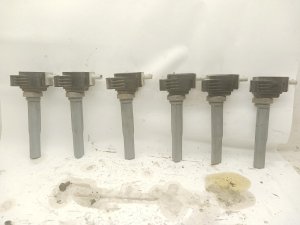
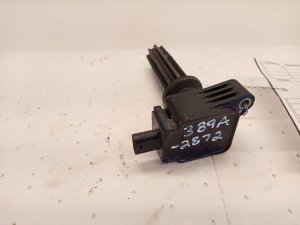

New Aftermarket Parts Available
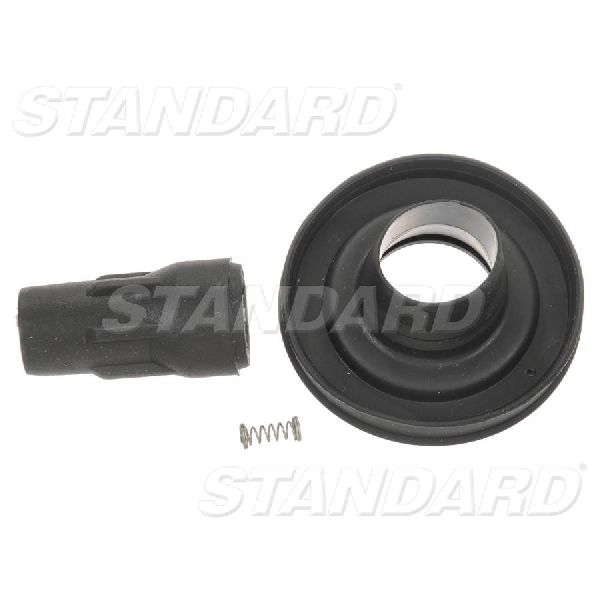
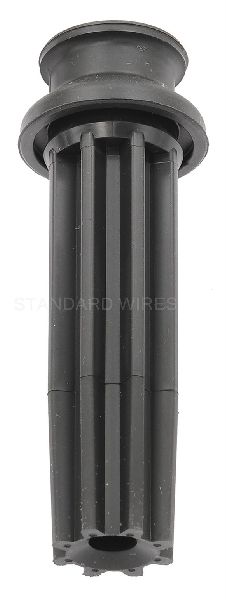



The information in this article is provided for general reference and educational purposes only. Vehicle specifications, procedures, and part compatibility can vary by production date, trim level, and region. Always consult your vehicle's factory service manual and verify part numbers before purchasing or performing repairs. Safety-critical components such as airbags, seat belts, and braking systems should be installed by a qualified professional.
- Ford EDGE:
- 🎬 Helpful Videos
- 🛍️ Shop This Part
- What's Unique About the 2015-2018 Ford EDGE
- Diagnostic Flowchart
- Symptoms You May Notice
- Most Likely Causes
- Rare But Worth Checking
- Diagnosis Steps
- Parts You'll Likely Need
- Related Codes That Often Appear With This One
- Technical Service Bulletins (TSBs) & Recalls
- Platform-Specific Known Issues
- Mechanic-Grade Diagnostic Values
- Hidden / Shadow Codes Worth Checking
- Scan Tool Commands That Help
- Wiring & Ground Locations
- Real Owner Repair Stories
- OEM Part Supersession History
- Model Year Variations Within This Range
- 🎟️ Get 5% Off