

P0302 on 2017-2022 Cadillac XT5: Cylinder 2 Misfire Causes and Fixes
P0302 indicates a misfire in cylinder #2. On the 2017-2022 Cadillac XT5, this is most often caused by a failed ignition coil or a worn spark plug. A less common but well-documented cause specific to the 3.6L LGX V6 is a faulty Active Fuel Management (AFM) Oil Control Valve (OCV) solenoid, as noted in GM Technical Service Bulletin #21-NA-036, which can also cause a P0305.
- P0302 is a misfire on cylinder #2, which is the front-most cylinder on the driver's side on the V6 engine.
- The most likely cause is a bad ignition coil or a worn spark plug. Start your diagnosis by swapping the cylinder #2 coil with another one to see if the misfire code follows it.
- Be aware of GM Technical Service Bulletin #21-NA-036, which points to a faulty OCV solenoid as a vehicle-specific cause for this code.
- Do not drive for an extended period with a flashing check engine light, as this indicates a severe misfire that can quickly damage your catalytic converter.
What's Unique About the 2017-2022 Cadillac XT5
While the primary causes for a P0302 on the XT5 are the usual ignition system components, the 3.6L LGX V6 has a specific issue documented by GM. A Technical Service Bulletin (TSB #21-NA-036) points to a potentially damaged Oil Control Valve (OCV) solenoid related to the Active Fuel Management (AFM) system. This solenoid can fail, causing oil pressure to bleed off, deactivating the cylinder, and leading to misfires specifically on cylinders 2 and/or 5. The TSB notes the end of the solenoid can break off and get stuck in the camshaft cover bore. For the 2.0L LSY engine, while less specific to P0302, issues like carbon buildup are common for GM direct-injection engines.
Diagnostic Flowchart
Tap your situation to follow the diagnostic path that matches what you're seeing on this vehicle.
Symptoms You May Notice
- Rough or shaky idle
- Hesitation or stumbling during acceleration
- Noticeable loss of engine power
- Flashing or solid Check Engine Light
- Reduced fuel economy
- Foul odor from the exhaust
- Replacing oxygen (O2) sensors. O2 sensors may report issues due to the unburned fuel from the misfire, but they are almost never the root cause of a single-cylinder misfire code.
Most Likely Causes
- Faulty Ignition Coil 🔴 High Probability Coil-on-plug systems are a common failure point on many modern engines as they age, leading to a weak or absent spark.
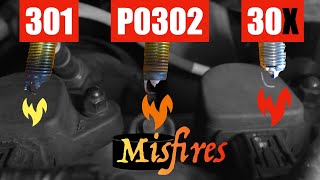
How to confirm: The easiest method is to swap the ignition coil from cylinder #2 with another cylinder (e.g., cylinder #4). Clear the codes and drive the vehicle. If the code changes to P0304, the ignition coil is confirmed to be faulty. 🎬 Watch: How to diagnose and fix a P0302 misfire code. A technician may also compare the primary resistance of the coil to others; it should be between 0.4 - 2.0 Ohms.
Typical fix: Replace the faulty ignition coil. It is often recommended to replace the corresponding spark plug at the same time. The coil bolt should be torqued to 10 Nm (89 in-lbs).
Est. part cost: $40-$90 - Worn or Fouled Spark Plug 🔴 High Probability Spark plugs are a regular maintenance item. The recommended replacement interval for the 3.6L V6 is around 97,500 miles, and for the 2.0L Turbo it is 60,000 miles. Plugs can fail earlier due to carbon fouling or other issues.
How to confirm: After ruling out the ignition coil, remove the spark plug from cylinder #2. Inspect it for wear on the electrode, carbon fouling, oil deposits, or cracks in the porcelain.
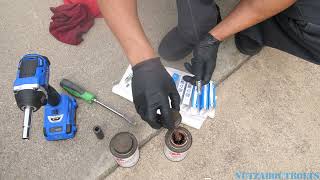
Typical fix: Replace the spark plug. It is best practice to replace all spark plugs at the same time to ensure even performance. Torque new plugs to 13 ft-lbs (18 Nm). 🎬 See this walkthrough for removing and installing XT5 spark plugs.
Est. part cost: $10-$25 per plug - Damaged AFM OCV (Oil Control Valve) Solenoid (3.6L V6) 🟡 Medium Probability A specific GM Technical Service Bulletin (#21-NA-036) identifies this as a possible issue on the LGX V6. The solenoid can leak or break, causing oil pressure loss to the Active Fuel Management lifters on cylinder 2 and/or 5, forcing a misfire.
How to confirm: Visually inspect the OCV solenoid in the camshaft cover for signs of oil leakage. The TSB provides instructions for inspection, noting that the end of the solenoid can break off and remain in the bore.
Typical fix: Replace the damaged OCV solenoid and its O-rings. If the bore is clear, the new solenoid can be installed. If the solenoid is not the cause, the TSB advises inspecting the rocker arms for the affected cylinder.
Est. part cost: $50-$120 - Clogged or Faulty Fuel Injector ⚪ Low Probability Direct injection (GDI) fuel injectors operate under high pressure and can become clogged or fail electronically over time. A real-world repair on a 2019 XT5 with a persistent misfire confirmed a faulty fuel injector was the cause after plugs and coils were eliminated.
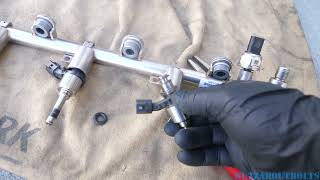
How to confirm: Listen for a consistent ticking sound from the injector using a mechanic's stethoscope. A more definitive test is to swap the fuel injector from cylinder #2 with another cylinder to see if the misfire follows. This is labor-intensive. 🎬 Watch: Step-by-step guide to removing the XT5 fuel rail. A professional scan tool (like GM's GDS2) can perform an 'Injector Balance Test' which measures the fuel pressure drop for each injector to identify a weak one.
Typical fix: Replace the faulty fuel injector. It's often recommended to replace the injector seals at the same time.
Est. part cost: $70-$150
Rare But Worth Checking
- Internal Engine Mechanical Issue (Lifters/Rocker Arms): This is rare but can include issues like a loss of compression due to a bad valve, worn piston rings, or a faulty cylinder deactivation (AFM) lifter. A Reddit user with a 2019 XT5 reported a P0305 misfire that was ultimately traced to defective rocker arms and an oil control valve after plugs, coils, and injectors were replaced. TSB 21-NA-036 also points to inspecting rockers if the OCV is not the cause. A compression test is a key step in diagnosing this.
- Vacuum Leak: A vacuum leak near the intake manifold runner for cylinder #2 could lean out the air/fuel mixture enough to cause a misfire. This would typically be accompanied by other codes (like lean codes) or symptoms like a high idle. A smoke test is the most effective way to find a leak.
- Carbon Buildup on Intake Valves: Both the LGX and LSY engines use Gasoline Direct Injection (GDI), which can lead to carbon deposits on the intake valves over time. This can restrict airflow into the cylinder, causing misfires. This is more likely to cause random misfires (P0300) but can affect a single cylinder. GM has a specific procedure for chemical cleaning and a 3-hour soak to resolve this without full disassembly.
Diagnosis Steps
- Read the code with an OBD-II scanner and confirm P0302 is present. Note any other codes, like P0300 or P0305.
- Determine the location of cylinder #2. For the 3.6L V6, the front bank (radiator side) is cylinders 2-4-6 from driver's side to passenger's side. Cylinder #2 is the front-most cylinder on the driver's side. For the 2.0L LSY 4-cylinder, cylinders are numbered 1-2-3-4 from the front (belt side) to the back (transmission side).
- Swap the ignition coil from cylinder #2 with the coil from cylinder #4 (on V6) or cylinder #1 or #3 (on I4). Clear the codes and test drive.
- If the code returns as P0304 (or the cylinder you swapped with), the ignition coil is bad. Replace it. Torque the coil bolt to 10 Nm (89 in-lbs).
- If the code returns as P0302, the coil is likely good. Proceed to inspect the spark plug in cylinder #2. Replace it if it appears worn, fouled, or damaged. Consider replacing all plugs if they are near their service interval (60k miles for 2.0L, ~97.5k miles for 3.6L). Torque new plugs to 13 ft-lbs (18 Nm).
- If the plug and coil are good, inspect the wiring and connector for the ignition coil and fuel injector for any damage or corrosion.
- For the 3.6L V6, inspect the area around the Bank 2 (front bank) AFM Oil Control Valve (OCV) solenoid for oil leaks, as indicated by TSB 21-NA-036.
- If no obvious cause is found, more advanced diagnostics are needed. This could include swapping fuel injectors, performing an engine compression test to rule out mechanical problems, or conducting a smoke test to check for vacuum leaks.
Parts You'll Likely Need
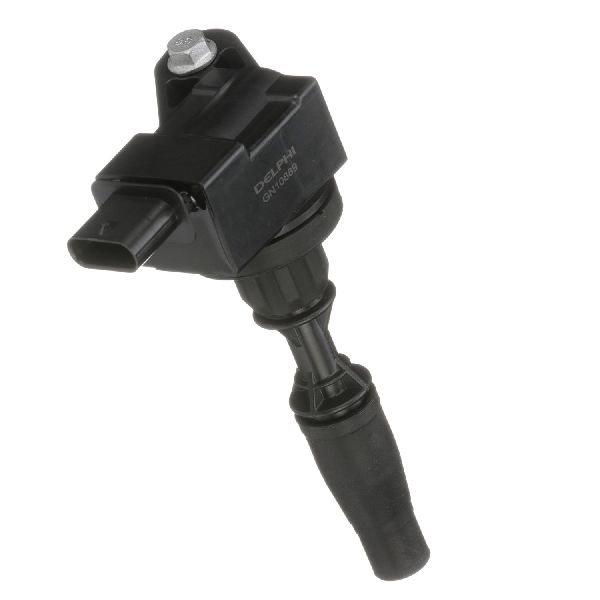
- Ignition Coil
(OEM #12707304 (current ACDelco for 3.6L LGX), 12725605 (ACDelco for 2.0L LSY))— This is one of the most common failure items to cause a single-cylinder misfire.
Trusted brands: ACDelco, Delphi, NGK
OEM price range: $60-$110
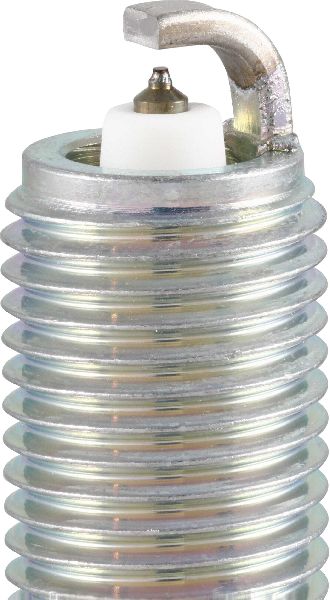
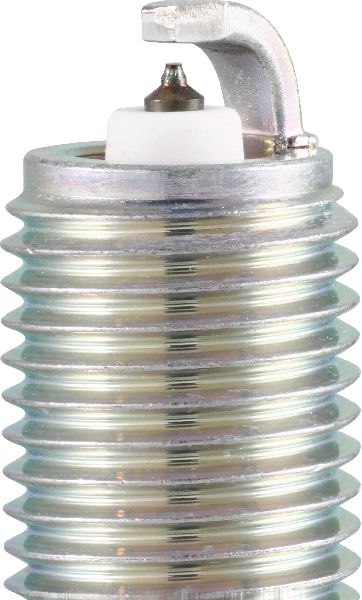
Aftermarket price range: $40-$90 - Iridium Spark Plug
(OEM #41-130 / 12646780 (ACDelco for 3.6L LGX), 41-103IP / 55504354 (ACDelco for 2.0L LSY))— As a primary component of the ignition system, a worn spark plug is a very common cause of misfires.
Trusted brands: ACDelco, NGK
OEM price range: $15-$25
Aftermarket price range: $10-$20 - Engine Oil Control Valve (OCV) Solenoid (3.6L V6)
(OEM #12694590 (ACDelco for Bank 2 AFM OCV))— A known issue documented in TSB 21-NA-036 for this specific vehicle that can cause oil leaks and misfires, including P0302.
Trusted brands: ACDelco
OEM price range: $70-$150
Aftermarket price range: $50-$120
Related Codes That Often Appear With This One
- P0300 — If the misfire on cylinder 2 is intermittent or other cylinders are also misfiring, the ECM may log a P0300 for 'Random/Multiple Cylinder Misfire Detected'.
- P0305 — TSB #21-NA-036 specifically notes that a faulty AFM OCV solenoid on the 3.6L V6 can cause P0302 and/or P0305, as these are the two cylinders with AFM deactivation on that bank.
Technical Service Bulletins (TSBs) & Recalls
- 21-NA-036: Notes a possible issue with a damaged AFM OCV solenoid on the 3.6L V6 that can cause an oil leak and misfire codes P0300, P0302, and/or P0305. It affects multiple GM vehicles with
Platform-Specific Known Issues
- TSB 21-NA-036 (3.6L V6): A damaged Active Fuel Management (AFM) Oil Control Valve (OCV) solenoid may cause an oil leak and misfire, illuminating the MIL and setting DTCs P0300, P0302 and/or P0305. The bulletin notes the end of the solenoid can break off and get stuck in the camshaft cover.
- TSB 21-NA-278: Provides a general diagnostic strategy for engine noises with possible misfires, suggesting checking fuel injectors first before moving to mechanical components.
Mechanic-Grade Diagnostic Values
- Low-Side Fuel Pressure (Key On, Engine Off) — expected: 55-60 PSI. Failure: Pressure below 55 PSI or pressure that bleeds off quickly can indicate a weak in-tank fuel pump or a leak.
- High-Side Fuel Pressure (Engine Idling, 3.6L LGX) — expected: 290-750 PSI (2-5 MPa). Failure: Significantly lower or erratic pressure can point to a failing high-pressure fuel pump (HPFP) or a bad rail pressure sensor.
- Ignition Coil Primary Resistance — expected: 0.4 - 2.0 Ohms. Failure: A reading outside this range, or a reading that is significantly different from the other coils on the engine, indicates a faulty coil.
- Fuel Injector Resistance — expected: 12-17 Ohms (typical for gasoline engines). Failure: A reading significantly outside this range suggests the injector's internal coil is faulty.
- Injector Pulse Width (Live Scan Tool Data) — expected: Values should be relatively consistent across all cylinders at idle.. Failure: A significantly longer pulse width (e.g., 3.6ms vs 1.9ms on others) on cylinder 2 suggests the ECM is holding the injector open longer to compensate for it being clogged or weak.
Scan Tool Commands That Help
- GM GDS2 (or equivalent professional scanner): Injector Balance Test — After ruling out spark plugs and ignition coils, this test can pinpoint a faulty fuel injector without requiring physical removal. The tool commands each injector to fire and measures the corresponding drop in fuel rail pressure, identifying any injector that causes a smaller or larger drop than the others.
- GM GDS2 (or equivalent professional scanner): Cylinder Power Balance / Misfire Data — This live data display shows current and historical misfire counts for each individual cylinder. It is the primary tool for confirming which cylinder is misfiring and determining if the misfire is constant or intermittent.
- GM GDS2 (or equivalent professional scanner): AFM Cylinder Deactivation (Control Function) — For the 3.6L V6, a technician can use this function to command the Active Fuel Management system on and off to see if it affects the misfire count on cylinder 2, which can help diagnose a faulty AFM lifter or OCV solenoid.
Wiring & Ground Locations
- G102 — Located at the left rear of the engine.. This is a primary grounding point for the ignition coils. A loose or corroded connection here can cause a weak spark and lead to misfires on one or more cylinders.
- G103 / G104 — Located on the cowl at the left rear of the engine compartment, above the brake booster.. These grounds are critical for the Engine Control Module (ECM) and Body Control Module (BCM). A poor ground here can cause a wide range of erratic engine management behavior, including phantom codes and misfires.
- Injector & Coil Control Wires — In the engine wiring harness, running from the main ECM connectors to each individual ignition coil and fuel injector.. The ECM uses a dedicated control wire for the ignition coil and fuel injector of each cylinder (e.g., 'IC 2 Ctrl', 'Fuel Inj 2 Ctrl'). Damage, corrosion, or a short in the specific wire for cylinder 2 will cause a persistent P0302 that won't be fixed by replacing the component itself. The driver-side fuel injector harness is available as a separate part (P/N 12690811).
Real Owner Repair Stories
- Reddit user in r/Cadillac (2019 Cadillac XT5 (3.6L V6), 50,000 miles) — Persistent P0305 misfire code (related to P0302 via TSB 21-NA-036).
❌ Tried (didn't work) Replaced spark plug on cylinder 5, Replaced ignition coil on cylinder 5, Replaced fuel injector on cylinder 5
✅ What actually fixed it The dealer replaced the rocker arms and the oil control valve for cylinder 5. The user noted GM covered half the cost as goodwill since the warranty had just expired. - Reddit user in r/Cadillac (2017 Cadillac XT5 (3.6L V6), 50,000 kms) — Intermittent P0305, eventually multiple different misfire codes and other electrical issues.
❌ Tried (didn't work) Replaced ignition coil on cylinder 5, Performed valve cleaning for carbon buildup
✅ What actually fixed it After extensive diagnostics where the car would not start, the final cause was identified as a faulty 'sensor on the cylinder deactivation' system, which is consistent with the AFM Oil Control Valve (OCV) solenoid.
OEM Part Supersession History
12679523 / 12666339→12707304, which was later superseded by 12741091— Standard part evolution for improved durability and performance.
Heads up: The parts are physically interchangeable, but using the latest part number (12741091) is recommended to get the most recent design revisions.
Model Year Variations Within This Range
- 2020-2022: The 2.0L Turbo LSY engine became the standard engine on Luxury and Premium Luxury trims starting in 2020. While it can still suffer from P0302 due to coils, plugs, and injectors, it is not susceptible to the 3.6L LGX-specific AFM OCV solenoid failure (TSB 21-NA-036).
Helpful Videos
Used OEM Parts in Stock


New Aftermarket Parts Available


The information in this article is provided for general reference and educational purposes only. Vehicle specifications, procedures, and part compatibility can vary by production date, trim level, and region. Always consult your vehicle's factory service manual and verify part numbers before purchasing or performing repairs. Safety-critical components such as airbags, seat belts, and braking systems should be installed by a qualified professional.
- Cadillac XT5:
- 🎬 Helpful Videos
- 🛍️ Shop This Part
- What's Unique About the 2017-2022 Cadillac XT5
- Diagnostic Flowchart
- Symptoms You May Notice
- Most Likely Causes
- Rare But Worth Checking
- Diagnosis Steps
- Parts You'll Likely Need
- Related Codes That Often Appear With This One
- Technical Service Bulletins (TSBs) & Recalls
- Platform-Specific Known Issues
- Mechanic-Grade Diagnostic Values
- Scan Tool Commands That Help
- Wiring & Ground Locations
- Real Owner Repair Stories
- OEM Part Supersession History
- Model Year Variations Within This Range
- 🎟️ Get 5% Off