

P0301 on 2006-2010 Lexus IS 250: Cylinder 1 Misfire Causes and Fixes
P0301 on a 2006-2010 IS 250 is often a symptom of a larger, well-documented carbon buildup issue in the 4GR-FSE engine. While a bad spark plug or ignition coil is possible, the misfire frequently points to the need for intake valve cleaning (walnut blasting). Lexus acknowledged this with a Customer Support Program (CSP) that extended the warranty to 9 years with unlimited mileage.
- P0301 on a 2006-2010 IS 250 is very frequently caused by carbon buildup on the intake valves due to the engine's direct-injection design.
- Before assuming a major repair, perform basic diagnostics by swapping the ignition coil and spark plug from cylinder 1 to another cylinder to rule out simple ignition component failure.
- Cylinder 1 is located on the passenger side, closest to the radiator, making the coil and spark plug easily accessible for diagnosis.
- If ignition parts are good, the most likely solution is a professional intake valve cleaning (e.g., walnut blasting).
- Lexus previously acknowledged this widespread issue with TSBs and a Customer Support Program (CSP), though the coverage period has likely expired.
What's Unique About the 2006-2010 Lexus IS 250
The 2006-2010 Lexus IS 250 uses the 4GR-FSE engine, which features direct injection. While this technology improves power and efficiency, it has a significant drawback: fuel is injected directly into the combustion chamber, bypassing the intake valves. As a result, the valves are not cleaned by fuel detergents, leading to heavy carbon deposit accumulation. This buildup can break off, preventing valves from sealing properly and causing the misfires reported by codes like P0301, especially a rough idle after the engine is warm or after sustained highway driving. This issue is so prevalent that Lexus issued Technical Service Bulletins (TSBs L-TT-0192-15, L-TT-0093-12) and a Customer Support Program (CSP ZLG) to address it.
Diagnostic Flowchart
Tap your situation to follow the diagnostic path that matches what you're seeing on this vehicle.
Symptoms You May Notice
- Check Engine Light is on (may be flashing if the misfire is severe enough to damage the catalytic converter).
- VSC and/or Traction Control light may also illuminate
- Rough or shaky idle, especially after the engine warms up or after highway driving.
- Hesitation or stumbling during acceleration.
- Noticeable loss of engine power.
- Reduced fuel economy.
- Smell of unburned gasoline from the exhaust
- Popping sound from the engine, particularly when cold.
- Replacing only the O2 sensors without checking for the root cause of the misfire.
- Assuming the catalytic converter is bad when it's actually being damaged by unburned fuel from the misfire.
- Performing a chemical 'top engine clean' (like Seafoam) and expecting it to solve heavy carbon buildup. Physical cleaning (walnut blasting) is required for significant deposits.
Most Likely Causes
- Carbon Buildup on Intake Valves and/or Pistons 🔴 High Probability The 4GR-FSE is a direct-injection engine, so fuel doesn't wash over the intake valves to keep them clean. This leads to oil vapors and combustion byproducts baking onto the valves, causing poor sealing and misfires. This is a widely documented issue for this specific vehicle and engine, acknowledged by Lexus.
How to confirm: A borescope inspection of the intake ports and valves will visually confirm carbon deposits. A common diagnostic test is to let the engine warm up, then rev it to 4000 RPM for 30 seconds and let it return to idle; if the idle becomes rough or stalls, it strongly indicates significant carbon buildup.
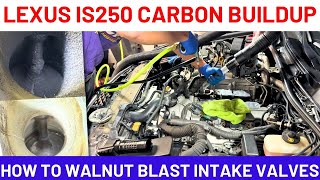
Typical fix: The most effective fix is physical cleaning of the intake valves, often through media blasting (commonly called 'walnut blasting'). In severe cases covered by Lexus's Customer Support Program, a top-engine rebuild with redesigned pistons and rings was performed. Some owners install an oil catch can after cleaning to reduce future buildup.
Est. part cost: $50-$100 (for intake gaskets if performing walnut blasting) - Worn or Faulty Spark Plugs 🟡 Medium Probability
How to confirm: Inspect the spark plug from cylinder 1. Look for a worn electrode, fouling (black, oily, or white deposits), or an incorrect gap. A definitive test is to swap the cylinder 1 spark plug with another cylinder (e.g., cylinder 3). If the misfire code changes to P0303, the spark plug is the culprit.
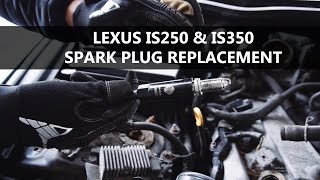
Typical fix: Replace the spark plugs. It is recommended to replace all six at the same time using high-quality Iridium plugs like Denso 🎬 Watch this step-by-step guide to replacing your spark plugs FK20HBR11 as specified by the manufacturer. Be careful, as the wiring harness connectors can become brittle and break during removal.
Est. part cost: $60-$150 for a set of six OEM-quality plugs - Faulty Ignition Coil 🟡 Medium Probability
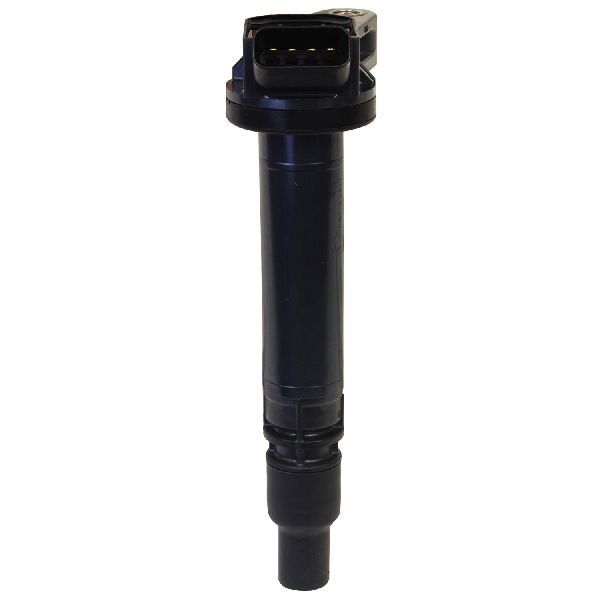
How to confirm: Swap the ignition coil from cylinder 1 with another cylinder on the same bank (e.g., cylinder 3, which is also on the passenger side and easily accessible). Clear the codes and run the engine. If the code changes to P0303, the ignition coil is faulty.
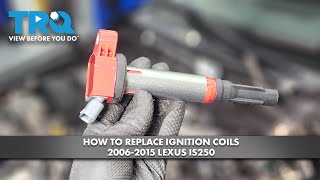
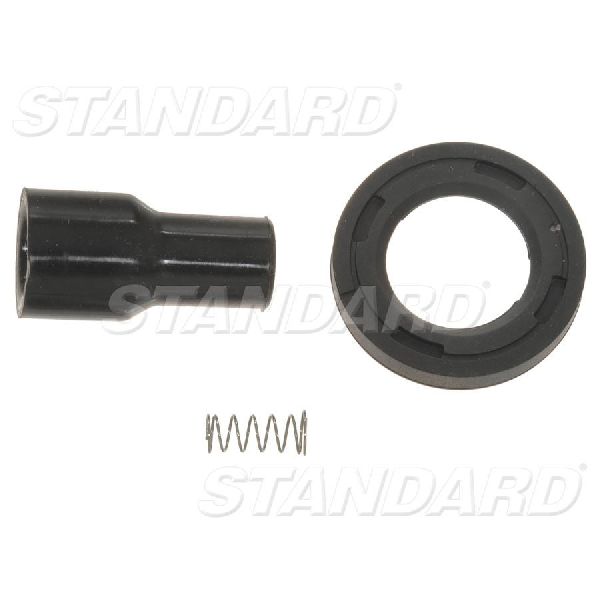
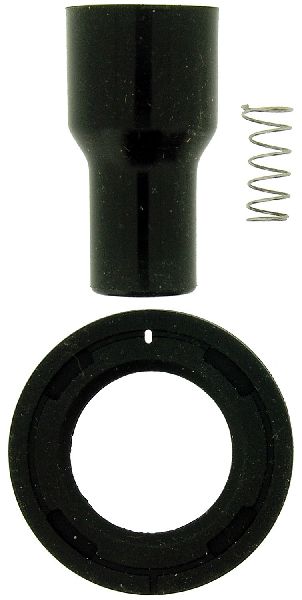
Typical fix: Replace the failed ignition coil. While you can replace just one, it's often wise to replace the set if they are original and high-mileage. Applying a small amount of dielectric grease to the inside of the new coil's boot is recommended.
Est. part cost: $50-$100 for one OEM-quality coil
Rare But Worth Checking
- Clogged or Faulty Fuel Injector: While less common than carbon or ignition issues, a direct injector can fail or become clogged, leading to a misfire in a single cylinder. This can sometimes be accompanied by negative long-term fuel trim values for that bank.
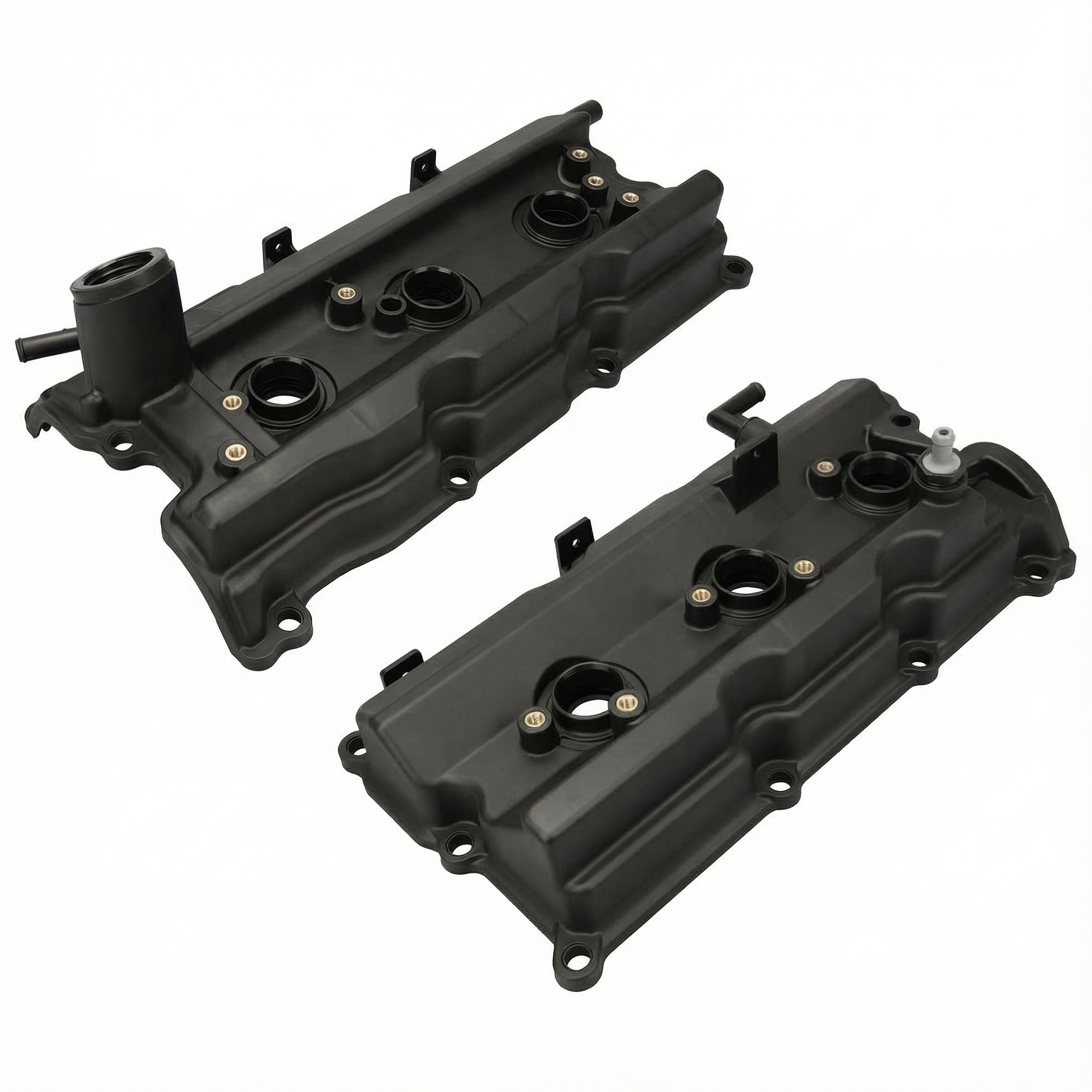
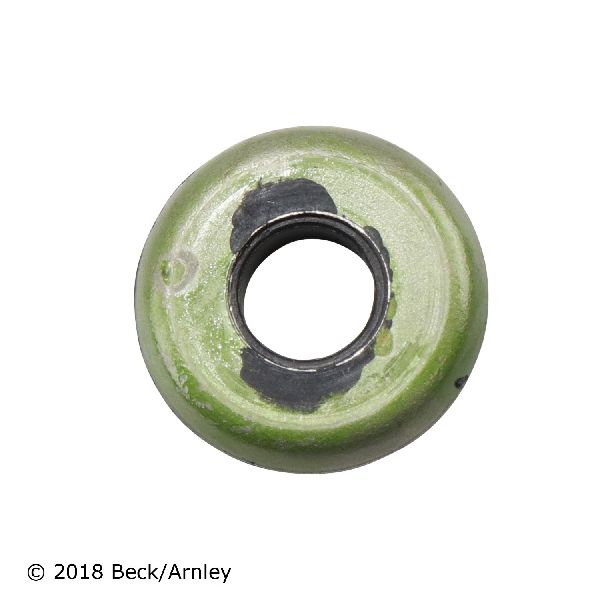
- Leaking Valve Cover Gasket (Spark Plug Tube Seal): The valve cover gasket includes seals for the spark plug tubes. If a tube seal fails, oil can leak into the spark plug well, fouling the plug and ignition coil, causing a misfire. This requires replacing the valve cover gasket set.
- Low Engine Compression: In severe cases of carbon buildup, piston rings can stick or cylinder walls can be scored, leading to a loss of compression and a persistent misfire that ignition or fuel parts won't fix. A compression test is needed to verify this.
- Dirty Mass Airflow (MAF) Sensor: A dirty MAF sensor can provide incorrect airflow readings to the ECM, disrupting the air-fuel mixture and potentially causing a misfire. Cleaning the sensor with a dedicated MAF sensor cleaner is a simple and inexpensive diagnostic step.
Diagnosis Steps
- Read the code with an OBD-II scanner and confirm it is P0301. Note any other codes present and check freeze frame data.
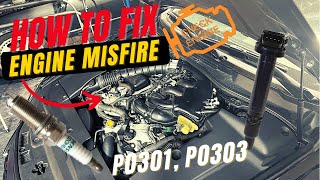
- Identify Cylinder 1: It is the front-most cylinder 🎬 Watch: How to diagnose and fix misfire codes P0301-P0306 on the passenger side of the engine.
- Swap Ignition Components: Swap the ignition coil from cylinder 1 with cylinder 3 (middle cylinder, passenger side). Clear the codes and drive the vehicle. If the code changes to P0303, the ignition coil is bad.
- If the code remains P0301, swap the spark plug from cylinder 1 with cylinder 5 (rearmost cylinder, passenger side). Clear codes and drive. If the code changes to P0305, the spark plug is bad.
- Inspect for Oil: When the coil and plug are out, inspect the spark plug tube for oil. Oil in the tube indicates a leaking valve cover gasket/tube seal.
- Check for Carbon Buildup: If ignition components are good, the next likely cause is carbon buildup. This is especially true if symptoms include a rough idle after the engine is hot. A visual inspection with a borescope is the best confirmation. If a borescope isn't available, the '4000 RPM test' can be a strong indicator.
- Consider Fuel Injector: If other tests are inconclusive, the fuel injector for cylinder 1 could be the issue. Check fuel trim data if your scanner supports it.
- Perform Compression Test: If a misfire persists after addressing the above, a compression test should be performed to check for mechanical engine problems like stuck piston rings or poor valve sealing.
Parts You'll Likely Need
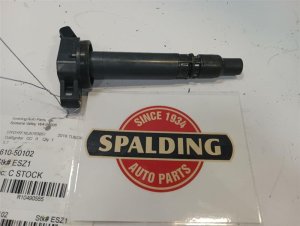
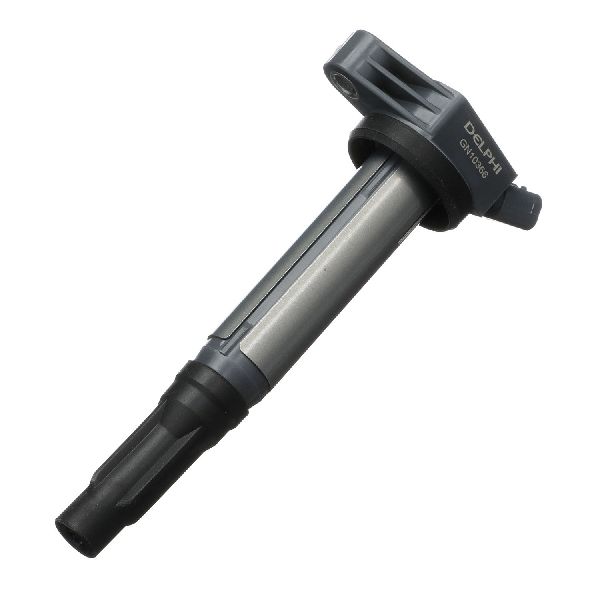
- Ignition Coil
(OEM #90919-A2005)— Ignition coils are a common failure item that can cause a single-cylinder misfire. Swapping them is a key diagnostic step.
Trusted brands: Denso (673-1309)
OEM price range: $90-$130
Aftermarket price range: $40-$80 - Spark Plug
(OEM #90919-01249)— Spark plugs are a routine maintenance item and can become fouled or worn, leading to a misfire. They are an inexpensive first step in diagnosis.
Trusted brands: Denso (FK20HBR11), NGK (DFH6B-11A)
OEM price range: $18-$25 per plug
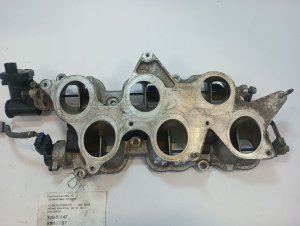
Aftermarket price range: $12-$20 per plug - Upper Intake Manifold Gasket Set
(OEM #17176-31050)— If the cause is carbon buildup, the intake manifold must be removed for cleaning. The gaskets are single-use and must be replaced during reassembly.
Trusted brands: Lexus (OEM), Fel-Pro
OEM price range: $40-$60
Aftermarket price range: $20-$40 - Valve Cover Gasket Set — If oil is found in the spark plug wells, the valve cover gaskets and spark plug tube seals must be replaced to stop the leak.
Trusted brands: Lexus (OEM), Mahle, Fel-Pro
OEM price range: $60-$90
Aftermarket price range: $30-$50
Related Codes That Often Appear With This One
- P0300 — This is a 'Random/Multiple Cylinder Misfire' code. It often appears alongside P0301 if the underlying issue, like carbon buildup, is starting to affect other cylinders intermittently.
- P0302, P0303, P0304, P0305, P0306 — These codes indicate misfires in other specific cylinders. Seeing multiple cylinder misfire codes strongly points towards a systemic problem like severe carbon buildup or a major vacuum leak.
Technical Service Bulletins (TSBs) & Recalls
- L-TT-0192-15: Technical service bulletin describing the conditions of rough idle and misfire codes (P0300-P0306) related to carbon buildup.
- L-TT-0093-12: An earlier TSB, also detailing the intermittent rough idle and misfire codes caused by carbon deposits on the 4GR-FSE engine.
- CSP ZLG: The internal code for the Customer Support Program that extended the warranty for the carbon buildup issue to 9 years with unlimited mileage.
Platform-Specific Known Issues
- Carbon Buildup & Customer Support Program (CSP) ZLG: The 4GR-FSE direct injection engine is highly susceptible to carbon deposits on intake valves and piston tops, causing misfires and rough idle. Lexus acknowledged this with TSBs (e.g., L-TT-0192-15) and offered a Customer Support Program (CSP ZLG) which extended the warranty for this specific issue to 9 years with unlimited mileage, covering a top engine clean or rebuild with redesigned pistons for affected vehicles.
Mechanic-Grade Diagnostic Values
- High-Pressure Fuel System Pressure (at idle) — expected: 3.5 to 4.5 MPa (508 to 653 psi). Failure: Pressure significantly above or below this range can indicate a failing high-pressure fuel pump or sensor issue.
- Low-Pressure Fuel System Pressure (Key-On, Engine-Off) — expected: 196 to 588 kPa (28 to 85 psi). Failure: Low pressure indicates a weak in-tank fuel pump or clogged filter.
- Ignition Coil Primary Resistance (Cold) — expected: 0.49 - 0.57 Ω. Failure: Resistance outside this range indicates a faulty primary winding in the coil.
- Ignition Coil Secondary Resistance (Cold) — expected: 9.5 - 11.1 kΩ. Failure: Resistance outside this range indicates a faulty secondary winding in the coil.
Hidden / Shadow Codes Worth Checking
- Techstream Misfire Counters (CYL #10-#60): While not a hidden code, the Techstream software provides a live data list showing the exact number of misfire events per cylinder. This is far more detailed than a standard P030x code and can help identify intermittent misfires on other cylinders that haven't yet triggered a separate DTC. (see via Toyota/Lexus Techstream diagnostic software in 'Check Mode' under the Engine Data List.)
Scan Tool Commands That Help
- Techstream: Control the Select Cylinder Fuel Cut — This is a powerful diagnostic 'Active Test' used when a misfire is present at idle. By commanding the ECM to stop fuel delivery to a specific cylinder (e.g., cylinder 1), a technician can confirm if the misfire is fuel-related. If cutting fuel to the misfiring cylinder causes no change in engine RPM or smoothness, it confirms that cylinder wasn't contributing anyway. If cutting fuel to a *good* cylinder makes the idle worse, it confirms that cylinder was working properly.
Wiring & Ground Locations
- EA, EB, EC — These are the primary engine ground points for the 4GR-FSE. They are typically located on the cylinder heads and engine block, secured by bolts. For example, on Bank 1 (passenger side), a key ground point is located on the cylinder head near the front of the engine.. A poor engine ground can cause erratic behavior in the ignition system, leading to weak spark and intermittent misfires. Verifying these grounds are clean and tight is a crucial step if ignition components repeatedly test good.
- Ignition Coil Connector (90980-11885) — Connects the engine wiring harness to the ignition coil for cylinder 1 (front-most coil on the passenger side).. The locking tabs on these connectors are notoriously brittle from engine heat and often break during spark plug or coil replacement. A loose or damaged connector can cause a P0301 misfire. The connector housing is available separately from Toyota/Lexus, allowing for repair without splicing wires.
Real Owner Repair Stories
- YouTube channel 'Tuner with Kids' (Lexus IS250 (2006-2013 generation)) — P0301, sluggish performance above 3,000 RPM, engine making an unbalanced 'creaking' noise.
❌ Tried (didn't work) Swapping the ignition coil from cylinder 1 to another cylinder; the P0301 code did not move and remained on cylinder 1.
✅ What actually fixed it The spark plug from cylinder 1 was swapped with the one in cylinder 3, causing the code to change to P0303. This confirmed the spark plug was the fault. Replacing the single bad spark plug resolved all symptoms. The owner also noted that several spark plugs on that bank were found to be loose. - ClubLexus Forum User (Lexus IS250) — Check Engine Light with codes P0300, P0301, P0302, P0303, P0304, especially on a cold start.
❌ Tried (didn't work) Following a TSB to add a fuel additive and drive at sustained high RPMs. The misfires returned after the engine cooled down.
✅ What actually fixed it The dealer removed the intake manifold and confirmed heavy carbon buildup on the intake valves. A physical cleaning of the valves and pistons was performed, and the carbon chunks were blown out of the cylinders. This permanently resolved the misfire codes.
OEM Part Supersession History
e.g., 13101-31060-B0→e.g., 13101-31061-B0— Lexus redesigned the pistons and piston rings for the 4GR-FSE engine to improve oil control.
Heads up: The original piston design was more prone to allowing oil past the rings, which contributed significantly to the carbon buildup that causes misfires. The updated parts were used in the factory recall/CSP repairs.
Model Year Variations Within This Range
- 2006-2009: These earlier model years are significantly more prone to the carbon buildup issue causing P0301. For the 2010 model year, Lexus introduced redesigned pistons and piston rings to mitigate the oil consumption that leads to deposit formation.
Helpful Videos
Used OEM Parts in Stock
New Aftermarket Parts Available


The information in this article is provided for general reference and educational purposes only. Vehicle specifications, procedures, and part compatibility can vary by production date, trim level, and region. Always consult your vehicle's factory service manual and verify part numbers before purchasing or performing repairs. Safety-critical components such as airbags, seat belts, and braking systems should be installed by a qualified professional.
- Lexus IS 250:
- 🎬 Helpful Videos
- 🛍️ Shop This Part
- What's Unique About the 2006-2010 Lexus IS 250
- Diagnostic Flowchart
- Symptoms You May Notice
- Most Likely Causes
- Rare But Worth Checking
- Diagnosis Steps
- Parts You'll Likely Need
- Related Codes That Often Appear With This One
- Technical Service Bulletins (TSBs) & Recalls
- Platform-Specific Known Issues
- Mechanic-Grade Diagnostic Values
- Hidden / Shadow Codes Worth Checking
- Scan Tool Commands That Help
- Wiring & Ground Locations
- Real Owner Repair Stories
- OEM Part Supersession History
- Model Year Variations Within This Range
- 🎟️ Get 5% Off