

P0301 on 2012-2017 Kia Sorento 2.4L GDI: Cylinder 1 Misfire Causes and Fixes
P0301 on a 2012-2017 Kia Sorento with the 2.4L GDI engine indicates a misfire on cylinder 1. The most common causes are a failed ignition coil or a worn spark plug. A simple DIY diagnosis is to swap the cylinder 1 ignition coil with another cylinder's coil to see if the code follows. However, be aware this engine has a history of severe carbon buildup and catastrophic internal failure which can also cause this code.
- P0301 is a misfire on cylinder 1, most often caused by a bad ignition coil or spark plug.
- The easiest first step is to swap the cylinder 1 ignition coil with another cylinder to see if the code moves.
- Be aware that the 2.4L GDI engine has known issues with carbon buildup and serious internal failures, which can also cause this code.
- Do not ignore a flashing check engine light, as it signals a severe misfire that can quickly damage your catalytic converter.
- Check with a Kia dealer using your VIN to see if your vehicle is covered by any recalls or engine warranty extensions related to the Theta II engine.
What's Unique About the 2012-2017 Kia Sorento
The 2.4L Theta II GDI engine in this Sorento is infamous for specific, severe issues that can lead to a P0301 code. Beyond typical ignition failures, these engines are highly susceptible to severe carbon buildup on intake valves due to their direct injection design, which can restrict airflow and cause misfires. More critically, this engine family was the subject of recalls, class-action lawsuits, and a multi-million dollar NHTSA penalty for premature connecting rod bearing failure. This failure, caused by manufacturing debris blocking oil passages, can lead to a persistent misfire as an early symptom before progressing to engine seizure.
Generation note: The 2012-2017 Sorento range covers two generations: the second generation (XM, 2012-2015) and the third generation (UM, 2016-2017). Both generations used a version of the 2.4L GDI Theta II engine and are included in the recalls and warranty extensions for engine failure. While the fundamental causes of a P0301 misfire are similar, owners of either generation must be aware of the engine's known issues with carbon buildup and potential internal failures.
Symptoms You May Notice
- Flashing or solid Check Engine Light
- Rough or vibrating idle
- Hesitation or stumbling during acceleration
- Noticeable loss of engine power
- Reduced fuel economy
- Hard starting
- Engine knocking noise, especially if related to bearing failure
- Replacing the O2 sensor. While a faulty O2 sensor can cause performance issues, it will typically set its own specific trouble code (like P0172 or P0138) and is unlikely to cause a single-cylinder misfire like P0301.
- Replacing the Mass Airflow (MAF) sensor. A bad MAF sensor usually affects all cylinders randomly and would be more likely to cause a P0300 (random misfire) code rather than a single cylinder code.
Most Likely Causes
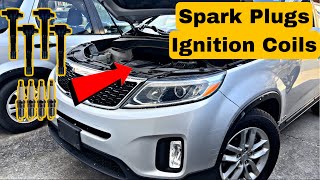
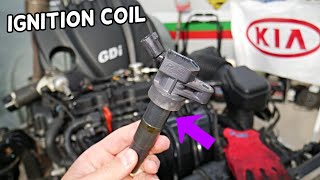
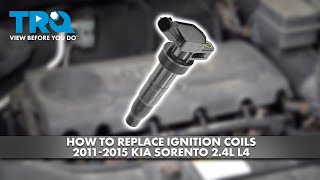
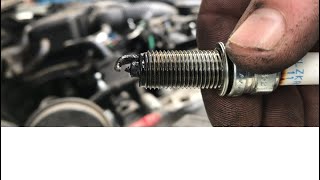
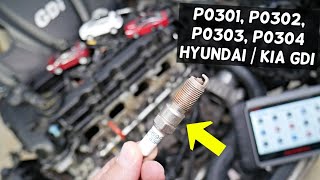
- Faulty Ignition Coil 🔴 High Probability Ignition coils are a common failure item on many modern engines due to constant exposure to high temperatures in the engine bay. On this platform, it's one of the first and easiest parts to check 🎬 Watch: Step-by-step guide to replacing your ignition coils. for any misfire code.
How to confirm: Swap the ignition coil from cylinder 1 with another cylinder (e.g., cylinder 2). Clear the codes and drive. If the code changes to P0302, the coil is definitively faulty. This is a common diagnostic step recommended on owner forums.
Typical fix: Replace the faulty ignition coil. Many mechanics and experienced owners recommend replacing all four coils and spark plugs at the same time for long-term reliability.
Est. part cost: $25-$75 per coil - Worn or Fouled Spark Plug 🔴 High Probability Spark plugs are a regular maintenance item. On this engine, the widespread issue of excessive oil consumption can foul the plugs with oil and carbon, causing them to fail prematurely and lead to misfires.
How to confirm: After confirming the ignition coil is good, remove the spark plug from cylinder 1. Inspect for a wide gap, heavy black carbon deposits, wet oil fouling, or damage to the electrode. An oil-fouled plug is a strong indicator of the engine's known oil consumption problem.
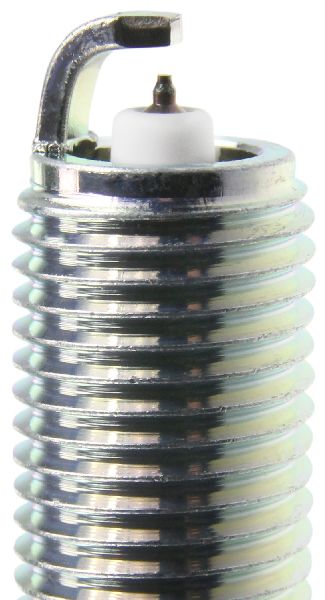
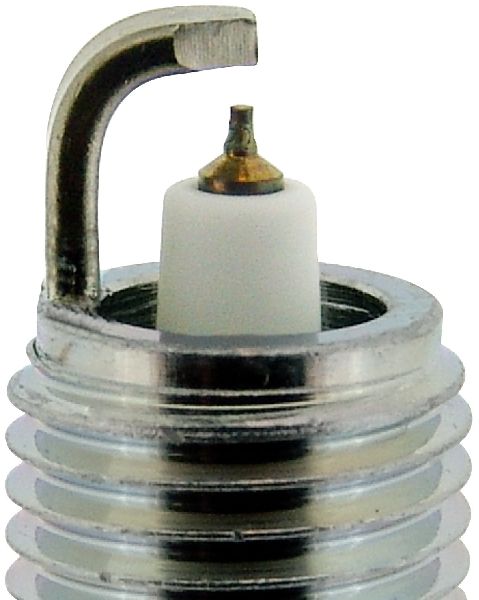
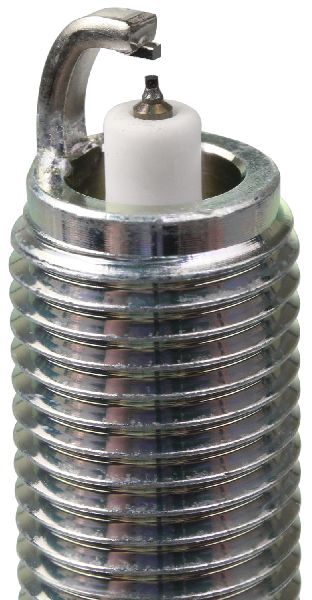
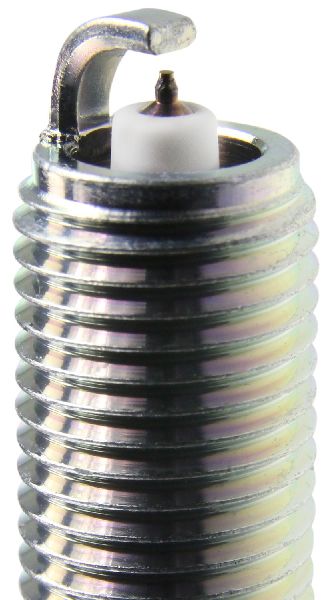
Typical fix: Replace the spark plug. It is best practice to replace all four spark plugs at the same time to ensure even performance. Use the correct OEM-spec Iridium plugs for longevity.
Est. part cost: $15-$30 per plug - Carbon Buildup on Intake Valves 🟡 Medium Probability The 2.4L engine uses Gasoline Direct Injection (GDI), which sprays fuel directly into the cylinder, bypassing the intake valves. Without the cleaning effect of gasoline, oil vapors from the PCV system bake onto the hot valves, restricting airflow and causing misfires, especially at cold start and idle.
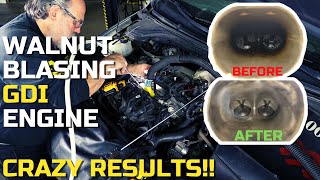
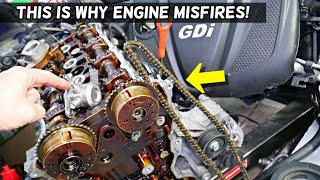
How to confirm: This is difficult to confirm without a borescope to visually inspect the intake valves. Misfires that persist after replacing plugs and coils, particularly when the engine is cold, are a strong indicator. A routine walnut shell blast cleaning is recommended every 40,000-50,000 miles to prevent this issue. 🎬 See how walnut blasting removes heavy carbon buildup.
Typical fix: Mechanical cleaning (walnut blasting) of the intake valves is the most effective solution, with shop costs typically ranging from $400-$800. Chemical induction cleaning services may provide a temporary fix for minor buildup but are less effective for heavy deposits.
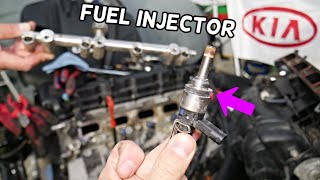
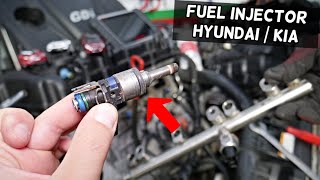
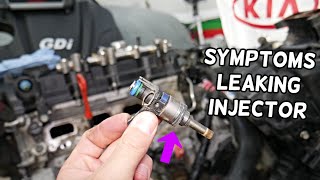
Est. part cost: $0 (service cost is labor) - Clogged or Faulty Fuel Injector 🟡 Medium Probability GDI injectors operate under extremely high pressure and are located inside the combustion chamber, making them susceptible to clogging from carbon deposits and fuel contaminants. This is a known failure point on the Theta II engine. NHTSA ODI #11362479 describes a case where a dealer diagnosed a cylinder 1 internal injector failure alongside code P0301.
How to confirm: If the misfire remains on cylinder 1 after swapping the coil and plug, the injector is a likely suspect. A professional can perform a flow test. A more involved DIY approach is to swap injectors between cylinders (e.g., swap #1 and #2) and see if the code follows to P0302. You can also test the injector's resistance.
Typical fix: Replace the faulty fuel injector. It is critical to also replace the Teflon seal and decoupler on the injector tip during installation.
Est. part cost: $70-$150
Rare But Worth Checking
- Low Engine Compression / Internal Engine Failure: This is a worst-case scenario but is a well-documented, widespread problem with the Theta II engine. Manufacturing debris can cause connecting rod bearing failure, leading to a loss of compression and a persistent misfire that does not resolve with ignition or fuel system repairs. A compression test is required for diagnosis. NHTSA ODI #11455353 reports a vehicle with no compression on a cylinder and codes P0300, P0301, and P0303, resulting in a recommendation for a new engine. If compression is low on cylinder 1, check with a Kia dealer for coverage under the extended engine warranty (Recall SC147 / NHTSA 17V224000) before authorizing any repairs.
- Vacuum Leak: A leak in a vacuum hose or a bad intake manifold gasket can introduce unmetered air into the engine, disrupting the air/fuel ratio and causing a misfire. This can sometimes be isolated to a single cylinder if the leak is near that cylinder's intake runner. A smoke test is the most effective way to find a vacuum leak.
Diagnosis Steps
- Read the code with an OBD-II scanner to confirm P0301 is active. Note if the check engine light is flashing, which indicates a severe misfire that can damage the catalytic converter.
- Swap the ignition coil from cylinder 1 to cylinder 2. Clear the codes and drive the vehicle. If the code returns as P0302, the ignition coil is bad.
- If the code remains P0301, inspect the spark plug from cylinder 1. Look for heavy wear, carbon fouling, or wet oil. An oil-fouled plug is a major red flag for internal engine issues. If the plug is bad, replace all four.
- If the code remains P0301, inspect the wiring and connector for the cylinder 1 fuel injector for any visible damage or corrosion.
- Check your vehicle's VIN with a Kia dealer for any open recalls or warranty extensions, specifically SC147 for the engine and the KSDS update.
- At this point, the most likely causes are a clogged fuel injector, significant carbon buildup, or a mechanical engine problem.
- A professional should perform a compression test. Low compression on cylinder 1 points to a serious mechanical issue. If this is the case, DO NOT proceed with repairs until warranty coverage is determined.
- If compression is good, the issue is likely a faulty fuel injector or heavy carbon buildup on the intake valves, which requires professional cleaning (walnut blasting).
Parts You'll Likely Need
- Ignition Coil
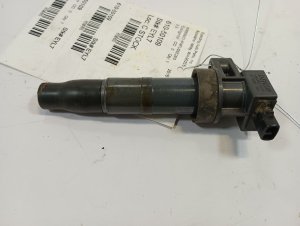
(OEM #27301-2G000)— This is the most common failure part for a P0301 code. It is responsible for creating the spark, and failure is frequent due to heat cycles.
Trusted brands: Kia (OEM), Denso, NGK, Delphi
OEM price range: $60-$90
Aftermarket price range: $25-$75 - Spark Plug
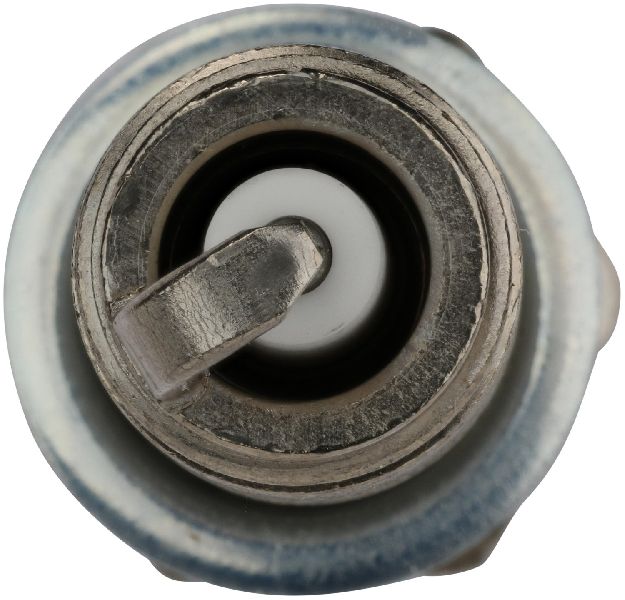
(OEM #18846-11070)— A worn or oil-fouled spark plug is the second most common cause. It's a standard maintenance item that is critical for proper combustion. Oil fouling is a key symptom of larger engine problems on this platform.
Trusted brands: NGK, Denso
OEM price range: $20-$30
Aftermarket price range: $10-$25
Related Codes That Often Appear With This One
- P0300 — If the underlying cause, such as severe carbon buildup, low fuel pressure, or progressing internal wear, begins to affect other cylinders, a P0301 may escalate to a P0300 (Random/Multiple Cylinder Misfire).
- P0201 — This code indicates an electrical fault in the cylinder 1 injector circuit. If you see P0201 alongside P0301, the problem is almost certainly the fuel injector for cylinder 1 or its wiring harness connector.
- P1326 — This code is specific to Hyundai/Kia and indicates the Knock Sensor Detection System (KSDS) has detected vibrations characteristic of connecting rod bearing wear. If this code is present with a misfire, it is a strong sign of the infamous Theta II engine failure, and the vehicle will enter a reduced-power 'limp mode'.
Technical Service Bulletins (TSBs) & Recalls
- SC147 (Recall Campaign for Theta II Engine Inspection/Replacement)
- NHTSA 17V224000 (Recall for Premature Engine Bearing Wear)
- ENG222 (Technical Service Bulletin for Excessive Oil Consumption)
- CHA084 / CHA091 (Technical Service Bulletins for MDPS Steering Noise)
Platform-Specific Known Issues
- Theta II Engine Failures: This engine is subject to recalls and extended warranties for catastrophic engine failure related to connecting rod bearings. A persistent misfire could be an early symptom of this severe issue. Check with a Kia dealer with your VIN to see if any recalls or warranty extensions apply.
- Excessive Oil Consumption: Many owners report high oil consumption, which can lead to oil-fouled spark plugs and accelerated carbon buildup.
- GDI Carbon Buildup: As a direct-injection engine, the intake valves are not cleaned by fuel spray, leading to carbon deposits that choke airflow and cause misfires over time, typically noticeable after 60,000 miles.
Mechanic-Grade Diagnostic Values
- GDI Fuel Injector Resistance — expected: 0.2 - 0.6 Ohms. Failure: An open circuit (infinite resistance) or a reading significantly outside the expected very low range.
- Ignition Coil #1 Control Circuit — expected: Pulsing ground signal from PCM with engine cranking/running (check with noid light or oscilloscope).. Failure: No signal from the PCM, indicating a wiring or PCM driver issue.
Hidden / Shadow Codes Worth Checking
- Mode 6, Test ID $A2: This is not a trouble code, but a diagnostic data parameter. Test ID $A2 (and subsequent IDs for other cylinders) tracks the number of misfire events detected on cylinder 1 during the current and last 10 driving cycles. (see via Requires an advanced OBD-II scanner capable of reading Mode 6 data. The value will be a raw count. A high count, even without a P0301 code, can indicate an intermittent or developing misfire.)
Wiring & Ground Locations
- PCM Connector C200-A, Pin 1 — At the Powertrain Control Module (PCM), which is typically located in the engine bay.. This is the specific pin that sends the control signal to the cylinder 1 ignition coil. Testing for a signal here can isolate a problem between a bad coil, bad wiring, or a bad PCM driver.
- Engine Wiring Harness Chafe Point — The section of the main engine wiring harness that routes near the throttle body.. This harness is known to rub through its loom due to engine vibration, potentially causing intermittent shorts or open circuits in the ignition coil or fuel injector wiring, leading to difficult-to-diagnose misfires.
- Engine Ground Wiring Assembly — Main ground strap and harness connecting the engine block to the chassis.. A corroded or loose engine ground can cause a host of erratic electrical issues, including weak spark or incorrect sensor readings, which can manifest as a misfire. The part number for the 2013-2014 2.4L model's ground harness is 91860-1U510.
Real Owner Repair Stories
- Reddit user Platinumboba (2012 Kia Soul+ with 69k miles (similar 2.0L Nu GDI engine, diagnosis is transferable)) — Check engine light that appeared after 10-15 minutes of driving in high heat.
❌ Tried (didn't work) Initially had a P0302 code (Cylinder 2 Misfire)., Replaced all 4 spark plugs and the cylinder 2 ignition coil.
✅ What actually fixed it As a diagnostic step, the user moved the brand new Duralast ignition coil from cylinder 2 to cylinder 1. The trouble code then changed to P0301, following the new part. This strongly indicated the new aftermarket coil was faulty out of the box, a common issue with non-OEM electronics. The user also noted the wiring connector for cylinder 1 appeared to have been replaced previously, suggesting a potential underlying wiring issue, but the coil-follow test was the most conclusive step.
Model Year Variations Within This Range
- 2015-2017: Engines from 2015 onward may be equipped with an electrically driven CVVT (E-CVVT) phaser on the intake camshaft, replacing the previous oil-pressure-driven unit. These E-CVVT units have a known high failure rate of the internal brush set, which can cause cold start rattles and trigger various engine codes, potentially including misfires if timing is affected.
Diagnostic Flowchart
Other Known Issues on This Vehicle
Issues unrelated to this code that are worth knowing about as an owner of this generation:
- Catastrophic Engine Failure (Connecting Rod Bearing) 🔴 High — Widespread across 2011-2017 models. Failure can occur anywhere from 50,000 to 120,000 miles. Subject of a massive class-action lawsuit and recalls. (Ref: NHTSA Campaign: 17V224000; Kia Service Campaign: SC147. A settlement extended the warranty to lifetime for this specific failure, contingent on a knock sensor software update (KSDS).)
- Excessive Oil Consumption 🔴 High — Very common. Many owners report needing to add a quart of oil every 1,000-3,000 miles. Often a precursor to more serious engine problems. (Ref: Kia TSB ENG222 addresses the oil consumption diagnosis and repair procedure.)
- MDPS Steering Column Coupler Failure 🟠 Medium — Common issue causing a clicking or knocking noise in the steering column when turning. The rubber coupler disintegrates over time. (Ref: Related TSBs include CHA084 and CHA091 for diagnosis and repair of the MDPS assembly.)
- Headlight Bulbs Burning Out Prematurely 🟡 Low — Frequently reported issue, particularly on earlier models in this range. Some owners report the connector melting as well.
- Door Lock Actuator / Latch Failure 🟠 Medium — A significant number of owners report doors failing to open from the outside, requiring replacement of the door latch assembly.
Used vs. New Parts: Buying Guide for This Vehicle
When a used part is the smart pick: For this specific vehicle and engine, sourcing used parts is generally not recommended for any component related to the engine's core function due to the high rate of catastrophic internal failures. A used ignition coil or sensor from a low-mileage donor is acceptable, but the risk often outweighs the small cost savings over a new aftermarket part.
Donor-vehicle mileage cap: roughly under 50000 miles for the part to have meaningful remaining life.
What to inspect on the donor part:
- For an ignition coil, check for cracks in the plastic housing or corrosion on the electrical connector pins.
- Ensure the rubber boot is pliable and not brittle or swollen from oil exposure.
- Ask for the VIN of the donor car to check its history for engine-related recalls or warranty work.
OEM-only on this vehicle (don't cheap out):
- Any internal engine component (pistons, rods, bearings, crankshaft). The risk of getting a part with the same manufacturing defect is too high.
- Fuel Injectors. Due to the precision required for GDI systems, OEM or top-tier OE-supplier injectors are strongly recommended to avoid performance issues.
Aftermarket brands forum-validated for this vehicle:
- Denso (often the OE supplier)
- Delphi
- NGK (for coils and plugs)
Brands owners have reported issues with on this vehicle:
- Be cautious with value-priced store brands or unbranded online parts. Forum discussions and repair stories indicate a higher-than-average rate of parts being dead-on-arrival or failing prematurely, as seen with a Duralast coil in one owner's experience.
Real Owner Stories
Aggregated from forums and TSBs cited above. Mileages and costs reflect what owners reported in those sources.
2016 Kia Sorento 2.4L
Symptoms: Misfire and excessive oil consumption.
What fixed it: The owner discussed the issue in the context of the known oil consumption and misfire problems common to the Theta II engine.
Source hint: kia-forums.com thread titled '2016 Sorento 2.4 misfire and oil consumption'
2017 Kia Sorento 2.4L
Symptoms: Engine problems including misfiring symptoms.
What fixed it: The owner sought advice regarding the widespread Theta II engine issues and potential for failure.
Source hint: reddit r/autorepair thread 'Kia Sorento 2017 2.4L engine problems'
2012-2017 Kia Sorento 2.4L — ~60000 miles
Symptoms: Misfires at cold start and idle, restricted airflow.
What fixed it: Mechanical cleaning (walnut blasting) of the intake valves to remove carbon deposits.
Source hint: vehicle_specific_issues section regarding GDI Carbon Buildup
2011-2017 Kia Sorento 2.4L — ~85000 miles
Symptoms: Persistent misfire and engine knocking noise.
What fixed it: Engine inspection and potential replacement under SC147/NHTSA 17V224000 due to connecting rod bearing failure.
Source hint: known_issues: Catastrophic Engine Failure (Connecting Rod Bearing)
Documented NHTSA Reports
NHTSA ODI #11513767
Symptoms: Multiple misfire codes including P0300, P0301, P0302, P0303, P0304, P0305, and P0306, along with fuel system codes like P0087.
What fixed it: An owner reported a complex situation involving numerous disappearing codes and sought professional advice regarding these recurring propulsion system issues.
NHTSA ODI #11499800
Symptoms: Intermittent codes appearing on the highway, including P0300 through P0306 and P0087 (low fuel rail pressure).
What fixed it: An owner noted that while codes like P0301 appeared in November, they eventually cleared and did not return to the dashboard, highlighting the intermittent nature of some fuel-related misfires.
Related OBD-II Codes
Frequently Asked Questions
Is my 2012-2017 Kia Sorento 2.4L covered by a warranty extension for engine failure?
Could my P0301 misfire be related to the Kia oil consumption TSB?
How often should I clean the intake valves to prevent GDI-related misfires?
Will the KSDS update fix my P0301 code?
What specific spark plugs should I use for the 2.4L Sorento?
Helpful Videos

Used OEM Parts in Stock


New Aftermarket Parts Available


The information in this article is provided for general reference and educational purposes only. Vehicle specifications, procedures, and part compatibility can vary by production date, trim level, and region. Always consult your vehicle's factory service manual and verify part numbers before purchasing or performing repairs. Safety-critical components such as airbags, seat belts, and braking systems should be installed by a qualified professional.
- Kia Sorento:
- 🎬 Helpful Videos
- 🛍️ Shop This Part
- What's Unique About the 2012-2017 Kia Sorento
- Symptoms You May Notice
- Most Likely Causes
- Rare But Worth Checking
- Diagnosis Steps
- Parts You'll Likely Need
- Related Codes That Often Appear With This One
- Technical Service Bulletins (TSBs) & Recalls
- Platform-Specific Known Issues
- Mechanic-Grade Diagnostic Values
- Hidden / Shadow Codes Worth Checking
- Wiring & Ground Locations
- Real Owner Repair Stories
- Model Year Variations Within This Range
- Diagnostic Flowchart
- Other Known Issues on This Vehicle
- Used vs. New Parts: Buying Guide for This Vehicle
- Real Owner Stories
- 2016 Kia Sorento 2.4L
- 2017 Kia Sorento 2.4L
- 2012-2017 Kia Sorento 2.4L — ~60000 miles
- 2011-2017 Kia Sorento 2.4L — ~85000 miles
- Documented NHTSA Reports
- NHTSA ODI #11513767
- NHTSA ODI #11499800
- Related OBD-II Codes
- Frequently Asked Questions
- 🎟️ Get 5% Off