

P0301 on 2018-2023 Ford Mustang 5.0L V8: Cylinder 1 Misfire Causes and Fixes
P0301 on a 2018-2023 Mustang 5.0L indicates a misfire in cylinder 1. The most common cause is a faulty ignition coil or a worn spark plug, which is a simple DIY fix. On 2021-2022 models, a PCM software update from a dealer may be required per a Ford TSB to fix false misfire codes.
- P0301 means cylinder 1 (front passenger side) is misfiring.
- The easiest and most likely fix is to replace the ignition coil or spark plug for cylinder 1.
- Always diagnose by swapping the coil first, then the spark plug, to avoid replacing good parts.
- If you have a 2021-2022 model and the coil/plug are good, the problem may be a software glitch that a Ford dealer must fix per TSB 22-2464.
- Do not drive if the check engine light is flashing, as you can cause expensive damage to your catalytic converter.
What's Unique About the 2018-2023 Ford Mustang
The 2018-2023 Mustang uses the 'Gen 3' 5.0L Coyote V8, which features a dual-fuel system with both port and direct fuel injectors. While this doesn't change the primary causes of a P0301 misfire (spark, fuel, compression), it adds a layer of complexity to fuel system diagnosis, as either injector could be at fault. More notably, for 2021-2022 models, Ford issued a Technical Service Bulletin (TSB 22-2464) acknowledging that misfire codes can be triggered by a software glitch, requiring a PCM reprogram by a dealer to fix. A real-world owner on Mustang6G.com confirmed this TSB fixed their multiple misfire codes after initial diagnosis pointed towards bad fuel.
Symptoms You May Notice
- Rough or shaky engine idle
- Hesitation or stumbling during acceleration
- Noticeable loss of engine power
- Check Engine Light is on and steady
- Check Engine Light is flashing (indicating a severe misfire)
- Smell of unburned gasoline from the exhaust
- Engine bucking or jerking, especially under load at low RPM
- Replacing oxygen (O2) sensors. While a faulty O2 sensor can cause fuel trim issues, it will not typically cause a single-cylinder misfire code like P0301.
- Replacing the catalytic converter. A misfire can damage a catalytic converter, but a bad converter does not cause a misfire.
Most Likely Causes
- Faulty Ignition Coil 🔴 High Probability Coil-on-plug ignition systems are a common failure point on most modern engines due to constant exposure to high heat and vibration in the cylinder head. Manufacturer Bulletin #SSM 53971 notes that misfire conditions with codes P0301-P0304 may be due to the ignition coils or spark plugs.
How to confirm: Swap the ignition coil from cylinder 1 with the coil from another cylinder (e.g., cylinder 2). Clear the codes and drive the vehicle. If the code changes to P0302, the ignition coil is faulty. This is a proven, no-cost diagnostic step. 🎬 Watch: How to diagnose and fix a Mustang misfire
Typical fix: Replace the faulty ignition coil. It is often recommended to replace all 8 coils and spark plugs at the same time for preventative maintenance, but it is not required.
Est. part cost: $30-$60 per coil - Worn or Fouled Spark Plug 🔴 High Probability Spark plugs are a regular maintenance item. High-performance engines like the Coyote V8 can be sensitive to spark plug wear, especially if driven hard or if the vehicle is tuned.
How to confirm: After confirming the ignition coil is good, swap the spark plug from cylinder 1 with another cylinder. If the code moves to the new cylinder, the spark plug is the issue. Visually inspect the removed plug for wear, cracks in the porcelain, oil fouling, or damage. A user on a Mustang forum traced a P0302 that moved to P0301 directly to a bad plug by performing this swap.
Typical fix: Replace the spark plug in cylinder 1. It is best practice to replace all 8 spark plugs at the same time to ensure consistent performance and avoid future misfires.
Est. part cost: $8-$20 per plug - PCM Software Issue 🟡 Medium Probability Specifically affects 2021-2022 models per Ford TSB 22-2464. The bulletin states that 'various strategies within the PCM software' can cause misfire DTCs (P0300-P0308) without a mechanical fault. This TSB may not apply if the vehicle has an aftermarket tune, such as one from Roush.
How to confirm: This can only be confirmed after ruling out common ignition components (coils and plugs). A Ford dealership can check your vehicle's VIN against TSB 22-2464 and see if the update is applicable and has been performed.
Typical fix: A Ford dealer must reprogram the Powertrain Control Module (PCM) with the updated software. A Mach 1 owner on Mustang6G.com reported this exact fix solved their P0302, P0300, and P0316 codes.
Est. part cost: $0 if under warranty, otherwise ~$100-$200 for dealer labor - Clogged or Faulty Fuel Injector ⚪ Low Probability The 2018+ Coyote has both port and direct injectors. While generally reliable, they can become clogged or fail electronically. A user on S197Forum.com with a 2018 GT reported multiple misfire codes including P0301 that were ultimately traced by a dealer to a clogged fuel injector on cylinder 8.
How to confirm: This is more complex. Diagnosis involves checking the injector's electrical circuit with a multimeter or noid light, and listening for its clicking operation with a mechanic's stethoscope. Swapping an injector with another cylinder is possible but is a more involved job, especially for the direct injectors located under the intake manifold.
Typical fix: Replace the faulty fuel injector. The 2018+ engine has both a port and a direct injector for each cylinder; diagnosis is required to determine which one has failed.
Est. part cost: $50-$150 per injector
Rare But Worth Checking
- Low Engine Compression: Although rare on a newer vehicle, a mechanical issue like a burnt valve, worn piston rings, or a broken valve spring can cause a persistent misfire. A compression test on cylinder 1 would be needed to diagnose this. A user on a Mustang forum reported a P0303 was ultimately caused by a broken valve spring.
- Vacuum Leak: A leak in the intake manifold gasket near cylinder 1 could lean out the air/fuel mixture enough to cause a misfire. This would typically be accompanied by a hissing sound and possibly other lean-related codes.
- Broken Intake Manifold Runner Control (IMRC): A known issue, particularly on 2015-2017 models but still possible, is the failure of the IMRC linkage or flaps. A break can disrupt airflow to a bank of cylinders, often causing misfires on multiple cylinders of that bank (e.g., P0301, P0302, P0303, P0304 for Bank 1).
- Coolant Intrusion: In some cases, misfire codes like P0301 can be caused by coolant leaking into the cylinder. NHTSA ODI #11683756 describes a situation where a P0301 code was accompanied by the sound of coolant sloshing and white exhaust. Similarly, NHTSA ODI #11701911 notes that misfire codes P0300, P0301, and P0316 can match a known coolant-intrusion defect, causing loss of power and rough operation.
Diagnosis Steps
- Read the trouble code using an OBD-II scanner and check for any other pending or stored codes. Note if P0300 or P0316 are also present.
- Note the freeze frame data to understand the engine conditions (RPM, load, temperature) when the misfire occurred.
- Locate cylinder 1, which is the front-most cylinder on the passenger side. 🎬 See this guide to Coyote engine firing order and cylinder locations
- Swap the ignition coil from cylinder 1 with the coil from cylinder 2. Clear the codes and run the engine to see if the misfire code moves to P0302. If it does, the coil is bad. This is the most crucial first step.
- If the code remains P0301, swap the spark plug from cylinder 1 with cylinder 2. Clear codes and re-test. If the code moves to P0302, the spark plug is bad.
- If the code is still P0301, the issue is less common. For 2021-2022 models, consult a Ford dealer about TSB 22-2464 for a potential PCM reflash before proceeding.
- If a PCM update is not applicable, inspect the wiring and connector for the cylinder 1 fuel injector and ignition coil for damage, corrosion, or loose connection.
- If wiring is good, suspect a faulty fuel injector. Listen for a consistent ticking from the injector with a stethoscope. Diagnosis beyond this may require a professional.
- If all else fails, perform a compression test on cylinder 1 to rule out mechanical engine problems like bad valves or rings. A healthy Coyote engine should show compression above 125 PSI.
Parts You'll Likely Need
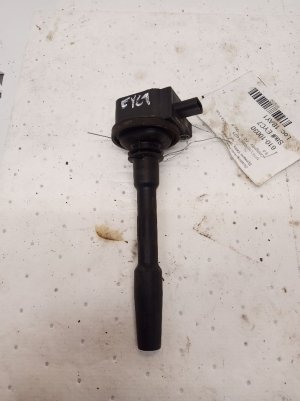
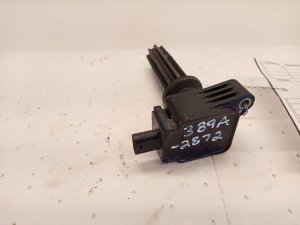
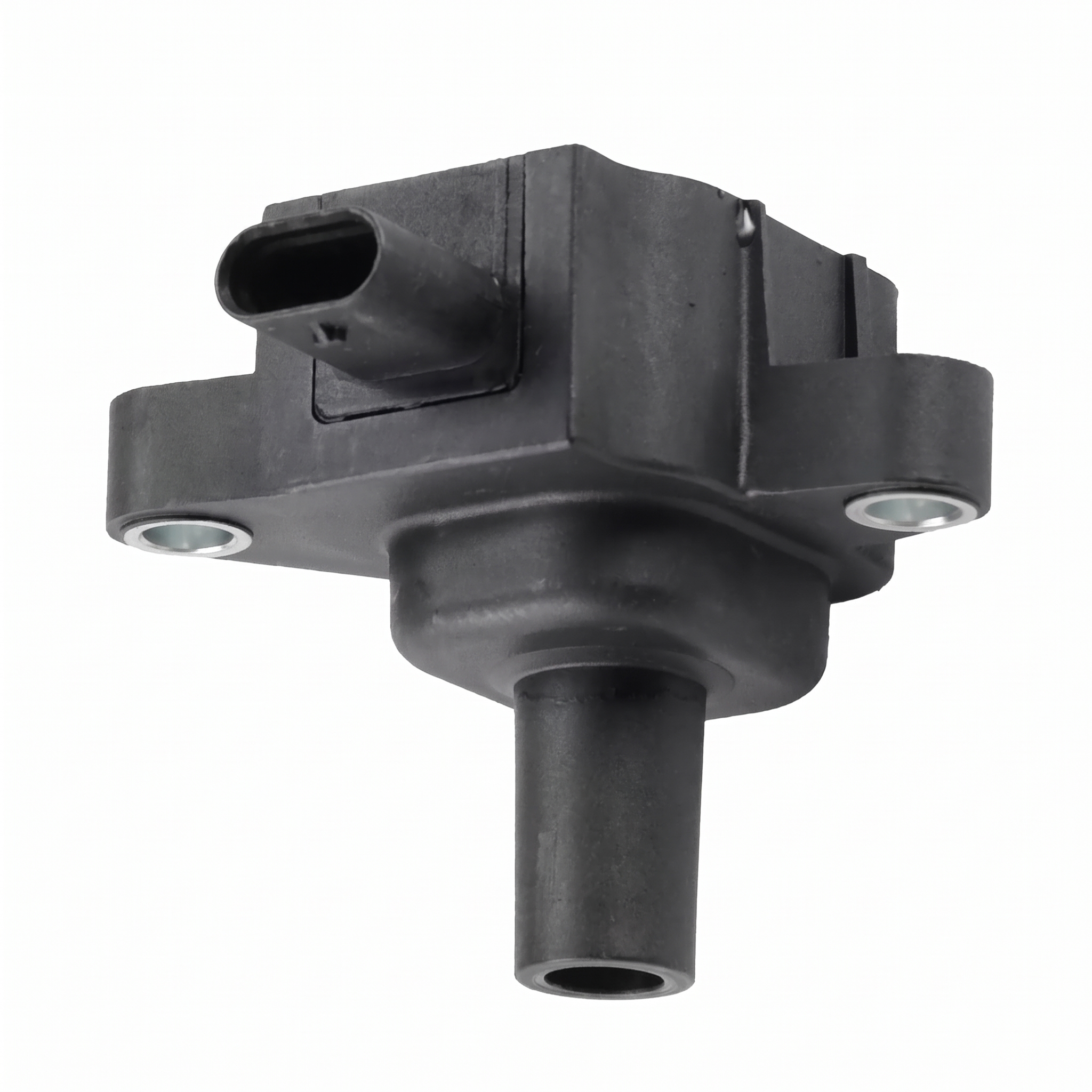
- Ignition Coil
(OEM #DG-565 (Ford P/N: JR3Z-12029-A))— This is the most common cause of a single-cylinder misfire on modern engines.
Trusted brands: Motorcraft, NGK, Denso
OEM price range: $45-$60
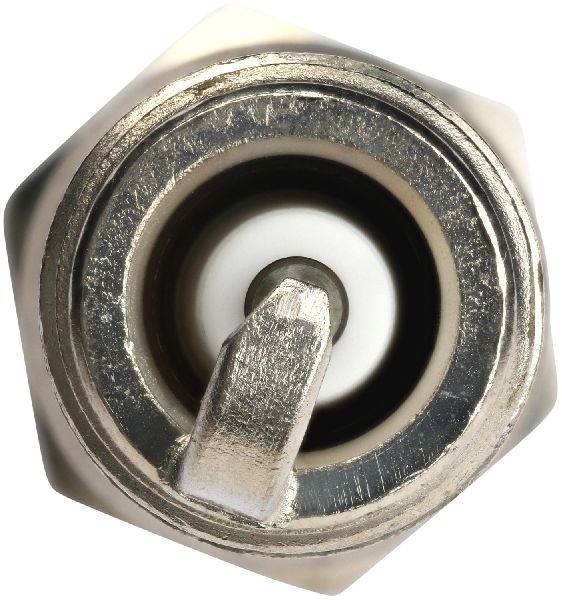
Aftermarket price range: $30-$50 - Spark Plug
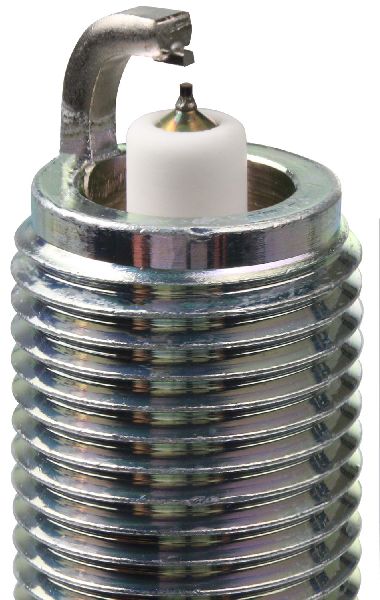
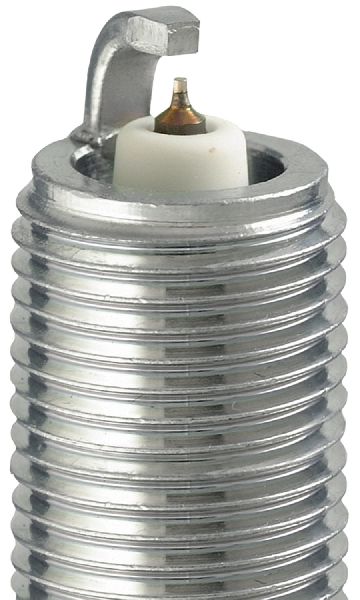
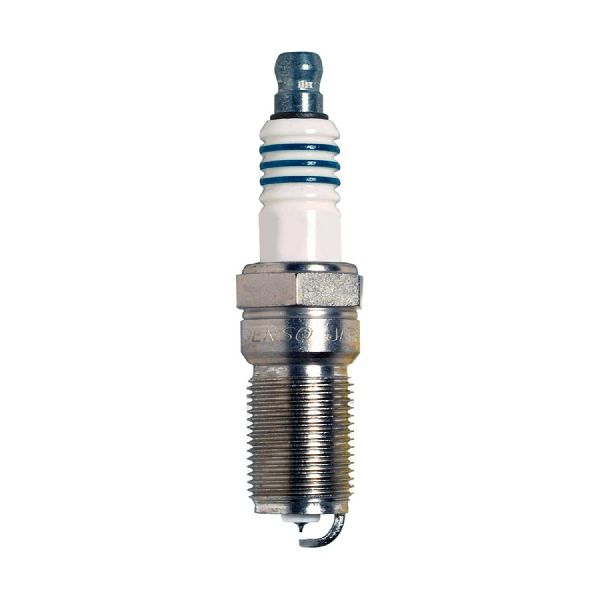
(OEM #SP-578 (Ford P/N: CYFS-12Y-PCTX) or M-12405-M50A (Ford Performance Colder Plug))— Spark plugs are a routine wear item and a frequent cause of misfires. The M-12405-M50A is a popular one-step-colder plug for tuned or high-performance applications.
Trusted brands: Motorcraft, NGK Ruthenium, Bosch Iridium
OEM price range: $15-$25
Aftermarket price range: $8-$15
Related Codes That Often Appear With This One
- P0300 — This code means 'Random Misfire Detected'. It can appear alongside P0301 if the misfire is intermittent, severe enough to be detected on other cylinders, or if the root cause (like the TSB 22-2464 software issue) affects multiple cylinders.
- P0316 — This code means 'Misfire Detected on Startup (First 1000 Revolutions)'. It often appears with a specific cylinder misfire code to indicate when the misfire is occurring.
- P0021 — This code means 'Intake Camshaft Position Timing - Over-Advanced (Bank 2)'. While less common, a user with an F-150 5.0L reported a P0301 followed by a camshaft timing code, suggesting a potential link to the variable cam timing (VCT) system.
Technical Service Bulletins (TSBs) & Recalls
- TSB 22-2464: For 2021-2022 5.0L engines, notes that misfire DTCs P0300-P0308 can be caused by PCM software and fixed with a reprogram.
- Bulletin #SSM 53971: Notes that misfire conditions with DTCs P0301, P0302, P0303 and/or P0304 may be due to spark plugs and/or ignition coils.
Platform-Specific Known Issues
- TSB 22-2464: Some 2021-2022 Mustang models with the 5.0L engine may set misfire codes (P0300-P0308) due to PCM software strategies. The official fix is a PCM reprogram performed by a Ford dealer.
Mechanic-Grade Diagnostic Values
- Ignition Coil Primary Resistance — expected: ~0.55 ohms. Failure: An open circuit (infinite resistance) or a significantly higher reading.
- Ignition Coil Secondary Resistance — expected: ~5,500 ohms (5.5 kOhms). Failure: A reading significantly higher (e.g., over 6.0 kOhms) or an open circuit.
- Fuel Injector Resistance (Port Injectors) — expected: High impedance, typically 12-14.5 Ohms.. Failure: A reading far outside this range or an open/shorted circuit.
- Low-Pressure Fuel System Pressure (Port Injection) — expected: ~55 PSI at idle or with key-on, engine-off (KOEO).. Failure: Pressure significantly lower than 55 PSI indicates a weak in-tank pump or restriction.
- High-Pressure Fuel System Pressure (Direct Injection) — expected: Stock setting is approximately 2900 PSI under load.. Failure: Failure to reach target pressure under load, which would be visible on a capable scan tool.
- Mode 6 Misfire Count (Cylinder 1) — expected: Value should be zero or very close to it during a test drive.. Failure: A count that is consistently climbing for cylinder 1 (TID $A2, CID $01) indicates misfire events, even if no CEL is present.
Hidden / Shadow Codes Worth Checking
- Mode 6, TID $A2, CID $01: This is not a DTC, but a specific monitor within the OBD-II system's Mode $06 data. It tracks the number of misfire events for Cylinder 1 during the current and last ten driving cycles. TID $A2 is the Test ID for Misfire Cylinder 1 Data. (see via A capable scan tool that can access Mode $06 data, such as a professional-grade scanner or software like FORScan.)
Scan Tool Commands That Help
- Ford IDS (Integrated Diagnostic System): Power Balance Test — To graphically display the power contribution of each cylinder in real-time. A drop on cylinder 1 confirms the misfire and allows the technician to disable/enable other components (like injectors) to see how it affects the misfire, aiding in diagnosis.
- Ford IDS (Integrated Diagnostic System): PCM Reprogramming — This service function is required to perform TSB 22-2464 for 2021-2022 models that are setting false misfire codes. It updates the PCM with revised software logic.
- FORScan: Mode 6 Data Viewer — To view raw misfire counts per cylinder for intermittent issues that don't consistently set a P0301 code. This can help confirm which cylinder is the problem when the symptom is subtle.
Wiring & Ground Locations
- G104 — On the driver's side strut tower, next to the battery.. This is a primary ground point for the Data Link Connector (OBD-II port). While not a direct cause of a misfire, a poor connection here can cause communication issues with scan tools during diagnosis.
- G105 — On the lower part of the engine block, near the starter motor.. This is a major engine ground. A loose or corroded connection here can cause a host of electrical issues, including erratic sensor readings or weak spark that could lead to a misfire.
- Engine Ground Strap — A braided strap typically running from the back of the driver's side cylinder head to the firewall.. Provides the main ground path from the engine to the vehicle's chassis. A broken or corroded strap is a known cause of hard-to-diagnose electrical problems, which can manifest as misfires.
- Cylinder 1 Ignition Coil Connector — On top of the valve cover, connected to the front-most ignition coil on the passenger side.. The connector and its wiring are a common point of failure. Check for broken locking tabs, corrosion on the pins, or chafed wires in the harness leading to it.
Real Owner Repair Stories
- S197Forum.com user (2018 Mustang GT PP1) — Flashing CEL, ferocious bucking between 1,500-2,000 RPM.
❌ Tried (didn't work) Swapping spark plugs, Swapping ignition coils
✅ What actually fixed it A Ford dealer diagnosed a clogged fuel injector on cylinder 8 after confirming good compression. The technician drained the fuel rail, swapped injectors, and the issue was resolved. This fixed codes P0300, P0301, P0304, and P0308. - Mustang6G.com user (2017 Mustang GT (Gen 2, but relevant IMRC issue)) — Stumble at light throttle around 2000 RPM, codes P0300 and P0308.
❌ Tried (didn't work) Initial dealer diagnosis was inconclusive.
✅ What actually fixed it The dealer pulled the intake manifold and confirmed a broken Intake Manifold Runner Control (IMRC) shaft. Replacing the intake manifold assembly resolved the misfire codes. - NHTSA ODI #11685431 — An owner reported a P0301 code accompanied by a Check Engine light, higher than normal engine temperature, low coolant in the reservoir, white smoke, and a rough idle when starting the engine.
"I Checked Everything" — The Actual Cause
- A smoke test is used to find vacuum leaks, but it would not identify the root cause in a documented case where a 2018 Mustang GT with multiple misfire codes (including P0301) was fixed by addressing a clogged fuel injector. All ignition components and compression were good, and a vacuum leak was not the issue. The problem was a fuel delivery restriction specific to one cylinder, which requires different diagnostic methods like an injector balance test or swapping injectors.
Model Year Variations Within This Range
- 2018-2023: The Gen 3 Coyote engine introduced a dual-fuel system with both port and high-pressure direct injection, adding the direct injector and high-pressure fuel pump as potential (though less common) failure points not present in earlier 5.0L engines.
- 2021-2022: These specific model years are subject to Ford TSB 22-2464, which identifies a PCM software issue that can cause false misfire codes (P0300-P0308). The fix is a dealer-installed software update, not a mechanical repair.
- 2021+: While not on the Mustang, the closely related 2021+ F-150 5.0L 'Gen 4' Coyote introduced cylinder deactivation. This adds complexity and new potential failure points (deactivation solenoids, lifters) that could theoretically cause misfire-like symptoms, though this is not a documented cause for P0301 on the Mustang yet.
Diagnostic Flowchart
Other Known Issues on This Vehicle
Issues unrelated to this code that are worth knowing about as an owner of this generation:
- The 'Coyote Tick' / 'BBQ Tick' 🟡 Low — Very common across 2018+ Gen 3 Coyotes. Often described as a 'typewriter' or light ticking sound at idle. Ford has issued TSBs (e.g., TSB 19-2144) stating this is a normal characteristic of the high-pressure fuel system and engine design and no repairs should be attempted. (Ref: TSB 19-2144)
- MT-82 Manual Transmission Problems 🟠 Medium — Common complaint on 2018-2023 manual transmission models. Issues include high-RPM lockouts (especially 2-3 shift), grinding, and premature wear of shift forks and synchronizers. A class-action lawsuit was filed regarding these issues. TSB 22-2372 addresses a broken 3-4 shift fork on 2018 models. (Ref: TSB 22-2372)
- Excessive Oil Consumption 🟠 Medium — More prevalent on 2018-2020 F-150s with the 5.0L, but also reported by Mustang owners. Can be caused by piston ring issues. TSBs have been issued for the F-150 platform to address this. (Ref: TSB 19-2384 (F-150))
- Intake Manifold Runner Control (IMRC) Failure 🟡 Low — More common on 2015-2017 models but can still occur. The plastic linkage or internal flaps can break, causing airflow issues and misfires, often on one entire bank of cylinders (e.g., P0305, P0306, P0307, P0308). (Ref: SSM 47433)
Used vs. New Parts: Buying Guide for This Vehicle
When a used part is the smart pick: For larger, expensive mechanical components like a complete intake manifold assembly (if the IMRC failed) or a wiring harness, a used part from a low-mileage donor vehicle can be a cost-effective option. These parts have low wear rates compared to electronic components.
Donor-vehicle mileage cap: roughly under 50000 miles for the part to have meaningful remaining life.
What to inspect on the donor part:
- For an intake manifold, check for cracks, broken vacuum ports, and ensure the IMRC actuator arms (if visible) are intact.
- For a wiring harness, inspect for any cuts, melted sections, or brittle connectors. Ensure all locking tabs on connectors are present.
- Verify the donor vehicle was not in a front-end collision, which could have stressed these components.
OEM-only on this vehicle (don't cheap out):
- Sensors (Crankshaft Position, Camshaft Position): Aftermarket sensors have a notoriously high failure rate and can cause difficult-to-diagnose issues. Stick with Motorcraft.
- PCM: A used PCM will have the donor car's VIN and security information, requiring expensive dealer programming to work in your vehicle. It's almost always better to have your original PCM repaired or buy a new one.
Aftermarket brands forum-validated for this vehicle:
- Ignition Coils: Motorcraft (OEM), NGK, Denso
- Spark Plugs: Motorcraft (OEM), NGK (Ruthenium or Iridium), Bosch
Brands owners have reported issues with on this vehicle:
- Unnamed 'no-brand' ignition coils and fuel injectors from online marketplaces. These often have incorrect internal resistance or poor build quality, leading to repeat failures or even damage to the PCM driver circuits.
Real Owner Stories
Aggregated from forums and TSBs cited above. Mileages and costs reflect what owners reported in those sources.
2022 Ford Mustang Mach 1 5.0L
Symptoms: Multiple misfire codes including P0303, P0302, P0300, and P0316 with a flashing check engine light.
What fixed it: A Ford dealer performed the TSB 22-2464 PCM reflash.
Source hint: Mustang6G.com: TSB 22-2464 Confirmed Fix
2018 Ford Mustang GT 5.0L
Symptoms: Severe bucking and multiple misfire codes including P0301 and P0308.
What fixed it: Replacement of a clogged fuel injector after coil and plug swaps failed to isolate the issue.
Source hint: S197Forum.com: Clogged Injector Confirmed Fix
2018-2023 Ford Mustang 5.0L
Symptoms: P0301 code occurring specifically during the engine warmup period.
What fixed it: The owner methodically ruled out spark plugs, ignition coils, fuel injectors, and compression, leading to a diagnosis of a potential vacuum leak or wiring harness issue.
Source hint: Mustang6G.com: Warm-up Misfire Diagnosis
Documented NHTSA Reports
NHTSA ODI #11701911
Symptoms: Sudden engine failure at 70,915 miles with misfire codes P0300, P0301, and P0316.
What fixed it: The dealership documented these codes as matching a known coolant-intrusion defect, which causes loss of power and rough operation.
NHTSA ODI #11683756
Symptoms: Check engine light on with code P0301 for multiple cylinder misfires.
What fixed it: The owner reported hearing coolant sloshing around at startup and seeing white exhaust, indicating coolant was leaking into the engine.
Related OBD-II Codes
Frequently Asked Questions
Does TSB 22-2464 apply to my 2021 Mustang GT with a Roush tune?
Where is cylinder 1 located on the 5.0L Coyote V8 engine?
My 2022 Mach 1 has a flashing Check Engine Light and codes P0302 and P0316. Is there a known software fix?
Is the 'typewriter' ticking sound at idle related to my P0301 misfire code?
How much does it cost to fix the PCM software issue if my Mustang is out of warranty?
Can I swap parts to diagnose P0301 on my Mustang without buying new components?
Helpful Videos
Used OEM Parts in Stock
New Aftermarket Parts Available


The information in this article is provided for general reference and educational purposes only. Vehicle specifications, procedures, and part compatibility can vary by production date, trim level, and region. Always consult your vehicle's factory service manual and verify part numbers before purchasing or performing repairs. Safety-critical components such as airbags, seat belts, and braking systems should be installed by a qualified professional.
- Ford Mustang:
- 🎬 Helpful Videos
- 🛍️ Shop This Part
- What's Unique About the 2018-2023 Ford Mustang
- Symptoms You May Notice
- Most Likely Causes
- Rare But Worth Checking
- Diagnosis Steps
- Parts You'll Likely Need
- Related Codes That Often Appear With This One
- Technical Service Bulletins (TSBs) & Recalls
- Platform-Specific Known Issues
- Mechanic-Grade Diagnostic Values
- Hidden / Shadow Codes Worth Checking
- Scan Tool Commands That Help
- Wiring & Ground Locations
- Real Owner Repair Stories
- "I Checked Everything" — The Actual Cause
- Model Year Variations Within This Range
- Diagnostic Flowchart
- Other Known Issues on This Vehicle
- Used vs. New Parts: Buying Guide for This Vehicle
- Real Owner Stories
- 2022 Ford Mustang Mach 1 5.0L
- 2018 Ford Mustang GT 5.0L
- 2018-2023 Ford Mustang 5.0L
- Documented NHTSA Reports
- NHTSA ODI #11701911
- NHTSA ODI #11683756
- Related OBD-II Codes
- Frequently Asked Questions
- 🎟️ Get 5% Off