

P0301 on 2013-2017 Audi S5 3.0T: Cylinder 1 Misfire Causes and Fixes
P0301 on an Audi S5 3.0T most commonly indicates a failed ignition coil or a worn spark plug in cylinder 1. A quick, no-cost diagnostic is to swap the ignition coil from cylinder 1 to an adjacent cylinder to see if the fault code follows. A single coil costs around $40-$80. If coils and plugs are not the cause, suspect platform-specific issues like carbon buildup, a failed PCV valve, or leaking supercharger intercoolers.
- P0301 on a 2013-2017 Audi S5 indicates a misfire in Cylinder 1, which is the front-most cylinder on the passenger side.
- The most likely causes are a bad ignition coil or a worn spark plug. Start your diagnosis by swapping the coil to another cylinder to see if the fault follows.
- Do not drive if the Check Engine Light is flashing, as this can quickly cause expensive damage to the catalytic converter.
- If new coils and plugs do not resolve the issue, the next most probable causes are carbon buildup on the intake valves or a faulty fuel injector, which may require professional diagnosis.
What's Unique About the 2013-2017 Audi S5

The 2013-2017 Audi S5 uses the B8.5 generation 3.0L TFSI supercharged V6 (engine code CGXC). This direct-injection engine is known for specific issues that cause misfires. While ignition components are the primary suspects, this engine is also highly prone to carbon buildup on intake valves which can restrict airflow and trigger misfires, especially under load. Additionally, a failed PCV valve (oil separator) located under the supercharger is a known weak point that can cause vacuum leaks, high oil consumption, and misfires. The supercharger also contains internal air-to-water intercoolers ('bricks') which can leak coolant directly into the intake ports, causing persistent misfires.
Symptoms You May Notice
- Flashing or solid Check Engine Light
- Rough or unstable idle
- Noticeable engine shaking or vibration, especially at idle
- Loss of power and hesitation during acceleration
- Smell of raw gasoline from the exhaust
- Reduced fuel economy
- Replacing the oxygen (O2) sensor. A faulty O2 sensor can cause issues, but more often it is correctly reporting the results of the misfire (unburnt fuel/oxygen in the exhaust), rather than being the cause of it. The O2 sensor codes are a symptom, not the root cause.
Most Likely Causes

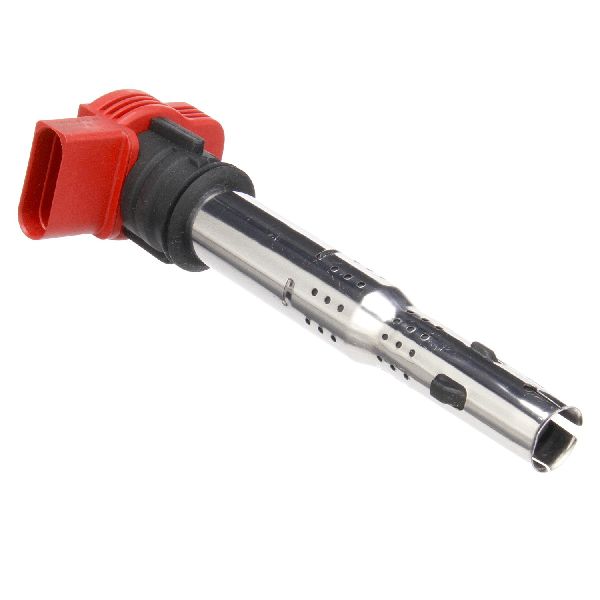
- Faulty Ignition Coil 🔴 High Probability Ignition coils on modern Audi engines are a common failure item due to high heat exposure in the engine bay and electrical stress. While more robust than on the 2.0T engines, they are still the most frequent cause of a single-cylinder misfire on the 3.0T.
How to confirm: Swap the ignition coil from cylinder 1 with another cylinder (e.g., cylinder 2). Clear the codes and drive. If the fault code changes to P0302, the coil is bad. This is the fastest and most definitive diagnostic step.
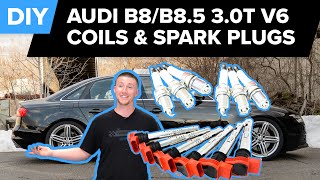
Typical fix: Replace the faulty ignition coil. Many owners choose to replace all six coils at once 🎬 Watch: Step-by-step ignition coil and spark plug replacement guide. as a preventative measure, as they tend to fail around the same time.
Est. part cost: $40-$80 - Worn or Fouled Spark Plug 🔴 High Probability The service interval for spark plugs is typically 35,000-55,000 miles, depending on the service schedule. Worn electrodes, an incorrect gap, or fouling from oil (due to PCV issues) or carbon can cause a weak spark. These direct-injection engines are sensitive to using correct, OEM-spec plugs.
How to confirm: After confirming the coil is good, swap the spark plug from cylinder 1 to another cylinder. If the misfire code moves, the spark plug is the culprit. Visually inspect the plug for wear, heavy carbon deposits, or oil/coolant fouling.
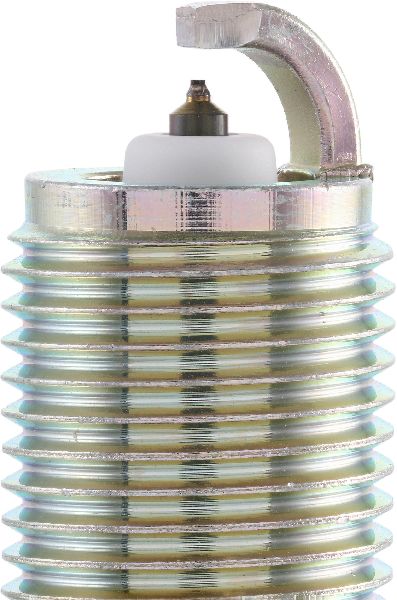
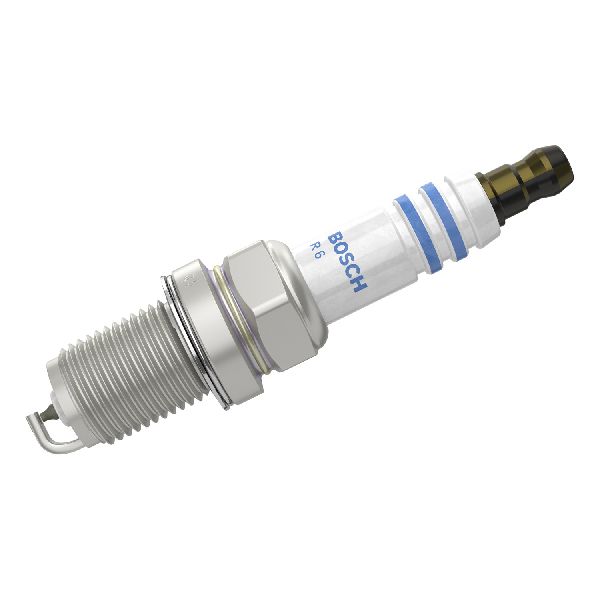
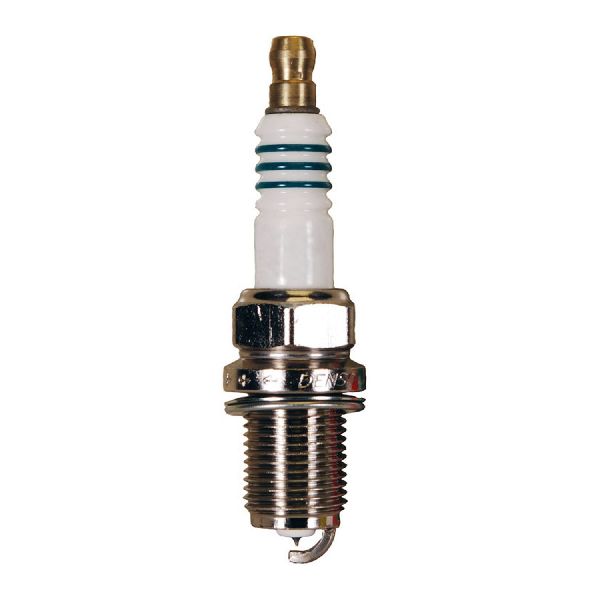
Typical fix: Replace the spark plug. It is highly recommended to replace all six spark plugs as a set with OEM-spec plugs (e.g., NGK PFR8S8EG) to ensure consistent performance.
Est. part cost: $15-$25 per plug - Carbon Buildup on Intake Valves 🟡 Medium Probability As a direct-injection (FSI/TFSI) engine, fuel is sprayed directly into the cylinder, not over the intake valves. This means there's no fuel to wash away carbon deposits from the PCV system, which accumulate over time. This buildup restricts airflow, causing misfires that are particularly noticeable on cold starts or under heavy load/high RPM.
How to confirm: This is difficult to confirm without a borescope to visually inspect the intake valves, which requires removing the supercharger. Misfires that occur mainly at high RPM or when the engine is cold, and are not resolved with new plugs/coils, often point to carbon buildup.
Typical fix: Professional cleaning of the intake valves, most effectively done via walnut shell blasting. 🎬 See how to perform a professional intake valve carbon cleaning. This is a labor-intensive job (4-6 hours) that requires removing the supercharger.
Est. part cost: $0 (service cost typically $800-$1500) - Faulty Fuel Injector ⚪ Low Probability A fuel injector can become clogged with carbon deposits or fail electronically, leading to an incorrect amount of fuel being delivered to cylinder 1. While less common than ignition issues, it's a possibility if other steps fail.
How to confirm: Use a mechanic's stethoscope to listen for a consistent clicking sound from the injector; compare the sound to an adjacent cylinder's injector. A more advanced method involves a VCDS scan to monitor fuel trims per cylinder. Swapping injectors is possible but labor-intensive as it requires removing the fuel rail.
Typical fix: Replace the faulty fuel injector. It's often recommended to replace the injector seals at the same time.
Est. part cost: $100-$200
Rare But Worth Checking
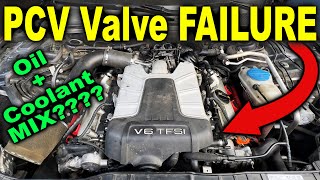
- PCV System Failure: The PCV valve (oil separator) is a known failure point on the 3.0T engine. It is located in the engine valley, under the supercharger. Its diaphragm can tear, causing unmetered air (vacuum leaks), a high-pitched whistle at idle, excessive oil consumption, and misfires. While it often causes multiple/random misfires (P0300), it can begin as a single cylinder misfire. Replacement is labor-intensive and often performed alongside carbon cleaning or thermostat replacement.
- Leaking Supercharger Intercooler: The supercharger houses two air-to-water intercooler cores ('bricks') that can develop internal leaks. This allows coolant to enter the intake air stream and get ingested by the cylinders, fouling the spark plug and causing a persistent misfire. Key symptoms are a gradual loss of coolant with no visible external leaks and sometimes white, sweet-smelling exhaust smoke. An AudiWorld forum member confirmed this was the cause of their misfire after finding coolant in the cylinder upon supercharger removal.
- Low Engine Compression: A mechanical issue such as a worn piston ring, damaged valve, or a failed/broken rocker arm can cause a loss of compression. This results in a persistent misfire that is not resolved by replacing ignition or fuel components. A Reddit user with a misfire on a similar engine found the cause to be failed rocker arms which led to a broken valve spring. A compression test and leak-down test are required for diagnosis.
Diagnosis Steps

- Read the fault codes with an OBD-II scanner (like VCDS for Audi) to confirm P0301 is present. Note any other codes, especially P0300 or P130A, and check freeze frame data for conditions when the misfire occurred.
- Identify Cylinder 1. On the Audi 3.0T V6, Bank 1 is the passenger side (in the US), and Cylinder 1 is the front-most cylinder on that bank. Cylinders 2 and 3 are middle and rear on the same side.
- Swap the ignition coil from Cylinder 1 to Cylinder 2 (the middle cylinder on the passenger side). This is a simple, no-tools-required task on this engine.
- Clear the codes, start the engine, and let it run or drive it briefly until the check engine light reappears.
- Re-scan for codes. If the code has moved to P0302, the ignition coil is faulty and must be replaced.
- If the code remains P0301, move the original coil back to cylinder 1. Now, swap the spark plug from Cylinder 1 to Cylinder 2. This requires a spark plug socket and extension.
- Clear codes and test again. If the code moves to P0302, the spark plug is faulty.
- If the code still remains P0301, the issue is more complex. Check for a gradually dropping coolant level with no visible leaks, which points to a leaking supercharger intercooler.
- Inspect the fuel injector wiring and listen for its operation with a stethoscope.
- At this point, if the cause is not found, further professional diagnosis is recommended. This may involve a compression test, a leak-down test, or using a borescope to inspect for carbon buildup (requires supercharger removal).
Parts You'll Likely Need

- Ignition Coil
(OEM #06E905115G)— This is the most common cause of a single-cylinder misfire on the 3.0T engine. They are subjected to significant heat and electrical stress, causing them to fail over time.
Trusted brands: Bosch, NGK, Eldor, Genuine Audi
OEM price range: $60-$90
Aftermarket price range: $40-$70 - Spark Plug
(OEM #NGK PFR8S8EG)— Worn or fouled spark plugs are a primary cause of misfires and are a standard maintenance item. Fouling can be caused by oil from a failing PCV system or coolant from a leaking intercooler.
Trusted brands: NGK, Bosch, Genuine Audi
OEM price range: $20-$30
Aftermarket price range: $15-$25 - PCV Valve / Oil Separator
(OEM #06E103547AC)— The diaphragm in the PCV valve is a known weak point that tears, causing a large vacuum leak that leads to misfires. It is located under the supercharger, making it a labor-intensive replacement.
Trusted brands: Genuine Audi, Vaico, Hengst
OEM price range: $200-$275
Aftermarket price range: $100-$180
Related Codes That Often Appear With This One
- P0300 — If 'Random/Multiple Cylinder Misfire' is present, the issue is likely systemic (e.g., vacuum leak from PCV failure, widespread carbon buildup, or a failing fuel pump) rather than isolated to cylinder 1.
- P130A — This is an Audi-specific code for 'Hide Cylinder' or 'Cylinder Disabling'. It means the ECM has intentionally shut down the fuel injector for cylinder 1 to protect the catalytic converter from being damaged by raw fuel. Its presence confirms a definite, not intermittent, fault and is often associated with carbon buildup per TSB 2033768.
- P0302, P0303, P0304, P0305, P0306 — Misfire codes for other cylinders appearing alongside P0301 indicate a more widespread problem affecting multiple cylinders, pointing away from a single bad coil or plug and towards a common cause like carbon buildup or a vacuum leak.
Technical Service Bulletins (TSBs) & Recalls
- 2033768/2 - Mentions misfire faults (P0301-P0306) with P130A, pointing towards carbon buildup as a likely cause.
- TSB Bulletin #01138920337681 - Confirms that a cylinder misfire fault (DTC P0301 – P0306) along with DTC P130A may be stored in the engine control module (ECM) J623.
Platform-Specific Known Issues
- A Technical Service Bulletin (TSB 2033768/2) exists for misfire faults (P0301-P0306) accompanied by P130A ('Cylinder Disabling'). The bulletin instructs technicians to contact Audi's Technical Assistance Center, noting that carbon buildup is a likely cause, especially for misfires under heavy load.
- Another TSB (2069038/4) addresses misfire DTCs on some 3.0T engines and resolves the issue with a software update to the ECM.
- A Pending Service Solution (PSS TSB 2058038) was issued for misfires at or near 0 km/h speed caused by software calibration with winter blend fuels, indicating a software update was the intended fix.
Mechanic-Grade Diagnostic Values
- VCDS Misfire Counter (Live Data) — expected: Using VCDS, monitor Measuring Block Groups 015 (Cyl 1-3) and 016 (Cyl 4-6). The counters should remain at or near zero at idle and under load.. Failure: A rapidly increasing count on cylinder 1 confirms the misfire in real-time, which is useful for diagnosing intermittent faults.
- Low-Pressure Fuel System — expected: 3.0 to 6.0 bar (approx. 44 to 87 PSI) at the feed line to the High-Pressure Fuel Pump (HPFP).. Failure: Pressure dropping below this range, especially under load, will starve the HPFP and can cause misfires.
- High-Pressure Fuel System — expected: 30 to 125 bar (approx. 435 to 1813 PSI) at the fuel rail during idle and low load. Can exceed 1500 PSI.. Failure: Inability to reach or maintain requested fuel pressure under load (viewable in VCDS Advanced Measuring Values) points to a failing HPFP or a leaking injector.
- Standing Engine Compression — expected: A healthy engine should show approximately 215-225 PSI per cylinder.. Failure: Significantly lower pressure in one cylinder (e.g., below 150 PSI) indicates a serious mechanical problem like a bad valve, piston ring, or head gasket failure.
Hidden / Shadow Codes Worth Checking
- Misfire Counter per Cylinder (VCDS): The ECU tracks misfires per cylinder even if they aren't frequent enough to set a P030x code. This acts as a 'shadow' fault log. (see via Viewable in real-time using VCDS or other advanced scan tools in Measuring Block Groups 015 and 016.)
Scan Tool Commands That Help
- VCDS (VAG-COM) or OBDeleven: Output Test - Fuel Injector — After ruling out spark, this test can be used to individually cycle the cylinder 1 fuel injector. A technician can listen for an audible 'click' to confirm the injector is receiving the command from the ECM, helping to isolate a wiring/ECM issue from a mechanically failed injector. Note: You may need to cycle the ignition to test another injector.
- VCDS (VAG-COM): Advanced Measuring Values - Logging — To diagnose intermittent misfires, log misfire counts for cylinder 1 against variables like Engine Speed, Engine Load, and Ignition Timing. This helps identify if the misfire only occurs under specific conditions (e.g., high RPM, cold start, high load).
- ODIS (Dealer Tool): Guided Fault Finding (GFF) — When a P0301 code is present, GFF provides a dealer-level, step-by-step diagnostic test plan. It prompts the technician to check specific values and components in a logical order, preventing misdiagnosis and unnecessary parts replacement.
Wiring & Ground Locations
- Ground Connection (601) — On the cylinder head. There is one for each bank.. A loose or corroded ground connection on the cylinder head for Bank 1 (passenger side) can cause intermittent and hard-to-diagnose issues for the ignition coils on cylinders 1, 2, and 3.
- Ground Connection (in engine harness) — Within the main engine wiring harness, often near the strut tower. For example, ground (615) is on the left strut for Bank 2.. The ignition coils are grounded through the engine wiring harness. A fault at a primary harness ground point can cause erratic behavior that mimics a failing coil.
Real Owner Repair Stories
- AudiWorld Forums User (Audi Q7 3.0T (same engine family)) — Persistent misfire on one cylinder (P0306), particularly noticeable under load.
❌ Tried (didn't work) Replaced all spark plugs, Replaced all ignition coils, Cleaned fuel injectors
✅ What actually fixed it The thermostat was failing, causing the engine to run slightly outside of its optimal temperature range. This subtly affected the air/fuel mixture enough to cause a consistent misfire on one cylinder under load. Replacing the thermostat resolved the misfire code. - Reddit user, r/Audi (2018 Audi SQ5 (related EA839 3.0T engine)) — Cylinder 4 misfire, car shakes/jolts on acceleration, loud knocking/clicking from top of engine.
❌ Tried (didn't work) Replaced spark plugs, Replaced ignition coil on misfiring cylinder
✅ What actually fixed it Diagnosis determined a mechanical failure. The user was quoted for valve spring replacement, but the symptoms are classic for the known rocker arm bearing failure on this engine family, which causes a loss of valve lift and a persistent misfire.
"I Checked Everything" — The Actual Cause
- A failed one-way check valve within a PCV system breather hose can cause misfires. This failure mode will not present as a vacuum leak during a standard intake smoke test. Under boost, the faulty valve allows pressurized air to be forced back into the crankcase, disrupting normal operation and causing a rough idle or misfire. The diagnosis requires physically removing the specific hose and testing the check valve's function directly.
OEM Part Supersession History
06E905115D / E / F→06E905115G— Internal revisions to the ignition coil to improve durability and prevent premature failure from heat and electrical stress.
Heads up: All versions are physically compatible, but it is best practice to use the latest revision (G) and not to mix different revisions on the same engine bank.06E103547C / F / Q→06E103547AC— The diaphragm material inside the PCV valve was improved in newer revisions to reduce the likelihood of tearing, which is the primary failure mode that causes a large vacuum leak.
Model Year Variations Within This Range
- 2013-2017: While the core CGXC engine hardware is consistent, Audi has released various ECU software updates. Some TSBs address overly sensitive misfire detection logic that could be triggered by certain fuel blends or operating conditions. Before extensive hardware replacement, it's worth checking with a dealer if any software updates related to TSB 2033768/1 (misfires with P130A) or similar apply to the vehicle's VIN.
Diagnostic Flowchart
Other Known Issues on This Vehicle
Issues unrelated to this code that are worth knowing about as an owner of this generation:
- Water Pump & Thermostat Failure 🔴 High — Very common, especially on pre-2013 models. Often fails between 60k-100k miles. Failure can cause overheating or, in some cases, coolant leaks into the vacuum system on newer engine variants. (Ref: Audi updated the parts post-2012 for better reliability, but it remains a common maintenance item.)
- DL501 (S-Tronic) Mechatronic Unit Failure 🔴 High — Common on models equipped with the 7-speed dual-clutch transmission, particularly earlier B8 models. Symptoms appear as harsh/jerky shifting, flashing PRNDS light, and limp mode. (Ref: Multiple TSBs exist. Repair often involves replacing solenoids or the entire mechatronic unit, which is very expensive.)
- PCV Valve (Oil Separator) Failure 🟠 Medium — Extremely common across all 3.0T engines. The diaphragm tears, causing a loud whistle, high oil consumption, and vacuum leaks leading to misfires. Typically occurs after 60k miles.
- Motor Mount Failure 🟠 Medium — The electronically controlled hydraulic engine mounts are known to leak and fail, causing excessive engine vibration at idle and under load. This is a common issue on B8/B8.5 platforms.
- Control Arm Bushing Wear 🟡 Low — The front upper and lower control arm bushings wear out, leading to knocking or creaking noises over bumps and imprecise steering feel. Typically requires replacement around 80k-120k miles.
Used vs. New Parts: Buying Guide for This Vehicle
When a used part is the smart pick: For high-cost, non-wear items like a complete supercharger assembly (if replacing for a reason other than bad intercoolers), engine wiring harnesses, or major engine brackets. A used fuel rail is also generally safe.
Donor-vehicle mileage cap: roughly under 80000 miles for the part to have meaningful remaining life.
What to inspect on the donor part:
- For superchargers, inspect intercooler inlet/outlet ports for any white or pink crusty residue, a sign of past coolant leaks.
- For wiring harnesses, ensure all connector tabs are intact and the loom is not brittle or frayed.
- Verify the donor vehicle was not in a major front-end collision.
OEM-only on this vehicle (don't cheap out):
- PCV Valve / Oil Separator: Aftermarket diaphragms are notorious for failing quickly. The labor involved in replacement is too high to risk using a non-OEM part.
- Fuel Injectors: Due to the precise nature of direct injection, it is strongly recommended to use OEM or the original supplier (e.g., Bosch).
- Engine Sensors (Crank/Cam): While not a common cause for P0301, if needed, always use OEM or VDO/Siemens.
Aftermarket brands forum-validated for this vehicle:
- Ignition Coils: Bosch, NGK, Eldor.
- Spark Plugs: NGK (PFR8S8EG is the OEM plug), Bosch.
- Gaskets (Supercharger, etc.): Elring, Victor Reinz.
Brands owners have reported issues with on this vehicle:
- Unnamed / 'white-box' ignition coils and PCV valves from online marketplaces. The failure rate is high and can lead to repeated repairs.
Real Owner Stories
Aggregated from forums and TSBs cited above. Mileages and costs reflect what owners reported in those sources.
2013 Audi S5 3.0T
Symptoms: Misfire on cylinder 1 that persisted after replacing spark plugs and ignition coils.
What fixed it: Replacement of a leaking supercharger intercooler core that was dripping coolant into the cylinder.
Source hint: AudiWorld: P0301 on 2013 Audi S5 - Leaking Intercooler Confirmed
Audi S5 (B9 platform)
Symptoms: Cylinder 1 misfire; owner attempted to fix by replacing the PCV valve and fuel injectors without success.
What fixed it: Cylinder head rebuild required after discovering failed rocker arms on cylinder 1 and a broken exhaust valve spring.
Source hint: Reddit r/audis5: Cylinder 1 misfire - Rocker Arm Failure
Related OBD-II Codes
Frequently Asked Questions
Where is Cylinder 1 located on my 2013-2017 Audi S5 3.0T?
My S5 is throwing P0301 along with P130A. What does this mean?
Is there a software update for misfires on the 3.0T engine?
What spark plugs should I use for my S5 to avoid misfire codes?
Can a coolant leak cause a P0301 code on this vehicle?
How can I tell if my P0301 is caused by carbon buildup without taking the engine apart?
Helpful Videos


Used OEM Parts in Stock

New Aftermarket Parts Available


The information in this article is provided for general reference and educational purposes only. Vehicle specifications, procedures, and part compatibility can vary by production date, trim level, and region. Always consult your vehicle's factory service manual and verify part numbers before purchasing or performing repairs. Safety-critical components such as airbags, seat belts, and braking systems should be installed by a qualified professional.
- Audi S5:
- 🎬 Helpful Videos
- 🛍️ Shop This Part
- What's Unique About the 2013-2017 Audi S5
- Symptoms You May Notice
- Most Likely Causes
- Rare But Worth Checking
- Diagnosis Steps
- Parts You'll Likely Need
- Related Codes That Often Appear With This One
- Technical Service Bulletins (TSBs) & Recalls
- Platform-Specific Known Issues
- Mechanic-Grade Diagnostic Values
- Hidden / Shadow Codes Worth Checking
- Scan Tool Commands That Help
- Wiring & Ground Locations
- Real Owner Repair Stories
- "I Checked Everything" — The Actual Cause
- OEM Part Supersession History
- Model Year Variations Within This Range
- Diagnostic Flowchart
- Other Known Issues on This Vehicle
- Used vs. New Parts: Buying Guide for This Vehicle
- Real Owner Stories
- 2013 Audi S5 3.0T
- Audi S5 (B9 platform)
- Related OBD-II Codes
- Frequently Asked Questions
- 🎟️ Get 5% Off