

P0301 on 2013 Audi Q5: Cylinder 1 Misfire Causes and Fixes
P0301 on a 2013 Audi Q5 indicates a misfire in cylinder 1. The most common cause is a failed ignition coil or a worn spark plug. A simple DIY diagnosis is to swap the cylinder 1 coil with another cylinder to see if the code follows. On 2.0T engines, carbon buildup is a very common underlying cause, while on 3.0T engines, a failed PCV valve under the supercharger is a frequent culprit. Expect to pay $40-$80 for a quality replacement coil.
- P0301 is a misfire on cylinder 1. Do not drive if the Check Engine Light is flashing.
- Always diagnose by swapping the ignition coil from cylinder 1 to another cylinder first. This is a simple, no-cost diagnostic step.
- If coils and plugs are good, the most likely platform-specific causes are carbon buildup on the intake valves (especially 2.0T) or a failed PCV valve.
- Fuel injector cleaner in the gas tank will NOT clean carbon from the intake valves on these direct-injection engines.
- If code P130A is also present, it strongly suggests the misfire is caused by carbon buildup, as noted in an Audi TSB.
What's Unique About the 2013-2013 Audi Q5
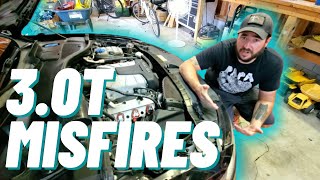
For the 2013 Audi Q5, especially models with the 2.0T direct-injection engine, P0301 is frequently more than just a bad spark plug. These engines are well-known for carbon buildup on the intake valves, which disrupts airflow and causes misfires, particularly when the engine is cold or at idle. Additionally, on the 3.0T supercharged engine, a failing PCV valve 🎬 Watch: How to diagnose misfires on the 3.0T supercharged engine. (oil separator) is a very common failure item that creates a vacuum leak leading to misfires. This part is notoriously located underneath the supercharger, making replacement a labor-intensive job.
Diagnostic Flowchart
Tap your situation to follow the diagnostic path that matches what you're seeing on this vehicle.
Symptoms You May Notice
- Engine shaking or vibrating, especially at idle
- Flashing or solid Check Engine Light
- Hesitation or loss of power when accelerating
- Rough engine operation, sometimes described as 'chugging'
- Reduced fuel economy
- Smell of unburned fuel from the exhaust
- Rough cold starts that may smooth out as the engine warms up
- Replacing only the spark plug without testing the ignition coil first. The coil is a more frequent failure point and should be tested with a simple swap.
- Using fuel injector cleaner additives to fix a misfire caused by heavy carbon buildup on the intake valves. These cleaners are added to the fuel tank and will not reach or clean the intake valves on a direct-injection engine.
Most Likely Causes
- Faulty Ignition Coil 🔴 High Probability Ignition coils are a common failure item on many modern engines due to high heat and vibration, including Audi's TFSI and supercharged powerplants. Many owners on forums report this as the first part to check.
How to confirm: Swap the ignition coil from cylinder 1 with the coil from cylinder 2. Clear the codes and drive. If the fault code changes to P0302 (Cylinder 2 Misfire), the coil is bad.
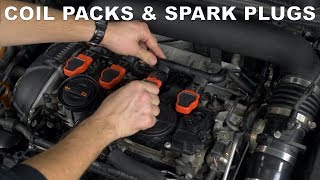
Typical fix: Replace the faulty ignition coil. It's often recommended to replace all coils at the same time 🎬 See this DIY guide for replacing 2.0T coils and plugs. for preventative maintenance, especially if they are original. Owners often recommend using OEM brands like Bosch or Eldor.
Est. part cost: $40-$80 - Worn or Fouled Spark Plug 🔴 High Probability Spark plugs are a regular maintenance item with a finite lifespan. On forced-induction engines like the 2.0T and 3.0T, they can wear more quickly. Oil or carbon fouling can also prevent a strong spark.
How to confirm: After confirming the ignition coil is good, move the spark plug from cylinder 1 to cylinder 3. If the code changes to P0303, the spark plug is the issue. Visually inspect the plug for wear, oil, or heavy carbon fouling.
Typical fix: Replace the spark plug. It is best practice to replace all spark plugs as a set to ensure consistent performance.
Est. part cost: $15-$30 per plug - Carbon Buildup on Intake Valves 🟡 Medium Probability Direct injection (TFSI) engines spray fuel directly into the cylinder, so there's no fuel washing over the intake valves. Oil vapors from the PCV system bake onto the hot valves, forming hard carbon deposits that restrict airflow and cause misfires, especially on cold starts. This is a well-documented issue across all Audi/VW direct injection engines.
How to confirm: This requires a visual inspection of the intake valves using a borescope after removing the intake manifold. Symptoms often include rough cold starts that improve when warm.
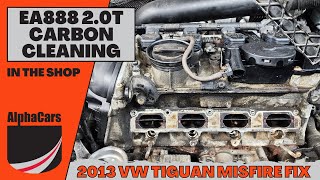
Typical fix: The intake valves must be manually cleaned or media-blasted (typically with walnut shells) to remove 🎬 Watch: How to fix misfires caused by heavy carbon buildup. the carbon deposits. This is a labor-intensive job that costs between $400 and $700 at an independent shop.
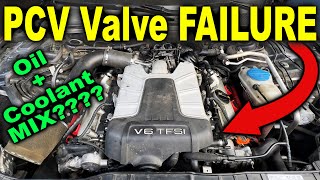
Est. part cost: $20-$50 for gaskets and seals - Faulty PCV Valve / Oil Separator 🟡 Medium Probability The PCV (Positive Crankcase Ventilation) valve diaphragm can tear, creating a significant unmetered vacuum leak. This throws off the air-fuel ratio and can cause lean codes and misfires across multiple cylinders. A sign of failure can be excessive suction when trying to remove the oil cap with the engine running or a loud whistling noise. On the 3.0T, this is a very common failure located under the supercharger.
How to confirm: A failed PCV often causes a loud whistling or sucking noise from the engine bay. A smoke test is the definitive way to confirm a leak in the system. Strong vacuum at the oil cap at idle is another key indicator.
Typical fix: Replace the PCV valve assembly. On the 3.0T engine, this is a very labor-intensive job as the valve is located underneath the supercharger and requires its removal.
Est. part cost: $150-$300 - Clogged or Faulty Fuel Injector ⚪ Low Probability Direct injectors operate under high pressure and can become clogged over time or fail electronically. While less common than coils or plugs, a bad injector is a known cause for persistent single-cylinder misfires that don't resolve after ignition system replacement.
How to confirm: This is a more advanced diagnostic step. The injector can be swapped to another cylinder to see if the misfire follows, but this requires removing the fuel rail. A professional can perform a flow test. Some owners on forums have confirmed this was their issue after eliminating other causes.
Typical fix: Replace the faulty fuel injector. It's recommended to replace the Teflon seal anytime an injector is removed. Many owners recommend replacing all injectors at once due to the labor involved.
Est. part cost: $100-$250 per injector
Rare But Worth Checking
- Low Engine Compression: If ignition and fuel system checks don't reveal the problem, a mechanical issue could be the cause. This can be due to worn piston rings, a bad valve, or a failing head gasket. A compression test is needed to diagnose this.
- Leaking Supercharger Intercooler (3.0T only): On the 3.0T engine, the air-to-water intercoolers are located inside the supercharger housing. A leak can introduce coolant into the intake air stream, causing misfires and coolant loss with no external signs of a leak. It is often recommended to inspect or replace these when the supercharger is removed for a PCV valve job.
Diagnosis Steps
- Read the code with an OBD-II scanner and confirm P0301 is present. Note any other codes, like P0300 or P130A.
- If the Check Engine Light is flashing, avoid driving the vehicle to prevent catalytic converter damage.
- Locate cylinder 1 (front-most cylinder). Swap the ignition coil from cylinder 1 with the coil from cylinder 2.
- Clear the codes, start the engine, and go for a test drive. Re-scan for codes.
- If the code is now P0302, the ignition coil from cylinder 1 is faulty and needs replacement.
- If the code remains P0301, the coil is likely good. Put the coils back in their original positions.
- Next, swap the spark plug from cylinder 1 with the plug from cylinder 3. Clear codes and test drive.
- If the code is now P0303, the spark plug is faulty and should be replaced (preferably as a full set).
- If the code remains P0301, the issue is not the coil or plug. The next likely causes are a faulty fuel injector, carbon buildup, or a failed PCV valve.
- Check for a failed PCV valve: listen for a whistling noise at idle and/or carefully try to remove the oil filler cap with the engine running. If there is strong suction holding it down, the PCV has likely failed. A professional smoke test can confirm.
- For suspected carbon buildup (especially on 2.0T engines with cold start issues), inspect the intake ports and valves with a borescope. This requires removing the intake manifold.
- If other diagnostics fail, consider swapping the fuel injector from cylinder 1 to another cylinder to see if the fault follows. This is an advanced step.
- If all else fails, perform an engine compression test to rule out internal mechanical problems.
Parts You'll Likely Need
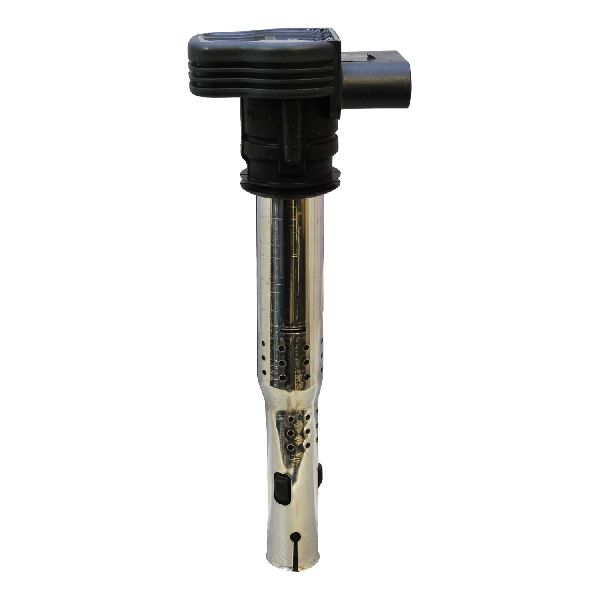
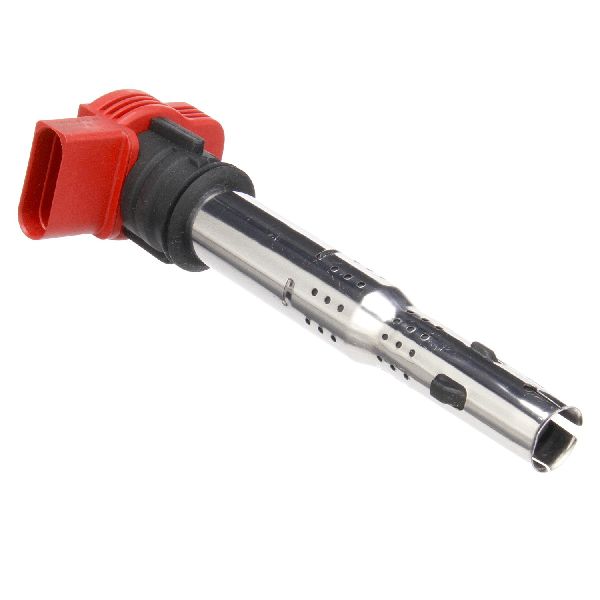
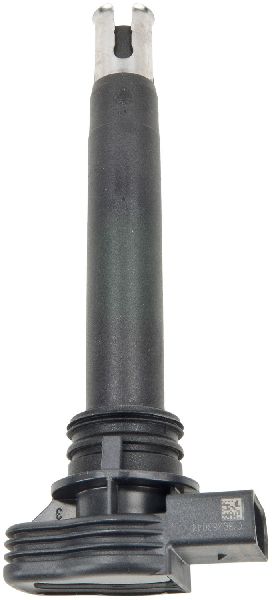
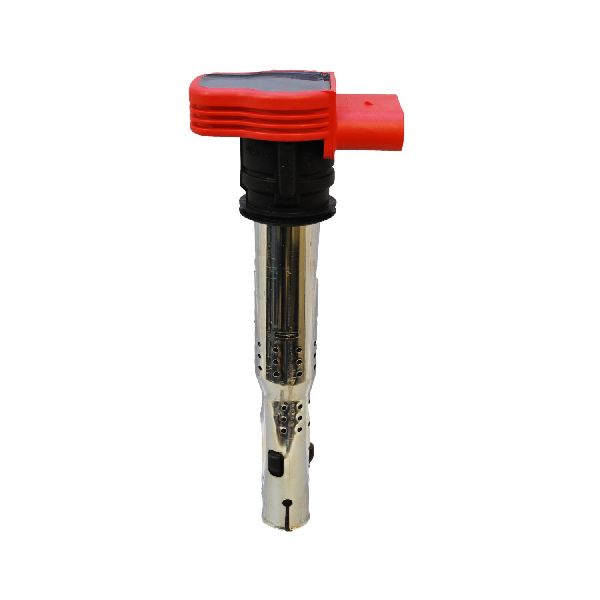
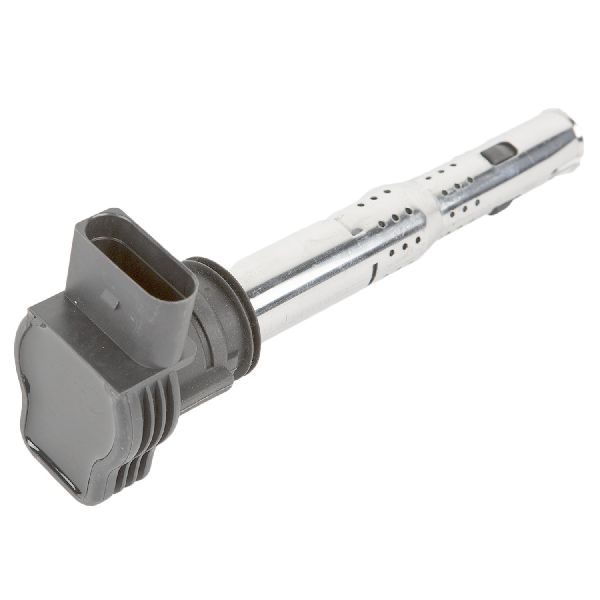
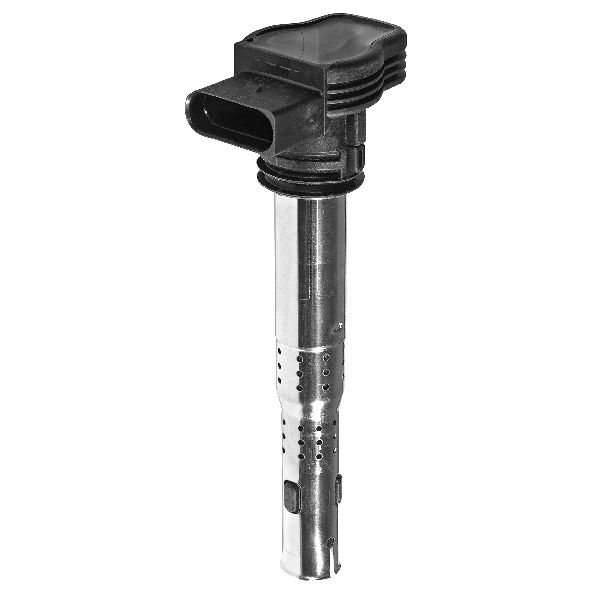
- Ignition Coil
(OEM #06E905115E (or newer revision like F/G). This part is often shared between the 2.0T and 3.0T.)
Related Codes That Often Appear With This One
- P0300 — This code means 'Random/Multiple Cylinder Misfire Detected.' It often appears alongside P0301 if the underlying issue, like a vacuum leak (PCV valve), fuel pressure problem, or severe carbon buildup, is affecting more than just cylinder 1.
- P130A — This Audi-specific code for 'Cylinder Disabling' is a protective measure by the ECM. When excessive misfires are detected in a cylinder (like P0301), the ECM shuts off the fuel injector to that cylinder to prevent raw fuel from damaging the catalytic converter. TSB 2033768/2 notes that this code appearing with misfire codes often points to a significant issue like carbon buildup.
- P0302, P0303, P0304 — If you see other specific cylinder misfire codes, it points to a problem affecting multiple cylinders, such as carbon buildup, a bad PCV valve, or a fuel delivery issue.
Technical Service Bulletins (TSBs) & Recalls
- TSB 2033768/2 (supersedes 2033768/1): This bulletin addresses the scenario where a cylinder misfire fault (P0301-P0306) is stored along with DTC P130A (Cylinder Disabling). It instructs technicians to contact the Technical Assistance Center (TAC), implying a known, complex issue, often related to carbon buildup.
Platform-Specific Known Issues
- The 2.0T TFSI engine is notorious for carbon buildup on the intake valves, which can cause cold-start misfires that may disappear as the engine warms up.
- A Technical Service Bulletin (TSB #01138920337681) was issued for 2013 models, noting that misfire codes (P0301-P0306) appearing with code P130A can be related to this carbon buildup issue.
Mechanic-Grade Diagnostic Values
- High-Pressure Fuel Rail Pressure (3.0T) — expected: 30 to 70 bar (3000 to 7000 mbar) at idle.. Failure: Pressure that is significantly lower, higher, or drops off quickly after engine shutoff can indicate a failing High Pressure Fuel Pump (HPFP) or leaky injector.
- High-Pressure Fuel Pump (HPFP) Heat Soak Test (3.0T) — expected: After a hot shutdown, pressure should rise steadily to 110-120 BAR and hold.. Failure: If pressure climbs slowly or plateaus at a lower pressure (e.g., 50-90 BAR) within 5-7 minutes, it suggests the HPFP is failing and may be leaking fuel into the crankcase.
- Camshaft Timing Adaptation (Phase) — expected: The 'Actual' value should be very close to the 'Specified' value (e.g., within ~0.5 degrees).. Failure: A variance greater than a degree (e.g., 28° specified vs 29.2° actual) could indicate a stretched timing chain or tensioner issue, which can cause misfires.
Scan Tool Commands That Help
- VCDS (VAG-COM): Misfire Counter per cylinder (Measuring Blocks 014, 015, 016) — To see a live count of misfires on each cylinder, which is more sensitive than the CEL. This helps confirm if the misfire is constant, intermittent, or only occurs under specific loads or temperatures.
- VCDS (VAG-COM): Fuel Injector Output Test (Engine > Output Tests) — To individually activate each fuel injector and listen for a consistent clicking sound. A silent or inconsistent injector indicates a failure. This can be used to test the electrical function of an injector without removing it.
- VCDS (VAG-COM) or Launch Scanner: Injector Adaptation / Coding (Engine > Adaptation / Long Adaptation) — This is required after replacing a fuel injector. The new injector's specific flow-rate code (IMA code) must be programmed into the ECM to ensure correct fueling and prevent performance issues. For some TDI engines, a security access code like '27971' may be needed.
Wiring & Ground Locations
- J623 — Engine Control Module (ECM) is located in the electronics box in the plenum chamber, on the driver's side.. The ECM is the source of all ignition and fuel injection commands. A poor connection at its T60 or T94 connectors could cause misfires.
- Ground Point 15 — Ground connection directly on the cylinder head.. This is a primary ground for ignition components. Corrosion or a loose connection here can cause a weak spark and lead to misfires.
- Ground Point 615 — Ground connection on the left suspension strut tower in the engine compartment.. This is a major chassis ground point for the engine compartment wiring harness. A fault here can cause various electrical issues, including erratic sensor readings or weak ignition.
- Ignition Coil Connector (e.g., N70 for Cyl 1) — 4-pin connector on top of each ignition coil.. Pin 2 is typically the power supply (from fuse SB8), Pin 4 is the ground, and other pins are for the trigger signal from the ECM. Damage to this connector or its wiring is a direct cause of single-cylinder misfires.
Real Owner Repair Stories
- AudiWorld Forums user (2012 Audi S4 3.0T (same engine family)) — EPC light, rough running, P0305 (Cylinder 5 Misfire).
❌ Tried (didn't work) Replacing spark plugs, Replacing ignition coils
✅ What actually fixed it After removing the supercharger, the mechanic discovered coolant leaking from one of the internal intercooler cores directly into the cylinder. The fix was to replace the faulty intercooler core.
OEM Part Supersession History
06E905115 / A / B / C / D→06E905115E, then 06E905115F, and currently 06E905115G— Revisions were made to improve reliability and prevent premature failure, which was common on earlier versions.
Heads up: While all revisions are generally interchangeable, it is highly recommended to use the latest available version (currently 'G') for all coils and not to mix old and new revisions.
Helpful Videos
Used OEM Parts in Stock


New Aftermarket Parts Available

The information in this article is provided for general reference and educational purposes only. Vehicle specifications, procedures, and part compatibility can vary by production date, trim level, and region. Always consult your vehicle's factory service manual and verify part numbers before purchasing or performing repairs. Safety-critical components such as airbags, seat belts, and braking systems should be installed by a qualified professional.
- Audi Q5:
- 🎬 Helpful Videos
- 🛍️ Shop This Part
- What's Unique About the 2013-2013 Audi Q5
- Diagnostic Flowchart
- Symptoms You May Notice
- Most Likely Causes
- Rare But Worth Checking
- Diagnosis Steps
- Parts You'll Likely Need
- Related Codes That Often Appear With This One
- Technical Service Bulletins (TSBs) & Recalls
- Platform-Specific Known Issues
- Mechanic-Grade Diagnostic Values
- Scan Tool Commands That Help
- Wiring & Ground Locations
- Real Owner Repair Stories
- OEM Part Supersession History
- 🎟️ Get 5% Off