

P0300 on 2014-2019 Toyota Highlander: Random Misfire Causes and Fixes
P0300 on a 2014-2019 Toyota Highlander indicates random cylinder misfires, most commonly caused by worn spark plugs or failing ignition coils. A set of six OEM-quality spark plugs costs $60-$120, while ignition coils are about $65-$110 each. The rear three plugs and coils (Bank 1) are notoriously difficult to access, requiring removal of the upper intake manifold, a job that can take several hours.
- P0300 means your Highlander's computer has detected misfires on more than one cylinder.
- The most likely causes are worn-out spark plugs or one or more failing ignition coils.
- If your check engine light is flashing, pull over as soon as it's safe to avoid expensive catalytic converter damage.
- Accessing the rear three cylinders on the V6 requires removing the upper intake manifold, significantly increasing the labor involved for spark plug or coil replacement.
- Check for vacuum leaks from old, cracked hoses, as this is a common and relatively inexpensive fix.
What's Unique About the 2014-2019 Toyota Highlander
This Highlander generation spans two versions of the 3.5L V6. The 2014-2016 models use the 2GR-FE engine with traditional port injection. The 2017-2019 models feature the updated 2GR-FKS engine with D-4S, a more complex system using both port and direct fuel injection that can switch to an Atkinson cycle for better fuel economy. While ignition components are common culprits on both, the later engine can have unique issues related to its high-pressure fuel system or, at higher mileage, carbon buildup on intake valves, which can disrupt airflow. A rare but well-documented issue for this platform is water intrusion into the A43 ECM connector, sometimes from a poorly sealed aftermarket windshield de-icer harness, which can cause random misfires and a host of other electrical codes.
Generation note: While the vehicle is the third generation (XU50), the engine was updated mid-cycle. 2014-2016 models have the 2GR-FE V6. 2017-2019 models have the 2GR-FKS V6 with D-4S direct and port injection. This can affect diagnosis, particularly for fuel-related issues and potential for intake valve carbon buildup on the 2GR-FKS.
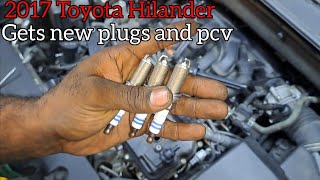
🎬 See this 2017-2019 Highlander spark plug and PCV replacement guideSymptoms You May Notice
- Flashing or solid Check Engine Light
- Rough or shaky idle
- Engine hesitation or stumbling during acceleration
- Reduced engine power and poor performance
- Noticeable vibrations from the engine bay
- Increased fuel consumption
- Smell of raw gasoline from the exhaust
- Limp mode or stalling after starting, as noted in TSB Bulletin #T-TT-0465-17
- Replacing oxygen (O2) sensors. A misfire allows unburnt fuel and oxygen into the exhaust, which an O2 sensor will correctly report as a lean or rich condition. The sensor is usually reporting the problem, not causing it.
Most Likely Causes
- Worn or Fouled Spark Plugs 🔴 High Probability Spark plugs are a routine maintenance item with a service life of around 100,000 miles. They are often neglected due to the high labor cost of replacing the rear bank, leading to weak spark and misfires as they age.
How to confirm: Remove and inspect the spark plugs. Look for worn electrodes, heavy carbon deposits, or oil fouling. The correct gap for the OEM Denso FK20HR11 plugs is 0.043" or 1.1mm. The original gap range of 0.024-0.071 inches was too broad and incorrect.
Typical fix: Replace all six spark plugs. It is critical to replace the rear three plugs (Bank 1) when the intake manifold is removed for any other service. Many owners and technicians recommend replacing the three rear ignition coils at the same time as a preventative measure.
Est. part cost: $60-$120 - Failing Ignition Coil(s) 🔴 High Probability Coil-on-plug systems are reliable, but individual coils are a common failure point on modern engines, including the 2GR family. Heat and vibration cause the internal windings to break down over time, leading to intermittent spark.
How to confirm: Use a scan tool with Mode $06 to view misfire counts per cylinder, even before a specific P030x code is set. If a specific cylinder is identified (e.g., P0304), swap that ignition coil with a known good one (e.g., from cylinder 2). Clear the codes and drive the vehicle. If the misfire code follows the coil (e.g., now shows P0302), the coil is bad.
Typical fix: Replace the faulty ignition coil. If a rear coil fails (requiring intake manifold removal), it is highly recommended to replace all three rear coils and all six spark plugs at the same time to save on future labor.
Est. part cost: $65-$110 per coil - Vacuum Leak 🟡 Medium Probability
How to confirm: Listen for a hissing sound with the engine running. You can also carefully spray carburetor cleaner or starter fluid around the intake manifold gaskets and vacuum hoses; a change in engine idle indicates a leak. A smoke test performed by a professional is the most definitive method.
Typical fix: Replace the cracked vacuum hose or leaking gasket. The upper intake plenum gasket is a common culprit, especially after being disturbed for a spark plug change.
Est. part cost: $10-$70 - Dirty or Clogged Fuel Injectors ⚪ Low Probability On the 2017-2019 2GR-FKS engine, carbon buildup on direct injectors can disrupt the spray pattern, although the D-4S system's port injectors help wash the valves. Port injectors on both engines can become clogged over time from poor fuel quality.
How to confirm: Testing injectors requires specialized tools to measure flow rates. A simpler first step is to use a high-quality fuel system cleaner like Techron in the gas tank. A scan tool showing significantly positive long-term fuel trims can also indicate a lean condition caused by clogged injectors.
Typical fix: Use a professional-grade fuel injector cleaning service or replace the faulty injector(s).
Est. part cost: $150-$300 per injector
Rare But Worth Checking
- Water Intrusion at ECM Connector: Toyota TSBs T-TT-0462-17 and T-SB-0072-19 describe a scenario where water from a poorly sealed aftermarket windshield de-icer harness can travel down the wiring and corrode the A43 ECM connector, causing random misfires and other codes like P1604 and P1605. This requires inspecting the connector for green or white corrosion.
- Low Fuel Pressure: A weak fuel pump or clogged fuel filter can starve the engine for fuel, causing lean conditions and random misfires, particularly under load. Fuel pressure should be tested with a gauge connected to the fuel rail. TSB Bulletin #T-SB-0072-19 notes that low or no fuel pressure can be a symptom of the aforementioned ECM connector corrosion.
- Rodent Damage: Rodents are known to build nests in the engine bay and chew on wiring. The soy-based insulation on modern wiring can be attractive to them. A visual inspection of the ignition coil and injector harnesses for chew marks is a worthwhile step, especially if the vehicle is parked outdoors.
- Clogged Catalytic Converter: A restricted exhaust can increase backpressure and cause misfires. This is often a result of a long-term misfire condition that was ignored, not the initial cause. The converter gets damaged by unburnt fuel.
- Mechanical Engine Failure: While very rare on these reliable 2GR engines, low compression from a bad valve, worn piston rings, or (in extreme cases) pulled head bolt threads can cause a persistent misfire. A compression test and a cylinder leak-down test can confirm this.
Diagnosis Steps
- Check for any other stored trouble codes. Codes like P0171/P0174 point towards a vacuum leak, while specific cylinder codes (P0301-P0306) help isolate the issue.
- Use a scan tool to view live data and Mode $06 to check misfire counts for each cylinder. This can often pinpoint a problematic cylinder even without a specific P030x code.
- If specific cylinder misfire codes are present, perform an 'ignition coil swap.' Move the ignition coil from the misfiring cylinder to a good cylinder, clear the codes, and see if the misfire code follows the coil.
- Inspect all spark plugs for wear, correct gap (0.043"), and signs of oil or fuel fouling. Replace if they are due for service or show signs of damage.
- Check for vacuum leaks. Listen for hissing noises and inspect all vacuum hoses for cracks or disconnection. A smoke test is the most effective way to find elusive leaks.
- Inspect the air filter and clean the Mass Airflow (MAF) sensor with a dedicated MAF sensor cleaner.
- Test fuel pressure to ensure the fuel pump is delivering adequate fuel to the engine.
- For persistent issues, especially if the windshield has been replaced, inspect the A43 ECM connector for any signs of green or white corrosion as per TSB-0072-19.
Parts You'll Likely Need
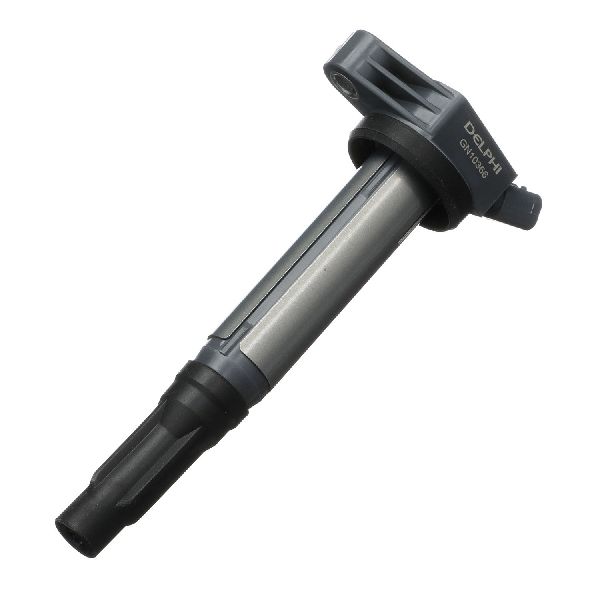
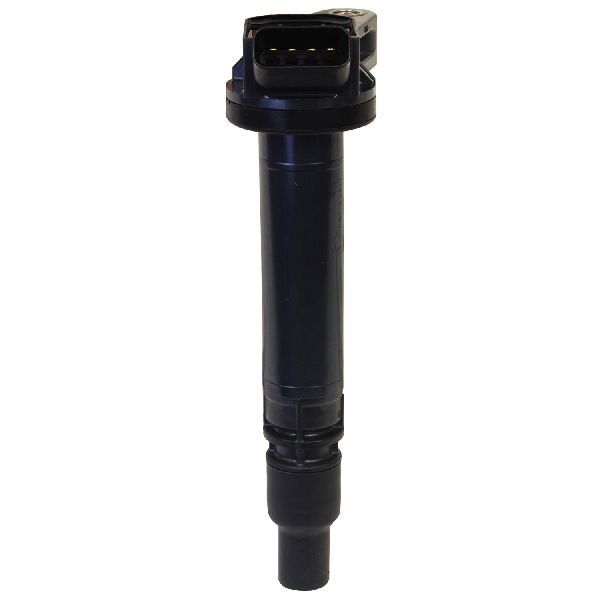
- Ignition Coil
(OEM #90919-A2008)— This is the most frequent cause of misfires on the 2GR engine family. One coil failing intermittently can trigger a random misfire code before settling on a specific cylinder.
Related Codes That Often Appear With This One
- P0301-P0306 — These codes indicate a misfire on a specific cylinder. A P0300 may appear first, and then as the ECM isolates the problem, a specific cylinder code will be stored, which is very helpful for diagnosis.
- P0171 / P0174 — These 'System Too Lean' codes for Bank 1 and Bank 2 often appear when a vacuum leak or a fuel delivery issue is the root cause of the misfire, as unmetered air affects the air-fuel ratio for all cylinders.
- P1604 / P1605 — These Toyota-specific codes for 'Startability Malfunction' and 'Rough Idle' can be triggered by the same electrical issues, such as the corroded ECM connector, that cause a P0300.
- P1603 — This code for "Engine stalls out" is frequently documented alongside P0300 in cases of electrical or fuel delivery failure, as seen in NHTSA ODI #11534554.
Technical Service Bulletins (TSBs) & Recalls
- T-SB-0072-19: Documents various drivability concerns, including P0300, caused by water/corrosion in the A43 ECM connector, often due to a poorly sealed aftermarket windshield de-icer harness.
- T-TT-0462-17: A Toyota Technical Tip that also points to water intrusion at the ECM connector from aftermarket windshield installations as a cause for random misfires and other DTCs.
- T-TT-0465-17: Notes that MIL "ON" conditions and limp mode may be accompanied by DTCs P0300, P030000, P030027, or P030085.
Mechanic-Grade Diagnostic Values
- Fuel Pressure (Low Pressure Side - 2GR-FE) — expected: 304 to 343 kPa (44 to 50 psi). Failure: Pressure below this range indicates a weak fuel pump or clogged filter.
- Fuel Pressure (Low Pressure Side - 2GR-FKS) — expected: 196 to 833 kPa (28 to 121 psi). Failure: Pressure outside this wide range could indicate a fault in the low-pressure pump or controller.
- Fuel Pressure (High Pressure Side - 2GR-FKS at 3000 rpm) — expected: 2,400 to 19,500 kPa (348 to 2828 psi). Failure: Pressure below this range points to an issue with the high-pressure mechanical fuel pump.
- Ignition Coil Primary Resistance (2GR-FE) — expected: 0.5Ω ± 0.1Ω. Failure: A reading outside this range indicates a faulty coil winding.
- Ignition Coil Secondary Resistance (2GR-FE) — expected: ~12 kΩ. Failure: Significant deviation suggests an internal breakdown of the coil.
- Fuel Injector Resistance (2GR-FE at 20°C/68°F) — expected: 11.6 to 12.4 Ω. Failure: Resistance outside this range points to a bad injector coil.
Hidden / Shadow Codes Worth Checking
- Mode $06 Misfire Counts: This is not a 'code' but a data stream within any advanced OBD-II scanner. It shows raw misfire counts for each cylinder, even if they haven't reached the threshold to set a specific P0301-P0306 code. It is invaluable for catching an intermittent misfire on a single cylinder that is triggering a general P0300. (see via Use an OBD-II scan tool with Mode $06 capability. Navigate to Test ID $A2 through $AD for misfire data.)
Scan Tool Commands That Help
- Toyota Techstream: Active Test: Control the Injector Cut — This function allows a technician to individually disable fuel injectors one by one while the engine is running. If disabling a specific injector causes no change in engine RPM or smoothness, that cylinder was not contributing power, confirming a misfire on that cylinder.
- Toyota Techstream: Data List > Misfire — Provides a real-time graph and count of misfires per cylinder, which is more user-friendly than raw Mode $06 data. It's the primary tool for observing which cylinder is the source of a P0300 while test-driving under various load conditions.
Wiring & Ground Locations
- A43 ECM Connector — Located in the engine bay, typically near the firewall on the passenger side.. This is the main connector to the Engine Control Module. As noted in TSB-0072-19, it is susceptible to water intrusion and corrosion, which can disrupt signals for ignition coils and injectors, causing random misfires.
- Engine Ground Straps — There are multiple ground points. A key one connects from the engine block (near the front bank of cylinders) to the chassis frame rail. Another connects the transmission housing to the chassis.. A loose or corroded main engine ground can cause a weak or intermittent spark across all cylinders, as the ignition coils rely on a solid ground path. This can lead to a random misfire code that is difficult to trace to a specific component.
Real Owner Repair Stories
- Electric Vehicle Forums (Highlander Hybrid (engine principles are similar)) — P0300, P0302, P0304 codes appeared suddenly.
❌ Tried (didn't work) Initially suspected failing ignition coils or spark plugs.
✅ What actually fixed it The owner had just filled the gas tank the day before the issue started. The root cause was water in the fuel. Running several bottles of Seafoam (or isopropyl alcohol) through the system absorbed the water and resolved the misfires. In more severe cases, draining the fuel tank would be necessary. - NHTSA ODI #11534554 — An owner reported that their service department diagnosed codes P0300, P0301, P0302, P0303, and P0306 as engine misfire codes, which were accompanied by P1603 (Engine stalls out) and P1604 (Startability malfunction).
"I Checked Everything" — The Actual Cause
- In some cases reported on forums, a smoke test of the intake manifold reveals no leaks, but the P0300 persists, especially at idle. The cause was later found to be a leaking or stuck-open PCV (Positive Crankcase Ventilation) valve. A faulty PCV valve can create a vacuum leak that is not always detectable with a smoke test, as it's part of a separate crankcase ventilation circuit. Replacing the PCV valve resolved the lean condition and the random misfires.
OEM Part Supersession History
90919-02251, 90919-02255, 90919-A2002, 90919-A2004→90919-A2007— Standard part evolution for improved reliability and manufacturing consistency.
Heads up: These part numbers are generally interchangeable for the 2GR-FE engine (2014-2016). However, always using the latest part number (90919-A2007) is recommended for longevity.
Model Year Variations Within This Range
- 2014-2016 vs 2017-2019: The primary difference is the engine: 2GR-FE (port injection only) vs. 2GR-FKS (port and direct injection, D-4S). This significantly changes fuel-related diagnostics. A P0300 on a 2017+ model could be related to the high-pressure fuel pump or direct injectors, components that do not exist on the earlier models. The 2017 refresh also introduced an 8-speed transmission (vs. 6-speed) and updated styling, but this does not directly impact P0300 causes.
Diagnostic Flowchart
Other Known Issues on This Vehicle
Issues unrelated to this code that are worth knowing about as an owner of this generation:
- Transmission Shudder / Hesitation (8-Speed UA80E) 🟠 Medium — Common complaint on 2017-2019 models with the 8-speed transmission, particularly at low speeds. Many owners report jerky or hesitant shifting. (Ref: Multiple TSBs exist for software updates to improve shift logic, such as T-SB-0115-22.)
- Front Brake Vibration 🟡 Low — Some owners report a vibration from the front brakes during light application at highway speeds. (Ref: T-SB-0072-18 Rev provides a repair procedure to address this condition.)
- Infotainment System Glitches 🟡 Low — Complaints include the screen freezing, going black, or Bluetooth connectivity issues. (Ref: Software updates were released to address some of these problems. T-TT-0578-19 addresses Bluetooth connectivity.)
- Musty/Moldy Smell from A/C Vents 🟡 Low — Some owners report a persistent moldy smell from the HVAC system, attributed to poor evaporator case drainage allowing water to stagnate. (Ref: TSB T-SB-0010-20 provides a procedure for HVAC odor maintenance.)
- Power Tailgate Malfunction 🟡 Low — The power liftgate struts/motors can fail or lose calibration, causing the tailgate to not open or close properly. Manually forcing the door can cause this.
- Fuel Tank Knocking Noise 🟡 Low — A knocking noise from the fuel tank area may be heard at idle with a full tank of gas on 2017-2019 models. (Ref: T-SB-0018-19 was issued to address this condition.)
Used vs. New Parts: Buying Guide for This Vehicle
When a used part is the smart pick: Used OEM (Denso) ignition coils from a low-mileage donor vehicle can be a cost-effective choice, especially when replacing all six. Structural components like the intake manifold, if needed, are also excellent candidates for used parts.
Donor-vehicle mileage cap: roughly under 75000 miles for the part to have meaningful remaining life.
What to inspect on the donor part:
- For ignition coils, check for cracks in the plastic housing or corrosion on the electrical connector pins.
- Ensure the vehicle was not in a front-end collision, which could damage engine components.
- Ask for the VIN of the donor car to verify its mileage and year to ensure compatibility (2GR-FE vs 2GR-FKS).
OEM-only on this vehicle (don't cheap out):
- Mass Airflow (MAF) Sensor - Aftermarket MAF sensors are notoriously unreliable and can cause persistent fuel trim and performance issues.
- Fuel Injectors (especially for 2GR-FKS) - The precise nature of direct injectors makes OEM the only reliable choice.
Aftermarket brands forum-validated for this vehicle:
- Denso and NGK are both OEM suppliers to Toyota and are considered top-tier for ignition coils and spark plugs.
- aFe Power and Ignition Projects offer high-performance ignition coils, though they are significantly more expensive and unnecessary for a stock engine.
Brands owners have reported issues with on this vehicle:
- Unbranded, no-name ignition coils and sensors from online marketplaces. While cheap, they have a very high failure rate and can cause misdiagnosis and repeated repairs.
Real Owner Stories
Aggregated from forums and TSBs cited above. Mileages and costs reflect what owners reported in those sources.
2007 Lexus RX 350 (2GR-FE)
Symptoms: The owner experienced a P0300 random misfire code along with specific codes for every cylinder (P0301-P0306) and a coil circuit code (P0354).
What fixed it: The issue was identified as a classic ignition failure scenario involving the coil circuit.
Source hint: ClubLexus - Help!! All Cylinder misfire on 2007 rx 350
2013 Lexus RX 350 (2GR-FE)
Symptoms: Cylinder misfire code P0300 triggered by external engine damage.
What fixed it: The technician discovered a massive rodent's nest under the engine cover and repaired chewed wiring caused by the pests.
Source hint: YouTube - Urban Automotive - 2013 Lexus RX350 cylinder misfire code P0300
2015 Toyota Highlander (2GR-FE) — ~100000 miles
Symptoms: General misfire symptoms requiring routine maintenance of the rear bank.
What fixed it: Replacement of all six spark plugs and the three rear ignition coils while the intake manifold and wiper cowl were removed.
Source hint: YouTube - Ron Ananian The Car Doctor - 2015 Toyota Highlander Spark Plug Replacement
2015 Toyota Highlander (2GR-FE)
Symptoms: An owner reported that their vehicle was diagnosed with codes P0300, P0301, P0302, P0303, and P0306, along with P1603 and P1604, indicating engine stalls and startability malfunctions.
Source hint: NHTSA ODI #11534554
Related OBD-II Codes
Frequently Asked Questions
I have a 2017-2019 Highlander with the 2GR-FKS engine; why am I getting a P0300 misfire?
Does TSB-0072-19 apply to my Highlander's random misfire issue?
Why is the labor cost so high for replacing spark plugs on the 3.5L V6?
Should I replace my ignition coils when I change the spark plugs?
What is the correct spark plug gap for the 2014-2019 Highlander V6?
Can a vacuum leak cause a P0300 on this vehicle?
Helpful Videos
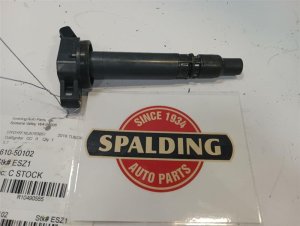
Used OEM Parts in Stock


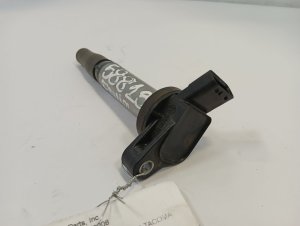
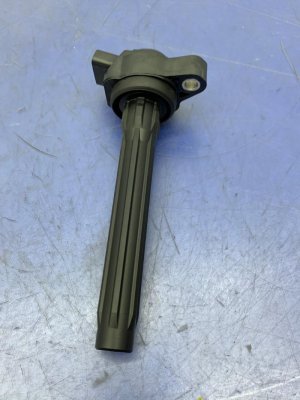
New Aftermarket Parts Available


The information in this article is provided for general reference and educational purposes only. Vehicle specifications, procedures, and part compatibility can vary by production date, trim level, and region. Always consult your vehicle's factory service manual and verify part numbers before purchasing or performing repairs. Safety-critical components such as airbags, seat belts, and braking systems should be installed by a qualified professional.
- Toyota Highlander:
- 🎬 Helpful Videos
- 🛍️ Shop This Part
- What's Unique About the 2014-2019 Toyota Highlander
- Symptoms You May Notice
- Most Likely Causes
- Rare But Worth Checking
- Diagnosis Steps
- Parts You'll Likely Need
- Related Codes That Often Appear With This One
- Technical Service Bulletins (TSBs) & Recalls
- Mechanic-Grade Diagnostic Values
- Hidden / Shadow Codes Worth Checking
- Scan Tool Commands That Help
- Wiring & Ground Locations
- Real Owner Repair Stories
- "I Checked Everything" — The Actual Cause
- OEM Part Supersession History
- Model Year Variations Within This Range
- Diagnostic Flowchart
- Other Known Issues on This Vehicle
- Used vs. New Parts: Buying Guide for This Vehicle
- Real Owner Stories
- 2007 Lexus RX 350 (2GR-FE)
- 2013 Lexus RX 350 (2GR-FE)
- 2015 Toyota Highlander (2GR-FE) — ~100000 miles
- 2015 Toyota Highlander (2GR-FE)
- Related OBD-II Codes
- Frequently Asked Questions
- 🎟️ Get 5% Off