

P0300 on 2016-2022 Honda Pilot 3.5L V6: Causes, Injector Issues, and Fixes
On a 2016-2022 Honda Pilot, code P0300 is most often caused by faulty fuel injectors, a known issue acknowledged by Honda with a warranty extension (10 years/150,000 miles). The fix is to replace all six injectors with an updated part (16010-RLV-315). Check with a dealer for warranty coverage before paying for repairs, citing TSB 21-010.
- For the 2016-2022 Honda Pilot, P0300 is almost certainly caused by faulty fuel injectors.
- Before starting any repairs, call a Honda dealer with your VIN to check for warranty coverage on the fuel injectors.
- The correct repair is to replace all six injectors and the fuel joint pipe; do not replace just one.
- If the check engine light is flashing, reduce speed and driving load to prevent damage to the catalytic converters.
- Always check for codes P219A/P219B, as they are a strong confirmation of the injector problem.
What's Unique About the 2016-2022 Honda Pilot
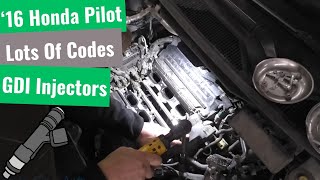
The 2016-2022 Pilot uses the J35Y6 direct-injection V6. This engine platform has a well-documented history of fuel injector problems. Debris from the high-pressure fuel pump or from the original injector machining process can cause internal wear or clogging, leading to an improper air-fuel mixture and random misfires. Honda acknowledged this widespread issue by issuing Technical Service Bulletin 21-010 (which supersedes A18-025 and 20-100) and a subsequent warranty extension program to cover the replacement of all six injectors.
Symptoms You May Notice
- Rough or shaking idle
- Hesitation or stumbling during acceleration
- Flashing or solid Check Engine Light
- Reduced engine power
- Decreased fuel economy
- Engine stalling at stops
- Replacing only one or two ignition coils when the root cause is fuel injectors.
- Replacing oxygen sensors or catalytic converters without diagnosing the underlying fuel delivery or ignition problem that caused them to fail.
- Assuming the cause is VCM-related plug fouling without first investigating the much more common fuel injector issue for this specific engine and model years.
Most Likely Causes
- Clogged or Faulty Fuel Injectors 🔴 High Probability This is a known design/manufacturing issue with the J35Y6 engine. Debris from the high-pressure pump or injector machining can clog the direct injectors, causing fuel flow problems. Honda has issued TSBs (A18-025, 20-100, and the superseding 21-010) and a warranty extension for this specific problem.
How to confirm: Scan for additional codes P219A or P219B, which strongly point to this issue. The most important step is to contact a Honda dealer with your vehicle's VIN to see if it is covered under the fuel injector warranty extension (10 years/150,000 miles).
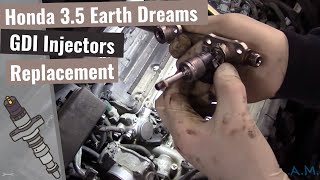
Typical fix: Replace all six fuel injectors as a set with the updated part (16010-RLV-315), which replaces the older part 16010-RLV-305. A new fuel joint pipe (16012-R9P-315) is also required for the job. This should be performed by a dealer if under warranty.
Est. part cost: $400-$800 - Worn or Fouled Spark Plugs 🟡 Medium Probability Spark plugs are a standard wear item. As they age, the gap can widen or they can become fouled, leading to a weak or inconsistent spark. This is a common cause for misfires on any gasoline engine, typically after 60,000-100,000 miles.
How to confirm: Remove and visually inspect the spark plugs. Look for excessive wear on the electrode, carbon fouling, or oil deposits. Check the gap against the manufacturer's specification.
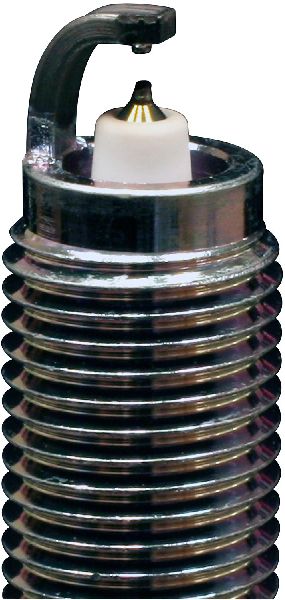
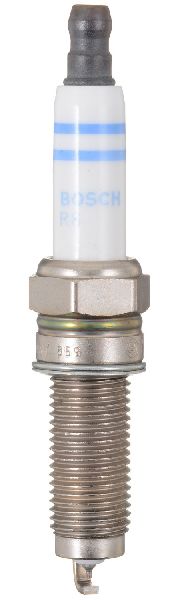
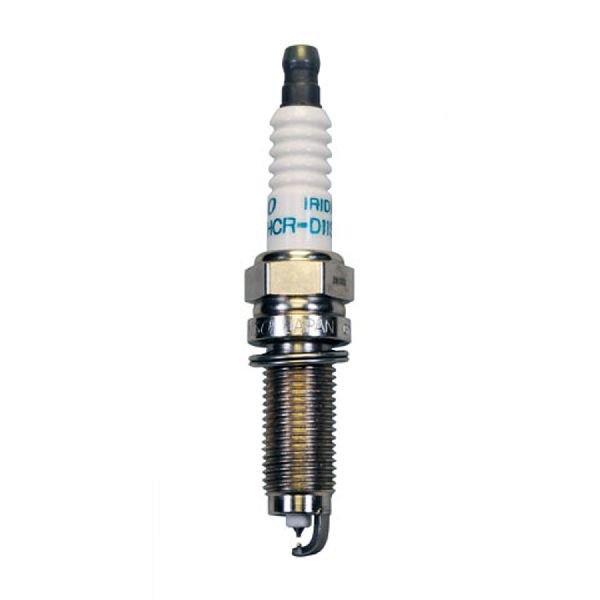
Typical fix: Replace all six spark plugs. It is recommended to use the OEM-specified NGK (ILZKR7B8DG) or Denso (DXE22HR-C11) iridium plugs.
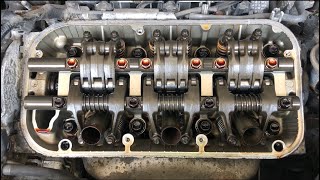
Est. part cost: $80-$150 - Incorrect Valve Lash (Clearance) ⚪ Low Probability Honda J-series engines have adjustable valves that can tighten over time. If the clearance becomes too small, valves may not seat properly, causing a loss of compression and misfires, particularly a cold start misfire. This is a known maintenance item on J-series engines, often recommended around 100,000 miles.
How to confirm: This requires a mechanical valve lash inspection, which involves removing the valve covers and measuring the clearance with a feeler gauge. This is best done by an experienced technician on a cold engine. A tight valve can be suspected if vacuum at idle is low (e.g., 10-12 in. Hg) when cold and slowly increases as the engine warms up.
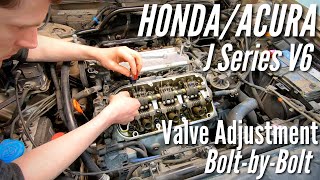
Typical fix: Perform a valve adjustment to bring the clearances back into the manufacturer's specifications. Intake: 0.20-0.24 mm. Exhaust: 0.28-0.32 mm (when cold).
Est. part cost: $20-$40 for valve cover gaskets
Rare But Worth Checking
- Failing Ignition Coil(s): While a single failing coil typically sets a specific cylinder code (e.g., P0301), it's possible for multiple coils to fail or for one to fail intermittently in a way that triggers a P0300 code.
- VCM (Variable Cylinder Management) Issues: On older Honda V6 engines, VCM was notorious for causing oil consumption that fouled the spark plugs on the deactivated cylinders. While the primary P0300 cause on the J35Y6 is injectors, VCM-related oil fouling can still be a contributing factor on higher-mileage examples.
- Large Vacuum Leak: A significant leak in the intake manifold or a vacuum hose can introduce unmetered air, leaning out the air-fuel mixture and causing random misfires across all cylinders.
Diagnosis Steps
- Use an OBD-II scanner to confirm the P0300 code and check for any other stored codes, especially P0301-P0306, P219A/P219B, and P0420/P0430.
- Crucial First Step: Contact a Honda dealership with your VIN. Ask them to check if your vehicle is covered by the warranty extension for fuel injectors (related to TSB 21-010). If it is, this repair should be performed by the dealer at no cost.
- If the vehicle is not covered by warranty, proceed with diagnosis. Start by inspecting the spark plugs. Remove them and check for wear, fouling, or oil deposits. Replace if they are worn or past their service life (typically 100k miles).
- If spark plugs are new or in good condition, investigate for vacuum leaks. Check all vacuum hoses for cracks or loose connections. A smoke test is the most effective way to find a leak.
- For higher mileage vehicles (over 100,000 miles), or if other causes are ruled out, consider a valve lash inspection and adjustment. This is an involved job and may require a professional.
- As a lower probability cause, test the ignition coils. This can be done by swapping a coil from a misfiring cylinder (identified by codes like P0301, etc.) to a known good cylinder and seeing if the misfire code follows the coil.
Parts You'll Likely Need
- Fuel Injector Set (Set of 6)
(OEM #16010-RLV-315)— This is the most common cause of P0300 on this vehicle, as documented by Honda's own service bulletins. The fix requires replacing all six injectors with this updated part number, which supersedes 16010-RLV-305.
Trusted brands: Honda (OEM)
OEM price range: $400-$800
Aftermarket price range: $250-$450 - Iridium Spark Plugs (Set of 6)
(OEM #12290-59B-003)— Worn spark plugs are a common maintenance item and a frequent cause of misfires. They should be inspected and likely replaced if the vehicle is near its 100,000-mile service interval.
Trusted brands: NGK (ILZKR7B8DG), Denso (DXE22HR-C11)
OEM price range: $100-$150
Aftermarket price range: $80-$120 - Fuel Joint Pipe Set
(OEM #16012-R9P-315)— This is a one-time-use part that must be replaced any time the fuel injectors are serviced, as per Honda's service procedure.
Trusted brands: Honda (OEM)
OEM price range: $50-$80
Aftermarket price range: $30-$50
Related Codes That Often Appear With This One
- P0301, P0302, P0303, P0304, P0305, P0306 — These are specific cylinder misfire codes. The PCM will often store these along with P0300 to indicate which cylinders are misfiring most frequently.
- P219A / P219B — These codes indicate an air-fuel ratio imbalance. Their presence is a very strong indicator that the P0300 is being caused by the known fuel injector issue on this vehicle.
- P0420 / P0430 — These codes indicate low catalyst efficiency. They are often a consequence of the injector problem, as unburned fuel from misfires can damage the catalytic converters. The Honda TSBs for the injector issue also list these codes as part of the diagnostic criteria. 🎬 Watch: Understanding air-fuel ratio codes P219A and P219B.
Technical Service Bulletins (TSBs) & Recalls
- 21-010: 'Warranty Extension: MIL Comes On with DTC P0420/P0430, P030x, and/or P219A/B (Without Software Update)'. This is the primary TSB for the fuel injector issue, expanding the warranty to 10 years/150,000 miles and superseding previous bulletins. It covers the 2017-19 Pilot, among other models.
- 20-100: This was the initial warranty extension for the 2016 Pilot, which was later incorporated into the broader 21-010 bulletin. Bulletin #A20-100 notes that the MIL may come on with misfire codes P0300-P0306 and catalyst efficiency codes P0420/P0430.
- A18-025: The original TSB describing the diagnostic procedure for the fuel injector issue. It was later superseded by the warranty extension bulletins. Bulletin #A18-025 specifically identifies the MIL coming on with DTC P0300 and/or P219A/B (air-fuel ratio variation).
- Bulletin #ONLN9403292021: This manufacturer communication confirms that P0300-P0306 misfire codes and air-fuel ratio variation codes P219A/B are frequently associated with catalyst system efficiency thresholds being exceeded.
Platform-Specific Known Issues
- A known issue with fuel injectors becoming clogged due to debris, leading to random misfires. This is covered by Honda TSB 21-010 (superseding A18-025 and 20-100) and subsequent warranty extensions.
- Owner on Piloteers.org for a 2016 Pilot with 84k miles reported P0300, P0305, P0306, and P219B. The dealer replaced all fuel injectors and the fuel pipe under the extended warranty, resolving the issue. (Source: Piloteers.org, Thread Title: 'Check Engine Light - P0300, P0305, P0306, P219B')
- A 2017 Pilot owner on Reddit described a flashing CEL and codes P0300, P0302, P0304, P0306. After confirming the vehicle was covered by the warranty extension, the dealership replaced all six injectors, which fixed the misfire. (Source: Reddit /r/HondaPilot)
Mechanic-Grade Diagnostic Values
- Ignition Coil Primary Winding Resistance — expected: 0.49 - 0.57 Ohms. Failure: A reading outside this range indicates a faulty coil.
- Ignition Coil Secondary Winding Resistance — expected: 9.5 - 11.1 kOhms. Failure: A reading outside this range indicates a faulty coil.
- Valve Lash (Clearance) - Cold Engine — expected: Intake: 0.20-0.24 mm, Exhaust: 0.28-0.32 mm. Failure: Clearance that is too tight (below minimum) can cause compression loss and misfires, especially when the engine is cold.
- Manifold Absolute Pressure (MAP) Sensor Voltage - Key On, Engine Off (KOEO) — expected: ~2.86 V at sea level. Failure: A voltage that is significantly different or doesn't correlate with barometric pressure can indicate a sensor or wiring issue.
- Engine Vacuum at Idle (Cold) — expected: Typically ~18 in. Hg. Failure: A low reading (e.g., 10-12 in. Hg) that slowly climbs as the engine warms up is a classic symptom of overly tight valve clearances.
Hidden / Shadow Codes Worth Checking
- Mode $06 Misfire Data: Even if only a P0300 is set, the ECU tracks misfire events for each individual cylinder. This data is accessible via Mode $06 on a capable OBD-II scanner. It can show, for example, that Cylinder 4 has 66 misfire counts while others have zero, pointing to the root cause without a specific P0304 code being stored. (see via Use an advanced OBD-II scan tool that supports Mode $06 data display. Navigate to the misfire monitor test IDs for the current and/or last 10 driving cycles.)
Scan Tool Commands That Help
- Honda Diagnostic System (HDS) or compatible bidirectional scanner: Cylinder AF Test — This is an active test to check the air-fuel ratio contribution of each cylinder. A failure can help confirm a fuel delivery issue (like a bad injector) on a specific cylinder. Note: This test may fail to complete if the engine is at full operating temperature and the cooling fans are on.
- Honda Diagnostic System (HDS) or compatible bidirectional scanner: CKP Pattern Clear/Learn — After certain repairs, or to rule out 'ghost misfires' caused by signal interference, the crankshaft position (CKP) sensor pattern can be cleared and relearned by the PCM. This resets the baseline profile the PCM uses to detect misfires.
- Launch X431, Autel, or other professional bidirectional scanner: Fuel Pump Activation — Allows the technician to command the fuel pump on without starting the engine. This is useful for testing fuel pressure and checking for leaks in the low-pressure side of the system.
- Honda Diagnostic System (HDS) or compatible bidirectional scanner: Injector Cut-out Test — Allows the technician to disable one injector at a time while the engine is running. If disabling an injector causes no change in engine RPM or smoothness, that cylinder was not contributing, confirming a problem with that specific cylinder's fuel, spark, or compression.
Wiring & Ground Locations
- Rocker Arm Oil Pressure Switch (Front Bank) — Located on the front of the engine, near the radiator, on the rocker arm oil control solenoid.. A faulty oil pressure switch related to the VCM or VTEC system can cause erratic engine behavior. While not a primary cause of P0300, if the switch is failing it can contribute to symptoms that mimic a misfire.
- Rocker Arm Oil Pressure Switch (Rear Bank) — Located on the rear of the engine, near the firewall, on the rocker arm oil control solenoid.. Similar to the front switch, a failure here can impact VCM/VTEC operation. Given its difficult-to-access location, it is often overlooked during diagnosis.
Real Owner Repair Stories
- YouTube user 'ADVANCED LEVEL AUTO' (2005 Honda Pilot 3.5L (J35 engine, similar valve design)) — P0300, misfires on all cylinders at idle only. Low vacuum on cold start.
❌ Tried (didn't work) Initial diagnosis pointed towards a potential vacuum leak or fuel issue.
✅ What actually fixed it A valve adjustment. The valve lash on cylinders 1 and 2 was found to be 0.002 inches, far too tight. This caused exhaust gases to be pulled back into the cylinder, leading to random misfires at idle. Adjusting the valves to the correct specification resolved the P0300 code. - NHTSA ODI #11586475 — An owner reported that three of the six fuel injectors failed, triggering codes P0300, P0304, P0306, P0430, and P219A. The failure was severe enough that the vehicle required a tow truck to reach a service center.
"I Checked Everything" — The Actual Cause
- In cases where a smoke test reveals no vacuum leaks and fuel/spark systems check out, the root cause is often mechanical. For the J35Y6, this frequently points back to either the known fuel injector issue (which won't be found with a smoke test) or the need for a valve lash adjustment, which causes low compression at idle and mimics vacuum leak symptoms.
When the Usual Fixes Don't Work
- While the overwhelming majority of P0300 codes on the 2016-2022 Pilot are due to the fuel injector TSB, it is not the only cause. A significant number of cases, particularly on vehicles over 100,000 miles, have been resolved with a valve lash adjustment. This is especially true if the misfire is most prominent at idle on a cold engine and improves as the engine warms. Technicians and owners should not automatically assume the injectors are the sole cause without performing a full diagnosis, especially if the vehicle is outside the injector warranty period.
OEM Part Supersession History
16010-RLV-305→16010-RLV-315— Updated design to mitigate internal wear and clogging issues that caused the original P0300 problem.
Heads up: The kit 06160-RLV-305, which includes the updated injectors, also contains the required one-time-use fuel joint pipe.16790-RLV-305→06161-RLV-305, 16790-RLV-A01— Part number revision for the high-pressure fuel pump assembly.
Heads up: While not the primary cause of P0300, debris from a failing high-pressure pump is the suspected source of the injector contamination. If replacing the pump, ensure the correct, most current part number is used.
Model Year Variations Within This Range
- 2019-2022: The 2019 model year received a mid-cycle refresh. While the J35Y6 engine remained, the 9-speed automatic transmission was revised, and the Honda Sensing safety suite became standard on all trims. TSB A18-025 notes a different fuel injector set part number (16010-RLV-306) specifically for the 2019 Pilot Touring and Elite trims, while other trims use the 16010-RLV-315 set.
- 2016-2018: These pre-refresh models had Honda Sensing available as an option on EX and above trims, not as standard. The 9-speed transmission was only on Touring and Elite trims, with a 6-speed on lower trims. These differences do not directly affect the P0300 cause but are relevant for vehicle identification.
Diagnostic Flowchart
Other Known Issues on This Vehicle
Issues unrelated to this code that are worth knowing about as an owner of this generation:
- 6-Speed and 9-Speed Automatic Transmission Problems (Judder, Shudder, Hard Shifts) 🟠 Medium — Common issue, particularly on 2016-2020 models. Judder is often felt between 20-60 mph. The 9-speed can have harsh or delayed shifts. (Ref: TSB 23-078 addresses torque converter judder on 6-speed models, often fixed with a triple fluid flush and software update. TSBs also exist for software updates on the 9-speed.)
- Infotainment System Failures (Popping, Cracking, Black Screen) 🟡 Low — Widespread issue affecting many 2016-2022 models, leading to a class-action lawsuit. Symptoms include speaker popping, screen going black, and system freezing. (Ref: Honda issued recalls and warranty extensions to fix issues with the MOST bus network connectors, which were the root cause for many of these symptoms.)
- Auto Idle-Stop Failure to Restart 🟠 Medium — A significant number of owners report the engine fails to restart after an auto-stop event, creating a safety hazard in traffic. This has led to NHTSA investigations and a class-action lawsuit. (Ref: Honda has acknowledged the problem (e.g., Engineering Search Message ID A10240E for later models) but a single definitive fix has been elusive. Often misdiagnosed as a bad battery.)
- Connecting Rod Bearing Failure (Recall) 🔴 High — Affects a specific range of 2016, 2018, and 2019 models. An improper crankshaft manufacturing process can lead to premature bearing wear and catastrophic engine failure. (Ref: NHTSA Recall 23V-751. Honda dealers will inspect and, if necessary, replace the engine assembly free of charge.)
- Fuel Pump Failure (Recall) 🔴 High — Part of a massive Honda/Acura recall, the in-tank fuel pump module may fail, causing the engine to stall while driving. (Ref: NHTSA Recall 24V-437 (expands on 21V-215 and 20V-314). Dealers will replace the fuel pump module.)
Used vs. New Parts: Buying Guide for This Vehicle
When a used part is the smart pick: For this specific P0300 issue, using used parts is generally not recommended for the primary failure components. However, used parts can be a cost-effective diagnostic tool. A known-good used ignition coil from a salvage yard can be swapped to confirm if a coil is the problem before buying a new one.
Donor-vehicle mileage cap: roughly under 80000 miles for the part to have meaningful remaining life.
What to inspect on the donor part:
- For an ignition coil, check for cracks in the housing or corrosion on the electrical connector.
- Ensure the donor vehicle was not in a front-end collision that could have damaged engine components.
- Look for a vehicle with a documented service history if possible, though this is rare for salvage parts.
OEM-only on this vehicle (don't cheap out):
- Fuel Injectors: The entire problem stems from a faulty original part design. Only the new, superseded OEM part (16010-RLV-315) should be used. Installing used or old-stock injectors will lead to a repeat failure.
- Fuel Joint Pipe: This is a one-time-use, high-pressure component. It must be purchased new (OEM) for safety and to prevent leaks.
Aftermarket brands forum-validated for this vehicle:
- Spark Plugs: NGK (ILZKR7B8DG) and Denso (DXE22HR-C11) are the original equipment manufacturers and are the best choice.
- Ignition Coils: Denso, NGK, and Delphi are reputable OEM suppliers and provide reliable alternatives to the dealer part.
Brands owners have reported issues with on this vehicle:
- No-name or unbranded fuel injectors and ignition coils from online marketplaces. For these critical components, the risk of premature failure and potential engine damage is too high.
Real Owner Stories
Aggregated from forums and TSBs cited above. Mileages and costs reflect what owners reported in those sources.
2016 Honda Pilot J35Y6 — 84000 miles
Symptoms: Check Engine Light with codes P0300, P0305, P0306, and P219B.
What fixed it: The dealer replaced all fuel injectors and the fuel pipe under the extended warranty.
Source hint: Piloteers.org - 'Check Engine Light - P0300, P0305, P0306, P219B'
2017 Honda Pilot J35Y6
Symptoms: Flashing Check Engine Light and codes P0300, P0302, P0304, P0306.
What fixed it: The dealership replaced all six injectors after confirming coverage under the warranty extension.
Source hint: Reddit /r/HondaPilot
2019 Honda Pilot
Symptoms: Failure of three out of six fuel injectors accompanied by codes P0300, P0304, P0306, P0430, and P219A.
What fixed it: The vehicle required towing to a service center for repair after the multiple injector failures. (NHTSA ODI #11586475)
Related OBD-II Codes
Frequently Asked Questions
Is there a warranty extension for the fuel injector issues on my 2016-2022 Honda Pilot?
Which specific spark plugs should I use for my J35Y6 engine to prevent misfires?
My Pilot is shaking at idle and showing P0300; could this be the fuel injectors?
What are the specific valve clearance specifications for a J-series engine adjustment?
I have a P0300 code along with P219A. What does this combination usually mean for a Honda?
Can a transmission issue cause the 'judder' I feel, or is it always an engine misfire?
Helpful Videos
Used OEM Parts in Stock

New Aftermarket Parts Available



The information in this article is provided for general reference and educational purposes only. Vehicle specifications, procedures, and part compatibility can vary by production date, trim level, and region. Always consult your vehicle's factory service manual and verify part numbers before purchasing or performing repairs. Safety-critical components such as airbags, seat belts, and braking systems should be installed by a qualified professional.
- Honda Pilot:
- 🎬 Helpful Videos
- 🛍️ Shop This Part
- What's Unique About the 2016-2022 Honda Pilot
- Symptoms You May Notice
- Most Likely Causes
- Rare But Worth Checking
- Diagnosis Steps
- Parts You'll Likely Need
- Related Codes That Often Appear With This One
- Technical Service Bulletins (TSBs) & Recalls
- Platform-Specific Known Issues
- Mechanic-Grade Diagnostic Values
- Hidden / Shadow Codes Worth Checking
- Scan Tool Commands That Help
- Wiring & Ground Locations
- Real Owner Repair Stories
- "I Checked Everything" — The Actual Cause
- When the Usual Fixes Don't Work
- OEM Part Supersession History
- Model Year Variations Within This Range
- Diagnostic Flowchart
- Other Known Issues on This Vehicle
- Used vs. New Parts: Buying Guide for This Vehicle
- Real Owner Stories
- 2016 Honda Pilot J35Y6 — 84000 miles
- 2017 Honda Pilot J35Y6
- 2019 Honda Pilot
- Related OBD-II Codes
- Frequently Asked Questions
- 🎟️ Get 5% Off