

P0300 on 2014-2018 Ford Fusion Energi: Random Misfire Causes & Fixes
P0300 on a Fusion Energi indicates random cylinder misfires. While common causes like spark plugs or ignition coils are possible, a significant and well-documented issue for this platform is coolant intrusion into the cylinders due to a flaw in the engine block design. This is a serious problem that can lead to complete engine failure and often requires a new engine block or long block assembly to fix.
- On a 2014-2018 Fusion Energi, P0300 is a serious code that should not be ignored.
- The most critical diagnostic step is to check for coolant loss and rule out the known engine block flaw (coolant intrusion) before spending money on other parts.
- Symptoms like white exhaust smoke on startup or a mysteriously low coolant level are major red flags pointing to the coolant intrusion issue.
- While spark plugs and coils can cause P0300, the high probability of the more severe engine issue makes a professional diagnosis highly recommended.
- Ignoring a flashing check engine light can lead to expensive catalytic converter damage on top of the existing engine problem.
What's Unique About the 2014-2018 Ford Fusion Energi
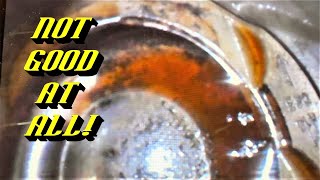
While any car can get a P0300 code from basic issues like bad spark plugs, the 2014-2018 Ford Fusion with the 2.0L engine is subject to a serious, manufacturer-acknowledged design flaw. Technical Service Bulletins (TSBs), including 19-2346, 🎬 Watch: This TSB breakdown explains the major engine design flaw. confirm that coolant can leak directly into the cylinders. This 'coolant intrusion' is a primary cause of misfires on this specific vehicle and is far more severe than typical tune-up-related faults. The underlying issue is reportedly a flaw in the engine block casting, creating a weak point between the coolant passages and the cylinder walls. Owners should be aware that a P0300 code on this car warrants an immediate check for coolant loss, as the ultimate fix is often a major engine repair.
Diagnostic Flowchart
Tap your situation to follow the diagnostic path that matches what you're seeing on this vehicle.
Symptoms You May Notice
- Rough or vibrating idle
- Engine hesitation or stumbling during acceleration
- Reduced engine power
- Flashing Check Engine Light
- Noticeable drop in fuel economy
- White smoke from the exhaust, especially on startup
- Low coolant level in the reservoir without visible external leaks
- Sweet smell from the exhaust
- Replacing only spark plugs and ignition coils without checking for coolant intrusion. On this specific vehicle, it's crucial to rule out the engine block flaw before assuming it's a simple tune-up issue. Many owners report replacing these parts only for the misfire to return.
Most Likely Causes
- Coolant Intrusion into Cylinders 🔴 High Probability A known design flaw in the 2.0L engine block can cause cracks to form between cooling passages and cylinder walls, allowing coolant to leak directly into the combustion chamber. This is documented in Ford TSBs like 19-2346, 22-2229, and 22-2322. The issue is with the open-deck design of the block which had slits between the cylinders; this was revised in later model years (around mid-2019) to correct the flaw.
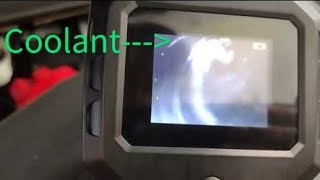
How to confirm: Perform a coolant system pressure test while observing the cylinders with a borescope for moisture. Other signs include a consistently low coolant tank, white exhaust smoke, and a sweet smell from the exhaust. 🎬 See a real-world example of coolant intrusion on a Fusion. A chemical test can also detect exhaust gases in the coolant. Pistons may appear 'steam cleaned' from the coolant burning off deposits.
Typical fix: The official Ford procedure is to replace the long block engine assembly with a revised part. This is a major and expensive repair. Some owners have sourced used engines from 2020 or newer models which have the revised block design.
Est. part cost: $3000-$6000+ - Worn or Fouled Spark Plugs 🟡 Medium Probability Spark plugs are a regular maintenance item. If coolant intrusion is occurring, it will quickly foul the spark plugs in the affected cylinders, causing misfires. It's important to use high-quality OEM or equivalent plugs.
How to confirm: Remove and inspect the spark plugs. Look for worn electrodes, carbon fouling, or wetness (which could indicate oil or coolant). A plug that appears unusually clean compared to others can be a sign of coolant intrusion steam cleaning it.
Typical fix: Replace all four spark plugs. It is recommended to use OEM Motorcraft Iridium plugs, such as part number SP-579 (service part number CYFS-12Y-PCTX). Always verify the part number for your specific vehicle.
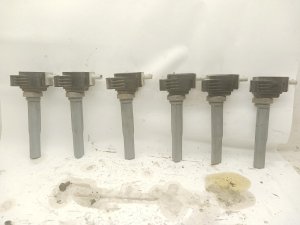
Est. part cost: $40-$80 - Faulty Ignition Coils 🟡 Medium Probability
How to confirm: With the engine running, use a scan tool to observe misfire counts per cylinder (Mode $06 data). You can also swap the suspected coil with one from a known good cylinder to see if the misfire follows the coil. Resistance can be checked with a multimeter.
Typical fix: Replace the failing ignition coil(s). It is often recommended to replace them as a set if they are original and have high mileage.
Est. part cost: $50-$100 per coil - Vacuum Leak ⚪ Low Probability
How to confirm: Visually inspect all vacuum hoses for cracks or loose connections. A smoke test is the most effective way to find a leak in the intake system, including from a bad PCV valve or intake manifold gasket.
Typical fix: Replace the cracked hose, faulty gasket, or leaking component.
Est. part cost: $10-$200 - Clogged or Faulty Fuel Injectors ⚪ Low Probability
How to confirm: A professional fuel system test can measure injector flow and spray patterns. A scan tool can also monitor fuel trims for indications of a lean or rich condition affecting multiple cylinders.
Typical fix: Clean the fuel injectors professionally or replace the faulty ones.
Est. part cost: $100-$300 per injector
Rare But Worth Checking
- Low Fuel Pressure: A failing fuel pump can starve the engine for fuel, causing random misfires under load. A fuel pressure test is required for diagnosis.
- Faulty Crankshaft Position Sensor: While rare, a failing crankshaft position sensor can send erratic signals to the PCM, leading to incorrect timing and misfire detection.
- Clogged Catalytic Converter: A restricted exhaust can cause excessive backpressure, leading to misfires. This is often a consequence of long-term, unaddressed misfires where unburnt fuel and coolant contaminate the converter.
Diagnosis Steps
- Check for other stored DTCs. Codes like P0301-P0304 can help narrow the search, and codes listed in the TSBs (P0316, P0217, etc.) strongly suggest coolant intrusion.
- Check coolant level. If it is low, and there are no visible external leaks, suspect coolant intrusion.
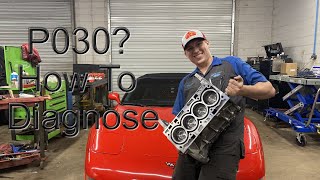
- Perform a coolant system pressure test. Pressurize the system to the specification on the cap and let it sit for several hours or overnight. Watch for a drop in pressure. 🎬 Watch: How to diagnose misfires and coolant loss step-by-step.
- With the pressure test still active (or after it has sat), remove the spark plugs and use a borescope to inspect the inside of each cylinder for green, orange, or yellow liquid (coolant). Look for 'steam cleaned' pistons, which appear unusually clean compared to others.
- If no coolant is found, inspect the spark plugs for wear, damage, or fouling. A fouled or wet plug can confirm the misfiring cylinder. Replace if necessary.
- Inspect ignition coils for damage. Test by swapping coils between cylinders to see if a specific misfire code (e.g., P0301) follows the coil.
- If no ignition or coolant issues are found, perform a smoke test to check for vacuum leaks.
- If all else fails, professional diagnosis of the fuel system (pump pressure, injector function) or checking for a clogged catalytic converter may be required.
Parts You'll Likely Need
- Engine Long Block Assembly
(OEM #DS7Z-6006-U)— This is the official Ford-recommended fix for the coolant intrusion issue documented in TSBs like 19-2346 and 22-2229. It replaces the entire core engine assembly with the flawed block.
Trusted brands: Motorcraft (OEM)
OEM price range: $4000-$7000
Aftermarket price range: $3000-$5000 - Spark Plugs
(OEM #SP-579 (CYFS-12Y-PCTX))— A common maintenance item and a frequent cause of misfires. They will be fouled by coolant if intrusion is present and should be replaced as a first diagnostic step if coolant loss is not evident.
Trusted brands: Motorcraft, NGK, Denso
OEM price range: $60-$100
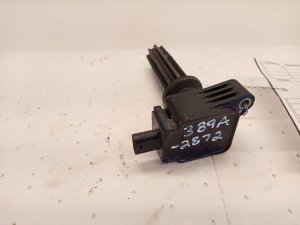
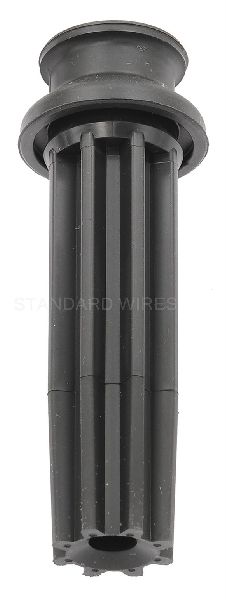
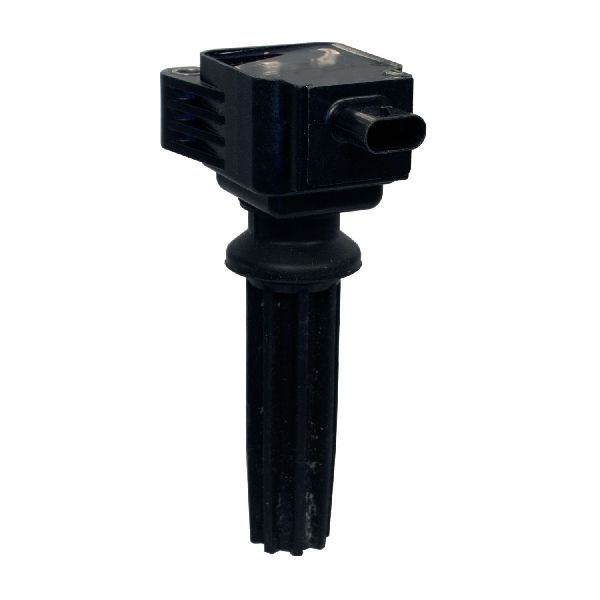
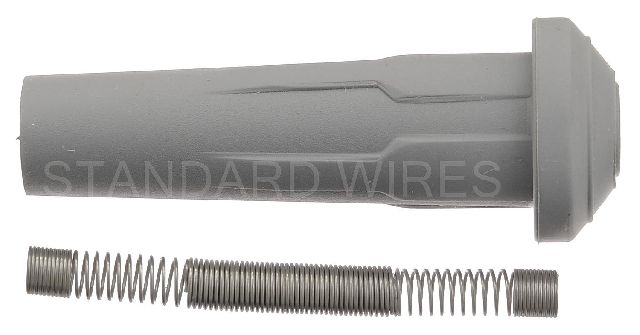
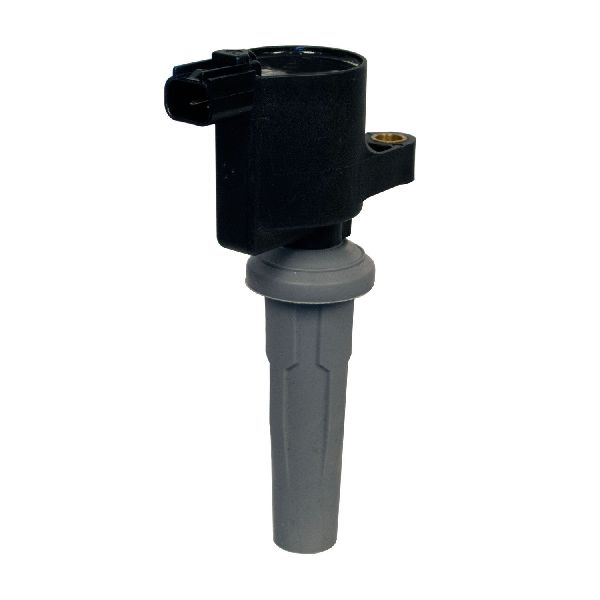
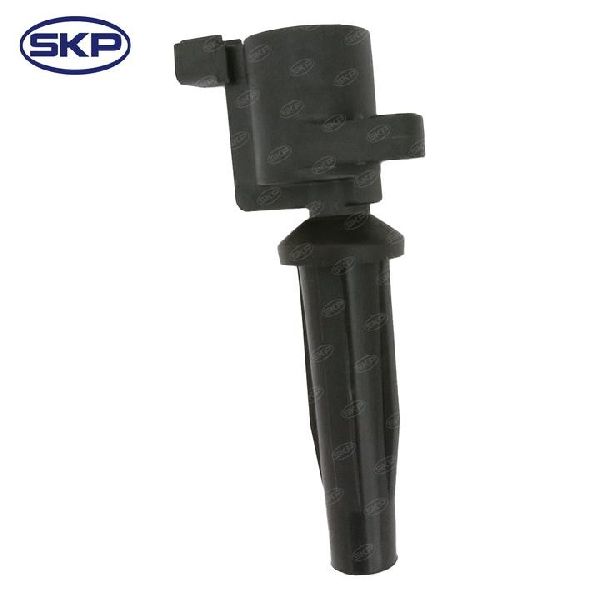
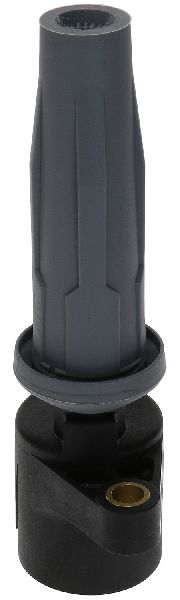
Aftermarket price range: $40-$80 - Ignition Coil
(OEM #DS7Z-12029-B)— Ignition coils are a common failure point that can cause misfires. It's wise to inspect them when changing plugs.
Trusted brands: Motorcraft, Delphi, NGK
OEM price range: $60-$120 per coil
Aftermarket price range: $40-$80 per coil
Related Codes That Often Appear With This One
- P0301, P0302, P0303, P0304 — These codes indicate misfires in specific cylinders. They often accompany P0300 as the problem worsens or becomes more localized. Coolant intrusion often starts in one cylinder before affecting others.
- P0316 — Indicates a misfire was detected within the first 1,000 engine revolutions (on startup). This is commonly seen with the coolant intrusion issue as coolant that has pooled in the cylinder overnight causes an immediate misfire.
- P0217, P1285, P1299 — These codes, related to engine over-temperature conditions, are also listed in the TSBs for coolant intrusion, indicating the severity of the cooling system failure.
Technical Service Bulletins (TSBs) & Recalls
- TSB 22-2322: '...may exhibit low coolant level, white exhaust smoke and/or runs rough condition... with only diagnostic trouble codes (DTCs) P0300, P0301-P0304, P0316, P0217, P1285 and/or P1299... This may be due to coolant intrusion into the cylinder.'
- TSB 22-2229: '...may exhibit a low coolant level, white exhaust smoke and/or a runs rough condition... Diagnostic trouble codes (DTCs) may include P0300, P0301-P0304, P0316, P0217, P1285 and/or P1299... This may be due to coolant intrusion into the cylinder. To correct the condition, follow the Service Procedure to replace the long block engine assembly.'
Platform-Specific Known Issues
- TSB 22-2229 & TSB 22-2322: These bulletins from Ford directly address the issue of coolant intrusion for the 2.0L and 1.5L engines used in the Fusion lineup. They state that vehicles may exhibit a rough running condition, white exhaust smoke, and store DTCs including P0300. The cause is identified as 'coolant intrusion into the cylinder,' and the prescribed fix is a replacement of the engine long block or short block, depending on the engine.
Mechanic-Grade Diagnostic Values
- High Pressure Fuel Rail Pressure (KOER - Key On Engine Running) — expected: Desired and actual pressure should be closely matched. At idle, this may be around 400-500 PSI.. Failure: A significant deviation between desired and actual pressure. For example, a desired pressure of 416.1 PSI with an actual reading of only 81.1 PSI indicates a problem with the high-pressure fuel system.
- Low Pressure Fuel System (KOER - Key On Engine Running) — expected: Approximately 79-80 PSI.. Failure: Pressure significantly below the desired value, which could indicate a weak in-tank fuel pump.
Hidden / Shadow Codes Worth Checking
- Mode $06, Test ID $A2-$AB: This is not a DTC, but a diagnostic data parameter accessible via a capable scan tool. Test IDs $A2 through $AB correspond to misfire counts for each cylinder (Cylinder 1 through Cylinder 10, though the Fusion only uses 4). Viewing this data can reveal which cylinder(s) are misfiring even if a specific P030x code has not yet been set. (see via A professional scan tool or advanced DIY software like FORScan connected to the vehicle's OBD-II port. Navigate to the Mode $06 test results.)
Scan Tool Commands That Help
- Ford IDS, FORScan, Snap-on, Launch X431: Misfire Monitor Neutral Profile Correction — This procedure must be performed after replacing the PCM, crankshaft position sensor, or after any internal engine repairs (like a long block replacement). The PCM uses this profile to accurately detect misfires. Failure to perform this relearn can result in false misfire codes or the misfire monitor not running at all. The test involves revving the engine above 3,500 RPM in Park/Neutral until the on-screen counter reaches zero.
- Ford IDS, FORScan: Power Balance Test — To identify a misfiring cylinder in real-time. This test graphically displays the RPM contribution of each cylinder, allowing a technician to see which one is underperforming. It's a highly effective way to confirm a misfire on a specific cylinder when only a general P0300 code is present.
- Ford IDS: Relative Compression Test — As a quick, non-invasive way to check for mechanical compression issues. The test measures the electrical current drawn by the starter motor as it cranks the engine, inferring compression from the variations for each cylinder. A cylinder with low compression will show a significant variation from the others. This can help diagnose internal engine damage without a manual compression test.
Wiring & Ground Locations
- C175B — This is a main connector at the Powertrain Control Module (PCM).. This connector houses the circuits for critical components like the starter motor control, fuel pump command, and various sensor inputs. While not a common failure point, any corrosion or damage to pins related to the ignition system or fuel injectors could theoretically cause random misfires.
Real Owner Repair Stories
- Reddit user in /r/fordfusion (2017 Ford Fusion SE 2.0L EcoBoost) — Coolant intrusion leading to engine failure.
❌ Tried (didn't work) Not specified, but the issue was diagnosed as the known coolant intrusion flaw.
✅ What actually fixed it The engine long block was replaced under a 60/40 cost-share with Ford after negotiation. The replacement part number was J2GZ6006E, which is noted as the newest part revision designed to fix the flaw.
OEM Part Supersession History
DS7Z-6006-C→DS7Z-6006-U— This is the part number for the 2.0L Hybrid long block engine assembly. The supersession likely reflects updates or changes in the remanufacturing process or included components.Engine blocks used in 2017-2019 models→Revised engine block design (used in long block assembly J2GZ6006E for non-hybrid)— The original engine block design featured slits in the deck between cylinders, which was prone to cracking and causing coolant intrusion. The revised block, introduced mid-2019, uses angled drilled holes instead of slits to resolve this structural weakness.
Heads up: Installing a long block with the old block design will likely lead to a repeat failure.
Model Year Variations Within This Range
- 2017-2018: The 2017 model year was a significant refresh for the Fusion, featuring updated front and rear fascias, new infotainment (SYNC 3), and revised trim structures. However, the 2.0L Atkinson cycle hybrid powertrain remained fundamentally the same between 2017 and 2018. The engine block flaw is present in all models within the 2014-2018 range.
Helpful Videos

Used OEM Parts in Stock



New Aftermarket Parts Available

The information in this article is provided for general reference and educational purposes only. Vehicle specifications, procedures, and part compatibility can vary by production date, trim level, and region. Always consult your vehicle's factory service manual and verify part numbers before purchasing or performing repairs. Safety-critical components such as airbags, seat belts, and braking systems should be installed by a qualified professional.
- Ford FUSION ENERGI:
- 🎬 Helpful Videos
- 🛍️ Shop This Part
- What's Unique About the 2014-2018 Ford Fusion Energi
- Diagnostic Flowchart
- Symptoms You May Notice
- Most Likely Causes
- Rare But Worth Checking
- Diagnosis Steps
- Parts You'll Likely Need
- Related Codes That Often Appear With This One
- Technical Service Bulletins (TSBs) & Recalls
- Platform-Specific Known Issues
- Mechanic-Grade Diagnostic Values
- Hidden / Shadow Codes Worth Checking
- Scan Tool Commands That Help
- Wiring & Ground Locations
- Real Owner Repair Stories
- OEM Part Supersession History
- Model Year Variations Within This Range
- 🎟️ Get 5% Off