

P0300 on 2011-2023 Dodge Durango 5.7L Hemi: Random Misfire Causes and Fixes
P0300 on a 5.7L Hemi Durango is most often caused by worn spark plugs or ignition coils. However, if a ticking noise is present, it strongly suggests a failed MDS lifter and damaged camshaft, a common and very expensive engine repair. Ignoring the tick and only replacing ignition components is a frequent misdiagnosis.
- A P0300 code on a 5.7L Hemi should be taken seriously. If you hear a ticking noise, stop driving if possible and prepare for a potential major engine repair.
- Always start diagnosis with the basics: check for codes and listen for noises. If no tick is present, inspect the 16 spark plugs and test the ignition coils.
- A flashing check engine light is a critical warning. Driving with a severe misfire can destroy your catalytic converters, adding thousands to the repair bill.
- Due to the known MDS lifter issue, a P0300 code that isn't fixed by new plugs or coils warrants an inspection of the camshaft and lifters sooner rather than later.
What's Unique About the 2011-2023 Dodge Durango
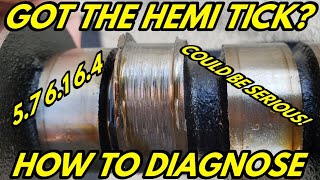
For the 5.7L Hemi V8 in the Durango, a P0300 code must be taken seriously. While standard tune-up parts are common culprits, this engine is notorious for a specific mechanical failure. The Multi-Displacement System (MDS) uses special hydraulic lifters that are a known weak point. The needle bearings inside the lifter's roller can fail, causing the roller to seize and skid on the camshaft lobe. This grinds away the camshaft, reduces valve lift, and causes a misfire. A P0300 code, especially when accompanied by a persistent engine ticking noise (the 'Hemi Tick'), is a classic symptom of a collapsed MDS lifter destroying the camshaft, a major and costly repair.
Symptoms You May Notice
- Flashing or solid Check Engine Light
- Rough or shaky idle
- Engine hesitation or stumbling during acceleration
- Audible engine 'ticking' or 'tapping' noise that increases with RPM, which strongly points to lifter/camshaft failure.
- Reduced engine power
- Poor fuel economy
- Noticeable smell of unburned fuel from the exhaust
- Popping or sputtering sounds from the exhaust.
- Replacing only spark plugs and coils when a mechanical ticking noise is present. The noise is a key indicator of the more serious camshaft/lifter failure, and ignoring it will not solve the P0300 code.
- Confusing the 'Hemi Tick' from a failed lifter with the tick from a broken exhaust manifold bolt. An exhaust leak tick is usually louder on cold starts and may diminish as the engine warms up, while a lifter tick is more consistent and rhythmic with engine RPM.
Most Likely Causes
- Worn or Faulty Spark Plugs 🔴 High Probability The 5.7L Hemi engine uses two spark plugs per cylinder, for a total of 16. This increases the likelihood of a failure and the cost of replacement. They are a regular maintenance item with a recommended replacement interval of 30,000 miles for standard copper plugs or longer for iridium/platinum.
How to confirm: Inspect the spark plugs for wear, fouling, carbon tracking, or an incorrect gap. Since they are a routine maintenance item, if they haven't been changed according to the service interval, they are a primary suspect.
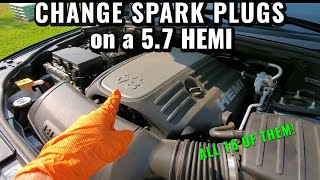
Typical fix: Replace all 16 spark plugs. It is 🎬 See how to change all 16 spark plugs on a Hemi critical to use the correct OEM-specified plugs, typically Champion or NGK, to ensure proper performance.
Est. part cost: $80-$200 - Failed MDS Lifter and/or Damaged Camshaft 🔴 High Probability This is a widely documented failure on 5.7L Hemi engines with the Multi-Displacement System (MDS). The roller on the lifter can seize due to failure of its needle bearings, causing it to grind against the camshaft lobe, leading to a misfire and sending metal debris through the engine. The issue is often preceded by a distinct ticking noise. Manufacturer Bulletin #9100143 notes that for certain engines, specific intake camshaft versions (PN 05047913AA or AB) may need replacement when diagnosing a P0300.
How to confirm: An audible, rhythmic ticking or tapping noise that increases with engine speed is the primary symptom. A definitive diagnosis requires removing the valve covers and intake manifold to visually inspect the camshaft lobes for scoring or flattening and the lifters for seized rollers.
Typical fix: This is a major engine repair that involves replacing the camshaft, all lifters, and often the oil pump to ensure metal shavings are removed. Many owners opt to install an MDS-delete kit with non-MDS lifters to prevent recurrence. This requires 🎬 Watch: Full walkthrough of Hemi camshaft and MDS lifter replacement head gaskets, intake gaskets, and other related components.
Est. part cost: $800-$2000 - Faulty Ignition Coil(s) 🟡 Medium Probability Coils are a common wear item that degrades from heat over time. With eight individual coil-on-plug units, the chance of one or more failing over the vehicle's lifespan is significant.
How to confirm: Use a scan tool with live data to identify which cylinders are misfiring. Swap the ignition coil from a misfiring cylinder with a coil from a cylinder that is not misfiring. Clear the codes and run the engine. If the misfire code follows the coil (e.g., P0302 becomes P0304 after swapping coils from cylinders 2 and 4), the coil is bad.
Typical fix: Replace the faulty ignition coil(s). It is often recommended to replace them in sets or all at once on higher mileage vehicles for preventative maintenance.
Est. part cost: $40-$90 per coil - Broken Exhaust Manifold Bolts 🟡 Medium Probability The rear-most bolts on the Hemi exhaust manifolds are prone to breaking due to thermal stress. This causes an exhaust leak.
How to confirm: Listen for a ticking noise that is loudest on a cold start and may quiet down as the engine warms and the metal expands. Visually inspect the manifold bolts, especially those closest to the firewall, for absence or breakage. Soot marks around the manifold-to-head mating surface are also an indicator.
Typical fix: The broken bolt must be extracted and replaced. This often requires removing the manifold and can be difficult if the bolt is seized. Replace with new bolts and a new manifold gasket.
Est. part cost: $20-$100 for bolts and gaskets - Vacuum Leak ⚪ Low Probability Intake manifold gaskets can degrade over time, causing unmetered air to enter the engine and disrupt the air-fuel ratio, leading to random misfires.
How to confirm: A smoke test is the most effective method. This involves forcing smoke into the intake system and watching for where it escapes. Pay close attention to the intake manifold gaskets and PCV hose.
Typical fix: Replace the leaking gasket or hose. The most common source is the intake manifold gasket.
Est. part cost: $50-$150
Rare But Worth Checking
- Clogged Fuel Injectors: If misfires seem to happen on one bank more than another, or if the vehicle has been sitting for a long time, dirty injectors could be the cause.
- Faulty Crankshaft Position Sensor: A failing crankshaft position sensor can send erratic signals to the PCM, causing random misfires and sometimes stalling. This may also be accompanied by a P0335 code.
- Restricted Catalytic Converter: While misfires can damage a catalytic converter, a clogged converter can also cause misfires by creating excessive exhaust backpressure, leading to a loss of power.
- Faulty Upstream O2 Sensors: Failing oxygen sensors can send incorrect data to the PCM, causing improper fuel adjustments that lead to misfires. This is often accompanied by lean or rich codes (P0171, P0174).
Diagnosis Steps
- Read all stored fault codes with an OBD-II scanner. Note any codes accompanying P0300, especially cylinder-specific (P030x) or MDS-related (P34xx) codes. Manufacturer Bulletin #18-044-26 notes that P0300 may also be accompanied by P00C6-00 (Fuel Rail Pressure Too Low) or oil level high warnings.
- Listen carefully for an engine ticking or tapping noise at idle and with slight throttle application. A rhythmic tick that increases with engine speed is a strong indicator of lifter/camshaft failure.
- If no ticking is present, start with basic ignition maintenance. Inspect all 16 spark plugs for wear, damage, or fouling. Check service records and replace if they are over 30,000 miles old.
- If specific cylinder misfire codes (P0301-P0308) are present, swap the ignition coil from the misfiring cylinder to a good cylinder. Clear codes and see if the misfire follows the coil.
- Inspect for an exhaust leak tick, especially when the engine is cold. Visually check the exhaust manifold bolts for breakage, particularly near the firewall.
- Check for vacuum leaks. Visually inspect all hoses connected to the intake manifold. For hard-to-find leaks, perform a smoke test.
- Test fuel pressure at the fuel rail to rule out a weak fuel pump or clogged filter. Pressure should be around 58 ± 5 PSI.
- If a ticking noise is present or ignition/fuel tests are inconclusive, proceed to mechanical inspection. This requires removing the valve covers and intake manifold to visually inspect the camshaft lobes and lifters for scoring, wear, or damage. TSB Bulletin #09-012-16 suggests that P0300 may also be found alongside P000A or P000C, indicating the camshaft is slow to respond.
- A compression test can help identify a cylinder with low compression, which could be caused by a valve not opening due to a flattened cam lobe.
Parts You'll Likely Need
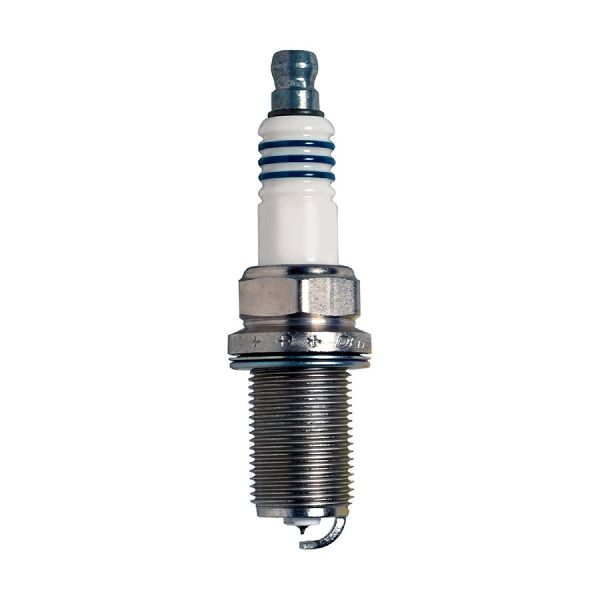
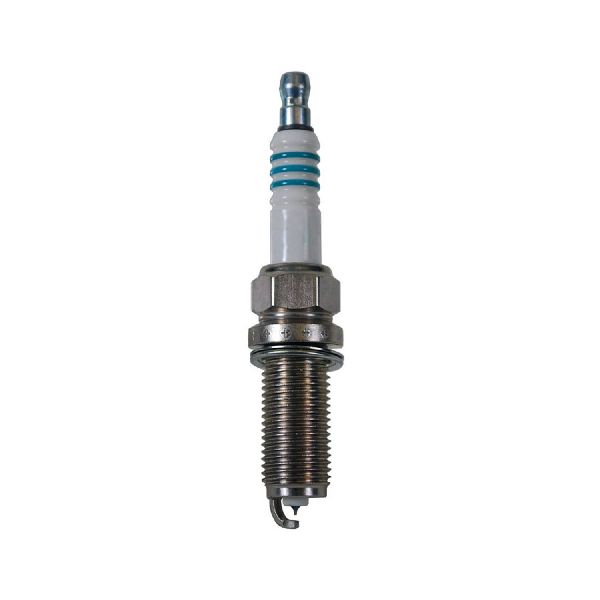
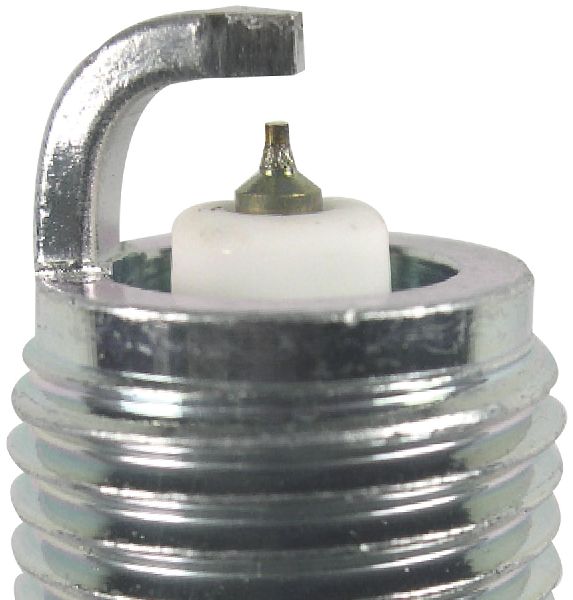
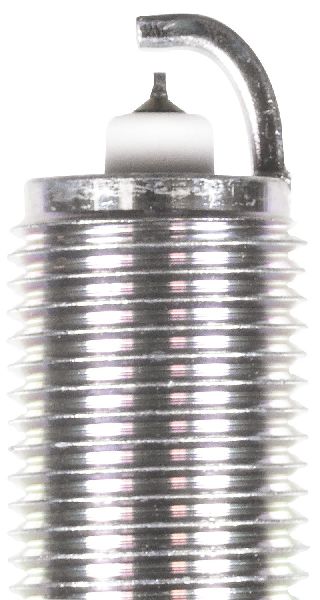
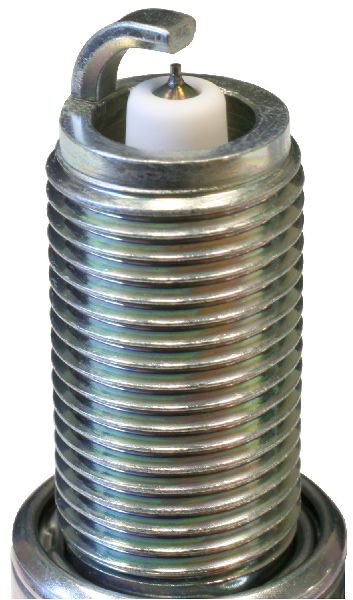
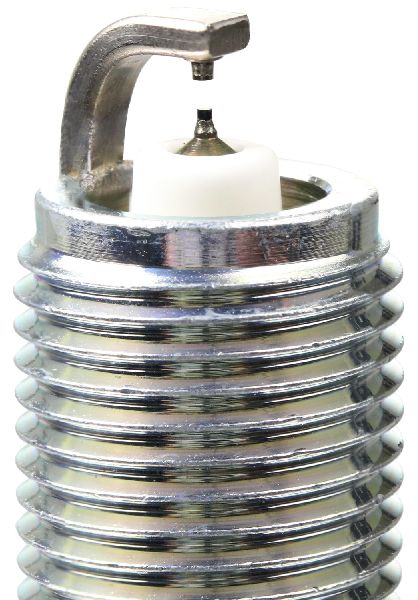
- Spark Plugs (Set of 16)
(OEM #SP143877)
Related Codes That Often Appear With This One
- P0301-P0308 — These codes pinpoint a misfire to a specific cylinder (e.g., P0308 for cylinder 8). They often appear with P0300 and can help identify a failing coil or injector, or a wiped cam lobe on a specific cylinder, before suspecting a larger issue.
- P3400, P3497 — These codes relate to the Cylinder Deactivation System (MDS). Their presence alongside a P0300 strongly points towards a failure in the MDS lifter system.
- P0171, P0174 — 'System Too Lean' codes for Bank 1 or Bank 2. These suggest the misfire is caused by a vacuum leak or a fuel delivery problem affecting the overall air-fuel mixture.
Technical Service Bulletins (TSBs) & Recalls
- TSB 09-002-17: While this TSB officially addresses engine vibration that can be confused with a misfire, it is often referenced in forum discussions about valvetrain issues and misfires on this platform.
- TSB Bulletin #18-039-26: This bulletin addresses MIL illumination where P0300-00 or P0301-00 are set specifically during the engine warm-up period.
- TSB Bulletin #18-033-26: This record describes instances where P0300-00 or P0301-00 are set in active or stored status during cold start catalyst heating.
Platform-Specific Known Issues
- Owner Experience with Post-Repair Misfires: In a thread on RamForum.com, a 2014 Ram 1500 owner reported a rough idle and a P0300 code immediately after replacing the camshaft and lifters to fix the 'Hemi tick'. The issue persisted despite new plugs and checking connections. Other forum members advised that the pushrods were likely not seated correctly in the new lifters or were bent during installation, a common mistake during this complex repair.
- The Inevitable 'Hemi Tick' Diagnosis: On YouTube, multiple mechanics document the teardown of 5.7L Hemi engines with a P0300 code and an audible tick. In one video by 'Brothers Motors', they tear down a Charger and confirm the diagnosis only after removing the heads, revealing a completely flattened camshaft lobe caused by a failed lifter. They emphasize that once a tick and a misfire are present together, a full teardown for inspection is necessary, as simply replacing plugs and coils is a waste of money.
Mechanic-Grade Diagnostic Values
- Ignition Coil Primary Resistance — expected: 0.558 - 0.682 ohms. Failure: A reading outside this range indicates a faulty coil winding.
- Ignition Coil Primary Resistance (Alternative Spec) — expected: 0.49 - 0.57 ohms. Failure: Resistance outside this range suggests the coil should be replaced.
- Ignition Coil Secondary Resistance — expected: 9.5 - 11.1 kilohms. Failure: A reading outside this range indicates a faulty secondary winding.
- Fuel Rail Pressure — expected: Approximately 58 psi. Failure: Significantly lower pressure indicates a weak fuel pump or clogged filter.
- Engine Compression — expected: 200-225 psi per cylinder. Failure: Low compression in one or more cylinders can indicate internal engine damage, such as from a wiped camshaft lobe.
Scan Tool Commands That Help
- wiTECH or other professional scan tool: Cylinder Power Balance Test — This test is crucial for isolating a weak or non-contributing cylinder when only a general P0300 code is present. The tool disables one cylinder at a time and measures the RPM drop. A healthy cylinder causes a significant drop, while a faulty one causes little to no change, pinpointing the problem for further testing.
- OBD-II Scanner with Live Data: Misfire Counter (Mode $06) — To identify which specific cylinders are misfiring and with what frequency, even if they haven't triggered a specific P030x code yet. This helps narrow down the diagnosis to a specific coil, plug, or injector before extensive teardown.
Real Owner Repair Stories
- RamForum.com user 'stc315' (2014 Ram 1500 5.7L Hemi, 135k miles) — Wicked lifter knock, engine wouldn't stay running after cam/lifter swap unless throttle was applied, ran very rough, P0300 code.
❌ Tried (didn't work) Initial cam and lifter swap to fix original knock., Replacing spark plugs., Double checking electrical connections and for vacuum leaks.
✅ What actually fixed it The user discovered a misaligned exhaust rocker arm on cylinder #4 that was caught under a rocker shaft bolt washer. After loosening the shaft, realigning the rocker arms, and re-torquing, the engine ran perfectly. - RamForum.com user (2012 Ram 1500 5.7L) — Initial cylinder 5 misfire from a wiped cam lobe. After replacing cam, lifters, and other components, the engine ran rough and threw a P0300 code.
❌ Tried (didn't work) Replaced camshaft, lifters, MDS solenoids, VVT actuator, timing components, and oil pump., Swapped spark plugs and ignition coils to other cylinders., Tested fuel injectors., Performed a compression test, which showed good compression (200-225 psi) on all cylinders.
✅ What actually fixed it The user re-tore down the engine and could not find an obvious mechanical fault. The misfires were isolated to cylinders 4 and 6 but the root cause was not posted in the thread, highlighting the difficulty of post-repair P0300 codes.
"I Checked Everything" — The Actual Cause
- In some cases on similar Hemi platforms, after a smoke test showed no vacuum leaks, the actual cause of a P0300 was found to be faulty upstream O2 sensors providing incorrect data to the PCM, leading to an improper fuel mixture and misfires.
OEM Part Supersession History
Multiple, including 5038785AC, 53021726BC→5038785AD (for MDS lifters)— Design improvement. Post-2016 lifters reportedly feature larger, more durable needle bearings to combat the common roller failure.
Heads up: Older stock may still be in circulation. When replacing MDS lifters, ensure you are getting the latest revision to benefit from the improved design. The part number itself may not have changed, making visual confirmation or sourcing from a reputable supplier important.N/A→5038784AD (for non-MDS lifters)— This is the Mopar OEM part number for a set of 16 non-MDS lifters, commonly used when performing an MDS-delete during a camshaft replacement.
Heads up: Using non-MDS lifters requires the MDS system to be electronically disabled in the PCM via a tuner to prevent fault codes and improper engine operation.
Model Year Variations Within This Range
- 2009-2015: Engines in this range are more susceptible to the lifter failure issue. While the problem can occur on any year, the pre-2016 lifters are widely considered to have a higher failure rate.
- 2016-2023: Starting mid-2016, Chrysler introduced updated MDS lifters with heavier-duty needle bearings and rollers to improve durability. While not a complete fix, the failure rate is reported to be lower on these later models.
- 2015+: Vehicles from 2015 and newer require the PCM to be unlocked before custom tuning can be performed, which is a necessary step if installing an MDS-delete kit.
Diagnostic Flowchart
Other Known Issues on This Vehicle
Issues unrelated to this code that are worth knowing about as an owner of this generation:
- Premature Water Pump Failure 🔴 High — Very common, often failing between 60,000 and 130,000 miles. Many owners report replacing them multiple times. (Ref: No recall, but a widely acknowledged issue with national backorders on parts at times.)
- TIPM (Totally Integrated Power Module) Failure 🔴 High — Common on 2011-2013 models. Can cause a wide range of bizarre electrical issues, including no-start conditions, fuel pump staying on, and random activation of wipers/horn. (Ref: No official recall, but the subject of a class-action lawsuit. Many companies offer repair services for the faulty internal relays.)
- Broken Exhaust Manifold Bolts 🟠 Medium — Very common. The rear-most bolts are prone to breaking due to thermal cycles, causing an exhaust leak and a ticking noise often mistaken for lifter failure.
- Uconnect Screen Delamination 🟡 Low — Common on vehicles equipped with the 8.4-inch Uconnect system, typically after 3-5 years. The screen bubbles and delaminates, causing 'ghost touches' and making the system unusable.
- Rocker Arm Failure 🟠 Medium — While less common than MDS lifter failure on the Hemi, rocker arm issues can still occur, leading to ticking noises and potential valvetrain damage.
Used vs. New Parts: Buying Guide for This Vehicle
When a used part is the smart pick: For major external components like an intake manifold, valve covers, or a complete used engine assembly if the original has suffered catastrophic failure. A used engine can be a cost-effective alternative to a full rebuild, provided its history and condition can be verified.
Donor-vehicle mileage cap: roughly under 80000 miles for the part to have meaningful remaining life.
What to inspect on the donor part:
- For a complete engine, ask for video of it running if possible, or at least a compression test.
- Check for signs of heavy oil leaks, particularly around the valve covers, timing cover, and rear main seal.
- Look for a 'sludge' or milky residue under the oil cap, which indicates poor maintenance or a head gasket issue.
- If buying from a dismantler, choose one that offers a warranty.
OEM-only on this vehicle (don't cheap out):
- MDS Lifters: Given the high failure rate of even OEM parts, using aftermarket lifters is a significant risk. If retaining MDS, use only the latest revision Mopar lifters.
- Camshaft Position Sensor and Crankshaft Position Sensor: These sensors are critical for engine timing. Aftermarket versions are known to cause erratic issues; stick with Mopar to avoid difficult-to-diagnose problems.
Aftermarket brands forum-validated for this vehicle:
- Melling: For oil pumps. A Melling high-volume (HV) pump is a highly recommended upgrade during a cam/lifter job to improve oiling, especially to the valvetrain.
- Texas Speed & Performance, Modern Muscle Xtreme (MMX), American Racing Headers (ARH): For MDS-delete kits, performance camshafts, and related valvetrain components.
- Johnson Lifters: A high-quality aftermarket option specifically designed to address the oiling issues of the stock Hemi lifters.
Brands owners have reported issues with on this vehicle:
- Unbranded or 'white box' ignition coils and sensors: While cheap, these parts have a high failure rate and can make diagnosis more complicated.
- Budget/no-name MDS lifters: Avoid any non-OEM or non-performance-brand lifters. The risk of rapid failure is extremely high.
Real Owner Stories
Aggregated from forums and TSBs cited above. Mileages and costs reflect what owners reported in those sources.
2014 Ram 1500 5.7L Hemi
Symptoms: Rough idle and a P0300 code immediately following a camshaft and lifter replacement intended to fix the 'Hemi tick'.
What fixed it: The issue was attributed to pushrods not being seated correctly in the new lifters or being bent during the installation process.
Source hint: RamForum.com - 'P0300 Running rough after cam and lifter swap'
2007 Dodge Ram 1500 5.7L Hemi
Symptoms: Ticking noise accompanied by a persistent P0300 code.
What fixed it: Diagnosis of a worn camshaft lobe, described as the 'classic hemi problem'.
Source hint: Reddit r/MechanicAdvice - 'still getting p0300 code on 2007 dodge ram 1500...'
Dodge Charger 5.7L Hemi
Symptoms: Audible ticking noise and P0300 code.
What fixed it: Full teardown and replacement of the camshaft and lifters after finding a completely flattened camshaft lobe caused by a failed lifter.
Source hint: YouTube video by 'Brothers Motors'
Related OBD-II Codes
Frequently Asked Questions
I hear a rhythmic ticking noise that gets faster when I accelerate my 5.7L Hemi. Is this related to the P0300 code?
Does TSB 09-002-17 apply to the misfire I'm feeling in my Durango?
How many spark plugs do I need to buy for my 2011-2023 Durango 5.7L V8?
My Durango has a ticking sound only when the engine is cold. Could this be the 'Hemi Tick' lifter failure?
Can I just replace the spark plugs and coils to fix a P0300 with an audible tick?
Is there a way to prevent the MDS lifter failure from happening again?
Helpful Videos
We Have This Part in Stock

The information in this article is provided for general reference and educational purposes only. Vehicle specifications, procedures, and part compatibility can vary by production date, trim level, and region. Always consult your vehicle's factory service manual and verify part numbers before purchasing or performing repairs. Safety-critical components such as airbags, seat belts, and braking systems should be installed by a qualified professional.
- Dodge Durango:
- 🎬 Helpful Videos
- 🛍️ Shop This Part
- What's Unique About the 2011-2023 Dodge Durango
- Symptoms You May Notice
- Most Likely Causes
- Rare But Worth Checking
- Diagnosis Steps
- Parts You'll Likely Need
- Related Codes That Often Appear With This One
- Technical Service Bulletins (TSBs) & Recalls
- Platform-Specific Known Issues
- Mechanic-Grade Diagnostic Values
- Scan Tool Commands That Help
- Real Owner Repair Stories
- "I Checked Everything" — The Actual Cause
- OEM Part Supersession History
- Model Year Variations Within This Range
- Diagnostic Flowchart
- Other Known Issues on This Vehicle
- Used vs. New Parts: Buying Guide for This Vehicle
- Real Owner Stories
- 2014 Ram 1500 5.7L Hemi
- 2007 Dodge Ram 1500 5.7L Hemi
- Dodge Charger 5.7L Hemi
- Related OBD-II Codes
- Frequently Asked Questions
- 🎟️ Get 5% Off