

P0300 on 2013-2020 Buick Encore: Random Misfire Causes and Fixes
P0300 on a Buick Encore is most often caused by a failed PCV system inside the valve cover, a bad ignition coil pack, or worn spark plugs. The primary culprit is a torn PCV diaphragm, creating a massive vacuum leak. Replacing the entire valve cover assembly is the common fix, but it's critical to also inspect the intake manifold's internal check valve, as its failure will cause the new valve cover to fail immediately.
- P0300 on a Buick Encore is very frequently caused by a failed PCV system within the valve cover, which creates a large vacuum leak.
- Always check for an audible hissing sound or strong vacuum at the oil cap as a first step; this is a quick indicator of the common PCV failure.
- When replacing the valve cover, you MUST inspect the intake manifold port to ensure the small non-return check valve is present and intact to prevent immediate repeat failure.
- If the PCV system is not the cause, the next most likely culprits are worn spark plugs and the ignition coil pack.
- Do not drive if the check engine light is flashing, as this can cause rapid and expensive damage to your catalytic converter.
What's Unique About the 2013-2020 Buick ENCORE

The 1.4L turbo engine in the Buick Encore is notorious for a specific two-part failure that directly leads to a P0300 code. First, the Positive Crankcase Ventilation (PCV) system's diaphragm, which is integrated into the plastic valve cover, frequently tears. This creates a large vacuum leak, causing a lean air-fuel mixture, a rough idle, and random misfires. Second, and just as critical, is a small check valve located *inside* the intake manifold. This check valve often fails and gets sucked into the engine. When it's gone, the PCV system is exposed to turbo boost pressure, which will instantly rupture the diaphragm on a brand-new valve cover, leading to immediate repeat failure. This combined issue is so prevalent that it's the first thing to check, often before basic ignition components.
Diagnostic Flowchart

Tap your situation to follow the diagnostic path that matches what you're seeing on this vehicle.
Generation note: The 2013-2020 year range covers the first generation of the Buick Encore. This includes the earlier 1.4L LUV engine and the updated 1.4L LE2 direct-injection engine introduced around 2016. Despite engine updates, the fundamental PCV system design and its common failure points (valve cover diaphragm and intake manifold check valve) remain a consistent cause for P0300 across these years.
Symptoms You May Notice

- Rough or unstable idle.
- Hesitation or stumbling during acceleration, especially under load or uphill.
- Flashing or solid Check Engine Light.
- Audible hissing, whistling, or 'chirping' noise from the engine bay at idle.
- Reduced fuel economy.
- Vehicle may stall.
- Strong suction felt when trying to remove the oil filler cap with the engine running.
- 'Service StabiliTrak' message may appear on the dash along with the flashing check engine light.
- Replacing oxygen (O2) sensors. O2 sensors will correctly report the lean condition (P0171) caused by the PCV vacuum leak, but they are almost never the root cause of the P0300 misfire itself.
- Replacing only the valve cover without checking the intake manifold. If the internal intake check valve is missing, the new valve cover's PCV diaphragm will rupture immediately under boost, leading to a repeat failure.
Most Likely Causes

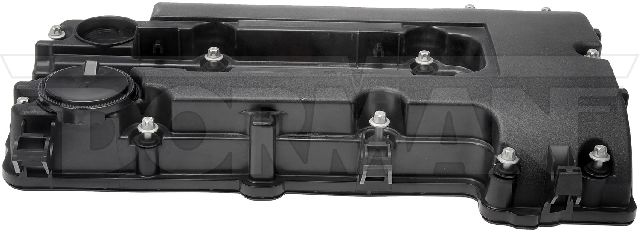
- Failed PCV System (Integrated in Valve Cover) 🔴 High Probability The PCV regulator diaphragm is made of a thin rubber that is built into the valve cover; it is known to tear over time, creating a significant vacuum leak that triggers lean codes and misfires.
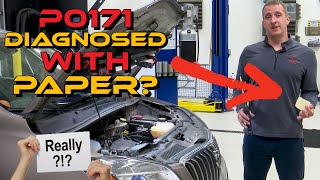
How to confirm: With the engine running, listen for a distinct hissing or whistling sound near the top of the engine. A definitive test is to place a small piece of paper or plastic bag over the small circular PCV breather hole on the valve cover; if it is sucked tightly against the hole, the diaphragm is torn. 🎬 Watch: How to perform this simple PCV vacuum leak test. Another common test is to try removing the oil filler cap; if strong suction holds it down, the diaphragm has failed.
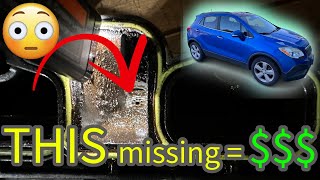
Typical fix: Replace the entire valve cover assembly, which includes a new integrated PCV valve and gaskets. CRITICAL: Before installing the new cover, you MUST inspect the intake manifold's PCV inlet port for a small, orange or red check valve. If this valve is missing or damaged, the new valve cover will fail again almost instantly.
Est. part cost: $50-$150 - Worn or Defective Spark Plugs 🔴 High Probability Turbocharged engines are more sensitive to spark plug condition. Worn plugs with an incorrect gap can't effectively ignite the air-fuel mixture under boost, leading to misfires.
How to confirm: Remove and inspect all four spark plugs for wear, fouling, or damage. The correct gap for the OEM ACDelco Iridium plugs is 0.028 inches (0.7mm), and they should not be re-gapped. Check for cracked porcelain insulators, a common failure point.
Typical fix: Replace all four spark plugs. It is highly recommended to use the OEM-spec ACDelco Iridium plugs (Part No. 41-121). This should be done whenever replacing the ignition coil.
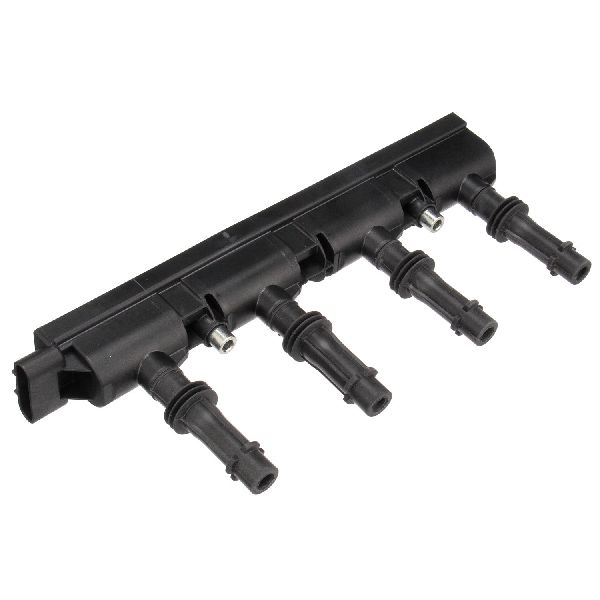
Est. part cost: $30-$60 - Faulty Ignition Coil Pack 🟡 Medium Probability The engine uses a single coil pack (cassette style) to fire all four cylinders. Heat and vibration contribute to its eventual failure, causing misfires that can be random or isolated to specific cylinders.
How to confirm: With the engine misfiring, use a scan tool to check misfire counters for each cylinder. Since this is a single pack, swapping is not an option. Visual inspection may reveal cracks or carbon tracking. Replacement is the most common diagnostic step after confirming plugs are good.
Typical fix: Replace the entire ignition coil pack assembly. It is best practice to replace spark plugs at the same time. 🎬 Watch: How to replace the ignition coil pack and spark plugs.
Est. part cost: $100-$250 - Missing/Failed Intake Manifold Check Valve 🟡 Medium Probability A small, non-serviceable check valve inside the intake manifold is prone to failing and being ingested by the engine. Its absence allows boost pressure into the crankcase, which ruptures the PCV diaphragm in the valve cover, causing a major vacuum leak. This is a root cause for repeat valve cover failures.
How to confirm: Remove the PCV tube from the intake manifold and shine a light into the port. You should see a small orange or red nipple-like check valve. If it is not visible, it has failed. The presence of codes P0171 and P1101 alongside P0300 strongly points to this failure cascade.
Typical fix: Officially, the entire intake manifold must be replaced. Aftermarket kits (e.g., from CruzeKits.com) exist to install an external check valve as a more permanent solution.
Est. part cost: $150-$300 (manifold), $50-$100 (aftermarket kit)
Rare But Worth Checking
- Internal Engine Damage (Broken Piston Ring Land): GM Technical Service Bulletin 19-NA-090 addresses P0300 caused by a broken piston ring land, leading to low compression, oil consumption, and misfires. This is a severe mechanical failure requiring a compression and cylinder leakage test to diagnose and may require piston replacement or a new engine.
- Faulty Fuel Injectors: A clogged or leaking fuel injector can disrupt the air-fuel ratio in one or more cylinders. TSB PIP5353F mentions checking fuel injector control circuits as part of a misfire diagnosis.
- Low Fuel Pressure: A weak fuel pump or clogged fuel filter can starve the engine of fuel, causing lean misfires across all cylinders, especially under load.
Diagnosis Steps
- Scan for all DTCs. Note if P0171 or P1101 are present, as this strongly suggests a PCV/vacuum leak issue.
- With the engine running, listen for a loud hissing or whistling sound from the valve cover area. Perform a definitive check by placing a finger or piece of paper over the small PCV breather hole on the cover; if there is suction, the diaphragm is bad.
- Confirm the PCV failure by checking for strong vacuum at the oil filler cap while the engine is running. If the cap is difficult to lift, the diaphragm is torn.
- CRITICAL STEP: Before ordering parts, remove the PCV hose from the intake manifold and inspect the inlet port with a flashlight. Look for the presence of a small orange/red check valve. If it is missing, the intake manifold must be replaced or an external check valve kit must be installed along with the new valve cover. 🎬 See this walkthrough for replacing both the manifold and valve cover.
- If no obvious vacuum leak is found, remove the ignition coil pack and inspect all four spark plugs for wear, damage, or incorrect gap. The OEM gap is 0.028". Look for broken insulators.
- While the coil pack is off, inspect the spark plug wells for oil. Oil presence indicates a leaking valve cover gasket, which can damage the coil pack boots and cause misfires.
- If plugs are old, replace them with OEM-spec plugs. If plugs are good, inspect the ignition coil pack for cracks or signs of carbon tracking/arcing.
- For persistent issues with no clear cause, perform an engine compression test and cylinder leakage test to check for mechanical problems like a bad valve or damaged piston rings, as noted in TSB 19-NA-090.
Parts You'll Likely Need
- Engine Valve Cover with PCV Valve
(OEM #25198874 (supersedes 55573746, 25198498)) - Intake Manifold
(OEM #55573837) - Ignition Coil Pack
(OEM #55579072) - Spark Plugs (Set of 4)
(OEM #ACDelco 41-121) - Aftermarket PCV Check Valve Fix Kit
Related Codes That Often Appear With This One
- P0171 — This code for 'System Too Lean' is extremely common with P0300 on this engine. It is the direct result of the unmetered air entering through the failed PCV diaphragm in the valve cover.
- P1101 — This code for 'Intake Air Flow System Performance' often appears with P0171 and P0300. It indicates the airflow measured by the MAF sensor doesn't match what the engine expects, which is a classic symptom of a large post-MAF vacuum leak like the failed PCV system.
- P0301, P0302, P0303, P0304 — These are cylinder-specific misfire codes. A P0300 may eventually be joined by one of these codes as the ECM isolates the problem to a particular cylinder, though the random nature of the vacuum leak often keeps it as a P0300.
Technical Service Bulletins (TSBs) & Recalls
- 19-NA-090: Details that a P0300 code with low compression can be caused by broken piston ring lands, a major mechanical failure.
- PIP5628G: General bulletin for diagnosing misfire codes P0300-P0308.
- PIP5353F: Advises technicians to check fuel injector control circuits when diagnosing a P0300 or rough idle.
- GM Special Coverage 18287: While not a TSB, this program extended the warranty to 10 years/120,000 miles for the failed PCV valve cover on some 2015-2016 Chevy Cruze and Sonic models, acknowledging the high failure rate of the part.
Platform-Specific Known Issues
- Intake Manifold Check Valve Failure: The most significant vehicle-specific issue is the non-serviceable check valve inside the intake manifold. Its failure is a root cause for the subsequent failure of the PCV diaphragm in the valve cover. When this small valve dislodges, it allows high-pressure air from the turbo (boost) to enter the crankcase, which is not designed to handle pressure. This pressure immediately ruptures the thin rubber diaphragm in the valve cover. Replacing the valve cover without first verifying this check valve is intact will lead to the new cover failing almost instantly. This makes visual inspection of the intake port a mandatory step in the diagnostic process for a P0300 on this engine.
Mechanic-Grade Diagnostic Values
- Fuel Injector Resistance (LUV Engine) — expected: ~12 ohms. Failure: Significant deviation from 12 ohms, or an open/short circuit reading.
- Ignition Coil Secondary Winding Resistance (General) — expected: 6,000 - 10,000 ohms (6kΩ - 10kΩ). Failure: Readings outside of this range suggest a faulty coil. This is a general specification and may vary slightly.
- High-Pressure Fuel System (LE2 Engine) — expected: 2,000 - 2,800 PSI. Failure: Inability to reach or maintain pressure within this range under specified conditions indicates a failing High Pressure Fuel Pump (HPFP).
- Spark Plug Torque — expected: 18 ft-lbs. Failure: Over or under-torquing can lead to plug damage, poor heat transfer, or the plug backing out.
Scan Tool Commands That Help
- GDS2 / Tech2 or equivalent professional scanner: Misfire Data / Mode 6, Test ID $A2-$AB — To view live and historical misfire counts for each individual cylinder. This is essential for turning a generic P0300 into an actionable diagnosis by seeing which cylinder(s) are contributing the most misfires, even if it's not enough to set a cylinder-specific code.
- GDS2 / Tech2 or equivalent professional scanner: Crankshaft Position Variation Learn — After replacing the crankshaft position sensor, engine, or ECM. Failure to perform this relearn procedure can cause the ECM to incorrectly interpret minor crankshaft speed variations as misfires, leading to a false P0300 code.
Wiring & Ground Locations
- G101 / G103 — Typically located on the front left (driver's side) of the engine block, sometimes as part of the main negative battery cable harness. Another common spot for G103 is on the cowl in the rear of the engine compartment, above the brake booster.. These are primary ground points for the Engine Control Module (ECM). A corroded or loose ground at these locations can cause erratic sensor readings and insufficient voltage for the ignition system, leading to random misfires and codes.
- G105 — Located at the left front of the engine compartment, often behind cooling fan relays.. While primarily for lighting and accessories, ensuring all engine bay grounds are clean and tight is a crucial step in diagnosing electrical-related misfires that don't have an obvious mechanical cause.
Real Owner Repair Stories
- Reddit user, r/Cartalk (Vehicle with P0496 and P0300 codes) — Engine running poorly, random misfire.
❌ Tried (didn't work) Identified that the EVAP purge solenoid was stuck open (could blow through it when de-energized)., Replaced the faulty EVAP purge solenoid.
✅ What actually fixed it The final root cause was a failed ignition coil pack that was only sending spark to two of the four cylinders. - Reddit user, r/MechanicAdvice (2018 Buick Encore) — Loud noise from engine bay, P0171 code present.
❌ Tried (didn't work) Self-diagnosis of intake manifold leak based on sound.
✅ What actually fixed it The problem was the PCV valve system. The repair was performed for free by a GM dealer under a special extended warranty for the part.
"I Checked Everything" — The Actual Cause
- A common diagnostic step for the associated P0171/P1101 codes is a smoke test to find vacuum leaks. However, a faulty EVAP purge valve solenoid that is stuck open internally may not be revealed by a smoke test, as the system may appear sealed from the outside. A technician confirmed this failure by removing the valve and being able to blow through it, indicating it was not closing as designed. This allowed un-commanded fuel vapor into the intake, causing a rich condition and misfires, which was ultimately resolved by replacing the ignition coil.
OEM Part Supersession History
55573746, 25198498→25198874— Standard part revision and consolidation by the manufacturer.
Heads up: These part numbers are generally interchangeable for the specified model years, with the latest number being the recommended replacement.
Model Year Variations Within This Range
- 2013-2016 (approx.): These models primarily use the 1.4L LUV port-injection engine. Misfire diagnosis focuses on the PCV system, ignition, and standard port fuel injectors. Fuel pressure is lower and regulated by an in-tank pump.
- 2016-2020 (approx.): These models introduced the 1.4L LE2 direct-injection engine. This adds a high-pressure fuel pump (HPFP) and gasoline direct injectors (GDI) as potential causes of misfires. A failing HPFP or clogged/faulty direct injector can cause P0300, which would not be a consideration on the earlier LUV engine.
Helpful Videos
Used OEM Parts in Stock
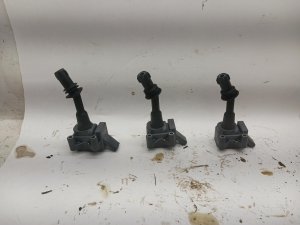
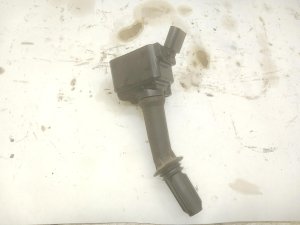
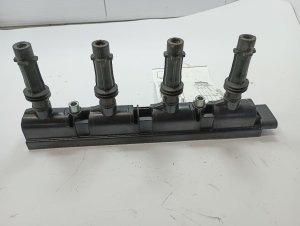
New Aftermarket Parts Available



The information in this article is provided for general reference and educational purposes only. Vehicle specifications, procedures, and part compatibility can vary by production date, trim level, and region. Always consult your vehicle's factory service manual and verify part numbers before purchasing or performing repairs. Safety-critical components such as airbags, seat belts, and braking systems should be installed by a qualified professional.
- Buick ENCORE:
- 🎬 Helpful Videos
- 🛍️ Shop This Part
- What's Unique About the 2013-2020 Buick ENCORE
- Diagnostic Flowchart
- Symptoms You May Notice
- Most Likely Causes
- Rare But Worth Checking
- Diagnosis Steps
- Parts You'll Likely Need
- Related Codes That Often Appear With This One
- Technical Service Bulletins (TSBs) & Recalls
- Platform-Specific Known Issues
- Mechanic-Grade Diagnostic Values
- Scan Tool Commands That Help
- Wiring & Ground Locations
- Real Owner Repair Stories
- "I Checked Everything" — The Actual Cause
- OEM Part Supersession History
- Model Year Variations Within This Range
- 🎟️ Get 5% Off