

P0299 on 2017-2018 Jaguar XE: Turbo Underboost Causes and Fixes
On a 2017-2018 Jaguar XE, especially with the 2.0L Ingenium engine, P0299 often points to a boost leak from a cracked or split charge air hose, a faulty wastegate actuator, or a failing turbocharger. A smoke test to find air leaks is the critical first step before considering a costly turbo replacement, as hoses are a very common and much cheaper failure point. On diesel models, the root cause is often oil contamination or starvation linked to DPF issues, which must be fixed to prevent repeat tu
- P0299 on a 2017-2018 Jaguar XE indicates the turbo is not providing enough boost.
- Always start diagnosis with a smoke test to check for air leaks in the intake system, as a cracked hose is a common and relatively inexpensive fix.
- The 2.0L Ingenium engine in these cars has a known history of premature turbocharger failure; if no leaks are found, the turbo itself is the next likely culprit.
- On diesel models, DPF health is directly linked to turbo health. A clogged DPF can cause P0299 and contribute to turbo failure.
- Do not ignore this code. Driving with an underboost condition can be unsafe due to lack of power and may lead to more severe engine damage.
What's Unique About the 2017-2018 Jaguar XE

The 2017-2018 Jaguar XE primarily uses the 2.0L Ingenium engine family (both diesel and petrol), which is known for having specific issues leading to P0299. Early versions of this engine are particularly susceptible to premature turbocharger failure, often linked to oil quality problems, oil starvation from blocked feed pipes, and issues with the Diesel Particulate Filter (DPF) system on diesel models. Furthermore, the charge air cooler hoses on this platform are a known weak point, prone to splitting and causing significant boost leaks. These underlying platform weaknesses mean that P0299 on an XE should be investigated promptly, as it can be a symptom of a more serious engine health problem.
Diagnostic Flowchart

Tap your situation to follow the diagnostic path that matches what you're seeing on this vehicle.
Symptoms You May Notice

- "Restricted Performance" message on the dashboard
- Significant loss of engine power and sluggish acceleration
- Check Engine Light is on
- Whistling, hissing, or siren-like noise from the engine bay that changes with engine speed
- Black or blue smoke from the exhaust, especially under acceleration
- Juddering or hesitation during acceleration
- Reduced fuel economy
- Replacing the turbocharger without first performing a thorough boost leak (smoke) test. A simple cracked hose is a much cheaper fix and a very common cause.
- Overlooking a faulty wastegate actuator, which can mimic the symptoms of a completely failed turbocharger. 🎬 See this guide on fixing common P0299 underboost causes.
- Replacing a failed turbocharger without replacing the oil feed pipe and correcting the underlying cause (e.g., DPF issues, oil dilution), leading to repeat failure of the new turbo.
Most Likely Causes

- Boost/Intake Air Leak 🔴 High Probability A Jaguar Technical Service Bulletin (LTB01254NAS1) specifically notes that an internally collapsing charge air cooler hose can cause P0299. These hoses, particularly the ones connected to the intercooler, are a well-documented weak point on the Ingenium platform, frequently splitting or developing cracks. A loose connection after other repair work is also a common cause.
How to confirm: Perform a visual inspection of all hoses from the air filter to the turbo and from the turbo to the intercooler and intake manifold. Squeeze the hoses to feel for hidden cracks. The most effective method is to have a shop perform a smoke test, which pressurizes the system with smoke to reveal any leaks, no matter how small. 🎬 Watch: How to perform a professional smoke test for leaks.
Typical fix: Replace the cracked, collapsed, or loose hose and clamps. Common culprits are the intercooler outlet and inlet hoses.
Est. part cost: $50-$300 - Failed Turbocharger 🔴 High Probability Early 2.0L Ingenium engines are noted to have issues with premature turbocharger failure. This is often a secondary failure caused by oil starvation from a blocked oil feed pipe, or oil contamination from fuel dilution due to incomplete DPF regeneration cycles on diesel models.
How to confirm: After ruling out boost leaks, a mechanic will inspect the turbocharger. This involves checking for excessive shaft play (wobble), signs of oil leaking past the seals, and damage to the compressor or turbine blades. A data log showing commanded vs. actual boost can also confirm the turbo is not performing.
Typical fix: The entire turbocharger assembly must be replaced. It is critical to also address the root cause of the failure, such as replacing the oil feed pipe, changing the oil and filter, and ensuring the DPF system is functioning correctly to prevent the new turbo from failing quickly.
Est. part cost: $1700-$4500 - Faulty Wastegate or Actuator 🟡 Medium Probability The wastegate controls boost pressure by diverting exhaust gas. The electronic or vacuum actuator that controls it can fail, or the wastegate itself can get stuck open, preventing the turbo from building sufficient pressure. These actuators can suffer from internal diaphragm leaks (on vacuum models) or electronic faults.
How to confirm: A mechanic can test the actuator's function using a vacuum pump or a bi-directional scan tool to command it open and closed while observing its movement. JLR diagnostics may state that if a fault is found with the wastegate system, the entire turbocharger should be replaced as they are often calibrated as a unit.
Typical fix: If the actuator is faulty, it is often replaced. In many cases, the actuator is integrated into the turbocharger or sold as a calibrated assembly, requiring a full turbo replacement.
Est. part cost: $150-$500 (actuator only, if available separately) - Blocked Diesel Particulate Filter (DPF) 🟡 Medium Probability On diesel models, a clogged DPF increases exhaust backpressure, which prevents the turbo from spinning up effectively. The Ingenium engine can struggle with DPF regeneration, especially with frequent short trips, leading to blockages and subsequent oil dilution that also damages the turbo.
How to confirm: A diagnostic scan tool can read the DPF soot level and pressure differential. A forced regeneration may be attempted. A visual check of the tailpipe for soot can also indicate a cracked or failed DPF.
Typical fix: A professional cleaning or replacement of the DPF is required. It's also important to investigate why it blocked (e.g., driving habits, sensor issues) to prevent a recurrence.
Est. part cost: $500-$2000
Rare But Worth Checking
- Faulty Boost Pressure Sensor (MAP Sensor): The sensor that measures boost can fail and send incorrect low-pressure readings to the ECU, triggering the code even if the turbo is working correctly. This is a less common cause, but should be considered if other diagnoses are inconclusive.
- Blocked Catalytic Converter: Similar to a blocked DPF, a clogged catalytic converter can create excessive backpressure and restrict the turbo's ability to spool up.
- Clogged Air Filter: A severely restricted engine air filter can starve the turbo of air, preventing it from building the required boost. This is a simple but sometimes overlooked check.
Diagnosis Steps
- Read all stored fault codes with an OBD-II scanner, paying close attention to any sub-codes (e.g., P0299-00) which can provide more specific clues.
- Perform a thorough visual inspection of the entire intake and charge air system. Look for obviously disconnected hoses, loose clamps, or visible cracks in plastic components. Squeeze the rubber hoses to check for splits.
- Check the engine air filter to ensure it is not clogged or restricting airflow.
- Perform a pressurized smoke test on the intake and boost system to identify any leaks that are not visually apparent. This is the most critical step for finding hidden leaks.
- Using a scan tool, monitor live data for commanded boost vs. actual boost pressure while driving under load. A large discrepancy confirms the underboost condition.
- Inspect the turbocharger wastegate actuator for proper movement. Check vacuum lines to the actuator for leaks or use a scan tool to command the actuator and verify its response.
- If no leaks are found, inspect the turbocharger for mechanical failure. Check for radial and axial shaft play and any damage to the turbine or compressor wheels. Check for oil in the intercooler, which indicates failed turbo seals.
- On diesel models, check the DPF pressure sensor readings and soot mass values to rule out a blockage.
Parts You'll Likely Need
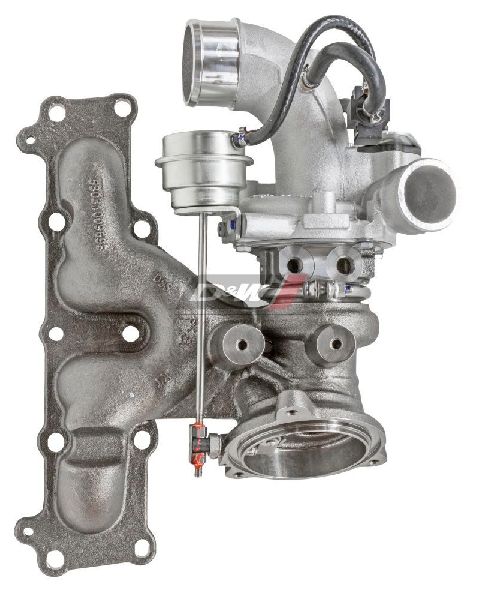
- Turbocharger Assembly
(OEM #JDE40740 (for 2.0L Diesel))— Premature turbo failure is a known weakness on the 2.0L Ingenium engine, making it a high-probability cause for P0299 after leaks are ruled out. Often sold as a unit with the actuator.
Trusted brands: Mitsubishi (OEM for some models), Garrett, BorgWarner
OEM price range: $2000-$4500
Aftermarket price range: $1000-$2500 - Charge Air Cooler Hose / Intercooler Pipe
(OEM #LR117083, T2H6776 (Petrol), HK83-6N650-AC (Diesel))— These hoses are a very common failure point, known to split, crack, or collapse internally, causing a significant boost leak. A specific TSB points to this issue, and it's a frequent topic in owner forums.
Trusted brands: Jaguar (OEM), URO Parts, Rein
OEM price range: $150-$300
Aftermarket price range: $50-$150 - Turbocharger Oil Feed Pipe
(OEM #LR072563, JDE38205)— This pipe is a critical failure point that leads to oil starvation and subsequent turbocharger destruction. It is considered best practice to replace this pipe whenever the turbocharger is replaced to prevent a repeat failure of the new unit.
Trusted brands: Jaguar (OEM), Aftermarket
OEM price range: $80-$150
Aftermarket price range: $40-$70
Related Codes That Often Appear With This One
- P226C — Turbocharger/Supercharger Boost Control 'A' Slow Response. This code often appears with P0299 and points more directly to a problem with the wastegate or actuator's ability to respond to commands, as seen in owner forums.
- P00BD — Mass or Volume Air Flow 'A' Circuit Range/Performance - Air Flow Too High. This code is mentioned alongside P0299 in TSB #SSM73671, suggesting a related air metering fault.
- P2178 — System Too Rich Off Idle Bank 1. Also mentioned in TSB #SSM73671, indicating a potential fuel/air mixture problem that can be associated with incorrect boost levels.
Technical Service Bulletins (TSBs) & Recalls
- SSM73671: Mentions P0299-00 - Turbocharger/Supercharger "A" Underboost Condition alongside other codes, confirming its definition for Jaguar vehicles.
- LTB01254NAS1: While for a Land Rover with a similar engine, this TSB is highly relevant as it identifies an internally collapsing charge air cooler hose as a specific cause for P0299-77.
Platform-Specific Known Issues
- Post-Repair Boost Leaks: A common story on owner forums is the P0299 code appearing immediately after the vehicle has been serviced for an unrelated issue. In many cases, this is caused by a technician improperly reconnecting a charge air hose or clamp, creating a boost leak. Always suspect a simple connection issue if the code appears right after a repair.
- Intermittent Highway Fault: Some owners report that the 'Restricted Performance' light and P0299 code only appear during sustained, low-load highway driving. This can be particularly tricky to diagnose and may point to issues with the vacuum-operated wastegate actuator, which can be affected by temperature and moisture, causing it to stick or leak intermittently under specific conditions.
- Dealer Quick to Blame Turbo: Multiple owners have shared experiences where a dealership immediately recommends a full, expensive turbocharger replacement for P0299 without first performing a comprehensive smoke test to rule out much cheaper and more common boost leaks. Owners should insist on a smoke test and a check of the actuator before authorizing a turbo replacement.
Hidden / Shadow Codes Worth Checking
- P0299-00: The '-00' is a manufacturer sub-type or symptom byte meaning 'No sub type information' or a general failure. Its presence, as noted in TSB SSM73671, confirms the code was read by a more advanced scanner (like JLR SDD/Pathfinder) than a basic OBD-II reader. (see via Jaguar's Symptom Driven Diagnostics (SDD) or Pathfinder, iCarsoft, or other professional-grade scan tools.)
Scan Tool Commands That Help
- JLR SDD/Pathfinder: Turbocharger Adaptation / Re-learn — Required after replacing or reinstalling the turbocharger to ensure the electronic actuator's position is correctly calibrated with the ECU. A forum user noted this was performed after a turbo rebuild.
- JLR SDD/Pathfinder or equivalent: DPF Regeneration / DPF Replacement Service Function — On diesel models, when a blocked DPF is suspected as the cause of high backpressure leading to P0299. This function can force a regeneration cycle or reset soot/ash values after a new DPF is installed.
- JLR SDD/Pathfinder or equivalent: Actuator Test / Bidirectional Control — To command the wastegate actuator to move through its range of motion while the engine is off or idling. This can help identify a stuck or slow-responding actuator without removing it from the vehicle.
Real Owner Repair Stories
- Jaguar Forums user 'BDuncan' (Jaguar XJ (X350), but demonstrates a universal issue applicable to the XE) — Got 'Performance Restricted' message and P0299 code immediately after having the alternator and water pump replaced.
❌ Tried (didn't work) Clearing the code with an OBD reader; the fault would return upon acceleration.
✅ What actually fixed it The garage had not correctly reassembled the intake system. A 'loose air conductor hose' was found and tightened, resolving the underboost code in 25 minutes. - Jaguar Forums user 'gekai' (2016 Jaguar XE 2.0d (diesel)) — P0299 & P226C codes, underboost/slow response specifically during smooth highway cruising (80-120 km/h), but normal behavior in city driving.
❌ Tried (didn't work) Turbo was removed and passed a bench test by a specialist., DPF/soot filter was checked., EGR was cleaned.
✅ What actually fixed it The final fix was not posted, but a veteran member suggested the cause was likely a small, intermittent leak in the vacuum-operated actuator controlling the variable vanes. This type of leak often only manifests during sustained boost on the highway and would not be caught in a static bench test, perfectly matching the user's symptoms. The original poster acknowledged the strong correlation and was pursuing this diagnostic path.
"I Checked Everything" — The Actual Cause
- A clogged catalytic converter or Diesel Particulate Filter (DPF) can cause P0299 by creating excessive exhaust backpressure, preventing the turbo from spooling up correctly. This fault would not be detected by a smoke test, which only checks for leaks in the intake/boost pressure side of the system.
- A faulty or slow-to-respond wastegate actuator can cause underboost that passes a static smoke test. The issue may only appear under dynamic driving conditions, especially during sustained, steady-state cruising where the actuator is making fine adjustments.
OEM Part Supersession History
JDE36863, JDE39005, JDE39467→JDE40740— Part evolution and updates for the 2.0L AJ20D4 Diesel Turbocharger (163/180 PS models).
Heads up: Part numbers are often equivalent for the same application, but it is critical to verify fitment with a VIN. JDE40740 is a commonly cited replacement part number.C2Z21976, LR028821→LR072563, JDE38205— Updates to the critical Turbocharger Oil Feed Pipe.
Heads up: Multiple part numbers exist for this component. Given its critical role in preventing turbo failure, ensuring the latest revision is used is highly recommended.
Helpful Videos
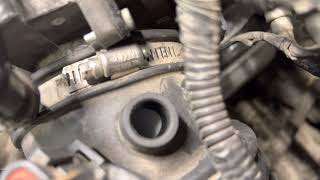


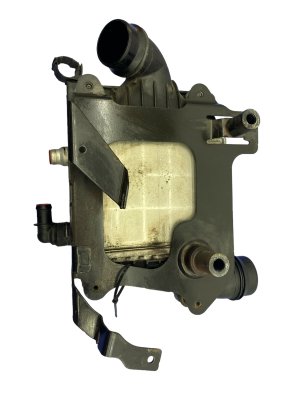
Used OEM Parts in Stock


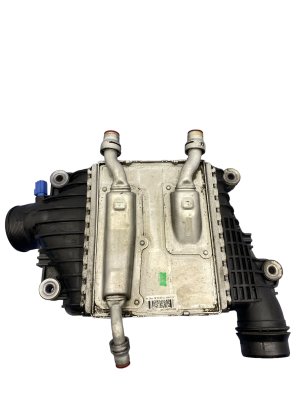


New Aftermarket Parts Available
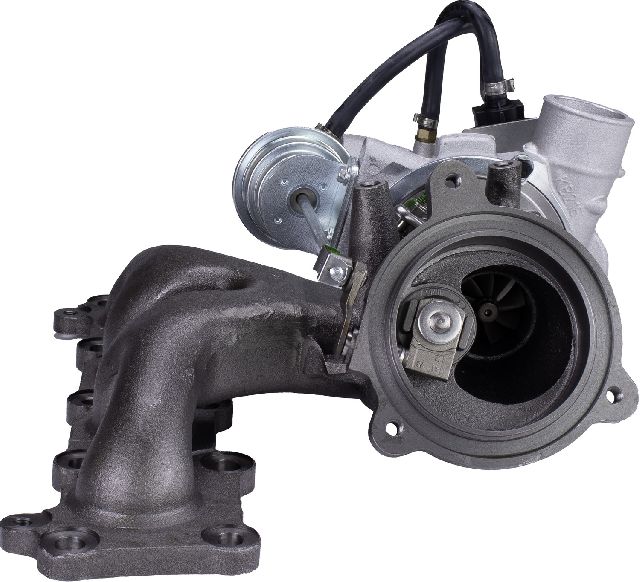




The information in this article is provided for general reference and educational purposes only. Vehicle specifications, procedures, and part compatibility can vary by production date, trim level, and region. Always consult your vehicle's factory service manual and verify part numbers before purchasing or performing repairs. Safety-critical components such as airbags, seat belts, and braking systems should be installed by a qualified professional.
- Jaguar XE:
- 🎬 Helpful Videos
- 🛍️ Shop This Part
- What's Unique About the 2017-2018 Jaguar XE
- Diagnostic Flowchart
- Symptoms You May Notice
- Most Likely Causes
- Rare But Worth Checking
- Diagnosis Steps
- Parts You'll Likely Need
- Related Codes That Often Appear With This One
- Technical Service Bulletins (TSBs) & Recalls
- Platform-Specific Known Issues
- Hidden / Shadow Codes Worth Checking
- Scan Tool Commands That Help
- Real Owner Repair Stories
- "I Checked Everything" — The Actual Cause
- OEM Part Supersession History
- 🎟️ Get 5% Off