

P0299 on 2019-2023 Genesis G70 3.3T: Turbo Underboost Causes and Fixes
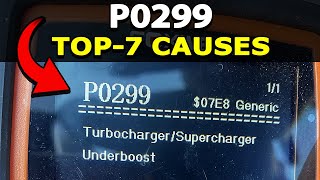
On the Genesis G70 3.3T, code P0299 is most often caused by a failing electronic wastegate actuator or a boost leak from a cracked plastic charge pipe. A thorough diagnosis should begin with a boost leak test before condemning the expensive turbocharger assembly.
- P0299 on your G70 3.3T means the engine is not making its target boost, causing a serious loss of power.
- The most likely causes are a failing electronic wastegate actuator or a leak from a cracked plastic charge pipe.
- Before assuming the turbo has failed, a smoke test is essential to check for much cheaper-to-fix boost leaks.
- There is a critical safety recall (NHTSA 24V191000) for the turbo oil feed line on 2019-2022 models that should be checked and completed to prevent fire risk and oil starvation.
- Due to the complexity of the twin-turbo system, diagnosis and repair are best left to a professional technician.
What's Unique About the 2019-2023 Genesis G70

The Lambda II 3.3L twin-turbo engine, shared with the Kia Stinger, has two particularly common failure points that trigger a P0299 code. The electronic wastegate actuators (EWGAs) are known to fail or perform erratically, causing the ECU to lose precise control over boost levels. This is a widely discussed issue on owner forums for both the G70 and Stinger. Additionally, the factory plastic charge pipes and turbo inlet pipes are prone to cracking under heat and pressure, creating boost leaks that are a direct cause of the underboost condition.
Symptoms You May Notice
- Significant loss of engine power and sluggish acceleration.
- Check Engine Light illuminated.
- Vehicle enters 'limp mode', which may be temporarily reset by turning the car off and on.
- Turbo boost gauge on the digital cluster reads '0' or does not build pressure.
- Audible whistling or hissing sound from the engine bay during acceleration, indicating a boost leak.
- A squeaking noise upon light throttle application or when shutting the engine off can be an early sign of a failing wastegate actuator.
- Replacing the entire turbocharger assembly when the actual problem is a simple and inexpensive boost leak from a cracked plastic pipe or loose clamp.
- Replacing a boost pressure sensor without first performing a smoke test to rule out a physical leak in the system.
- Replacing a turbocharger for a wastegate issue when only the separately-available electronic actuator has failed.
Most Likely Causes


- Failing Electronic Wastegate Actuator (EWGA) 🔴 High Probability The EWGAs on the 3.3T platform are a known failure point. They can become stuck, slow to respond, or fail electronically, preventing proper boost regulation. This is a well-documented issue on both the G70 and its platform-mate, the Kia Stinger.
How to confirm: A technician can use a high-level scan tool to command the wastegate actuator and observe its movement and position sensor data. A voltage check at the actuator may also reveal issues; a technician video for a G70 showed a target voltage of around 4.0V corresponds to atmospheric pressure (14.7 PSI) with the ignition on. An owner on a G80 forum reported a diagnosis of faulty wastegates after hearing a squeak on shutdown.
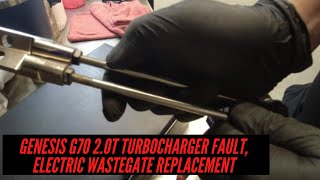
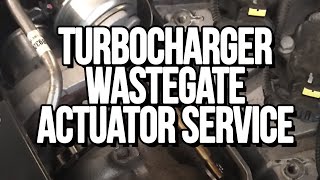
Typical fix: The wastegate actuator is often replaced. While some sources claim it is integrated, the actuator is available as a separate part (OEM P/N 39400-3L100). However, some dealers may opt to replace the entire turbocharger assembly. It is critical that the actuator rod length is properly calibrated upon installation to ensure correct preload.
Est. part cost: $200-$400 for actuator, $1500+ for turbo assembly - Boost Leak (Cracked Charge Pipe, Inlet Pipe, or Loose Hose) 🔴 High Probability The factory charge pipes and turbo inlets are made of plastic that can become brittle from engine heat cycles and crack, causing pressurized air to escape.
How to confirm: A visual inspection may reveal an obvious crack or disconnected hose. The most effective method is a smoke test, where a technician fills the intake and charge system with pressurized smoke to see where it leaks out.
Typical fix: Replace the cracked pipe or hose and secure all clamps. Many owners upgrade to more durable aluminum charge pipes to prevent future failures.
Est. part cost: $50-$150 for OEM plastic pipe, $400-$600 for aftermarket aluminum kit - Faulty Boost Pressure Sensor (MAP Sensor) 🟡 Medium Probability
How to confirm: Using a scan tool, compare the boost pressure reading to a known good manual gauge or to the ambient pressure reading with the engine off. If the readings are illogical, the sensor is likely faulty.
Typical fix: Replacement of the faulty boost pressure sensor.
Est. part cost: $60-$120 - Leaking Turbo Recirculation/Diverter Valve ⚪ Low Probability
How to confirm: These can be difficult to test without removing them. A smoke test may sometimes reveal a leak from the valve's diaphragm or housing. A faulty diverter valve is a known cause of P0299 on turbocharged engines.
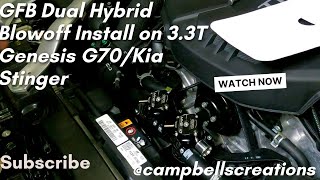
Typical fix: Replace the faulty diverter valve. Aftermarket blow-off valves are a common modification but can also be a source of leaks if not installed correctly.
Est. part cost: $100-$250
Rare But Worth Checking
- Charge Air Cooler (Intercooler) Icing: In extremely cold temperatures (below 0°F / -18°C), moisture in the intake system can freeze inside the intercooler, creating a blockage that restricts airflow and causes underboost. This is rare but possible in frigid climates.
- Internal Turbocharger Failure: While less common than actuator or leak issues, the turbo's internal components (bearings, turbine/compressor wheels) can fail from oil starvation or age, preventing it from spooling up correctly. A failure of the recalled LH turbo oil feed pipe could lead to such oil starvation.
Diagnosis Steps

- Read all stored fault codes with an OBD-II scanner. Check for related codes like P2563 or P0234 that can help pinpoint the cause.
- Inspect the engine bay for any obvious signs of disconnected hoses, cracked plastic pipes (especially charge pipes and turbo inlets), or loose clamps.
- Perform a professional smoke test on the entire intake and charge air system to pinpoint any leaks that are not visible. This is the most common cause.
- Using a scan tool, monitor live data for the boost pressure sensor. Compare its reading at idle and under load to specified values.
- Command the electronic wastegate actuator (EWGA) using a bidirectional scan tool to verify its range of motion and check for binding or electronic faults. Check voltage at the actuator; a reading outside the expected range may indicate a fault.
- If no leaks or sensor faults are found, inspect the turbocharger itself for shaft play or signs of damage to the compressor/turbine wheels.
- Check for any open recalls, especially NHTSA 24V191000 regarding the LH turbo oil feed pipe, as an oil leak can lead to turbo failure.
Parts You'll Likely Need
- Electronic Wastegate Actuator
(OEM #39400-3L100)— This is a very common failure point on the 3.3T engine leading to boost control problems and the P0299 code.
Trusted brands: Genuine Hyundai/Genesis
OEM price range: $250-$400
Aftermarket price range: N/A - Charge Pipe Kit — The factory plastic charge pipes are prone to cracking. Upgrading to an aluminum kit is a common and durable fix.
Trusted brands: Burger Motorsports (BMS), aFe Power
OEM price range: $150-$250
Aftermarket price range: $400-$600 - RH Turbocharger Assembly
(OEM #28231-3L110)— P0299 corresponds to the Bank 1 (RH) turbo. If the turbo has failed internally or if a dealer opts to replace the whole unit instead of just the actuator, this part is required.
Trusted brands: Genuine Hyundai/Genesis
OEM price range: $900-$1500
Aftermarket price range: N/A - LH Turbocharger Oil Feed Pipe Assembly (Recall Part)
(OEM #28240-3L121QQH)— This is a critical safety recall part. The original pipe can crack and leak oil due to heat, leading to a fire risk and potential turbo failure from oil starvation. While not a direct cause, its failure can lead to P0299.
Related Codes That Often Appear With This One
- P0234 — This code for 'Turbocharger Overboost' can sometimes appear with P0299 if the wastegate control system is malfunctioning erratically, causing both underboost and overboost conditions at different times.
- P2563 — This code relates to the 'Turbocharger Boost Control Position Sensor 'A' Circuit Range/Performance', which directly points to a problem with the wastegate actuator's position sensor, a common cause of P0299.
- P2562 — This code for 'Turbocharger Boost Control Position Sensor Circuit' is also a known issue on the platform and points directly to a fault with the electronic wastegate actuator.
Technical Service Bulletins (TSBs) & Recalls
- NHTSA Campaign: 24V191000 (Recall for Turbo Oil Feed Pipe)
- NHTSA Campaign: 21V161000 (Recall for ABS Module Short Circuit)
- NHTSA Campaign: 24V528000 (Recall for High-Pressure Fuel Pump)
Platform-Specific Known Issues
- Recall 24V191000 / Campaign 019G: Left Turbocharger Oil Feed Pipe: Hyundai issued a recall for 2019-2022 G70s with the 3.3T engine because the left-hand turbocharger oil supply pipe can crack from heat exposure. This can cause oil to leak onto the hot exhaust manifold, increasing the risk of an engine fire. The remedy involves replacing the pipe with an improved part.
Mechanic-Grade Diagnostic Values
- Boost Pressure Sensor (MAP) Voltage, Key On Engine Off — expected: ~4.0 V. Failure: A voltage reading significantly different from 4.0V at atmospheric pressure suggests a faulty sensor.
- P0299 Set Condition (Ford Example, for context) — expected: Actual boost pressure is within 4 PSI of desired boost.. Failure: The code sets if actual boost is 4 PSI or more below desired boost for at least 5 seconds. While specific to Ford, this provides a general idea of the ECU's tolerance.
Scan Tool Commands That Help
- Hyundai/Genesis GDS (Global Diagnostic System): Wastegate Actuator Calibration / Installation Procedure — This function is required after replacing the electronic wastegate actuator. It performs a learning procedure to set the actuator's fully open and closed positions, ensuring correct rod length and preload. Failure to perform this calibration can result in an immediate return of P0299 or an overboost code.
- Hyundai/Genesis GDS (Global Diagnostic System): ECU Reset / Throttle Position Relearn — After replacing components like the throttle body or certain sensors, or even after disconnecting the battery, performing an ECU reset can clear learned adaptive values. A common procedure involves turning the ignition to 'ON' (without starting the engine) for 15 seconds, then off, to allow the throttle body to cycle and relearn its positions.
Wiring & Ground Locations
- G101 (Example from generic guide) — Located at the left front of the engine, on the lower block.. A generic ground location guide indicates G101 grounds the Mass Air Flow Sensor, Engine Control Module, and Transmission Control Module. A poor ground at this location could cause erratic sensor readings and control module behavior, potentially contributing to a P0299 code.
Real Owner Repair Stories
- Kia Stinger Forum (platform mate) (Kia Stinger GT 3.3T) — P0299 underboost code, loss of power.
❌ Tried (didn't work) Initial diagnosis suspected a boost leak, but a smoke test came back clean.
✅ What actually fixed it The issue was traced to a faulty electronic wastegate actuator on one of the turbos. Replacing the actuator and performing the calibration procedure with a scan tool resolved the P0299 code and restored power.
"I Checked Everything" — The Actual Cause
- In cases involving the platform-sharing Kia Stinger, owners have reported passing a smoke test (indicating no boost leaks) but still having the P0299 code. The ultimate cause was often a failing electronic wastegate actuator that was not responding correctly to ECU commands, but was not leaking externally.
OEM Part Supersession History
Unknown→39400-3L100— This is the current, widely available part number for the electronic wastegate actuator for the 3.3T engine.
Heads up: This part fits a wide range of model years for the G70, G80, G90, and Kia Stinger with the 3.3T engine.
Model Year Variations Within This Range
- 2022-2023: The 2022 facelift model introduced a new 'Sport+' driving mode. This mode alters transmission shifting, throttle response, and features a more aggressive engine sound profile via a new variable exhaust system. While not a direct cause, operating in this mode makes boost levels more critical and may make an underboost condition more immediately noticeable to the driver.
Diagnostic Flowchart

Other Known Issues on This Vehicle
Issues unrelated to this code that are worth knowing about as an owner of this generation:
- Interior Rattles (Sunroof/Headliner/Center Console) 🟡 Low — Very common, especially in warmer weather. Many owners report rattles from the sunroof assembly, headliner, and center console area within the first 1-2 years of ownership.
- Peeling Exterior Paint 🟠 Medium — Frequently reported on pre-facelift (2019-2021) models, particularly white and other light colors. Peeling and chipping can occur prematurely. A class-action lawsuit has been noted regarding this issue.
- ABS Module Internal Short Circuit 🔴 High — Affects 2019-2021 models. A recall was issued because the ABS module can malfunction and short, creating a fire risk even when the vehicle is parked. (Ref: NHTSA Recall 21V161000 / Genesis Campaign 007G)
- Failing High-Pressure Fuel Pump (HPFP) 🟠 Medium — A known issue on the wider Lambda GDI engine family. A recall was issued for the 2019-2023 G70 as the fuel pump may fail, causing a loss of drive power. (Ref: NHTSA Recall 24V528000 / Genesis Campaign 023G/262)
- Oxidizing/Fading Dark Chrome Trim 🟡 Low — Common on Sport/Prestige trims with dark chrome. The finish can oxidize, bubble, or fade over time, requiring warranty replacement.
Used vs. New Parts: Buying Guide for This Vehicle
When a used part is the smart pick: For this specific repair, used parts are generally not recommended due to the nature of the common failures. However, simple, non-moving plastic or metal pipes (like sections of the intake or charge piping) could be sourced from a low-mileage donor vehicle if a new part is unavailable or cost-prohibitive.
Donor-vehicle mileage cap: roughly under 40000 miles for the part to have meaningful remaining life.
What to inspect on the donor part:
- For pipes/hoses: Check for any hairline cracks, especially near mounting points or bends.
- Ensure all mounting tabs are intact.
- Verify the vehicle had a front-end collision, suggesting the engine components were likely running fine prior to the accident.
OEM-only on this vehicle (don't cheap out):
- Electronic Wastegate Actuator (EWGA): This is a high-failure, electronic component. A used part has an unknown lifespan and may fail shortly after installation. Given the labor involved, a new Genuine Hyundai/Genesis part is the only reliable option.
- Turbocharger Assembly: A turbocharger spins at extremely high RPMs and has tight tolerances. A used unit has an unknown history of oil changes and abuse. Only a new or professionally remanufactured unit should be considered.
- Boost Pressure (MAP) Sensor: This is a critical sensor and relatively inexpensive. The risk of a faulty used sensor causing misdiagnosis is not worth the small cost savings.
Aftermarket brands forum-validated for this vehicle:
- Charge Pipes: Burger Motorsports (BMS), aFe Power (These are considered upgrades over the failure-prone OEM plastic pipes).
Brands owners have reported issues with on this vehicle:
- Unknown/No-Name Wastegate Actuators: Avoid generic electronic actuators from online marketplaces. They often lack the precise calibration and durability of the OEM unit, leading to a quick return of the P0299 code.
Real Owner Stories
Aggregated from forums and TSBs cited above. Mileages and costs reflect what owners reported in those sources.
2019 Genesis G70 3.3T
Symptoms: The car makes a squeak when tapping the gas and also when the engine is turned off.
What fixed it: Diagnosis of faulty wastegates by the dealership.
Source hint: Reddit r/GenesisG70 thread titled 'Anyones g70 33t make a squeak when you tap the gas'
2019-2023 Genesis G70 3.3T
Symptoms: Significant loss of engine power and the vehicle enters 'limp mode', which can be temporarily reset by cycling the ignition.
What fixed it: Replacement of the Electronic Wastegate Actuator (EWGA).
Source hint: https://www.reddit.com/r/GenesisG70/comments/10x7j3j/wastegate_actuator_issue_is_there_a_permanent_fix/
2018-2023 Kia Stinger GT 3.3T
Symptoms: No boost pressure being built by the turbochargers.
What fixed it: Repairing boost leaks and addressing failing electronic wastegate actuators.
Source hint: stingerforum.org thread 'no boost'
Related OBD-II Codes
Frequently Asked Questions
Is there a recall for my 2019-2022 Genesis G70 3.3T that could cause turbo issues or fires?
My G70 makes a squeaking noise when I tap the gas or shut the engine off; is this related to P0299?
Can I replace just the wastegate actuator on my 3.3L Twin-Turbo V6, or do I need a whole new turbo?
Does the Kia Stinger share the same underboost issues as the Genesis G70?
What is the target voltage for the wastegate actuator on the G70 3.3T during diagnosis?
Are there any other recalls I should be aware of for my 2019-2023 G70?
Helpful Videos

We Have This Part in Stock



The information in this article is provided for general reference and educational purposes only. Vehicle specifications, procedures, and part compatibility can vary by production date, trim level, and region. Always consult your vehicle's factory service manual and verify part numbers before purchasing or performing repairs. Safety-critical components such as airbags, seat belts, and braking systems should be installed by a qualified professional.
- Genesis G70:
- 🎬 Helpful Videos
- 🛍️ Shop This Part
- What's Unique About the 2019-2023 Genesis G70
- Symptoms You May Notice
- Most Likely Causes
- Rare But Worth Checking
- Diagnosis Steps
- Parts You'll Likely Need
- Related Codes That Often Appear With This One
- Technical Service Bulletins (TSBs) & Recalls
- Platform-Specific Known Issues
- Mechanic-Grade Diagnostic Values
- Scan Tool Commands That Help
- Wiring & Ground Locations
- Real Owner Repair Stories
- "I Checked Everything" — The Actual Cause
- OEM Part Supersession History
- Model Year Variations Within This Range
- Diagnostic Flowchart
- Other Known Issues on This Vehicle
- Used vs. New Parts: Buying Guide for This Vehicle
- Real Owner Stories
- 2019 Genesis G70 3.3T
- 2019-2023 Genesis G70 3.3T
- 2018-2023 Kia Stinger GT 3.3T
- Related OBD-II Codes
- Frequently Asked Questions
- 🎟️ Get 5% Off