

P0299 on 2011-2022 Ford F-150 EcoBoost: Turbo Underboost Causes and Fixes
For a Ford F-150 with an EcoBoost engine, code P0299 is most often caused by a boost leak from a cracked charge pipe, a loose clamp, or a failed turbocharger bypass valve (BOV). On 2021+ models, specific TSBs point to a deformed air deflector or wastegate actuator issues. Inspecting all boost-related plumbing, checking the BOV, and reviewing relevant TSBs are the most common first steps to fixing this underboost code.
- Do not assume P0299 means you need new turbos. The cause is very often a much cheaper component.
- Start your diagnosis by checking for boost leaks. Inspect all charge pipes and clamps, and consider a smoke test.
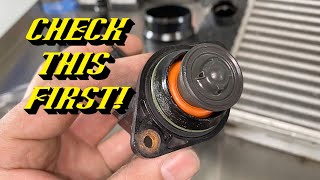
- The turbocharger bypass valve (BOV) is a top suspect. Remove and inspect its orange diaphragm for tears.
- A rattling noise strongly suggests a problem with the turbo wastegate, which may require turbo replacement.
- Check for any applicable TSBs for your specific model year, as Ford has issued several bulletins related to this code.
What's Unique About the 2011-2022 Ford F-150

The twin-turbocharged EcoBoost engines in the F-150 rely on a complex system of plumbing, valves, and controls to produce power. While very effective, this complexity introduces several common failure points that lead to P0299. Unlike some other turbocharged vehicles, issues with the electronic bypass valve, wastegate actuators, and even specific plastic air deflectors (on newer models) are frequent culprits, often preceding actual turbocharger failure. Early 3.5L models (2011-2012) were more prone to intercooler condensation issues and turbo failure, while later models received redesigned components, though they still suffer from leaks and valve issues.
Generation note: This guide covers the 12th Gen (2011-2014), 13th Gen (2015-2020), and 14th Gen (2021-2022) F-150. While many causes are common across all years, some issues are generation-specific. For example, TSBs for a deformed upper air deflector (TSB 24-2264, 22-2198) and wastegate actuator linkage issues (SSM 49960) apply specifically to 2021 and newer models. Early 12th Gen trucks (2011-2014) had more frequent issues with intercooler condensation and turbocharger failures before a redesign in 2015. The 2nd Generation 3.5L EcoBoost (2017+) introduced electronic wastegates, which have their own unique diagnostic procedures and failure modes, including a common rattle.
Symptoms You May Notice

- Significant loss of engine power and sluggish acceleration.
- Check Engine Light illuminated.
- Powertrain fault warning (orange wrench icon) on the dashboard.
- Hissing or 'whooshing' sounds from the engine bay under boost, indicating a charge air leak.
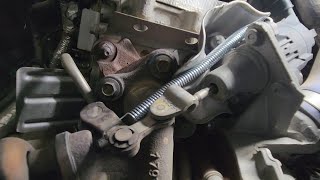
- Rattling noise, especially on deceleration or at idle, often pointing to a loose wastegate actuator linkage.
- Reduced fuel economy.
- For 2011-2014 models, a shudder or misfire under hard acceleration, especially in humid weather, can be caused by intercooler condensation being ingested by the engine.
- A stall on acceleration, particularly when climbing small hills, has been reported by owners experiencing persistent P0299 issues (NHTSA ODI #11626996).
- Immediately replacing the turbochargers without performing a thorough diagnosis. The cause is often a much cheaper and simpler part like a hose, clamp, or the bypass valve.
- Replacing boost sensors when the issue is a mechanical leak. A high-pressure smoke test should always be performed to rule out leaks before replacing electronic components. 🎬 Watch: Quick diagnostic steps for P0299 underboost codes
- Mistaking the wastegate rattle for a more serious engine problem. The rattle is a very common and well-documented issue that often does not require full turbo replacement. 🎬 Watch: A simple fix for common wastegate rattle
Most Likely Causes

- Boost/Charge Air Leaks 🔴 High Probability The system uses numerous plastic and rubber components that can crack with age and heat cycles. Clamps on the charge pipes, especially the large cold-side boot coming off the intercooler, can loosen and blow off under pressure.
How to confirm: Perform a thorough visual inspection of all air ducts between the turbos, the intercooler, and the throttle body. Look for loose clamps, disconnected hoses, or visible cracks. A high-pressure smoke test is the most effective way to find small, hard-to-see leaks; a standard low-pressure EVAP smoke tester may not reveal boost leaks.
Typical fix: Tighten loose clamps or replace cracked/split hoses. The charge air cooler (intercooler) connections are a common point of failure. A user on F150Forum.com found their cold-side boot was almost entirely off the pipe, causing a P0299 code.
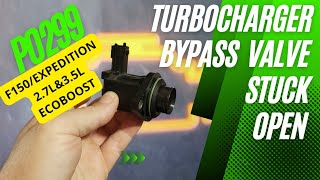
Est. part cost: $10-$200 - Faulty Turbocharger Bypass Valve (BOV) 🔴 High Probability The electronic bypass valve (also called a diverter or blow-off valve) is a very common failure point. The internal orange rubber diaphragm is known to tear, or the valve's piston can stick open due to rust on the shaft, causing a constant internal boost leak.
How to confirm: Remove the valve from the intercooler (typically two 7mm or 8mm bolts). Visually inspect the orange diaphragm for any rips or tears. Check if the valve piston is stuck in the open position; it should be normally closed.
Typical fix: Replace the bypass valve assembly. It is a relatively inexpensive and accessible part located on the intercooler. 🎬 See how a faulty bypass valve causes this issue The OEM part number is often AA5Z-9U465-A, which was superseded by FL3Z-9U465-A. Aftermarket options from brands like Turbosmart or Boomba are also popular.
Est. part cost: $50-$100 - Faulty Turbocharger Wastegate or Actuator 🟡 Medium Probability The wastegate controls turbo speed. On 2011-2016 models, the vacuum-operated actuator linkage can develop excessive play causing a rattle, or the wastegate flapper can wear. On 2017+ models, the electronic actuators can fail or require adjustment. Manufacturer bulletin SSM 54392 notes that a rattle noise from the turbocharger in newer 3.5L models may be directly related to the wastegate actuator rod, leading to P0299.
How to confirm: Listen for a distinct rattle from the turbo area. For 2011-2016 models, use a pressure pump on the actuator; it should start moving at 3-5 PSI and be fully open by 15-18 PSI, holding pressure without leaking. For 2017+ electronic actuators, use a scan tool to monitor wastegate position voltage; it should be within 1.2V to 4.1V during operation.
Typical fix: For linkage rattle, a spring kit (TSB 20-2016, part HL3Z-9G488-C) may resolve the noise on 2017 models. On some models, the actuator can be replaced separately. However, in many cases, especially with internal wastegate wear, the entire turbocharger assembly must be replaced.
Est. part cost: $20 (spring kit) to $250 (actuator only) or $800-$2500 (full turbo assembly) - Cracked Exhaust Manifold or Broken Studs 🟡 Medium Probability The cast iron manifolds are subject to extreme heat cycles which can cause them to warp or crack, and the steel studs can break. This allows exhaust to leak before it reaches the turbocharger, reducing the energy available to spin the turbine.
How to confirm: Listen for a ticking or exhaust leak sound, especially when the engine is cold. Visually inspect the exhaust manifolds where they bolt to the cylinder head. Look for broken studs (especially those near the firewall which are harder to see) or black soot trails indicating a leak.
Typical fix: Replace the damaged exhaust manifold and any broken studs. This is often a labor-intensive job due to stuck bolts and tight access.
Est. part cost: $200-$500 (per manifold) - Deformed Upper Radiator Air Deflector (2021+ models) ⚪ Low Probability Ford issued TSBs 24-2264 and 22-2198 for an issue where the upper air deflector can deform and restrict airflow to the right-side turbocharger's intake snorkel, causing P0299. This starves the turbo of air, leading to an underboost condition.
How to confirm: Visually inspect the upper air deflector located near the radiator to see if it is warped, misaligned, or obstructing the turbo intake path. This issue is most common on the passenger side.
Typical fix: Reseat or replace the air deflector. The updated OEM part number is ML3Z-8310-D. Some owners report dealers cutting a hole in the deflector as part of the fix.
Est. part cost: $50-$80 - Damaged Wastegate Control Solenoid or Vacuum Lines ⚪ Low Probability The plastic vacuum/pressure lines that control the wastegate actuators (on 2011-2016 models) can become brittle and crack, or the solenoid itself can fail. A broken nipple on a vacuum line or solenoid is a common failure point.
How to confirm: Inspect all vacuum/pressure lines connected to the wastegate control solenoid and the turbo actuators for cracks or breaks. Test the solenoid for proper function using a scan tool or by applying voltage and listening for a click.
Typical fix: Replace the broken lines or the faulty solenoid. The solenoid is often referred to as the Turbocharger Boost Control Solenoid (Ford part BL3Z-9K378-A).
Est. part cost: $25-$100
Rare But Worth Checking
- Intercooler Condensation (2011-2014 3.5L): On early 3.5L EcoBoosts, especially in humid climates, condensation can build up inside the stock intercooler. During hard acceleration, this water can be ingested by the engine, causing a significant stumble, misfire, and sometimes triggering P0299. A common DIY fix mentioned in forums is drilling a small 1/16" 'weep hole' in the bottom of the intercooler, though this is debated. Upgrading to a larger aftermarket intercooler is a more permanent solution.
- Stretched Timing Chain: In some instances, a stretched timing chain can lead to P0299 in conjunction with timing codes like P0016. An owner reported that a Ford dealer advised a timing chain replacement was necessary to resolve these combined error codes (NHTSA ODI #11139177).
- Complete Turbocharger Failure: While less common than leaks or valve issues (especially on 2015+ models), the turbo's internal bearings can fail due to oil starvation (clogged oil feed screen) or the compressor/turbine wheels can be damaged. This is a worst-case scenario and is often accompanied by grinding noises, excessive shaft play, or blue/white smoke from the exhaust. NHTSA ODI #11508788 describes an owner experiencing a loss of power while driving that was attributed to turbocharger failure.
- Clogged Catalytic Converters: If the catalytic converters become clogged, the excessive exhaust backpressure can prevent the turbos from spooling up effectively. This is usually accompanied by other symptoms like a sulfur smell and a more severe, continuous loss of power across all RPMs.
- Faulty Boost Pressure Sensor (MAP/TIP): It is possible for the sensor that measures boost pressure (often labeled as a TIP or MAP sensor on Fords) to fail and send inaccurate readings to the PCM. However, this is less common than mechanical failures in the turbo system. Cleaning the sensors with an appropriate electronic cleaner is a good first step before replacement.
Diagnosis Steps

- Read the code with an OBD-II scanner to confirm P0299 is present. Note any other codes. Be aware that on some PowerBoost models, P0299 may appear alongside misfire codes P0301, P0302, or P0303 (TSB 24-2257).
- Perform a thorough visual inspection of the entire air intake and charge air system. Look for obviously disconnected hoses, loose clamps, or cracked plastic pipes. Pay close attention to the connections at the intercooler and throttle body.
- Listen for abnormal noises. A 'whoosh' or hiss under acceleration suggests a boost leak, while a metallic rattle on deceleration points towards a wastegate issue.
- For 2021+ models, inspect the upper radiator air deflector for deformation or obstruction of the passenger-side air intake snorkel, per TSB 22-2198.
- Remove and inspect the turbocharger bypass valve (BOV) on the intercooler. It is held by two 7mm or 8mm bolts. Check for tears in the orange diaphragm or a stuck piston.
- If no obvious leaks are found, perform a smoke test on the charge air system to identify hidden leaks from cracked pipes, gaskets, or the intercooler itself.
- Inspect the wastegate actuator linkage on both turbos for excessive play. Use a vacuum/pressure pump to test the actuators. For F-150s, the wastegates are typically pressure-activated.
- Inspect exhaust manifolds for cracks or broken studs, indicated by soot trails or an audible ticking noise when cold.
Parts You'll Likely Need

- Turbocharger Bypass Valve (Blow-Off Valve)
(OEM #AA5Z-9U465-A)— This is a very common failure point. The internal diaphragm tears or the valve sticks, causing a boost leak.
Trusted brands: Motorcraft, Bosch
OEM price range: $60-$90
Aftermarket price range: $40-$70 - Charge Air Cooler Pipe / Hose — The hoses and pipes carrying boost pressure can crack or pop off their connections, causing a major leak.
Trusted brands: Motorcraft, Mishimoto
OEM price range: $80-$200
Aftermarket price range: $50-$150 - Turbocharger Wastegate Actuator
(OEM #ML3Z-9G488-J (2.7L RH))— The actuator can fail or the linkage can become loose, preventing proper wastegate control. This is a known issue covered by TSBs.
Trusted brands: Motorcraft
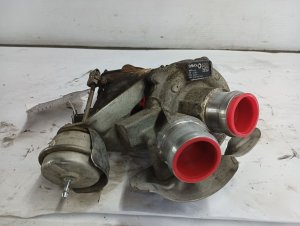
OEM price range: $150-$250 - Turbocharger Assembly — Required if the wastegate is not serviceable or if the turbo has failed internally. This is the most expensive repair.
Trusted brands: Motorcraft, Garrett
OEM price range: $1000-$2500
Aftermarket price range: $600-$1500
Related Codes That Often Appear With This One
- P0300-P0306 (Random/Multiple Misfire)
- P0015, P0017 (Camshaft Position Timing - Over-Retarded)
- P054B (Cold Start 'B' Camshaft Position Timing Performance)
- P0016 (Crankshaft Position - Camshaft Position Correlation)
Technical Service Bulletins (TSBs) & Recalls
- TSB 24-2264: Supersedes 22-2198 for deformed upper air deflector on 2021-2024 models.
- TSB 22-2198: Deformed upper radiator air deflector on 2021-2022 F-150 Raptor/Tremor causing P0299.
- TSB 20-2016: Addresses wastegate linkage rattle on 2017 3.5L EcoBoost with a spring kit (HL3Z-9G488-C).
- SSM 54392: Points to wastegate actuator rattle as a cause for P0299 on 2021+ models.
- SSM 49960: For 2021 2.7L EcoBoost, addresses a separated wastegate actuator linkage, providing replacement kits to avoid full turbo replacement.
- TSB 24-2257: Notes that 3.5L PowerBoost models built on or before 30-Sep-2021 may experience reduced engine power and P0299 alongside misfire codes.
Platform-Specific Known Issues
- Intercooler Condensation (2011-2014 3.5L): Early 3.5L EcoBoost engines are notorious for accumulating condensation in the factory intercooler, especially in humid climates. Under hard acceleration, this water gets sucked into the intake, causing a violent shudder, misfires, and potentially triggering code P0299. Forum users often discuss drilling a 1/16-inch 'weep hole' in the bottom of the intercooler as a temporary fix.
- Deformed Air Deflector (2021+): As detailed in Ford TSBs 22-2198 and 24-2264, the plastic upper radiator air deflector on 14th Gen F-150s can warp and block the air intake snorkel for the passenger-side turbo. This starves the turbo for air, causing underboost and setting P0299. The fix is to replace the deflector with an updated part (ML3Z-8310-D).
- Wastegate Rattle (Gen 2 3.5L & 2.7L): A common complaint is a metallic rattling sound, often compared to crickets, coming from the turbo area at idle or during light acceleration/deceleration. This is caused by wear and excessive play in the wastegate actuator linkage. Ford has issued TSBs (e.g., 20-2016) with spring kits to add tension and quiet the rattle.
Mechanic-Grade Diagnostic Values
- P0299 DTC Trigger Condition — expected: Actual Throttle Intake Pressure (TIP) is 4 psi (27.6 kPa) or more below desired pressure for 5 seconds.. Failure: The PCM logs code P0299.
- Pneumatic Wastegate Actuator Test (2011-2016) — expected: Using a pressure pump, actuator rod begins to move at 3-5 PSI and is fully extended at 15-18 PSI. It must hold this pressure without bleeding off.. Failure: Actuator does not move, does not hold pressure, or moves outside the specified pressure range.
- Electronic Wastegate Actuator Voltage (2017+) — expected: Operating range is between 1.2V and 4.1V. Key-on, engine-off (KOEO) voltage should be between 1.26V and 1.43V after adjustment.. Failure: Voltage readings outside of this range will trigger a range/performance fault.
- Scan Tool PID - Wastegate Duty Cycle (VGT %) — expected: The PID should actively change between ~15% and ~85% depending on engine load and RPM. It should not be stuck at either extreme for extended periods under normal driving.. Failure: PID value is stuck at 15% or 85%, indicating the PCM is commanding maximum or minimum duty cycle but desired boost is not being achieved.
Scan Tool Commands That Help
- Ford IDS (Integrated Diagnostic System): Powertrain -> Air Management -> Turbocharger Test — This is an automated test that commands the wastegates (VGT vanes on applicable models) through their full range of motion at idle to verify mechanical operation. It graphs the commanded position vs. actual position and corresponding backpressure, making it easy to spot a sticking or failed actuator/wastegate.
- Ford IDS (or advanced scan tools like FORScan): Live Data / PID Monitoring — Monitor PIDs such as 'TCBP_A' (Turbocharger Boost Pressure Actual), 'TCBP_DES' (Desired Boost), 'WGATE_A_CMD' (Wastegate Command %), and 'WGA_V' (Wastegate Actuator Voltage) to compare what the PCM is requesting versus what the sensors are reporting. This is crucial for diagnosing electronic vs. mechanical faults.
Wiring & Ground Locations
- G100 / G102 / G107 / G108 — Various points on the right and left side of the engine compartment, often on the firewall or inner fender. G100 is on the right side, G102 is on the left front.. These are primary grounds for the Powertrain Control Module (PCM) and its related sensors. A poor ground connection at these points can cause erratic sensor readings and incorrect actuator commands, potentially leading to a P0299 code.
- G106 — Bottom right side of the engine block.. This is a critical engine block ground. A poor connection here can affect the operation of engine-mounted sensors and actuators involved in the turbo control system.
- Wastegate Control Solenoid Connector — On the wastegate control solenoid valve, typically mounted near the top of the engine. (2011-2016 models).. This connector provides power and signal to the solenoid that controls the vacuum/pressure to the wastegate actuators. Checking for voltage and a good connection here is a key step in diagnosing a non-responsive wastegate system.
Real Owner Repair Stories
- YouTube user Barbour's Auto Help (2018 Ford F-150 2.7L EcoBoost) — Check engine light with P0299, slightly underpowered on acceleration.
❌ Tried (didn't work) Initial diagnosis pointed towards a general underboost condition.
✅ What actually fixed it The turbocharger bypass valve (BOV) was mechanically stuck in the open position due to rust buildup on the internal shaft. Replacing the valve resolved the code. - YouTube user That Expat Mechanic (2014 Ford F-150 3.5L EcoBoost with a rebuilt engine) — P0299 code present after engine replacement.
❌ Tried (didn't work) Checking for common boost leaks in charge pipes.
✅ What actually fixed it A vacuum hose nipple located under the air filter box was found to be broken off, likely during the engine installation. A temporary repair with silicone and reconnecting another unplugged hose in the same area fixed the vacuum leak and cleared the P0299 code. - Reddit user on r/f150 (2013 3.5L EcoBoost) — Intermittent P0299. Boost works fine initially, then disappears after coasting downhill or cruising for a few miles. No turbo spool sound when failed.
❌ Tried (didn't work) Replacing the boost control solenoid.
✅ What actually fixed it The user found that turning the truck off and restarting it would temporarily bring the boost back. This behavior strongly points to an electronic issue, such as a failing sensor providing bad data, a wiring fault, or a failing electronic bypass valve, rather than a mechanical boost leak. The final fix was not posted, but the diagnostic pattern is highly valuable. - NHTSA ODI #11626996 — An owner reported that despite several dealership visits where diagnostics were reset, the P0299 code repeatedly returned. The issue was preceded by the vehicle stalling on acceleration while climbing small hills.
"I Checked Everything" — The Actual Cause
- A 2013 F-150 with P0299, P0369, and P0365 codes was diagnosed. While P0299 suggests a boost issue, the root cause was a faulty camshaft position sensor (Bank 1, Sensor B). The sensor was covered in metallic debris. Cleaning the sensor and its connector resolved all codes, including the P0299. The faulty cam timing signals were causing the PCM to incorrectly manage the engine, which impacted turbo performance and triggered the underboost code. This is a classic example where the fault lies outside the charge air system.
OEM Part Supersession History
AA5Z-9U465-A→FL3Z-9U465-A— Updated design for the turbocharger bypass valve (BOV) / boost pressure relief valve.
Heads up: The parts are generally interchangeable, but the newer part number is the preferred replacement for improved reliability.DL3Z-6K682-E / DL3Z-6K682-F (2017 Turbos)→JL3Z-6K682-C / JL3Z-6K682-D (2018-2020 Turbos)— Year-specific turbocharger assembly updates.
Heads up: While they may physically mount, the electronic wastegate actuators and control logic can differ. It is critical to use the correct part number for the specific model year.
Model Year Variations Within This Range
- 2011-2012: These early 3.5L EcoBoost engines used turbos with a built-in blow-off valve (BOV) mount on the turbo's compressor housing itself. They are not interchangeable with 2013+ models.
- 2013-2016: Ford updated the 3.5L turbos to a larger design and moved to an external electronic bypass valve (BOV) mounted on the intercooler. These turbos are more reliable than the 2011-2012 units. The wastegates are controlled by vacuum/pressure via a solenoid.
- 2017-2020 (Gen 2 3.5L): The second-generation 3.5L engine introduced a new turbo system with electronic wastegate actuators. These are controlled by a stepper motor for more precise boost control but are known to cause a rattle noise (addressed by TSB 20-2016) and require a specific voltage-based adjustment procedure if replaced or serviced.
- 2021+: These models are subject to a TSB for a deformed upper radiator air deflector that can starve the passenger-side turbo of air, causing P0299. Manufacturer bulletin SSM 54392 also highlights that a rattle noise from the turbocharger may be due to the wastegate actuator rod in these years.
Diagnostic Flowchart
Real Owner Stories
Aggregated from forums and TSBs cited above. Mileages and costs reflect what owners reported in those sources.
Ford F-150 EcoBoost
Symptoms: Experienced a P0299 underboost code and a loss of engine power.
What fixed it: Found the large cold-side boot was almost entirely blown off the intercooler pipe. Reconnected and tightened the clamp.
Source hint: F150Forum.com
2011-2014 Ford F-150 3.5L EcoBoost
Symptoms: Violent shudder and misfires under hard acceleration in humid weather, accompanied by a P0299 code.
What fixed it: Drilled a 1/16-inch 'weep hole' in the bottom of the factory intercooler to allow accumulated condensation to drain out.
Source hint: Forum users
2021+ Ford F-150
Symptoms: Triggered a P0299 code due to the upper radiator air deflector warping and obstructing the passenger-side turbo intake snorkel.
What fixed it: The dealer cut a hole in the deformed air deflector to restore airflow to the turbocharger.
Source hint: Owner reports / TSB 24-2264 / TSB 22-2198
Related OBD-II Codes
Frequently Asked Questions
Does TSB 22-2198 or 24-2264 apply to my F-150?
Why does my 2011-2014 3.5L EcoBoost shudder and misfire under hard acceleration?
I hear a rattling noise like crickets on deceleration. What causes this on the EcoBoost?
What is the most common cause of a hissing sound under boost on the F-150?
Can a cracked exhaust manifold cause a P0299 code on the 3.5L or 2.7L?
What part number do I need to replace a torn turbo bypass valve (BOV)?
Helpful Videos
We Have This Part in Stock


The information in this article is provided for general reference and educational purposes only. Vehicle specifications, procedures, and part compatibility can vary by production date, trim level, and region. Always consult your vehicle's factory service manual and verify part numbers before purchasing or performing repairs. Safety-critical components such as airbags, seat belts, and braking systems should be installed by a qualified professional.
- Ford F-150:
- 🎬 Helpful Videos
- 🛍️ Shop This Part
- What's Unique About the 2011-2022 Ford F-150
- Symptoms You May Notice
- Most Likely Causes
- Rare But Worth Checking
- Diagnosis Steps
- Parts You'll Likely Need
- Related Codes That Often Appear With This One
- Technical Service Bulletins (TSBs) & Recalls
- Platform-Specific Known Issues
- Mechanic-Grade Diagnostic Values
- Scan Tool Commands That Help
- Wiring & Ground Locations
- Real Owner Repair Stories
- "I Checked Everything" — The Actual Cause
- OEM Part Supersession History
- Model Year Variations Within This Range
- Diagnostic Flowchart
- Real Owner Stories
- Ford F-150 EcoBoost
- 2011-2014 Ford F-150 3.5L EcoBoost
- 2021+ Ford F-150
- Related OBD-II Codes
- Frequently Asked Questions
- 🎟️ Get 5% Off