

P0299 on 2013-2019 Ford Escape EcoBoost: Underboost Causes and Fixes
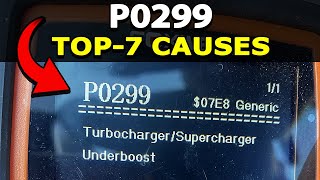
On a 2013-2019 Ford Escape with an EcoBoost engine, code P0299 is most often caused by a faulty turbocharger wastegate regulating solenoid, a leak in the charge air system (cracked or disconnected pipes), or a torn turbocharger bypass valve. Replacing the solenoid is a common, relatively inexpensive first step, especially on the 1.6L engine.
- P0299 means the turbo isn't making enough boost, causing a major loss of power.
- Before assuming the expensive turbo has failed, thoroughly check for boost leaks from cracked hoses, a bad bypass valve, or a faulty wastegate solenoid.
- For the 1.6L engine, the wastegate regulating solenoid is a known weak point and is the subject of Ford TSB 15-0162.
- A smoke test is the best way to find hard-to-see leaks in the charge air system.
- If you have a 1.6L engine, the bypass valve from the 2.0L engine (CJ5Z-9U465-A) can be used as a replacement, saving you from buying a whole new turbo assembly.
What's Unique About the 2013-2019 Ford Escape

The EcoBoost engines in the Ford Escape rely heavily on their turbochargers for power and efficiency. While P0299 is a generic code, these specific engines have well-documented failure points. Ford has issued Technical Service Bulletins (TSBs) that point directly to components like the wastegate regulating solenoid, especially on the 1.6L engine (TSB 15-0162). Additionally, owner experiences have revealed that parts not officially sold separately, like the bypass valve on the 1.6L, can often be replaced using the part from the 2.0L engine (CJ5Z-9U465-A), saving a costly full turbo replacement. Another common issue is charge air cooler hoses popping off their connections, resulting in a sudden loss of power and a whistling noise.
Symptoms You May Notice
- Significant loss of engine power and sluggish acceleration
- Check Engine Light illuminated
- Whining, whistling, or other unusual noises from the engine bay, especially under acceleration
- Vehicle may enter "limp mode" to prevent damage
- A sudden "pop" sound followed by immediate power loss
- Poor fuel economy
- Replacing the entire turbocharger assembly before checking for simpler issues like boost leaks, a faulty solenoid, or a bad bypass valve. Many owners have fixed the code by replacing a sub-$100 part instead of the entire turbo.
- A mechanic diagnosing a bad turbo due to oil leaks when the actual fault was the wastegate solenoid, a much cheaper repair confirmed by a Ford dealer diagnostic.
Most Likely Causes

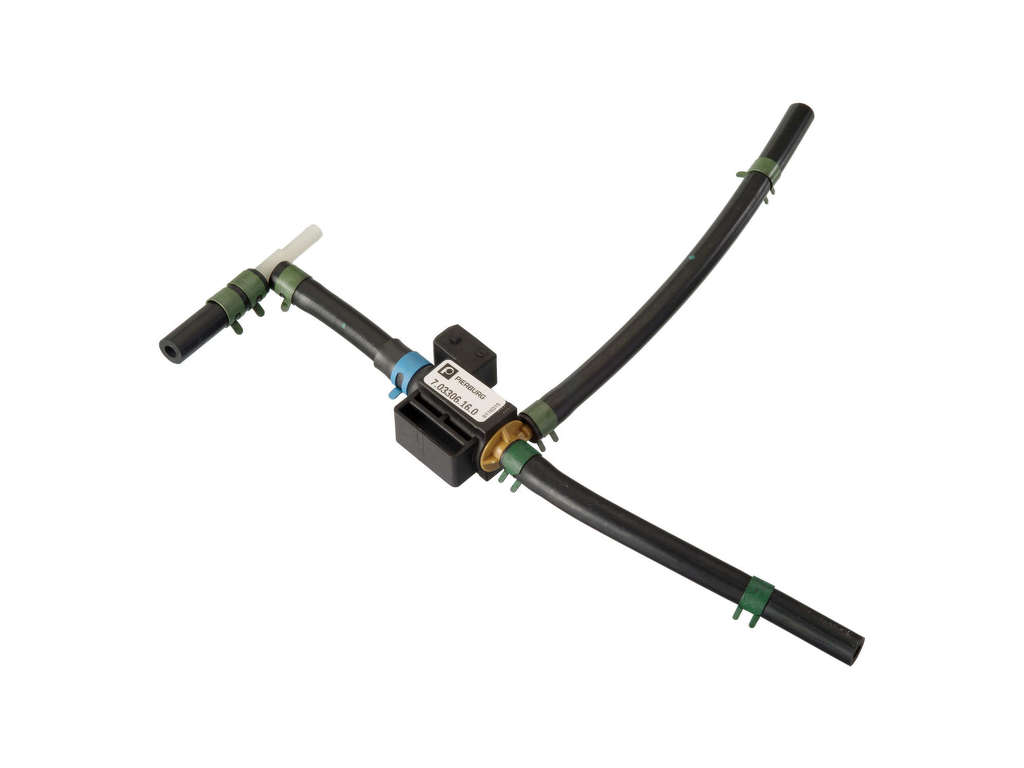
- Faulty Turbocharger Wastegate Regulating Valve Solenoid 🔴 High Probability This is a well-documented failure point, specifically addressed by Ford TSB 15-0162 for 2013-2016 Escapes with the 1.6L engine. The solenoid, which controls the vacuum sent to the wastegate, can stick or fail electrically, leading to improper boost regulation. Many owners on forums report this as the fix, with part number CJ5Z-9K378-B being a common replacement.
How to confirm: The solenoid can be tested with a multimeter for electrical integrity; for the 1.6L engine, the expected resistance is 12.4 Ω ± 0.5 Ω. A mechanic can also command it on and off with a scan tool while observing vacuum readings. Often, due to its low cost and high failure rate, it's replaced as a primary diagnostic step.
Typical fix: Replace the wastegate regulating valve solenoid and its associated vacuum hoses. The Motorcraft part number is CJ5Z-9K378-B (supersedes CJ5Z-9K378-A).
Est. part cost: $40-$90 - Leaking, Cracked, or Disconnected Charge Air Hoses/Pipes 🔴 High Probability The charge air system operates under pressure and high temperatures. Over time, rubber and plastic components can become brittle, crack, or the clamps can loosen, causing a pipe to pop off its connection. One owner reported hearing a 'pop' and finding the charge air cooler outlet hose had blown off, which was fixed by re-securing the clamp.
How to confirm: Visually inspect all hoses and pipes between the turbocharger, intercooler, and throttle body for cracks, holes, oil residue (indicating a leak), or loose clamps. A smoke test is the most effective way to find small, hard-to-see leaks.
Typical fix: Replace the damaged hose or pipe and secure all clamps. Sometimes just tightening a loose clamp is sufficient.
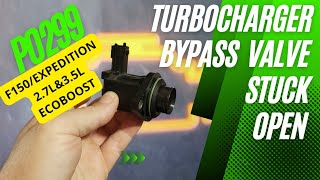
Est. part cost: $50-$200 - Faulty Turbocharger Bypass/Diverter Valve (BPV) 🟡 Medium Probability The diaphragm inside the valve can tear, or the valve can become stuck open due to corrosion or debris, creating a constant boost leak. On the 1.6L engine, Ford does not sell this part separately from the turbo, but the valve from the 2.0L (Part No. CJ5Z-9U465-A) is a known compatible replacement, as documented by owners who have performed the swap successfully.
How to confirm: The valve can be removed and inspected for tears in the diaphragm or rust on the actuator shaft. Applying vacuum to its port can test if it holds pressure. A stuck-open valve may be visibly seized.
Typical fix: Replace the bypass valve. For 1.6L owners, this means purchasing part number CJ5Z-9U465-A.
Est. part cost: $60-$90 - Faulty or Disconnected Wastegate Actuator 🟡 Medium Probability TSB SSM 50485 notes that on some EcoBoost engines, the e-clip holding the actuator rod to the wastegate arm can fall off, causing a total loss of boost control. The vacuum-operated actuator itself can also fail, with the internal diaphragm rupturing.
How to confirm: Visually inspect the turbocharger to ensure the wastegate actuator rod is connected to the wastegate arm. The actuator can be tested with a vacuum pump to see if it moves the arm smoothly through its full range of motion and holds vacuum (e.g., holds 20 inHg for 30+ seconds).
Typical fix: Re-secure the actuator rod with a new e-clip or replace the entire wastegate actuator if it's faulty. Ford has released service kits for some models to avoid full turbo replacement.
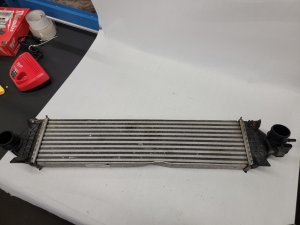
Est. part cost: $5-$150 - Cracked or Leaking Charge Air Cooler (Intercooler) ⚪ Low Probability The intercooler can develop leaks, especially at the seams where plastic end tanks are crimped to the aluminum core. It can also be damaged by road debris.
How to confirm: A smoke test is the most reliable method to confirm a leak in the intercooler core or end tanks. Visual inspection may reveal damage or oil residue concentrated in one area.
Typical fix: Replace the charge air cooler assembly.
Est. part cost: $150-$400
Rare But Worth Checking
- Clogged Catalytic Converter: A clogged catalytic converter creates excessive exhaust backpressure, which can prevent the turbo from spinning up to speed and building boost.
- Dirty Manifold Absolute Pressure (MAP) Sensor: If the MAP sensor, which reads the boost pressure, is dirty with oil or carbon, it can send inaccurate readings to the PCM, triggering the code. Cleaning it is a simple and low-cost diagnostic step. On some models, it is easily accessible on top of the intake manifold.
- Internal Turbocharger Failure: While less common than the other causes, worn bearings or damaged turbine/compressor wheels inside the turbocharger itself can lead to an inability to produce boost. NHTSA ODI #11530029 describes an owner whose engine light came on with code P0299 and noted that many owners are finding they have to replace the turbo completely. This is usually a last resort after all other possibilities have been ruled out and is often misdiagnosed when a simpler component is the real cause.
Diagnosis Steps
- Scan for any other trouble codes to get more context. Codes like P0234 or P0243 can point directly to the wastegate control system. NHTSA ODI #11633558 notes a case where P0299 appeared alongside P1016, P0365, and P0443, which the dealer eventually linked to the EVAP system.
- Visually inspect the entire air intake system from the air filter to the throttle body. Look for loose or disconnected hoses (especially at the intercooler), cracked plastic pipes, and loose clamps.
- Specifically inspect the small vacuum lines going to the turbocharger wastegate regulating solenoid for cracks or disconnections.
- Inspect the turbocharger wastegate actuator rod to ensure it is physically connected to the wastegate arm. Check for a missing e-clip, as noted in TSB SSM 50485.
- If no obvious leaks are found, perform a smoke test on the intake and charge air system to pinpoint any hidden leaks from pipes, the intercooler, or gaskets.
- Test the wastegate regulating solenoid (Part No. CJ5Z-9K378-B). Given its high failure rate and low cost on the 1.6L, many owners and shops replace this part as a primary diagnostic step.
- Remove and inspect the turbocharger bypass valve (diverter valve) for a torn diaphragm. On the 1.6L, use part CJ5Z-9U465-A from the 2.0L as a replacement.
- Test the wastegate actuator using a hand-held vacuum pump to ensure it moves freely and holds vacuum.
- Clean and inspect the MAP sensor. If it's heavily coated in oil, it may not be reading pressure correctly.
- If all other components check out, the issue may be with the turbocharger itself. Inspect for excessive shaft play or signs of internal damage.
Parts You'll Likely Need

- Turbocharger Wastegate Regulating Valve Solenoid
(OEM #CJ5Z-9K378-B) - Turbocharger Bypass Valve (Diverter Valve)
(OEM #CJ5Z-9U465-A) - Charge Air Cooler Hose (Intercooler Pipe)
Related Codes That Often Appear With This One
- P0234 — This is an 'Overboost' code. It can appear with P0299 if the wastegate control system (solenoid, actuator) is failing erratically, causing both underboost and overboost conditions at different times. TSB 15-0162 addresses both codes with the same fix.
- P0243, P0245, P0246 — These codes are related to the wastegate solenoid circuit. Their presence alongside P0299 strongly points to the solenoid or its wiring as the root cause.
- P0365, P0369, P0012 — These codes related to camshaft position and timing were reported alongside P0299 in NHTSA ODI #11427314, suggesting potential damage to the cam and bottom end of the motor.
Technical Service Bulletins (TSBs) & Recalls
- source — Bulletin #TSB150162: For 2013-2016 Escape, 2014-2016 Fiesta ST, and 2013-2014 Fusion with the 1.6L GTDI engine. Addresses DTCs P0234, P0245, P0246, and/or P0299. The official fix is to replace the turbocharger wastegate regulating valve solenoid after inspecting for charge air and vacuum line leaks.
- source — For various 2019-2022 Ford/Lincoln vehicles with 2.0L or 2.3L EcoBoost engines. Addresses P0299 and other codes caused by an inoperative wastegate actuator, a missing e-clip on the actuator rod, or non-visible rod damage. It notes a service kit is available to avoid full turbo replacement.
Platform-Specific Known Issues
- TSB 15-0162 was issued for 2013-2016 Escapes with the 1.6L engine, specifically identifying the wastegate regulating valve solenoid as the likely cause for P0299.
- TSB SSM 50485 applies to multiple EcoBoost engines and points to an inoperative wastegate actuator or a missing e-clip on the actuator rod as a potential cause.
- On the 1.6L EcoBoost, the turbocharger bypass valve (BPV) is not officially sold as a separate part. However, owners and mechanics have confirmed that the BPV from the 2.0L EcoBoost (part number CJ5Z-9U465-A) is a direct replacement and resolves boost leak issues.
Mechanic-Grade Diagnostic Values
- Turbocharger Wastegate Regulating Valve Solenoid Resistance (1.6L Engine) — expected: 12.4 Ω ± 0.5 Ω at 25°C (77°F). Failure: A reading significantly outside this range, or an open/short circuit, indicates a faulty solenoid.
- Wastegate Actuator Vacuum Test — expected: The actuator should hold a steady vacuum (e.g., 20 inHg) without bleeding down for at least 30 seconds.. Failure: If the actuator cannot hold vacuum, the internal diaphragm is likely torn, requiring actuator replacement.
- Wastegate Solenoid Control Wire Voltage (Key On, Engine Off) — expected: 0 Volts. Failure: Receiving any constant voltage from the PCM pin for this wire indicates a possible short to voltage within the PCM itself.
Scan Tool Commands That Help
- Ford IDS (Integrated Diagnostic System): VGT/Turbocharger System Test — This is a guided routine that allows a technician to command the wastegate through its range of motion and monitor sensor responses to verify the entire control system is working.
- FORScan: Wastegate Control (WGC) Solenoid Commanded State & Duty Cycle PIDs — Use these PIDs (Parameter IDs) to monitor what the PCM is commanding the solenoid to do in real-time while driving. Comparing the commanded vs. actual boost can confirm if the solenoid is responding correctly. FORScan may also reveal manufacturer-specific DTCs not visible on basic scanners.
Wiring & Ground Locations
- G100 — Located on the left rear of the engine compartment.. This is a primary grounding point for the engine harness. A loose or corroded connection at G100 can cause erratic behavior or failure of various engine sensors and actuators, including those in the turbo control system.
- Wastegate Solenoid Connector — On the wastegate regulating valve solenoid, typically mounted near the turbocharger assembly.. This connector and its wiring are susceptible to heat damage. The pins should be checked for corrosion or being spread, and the wiring should be inspected for chafing, especially on 1.5L and 2.0L models where harness chafing can blow fuse F34.
Real Owner Repair Stories
- Reddit user on r/fordescape (2014 Ford Escape, mileage not specified) — Dreaded P0299 underboost code.
✅ What actually fixed it The wastegate regulating valve solenoid was stuck open. Replacing the solenoid (part number CJ5Z-9K378-B was referenced) resolved the issue completely, restoring power. - Reddit user on r/fordescape (2014 Ford Escape, mileage not specified) — A 'pop' sound while driving, followed by immediate power loss and a loud whistling noise above 3500 RPM. Stored P0299 code.
✅ What actually fixed it The charge air cooler outlet hose on the driver's side had popped off its connection. Re-seating the hose and tightening the clamp fixed the problem. - NHTSA ODI #11603851 — An owner reported that after a dealer had previously replaced the engine, error code P0299 was retrieved during a diagnostic test at an auto parts store.
- 2CarPros Forum User (2013 Ford Escape, mileage not specified) — Sluggish acceleration, no power, P0299 code present. Turbo whining noise.
❌ Tried (didn't work) Checked hoses for holes, Changed air filter, Sprayed cleaner inside turbo hoses
✅ What actually fixed it The final diagnosis pointed to a bad turbocharger. The user tested the wastegate actuator with a vacuum pump and it bled down slowly. After cleaning attempts failed and the whining noise got louder, the expert advice was to check for turbo shaft endplay and replace the turbo.
"I Checked Everything" — The Actual Cause
- A system can pass a smoke test (indicating no static leaks) but still set a P0299 code if the e-clip holding the wastegate actuator rod to the wastegate arm is missing. This is documented in Ford TSBs (SSM 50485, 50171, 49427). The rod physically detaches from the arm, leaving the wastegate open and preventing any boost from building, a condition a smoke test would not reveal.
When the Usual Fixes Don't Work
- While many P0299 codes are fixed by replacing the wastegate solenoid, a notable number of owners have found the issue to be a simple, disconnected charge air cooler hose. One owner reported a mechanic quoted a full turbo replacement due to oil leaks, but a second opinion from a Ford dealer correctly identified the much cheaper wastegate solenoid as the true culprit, saving thousands. This underscores the importance of checking simple mechanical connections and getting a proper electronic diagnosis before approving major repairs.
OEM Part Supersession History
CJ5Z-9K378-A→CJ5Z-9K378-B— Part revision/update by Ford. The -B version is the current recommended replacement for the wastegate regulating valve solenoid.Not sold separately for 1.6L→CJ5Z-9U465-A— Owner/technician discovery.
Heads up: Ford does not officially sell the Turbocharger Bypass Valve (BPV) for the 1.6L EcoBoost separately. However, the BPV from the 2.0L engine (CJ5Z-9U465-A) is a known direct-fit replacement that works correctly.
Model Year Variations Within This Range
- 2013-2016: These years used the 1.6L EcoBoost engine. TSB 15-0162, which points to the wastegate regulating valve solenoid as a primary cause for P0299, is specific to this engine.
- 2017-2019: The 1.6L engine was replaced by the 1.5L EcoBoost. Some 1.5L models may feature a water-to-air charge air cooler integrated into the intake manifold, which is a different design from the traditional air-to-air intercooler on the 1.6L and 2.0L engines.
Diagnostic Flowchart

Other Known Issues on This Vehicle
Issues unrelated to this code that are worth knowing about as an owner of this generation:
- Engine Coolant Intrusion (1.5L/1.6L EcoBoost) 🔴 High — A well-documented design flaw where coolant leaks internally into the cylinders. Can occur at various mileages, often leading to misfires, white exhaust smoke, and eventual catastrophic engine failure. (Ref: TSB 19-2375)
- 6F35 Transmission Failures 🔴 High — Widespread issues including shuddering, slipping, harsh shifting, and complete failure, often before 100,000 miles. The 2013-2019 generation is particularly notorious for these problems. (Ref: Subject of multiple class-action lawsuits.)
- Faulty Door Latches 🔴 High — A component in the door latch can break, preventing the door from closing properly or causing it to open while driving. This affected millions of Ford vehicles, including the 2013-2015 Escape. (Ref: Recall 16S30)
- Overheating and Coolant Leaks (1.6L EcoBoost) 🟠 Medium — Separate from the internal coolant intrusion, these engines are also prone to external coolant leaks from components like the water pump, coolant reservoir, and various hoses. Overheating is a common complaint. (Ref: Recall 13S12)
- EVAP Purge Valve Failure 🟡 Low — A common failure causing a check engine light and sometimes rough idle or difficulty starting after refueling. It's a relatively simple and inexpensive part to replace.
Used vs. New Parts: Buying Guide for This Vehicle
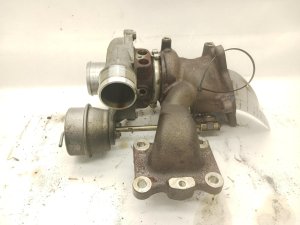
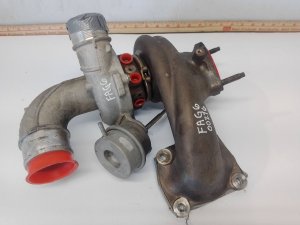
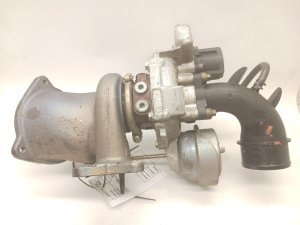
When a used part is the smart pick: Used parts can be a cost-effective choice for major structural components like the turbocharger assembly (from a low-mileage donor), the charge air cooler (intercooler), or charge pipes, provided they are thoroughly inspected for damage, cracks, or excessive wear.
Donor-vehicle mileage cap: roughly under 60000 miles for the part to have meaningful remaining life.
What to inspect on the donor part:
- For a used turbocharger, check for minimal shaft play (both in-and-out and side-to-side) and ensure the compressor/turbine wheels spin freely with no signs of blade damage or housing contact.
- For a used intercooler or charge pipes, visually inspect for cracks, especially at plastic end tanks and mounting points. Ensure there are no significant dents or blockages.
- Check the donor vehicle's history for accidents, especially front-end collisions that could have caused hidden damage to the intercooler.
OEM-only on this vehicle (don't cheap out):
- Turbocharger Wastegate Regulating Valve Solenoid
- Manifold Absolute Pressure (MAP) Sensor
Aftermarket brands forum-validated for this vehicle:
- Motorcraft (OEM for all electronics)
- Pierburg (Often the OEM supplier for solenoids like the wastegate valve)
Brands owners have reported issues with on this vehicle:
- Unnamed/white-box electronic sensors and solenoids from online marketplaces are frequently cited as unreliable or failing shortly after installation.
Real Owner Stories
Aggregated from forums and TSBs cited above. Mileages and costs reflect what owners reported in those sources.
2013 Ford Escape 1.6L EcoBoost
Symptoms: The vehicle triggered a P0299 underboost code. A mechanic initially suggested a full turbocharger replacement.
What fixed it: The owner took it to a Ford dealer who correctly diagnosed and replaced only the wastegate solenoid (part CJ5Z-9K378-B).
Source hint: Reddit - r/fordescape - Dredged P0299 Underboost Code
2013-2019 Ford Escape EcoBoost
Symptoms: Heard a sudden 'pop' sound followed by an immediate loss of engine power.
What fixed it: Found that the charge air cooler outlet hose had blown off; re-secured the hose and tightened the clamp.
Source hint: Reddit - r/fordescape - Dredged P0299 Underboost Code
2013 Ford Escape 1.6L EcoBoost
Symptoms: Boost leak issues and P0299 code; discovered the bypass valve (BPV) was faulty, but the part wasn't listed separately for the 1.6L.
What fixed it: Installed the bypass valve intended for the 2.0L EcoBoost (Part No. CJ5Z-9U465-A), which served as a direct fit.
Source hint: YouTube - 1.6 Ecoboost - Boost Leak Fix and BPV Part Number - 2013 Escape - P0299
Related OBD-II Codes
Frequently Asked Questions
Does TSB 15-0162 apply to my 2014 Ford Escape 1.6L EcoBoost?
I have a 1.6L EcoBoost and need a new bypass valve, but Ford says I have to buy the whole turbo. Is there a workaround?
What is the specific part number for the wastegate solenoid often replaced on the 1.6L engine?
My Escape made a loud 'pop' sound and then lost all power. What should I check first?
Is there a TSB for the wastegate actuator rod or e-clip issues on newer Escapes?
How can I electrically test the wastegate solenoid on my 1.6L EcoBoost?
Helpful Videos
Used OEM Parts in Stock
New Aftermarket Parts Available


The information in this article is provided for general reference and educational purposes only. Vehicle specifications, procedures, and part compatibility can vary by production date, trim level, and region. Always consult your vehicle's factory service manual and verify part numbers before purchasing or performing repairs. Safety-critical components such as airbags, seat belts, and braking systems should be installed by a qualified professional.
- Ford Escape:
- 🎬 Helpful Videos
- 🛍️ Shop This Part
- What's Unique About the 2013-2019 Ford Escape
- Symptoms You May Notice
- Most Likely Causes
- Rare But Worth Checking
- Diagnosis Steps
- Parts You'll Likely Need
- Related Codes That Often Appear With This One
- Technical Service Bulletins (TSBs) & Recalls
- Platform-Specific Known Issues
- Mechanic-Grade Diagnostic Values
- Scan Tool Commands That Help
- Wiring & Ground Locations
- Real Owner Repair Stories
- "I Checked Everything" — The Actual Cause
- When the Usual Fixes Don't Work
- OEM Part Supersession History
- Model Year Variations Within This Range
- Diagnostic Flowchart
- Other Known Issues on This Vehicle
- Used vs. New Parts: Buying Guide for This Vehicle
- Real Owner Stories
- 2013 Ford Escape 1.6L EcoBoost
- 2013-2019 Ford Escape EcoBoost
- 2013 Ford Escape 1.6L EcoBoost
- Related OBD-II Codes
- Frequently Asked Questions
- 🎟️ Get 5% Off