

P0299 on 2015-2024 Ford Edge: Turbo Underboost Causes and Fixes
For the 2015-2024 Ford Edge, code P0299 is most often caused by a faulty turbocharger wastegate actuator, a disconnected actuator rod, or a leaking turbocharger bypass valve. Inspecting the wastegate linkage for a missing e-clip and testing the bypass valve are the first steps before suspecting a major turbo issue or boost leak.
- Before assuming the worst, visually inspect the turbocharger wastegate actuator rod. A missing clip is a cheap and easy fix.
- The two most likely culprits for P0299 on a Ford Edge are the wastegate actuator and the turbo bypass valve.
- Do not replace the entire turbocharger until all other possibilities, especially boost leaks and control components, have been thoroughly ruled out.
- A smoke test is the most reliable way to find small, hard-to-see leaks in the charge air system.
- Ford has acknowledged the wastegate actuator issue and provides a service kit, saving hundreds of dollars over a full turbo replacement.
What's Unique About the 2015-2024 Ford Edge

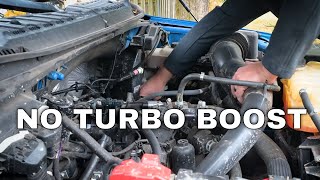
On the 2.0L EcoBoost engine used in the second-generation Ford Edge, the most common cause of P0299 is not the turbocharger itself, but the components that control it. Ford has issued multiple Technical Service Bulletins (TSBs) for similar engines acknowledging that the electronic wastegate actuator can fail or its linkage can come disconnected. This makes the diagnosis more specific than on other vehicles, where a boost leak might be the primary suspect. The 2.7L V6 can also suffer from these issues 🎬 Watch: Diagnosing P0299 no boost on the 2.7L EcoBoost, along with potential boost leaks from its more complex twin-turbo plumbing and issues like leaking plastic oil pans that were common on early versions.
Symptoms You May Notice
- Significant loss of engine power and acceleration
- Check Engine Light is on
- Vehicle may enter 'limp mode' or 'reduced power mode'
- Whistling or hissing sound from the engine bay, especially under acceleration (indicates a boost leak)
- Sluggish throttle response
- Rattling noise from the turbo area, especially at idle or light throttle, can indicate a loose wastegate linkage.
- Replacing the entire turbocharger assembly when only the wastegate actuator, linkage clip, or bypass valve has failed. This is a very expensive mistake that can be avoided by proper diagnosis.
Most Likely Causes


- Faulty Turbocharger Wastegate Actuator or Linkage 🔴 High Probability This is a well-documented issue on Ford's 2.0L and 2.3L EcoBoost engines, with TSBs like SSM 50485 confirming the problem for 2019-2022 Edge models. The electronic actuator can fail internally, or the small e-clip holding the actuator rod to the wastegate arm can fall off, disconnecting it and leaving the wastegate open.
How to confirm: Visually inspect the turbocharger wastegate actuator, located on the turbo itself. Check if the actuator rod is securely connected to the wastegate arm with its retaining clip. With the engine off, try to move the rod; excessive play or a complete disconnect is a clear sign of failure. 🎬 Watch: Inspecting the Ford Edge turbo wastegate for play A scan tool can also command the wastegate to check for a response.
Typical fix: If the clip is missing, install a new one. If the actuator has failed, it can be replaced separately from the entire turbocharger using a service kit. Ford has made a service kit (K2GZ-9G488-B) available for this specific repair on 2019-2022 models.
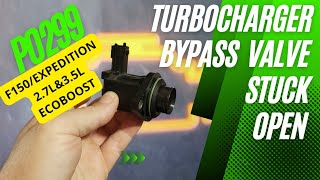
Est. part cost: $5-$250 - Leaking Turbocharger Bypass Valve (BPV) / Diverter Valve 🟡 Medium Probability The diaphragm inside the factory bypass valve is a known weak point and is prone to tearing. When it fails, it creates a constant boost leak as it can't hold pressure, directly causing an underboost condition. This is a common failure point across many EcoBoost engine platforms.
How to confirm: Remove the valve (typically mounted on the turbo compressor housing) and inspect the rubber diaphragm for tears or damage. You can also apply vacuum to its port to see if it holds. A torn diaphragm will not hold vacuum. Sometimes the failure is electronic, not mechanical.
Typical fix: Replace the bypass valve. Upgraded aftermarket valves like the Go Fast Bits (GFB) DV+ (part T9356) are available that use a more durable piston design instead of a rubber diaphragm. The OEM part is often a Bosch or Motorcraft unit. 🎬 See how a faulty bypass valve causes underboost codes
Est. part cost: $50-$150 - Boost Leak (Charge Air System) 🟡 Medium Probability The charge pipes and intercooler handle high pressure and temperature cycles. Plastic components can crack, and rubber hoses can split or come loose from their connections over time. A loose clamp is a simple but common cause.
How to confirm: Visually inspect all intake plumbing from the turbo to the throttle body for cracks, loose clamps, or signs of oil spray (which can indicate a leak). A smoke test is the most effective method to pinpoint hard-to-see leaks. A user comment confirmed their P0299 was fixed simply by tightening a loose hose clamp.
Typical fix: Tighten any loose clamps or replace the damaged hose, pipe, or intercooler.
Est. part cost: $20-$400
Rare But Worth Checking
- Failed Turbocharger: While often blamed, complete turbo failure is less common than the supporting components. This should only be suspected after ruling out all other causes or if there are symptoms like loud grinding/whining noises, excessive shaft play, or excessive slop in the wastegate arm pivot itself.
- Faulty Boost Pressure Sensor (MAP/TCBP): The sensor that measures boost can fail and send incorrect readings to the PCM, triggering P0299 even if boost is mechanically fine. This is less common than mechanical failures but is possible.
- Restricted Air Intake or Exhaust: A severely clogged engine air filter or a blocked catalytic converter can restrict airflow enough to prevent the turbo from building the required boost, causing an underboost condition.
Diagnosis Steps

- Read the trouble codes with an OBD-II scanner. Note any other codes that may be present, especially wastegate control codes like those listed in TSB 50485.
- Using a capable scan tool, monitor live data. Compare the 'Desired Boost Air Pressure' PID with the 'Actual Boost Air Pressure' (or MAP/TIP) PID during a test drive. A large, persistent negative deviation under load confirms the underboost condition.
- Perform a thorough visual inspection of the engine bay. Look for any obviously disconnected hoses or loose clamps in the intake system.
- Specifically inspect the turbocharger wastegate actuator rod. Confirm it is connected to the wastegate arm and the retaining clip is in place. Check for excessive play.
- Inspect all charge pipes and the intercooler for cracks, damage, or signs of oil residue that would indicate a leak.
- If no visual leaks are found, perform a smoke test on the charge air system to identify hidden leaks.
- Remove and inspect the turbocharger bypass valve for a torn diaphragm or test its function if it's an electronic type.
- If all else is confirmed to be working, test the boost pressure sensor's output with a scan tool to ensure it is reading correctly and its wiring is intact.
- As a final step, inspect the turbocharger for excessive shaft play or physical damage to the compressor/turbine wheels.
Parts You'll Likely Need

- Turbocharger Wastegate Actuator Service Kit
(OEM #K2GZ-9G488-B)— This is the most frequent cause for the 2.0L EcoBoost, especially on 2019-2022 models. The actuator fails electronically or the linkage physically disconnects. This kit, confirmed in TSB SSM 50485, allows for replacement without buying a whole new turbo.
Trusted brands: Motorcraft
OEM price range: $150-$250
Aftermarket price range: $100-$180 - Turbocharger Bypass Valve (Diverter Valve)
(OEM #BL3Z-9K378-A (Supersedes older numbers like AA5Z-9K378-A))— The diaphragm in the factory valve is a known weak point and can tear, causing a significant boost leak.
Trusted brands: Motorcraft, Bosch, GFB (Go Fast Bits) DV+ T9356 (Piston-style upgrade)
OEM price range: $70-$120
Aftermarket price range: $50-$150 - Charge Air Cooler Hose / Pipe — Cracks in plastic pipes or splits in rubber hoses are a common source of boost leaks that trigger P0299.
Trusted brands: Motorcraft
OEM price range: $100-$300
Aftermarket price range: $50-$200
Related Codes That Often Appear With This One
- P0243, P02AB, P25B3, P25B4, P2AB7, P2AB8, P2AB9: TSB 50485 explicitly lists these codes alongside P0299 as indicators of a fault in the wastegate actuator system for 2019-2022 models.
- P2262: This code for 'Turbo/Super Charger Boost Pressure Not Detected - Mechanical' can point towards a mechanical issue with the turbo itself, like a stuck wastegate.
Technical Service Bulletins (TSBs) & Recalls
- SSM 50485: Mentions inoperative wastegate actuator or missing e-clip as a cause for P0299 on 2019-2022 Edge models and announces the availability of a service kit (K2GZ-9G488-B).
- TSB 16-0122: While for a 2.3L Explorer, it details the exact same issue of the wastegate actuator rod coming disconnected, which is highly relevant and functionally identical.
Platform-Specific Known Issues
- Wastegate Actuator E-Clip Failure: A known issue, covered by TSBs (e.g., SSM 50485), is the wastegate actuator rod retaining clip falling off, leading to a disconnected rod and immediate P0299 code.
- Wastegate Actuator Service Kit Availability: Ford has released service kit K2GZ-9G488-B specifically to address the electronic wastegate actuator failure on 2019-2022 models, acknowledging it as a common problem that does not require full turbocharger replacement.
- Real-World Dealer Repair Confirmation: A user on the Ford Edge Forum with a 2020 2.0L EcoBoost confirmed their P0299 code was fixed under warranty by the dealer replacing the 'wastegate solenoid' (the electronic actuator), validating the fix prescribed in TSB SSM 50485.
Mechanic-Grade Diagnostic Values
- Electronic Wastegate Actuator Position Sensor Voltage — expected: 1.26V - 1.43V (with Key On, Engine Off). Failure: Voltage outside this range indicates the actuator rod length is not adjusted correctly or the position sensor within the actuator is faulty. May be accompanied by code P0046.
- Electronic Wastegate Actuator Motor Resistance — expected: ~1.44 - 1.96 Ω. Failure: Testing resistance between the two motor pins on the actuator connector. A reading in the high kΩ or MΩ range, especially when manually moving the actuator arm, indicates a dead spot in the motor's commutator, requiring actuator replacement.
- Exhaust Backpressure — expected: Below 3 psi at idle; Below 8 psi at WOT under load.. Failure: Higher readings indicate a restriction in the exhaust, such as a clogged catalytic converter, which can prevent the turbo from spooling correctly.
Scan Tool Commands That Help
- Ford IDS (Integrated Diagnostic System): Turbocharger Test — This is a guided, bidirectional test that commands the electronic wastegate actuator through its full range of motion, allowing a technician to verify its operation without manual manipulation and confirm if it is responding to PCM commands.
Wiring & Ground Locations
- G104 / G106 — Main engine compartment ground points. G104 is typically on the left (driver's side) front of the engine compartment, and G106 is on the right (passenger's side) front.. These are primary grounds for the PCM and its related sensors. A poor or corroded ground connection can cause erratic voltage in sensor circuits, including the boost pressure sensor, leading to false P0299 codes.
- PCM Ground Pins — On a similar generation Edge, the main PCM grounds were identified at pins 1, 2, and 4 of the PCM connector, meeting at a single ground point.. A fault at the PCM's own ground point can cause a wide range of issues, including incorrect processing of sensor data and improper command of the wastegate actuator.
Real Owner Repair Stories
- Ford Edge Forum user '59panman' (2012 Ford Edge 2.0L EcoBoost (Pre-dates the specified generation, but the part issue is highly relevant)) — P0299 code.
❌ Tried (didn't work) Initially quoted for a new turbo from Ford.
✅ What actually fixed it The original turbo was an early '-A' revision. The new Ford replacement was a '-H' revision with a physically different 'thicker' wastegate section. This new turbo would not mate to the existing catalytic converter and would have required buying a new converter for an additional $2,000. The owner opted to have the original turbo rebuilt for $780 to avoid the incompatibility issue. - Go-Parts.com / Ford Edge Forum user (2020 Ford Edge 2.0L EcoBoost) — P0299 and P0243 (Turbocharger/Supercharger Wastegate Solenoid 'A' Circuit).
✅ What actually fixed it The vehicle was taken to a dealer. The dealer diagnosed a faulty 'wastegate solenoid' (the electronic actuator) and replaced it under warranty, which resolved the codes. This real-world repair directly confirms the fix outlined in TSB SSM 50485.
"I Checked Everything" — The Actual Cause
- A known issue on EcoBoost engines in cold climates is the formation of ice inside the charge air cooler (intercooler) from condensation buildup. This creates a physical blockage to airflow, causing a P0299 underboost code, but the system will still pass a smoke test because there are no leaks. The fix involves allowing the intercooler to thaw.
- If a previous turbocharger failed and leaked oil into the intake system, the charge air cooler (CAC) can become internally clogged with oil and sludge. This creates an airflow restriction that will cause P0299 but will not show up as a leak during a smoke test. The CAC must be removed and cleaned or replaced.
OEM Part Supersession History
AA5Z-9K378-A→BL3Z-9K378-A— Updated design for the turbocharger bypass/diverter valve.Varies (e.g., -A revision turbos on early models)→Varies (e.g., -H revision turbos)— Design update to the turbocharger assembly, specifically the wastegate housing.
Heads up: On some early 2.0L EcoBoost engines, replacing an early revision turbo with the latest superseded OEM part number may require also replacing the catalytic converter due to physical changes in the wastegate/turbine housing flange. This can add thousands to the repair cost.
Model Year Variations Within This Range
- 2019-2022: These model years are specifically called out in TSB SSM 50485 for the wastegate actuator failure. While the issue can occur on other years, it appears most prevalent on these facelift models, for which Ford released the K2GZ-9G488-B service kit.
Diagnostic Flowchart
Other Known Issues on This Vehicle
Issues unrelated to this code that are worth knowing about as an owner of this generation:
- 2.0L EcoBoost Coolant Intrusion 🔴 High — Common in 2015-2018 models. A design flaw in the open-deck engine block can lead to cracks between cylinders, allowing coolant to leak into the combustion chamber. (Ref: TSB 19-2346 (superseded by multiple newer TSBs like 22-2229) acknowledges the issue and prescribes a long block engine replacement as the fix.)
- AWD Power Transfer Unit (PTU) Failure 🔴 High — Affects all AWD models. The PTU is located next to the hot exhaust with no cooling fins and is specified with a 'lifetime' fluid that often cooks, thickens, and ceases to lubricate, leading to catastrophic gear failure. (Ref: No recall, but it is a widely known issue. The fix is a costly PTU replacement ($1600+). Preventative maintenance (changing the fluid every 20-30k miles) is highly recommended.)
- Panoramic Vista Roof Mechanism Failure 🟠 Medium — Common across multiple model years. The plastic guide tracks for the large glass panel can break, or the mechanism can bind due to lack of lubrication, causing the roof to get stuck open or closed. (Ref: No recall. Repair is very expensive, often quoted at $3,000-$5,000, as it may require replacing the entire cassette assembly.)
- 2.7L EcoBoost Plastic Oil Pan Leak 🟡 Low — Prevalent on earlier 2.7L models (approx. 2015-2017). The composite plastic oil pan is prone to warping from heat cycles, causing the sealant to fail and leading to oil leaks. (Ref: TSB 19-2205 was issued for this problem on other platforms like the F-150.)
- Cracked Flexplate (2.0L EcoBoost) 🟠 Medium — Reported on 2015-2018 models. A rattling or knocking sound from the transmission bellhousing area could indicate a cracked flexplate, which connects the engine to the torque converter.
Used vs. New Parts: Buying Guide for This Vehicle
When a used part is the smart pick: Used parts are a reasonable choice for static, non-wear components like charge pipes, brackets, or the intercooler, provided they are inspected for cracks or damage. A used part can save significant money over a new OEM pipe.
Donor-vehicle mileage cap: roughly under 80000 miles for the part to have meaningful remaining life.
What to inspect on the donor part:
- For charge pipes/hoses: Check for any hairline cracks, especially near mounting points or bends. Ensure all plastic is still flexible and not brittle.
- For an intercooler: Inspect fins for excessive damage that could impede airflow. Look inside the inlet/outlet for heavy oil residue, which could indicate the donor vehicle had a failing turbo.
- For a complete turbo assembly: This is high-risk. Ask for video showing minimal shaft play (both in-and-out and side-to-side). Avoid any turbo from a vehicle with known oil consumption or sludge issues.
OEM-only on this vehicle (don't cheap out):
- Turbocharger Wastegate Actuator: Given this is a high-failure item with a specific OEM service kit (K2GZ-9G488-B), using a new OEM part is strongly recommended over a used one with unknown life remaining.
Aftermarket brands forum-validated for this vehicle:
- Go Fast Bits (GFB) DV+: A well-regarded aftermarket upgrade for the OEM diaphragm-style bypass valve, replacing it with a more durable piston design.
Brands owners have reported issues with on this vehicle:
- No-name, generic electronic wastegate actuators or bypass valves from online marketplaces. These often have high failure rates, incorrect calibration, or use substandard materials, leading to a repeat of the P0299 code.
Real Owner Stories
Aggregated from forums and TSBs cited above. Mileages and costs reflect what owners reported in those sources.
2020 Ford Edge 2.0L EcoBoost
Symptoms: The vehicle triggered a P0299 code and was taken to the dealer for diagnosis.
What fixed it: The dealer replaced the 'wastegate solenoid' (the electronic actuator) under warranty, following the guidance in TSB SSM 50485.
Source hint: Ford Edge Forum - '2020 ST P0299 and P0243'
2012 Ford Edge EcoBoost
Symptoms: P0299 code appeared after a long trip.
What fixed it: The owner diagnosed excessive play in the wastegate flapper arm itself, which required a full turbocharger replacement to resolve.
Source hint: Ford Edge Forum - '2012 Ecoboost - P0299 - After long trip'
Ford Edge EcoBoost
Symptoms: Owner experienced a P0299 code and initially tried replacing a clicking part (likely the bypass valve) but it did not fix the issue.
What fixed it: The actual fix was finding and tightening a loose clamp on a boost hose.
Source hint: YouTube Comment - 'How to fix Code P0299 - Turbo Underboost - Ford Ecoboost'
Related OBD-II Codes
Frequently Asked Questions
Does SSM 50485 apply to my 2020 Ford Edge with the 2.0L EcoBoost?
Is there a specific Ford part number to fix the wastegate actuator without replacing the whole turbo?
My 2017 Edge is making a whistling sound under acceleration; what is the likely cause?
Can a faulty bypass valve cause an underboost code on the EcoBoost engine?
Is the wastegate rod issue on the Edge similar to the one on the Ford Explorer?
What should I check first if I have a P0299 and hear a rattling noise at idle?
Helpful Videos

Used OEM Parts in Stock

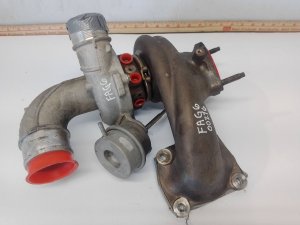
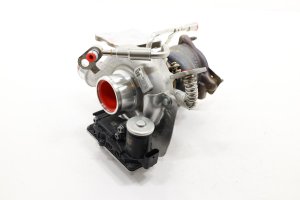


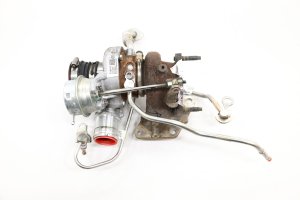
New Aftermarket Parts Available
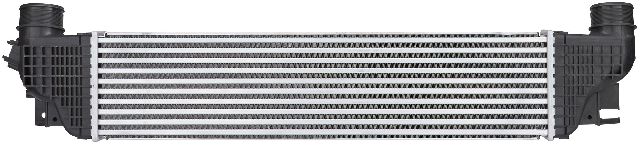

The information in this article is provided for general reference and educational purposes only. Vehicle specifications, procedures, and part compatibility can vary by production date, trim level, and region. Always consult your vehicle's factory service manual and verify part numbers before purchasing or performing repairs. Safety-critical components such as airbags, seat belts, and braking systems should be installed by a qualified professional.
- Ford Edge:
- 🎬 Helpful Videos
- 🛍️ Shop This Part
- What's Unique About the 2015-2024 Ford Edge
- Symptoms You May Notice
- Most Likely Causes
- Rare But Worth Checking
- Diagnosis Steps
- Parts You'll Likely Need
- Related Codes That Often Appear With This One
- Technical Service Bulletins (TSBs) & Recalls
- Platform-Specific Known Issues
- Mechanic-Grade Diagnostic Values
- Scan Tool Commands That Help
- Wiring & Ground Locations
- Real Owner Repair Stories
- "I Checked Everything" — The Actual Cause
- OEM Part Supersession History
- Model Year Variations Within This Range
- Diagnostic Flowchart
- Other Known Issues on This Vehicle
- Used vs. New Parts: Buying Guide for This Vehicle
- Real Owner Stories
- 2020 Ford Edge 2.0L EcoBoost
- 2012 Ford Edge EcoBoost
- Ford Edge EcoBoost
- Related OBD-II Codes
- Frequently Asked Questions
- 🎟️ Get 5% Off