

P0299 on 2021-2024 Chevrolet Trailblazer 1.2L: Turbo Underboost Causes and Fixes
P0299 on a 2021-2024 Trailblazer almost always points to a known issue with the turbocharger wastegate linkage wearing out, causing a rattle and underboost. This often requires a full turbo replacement, but check for several related TSBs and a special warranty extension from GM before paying for repairs. For 2022 models specifically, Special Coverage #N242484750 extends the turbo warranty to 15 years/150,000 miles.
- P0299 on this engine is very frequently caused by a worn turbocharger wastegate linkage, which is a known issue covered by TSB 23-NA-058.
- A rattling sound on a cold start is the key symptom that points directly to the wastegate linkage failure.
- Before paying for any repairs, check with a Chevrolet dealer for any applicable TSBs, recalls, or warranty extensions, as GM has special coverage for this problem on some vehicles.
- Less common but still possible causes include a blocked vacuum line (TSB PIP5978), an ECM software issue (TSB PIP5903), or intercooler icing in cold climates (TSB 21-NA-293).
- Do not immediately assume a generic boost leak; the platform-specific issues are much more probable causes.
What's Unique About the 2021-2024 Chevrolet Trailblazer

The 2021-2024 Trailblazer with the 1.2L LIH engine, and its platform-mate the Buick Encore GX, are highly susceptible to specific, well-documented issues causing P0299 that go beyond generic boost leaks. GM has issued multiple Technical Service Bulletins (TSBs) for this platform related to premature turbocharger wastegate linkage wear, restricted vacuum lines from the factory, and even charge air cooler icing in cold climates. These known failure points mean diagnosis should start with the TSBs, not with a generic hunt for leaks.
Symptoms You May Notice
- Drastically reduced engine power and sluggish acceleration
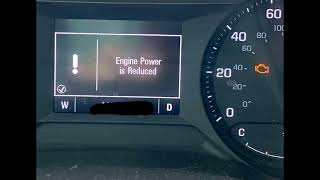
- "Reduced Engine Power" message on the dashboard
- Check Engine Light is on
- A distinct rattling noise from the engine bay, especially on a cold start, that sounds like a metallic rattle
- Hissing or whistling noises from the engine bay
- Engine stalling
- Replacing the boost pressure sensor first. While possible, it's a much less common cause of P0299 on this engine compared to the mechanical turbo and vacuum line issues.
- Assuming a generic boost leak. Mechanics not familiar with this platform may spend hours smoke testing for leaks when the root cause is the well-documented wastegate linkage wear.
Most Likely Causes

- Worn Turbocharger Wastegate Linkage 🔴 High Probability This is a widely documented failure on this platform, covered by GM Technical Service Bulletin 23-NA-058 (which supersedes PIP5829A). The linkage and its bushing wear prematurely, causing excessive play and preventing the wastegate from closing properly to build boost.
How to confirm: A key symptom is a rattle noise on a cold start that can be quieted by touching the wastegate actuator rod with a long screwdriver while the engine is running. A visual inspection with the turbo removed will show excessive, ovalized wear in the linkage arm hole or bushing.
Typical fix: This condition requires the replacement of the entire turbocharger assembly. Check for special warranty coverage from GM (Special Coverage #N242484750 for 2022 models) which extends the warranty to 15 years or 150,000 miles and may cover the repair at no cost.
Est. part cost: $1000-$1500 - Restricted Wastegate Vacuum Line 🟡 Medium Probability A known manufacturing defect where adhesive can block the wastegate vacuum line is documented in TSB PIP5978. This prevents the wastegate actuator from getting the proper vacuum signal to operate.
How to confirm: Test the vacuum supply to and from the wastegate solenoid valve using a vacuum pump, as detailed in TSB 23-NA-058. The supply hose should hold -50 kPa (-0.5 bar, 15 in Hg) at idle.
Typical fix: Clear the restriction or replace the affected vacuum hose.
Est. part cost: $20-$40 - Charge Air Cooler (Intercooler) Icing ⚪ Low Probability In freezing temperatures (specifically -18°C / 0°F or less), condensation can freeze inside the charge air cooler, blocking airflow. This is documented in TSB 21-NA-293 and typically occurs during short trips or slow-speed driving.
How to confirm: This issue is climate-dependent and will typically only occur in below-freezing weather. The code may disappear when the ambient temperature rises or the vehicle is thawed in a warm garage.
Typical fix: The TSB involves installing a new charge air cooler outlet pipe with a water shield and reprogramming the ECM with an updated calibration designed to mitigate icing.
Est. part cost: $50-$100 - Outdated Engine Software ⚪ Low Probability The ECM's sensitivity for detecting an underboost condition may be too high, falsely triggering the code. TSB PIP5903 addresses this. This should be considered if all mechanical and vacuum checks pass.
How to confirm: A GM dealership can check the current software calibration of the ECM against the latest available version in the TIS2Web system.
Typical fix: Reprogram the Engine Control Module (ECM) with the updated software. This must be done at a dealership.
Est. part cost: $0
Rare But Worth Checking
- Boost/Intake Air Leak: While common on other turbo vehicles, on this platform it's less likely than the TSB-documented issues. Still worth checking for cracked hoses or loose clamps in the intake system between the turbo and the engine.
- Faulty Turbocharger Wastegate Solenoid Valve: The electronic solenoid that controls the wastegate's vacuum can fail, but this is less common than the mechanical linkage wear. It can be tested with a vacuum pump per TSB 23-NA-058.
Diagnosis Steps

- Check for any applicable Technical Service Bulletins (TSBs) and Special Coverages for P0299. Specifically, look for 23-NA-058, PIP5978, 21-NA-293, PIP5903, and Special Coverage #N242484750.
- If a rattle is heard on cold starts, perform the diagnostic outlined in TSB 23-NA-058: with the vehicle on a hoist, use a long screwdriver to apply slight pressure to the wastegate actuator rod during a remote start. If the noise stops, the turbocharger linkage is worn and the assembly needs replacement.
- If no rattle is present, perform the vacuum tests outlined in TSB 23-NA-058 to check the vacuum pump, lines, and wastegate solenoid for restrictions or leaks.
- Visually inspect all charge air cooler hoses and connections for cracks, loose clamps, or signs of damage.
- If operating in a climate where temperatures drop below -18°C (0°F), consider the possibility of charge air cooler icing as described in TSB 21-NA-293.
- If all mechanical and vacuum checks pass, consult a dealer to check if an ECM software update (per TSB PIP5903) is available and applicable.
- If all other possibilities are exhausted, perform a smoke test on the intake system to check for elusive air leaks.
Parts You'll Likely Need
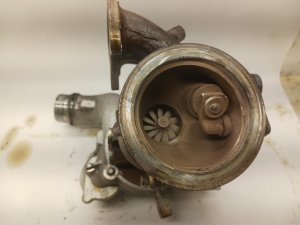
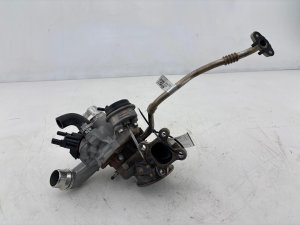
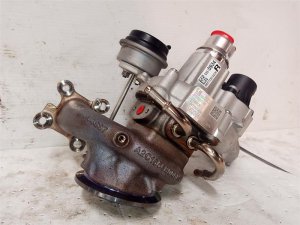
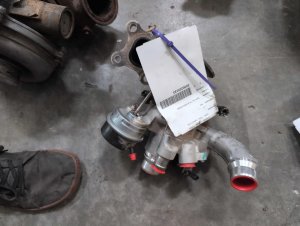
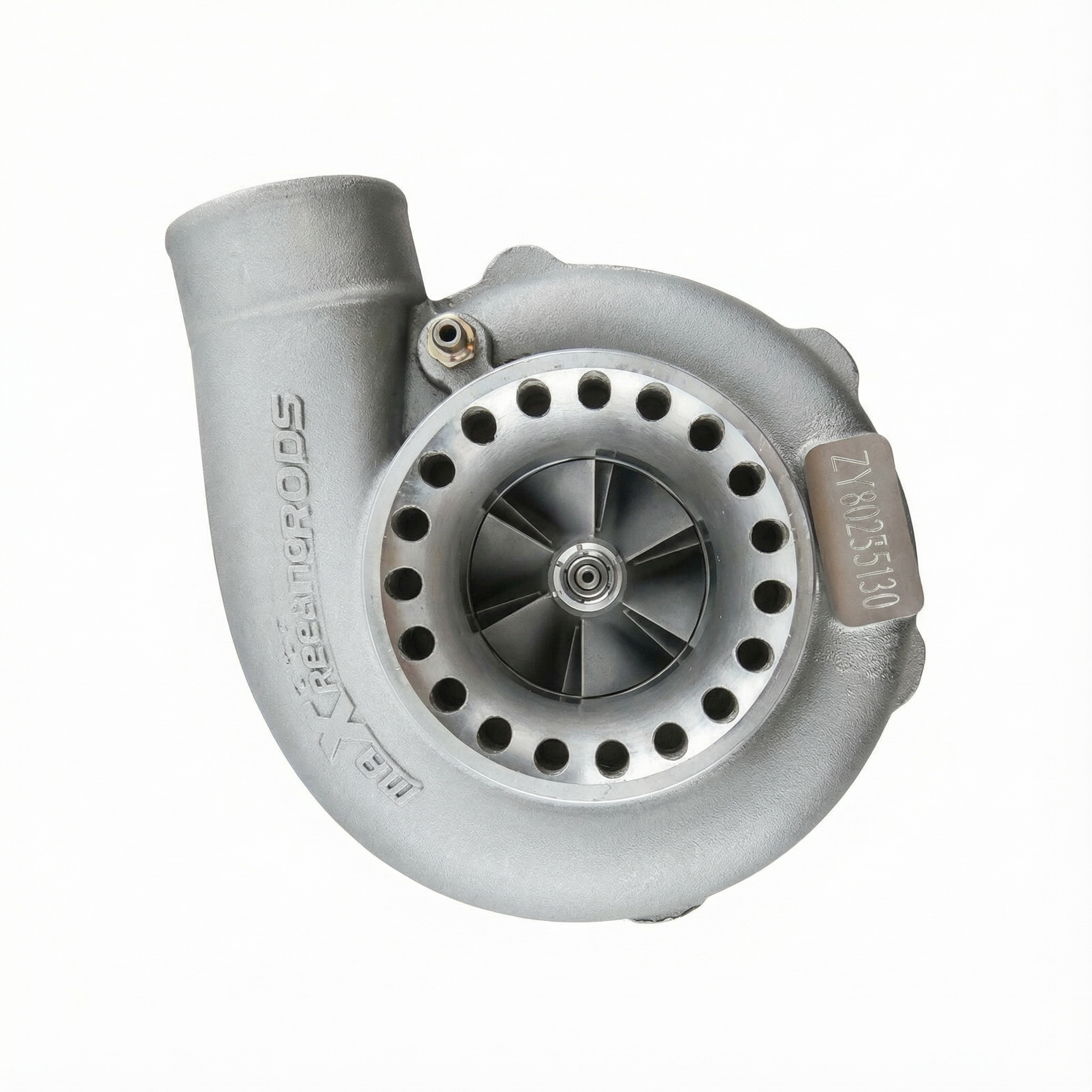
- Turbocharger Assembly
(OEM #25204082 (replaces 55515934))— Required fix for the most common cause: worn wastegate linkage, as per TSB 23-NA-058. The entire assembly is replaced.
Trusted brands: ACDelco, General Motors
OEM price range: $1000-$1500
Aftermarket price range: $400-$1100 - Vacuum Hose — May be needed to fix the restricted wastegate vacuum line issue documented in TSB PIP5978.
Trusted brands: ACDelco, Generic
OEM price range: $20-$40
Aftermarket price range: $10-$20
Technical Service Bulletins (TSBs) & Recalls

- 23-NA-058 (replaces PIP5829A): Links P0299 and a cold start rattle to turbocharger wastegate linkage wear, requiring turbo replacement. Provides detailed diagnostic steps for the rattle and vacuum system.
- PIP5978: Details P0299 caused by a restricted wastegate solenoid vacuum line due to manufacturing adhesive.
- 21-NA-293: Addresses poor engine performance and P0299 in extremely cold weather (-18°C / 0°F) due to charge air cooler icing.
- PIP5903: Communicates the need to update ECM software to correct for overly sensitive P0299 diagnostics.
Platform-Specific Known Issues
- GM has issued Special Coverage bulletin #N242484750 for some 2022 models, extending the warranty for this specific turbocharger failure to 15 years or 150,000 miles, whichever comes first. Owners should check with a dealer with their VIN to see if their vehicle is covered before paying for repairs. The program began in January 2025.
Scan Tool Commands That Help
- GDS2 / Professional Scan Tool: Turbocharger Wastegate Actuator Position Control — This bidirectional test allows a technician to command the wastegate actuator to a specific position (e.g., 0% to 100%) while monitoring boost pressure. It is essential for determining if the actuator is physically stuck, responding slowly, or if the vacuum control solenoid is failing to respond to ECM commands.
Wiring & Ground Locations
- G103 (or equivalent) — Typically located on the engine block itself, often near the starter motor or transmission bell housing.. This is a primary ground point for the Engine Control Module (ECM). A loose or corroded ground at this location can cause a wide range of erratic sensor readings and actuator problems, including incorrect data from the boost pressure sensor or faulty operation of the wastegate control solenoid, potentially leading to a P0299 code.
Real Owner Repair Stories
- Edmunds Consumer Review (2023 Chevrolet Trailblazer LT 1.2L Turbo CVT) — Knocking sound on startup, RPMs would rise to 4000-5000 but the vehicle would only move at 2 mph.
✅ What actually fixed it The user's description strongly aligns with the symptoms of a failed turbocharger (cold start rattle/knock) and the subsequent 'Reduced Engine Power' mode (high RPM, no power), which is fixed by replacing the turbocharger assembly.
OEM Part Supersession History
55515934, 55515879, 55514781, 55513088→25204082— GM has updated the turbocharger assembly multiple times. The latest part number reflects design revisions intended to improve durability, likely addressing the wastegate linkage wear issue.
Diagnostic Flowchart
Other Known Issues on This Vehicle
Issues unrelated to this code that are worth knowing about as an owner of this generation:
- Brake System Malfunctions (AEB / Boost Assist) 🔴 High — Common enough to trigger two separate major recalls (NHTSA 20V567000 for 2021 models, NHTSA 24V133000 for 2023 models). (Ref: Recall A202307260 (loss of brake boost) and Recall A232424660 (unwanted AEB activation).)
- Faulty EVAP Purge Pump 🟠 Medium — A known issue on 2021 models, often setting code P0496. (Ref: Special Coverage N232395310 extends the warranty for this part to 15 years/150,000 miles.)
- CVT Transmission Hesitation/Jerking 🟡 Low — Frequently reported by owners of FWD models, especially in early model years. Described as jerky engagement or hesitation from a stop.
- Parasitic Battery Drain 🟡 Low — Some owners report batteries dying prematurely if the vehicle sits for a few days. This can be caused by various electronic modules failing to enter 'sleep' mode properly. (Ref: TSB #20-NA-132 provides updated policy on battery testing for dealers.)
Used vs. New Parts: Buying Guide for This Vehicle
When a used part is the smart pick: Given that the primary failure is a known wear-and-tear defect (wastegate linkage), buying a used turbocharger for this specific engine is HIGHLY RISKY. It only makes sense if the donor vehicle is very low mileage (under 20,000 miles), has verifiable maintenance records, and the part is significantly cheaper than a new aftermarket unit. The risk of receiving a part that will soon fail with the same issue is substantial.
Donor-vehicle mileage cap: roughly under 20000 miles for the part to have meaningful remaining life.
What to inspect on the donor part:
- Verify the VIN of the donor vehicle to check its age and service history if possible.
- Physically inspect the wastegate actuator arm and linkage. There should be absolutely minimal play or looseness in the linkage pivot point.
- Spin the turbine and compressor wheels by hand. They should spin freely with no scraping, binding, or wobble (in/out or side-to-side shaft play).
- Look for any signs of oil leakage from the center housing rotating assembly (CHRA).
OEM-only on this vehicle (don't cheap out):
- Turbocharger Assembly: While aftermarket options exist, the OEM part (PN 25204082) is the most reliable choice as it is the latest revision designed to address the original flaws. Given the Special Coverage warranty, an OEM part from a dealer is the first and best option.
Brands owners have reported issues with on this vehicle:
- Unnamed, no-brand turbochargers from online marketplaces should be avoided. The metallurgy and balancing of the turbine are critical, and cheap units are prone to catastrophic failure that can damage the engine.
Real Owner Stories
Aggregated from forums and TSBs cited above. Mileages and costs reflect what owners reported in those sources.
2021 Chevrolet Trailblazer 1.2L LIH — 65000 miles
Symptoms: Received a 'Reduced Engine Power' message on the dash along with the check engine light; the vehicle had no 'get up' or acceleration power.
What fixed it: The owner reported the issue occurred outside of the basic warranty period, but the context points to TSB 23-NA-058 requiring turbocharger replacement for these symptoms.
Source hint: Reddit r/MechanicAdvice - Code P0299 21' Chevy trailblazer
2022 Chevrolet Trailblazer 1.2L LIH
Symptoms: Owner experienced the 'Reduced Engine Power' message and a P0299 diagnostic code.
What fixed it: The turbocharger was replaced at the dealership, covered under Special Coverage #N242484750.
Source hint: CarComplaints.com - 2022 Trailblazer Owner Experience
Related OBD-II Codes
Frequently Asked Questions
Is there a special warranty for the turbocharger on my 2022 Chevrolet Trailblazer?
My Trailblazer makes a metallic rattling sound on cold starts along with the P0299 code. What is causing this?
Can extremely cold weather cause a P0299 underboost code on the 1.2L engine?
Is it possible that a software error is causing my Check Engine Light instead of a mechanical failure?
Could a simple vacuum line be the reason for my 'Reduced Engine Power' message?
Does the Buick Encore GX share this same turbocharger issue?
Helpful Videos
We Have This Part in Stock

The information in this article is provided for general reference and educational purposes only. Vehicle specifications, procedures, and part compatibility can vary by production date, trim level, and region. Always consult your vehicle's factory service manual and verify part numbers before purchasing or performing repairs. Safety-critical components such as airbags, seat belts, and braking systems should be installed by a qualified professional.
- Chevrolet Trailblazer:
- 🎬 Helpful Videos
- 🛍️ Shop This Part
- What's Unique About the 2021-2024 Chevrolet Trailblazer
- Symptoms You May Notice
- Most Likely Causes
- Rare But Worth Checking
- Diagnosis Steps
- Parts You'll Likely Need
- Technical Service Bulletins (TSBs) & Recalls
- Platform-Specific Known Issues
- Scan Tool Commands That Help
- Wiring & Ground Locations
- Real Owner Repair Stories
- OEM Part Supersession History
- Diagnostic Flowchart
- Other Known Issues on This Vehicle
- Used vs. New Parts: Buying Guide for This Vehicle
- Real Owner Stories
- 2021 Chevrolet Trailblazer 1.2L LIH — 65000 miles
- 2022 Chevrolet Trailblazer 1.2L LIH
- Related OBD-II Codes
- Frequently Asked Questions
- 🎟️ Get 5% Off