

P0299 on 2013-2020 Buick Encore: Turbo Underboost Causes and Fixes
On the 2013-2020 Buick Encore, P0299 almost always indicates a failed turbocharger or a related PCV system issue. A complete turbo replacement is the most common fix, but always check for boost leaks and PCV valve failure first. For some 2017-2018 models, a Special Coverage program (N232395330) may cover the turbo replacement.
- P0299 on a 2013-2020 Encore is most frequently caused by a failed turbocharger.
- Always inspect the PCV system (specifically the valve cover) for leaks before condemning the turbo, as a bad PCV valve can cause the P0299 code or lead to turbo failure.
- When replacing the turbocharger, it is essential to also replace the oil feed and return lines to prevent immediate failure of the new part.
- Check for active GM Special Coverage programs or TSBs related to the turbocharger for your specific vehicle, as the repair might be covered.
- Do not ignore symptoms like sluggishness or whining noises; prompt diagnosis can prevent a failing turbo from causing more extensive engine damage.
What's Unique About the 2013-2020 Buick ENCORE

The 1.4L Turbo engine used in the first-generation Buick Encore (and its siblings, the Chevy Trax and Sonic) is notorious for a high rate of turbocharger failures. This is often a chain reaction: a faulty Positive Crankcase Ventilation (PCV) check valve, frequently integrated into the valve cover or intake manifold, fails. This failure pressurizes the crankcase, blowing out the turbocharger's oil seals and leading to its destruction. GM acknowledged this widespread problem by issuing multiple Technical Service Bulletins (TSBs) and a Special Coverage program (N232395330) for certain model years, extending the turbo warranty to 10 years/120,000 miles.
Diagnostic Flowchart

Tap your situation to follow the diagnostic path that matches what you're seeing on this vehicle.
Symptoms You May Notice

- Noticeable loss of engine power and acceleration.
- Vehicle feels sluggish, especially on hills or when trying to merge.
- Hesitation when accelerating from a stop.
- Check Engine Light is illuminated.
- Whining, whistling, or siren-like noise from the engine bay that changes with RPM.
- Higher than normal engine RPMs to maintain speed.
- Burning oil smell or visible blue/grey smoke from the exhaust.
- A distinct rattle noise from the engine area on a cold start, which may indicate a worn wastegate linkage according to TSB PIP5829A.
- Replacing the turbocharger without addressing the underlying PCV system failure, leading to repeat failure of the new turbo.
- Replacing only the boost pressure sensor without checking for underlying turbo failure, PCV issues, or boost leaks.
- Replacing O2 sensors or the catalytic converter when P0299 is the primary code, as the underboost condition is the root cause, not the exhaust sensors.
Most Likely Causes

- Failed Turbocharger Assembly 🔴 High Probability The original turbochargers on the 1.4L LUV engine have a high failure rate. Common failure points include the wastegate actuator linkage wearing out (causing a rattle and loss of preload), the internal wastegate flap cracking, or oil seals failing due to PCV issues. GM's Special Coverage N232395330 for 2017-18 models is a direct acknowledgment of this problem.
How to confirm: Inspect the turbo for excessive shaft play (wobble in the turbine wheel). Check the wastegate actuator arm for looseness or disconnection; TSB PIP5495B notes that if the lever wiggles easily while the rod is static, preload is lost and the turbo needs replacement. A cold-start rattle that stops when the actuator rod is touched also points to a bad turbo.
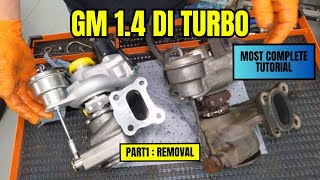
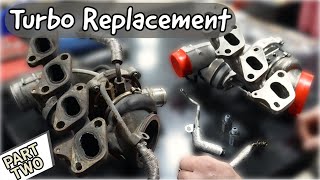
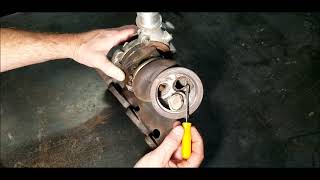
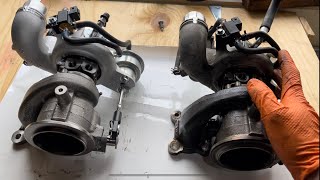
Typical fix: Replace the entire turbocharger assembly. It is critical to also replace the oil feed and return lines and change the engine oil and coolant at the same time to prevent starving the new turbo of oil. 🎬 See this step-by-step guide for installing your new turbocharger.
Est. part cost: $350-$1100 - PCV System Failure (Valve Cover or Intake Manifold) 🔴 High Probability The PCV system has multiple failure points. A diaphragm in the valve cover is known to tear, creating a large vacuum leak. There is also a non-return check valve in the intake manifold that can fail or get sucked into the engine, allowing boost pressure to enter the crankcase, which destroys the turbo's seals. This is a root cause of many turbo failures.
How to confirm: For the valve cover, listen for a distinct hissing from the engine top at idle. A torn diaphragm will create strong suction at a small hole on the PCV cap. For the intake manifold valve, a smoke test or checking for boost pressure in the crankcase is required. Often, this is diagnosed after a new turbo fails quickly.
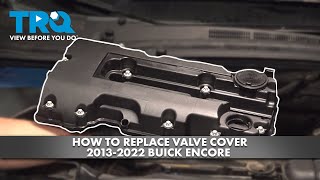
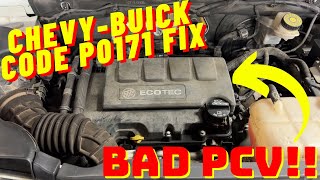
Typical fix: Replace the entire engine valve cover assembly (which includes the new diaphragm) or install an aftermarket PCV fix kit. If the intake manifold check valve fails, the manifold must be replaced or modified with an aftermarket kit. 🎬 Watch: This DIY guide shows how to fix both PCV issues.
Est. part cost: $60-$210 - Boost/Vacuum Leaks 🟡 Medium Probability The charge air system uses plastic and rubber components that can crack, split, or have loose clamps over time due to heat and pressure cycles. Common leak points are the hoses connecting to the intercooler and throttle body.
How to confirm: Visually inspect all hoses from the turbo to the throttle body for cracks, loose clamps, or oily residue (which indicates a leak). A smoke test is the most effective method to find small, hard-to-see leaks.
Typical fix: Replace the cracked hose or tighten the loose clamp.
Est. part cost: $20-$150 - Faulty Turbocharger Bypass/Solenoid Valve ⚪ Low Probability This solenoid (also called a wastegate regulator valve) controls the vacuum signal to the wastegate actuator. It can fail electronically, get stuck, or become clogged with oil/moisture, especially in cold weather as noted in TSB PIP5812C.
How to confirm: Test the solenoid's operation with a vacuum pump and a capable scan tool. TSB PIP5812C provides a procedure to blow out the valve with compressed air if freezing is suspected. If it cannot hold vacuum or actuate properly, it needs replacement.
Typical fix: Replace the turbocharger bypass/wastegate solenoid valve.
Est. part cost: $40-$100
Rare But Worth Checking
- Clogged Catalytic Converter: An exhaust restriction can prevent the turbo from spooling up effectively. This is often a secondary failure caused by a bad turbo leaking oil into the exhaust, which then clogs the converter. If you have P0299 and also a catalyst efficiency code (P0420), suspect a damaged turbo as the root cause.
- Faulty Boost Pressure Sensor (MAP sensor): It's rare for the sensor itself to fail, but it can happen. It's more likely to be affected by oil contamination from a failing PCV system or icing in cold weather. TSB PIP5495N warns against replacing the turbo before checking for other causes, and this is a common misdiagnosis.
- Charge Air Cooler (CAC) Icing: In extremely cold climates (-18°C / 0°F or below), moisture can freeze inside the intercooler, creating a restriction that triggers P0299. GM issued TSB PIP5495L to address this, which may involve thawing the cooler and draining water.
Diagnosis Steps
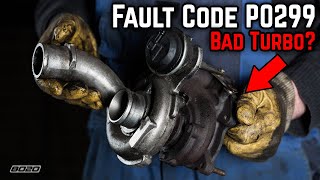
- Verify the Check Engine Light is on and scan for P0299 and any other codes. 🎬 Watch: Professional diagnostic tips for troubleshooting the P0299 underboost code. Pay close attention to codes like P0171 and P1101.
- With the engine running at idle, listen for a distinct hissing or whistling noise from the top of the engine, which strongly indicates a torn PCV diaphragm in the valve cover.
- Perform a visual inspection of the entire air intake tract. Look for cracked hoses, loose clamps, or signs of oil leaks, especially around the intercooler connections.
- Inspect the turbocharger wastegate actuator rod. Per TSB PIP5829A, check for a rattle on cold start. With the engine off and cool, check for excessive play in the linkage.
- Carefully check the turbo's turbine wheel for shaft play (side-to-side or in-and-out wobble) and signs of the wheel contacting the housing.
- If leaks are suspected but not visible, perform a smoke test on the intake and charge air system.
- If cold weather is a factor, investigate the possibility of a frozen wastegate solenoid (TSB PIP5812C) or a frozen charge air cooler (TSB PIP5495L).
- If all other possibilities are exhausted, check for a restricted exhaust system by measuring backpressure before the catalytic converter. A clogged cat is usually a symptom of a failed turbo, not the primary cause.
Parts You'll Likely Need
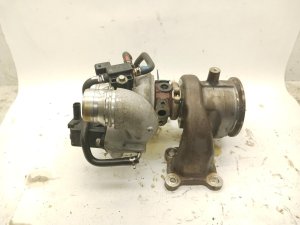
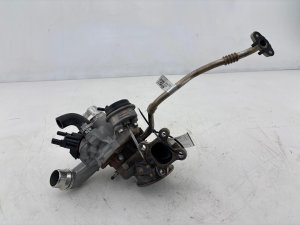
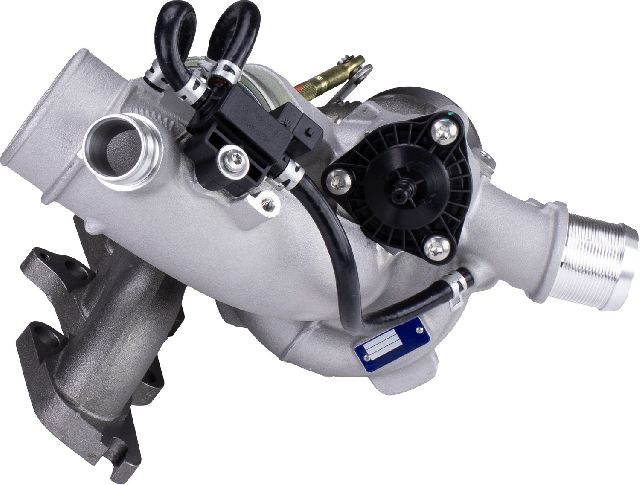
- Turbocharger Assembly
(OEM #55565353)— This is the most common failure point for P0299 on this engine, as confirmed by numerous owner complaints and TSBs.
Trusted brands: ACDelco (OEM), Rotomaster, Mahle
OEM price range: $944-$1145
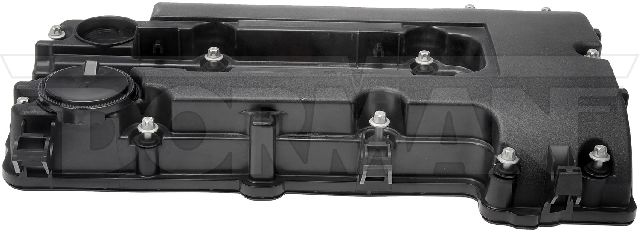
Aftermarket price range: $350-$600 - Engine Valve Cover
(OEM #25198874 (Superseded by 25205241))— The integrated PCV diaphragm is a known high-failure item that causes vacuum leaks and can lead to turbo failure.
Related Codes That Often Appear With This One
- P0171 — System Too Lean. This often appears with P0299 because a torn PCV diaphragm or a major boost leak allows unmetered air into the engine, creating a lean air/fuel mixture.
- P1101 — Intake Air Flow System Performance. This code is often set in conjunction with PCV issues or boost leaks on GM vehicles, as the ECU detects an airflow reading that is inconsistent with other sensors.
- P0234 — Turbocharger Overboost Condition. While the opposite of P0299, it can sometimes appear if the wastegate or bypass solenoid is sticking or operating erratically, causing intermittent boost spikes before failing to an underboost state.
Technical Service Bulletins (TSBs) & Recalls
- N232395330 — Special Coverage - Turbocharger Failure — GM extended the warranty on the turbocharger for certain 2017-2018 Encore, Trax, and Sonic models to 10 years or 120,000 miles. It covers replacement if the vehicle has an active P0299 code or other specified turbo-related DTCs.
- PIP5495N — Check Engine Light On With P0299 Or P0234 — A critical TSB warning technicians against misdiagnosis. It lists many non-turbo causes for P0299 (leaks, bad solenoids) and states many turbos are returned with 'No Trouble Found' (NTF). It advises to rule out all other causes before replacing the turbo.
- PIP5812C / 22-NA-002 — DTC P0299/P0234 in Cold Weather — Addresses P0299 codes that appear in freezing temperatures. The cause is often oil/moisture condensate freezing inside the Turbocharger Wastegate Regulator Solenoid Valve (TCV), causing it to stick. The fix is to remove, drain, and clean the valve, or replace it if deposits are present.
- 23-NA-058 (replaces PIP5829A) — Cold Start Rattle Noise, MIL Illuminated - DTC P0299 Set — Links P0299 to a rattle noise on cold starts. This is caused by wear in the turbocharger wastegate linkage. The diagnostic step is to listen for the rattle on a cold start and see if it can be dampened by touching the wastegate actuator rod with a long screwdriver. If so, the turbo needs replacement.
- TSB 16-NA-405 — Charge Air Cooler (CAC) Icing — Addresses P0299 in extreme cold (-18°C / 0°F). Moisture from the PCV system freezes in the intercooler, blocking airflow. The fix involves thawing the CAC, draining water, and potentially installing updated parts or a winter grille cover.
Platform-Specific Known Issues
- NHTSA owner complaint #11592997 mentions a Special Coverage program N-232395330 for faulty turbochargers, indicating GM's awareness of the issue. Another source confirms this special coverage for some 2017-2018 models.
- TSB #PIP5495N was issued to help technicians avoid misdiagnosing P0299 and returning non-faulty turbochargers, highlighting common diagnostic errors like overlooking boost leaks or PCV issues.
- TSB #PIP5829A specifically links DTC P0299 with a potential cold start rattle noise from the engine compartment.
- TSB #16-NA-405 addresses P0299 codes caused by ice buildup in the charge air cooler and PCV system during extreme cold weather.
Mechanic-Grade Diagnostic Values
- MAP Sensor Signal Voltage (Key On, Engine Off) — expected: ~4.5 - 4.9 Volts. Failure: Voltage significantly lower than expected indicates a sensor or wiring issue.
- MAP Sensor Signal Voltage (Engine at Idle) — expected: ~1.0 - 2.0 Volts. Failure: Voltage significantly higher than this range at idle can indicate a vacuum leak or a faulty sensor.
- MAP Sensor Reference Voltage — expected: 5.0 Volts. Failure: If the 5V reference is missing, there is a wiring or ECM issue, not a sensor issue.
- Wastegate Regulator Solenoid Coil Resistance — expected: 32 ± 2 ohms. Failure: A reading outside this range indicates a faulty solenoid. An aftermarket part measured at 28 ohms was found to cause issues.
Scan Tool Commands That Help
- GDS2 (GM Global Diagnostic System): Turbocharger Boost Control Test — This is a specific diagnostic routine to be performed when P0299 is set and no obvious physical faults (boost leaks, disconnected linkages) are found. It actively tests the turbo's control system before condemning the turbocharger itself.
Wiring & Ground Locations
- MAP Sensor Connector — On the intake manifold, near the throttle body.. A poor connection, oil contamination, or damaged wiring at this 3-pin connector will cause incorrect boost pressure readings, directly leading to code P0299 or P0106. The pins are typically +5V Reference, Ground, and Signal.
- G103 — At the rear of the engine compartment on the cowl, above the brake booster.. This is a major ground point for the Body Control Module (BCM) and Engine Control Module (ECM). A poor connection here can cause a wide range of erratic sensor readings and communication issues, potentially affecting the MAP sensor's ground reference.
- G105 — At the left front of the engine compartment, often near the cooling fan relays.. This ground serves several engine components. While not the primary ECM ground, ensuring all engine bay grounds are clean and tight is a crucial step in diagnosing any electronic fault code like P0299.
Real Owner Repair Stories
- Reddit user comment in r/cruze (Chevrolet Cruze (shares 1.4L LUV engine)) — P0299 code present.
❌ Tried (didn't work) Initially suspecting the turbocharger itself.
✅ What actually fixed it The intake manifold was split on the underside, causing a massive boost leak. The user repaired it with JB Weld and a hose clamp, and the fix held for over 5 years. This highlights that a boost leak test is the critical first step before replacing the turbo. - CruzeKits.com technical article (GM 1.4L LUV/LUJ Engine (Chevy Cruze, Sonic, Trax, Buick Encore)) — P0299 underboost code.
❌ Tried (didn't work) Assuming the turbocharger is the sole cause.
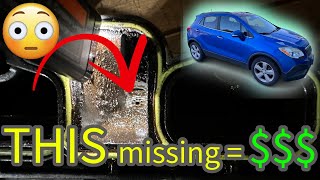
✅ What actually fixed it The intake manifold's internal PCV check valve failed/went missing. This created an internal boost leak from the intake manifold back to the turbo inlet. Installing an aftermarket external check valve kit resolved the P0299 code without replacing the turbo.
"I Checked Everything" — The Actual Cause
- In many cases with the 1.4L LUV engine, a standard smoke test may not reveal the root cause. The most common scenario is the failure of the internal, non-return check valve inside the intake manifold. This creates an internal boost leak where pressurized air is routed from the manifold directly back into the turbo inlet via the PCV system, a loop that a smoke test on the charge pipes alone won't show. The fix is to replace the intake manifold or install an aftermarket external check valve kit.
OEM Part Supersession History
55565353→25198550, 25201063 (among others)— GM has updated the turbocharger assembly over the years to address reliability issues. The original part number is now discontinued.
Heads up: While many aftermarket parts are listed as compatible, ensure the replacement is for the correct LUV engine family. Always verify fitment with the vehicle's VIN.25198874→25205241— Updates to the valve cover assembly, which includes the problematic PCV diaphragm.
Model Year Variations Within This Range
- 2013-2016: The facelift for the 2017 model year introduced revised styling and interior tech, but the core 1.4L LUV powertrain and its associated P0299 issues remained largely the same.
- 2019-2020: For the 2019 model year, the base 1.8L non-turbo engine was discontinued in sibling vehicles like the Chevy Sonic, making the 1.4L turbo standard. This change did not significantly alter the causes of P0299 for the Encore, which already used the 1.4L turbo.
- 2021-2022: Some later models (notably the Chevy Trax starting in 2021) switched from the 1.4L LUV engine (138 hp) to the 1.4L LE2 engine (155 hp). The LE2 is a newer design with direct injection and more power. While architecturally similar, some parts may differ.
Helpful Videos

Used OEM Parts in Stock
New Aftermarket Parts Available


The information in this article is provided for general reference and educational purposes only. Vehicle specifications, procedures, and part compatibility can vary by production date, trim level, and region. Always consult your vehicle's factory service manual and verify part numbers before purchasing or performing repairs. Safety-critical components such as airbags, seat belts, and braking systems should be installed by a qualified professional.
- Buick ENCORE:
- 🎬 Helpful Videos
- 🛍️ Shop This Part
- What's Unique About the 2013-2020 Buick ENCORE
- Diagnostic Flowchart
- Symptoms You May Notice
- Most Likely Causes
- Rare But Worth Checking
- Diagnosis Steps
- Parts You'll Likely Need
- Related Codes That Often Appear With This One
- Technical Service Bulletins (TSBs) & Recalls
- Platform-Specific Known Issues
- Mechanic-Grade Diagnostic Values
- Scan Tool Commands That Help
- Wiring & Ground Locations
- Real Owner Repair Stories
- "I Checked Everything" — The Actual Cause
- OEM Part Supersession History
- Model Year Variations Within This Range
- 🎟️ Get 5% Off