

P0272 on 2003-2005 Ford Excursion 6.0L: Cylinder 4 Contribution/Balance Fault Guide
P0272 on a 6.0L Power Stroke almost always points to a problem with the #4 fuel injector, often due to 'stiction' or electrical failure. Other common causes include a failing Fuel Injection Control Module (FICM) or wiring issues. A single replacement injector costs around $200-$350.
- P0272 on a 6.0L Power Stroke means cylinder #4 isn't working correctly, most likely due to a faulty fuel injector.
- Before replacing parts, check the Fuel Injection Control Module (FICM) voltage. It must be a steady 48 volts; if it's low, the FICM is the problem.
- If the problem is worse when the engine is cold and improves as it warms up, suspect injector 'stiction' and try a quality oil additive before replacing the injector.
- Use a scan tool to perform a power balance test to confirm the fault is with cylinder #4.
- When replacing an injector, using a quality OEM (Motorcraft) or reputable remanufactured part is highly recommended to avoid repeat failures.
What's Unique About the 2003-2005 Ford Excursion
The 6.0L Power Stroke uses a Hydraulic Electronic Unit Injector (HEUI) system, which relies on high-pressure engine oil (up to 4,000 PSI) to actuate the fuel injectors. This design makes the injectors susceptible to a unique problem called 'stiction,' where burnt, sticky oil residue slows down internal injector components like the spool valve, causing rough running, especially when cold. Additionally, the Fuel Injection Control Module (FICM), which supplies a critical 48 volts to the injectors, is a known weak point; low voltage from a failing FICM is a frequent cause of injector performance codes like P0272.
Symptoms You May Notice
- Rough or erratic idle, especially when the engine is cold but can persist when warm.
- Noticeable engine misfire or 'lope'.
- Loss of power and slower acceleration.
- Excessive white smoke (unburnt fuel) or blue/black smoke from the exhaust.
- Hard starting, especially in cold weather.
- Decreased fuel economy.
- Hesitation during acceleration.
- Replacing the EGR valve. While EGR issues are common on the 6.0L, they typically cause different codes (P0401, P0402) and symptoms, not a single cylinder contribution fault.
- Assuming it's a PCM failure. While possible, a faulty PCM is extremely rare compared to injector, FICM, or wiring issues.
Most Likely Causes
- Faulty #4 Fuel Injector 🔴 High Probability The HEUI injectors are prone to both mechanical and electrical failure. 'Stiction' is a common issue where the spool valve inside the injector gets sticky from oil deposits, impairing its movement. Internal electronic coil failure is also common. Cylinder #4 is located on the passenger side, second from the front.
How to confirm: Perform a power balance test using a capable scan tool (like FORScan) to confirm cylinder #4 is underperforming. An injector 'buzz test' can help identify electrical issues, though it may still pass with a stiction problem. Swapping the #4 injector with another cylinder (e.g., #2) and seeing if the code follows the injector is a definitive test. Resistance for the injector coils should measure between 0.5 to 1.5 ohms.
Typical fix: Replace the fuel injector for cylinder #4. It is often recommended to replace all 8 injectors if they are original and have high mileage, especially if 'bulletproofing' the engine.
Est. part cost: $200 - $350 for a single OEM remanufactured injector. - Injector 'Stiction' 🔴 High Probability The HEUI system uses engine oil under high pressure and temperature, which can cause the oil to break down and form varnish-like deposits on the injector's spool valve. This is more common with conventional oils, extended drain intervals, or in cold weather. The 6.0L runs its high-pressure oil system at nearly double the pressure of the older 7.3L, which accelerates oil breakdown.
How to confirm: Symptoms are typically worse on a cold start and may improve as the engine warms up. A power balance test will show a contribution fault. The issue might temporarily clear up after an oil change or with the use of an oil additive. A user on Ford Truck Enthusiasts forums noted a P0272 appeared after the truck sat for a few weeks in the cold, ran terribly rough, but improved as it warmed up, a classic stiction symptom.
Typical fix: Try a high-quality oil additive designed to clean HEUI injectors (e.g., Hot Shot's Secret Stiction Eliminator, Archoil AR9100). If that doesn't work, the injector will need to be replaced. Switching to a 5W-40 synthetic oil can also help in colder climates.
Est. part cost: $30 - $60 for a bottle of stiction additive. - Failing Fuel Injection Control Module (FICM) 🟡 Medium Probability The FICM's power supply is a very common failure point on the 6.0L Power Stroke, often due to weak solder joints failing from heat and vibration. Weak vehicle batteries or alternator issues can strain the FICM, leading to its eventual failure.
How to confirm: Using a scan tool or multimeter, check the FICM voltage with the key on, engine off (KOEO) and while cranking. The voltage should remain steady at 48 volts. If it drops below 45-46 volts, the FICM is failing. A failing FICM often throws multiple injector codes or a P0611 (FICM Performance) code.
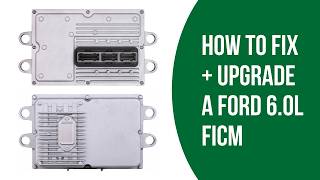
Typical fix: Replace or repair the FICM. Several companies (e.g., Circuit Board Medics, FICMRepair.com) offer repair services or upgraded replacement units with more robust components.
Est. part cost: $300 - $700 for a repaired or replacement FICM. - Injector Wiring Harness Issue ⚪ Low Probability The wiring harness can chafe against engine components, leading to shorts or open circuits. Common chafe points include the upper left valve cover or stud near the FICM, the exhaust pressure sensor bracket, and where the harness passes over other components.
How to confirm: Visually inspect the wiring harness for any signs of rubbing, melting, or damage, particularly where it passes over the valve cover. Wiggle the harness with the engine running to see if the misfire changes. Check for continuity and resistance on the wires for the #4 injector circuit between the FICM and the injector.
Typical fix: Repair the damaged section of the harness with a pigtail connector or replace the entire injector harness if damage is widespread.
Est. part cost: $150 - $250 for a new injector harness.
Rare But Worth Checking
- Low Fuel Pressure: While less common to cause a single cylinder code, low fuel pressure starves the injectors and can lead to damage and contribution faults. Fuel pressure should be a minimum of 45 PSI at all times, with 60-65 PSI being ideal under load.
- Base Engine Mechanical Problem: A loss of compression in cylinder #4 due to piston rings, valves, or other internal issues can cause a contribution fault. A relative compression test or a manual compression test can diagnose this.
- High Pressure Oil System Leak: A leak in the high-pressure oil system specific to the bank containing cylinder #4 (e.g., a leaking standpipe or dummy plug on later models) could potentially cause issues, though this usually affects the entire bank. A failed check valve in the high-pressure oil system can also send metal debris into an injector, causing it to fail.
Diagnosis Steps
- Check for other stored DTCs. Pay close attention to any FICM (P0611) or other injector codes.
- With a capable scan tool, perform a Key On, Engine Off (KOEO) Injector 'Buzz Test'. Listen to ensure all injectors make a sharp, distinct buzzing sound. A weak or absent buzz on cylinder #4 points to an electrical issue.
- Perform a Power Balance Test while the engine is running. This test graphically shows the contribution of each cylinder and will confirm if #4 is underperforming.
- Monitor FICM Main Power voltage during KOEO, cranking, and running conditions. It must consistently read 48 volts. A drop below 46V indicates a failing FICM.
- If stiction is suspected (misfire is worse when cold), perform an oil change using a quality diesel-rated oil (like 5W-40 synthetic) and consider a 'stiction-eliminating' oil additive. Drive the vehicle to see if symptoms improve. Ford also released TSB 08-26-3 which involves a FICM calibration to add an 'inductive heating' strategy to warm the oil in the injectors on cold starts.
- Inspect the engine wiring harness, especially the section going to the #4 injector and the main connectors at the FICM, for any signs of chafing, melting, or loose connections.
- If the injector is confirmed to be the fault, remove the valve cover and replace the #4 fuel injector. Cylinder #4 is the second injector from the front on the passenger side.
- If all else fails, perform a manual compression test on cylinder #4 to rule out a base engine mechanical problem.
Parts You'll Likely Need
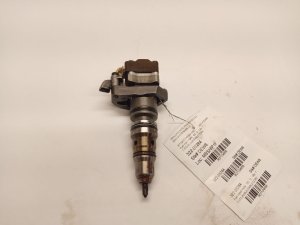
- Fuel Injector (Cylinder #4)
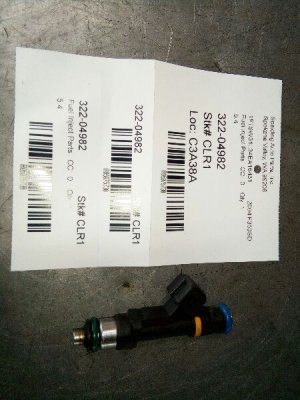
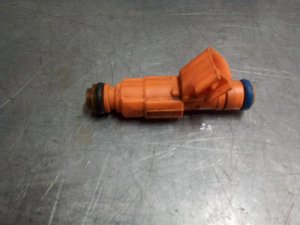
(OEM #Motorcraft CN-5019-RM (reman) or 4C3Z-9E527-BRM. Also crosses to Alliant Power AP60901.)— This is the most frequent cause of a P0272 code, due to either internal electrical failure or mechanical stiction.
Trusted brands: Motorcraft (OEM), Bosch, Alliant Power, PurePower Technologies
OEM price range: $250 - $400 for a new or premium remanufactured injector.
Related Codes That Often Appear With This One
- P0611 — This code indicates a FICM performance issue. If your FICM voltage is low, it will often set this code along with one or more injector contribution or circuit codes.
- P0261, P0264, P0267, P0270, P0273, P0276, P0279, P0282 — These are 'Injector Circuit Low' codes. A failing FICM power supply or an open coil in an injector can cause these codes.
- P0273, P0274 — These are other codes related to cylinder 5. Sometimes issues can affect adjacent cylinders or multiple cylinders on the same bank.
Technical Service Bulletins (TSBs) & Recalls
- TSB 08-26-3: Recommends a FICM re-calibration to add an 'inductive heating' feature. This preheats the oil in the injectors on cold starts to combat stiction.
- TSB 08-2-7: Discusses how excessive coking deposits from poor fuel quality or incomplete combustion can cause a lack of power, smoke, and other issues, which can be related to injector performance.
- TSB 08-20-1: Outlines diagnostic procedures for the high-pressure oil system, including issues with check valves that can fail and send metal into the injectors.
- TSB Bulletin #16-0056: Notes that the MIL may illuminate with DTC P0272 and other cylinder contribution codes during PTO operation or split-shaft PTO mode.
- TSB Bulletin #16-0064: Reports that vehicles may exhibit a fuel knock type noise at idle along with an illuminated MIL and DTC P0272.
- TSB Bulletin #TSB18-2015: Describes a fuel knock type noise at idle and an illuminated MIL with DTC P0272 stored in the PCM, which may be due to incorrect learning of the injector timing.
Platform-Specific Known Issues
- Post-Repair P0272: In several forum discussions, owners report the P0272 code appearing shortly after major engine work, such as head gasket replacement or FICM installation. In one case on Diesel Bombers, a truck developed P0272 with blue smoke 1,200 miles after head work. Another user on Ford Truck Enthusiasts found their P0272 was caused by the two screws holding the top of the #4 injector having backed out, causing the injector to come apart. This highlights the importance of checking injector installation and torque after service.
- Stiction After Sitting: A common story for P0272 is the code appearing after the truck has been sitting unused for several weeks, especially in cold weather. The oil drains from the injectors, and upon startup, the spool valves stick. An owner on the Ford Truck Enthusiasts forum experienced exactly this, with a very rough run condition that improved as the engine warmed up, pointing directly to stiction.
Mechanic-Grade Diagnostic Values
- Fuel Injector Coil Resistance — expected: 0.5 to 1.5 ohms between pins 1&2 (open coil) and 3&4 (close coil). Some sources state a tighter range of 0.4 to 0.6 ohms. Resistance between any other pin combination should be >10,000 ohms.. Failure: A reading of 0 ohms indicates a shorted coil. An infinite reading (OL) indicates an open coil. A reading outside the specified range suggests a failing coil.
- FICM Main Power (V_FICM) — expected: 48 volts KOEO (Key On, Engine Off), should not drop below 46V while cranking or running.. Failure: Voltage dropping below 45-46V, especially during cranking or under load, indicates a failing FICM power supply.
- Injection Control Pressure (ICP) — expected: Cranking: >500 PSI. Idle (warm): ~580-800 PSI. Wide Open Throttle (WOT): Up to 4,000 PSI.. Failure: Failure to reach 500 PSI while cranking will result in a no-start. Low ICP at idle or under load points to a high-pressure oil leak or a weak HPOP.
- Injector Pulse Width (IPW) — expected: Warm Idle: ~0.7-0.9 milliseconds. This value is commanded by the PCM based on engine load.. Failure: Unusually high or low IPW for a given cylinder can indicate the PCM is trying to compensate for a mechanical or hydraulic issue.
- Low-Pressure Fuel System Pressure — expected: Minimum of 45 PSI at all times. Ideally 60-65 PSI under load.. Failure: Pressure below 45 PSI can starve the injectors, causing damage and contribution faults.
- Scan Tool PID: FICM_SYNC — expected: Should display 'YES' or '1' while cranking and running.. Failure: A value of 'NO' or '0' indicates the FICM is not synchronized with the PCM (via CAM and Crank signals), which will prevent the injectors from firing.
- Scan Tool PID: PERDEL (Percent Fuel Mass Deviation) — expected: Values should be close to 0% for all cylinders on a healthy engine.. Failure: A high positive or negative percentage on cylinder #4 is a direct indicator of a contribution fault and confirms the PCM's diagnosis.
Hidden / Shadow Codes Worth Checking
- N/A (Shared Driver Logic): On 2004.25 and later models with the 1845117C2 FICM, the low-side injector driver is shared among four injectors. A short-to-ground on the low side of one injector's circuit can cause the FICM to set circuit codes for all four cylinders on that driver (e.g., P0262, P0265, P0271, P0274). This can be misleading, making a single wiring fault appear as a multi-injector or FICM failure. Early 2003 FICMs had individual drivers for each injector. (see via Standard OBD-II scanner will show multiple injector circuit codes simultaneously.)
Scan Tool Commands That Help
- Ford IDS (or capable equivalent): Power Balance Test at elevated RPM — Per TSB 08-20-1, if a rough run is felt at specific RPMs, this test can help diagnose HPOP check valves. If the power balance is erratic between 1200-1900 RPM, a check valve is suspect. If it's erratic between 3000-4000 RPM, the IPR valve is suspect. This is crucial for finding issues missed by an idle-only power balance test.
- FORScan / Ford IDS: KOEO Injector 'Buzz' Test — This is a primary electrical test. The FICM commands each injector to cycle rapidly, creating an audible buzz. A weak or missing buzz from cylinder #4 indicates an electrical fault in the injector coil or the wiring harness.
Wiring & Ground Locations
- Main Engine Ground — The main negative battery cable from the passenger-side battery connects directly to the engine block. A secondary connection from this point goes to the frame.. A poor main engine ground can cause voltage drops and electrical noise, affecting the performance of the FICM and other modules, potentially leading to erratic injector behavior.
- Chassis/Body Ground Strap — A braided ground strap connects the engine block (often at the back of the head) to the firewall on the passenger side. Another strap is often found under the passenger door area connecting the body to the frame.. These bonding straps ensure all metal components share a common ground potential. Corrosion or breakage can lead to intermittent and hard-to-diagnose electrical issues.
- FICM Connector C1388A (X1) — This is the 32-pin connector on the FICM closest to the firewall. It controls injectors 1, 4, 6, and 7.. This is the primary test point for the #4 injector circuit without removing the valve cover. A backed-out pin or corrosion here can cause P0272.
- Cylinder #4 Injector Circuit at C1388A — Open Coil: Pin 23 (Power) and Pin 1 (Ground). Close Coil: Pin 24 (Power) and Pin 2 (Ground).. These are the specific pins to test for resistance and continuity when diagnosing an electrical fault for the #4 injector circuit at the FICM.
- Common Harness Chafe Points — Upper left valve cover/stud near FICM, EP sensor bracket, idler pulley area, accelerator pedal pivot point, and where the harness passes the battery box.. Vibrations can cause the harness to rub through on these sharp metal edges, shorting the injector wires to ground and causing circuit or contribution codes.
Real Owner Repair Stories
- PowerStrokeArmy forum user (6.0L Power Stroke, year not specified, post-head gasket replacement) — Ran great for a few days after head gasket job, then developed an erratic idle and P0272 only when warm. Misfire would come and go.
❌ Tried (didn't work) Checked rocker arm movement, confirmed pushrods were okay. Ohm test on the injector coils read a normal 0.7 ohms.
✅ What actually fixed it The user suspected an issue with the injector seating or the hold-down bolt and planned to swap the injector with another cylinder to confirm. The thread implies the injector itself was the ultimate culprit despite passing the initial electrical test, a common scenario with mechanical/stiction issues. - Ford Truck Enthusiasts forum user (6.0L Power Stroke, year not specified) — P0272 with rough idle cold or hot after replacing all 8 injectors with rebuilt units. Also had other injector codes initially.
❌ Tried (didn't work) Replaced the #4 injector a second time. FICM was a known-good upgraded unit. Injector harness was new. Buzz test passed. Power balance showed a slight issue on #4.
✅ What actually fixed it The user discovered the first replacement #4 injector had physically come apart (the two screws holding the top were gone). After installing a third injector on that cylinder, the problem persisted. The final resolution pointed towards getting a high-quality, reliable injector, as the 'rebuilt' units were causing repeated, immediate failures. The key takeaway was the poor quality of some aftermarket remanufactured injectors.
OEM Part Supersession History
3C3Z-9E527-EBRM (2003 specific)→4C3Z-9E527-BRM / Motorcraft CN-5019-RM (2004+)— Internal revisions and updates, including changes to the spool valve and other components to improve reliability and address stiction.
Heads up: While the part numbers differ, the injectors are physically interchangeable between all 2003-2007 6.0L engines. It is generally recommended to use the latest revision part number for all replacements.
Model Year Variations Within This Range
- 2003 - early 2004: These engines used a 'straight' or 'round' high-pressure oil rail and a corresponding HPOP design that was prone to failure. The ICP sensor was located at the rear of the engine on the HPOP cover, making it difficult to service.
- Late 2004 - 2005: Ford introduced 'wavy' high-pressure oil rails which hold more oil and are paired with updated standpipes and dummy plugs. The ICP sensor was moved to the passenger-side valve cover for easy access. The HPOP design was also changed.
- 2005+: A new cast-iron body HPOP was introduced. While the pump itself was more reliable, it introduced the failure-prone Snap-to-Connect (STC) fitting on its outlet.
- 2003 vs 2004+: The FICM logic changed. Early (2003) FICMs had individual drivers for each injector. Later (2004.25+) FICMs used shared low-side drivers, meaning a fault on one cylinder's circuit could set codes for up to four cylinders.
Diagnostic Flowchart
Other Known Issues on This Vehicle
Issues unrelated to this code that are worth knowing about as an owner of this generation:
- EGR Cooler Failure 🔴 High — Very common. Clogged oil cooler often leads to EGR cooler failure due to thermal stress. Can occur at any mileage but becomes more likely after 100k miles. (Ref: Multiple TSBs exist. Upgraded aftermarket coolers are a common preventative fix.)
- Engine Oil Cooler Clogging 🔴 High — Extremely common. The cooler's small passages get clogged with casting sand and other debris, restricting coolant flow. This is a primary cause of EGR cooler and head gasket failure.
- Head Gasket Failure (Stretching TTY Bolts) 🔴 High — A notorious weak point. The factory Torque-To-Yield (TTY) head bolts can stretch under high cylinder pressures, especially on tuned engines. Failure is common, often after 100k-150k miles. (Ref: The common fix is replacing factory bolts with stronger ARP head studs.)
- FICM Power Supply Failure 🔴 High — Very common across all model years. The internal power supply board fails due to heat and vibration, or stress from weak batteries/alternator.
- High-Pressure Oil System Leaks (STC Fitting, Standpipes, Dummy Plugs) 🟠 Medium — Common, especially on 2004.5+ models with the updated 'snap-to-connect' fittings. Leaks cause hard starting or no-start conditions, particularly when the engine is hot. (Ref: Updated parts are available to resolve these leaks.)
- Variable Geometry Turbo (VGT) Sticking 🟠 Medium — Common issue where soot and carbon buildup cause the turbo vanes to stick, leading to over-boost or under-boost conditions and loss of power. (Ref: Regular cleaning or updated turbo components can mitigate the issue.)
Used vs. New Parts: Buying Guide for This Vehicle
When a used part is the smart pick: A used OEM FICM from a donor vehicle can be a cost-effective option if its voltage is tested and confirmed to be a stable 48V. Used wiring harnesses are also viable if they are visually inspected thoroughly for chafe marks, brittle insulation, and connector damage.
Donor-vehicle mileage cap: roughly under 150000 miles for the part to have meaningful remaining life.
What to inspect on the donor part:
- For a FICM: Ask the seller for a video showing a multimeter test (KOEO, cranking, running) proving it holds 46V+.
- For a wiring harness: Check for any previous repairs (splices, tape). Bend the harness in several places to check for cracking insulation. Ensure all connector locking tabs are intact.
- For injectors: Avoid used injectors entirely. The risk of installing a worn or 'stiction'-prone injector is too high for the labor involved.
OEM-only on this vehicle (don't cheap out):
- Fuel Injectors: This is critical for the 6.0L. Only use new or premium remanufactured injectors from OEM-affiliated brands. Low-quality remans often reuse the old spool valve, which is the primary failure point.
Aftermarket brands forum-validated for this vehicle:
- Injectors: Motorcraft (OEM), Alliant Power (often re-boxed OEM PurePower injectors), PurePower Technologies (the original manufacturer).
- FICM: FICMRepair.com, Circuit Board Medics (for repair/upgrade services), Bullet Proof Diesel.
Brands owners have reported issues with on this vehicle:
- Unnamed or 'white box' remanufactured fuel injectors from online marketplaces. Forum stories are filled with reports of these failing immediately or within a few thousand miles.
Real Owner Stories
Aggregated from forums and TSBs cited above. Mileages and costs reflect what owners reported in those sources.
2005 Ford Excursion 6.0L Power Stroke V8
Symptoms: Rough idle and P0272.
What fixed it: The #4 fuel injector was replaced by the dealer to resolve the issue.
Source hint: Ford Truck Enthusiasts forum thread from 2005
Ford Excursion 6.0L Power Stroke V8
Symptoms: P0272 code appeared after major engine work was performed.
What fixed it: The owner discovered the two screws holding the top of the #4 injector had backed out, causing the injector to come apart. Securing the injector resolved the code.
Source hint: vehicle_specific_issues section, citing a Ford Truck Enthusiasts user
Ford Excursion 6.0L Power Stroke V8
Symptoms: P0272 appeared after the truck sat for a few weeks in the cold, ran terribly rough, but the condition improved as the engine warmed up.
What fixed it: This was diagnosed as a classic case of injector 'stiction'. The recommended fix is to use a quality oil additive designed to clean HEUI injectors or, if that fails, replace the injector.
Source hint: vehicle_specific_issues section, citing a Ford Truck Enthusiasts user
Related OBD-II Codes
Frequently Asked Questions
My 6.0L Excursion runs rough when cold but smooths out when it warms up. What could cause this?
I just had head gaskets replaced on my 6.0L and now I have a P0272 code. What should I check first?
Is there a Ford TSB that can help with my cold start misfire and P0272?
How can I test the FICM on my 2004 Excursion myself?
Where is the #4 fuel injector located on the 6.0L Power Stroke engine?
What's the difference between a 'buzz test' and a 'power balance test' for this code?
Helpful Videos
Used OEM Parts in Stock


New Aftermarket Parts Available


The information in this article is provided for general reference and educational purposes only. Vehicle specifications, procedures, and part compatibility can vary by production date, trim level, and region. Always consult your vehicle's factory service manual and verify part numbers before purchasing or performing repairs. Safety-critical components such as airbags, seat belts, and braking systems should be installed by a qualified professional.
- Ford Excursion:
- 🎬 Helpful Videos
- 🛍️ Shop This Part
- What's Unique About the 2003-2005 Ford Excursion
- Symptoms You May Notice
- Most Likely Causes
- Rare But Worth Checking
- Diagnosis Steps
- Parts You'll Likely Need
- Related Codes That Often Appear With This One
- Technical Service Bulletins (TSBs) & Recalls
- Platform-Specific Known Issues
- Mechanic-Grade Diagnostic Values
- Hidden / Shadow Codes Worth Checking
- Scan Tool Commands That Help
- Wiring & Ground Locations
- Real Owner Repair Stories
- OEM Part Supersession History
- Model Year Variations Within This Range
- Diagnostic Flowchart
- Other Known Issues on This Vehicle
- Used vs. New Parts: Buying Guide for This Vehicle
- Real Owner Stories
- 2005 Ford Excursion 6.0L Power Stroke V8
- Ford Excursion 6.0L Power Stroke V8
- Ford Excursion 6.0L Power Stroke V8
- Related OBD-II Codes
- Frequently Asked Questions
- 🎟️ Get 5% Off