

P0269 on 2003-2024 Honda Pilot: Cylinder 3 Contribution/Balance Fault Causes and Fixes
On a Honda Pilot with the J-series V6, code P0269 almost always points to a faulty or clogged fuel injector for cylinder #3. This is a well-documented issue, with Honda issuing multiple service bulletins and a warranty extension for injectors on many 2016-2019 models. Replacing the single injector is a common fix, though some TSBs recommend replacing all of them. Expect to pay around $50-$150 for an aftermarket injector or $200-$350 for an OEM part. Shop replacement costs can range from $680 to
- P0269 on a Honda Pilot strongly suggests a problem with the fuel injector on cylinder #3.
- The most reliable diagnostic step is to swap the cylinder #3 injector with another cylinder and see if the fault code follows it.
- Cylinder #3 is located against the firewall on the driver's side of the engine.
- Check for Honda service bulletins or warranty extensions related to fuel injectors for your specific model year, as a replacement may be covered.
What's Unique About the 2003-2024 Honda Pilot
Honda has issued multiple Technical Service Bulletins (TSBs) for J-series V6 engines in this year range related to clogged or faulty fuel injectors. Debris from the manufacturing process of the high-pressure fuel system or the injectors themselves can cause them to fail, leading to misfires and contribution faults. For many 2016-2019 Pilots, Honda extended the warranty on fuel injectors to 10 years or 150,000 miles. While P0269 isn't always explicitly named, these TSBs address the root cause (faulty injectors) that is the most common reason for this specific code on a Pilot.
Generation note: This range covers all four generations of the Honda Pilot (2003-2008, 2009-2015, 2016-2022, 2023-2024). All generations use a J-series 3.5L V6 engine where the fundamental causes and diagnostic steps for this code remain consistent. On the transversely mounted J-series engine, Cylinder #3 is located on the rear bank (against the firewall), closest to the driver's side. The rear bank is Bank 1, and cylinders are numbered 1-2-3 from passenger to driver side.
Symptoms You May Notice
- Check Engine Light is on
- Rough or vibrating idle
- Engine hesitation or stumbling during acceleration
- Noticeable loss of power
- Reduced fuel economy
- Popping or sputtering sound from the engine.
- Replacing the ignition coil when the problem is the fuel injector. Swapping components is key to avoiding this.
- Replacing the oxygen sensor. A single-cylinder contribution fault is almost never caused by an O2 sensor.
Most Likely Causes
- Faulty or Clogged Fuel Injector 🔴 High Probability Honda has documented issues with fuel injectors on these engines, sometimes due to debris from the high-pressure pump or injector machining process, leading to clogging or failure. TSBs 21-010 and 20-100 directly address this and extend the warranty for many 2016-2019 models.
How to confirm: The most effective method is to swap the fuel injector from cylinder #3 with an adjacent cylinder (like cylinder #1 or #2 on the same bank). Clear the codes and drive the vehicle. If the code returns as P0263 (Cylinder 1 Contribution) or P0266 (Cylinder 2 Contribution), the injector is confirmed to be the faulty part. This is an involved repair as it requires removing the intake manifold. 🎬 Watch: Step-by-step guide to replacing GDI fuel injectors.
Typical fix: Replace the faulty fuel injector for cylinder #3. It is recommended to replace the O-rings and seals at the same time. Some Honda TSBs recommend replacing all six injectors as a set.
Est. part cost: $50-$350 - Fouled or Defective Spark Plug 🟡 Medium Probability On Pilots equipped with Variable Cylinder Management (VCM), chronic oil consumption can lead to spark plug fouling, especially on cylinders that are frequently deactivated. While cylinder #3 is not a primary VCM cylinder (1, 2, and 4 are often cited in TSBs), oil burning issues can affect all cylinders over time, and plug fouling is a common issue on the J-series.
How to confirm: Remove the spark plug from cylinder #3 and inspect it for heavy carbon buildup, oil contamination, or damage to the electrode. Compare it to a plug from a healthy cylinder.
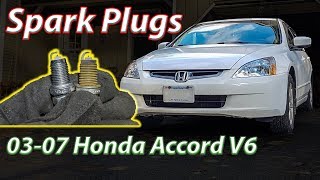
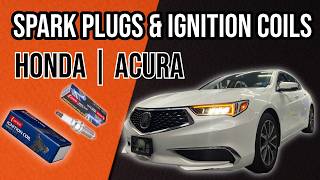
Typical fix: Replace the spark plug for cylinder #3. It is best practice to replace all six spark plugs 🎬 See how to replace spark plugs and ignition coils. if they are near the end of their service life.
Est. part cost: $10-$30 - Failed Ignition Coil ⚪ Low Probability
How to confirm: Swap the ignition coil from cylinder #3 with another cylinder (e.g., cylinder #6 at the front of the engine). If the misfire-related code moves to P0306, the ignition coil is bad. A contribution fault like P0269 is less likely to be caused by a coil but is possible.
Typical fix: Replace the faulty ignition coil.
Est. part cost: $40-$100
Rare But Worth Checking
- Low Compression in Cylinder #3: This is a more serious mechanical engine issue, such as a problem with piston rings or valves. It should be investigated after fuel and ignition causes are ruled out. On VCM-equipped engines, sticking piston rings are a known issue that can cause low compression and oil consumption.
- Damaged Wiring or Connector: The wiring harness or connector for the fuel injector on cylinder #3 could be damaged or corroded, preventing the injector from firing correctly. A visual inspection is the first step.
- PCM Software/Calibration Error: In rare cases, a corrupted or outdated PCM calibration file can misinterpret normal cylinder data and trigger a P0269 code.
Diagnosis Steps
- Read all stored fault codes with an OBD-II scanner. Note any other codes present alongside P0269, such as P0303 or P219A.
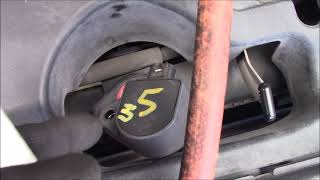
- Locate Cylinder #3. On the Honda J-series V6, the cylinders against the firewall are Bank 1. From passenger to driver side, they are numbered 1, 2, 3. Cylinder #3 is the rear-most cylinder on the driver's side.
- Swap the ignition coil from cylinder #3 with another easily accessible cylinder (e.g., cylinder #6 at the front). Clear codes and drive. If the code changes to P0278 (Cylinder 6 Contribution), the coil is bad. If P0269 returns, proceed to the next step.
- Swap the fuel injector from cylinder #3 with another cylinder on the same bank (e.g., cylinder #2). This is more involved and requires removing the upper intake manifold. 🎬 Watch: How to remove the upper intake manifold for access. Clear codes and drive. If the code changes to P0266 (Cylinder 2 Contribution), the fuel injector is the confirmed problem.
- While the injector and coil are removed, inspect the spark plug for fouling, wear, or damage. A spark plug fouled with oil is a strong indicator of VCM-related piston ring issues. Replace if necessary.
- If the code does not move after swapping components, inspect the wiring and connector for the cylinder #3 fuel injector for any visible damage, corrosion, or loose pins.
- If all the above steps fail to find the issue, a mechanical problem is possible. Perform a compression test on cylinder #3 and compare the reading to the other cylinders to check for internal engine issues like worn piston rings or valve problems.
Parts You'll Likely Need
- Fuel Injector
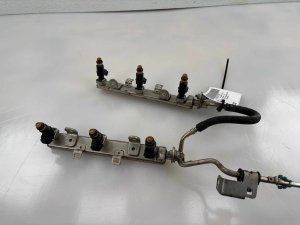
(OEM #16010-RLV-315)— This is the most common failure part for code P0269 on this vehicle, as supported by owner experiences and multiple TSBs. Note: 16010-RLV-315 is a set of 6 injectors for 2016-2020 models and replaces the older part number 16010-RLV-305. Earlier generations use different part numbers (e.g., 16010-R70-A01 for some 2009-2015 models). Always verify with VIN.
Trusted brands: Honda OE, Denso, Bosch
OEM price range: $200-$350
Aftermarket price range: $50-$150 - Spark Plug — A fouled spark plug can cause a contribution fault and is a common maintenance item that is often overlooked, especially on engines with VCM-related oil consumption.
Trusted brands: NGK, Denso
OEM price range: $20-$40
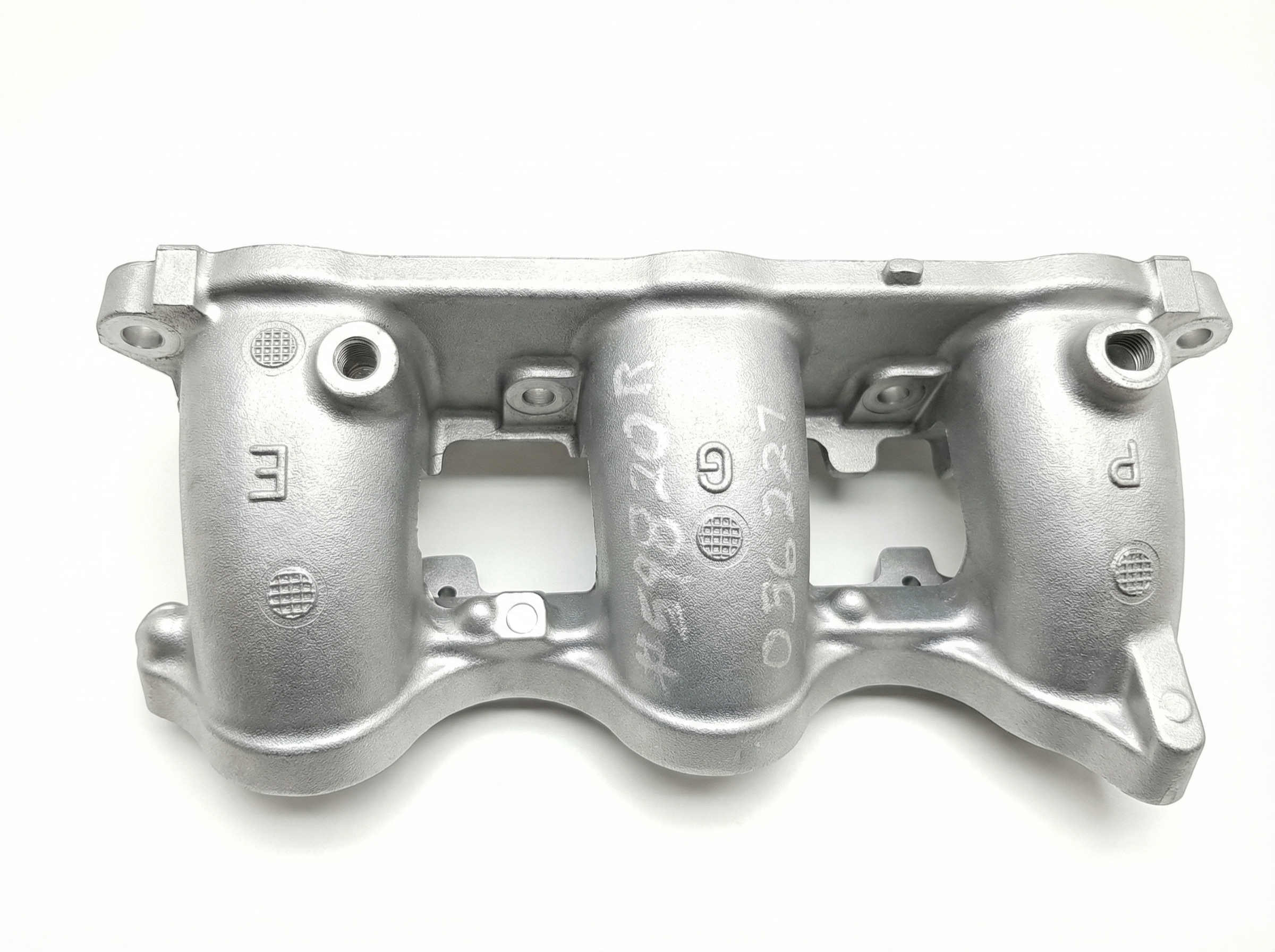
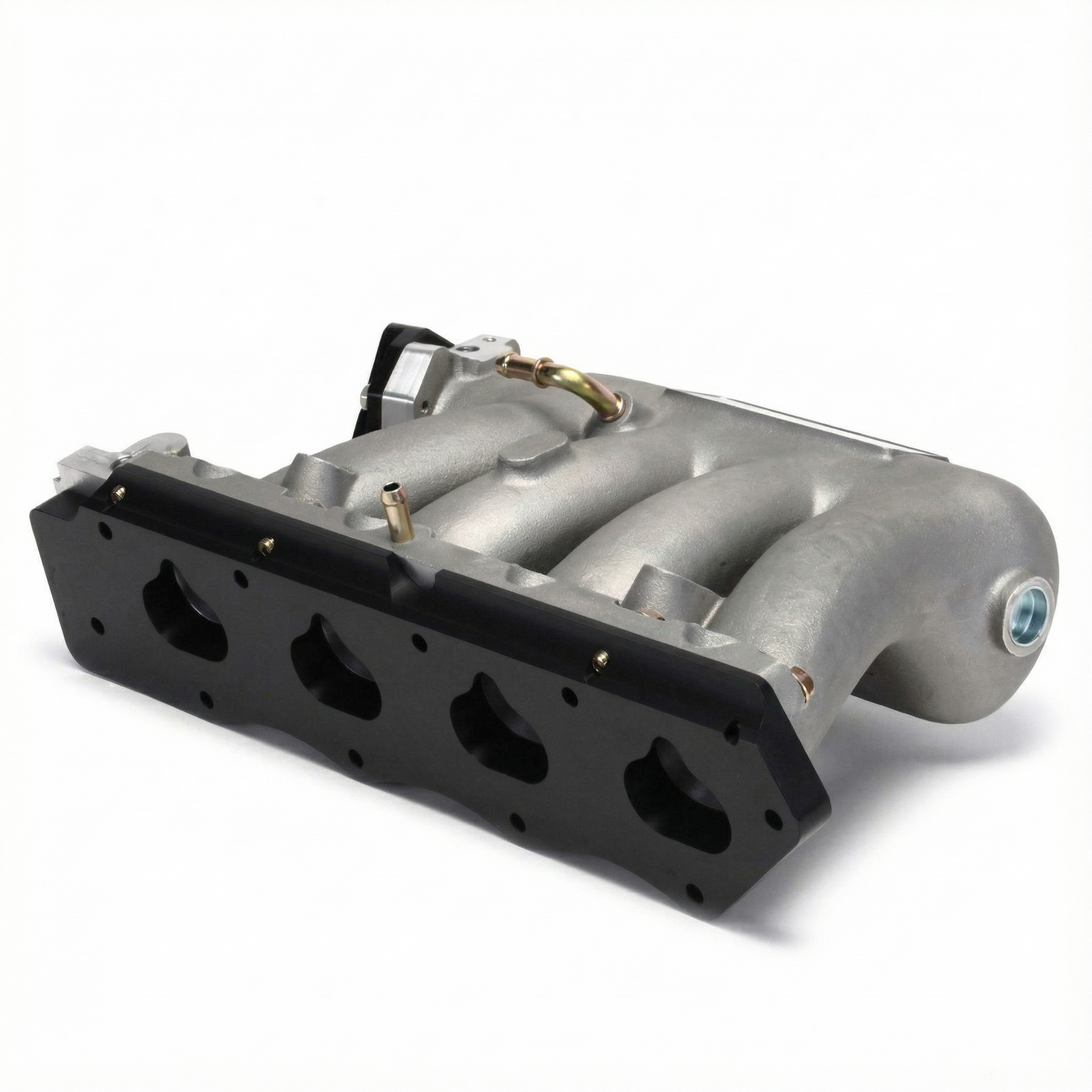
Aftermarket price range: $10-$25 - Intake Manifold Gaskets — Required when replacing the fuel injectors on the rear bank, as the intake manifold must be removed for access.
Trusted brands: Honda OE, Fel-Pro, Mahle
OEM price range: $30-$60
Aftermarket price range: $15-$40
Related Codes That Often Appear With This One
- P0303 — P0303 is 'Cylinder 3 Misfire Detected'. P0269 is a more specific type of misfire code indicating a power contribution problem. They often appear together because a lack of contribution results in a misfire.
- P219A / P219B — These codes indicate an air-fuel ratio imbalance between cylinders on a specific bank. A faulty injector causing P0269 can also trigger these codes, as noted in Honda TSB 21-010 and other related bulletins.
Technical Service Bulletins (TSBs) & Recalls
- 21-010: 'Warranty Extension: MIL Comes On with DTC P0420/P0430, P030x, and/or P219A/B'. Supersedes 18-025. Points to faulty fuel injectors from manufacturing debris as the cause and extends the warranty to 10 years/150,000 miles for eligible 2017-19 Pilots.
- 20-100: 'Warranty Extension: MIL Comes On with DTC P0420/P0430, P030x, and/or P219A/B (With Software Update)'. Cites the same injector
Platform-Specific Known Issues
- Honda Service Bulletin 21-010 (superseding 18-025) extends the warranty for fuel injector replacement on some 2017-2019 Pilots to 10 years/150,000 miles for misfire and air-fuel imbalance codes.
- Honda Service Bulletin 20-100 extends the warranty for fuel injector replacement on some 2016-2017 Pilots to 10 years/150,000 miles for similar issues.
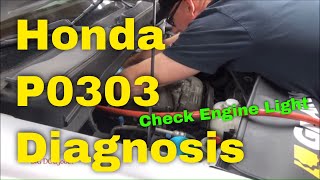
- A real-world diagnosis on a 2011 Pilot with a cylinder 3 misfire (P0303) is documented on the 'Automotive Service Excellence' YouTube channel, showing the process of elimination between coil, plug, and injector. URL: https://www.youtube.com/watch?v=5zQSW8p-dJ0
Mechanic-Grade Diagnostic Values
- Fuel Pressure (Port Injected Models) — expected: 380-430 kPa (55-63 psi) for 2003-2008 models; 390-440 kPa (57-64 psi) for 2009-2015 models.. Failure: Pressure below the specified range indicates a weak fuel pump, clogged filter, or faulty pressure regulator.
- Fuel Injector Resistance (High Impedance/Saturated) — expected: Approximately 10-13 Ohms between the two terminals.. Failure: A reading significantly outside this range (e.g., open circuit or shorted) indicates a failed injector coil.
- Valve Clearance / Lash (Intake) — expected: 0.20-0.24 mm (0.008-0.009 in).. Failure: Excessive clearance (ticking noise) or no clearance (tight valves) can affect cylinder compression and contribution. Intake valves on J-series engines tend to loosen over time.
- Valve Clearance / Lash (Exhaust) — expected: 0.28-0.32 mm (0.011-0.013 in).. Failure: Excessive clearance or no clearance. Exhaust valves on J-series engines tend to tighten over time.
Scan Tool Commands That Help
- Honda HDS (or advanced aftermarket scanner): Cylinder Balance Test — This active test sequentially disables each fuel injector and measures the corresponding drop in engine RPM. A small or non-existent RPM drop when cylinder #3 is disabled confirms it is not contributing properly. This is a primary diagnostic step before physically swapping parts.
- Honda HDS (or advanced aftermarket scanner): Fuel Injector Test — Allows the technician to individually command each injector to open for a specific duration, verifying the electrical circuit and injector solenoid operation with an audible click.
Wiring & Ground Locations
- Cylinder #3 Injector Wire Color — At the fuel injector connector for cylinder #3.. On many Honda V6 engines, the wire for the #3 injector is BLUE. The other wire is typically a common power wire (e.g., Yellow/Black). Knowing the specific wire color helps in tracing the circuit back to the PCM for continuity and voltage checks.
- Injector Connector — On the fuel rail, connected to the top of the fuel injector for cylinder #3 (rear bank, driver's side).. This 2-pin connector is a common point of failure due to engine heat and vibration. Corrosion or a loose pin can interrupt the signal from the PCM, causing the P0269 code.
- Engine and PCM Grounds (e.g., G101) — Commonly found on the thermostat housing or bolted directly to the engine block/cylinder head.. A poor engine or PCM ground can cause erratic behavior across multiple sensors and actuators, including fuel injectors. While not specific to one cylinder, a faulty ground can cause intermittent contribution faults that are difficult to diagnose.
Real Owner Repair Stories
- YouTube channel 'Pine Hollow Auto Diagnostics' (2016 Honda Pilot) — Check engine light, fuel trims maxed out (negative), fuel pressure dropping to zero with key-off-engine-off.
❌ Tried (didn't work) Initial diagnosis pointed towards a fuel system issue, but the specific cause was not immediately obvious.
✅ What actually fixed it The shop replaced all six fuel injectors and the PCM. The technician then programmed the new PCM to the vehicle, which resolved the fuel trim and pressure drop issues, clearing the related codes.
OEM Part Supersession History
16010-RLV-305→16010-RLV-315— Updated part from Honda to address reliability issues that caused the original warranty extension. The new part is sold as a complete set of six injectors.16010-5R1-305→16010-5R1-315— Part update for direct injection models (though this part number is primarily for other Honda models like the Fit, it is sometimes confused with the Pilot part).
Heads up: This part is for direct injection systems and is NOT compatible with the port-injected J-series V6 found in 2003-2015 Pilots. It is also different from the direct injectors used on 2016+ Pilots.
Model Year Variations Within This Range
- 2016-2024: Starting with the third generation (2016), the J35Y6 engine uses direct injection instead of port injection. While the P0269 code's meaning is the same, the fuel injectors are physically different, operate at much higher pressure, and are more expensive. The TSBs and warranty extensions for faulty injectors are primarily focused on these direct-injection models.
- 2003-2015: These models use a port-injection fuel system. Fuel pressure is significantly lower, and injectors are a different design and part number (e.g., 16450-RCA-A01 for many 2003-2008 models). While injectors can still fail, it is less of a widespread, documented issue compared to the 2016+ models.
- 2005+: Models equipped with Variable Cylinder Management (VCM) can experience oil consumption issues, which may lead to spark plug fouling and trigger misfire or contribution codes. Disabling VCM is a popular modification by owners to prevent these issues.
Diagnostic Flowchart
Other Known Issues on This Vehicle
Issues unrelated to this code that are worth knowing about as an owner of this generation:
- VCM-Related Oil Consumption & Fouled Plugs 🔴 High — Common on 2009+ models with VCM, typically noticeable after 80,000 miles. Can lead to piston ring replacement. (Ref: Honda settled a class-action lawsuit and issued TSBs (e.g., 11-033, 13-081) for some models regarding misfires and fouled plugs (cylinders 1-4) due to sticking piston rings caused by VCM operation.)
- 1st Gen (2003-2005) Automatic Transmission Failure 🔴 High — Very common in 2003-2004 models, often failing around 100,000 miles. Symptoms include slipping, harsh shifts, and complete failure. (Ref: A recall was issued for early models to install a revised oil cooler return line to improve lubrication, but long-term durability remains a major concern.)
- 3rd Gen (2019-2022) Infotainment Popping/Blackouts 🟠 Medium — Widespread complaints of speakers popping/crackling, followed by the infotainment screen and sometimes the gauge cluster going black. (Ref: Honda TSB 23-047 addresses the issue, which is often caused by faulty MOST bus network connectors or tension on the wiring harness behind the dash.)
Used vs. New Parts: Buying Guide for This Vehicle
When a used part is the smart pick: For pre-2016 models with port injection, a used fuel injector from a low-mileage donor vehicle can be a cost-effective option, as they are not a high-failure item. Used ignition coils are also generally reliable. For any major electronic module like the PCM, a used part is viable only if sourced from a specialist who can guarantee it is unlocked and programmable.
Donor-vehicle mileage cap: roughly under 80000 miles for the part to have meaningful remaining life.
What to inspect on the donor part:
- Check for a clean, corrosion-free electrical connector on the injector or coil.
- Ask for the VIN of the donor vehicle to verify its year and mileage.
- Avoid parts from vehicles that show signs of a major engine fire, flood, or severe front-end collision.
OEM-only on this vehicle (don't cheap out):
- Fuel Injectors (2016+ models): Due to the known manufacturing defects and subsequent TSBs/warranty extensions, using only new OEM Honda injectors (part # 16010-RLV-315 set) is strongly recommended to ensure the latest, corrected design is installed.
Aftermarket brands forum-validated for this vehicle:
- Denso (often the OEM supplier for Honda)
- Bosch
- NGK (for spark plugs)
- Fel-Pro (for intake gaskets)
Brands owners have reported issues with on this vehicle:
- Unbranded, no-name fuel injectors sold on marketplaces like eBay or Amazon. These often have inconsistent flow rates and high failure rates, leading to a repeat of the same problem.
Real Owner Stories
Aggregated from forums and TSBs cited above. Mileages and costs reflect what owners reported in those sources.
2017 Honda Pilot J-series V6 — ~95000 miles
Symptoms: Check Engine Light came on with a rough, vibrating idle and hesitation. The scanner showed P0269 and a P0303 misfire code.
What fixed it: The dealer confirmed the vehicle was covered under the warranty extension from TSB 21-010 and replaced the full set of six fuel injectors.
Source hint: Piloteers.org: Numerous threads discuss P030x misfire codes which often accompany P0269.
2011 Honda Pilot J-series V6
Symptoms: The vehicle had a persistent cylinder #3 misfire (P0303) and a rough idle.
What fixed it: After swapping the coil and plug did not solve the issue, the fuel injector for cylinder #3 was swapped with another cylinder. The misfire code followed the injector, confirming it was faulty. A new injector fixed the problem.
Source hint: YouTube - Automotive Service Excellence: A video titled '2011 Honda Pilot P0303 cylinder #3 misfire let's find out what cause that and how to diagnosis'
2016 Honda Pilot J-series V6
Symptoms: The Check Engine Light appeared and the engine had a noticeable loss of power, especially during acceleration.
What fixed it: After getting a contribution code, the owner was advised to check their VIN for the warranty extension program. The dealer confirmed eligibility under TSB 20-100 and replaced the faulty fuel injectors.
Source hint: Reddit r/hondapilot: Discussions often revolve around the related TSBs for fuel injectors.
Related OBD-II Codes
Frequently Asked Questions
My 2018 Honda Pilot has a P0269 code. Is this covered by a warranty extension?
Where is cylinder #3 located on my Pilot's V6 engine?
My mechanic wants to swap the fuel injector to diagnose the P0269 code. Is this a standard procedure?
I found oil on the spark plug from cylinder #3. What does this indicate?
If the fuel injector for cylinder #3 is bad, should I replace just that one or all six?
How difficult is it to access the fuel injector on cylinder #3?
Helpful Videos
We Have This Part in Stock



The information in this article is provided for general reference and educational purposes only. Vehicle specifications, procedures, and part compatibility can vary by production date, trim level, and region. Always consult your vehicle's factory service manual and verify part numbers before purchasing or performing repairs. Safety-critical components such as airbags, seat belts, and braking systems should be installed by a qualified professional.
- Honda Pilot:
- 🎬 Helpful Videos
- 🛍️ Shop This Part
- What's Unique About the 2003-2024 Honda Pilot
- Symptoms You May Notice
- Most Likely Causes
- Rare But Worth Checking
- Diagnosis Steps
- Parts You'll Likely Need
- Related Codes That Often Appear With This One
- Technical Service Bulletins (TSBs) & Recalls
- Platform-Specific Known Issues
- Mechanic-Grade Diagnostic Values
- Scan Tool Commands That Help
- Wiring & Ground Locations
- Real Owner Repair Stories
- OEM Part Supersession History
- Model Year Variations Within This Range
- Diagnostic Flowchart
- Other Known Issues on This Vehicle
- Used vs. New Parts: Buying Guide for This Vehicle
- Real Owner Stories
- 2017 Honda Pilot J-series V6 — ~95000 miles
- 2011 Honda Pilot J-series V6
- 2016 Honda Pilot J-series V6
- Related OBD-II Codes
- Frequently Asked Questions
- 🎟️ Get 5% Off