

P0245 on 2003-2012 Saab 9-3 2.0T: Boost Valve Solenoid or ECU Failure Guide
If P0245 appears alone, you likely need a new Boost Control Valve (approx. $60-$80). If it appears with codes P0201-P0204, your Engine Control Unit (ECU) has failed and needs professional repair or replacement, which can cost several hundred dollars.
- First, check for other codes. P0245 by itself points to the Boost Control Valve (BCV). P0245 with P0201-P0204 means your ECU has failed.
- Do not replace fuel injectors if you have the full set of codes; the problem is the ECU.
- Replacing the Boost Control Valve (Part #12787706) is a simple DIY job if it's the only code present.
- ECU failure is a known weak point on these cars due to heat. If you replace or repair it, consider adding a heat shield or relocating it to prevent future issues.
What's Unique About the 2003-2012 Saab 9-3

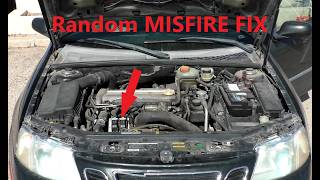
On the Saab 9-3, the meaning of P0245 changes dramatically depending on what other codes are present. By itself, it's a simple component fault. However, when seen with a full set of injector codes (P0201, P0202, P0203, P0204), it's a classic sign of a failed Trionic 8 Engine Control Unit (ECU). This is a well-known issue caused by the ECU's placement on top of the hot engine, leading to heat-related failure of the internal driver chip that controls both the boost valve and the injectors.
Symptoms You May Notice
- Check Engine Light is on
- Significant loss of engine power and acceleration (limp-home mode)
- Cruise control is disabled
- If caused by ECU failure: rough idling, engine misfires, hard starting, and white smoke or a strong smell of fuel from the exhaust
- Replacing the fuel injectors when P0245 is present with P0201-P0204. The root cause is not the injectors, but the ECU that controls them.
- Replacing the turbocharger. This code indicates an electrical fault in the control circuit, not a mechanical failure of the turbo itself.
Most Likely Causes

- Failed Boost Control Valve (BCV) / Wastegate Solenoid 🔴 High Probability The solenoid is an electronic component that operates in a hot engine bay and can fail over time by shorting out internally. It is a very common and relatively simple fix.
How to confirm: This is the most likely cause if P0245 appears ALONE. With a multimeter, disconnect the valve and measure the resistance between its two pins. A reading far outside the typical 8-12 ohm range (e.g., near zero ohms for a short, or infinite for an open circuit) indicates a bad valve.
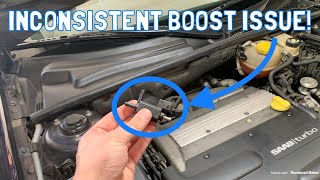
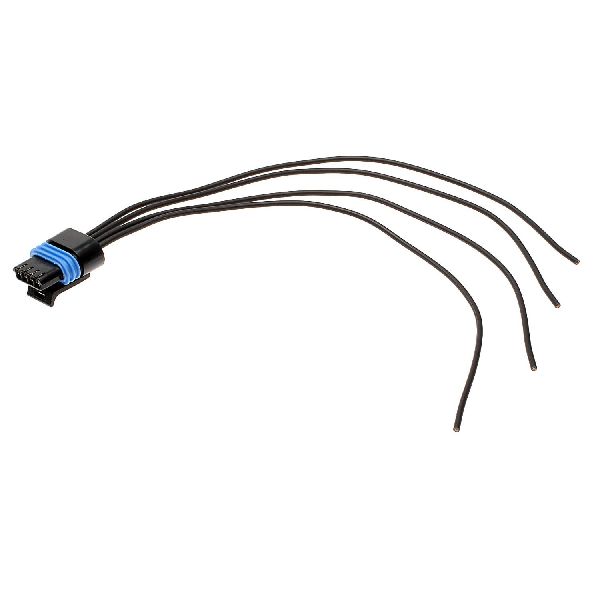
Typical fix: Replace the Boost Control Valve. It is located on the top-front of the engine and is held by a simple bracket, with three vacuum hoses and one electrical connector. The replacement is a straightforward DIY job. 🎬 Watch: This quick walkthrough shows how to replace the valve.
Est. part cost: $55-$85 - Failed Engine Control Module (ECM/ECU) 🔴 High Probability The Trionic 8 ECU is mounted directly on the engine, causing internal components and solder joints to fail from excessive heat and vibration. This is a widely documented design flaw that affects Saabs and platform-mates like the Cadillac BLS.
How to confirm: This is the almost certain cause if P0245 appears TOGETHER with injector codes P0201, P0202, P0203, and P0204. The combination of these specific codes points directly to the failure of the shared driver chip inside the ECU.
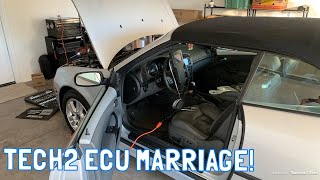
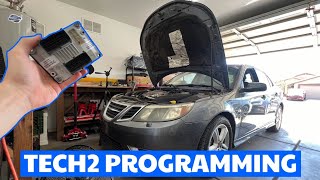
Typical fix: The ECU must be repaired by a specialist who can replace the internal driver chip (e.g., TPIC46L02), or the entire unit must be replaced and programmed ('married') to the vehicle with a Saab Tech 2 tool. Reputable repair services are available online.
Est. part cost: $200-$500 for repair/refurbished unit - Wiring Harness Short-to-Ground ⚪ Low Probability The wiring harness to the boost control valve can become brittle from engine heat, potentially chafing against the engine or other components and causing a short circuit.
How to confirm: Visually inspect the wiring from the BCV back toward the main harness for any signs of melting, chafing, or damage. Use a multimeter to check for continuity to ground on the signal wire between the ECU connector and the BCV connector (with both ends disconnected).
Typical fix: Repair the damaged section of the wire and protect it with heat-resistant loom.
Est. part cost: $5-$20
Diagnosis Steps

- Scan for Codes: Read all stored Diagnostic Trouble Codes (DTCs).
- Analyze the Codes: CRITICAL STEP - If P0245 is present with P0201, P0202, P0203, and P0204, proceed directly to diagnosing the ECU. Do not waste time or money on other parts.
- Inspect the Boost Control Valve (BCV) and Wiring (if P0245 is alone): Locate the BCV on top of the engine. Check its electrical connector for corrosion or loose pins. Inspect the visible wiring for any signs of melting or damage.
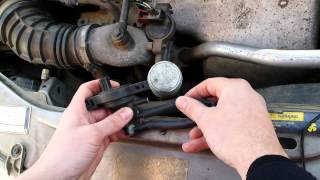
- Test the BCV Solenoid: Disconnect the BCV's electrical connector. Use a multimeter set to Ohms (Ω) to measure the resistance across the two pins on the valve itself. A healthy valve should read between 8-12 ohms. A reading near zero indicates a short circuit, confirming the valve is bad. 🎬 See how to test the BPC valve with a multimeter.
- Test the BCV Circuit: If the valve's resistance is good, check the wiring. With the key on, one pin in the harness connector should have battery voltage. The other is the control wire from the ECU. Check this control wire for a short to ground using a multimeter.
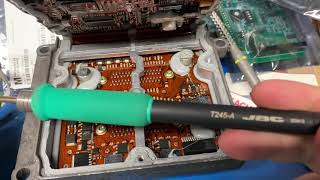
- Diagnose the ECU (if multiple codes are present): The presence of P0245 with P0201-P0204 is conclusive evidence of ECU failure. The unit must be sent to a reputable electronics repair service 🎬 Watch: A look inside the ECU at the common failure points. (like Nick's Electronics Repair, BBA Reman, or others found on forums) or replaced by a shop with a Saab Tech 2 programmer.
Parts You'll Likely Need

- Boost Pressure Control Valve
(OEM #12787706)— This is the most common failure when P0245 appears by itself. The internal coil shorts out, triggering the code.
Trusted brands: Genuine Saab, Pierburg (OEM Supplier)
OEM price range: $75-$90
Aftermarket price range: $55-$70 - Engine Control Module (ECU) Repair Service — Required when P0245 is accompanied by injector codes P0201-P0204, indicating a common internal failure due to heat soak.
Trusted brands: Nick's Electronics Repair, BBA Reman, SaabTuning.pl, SPARTS AB
OEM price range: $800+ for new unit
Aftermarket price range: $200-$500 for repair/cloning service
Related Codes That Often Appear With This One
- P0201, P0202, P0203, P0204 — These injector circuit fault codes appear with P0245 when the specific driver chip inside the Trionic 8 ECU fails, as this single chip controls both the wastegate solenoid and the fuel injectors.
- P0246 — This code for 'Wastegate Solenoid Circuit High' can also be triggered by ECU failure or wiring problems, representing the opposite electrical fault condition (short to power instead of ground).
Platform-Specific Known Issues

- The Trionic 8 ECU's location on top of the engine leads to a high rate of failure from heat damage, causing a specific and predictable set of fault codes (P0245 + P0201-P0204). Some owners fabricate heat shields or purchase kits to relocate the ECU to a cooler location, such as under the radiator crossmember, to prevent repeat failures.
Mechanic-Grade Diagnostic Values
- Boost Control Valve (BCV) internal resistance — expected: The Pass 2 value of 8-12 ohms is a commonly cited forum value. However, official Saab WIS documentation for an earlier but similar system specifies 3 ±1 ohms at 20°C (68°F). A value near 0 ohms indicates a direct short.. Failure: A reading of 0 ohms (or very close to it) indicates a short circuit, which is the direct cause of a P0245 code. An infinite reading indicates an open circuit, which would typically set a P0246.
- BCV control signal from ECU — expected: The ECU grounds this circuit with a Pulse Width Modulated (PWM) signal. With the valve disconnected and key on, you should measure battery voltage on the power supply pin and the control pin (relative to ground). The ECU pulls the control pin to ground to activate the solenoid.. Failure: If the control wire shows a constant ground connection even with the key off, there is a short in the harness. If it never shows ground when activated via a scan tool, the ECU driver may be faulty (open).
Scan Tool Commands That Help
- Saab Tech 2: Boost Pressure Control Valve Activation Test — This bidirectional command allows a technician to manually command the BCV on and off while monitoring the circuit's response. It is the definitive way to test the entire circuit, from the ECU driver to the solenoid itself, without having to physically access wires. It can confirm if the ECU is capable of grounding the circuit and if the solenoid clicks when activated.
- Saab Tech 2: View Fuel/Air Deviation Data — While not directly for P0245, if limp mode is present, this data is invaluable. It compares stored MAF values against actual readings and fuel trims. A major deviation can indicate a significant control problem, which could be related to the ECU's inability to manage boost, indirectly confirming the severity of the fault.
Wiring & Ground Locations
- ECU Pin 56 (Connector B) — On the main connector of the Trionic 8 ECU, located on top of the engine.. This is the specific pin from which the Trionic 8 ECU grounds the Boost Control Valve solenoid. Testing for a short-to-ground at this pin (with the ECU disconnected) can isolate the fault to the wiring harness itself.
- G7 — On the engine control module's top right attachment lug.. This is a primary grounding point for the engine control system on T8-equipped cars. A corroded or loose G7 ground can cause a host of erratic electrical issues, including intermittent circuit low/high faults. It should be inspected and cleaned as part of any electrical diagnosis.
- G2 — On the side of the left-hand structure strut by the connector bracket, near the battery.. This is a main chassis ground point where one of the battery's primary ground cables connects. While less likely to cause a specific P0245, a poor connection here can affect the stability of the entire vehicle electrical system.
Real Owner Repair Stories
- Aggregated from Reddit and repair shop articles (2006 Saab 9-3 2.0T) — Car starts but runs very roughly in limp home mode, strong smell of gasoline, occasional white smoke from exhaust. Codes P0201, P0202, P0203, P0204, P0245, and P0246 were all present.
❌ Tried (didn't work) Replacing O2 sensor, Installing a new battery, Replacing an ignition coil
✅ What actually fixed it The combination of all injector codes plus the boost control codes (P0245/P0246) was correctly diagnosed as a classic Trionic 8 ECU failure. The ECU was sent to a repair service that confirmed and fixed a defective internal chip controlling the injector and turbo circuits. The car ran perfectly after reinstalling the repaired ECU.
OEM Part Supersession History
Unknown→12787706— Standard part evolution and supplier changes.
Heads up: Part number 12787706 is the correct and widely available replacement for the entire 2003-2012 2.0T range. An older part number, 12791172, is also cited as an equivalent.
Model Year Variations Within This Range
- 2007-2012: A facelift occurred for the 2008 model year, which included revised frontal styling, but the core engine, Trionic 8 management system, and the location/function of the BCV and ECU remained the same for the 2.0T engine. Therefore, the causes and fixes for P0245 are consistent across the entire 2003-2012 range.
- 2009-2012: Starting in 2009, an all-wheel-drive (XWD) option became available on 2.0T models. This added complexity to the drivetrain but did not change the engine management or turbo control system related to code P0245.
Diagnostic Flowchart
Other Known Issues on This Vehicle
Issues unrelated to this code that are worth knowing about as an owner of this generation:
- CIM Module Failure 🔴 High — Very common. Can occur at any mileage. Symptoms include non-functional steering wheel controls, horn failure, airbag warnings, and 'Steering Lock Malfunction' messages preventing the car from starting.
- Premature Intake Valve Wear / Carbon Buildup 🟠 Medium — A well-documented issue, particularly on 2007-2011 models, causing cold-start misfires that disappear when warm. Carbon buildup is a general issue for the engine's life, while the valve wear was specific to certain years. (Ref: Saab TSB 253-2442 (for valve wear issue on 2007-2011 models))
- Ignition Switch Module (ISM) Failure 🟠 Medium — Common failure point. The switch where the key fob is inserted can fail internally due to dirty or worn contacts, leading to 'Key Not Accepted' messages or the key getting stuck.
- Steering Column Lock (SCL) Failure 🔴 High — Often occurs with CIM or ISM failure, this mechanical lock in the steering column can jam, causing a 'Steering Lock Malfunction' and immobilizing the vehicle.
- Convertible Top Hydraulic System Failures 🟠 Medium — Specific to convertible models, the hydraulic lines are known to become brittle and leak, and the hydraulic cylinders or pump can fail, preventing the top from operating.
Used vs. New Parts: Buying Guide for This Vehicle
When a used part is the smart pick: A used Boost Control Valve (BCV) from a reputable salvage yard is a reasonable choice, especially if it comes from a lower-mileage, accident-damaged vehicle. Given the low cost of a new aftermarket part, the savings may be minimal.
Donor-vehicle mileage cap: roughly under 80000 miles for the part to have meaningful remaining life.
What to inspect on the donor part:
- Check for intact vacuum nipples with no cracks or brittleness.
- Ensure the electrical connector pins are clean and free of corrosion.
- If possible, test the resistance with a multimeter before purchase; it should be within the 8-12 ohm range.
- Ask for the VIN of the donor car to verify it's from a compatible 2.0T model.
OEM-only on this vehicle (don't cheap out):
- Engine Control Module (ECU): NEVER install a used, non-divorced ECU. A used ECU must be professionally repaired and/or 'cloned' from your original unit. A new ECU must be 'married' to the car using a Saab Tech 2 tool. Simply swapping a used ECU from another car will result in a no-start condition due to the immobilizer.
Aftermarket brands forum-validated for this vehicle:
- Pierburg: This is the Original Equipment Manufacturer (OEM) for the Boost Control Valve, offering the same quality as the Genuine Saab part at a lower price.
Brands owners have reported issues with on this vehicle:
- Unbranded, generic BCVs from online marketplaces may have questionable quality control and are best avoided, as a failure could lead to improper boost levels.
Real Owner Stories
Aggregated from forums and TSBs cited above. Mileages and costs reflect what owners reported in those sources.
2003-2012 Saab 9-3 2.0T
Symptoms: Owner reported getting codes P0245 and P0201-P0204 simultaneously, which was correctly identified as a failed ECU chip.
What fixed it: The owner performed a successful DIY replacement of the failed driver chip on the ECU circuit board.
Source hint: BobIsTheOilGuy.com - 'Saab Codes' thread
2003-2012 Saab 9-3 2.0T
Symptoms: The vehicle presented with the P0201-P0204 and P0245 code combination. Attempts to fix the issue by replacing the Boost Control Valve (BCV) or fuel injectors were unsuccessful.
What fixed it: The problem was ultimately resolved by having the Engine Control Unit (ECU) repaired or replaced.
Source hint: Reddit r/saab - 'Anyone ever have to get their ECU replaced?'
2003-2012 Saab 9-3 2.0T
Symptoms: The combination of codes P0201-P0204 and P0245 was confirmed as a known symptom of Trionic 8 ECU failure, caused by the unit's location and exposure to engine heat.
What fixed it: After ECU repair or replacement, an ECU relocation strategy was employed to move the unit to a cooler location to prevent the problem from recurring.
Source hint: SaabPlanet.com - 'Solution to problems with T8 Electronic Control Module (or ECU)'
Related OBD-II Codes
Frequently Asked Questions
I have code P0245 along with P0201, P0202, P0203, and P0204. Should I replace the boost control valve first?
Is ECU failure a common problem on the 2003-2012 Saab 9-3 2.0T?
What is the most likely cause if I only have the P0245 code and no others?
How can I test the Boost Control Valve (BCV) to see if it's bad?
I've had my ECU repaired. Is there a way to prevent it from failing again?
Does this P0245 and injector code issue also affect the Cadillac BLS or Opel/Vauxhall Vectra C?
Helpful Videos
Used OEM Parts in Stock


New Aftermarket Parts Available



The information in this article is provided for general reference and educational purposes only. Vehicle specifications, procedures, and part compatibility can vary by production date, trim level, and region. Always consult your vehicle's factory service manual and verify part numbers before purchasing or performing repairs. Safety-critical components such as airbags, seat belts, and braking systems should be installed by a qualified professional.
- Saab 9-3:
- 🎬 Helpful Videos
- 🛍️ Shop This Part
- What's Unique About the 2003-2012 Saab 9-3
- Symptoms You May Notice
- Most Likely Causes
- Diagnosis Steps
- Parts You'll Likely Need
- Related Codes That Often Appear With This One
- Platform-Specific Known Issues
- Mechanic-Grade Diagnostic Values
- Scan Tool Commands That Help
- Wiring & Ground Locations
- Real Owner Repair Stories
- OEM Part Supersession History
- Model Year Variations Within This Range
- Diagnostic Flowchart
- Other Known Issues on This Vehicle
- Used vs. New Parts: Buying Guide for This Vehicle
- Real Owner Stories
- 2003-2012 Saab 9-3 2.0T
- 2003-2012 Saab 9-3 2.0T
- 2003-2012 Saab 9-3 2.0T
- Related OBD-II Codes
- Frequently Asked Questions
- 🎟️ Get 5% Off