

P0245 on 2015-2017 Lincoln Navigator 3.5L EcoBoost: Wastegate Solenoid 'A' Low Circuit Fixes
The P0245 code on a 2015-2017 Lincoln Navigator most often indicates a failed turbocharger wastegate control solenoid or a wiring issue. The solenoid is a relatively inexpensive part (around $40-$100) and is a common DIY fix. Before replacing it, always check for a blown fuse (specifically #79 under the hood) and inspect the engine wiring harness for damage where it can rub against the driver's side cylinder head.
- P0245 on your Navigator means there's a low voltage problem in the turbo wastegate solenoid circuit, which will cause a major loss of power.
- The most likely cause is a failed wastegate solenoid itself, which is a relatively affordable and accessible part to replace.
- Before buying any parts, carefully inspect the engine wiring harness for damage, especially near the driver's side cylinder head, as chafing is a known issue.
- Always check the related fuse (#79 on a 2015 model) with a multimeter before performing more complex diagnostics, as it can fail without looking burnt.
What's Unique About the 2015-2017 Lincoln Navigator
The 3.5L EcoBoost V6 engine, shared with the Ford F-150 and Expedition, is known for this specific code. The primary culprits are either the wastegate control solenoid failing due to heat and vibration or, very commonly, the engine wiring harness chafing against the driver's side cylinder head. This chafing can cause a short to ground, directly triggering the P0245 'Circuit Low' fault. While other EcoBoost engines have TSBs related to blown fuses for this code, the 3.5L platform points more frequently to the solenoid or harness damage.
Symptoms You May Notice
- Check Engine Light is on
- Significant loss of engine power and sluggish acceleration
- Lack of boost from the turbochargers
- Vehicle may enter 'limp mode'
- Erratic turbo boost
- In some cases, the A/C compressor may not engage
- Replacing the turbocharger assembly. The P0245 code specifically points to an electrical circuit fault, not a mechanical failure of the turbo itself.
- Replacing the boost pressure sensors. While these sensors are part of the turbo system, this code is specific to the wastegate solenoid's control circuit.
Most Likely Causes
- Failed Turbocharger Wastegate Solenoid 🔴 High Probability The solenoid is exposed to significant heat and vibration in the engine bay, which can lead to internal electrical failure over time. The plastic components can also become brittle and break.
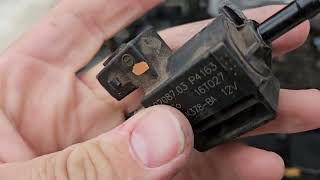
How to confirm: Test the solenoid's resistance with a multimeter; compare the reading to the manufacturer's specification. You can also use a scan tool to command the solenoid on and off to check for an audible click.
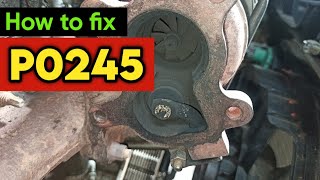
Typical fix: Replace the wastegate control solenoid. 🎬 Watch: Step-by-step EcoBoost wastegate solenoid replacement guide
Est. part cost: $40-$100 - Wiring Harness Damage (Short to Ground) 🔴 High Probability There is a well-documented issue on the 3.5L EcoBoost platform where the engine wiring harness can rub against the sharp corner of the driver's side cylinder head, the drive belt idler pulley bracket, or the oil dipstick tube bracket, causing wires to chafe and short out.
How to confirm: Visually inspect the entire length of the wiring harness leading to the wastegate solenoid, paying close attention to contact points with engine components. Perform a continuity test on the wires to check for a short to ground. A voltage test at the solenoid connector showing very low voltage (e.g., under 1V) with the key on points to a wiring issue.
Typical fix: Repair the damaged section of the wire and secure the harness away from the contact point using zip ties or protective conduit to prevent future damage.
Est. part cost: $5-$25 for wiring repair supplies - Blown or Faulty Fuse 🟡 Medium Probability A short in the circuit, either from the solenoid or the wiring, can cause the corresponding fuse to blow. In some documented cases, the fuse itself can fail intermittently without appearing visibly burnt.
How to confirm: Locate and inspect the fuse for the PCM or related actuators in the under-hood fuse box. On a 2015 Navigator, this has been identified as fuse #79 (10A). 🎬 Watch: How to locate and test the wastegate fuse It is critical to test the fuse with a multimeter for continuity, as a visual inspection may not be sufficient.
Typical fix: Replace the fuse. If the original fuse failed intermittently, this may be the only fix required. If it is blown, the underlying short circuit must be found and repaired first.
Est. part cost: $1-$5 - Corroded or Loose Electrical Connector ⚪ Low Probability
How to confirm: Disconnect the electrical connector at the wastegate solenoid and inspect the pins for corrosion, moisture, or damage. Ensure it is securely connected.
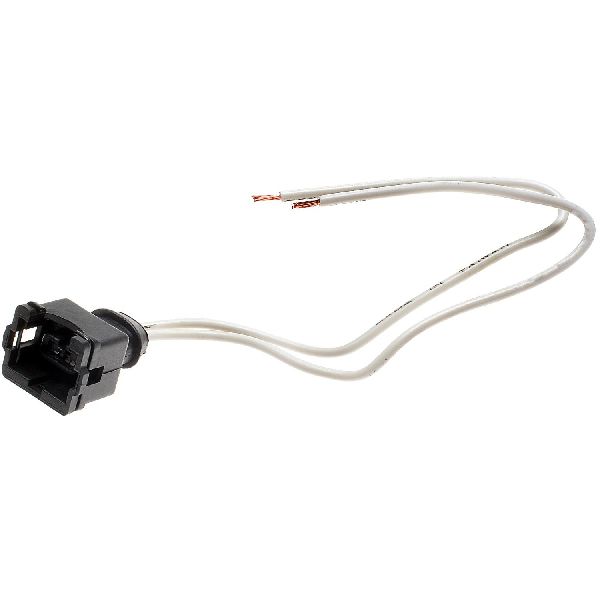
Typical fix: Clean the connector terminals with electrical contact cleaner or replace the connector pigtail if damaged.
Est. part cost: $10-$30 for a new pigtail connector
Rare But Worth Checking
- Faulty Powertrain Control Module (PCM): This is the least likely cause. The PCM's internal driver for the solenoid circuit can fail, but all other possibilities, especially wiring and the solenoid itself, should be exhaustively ruled out before considering PCM replacement.
Diagnosis Steps
- Scan the PCM for stored trouble codes and document the freeze frame data.
- Inspect fuse #79 (10A) in the under-hood fuse box. Test it with a multimeter for continuity, do not rely on a visual check alone. Replace if faulty.
- Perform a thorough visual inspection of the wastegate solenoid's wiring harness. Look for signs of chafing, melting, or corrosion, especially where the harness runs near the driver's side cylinder head and idler pulley bracket.
- Inspect the electrical connector at the solenoid for damage, corrosion, or a loose connection.
- With the ignition on and engine off, use a multimeter to check for battery voltage (approximately 12V) at the power supply wire of the solenoid connector. A reading below 11V suggests a problem in the power supply circuit, such as a blown fuse or a break in the wire.
- Test the resistance of the wastegate solenoid itself. Compare the reading to the manufacturer's specifications. An out-of-spec reading indicates a faulty solenoid.
- If wiring and the solenoid test good, the issue may be with the PCM, but this is extremely rare.
Parts You'll Likely Need
- Turbocharger Wastegate Solenoid
(OEM #BL3Z-9K378-A)— This solenoid is the most common part to fail, leading directly to the P0245 code.
Trusted brands: Motorcraft, Standard Motor Products, Dorman
OEM price range: $60-$100
Aftermarket price range: $40-$70
Related Codes That Often Appear With This One
- P0299 — This code is a direct consequence of P0245. If the PCM cannot control the wastegate solenoid due to a low voltage fault, it cannot command the turbo to build boost, resulting in an underboost condition.
- P0246 — Seeing both 'Circuit Low' and 'Circuit High' codes can indicate an intermittent wiring problem or a faulty fuse connection affecting the entire circuit.
Platform-Specific Known Issues
- Intermittent Fuse Failure: A documented case on a 2015 Lincoln Navigator showed that fuse #79 in the under-hood fuse box was the root cause. The fuse appeared visually intact but failed an intermittent continuity test with a multimeter. Replacing this single fuse resolved both the P0245 code and a related A/C compressor failure after a solenoid replacement did not fix the issue.
- Specific Harness Chafing Point: Owners and technicians repeatedly identify the engine wiring harness rubbing on the corner of the driver's side cylinder head or the drive belt idler pulley bracket as the most common location for a short-to-ground that causes P0245. Careful inspection in this area is a critical diagnostic step.
Mechanic-Grade Diagnostic Values
- Turbocharger Wastegate Solenoid Resistance — expected: 10 - 40 Ohms. Failure: A reading of 'OL' (infinite resistance) indicates an open circuit, while a reading near 0 Ohms indicates a shorted coil. Either reading confirms a faulty solenoid.
- Solenoid Connector Power Pin Voltage (Key On, Engine Off) — expected: Approximately 12 Volts (Battery Voltage). Failure: A reading significantly below 11V (e.g., 0.71V as seen in a real case) points to a fault in the power supply circuit, such as a blown fuse or a short/open in the wiring.
Scan Tool Commands That Help
- Ford IDS (or equivalent professional scan tool): Output State Control / Actuator Self-Test (e.g., for PID TURBO_WGATE) — After confirming the fuse and wiring have proper voltage, this command directly activates the wastegate solenoid. You should hear an audible click from the engine bay. If there is no click despite having good power and ground at the connector, the solenoid itself has failed internally.
Wiring & Ground Locations
- GD200 — On the back side of the left (driver's side) cylinder head.. This is a primary ground point for the engine control harness. A loose or corroded connection here can cause intermittent and difficult-to-diagnose low voltage faults for multiple sensors and actuators, including the wastegate solenoid.
- Solenoid Connector (C1617F on some diagrams) — The electrical connector on the wastegate solenoid itself.. This is the primary point for performing voltage and resistance tests. The pins can become corroded or contaminated with oil, leading to a P0245 code even if the solenoid and wiring harness are otherwise intact.
Real Owner Repair Stories
- f150forum.com user (2015 Lincoln Navigator 3.5L EcoBoost) — Check Engine Light with P0245, A/C compressor not engaging, blower motor cut out then blew hot air after a remote start.
❌ Tried (didn't work) Replacing the turbocharger wastegate regulating valve solenoid.
✅ What actually fixed it The owner measured only 0.71V at the solenoid connector, indicating a power supply issue. The root cause was a faulty fuse #79 in the under-hood fuse box. The fuse appeared visually fine but was failing intermittently. Replacing the 10A fuse resolved all issues.
OEM Part Supersession History
AA5Z-9K378-A→BL3Z-9K378-A— Standard part update and consolidation by Ford.
Model Year Variations Within This Range
- 2017: The 2017 model year Lincoln Navigator received the second-generation 3.5L EcoBoost V6 engine. A key change was the move to twin BorgWarner turbochargers with electronic stepper-motor wastegates, which offer more precise control compared to the pneumatic wastegates on the 2015-2016 models. While the P0245 code still points to a circuit issue, the physical component and control strategy are different.
Diagnostic Flowchart
Other Known Issues on This Vehicle
Issues unrelated to this code that are worth knowing about as an owner of this generation:
- Timing Chain Stretch and Cam Phaser Rattle 🔴 High — Common, especially over 80,000-100,000 miles. A distinct rattle for 2-5 seconds on a cold start is the primary symptom. (Ref: TSB 16-0027 (supersedes 15-0131))
- Electronic Throttle Body Failure 🔴 High — A very common failure item that can occur at various mileages, causing the vehicle to suddenly enter a dangerous 'limp mode' with no warning. (Ref: Ford Customer Satisfaction Program 13N03)
- Turbo Coolant Line Fitting Leaks 🟠 Medium — Common on higher-mileage vehicles (approaching 150,000 miles), causing slow coolant loss. The fittings seep where they connect to the turbos.
- Carbon Buildup on Intake Valves 🟡 Low — An inherent issue with first-generation direct-injection engines. Over time, it can lead to rough idle and misfires.
- Cracked or Warped Exhaust Manifolds 🟠 Medium — The cast iron manifolds are susceptible to cracking from heat cycles, causing an exhaust leak tick, especially when cold.
Used vs. New Parts: Buying Guide for This Vehicle
When a used part is the smart pick: A used wiring harness pigtail from a salvage yard is a very sensible and cost-effective repair if only the connector is damaged. For the solenoid itself, given the relatively low cost of a new aftermarket part ($40-$70), buying used is generally not recommended due to the high heat and vibration environment leading to a finite lifespan.
Donor-vehicle mileage cap: roughly under 80000 miles for the part to have meaningful remaining life.
What to inspect on the donor part:
- For a wiring pigtail, ensure there are several inches of wire past the connector.
- Check for brittle or cracked plastic on the connector body.
- Inspect the connector pins for any signs of green or white corrosion.
- Ensure the locking tab on the connector is intact and functional.
OEM-only on this vehicle (don't cheap out):
- Powertrain Control Module (PCM) - Due to programming and security requirements, a new or professionally refurbished OEM unit is required if the PCM is diagnosed as the fault.
Aftermarket brands forum-validated for this vehicle:
- Motorcraft (OEM)
- Standard Motor Products (SMP)
- Dorman
Brands owners have reported issues with on this vehicle:
- No-name or unbranded solenoids from online marketplaces should be avoided, as their coil windings and internal components may not meet OEM specifications for heat resistance and durability, leading to premature failure.
Real Owner Stories
Aggregated from forums and TSBs cited above. Mileages and costs reflect what owners reported in those sources.
2015 Lincoln Navigator 3.5L EcoBoost
Symptoms: After using remote start, the blower motor cut out and then blew hot air. The A/C compressor would not kick on and the vehicle threw a P0245 code.
What fixed it: Replacing fuse #79 (10A) in the under-hood fuse box. The owner initially replaced the solenoid and found only 0.71V at the connector; the fuse appeared visually okay but failed a continuity test.
Source hint: f150forum.com thread titled 'P0245 code and no AC compressor after remote start'
2015-2017 Ford F-150 3.5L EcoBoost
Symptoms: Significant loss of engine power, sluggish acceleration, and a P0245 code indicating a wastegate solenoid issue.
What fixed it: Repairing the engine wiring harness where it had chafed against the driver's side cylinder head and securing it away from the contact point.
Source hint: Vehicle-specific issues: Specific Harness Chafing Point
Related OBD-II Codes
Frequently Asked Questions
Why is my 2015 Lincoln Navigator's A/C compressor not engaging along with the P0245 code?
I replaced the wastegate solenoid on my 3.5L EcoBoost but the P0245 code persists. What should I check next?
Is there a specific fuse I should check for P0245 on my 2015-2017 Navigator?
Does the 3.5L EcoBoost engine in my Navigator have a known issue with the timing chain?
My Navigator suddenly lost power and feels sluggish. Could this be the Electronic Throttle Body?
Where is the most common place for wiring damage on the 2015-2017 Navigator 3.5L?
Helpful Videos


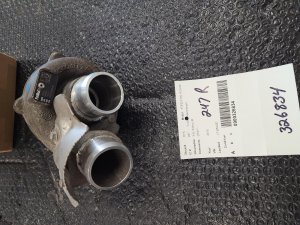
Used OEM Parts in Stock

New Aftermarket Parts Available


The information in this article is provided for general reference and educational purposes only. Vehicle specifications, procedures, and part compatibility can vary by production date, trim level, and region. Always consult your vehicle's factory service manual and verify part numbers before purchasing or performing repairs. Safety-critical components such as airbags, seat belts, and braking systems should be installed by a qualified professional.
- Lincoln Navigator:
- 🎬 Helpful Videos
- 🛍️ Shop This Part
- What's Unique About the 2015-2017 Lincoln Navigator
- Symptoms You May Notice
- Most Likely Causes
- Rare But Worth Checking
- Diagnosis Steps
- Parts You'll Likely Need
- Related Codes That Often Appear With This One
- Platform-Specific Known Issues
- Mechanic-Grade Diagnostic Values
- Scan Tool Commands That Help
- Wiring & Ground Locations
- Real Owner Repair Stories
- OEM Part Supersession History
- Model Year Variations Within This Range
- Diagnostic Flowchart
- Other Known Issues on This Vehicle
- Used vs. New Parts: Buying Guide for This Vehicle
- Real Owner Stories
- 2015 Lincoln Navigator 3.5L EcoBoost
- 2015-2017 Ford F-150 3.5L EcoBoost
- Related OBD-II Codes
- Frequently Asked Questions
- 🎟️ Get 5% Off