

P0245 on 2015-2024 Ford Edge 2.7L EcoBoost: Wastegate Solenoid 'A' Low Circuit Guide
P0245 on a Ford Edge with the 2.7L EcoBoost engine typically indicates a faulty turbocharger wastegate solenoid or a wiring issue. Expect a significant loss of power. The most likely fix is replacing the solenoid, which costs around $40-$100 for the part. This is an electrical fault, not a mechanical turbo failure.
- P0245 on your Ford Edge 2.7L means the engine computer has detected an electrical problem with the turbo wastegate solenoid, causing a severe loss of power.
- Do not immediately assume the turbocharger has failed; this is an electrical circuit code, not a mechanical one.
- The most likely culprit is the solenoid itself, followed by its wiring connector. A simple multimeter test can often pinpoint the bad component.
- Check for blown fuses, as a short circuit in the harness can cause this code on related Ford vehicles.
What's Unique About the 2015-2024 Ford Edge

While many Ford EcoBoost engines have well-documented, specific failure points for P0245 (like chafed wiring on 2.0L Escapes causing a blown fuse F34), the 2.7L V6 in the Edge does not have a single, universally reported 'common culprit'. Diagnosis typically follows a more traditional path of checking the solenoid, wiring, and vacuum lines. Unlike some other platforms, a specific harness rub-through is less commonly cited for the Edge 2.7L, making direct component testing more critical. However, the issue is common across the 2.7L EcoBoost family, affecting F-150s and Lincolns in the same manner. A TSB for the 2017 Lincoln Continental with the 2.7L engine points to a potential wiring chafe point near the Power Transfer Unit (PTU) heat shield that can cause P0245 by blowing fuse F3. Additionally, manufacturer service bulletin #TSB150162 notes that across several Ford GTDI platforms, P0245 is frequently associated with a lack of power and an illuminated MIL.
Generation note: The 2015-2024 Ford Edge covers the second generation. The 2.7L EcoBoost V6 was available in the Sport model (2015-2018) and was later used in the ST model (2019-2024). No significant differences in the diagnosis of this code have been noted between the Sport and ST trims, as the underlying engine and control systems are fundamentally the same. The 2.7L EcoBoost uses a vacuum-actuated wastegate system controlled by a solenoid, which is different from the electronic stepper-motor wastegates used on some later 2.0L EcoBoost engines.
Symptoms You May Notice

- Check Engine Light illuminated
- Significant loss of engine power (Limp Mode)
- Poor or no turbo boost
- Sluggish acceleration
- Hesitation under load
- In some cases, related systems on the same circuit, like the A/C compressor, may not function correctly.
- Replacing the entire turbocharger assembly. P0245 is an electrical control circuit code, not a mechanical failure of the turbo itself.
- Replacing the boost pressure sensor. While related to the turbo system, this code specifically points to the wastegate solenoid circuit. 🎬 Watch: How to replace the turbo wastegate solenoid
Most Likely Causes

- Faulty Turbocharger Wastegate Solenoid 🔴 High Probability The solenoid is an electro-mechanical part exposed to high heat and vibration in the engine bay, which can lead to internal electrical failure (shorts or open circuits) over time. This is the most common failure point for this code on many Ford EcoBoost engines.
How to confirm: Disconnect the solenoid and measure the resistance across its two pins with a multimeter. Compare the reading to the manufacturer's specification (typically 10-40 Ohms for this type of solenoid). A reading of infinite resistance (open) or near-zero resistance (short) indicates a bad solenoid. A bidirectional scan tool can also be used to command the solenoid on and off while listening for an audible click.
Typical fix: Replace the turbocharger wastegate solenoid.
Est. part cost: $40-$100 - Wiring Harness or Connector Issue 🟡 Medium Probability Engine vibrations and heat can cause wires to chafe, break, or corrode over time. The connector itself can also become damaged, melted, or loose. On some related platforms, wire chafing near the Power Transfer Unit (PTU) has been noted to cause a variety of electrical faults. Other known chafe points on the 2.7L engine family include the corner of the cylinder head and various brackets.
How to confirm: Visually inspect the wiring harness leading to the wastegate solenoid for any signs of damage, melting, or chafing. Check the connector for corrosion, bent pins, or a loose fit. Perform a continuity test from the PCM connector to the solenoid connector to check for opens or shorts to ground. Check for 12V power at the connector with the key on; a low voltage reading points to a wiring fault upstream.
Typical fix: Repair the damaged section of the wiring harness. If the connector is damaged, it can be replaced with a new pigtail connector (Motorcraft WPT-1370).
Est. part cost: $20-$60 - Vacuum Line Leak or Blockage ⚪ Low Probability Rubber and plastic vacuum lines can become brittle and crack with age and heat cycles, leading to leaks that prevent the wastegate actuator from being controlled correctly. While the code is electrical, a significant vacuum leak could potentially cause the system to operate outside its expected parameters, 🎬 See how to check and adjust wastegate actuators though it's less likely to cause a 'circuit low' fault.
How to confirm: Visually inspect all vacuum lines connected to the wastegate solenoid and actuator for cracks, splits, or disconnections. A smoke test can be used to find small, hard-to-see leaks.
Typical fix: Replace the damaged vacuum line(s).
Est. part cost: $10-$30
Rare But Worth Checking
- Faulty Powertrain Control Module (PCM): This is very rare. The PCM should only be considered as a cause after all other possibilities (solenoid, wiring, vacuum lines) have been thoroughly tested and ruled out.
- Blown Fuse: On some Ford platforms like the Escape, P0245 is directly linked to a blown fuse (F34 in the Battery Junction Box) caused by a chafed harness. A TSB for the related Lincoln Continental 2.7L platform links P0245 to a blown fuse F3 in the BJB. It's worth checking the under-hood fuse box for any blown fuses that supply power to the turbo control components. Manufacturer bulletin #SSM 47086 notes that an open fuse F34 can also trigger an all-wheel drive (AWD) fault alongside P0245.
Diagnosis Steps
- Verify the code with an OBD-II scanner and check for any other stored codes. Note any accompanying codes like P0246 or P0034.
- Inspect the vacuum lines running to and from the wastegate solenoid for any cracks, disconnections, or blockages.
- Visually inspect the electrical connector and wiring harness for the wastegate solenoid. Look for signs of corrosion, melting, damage, or loose connections. Pay attention to areas where the harness may rub against engine components or heat shields, particularly near the PTU heat shield on AWD models.
- If the visual inspection passes, disconnect the solenoid and test its internal resistance with a multimeter. It should be within 10-40 ohms. An open (infinite) or shorted (near zero) reading confirms a faulty solenoid.
- If the solenoid tests good, check for voltage at the connector with the key on, engine off. One pin should have battery voltage (approx. 12V). If voltage is missing or very low, the problem is in the power supply wiring or a blown fuse.
- Check the associated fuse in the under-hood fuse box (Battery Junction Box). On related platforms, this has been fuse F3 or F34. According to #SSM 47575, an open fuse F34 can trigger P0245 along with a wide array of other codes including P0480, P0645, and P2681. If the fuse is blown, inspect the harness carefully for a short to ground before replacing the fuse.
- If voltage is present and the solenoid is good, perform a continuity test on the control wire between the solenoid connector and the PCM connector to rule out a break in the wire.
- If all wiring, fuses, and the solenoid test good, the issue may be a rare PCM driver failure.
Parts You'll Likely Need
- Turbocharger Wastegate Solenoid
(OEM #FL3Z-9E882-B (may be superseded by JT4Z-9E882-A))— This solenoid is the most common failure point for code P0245. It is an electro-mechanical part that wears out over time due to heat and vibration.
Trusted brands: Motorcraft, Standard Motor Products, BorgWarner
OEM price range: $60-$100
Aftermarket price range: $40-$80 - Wastegate Solenoid Connector Pigtail
(OEM #WPT-1370)— If the wiring or connector at the solenoid is corroded, melted, or damaged, replacing the pigtail is the standard repair.
Trusted brands: Motorcraft
OEM price range: $30-$50
Aftermarket price range: $20-$40
Related Codes That Often Appear With This One
- P0299 — Turbocharger Underboost. If the wastegate solenoid fails in a way that leaves the wastegate partially or fully open, the turbo cannot build sufficient boost, leading to an underboost condition.
- P0246 — Turbocharger Wastegate Solenoid 'A' Circuit High. This is the companion code for high voltage. An open circuit or short to power can cause P0246, while P0245 is typically a short to ground.
- P0034 — Turbocharger/Supercharger Bypass Valve 'A' Control Circuit Low. This code often appears with P0245 when there is a shared power or ground issue affecting multiple turbo control components, such as a blown fuse F3 or F34 as seen on related platforms.
Technical Service Bulletins (TSBs) & Recalls
- SSM 48895: Pertains to 2017-2019 Escape 1.5L/2.0L engines. Mentions P0245 as a possible code when fuse F34 is open due to a chafed wiring harness. While not for the Edge 2.7L, it highlights a known failure pattern on other EcoBoost platforms involving a shorted wire causing this code.
- TSB for Lincoln Continental (related platform): Mentions P0245 among other codes resulting from an open fuse F3 in the BJB, caused by the engine wiring harness chafing on the EPAS PTU heat shield. This is a relevant data point for potential wiring inspection areas on the Edge.
- Bulletin #TSB150162: Notes that P0245 may be present alongside P0234, P0246, or P0299 on GTDI engines, often resulting in a lack of power.
Platform-Specific Known Issues
- Proximity to Heat Sources: On the 2.7L EcoBoost, the wastegate solenoid and its associated vacuum lines and wiring are located in a high-heat area of the engine bay. Over time, this heat can accelerate the degradation of plastic connectors, rubber hoses, and wire insulation, making them brittle and prone to failure.
Mechanic-Grade Diagnostic Values
- Wastegate Solenoid Internal Resistance — expected: 10 - 40 Ohms. Failure: Near 0 Ohms (short circuit) or infinite/OL (open circuit).
- Solenoid Connector Power Pin Voltage (Key On, Engine Off) — expected: ~12V (Battery Voltage). Failure: A reading below 11V indicates a problem in the power supply circuit (fuse, wiring).
- Wastegate Actuator Vacuum Requirement (on bench) — expected: Starts opening at ~7 inHg, fully open by ~17 inHg.. Failure: Actuator does not move or does not hold vacuum, indicating a ruptured diaphragm.
Scan Tool Commands That Help
- Ford IDS, FORScan, or equivalent: Wastegate Solenoid Output State Control / Duty Cycle Command (PID: TURBO_WGATE) — After verifying power and ground at the solenoid connector, this command allows you to functionally test the solenoid without removing it. Commanding it on and off should produce an audible click, confirming the solenoid's internal mechanics are working.
Wiring & Ground Locations

- PCM Grounds — On the firewall. There may be one or two depending on the model year.. A poor PCM ground can cause a variety of erratic electrical faults and incorrect sensor readings. While not a direct cause of a 'circuit low' code (which is usually a short to ground elsewhere), verifying main grounds is a critical step in any electrical diagnosis.
- Engine Harness Chafe Point (AWD Models) — Near the Power Transfer Unit (PTU) cooling pump and EPAS heat shield.. A TSB for the Lincoln Continental with the same 2.7L engine identifies this as a location where the harness can chafe, short to ground, and blow fuse F3, which powers the wastegate solenoid circuit and triggers P0245.
- Main Battery Ground — In the engine bay, just in front of the washer fluid reservoir (location based on F-150 2.7L, may vary slightly on Edge).. Ensures the entire electrical system has a solid reference to ground. A loose or corroded main ground can cause widespread, unpredictable electrical issues.
OEM Part Supersession History
FL3Z-9E882-B→JT4Z-9E882-A— Standard part number update/revision by Ford.
Heads up: The parts are interchangeable. JT4Z-9E882-A is the current service part.
Diagnostic Flowchart
Other Known Issues on This Vehicle
Issues unrelated to this code that are worth knowing about as an owner of this generation:
- Leaking Plastic/RTV Oil Pan 🟠 Medium — Common on earlier models (approx. 2015-2018). The original RTV seal can fail due to poor adhesion or the plastic pan warping from heat cycles. (Ref: TSB 23-2338)
- Power Transfer Unit (PTU) Failure 🔴 High — A common issue on all-wheel-drive models across generations. The PTU fluid is often considered 'lifetime' but gets cooked by the adjacent exhaust, leading to fluid breakdown and gear failure.
- Coolant Intrusion into Cylinders 🔴 High — A known issue with some EcoBoost engine families where a cylinder head design flaw can allow coolant to leak into the cylinders, potentially causing engine failure. While more documented on the 2.0L, it's a known concern for the engine family.
- Leaking Turbocharger Oil Lines 🟡 Low — The seals on the turbocharger oil supply and drain lines can degrade over time, causing minor but persistent oil leaks.
- Valve Cover Gasket Leaks 🟡 Low — Similar to the oil pan, the valve cover gaskets can become hard and brittle over time, leading to oil leaks, often noticeable by a burning oil smell as it drips onto hot exhaust components.
- Intake Valve Failure (2021-2022 models) 🔴 High — Affects a specific range of 2.7L engines where the intake valves may fracture, leading to a loss of power and potential engine failure. (Ref: Recall 23V596000)
Used vs. New Parts: Buying Guide for This Vehicle
When a used part is the smart pick: A used wastegate solenoid from a low-mileage donor vehicle is a reasonable option, as it is an external, easily replaceable component. Sourcing a used wiring harness pigtail is also a viable repair method if the connector is damaged.
Donor-vehicle mileage cap: roughly under 60000 miles for the part to have meaningful remaining life.
What to inspect on the donor part:
- For a solenoid, ensure the plastic housing is not cracked or brittle and the vacuum nipples are intact.
- Check that the electrical connector pins are clean, straight, and free of corrosion.
- For a wiring pigtail, ensure there is at least 6 inches of clean, undamaged wire attached.
- Avoid parts from vehicles with signs of front-end collision or engine fire.
OEM-only on this vehicle (don't cheap out):
- Powertrain Control Module (PCM) - Due to programming requirements, a used PCM is difficult to integrate into a different vehicle.
Aftermarket brands forum-validated for this vehicle:
- Motorcraft (OEM)
- Standard Motor Products (SMP)
- BorgWarner
- Dorman
Brands owners have reported issues with on this vehicle:
- Unbranded, low-cost parts from online marketplaces like eBay or Amazon are frequently reported on forums as being counterfeit or failing quickly, even if they look identical to the OEM part.
Real Owner Stories
Aggregated from forums and TSBs cited above. Mileages and costs reflect what owners reported in those sources.
2015-2024 Ford F-150 2.7L EcoBoost V6
Symptoms: P0245 code and no AC compressor after remote start; found only 0.71V at the solenoid connector instead of the required 12V.
What fixed it: Diagnosis of a wiring issue rather than just replacing the solenoid, after discovering low voltage at the connector.
Source hint: Ford F150 Forum - 'P0245 code and no AC compressor after remote start'
2016 Ford F-150 2.7L EcoBoost V6
Symptoms: Reported P0245 along with other circuit low codes (P06DB, P2602), inoperative grille shutters, and warm A/C.
What fixed it: Investigation of a potential shared power circuit or fuse issue affecting multiple components.
Source hint: Ford F150 Forum - 'P0034 and P0245 error code'
2017-2020 Lincoln Continental 2.7L EcoBoost V6
Symptoms: P0245 resulting from an open fuse F3 in the Battery Junction Box (BJB).
What fixed it: Repairing the engine wiring harness where it was chafing on the EPAS PTU heat shield.
Source hint: TSB for Lincoln Continental (related platform)
Related OBD-II Codes
Frequently Asked Questions
I have a 2016 Ford Edge 2.7L with P0245; is there a specific connector I should look for if mine is melted?
My Edge is showing P0245 and the A/C stopped working. Are these related?
Does the TSB regarding wiring harness chafing near the PTU apply to my AWD Edge?
What is the correct resistance for the wastegate solenoid on a 2.7L EcoBoost?
Where are the common wire chafe points on the 2.7L engine that cause this code?
Helpful Videos
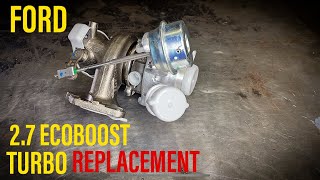
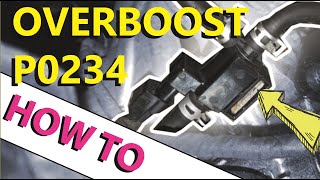
We Have This Part in Stock



The information in this article is provided for general reference and educational purposes only. Vehicle specifications, procedures, and part compatibility can vary by production date, trim level, and region. Always consult your vehicle's factory service manual and verify part numbers before purchasing or performing repairs. Safety-critical components such as airbags, seat belts, and braking systems should be installed by a qualified professional.
- Ford Edge:
- 🎬 Helpful Videos
- 🛍️ Shop This Part
- What's Unique About the 2015-2024 Ford Edge
- Symptoms You May Notice
- Most Likely Causes
- Rare But Worth Checking
- Diagnosis Steps
- Parts You'll Likely Need
- Related Codes That Often Appear With This One
- Technical Service Bulletins (TSBs) & Recalls
- Platform-Specific Known Issues
- Mechanic-Grade Diagnostic Values
- Scan Tool Commands That Help
- Wiring & Ground Locations
- OEM Part Supersession History
- Diagnostic Flowchart
- Other Known Issues on This Vehicle
- Used vs. New Parts: Buying Guide for This Vehicle
- Real Owner Stories
- 2015-2024 Ford F-150 2.7L EcoBoost V6
- 2016 Ford F-150 2.7L EcoBoost V6
- 2017-2020 Lincoln Continental 2.7L EcoBoost V6
- Related OBD-II Codes
- Frequently Asked Questions
- 🎟️ Get 5% Off