

P0236 on 2013-2020 Ford Fusion 2.0L EcoBoost: Turbo Boost Sensor Causes and Fixes
On the 2.0L EcoBoost Fusion, P0236 is most often a faulty boost pressure sensor (TCBP or MAP). Expect to pay $40-$100 for a sensor. However, faulty wiring splices are also a common cause, requiring a more involved diagnosis. TSB 13-7-5 for the related Ford Escape with the same engine directly addresses this code being caused by corroded wiring splices.
- P0236 on your Fusion means a boost pressure sensor signal is illogical, which will put the car in a low-power 'limp mode'.
- The most common fixes are replacing the Turbocharger Boost Pressure (TCBP) sensor on the intercooler or the MAP sensor on the intake manifold.
- Before replacing parts, check the wiring. Ford has known issues with corroded wiring splices on these engines that can cause this exact code.
- A scan tool that can read live engine data is essential for diagnosis to see which sensor is providing faulty data.
What's Unique About the 2013-2020 Ford Fusion

While sensor failure is common on many turbocharged cars, Ford's EcoBoost engines from this era, including the 2.0L, are known for having issues with wiring harness splices. Multiple Technical Service Bulletins (TSBs) for related vehicles and engines point to poorly crimped or corroded splices in sensor circuits causing erratic signals and triggering codes like P0236. TSB 13-7-5, for the mechanically identical 2013 Escape 2.0L, explicitly calls out P0236 as a result of these faulty splices. This means that while the sensor itself is a likely culprit, the underlying wiring must also be considered a high-probability cause, especially on earlier models in this year range.
Generation note: The 2013-2020 range covers the entire second generation of the Ford Fusion, which had a significant facelift for the 2017 model year. However, the 2.0L EcoBoost engine was used throughout. The wiring-related issues seem more prevalent in the earlier 2013-2016 models, as suggested by TSBs for similar platforms of that time.
Symptoms You May Notice
- Check Engine Light illuminated
- Wrench light illuminated on the dashboard
- Sudden and significant loss of engine power (limp mode)
- Engine runs rough, hesitates, or stalls, especially when coming to a stop
- Jerky acceleration or shifting
- Engine RPMs bouncing up and down
- No boost from the turbocharger
- Car runs fine after clearing the code, but the issue returns after a restart or short drive
- Replacing only one of the pressure sensors when both may be failing or when the issue is actually in the wiring.
- Replacing the turbocharger before thoroughly checking for boost leaks, sensor faults, and wiring issues.
- Replacing the wastegate solenoid when the issue is a sensor or wiring.
Most Likely Causes

- Faulty Turbocharger Boost Pressure (TCBP/CACT) Sensor 🔴 High Probability This sensor is located on the charge air cooler (intercooler), low in the front of the vehicle, exposing it to moisture and road debris which can lead to corrosion and failure.
How to confirm: With a scan tool, compare the TCBP/CACT sensor reading to the MAP and BARO readings with the Key On, Engine Off (KOEO). They should all be very close. If the TCBP sensor is significantly different, it is likely faulty.
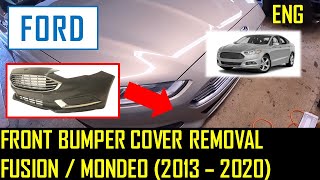
Typical fix: Replace the TCBP/CACT sensor. This requires removing the front bumper cover for access on the Fusion. 🎬 See this step-by-step front bumper removal guide
Est. part cost: $40-$80 - Faulty Manifold Absolute Pressure (MAP) Sensor 🟡 Medium Probability This sensor is also part of the pressure comparison check. A failure here can make the TCBP sensor appear faulty. Forum users have reported that replacing both sensors at the same time often resolves the issue.
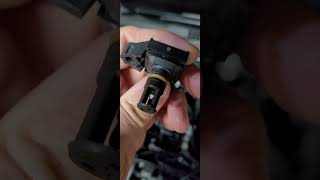
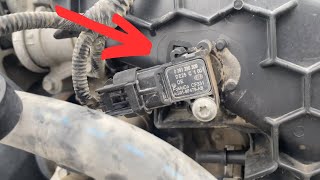
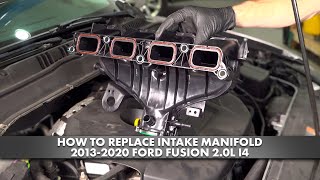
How to confirm: With a scan tool at KOEO, if the MAP sensor reading is out of line with the BARO and TCBP sensors, it is the likely culprit. The MAP sensor is easily accessible on top of the intake manifold, right after the throttle body. 🎬 Watch: How to locate and replace the MAP sensor
Typical fix: Replace the MAP sensor located on the intake manifold.
Est. part cost: $30-$70 - Corroded or Faulty Wiring Harness Splice 🟡 Medium Probability TSB 13-7-5 specifically calls out a faulty signal return splice as a cause for P0236 on the mechanically similar 2013 Escape 2.0L. These splices are known to corrode due to being simple crimps, creating high resistance and causing erratic sensor signals that the PCM misinterprets. Manufacturer TSB 16-0161 further confirms that P0236 can be caused by a wiring concern in the reference voltage circuit (VREF) splice.
How to confirm: Locate the specified splice in the engine wiring harness. TSB 13-7-5 shows the location for the wiggle test near the top of the engine harness. Perform a 'wiggle test' on the harness while monitoring sensor voltage on a scan tool; fluctuations indicate a bad connection. Visually inspect the splice for corrosion after removing the harness tape.
Typical fix: Cut out the old crimp splice, solder the wires together, and seal with heat shrink tubing as detailed in the TSB.
Est. part cost: $5-$15 (for solder and heat shrink)
Rare But Worth Checking
- Boost/Vacuum Leak: A significant leak in the intake tract between the turbo and the engine can cause pressure readings to be out of expected range. This could be a cracked hose, a loose clamp, or a leaking intercooler.
- Faulty Turbocharger Wastegate or Actuator: If the wastegate is stuck or not responding correctly, it can cause boost levels that don't match what the PCM expects, potentially triggering a performance-range code.
Diagnosis Steps

- Connect a scan tool and verify P0236 is present. 🎬 Watch: Diagnosing a Fusion P0236 boost pressure fault Check for any other codes, especially P0106 or P06A7.
- With the Key On, Engine Off (KOEO), view live data for the TCBP (or Boost), MAP, and BARO pressure sensors. They should all read very close to each other (within about 0.5 PSI).
- If one sensor's reading is clearly different from the others, suspect that sensor is faulty.
- Visually inspect the wiring and connectors for both the TCBP sensor (behind the bumper, on the intercooler) and the MAP sensor (on the intake manifold). Look for corrosion, damage, or loose pins.
- Perform a 'wiggle test' as described in TSB 13-7-5. While monitoring the sensor data on the scan tool (KOEO), gently wiggle the engine wiring harness, particularly in the area shown in the TSB diagram near the top of the engine. If the readings jump around, a wiring splice issue is highly likely.
- If sensors and wiring seem okay, perform a smoke test on the intake system to check for any air leaks between the turbocharger and the intake manifold.
- If no leaks are found, the most likely cause is a failing sensor. Many owners and mechanics recommend replacing both the MAP and TCBP sensors at the same time to avoid a repeat failure.
- If the problem persists, consider the possibility of a faulty PCM, though this is very rare.
Parts You'll Likely Need

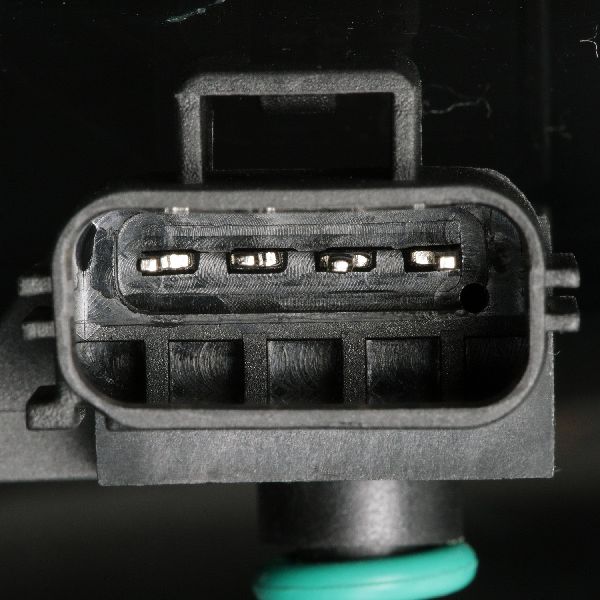
- Turbocharger Boost Pressure Sensor (TCBP/CACT)
(OEM #CJ5Z-9F479-A)— This is the primary sensor ('A') that measures boost pressure from the turbo. Its location makes it prone to failure. It is located on the intercooler and requires bumper removal to access.
Trusted brands: Motorcraft, Bosch
OEM price range: $50-$90
Aftermarket price range: $30-$60 - Manifold Absolute Pressure (MAP) Sensor
(OEM #BU5A-9F479-BA)— The PCM compares the TCBP sensor to the MAP sensor. A faulty MAP sensor can cause the PCM to incorrectly flag the TCBP sensor. Many owners and mechanics replace both to be safe. This sensor is easily accessible on the intake manifold.
Trusted brands: Motorcraft, Bosch, Delphi
OEM price range: $40-$70
Aftermarket price range: $25-$50
Related Codes That Often Appear With This One
- P0106 — This code for 'Manifold Absolute Pressure/Barometric Pressure Sensor Circuit Range/Performance' often appears with P0236 because the same faulty wiring splice or sensor issue can affect both circuits. TSB 13-7-5 explicitly lists P0106 alongside P0236 for this reason.
- P0299 — This code for 'Turbocharger Underboost' can occur if the sensor is failing to read the boost pressure that is actually being produced.
- P06A7 — This code for 'Sensor Reference Voltage 'B' Circuit Range/Performance' is also mentioned in TSB 13-7-5 as being related to the same wiring and sensor issues.
- P0238 / P007D — NHTSA ODI #11620504 notes these codes can appear alongside P0236, indicating a "charged air sensor A fault" or "boost sensor range/performance fault."
Technical Service Bulletins (TSBs) & Recalls
- TSB 13-7-5: While for the 2013 Escape 1.6L/2.0L GTDI, it directly addresses P0236 being caused by corrosion in the TCBP/CACT sensor connector or a faulty signal return splice. It provides a procedure for a 'wiggle test' to confirm the wiring fault. This is highly relevant due to the shared engine.
- TSB 16-0161: This bulletin identifies a faulty VREF circuit splice as a cause for P0236, noting symptoms like running rough, lack of power, surging, bucking, jerking, or hesitation.
- TSB 13-9-8 / 13-5-29: As referenced in NHTSA ODI #10787972, these bulletins address P0106 and P0236, where vehicles experience hesitation, loss of idle RPM, and difficulty starting.
Platform-Specific Known Issues
- A known issue on 2013-2014 models involves faulty wiring harness splices that can cause high resistance and lead to various sensor codes, including P0236. TSB 13-7-5 addresses this for the similar Escape 2.0L EcoBoost.
- Owner Experience: Sudden Stalling: A 2014 Fusion 2.0 owner on Reddit described the exact symptoms of driving and having the car completely shut off when coming to a stop, accompanied by the wrench and check engine lights. The car would then run and shift very jerkily with bouncing RPMs until the code was cleared, only for the issue to return a few days later. This points to an intermittent electrical fault, consistent with a failing sensor or bad wiring connection.
Mechanic-Grade Diagnostic Values
- TCBP/MAP Sensor Signal Voltage — expected: Approx. 0.5V (high vacuum) to 4.5V (max boost). Voltage should be stable and correlate with MAP and BARO sensors at KOEO.. Failure: Voltage is stuck near 0V or 5V, does not change with engine load, or is significantly different (>0.5 PSI equivalent) from other pressure sensors at KOEO.
- Live Data PID Comparison (TCBP vs MAP vs BARO) — expected: At Key On, Engine Off (KOEO), all three pressure readings should be within ~0.5 PSI of each other.. Failure: One sensor reading deviates significantly from the other two, indicating the outlier sensor or its circuit is faulty.
Scan Tool Commands That Help
- Ford IDS, FORScan, or similar professional scanner: Live Data Monitoring (PID: MAP, BARO, TIP_PRS-BOOST) — Used during a 'wiggle test' as prescribed by TSB 13-7-5. Monitoring these PIDs while manipulating the engine harness helps confirm an intermittent connection at a faulty splice.
- Ford IDS, FORScan, or similar professional scanner: Wastegate Solenoid Test / Output State Control (OSC) — If sensor and wiring diagnostics are inconclusive, this command can be used to cycle the wastegate solenoid to check for electrical function and audible clicking, helping to rule out a failed solenoid.
Wiring & Ground Locations

- S182 — In the main engine wiring harness, specific to the 2.0L GTDI engine.. This is the signal return splice for the TCBP/CACT (Boost) sensor. TSB 13-7-5 identifies this as a primary point of failure due to corrosion, causing erratic signals and triggering P0236.
- S108 — In the main engine wiring harness, near S182, specific to the 2.0L GTDI engine.. This is the signal return splice for the MAP sensor. A fault here can cause P0106 and contribute to the PCM flagging a P0236 due to irrational comparison data.
- G105 — Right side of the engine compartment.. This is a primary engine compartment ground point. A poor connection here can cause a floating ground for various sensors, leading to erratic readings and codes like P0236.
- G111 / G112 — Left front of the engine compartment.. These are additional engine compartment ground points. Verifying they are clean and tight is a crucial step in diagnosing any electrical fault.
Real Owner Repair Stories
- Reddit user cmarmo23 in r/fordfusion (2014 Ford Fusion SE 2.0L) — Car completely shut off when coming to a stop, check engine light and wrench light came on. Upon restart, car was jerky, and RPMs were bouncing. Code P0236 was present. Clearing the code made the car run normally for a few days before the issue returned.
❌ Tried (didn't work) Clearing the code was only a temporary fix.
✅ What actually fixed it The user's post describes the symptoms and asks for advice, with the community response strongly pointing to a bad Turbo Boost Sensor or related wiring, consistent with the known common fixes. The detailed symptom description is the key value, as it perfectly matches an intermittent electrical failure. - NHTSA ODI #11667579 — An owner reported that the P0236 error message would not go away even after turning off the car, requiring a dealership appointment for a permanent repair.
- NHTSA ODI #11181564 — One owner experienced a situation where fuel pressures were normal, but codes P06A7, P0106, and P0236 were present and permanent, complicating the diagnostic process.
OEM Part Supersession History
BB5A-9F479-BA (example of an older PN)→BU5A-9F479-BA— Likely for improved reliability and resistance to heat/pressure cycling. Ford often revises electronic sensors to address field failures.
Heads up: The newer part is generally backward compatible and the preferred replacement. Using an old-stock or salvaged older part number is not recommended.
Model Year Variations Within This Range
- 2013-2016: These models use the first-generation 2.0L EcoBoost. The wiring splice issue detailed in TSB 13-7-5 is most heavily associated with this earlier production period.
- 2017-2020: These models use the second-generation 2.0L EcoBoost with a twin-scroll turbocharger. While the sensors and P0236 code are still relevant, the engine block design changed. These later engines (specifically 2017-2019) are known for potential coolant intrusion issues, a separate and more severe problem.
Diagnostic Flowchart
Other Known Issues on This Vehicle
Issues unrelated to this code that are worth knowing about as an owner of this generation:
- 2.0L EcoBoost Coolant Intrusion 🔴 High — Common on 2017-2019 models built before mid-2019. A design flaw in the open-deck engine block can lead to cracks between cylinders, causing coolant to leak into the combustion chamber. Symptoms include unexplained coolant loss, white exhaust smoke, and misfire codes (P0301-P0304). (Ref: TSB 19-2346 supersedes previous versions and advises replacement of the engine long block for confirmed cases.)
- 6F35 Automatic Transmission Faults 🟠 Medium — Widespread across many model years. Owners report shuddering, harsh/jerky shifting, delayed engagement, and sometimes premature failure. Issues can sometimes be mitigated with software updates or fluid changes, but can also require extensive internal repairs or replacement. (Ref: Multiple class-action lawsuits have been filed regarding this transmission's reliability.)
- AWD Power Transfer Unit (PTU) Failure 🔴 High — Common on AWD models. The PTU is located next to the hot exhaust, causing its 'lifetime' fluid to break down and cook, leading to seal and gear failure. Symptoms include a burning gear oil smell in the cabin, whining/grinding noises that change with speed, and eventual loss of AWD. Fluid should be changed every 30,000 miles to prevent failure. (Ref: TSB 19-2017 addresses a related seal leak.)
- Shifter Cable Bushing Failure 🟠 Medium — Affects 2013-2016 models. The bushing on the shifter cable can degrade and detach, causing a disconnect between the gear shifter's position and the actual transmission gear. This can lead to a rollaway risk if the vehicle is not actually in Park. (Ref: Subject of a safety recall.)
- Brake Vacuum Pump Failure 🟠 Medium — A known issue on the 2.0L EcoBoost where the mechanically-driven vacuum pump fails, resulting in an intermittently or permanently hard brake pedal, increasing stopping distances.
Used vs. New Parts: Buying Guide for This Vehicle
When a used part is the smart pick: For this specific repair, using used parts is not recommended. The primary failure components are electronic sensors that have a finite lifespan and are relatively inexpensive to purchase new.
What to inspect on the donor part:
- Not applicable, as new parts are the recommended course of action.
OEM-only on this vehicle (don't cheap out):
- While not strictly 'OEM-only', using a Motorcraft-branded sensor provides the highest assurance of compatibility and longevity. If choosing aftermarket, stick to top-tier brands.
Aftermarket brands forum-validated for this vehicle:
- Bosch
- Delphi
- NTK
Brands owners have reported issues with on this vehicle:
- Unnamed, no-brand 'white box' parts from online marketplaces should be avoided, as their calibration and durability are often questionable and can lead to repeat failures.
Real Owner Stories
Aggregated from forums and TSBs cited above. Mileages and costs reflect what owners reported in those sources.
2014 Ford Fusion 2.0L EcoBoost
Symptoms: The car completely shut off when coming to a stop, accompanied by the wrench and check engine lights. It then ran and shifted very jerkily with bouncing RPMs until the code was cleared, only for the issue to return a few days later.
What fixed it: The symptoms pointed to an intermittent electrical fault consistent with a failing sensor or bad wiring connection.
Source hint: vehicle_specific_issues: Owner Experience: Sudden Stalling (Reddit)
2016 Ford Fusion 2.0L EcoBoost
Symptoms: Experienced a rough idle and no-boost condition with code P0236. The issue would resolve temporarily after clearing codes.
What fixed it: The diagnostic process pointed towards the MAP/CAC boost sensors as the likely culprits.
Source hint: BobIsTheOilGuy.com ('16 Fusion 2.0 Ecoboost P0236)
Related OBD-II Codes
Frequently Asked Questions
Does TSB 13-7-5 apply to my 2013 Ford Fusion 2.0L EcoBoost even though it mentions the Escape?
Where is the TCBP/CACT sensor located on the Fusion, and is it hard to reach?
Why does my Fusion run fine after I clear the P0236 code but then go back into limp mode later?
Can I just replace the MAP sensor to fix P0236?
What is the 'wiggle test' mentioned for the Fusion's wiring harness?
Is the P0236 code related to the coolant intrusion issues common on 2017-2019 Fusions?
Helpful Videos
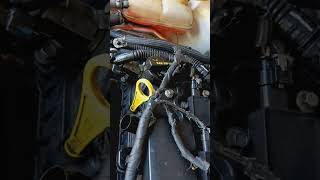
Used OEM Parts in Stock


New Aftermarket Parts Available



The information in this article is provided for general reference and educational purposes only. Vehicle specifications, procedures, and part compatibility can vary by production date, trim level, and region. Always consult your vehicle's factory service manual and verify part numbers before purchasing or performing repairs. Safety-critical components such as airbags, seat belts, and braking systems should be installed by a qualified professional.
- Ford Fusion:
- 🎬 Helpful Videos
- 🛍️ Shop This Part
- What's Unique About the 2013-2020 Ford Fusion
- Symptoms You May Notice
- Most Likely Causes
- Rare But Worth Checking
- Diagnosis Steps
- Parts You'll Likely Need
- Related Codes That Often Appear With This One
- Technical Service Bulletins (TSBs) & Recalls
- Platform-Specific Known Issues
- Mechanic-Grade Diagnostic Values
- Scan Tool Commands That Help
- Wiring & Ground Locations
- Real Owner Repair Stories
- OEM Part Supersession History
- Model Year Variations Within This Range
- Diagnostic Flowchart
- Other Known Issues on This Vehicle
- Used vs. New Parts: Buying Guide for This Vehicle
- Real Owner Stories
- 2014 Ford Fusion 2.0L EcoBoost
- 2016 Ford Fusion 2.0L EcoBoost
- Related OBD-II Codes
- Frequently Asked Questions
- 🎟️ Get 5% Off