

P0236 on 2013-2020 Chevrolet Trax 1.4L: Turbo Boost Sensor Issues & Fixes
On the 2013-2020 Chevy Trax 1.4L, code P0236 is most often caused by a faulty Turbocharger Boost Sensor (also called a MAP sensor) or a boost/vacuum leak from the PCV system. Replacing the sensor is a common, relatively easy fix costing around $30-$70 for the part. In very cold climates, ice in the intake system can also trigger this code, a known issue addressed by GM service bulletins.
- P0236 on a Chevy Trax 1.4L means the boost sensor reading is illogical.
- The most likely cause is a faulty or oil-fouled boost sensor, which is a simple DIY replacement.
- Before replacing the sensor, inspect for common issues like a failed PCV system (requiring a new valve cover) or boost leaks, as these can cause the code and will foul a new sensor.
- In very cold climates, the issue could be temporary ice buildup in the intake system, as noted in GM service bulletins.
- Do not immediately assume the expensive turbocharger has failed; diagnose the cheaper and more common causes first.
What's Unique About the 2011-2020 Chevrolet Trax

The 1.4L LUV turbo engine used in the Trax, Sonic, Cruze, and Buick Encore is known for specific issues that can trigger a P0236 code. A primary culprit is the PCV system; a failed diaphragm in the valve cover or a missing check valve in the intake manifold can cause improper crankcase pressure, leading to boost leaks and oil being forced into the intake, fouling the boost sensor. Additionally, in extremely cold climates (below 0°F / -18°C), moisture can freeze inside the charge air cooler (intercooler) or PCV hoses, creating blockages that cause erratic boost pressure readings and set this code. GM has addressed this with multiple technical service bulletins, including #22-NA-067 and #16-NA-405. Manufacturer service bulletin #22-NA-007 also highlights that extremely cold weather can lead to Charge Air Cooler (CAC) icing, which illuminates the MIL and sets codes including P0236 and P2227.
Symptoms You May Notice
- Check Engine Light is on
- Significant loss of engine power and sluggish acceleration
- Vehicle may enter a "limp mode" with boost disabled by the ECM
- Poor fuel economy
- Rough or unstable idle
- Hesitation when accelerating
- Black smoke from the exhaust if the engine is running rich
- Hissing noise from the engine bay, indicating a vacuum leak from a failed PCV diaphragm
- Replacing the turbocharger when the actual problem is a simple sensor, vacuum leak, or wiring issue.
- Replacing the boost sensor without checking for underlying issues like PCV failure, which will cause the new sensor to become oil-fouled and fail again.
- Replacing the boost sensor when the root cause is icing in the charge air cooler during cold weather.
Most Likely Causes

- Faulty Turbocharger Boost Pressure Sensor (MAP Sensor) 🔴 High Probability The sensor can become contaminated with oil from the PCV system or simply fail electronically over time. A Reddit user noted their sensor was covered in oil. This is the most common direct cause for the code.
How to confirm: Check the sensor for oil contamination. With a scan tool, monitor the live data for the boost pressure sensor. The reading should change smoothly with engine RPM. If it's stuck, erratic, or doesn't match the BARO sensor reading by more than 0.5 PSI with the key on/engine off, the sensor is likely bad.
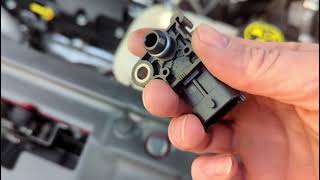
Typical fix: Replace the boost pressure sensor. It is located on the charge air pipe near the throttle body and is held by a single T15 Torx screw. The electrical connector has a red locking tab that must be slid back before depressing the release tab. While cleaning with MAF cleaner may be a temporary fix, replacement is recommended. 🎬 Watch: A quick walkthrough on fixing the P0236 code.
Est. part cost: $30-$70 - Boost/Vacuum Leak (PCV System Failure) 🟡 Medium Probability The PCV system on the 1.4L Turbo engine has two common failure points: a check valve in the intake manifold that can dislodge and a rubber diaphragm in the valve cover that can tear. When either fails, it allows pressurized boost to enter the crankcase, creating a significant vacuum/boost leak that the ECU cannot compensate for, leading to P0236 and other codes like P0171.
How to confirm: With the engine running, a torn valve cover diaphragm will often create a loud hissing or sucking sound. Another test is to check for a strong vacuum at the oil cap while the engine is running; if it's difficult to remove, the PCV system has likely failed. A smoke test of the intake system is the most effective way to find leaks, but a failed intake check valve may require pressurizing the crankcase to detect.
Typical fix: If the intake manifold check valve has failed, the intake manifold must be replaced. If the valve cover diaphragm is torn, the entire valve cover assembly needs to be replaced as the diaphragm is not sold separately by GM. Aftermarket kits like those from CruzeKits.com exist to provide a more robust, serviceable external PCV solution.
Est. part cost: $80-$250 - Ice in Charge Air Cooler (CAC) or PCV System ⚪ Low Probability In extremely cold weather (below 0°F / -18°C), moisture from the crankcase ventilation system can freeze in the intercooler, PCV hoses, or intake manifold passages. This blockage restricts airflow or traps pressure, causing erratic boost pressure readings. This is a well-documented issue for the 1.4L LUV engine, addressed by multiple GM TSBs. Manufacturer bulletin #21-NA-293 notes that this icing can lead to poor engine performance and the illumination of the Malfunction Indicator Lamp with DTC P0236 set.
How to confirm: This issue is specific to very cold climates and may occur after short trips. A visual inspection may reveal ice or a significant amount of milky water/oil sludge in the charge pipes or throttle body. The condition may resolve itself after the vehicle thaws in a warm garage.
Typical fix: Thaw the vehicle in a warm garage. Clean out any accumulated water or sludge from the intake piping and throttle body. GM has released several updates under TSBs #22-NA-067 and #16-NA-405, which can include installing a PCV thermal wrap, a winter grille cover, a redesigned CAC outlet duct, and ECM reprogramming to mitigate the issue.
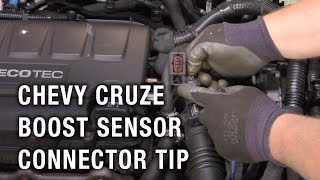
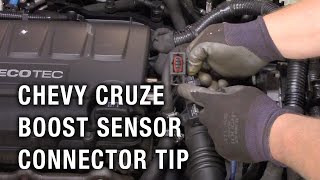
Est. part cost: $0-$150 for updated parts/cleaning supplies - Damaged Wiring or Connectors ⚪ Low Probability Vibrations and heat can cause wiring to fray or connectors to become loose or corroded. On some Cruze models with the same engine, the boost sensor connector and O2 sensor connector are similar and can be accidentally swapped during service, causing multiple codes including P0236. 🎬 See this tip on avoiding common sensor connector mistakes.
How to confirm: Visually inspect the wiring harness and connector for the boost pressure sensor. Check for breaks, corrosion, or loose pins. Test for proper 5V reference, ground, and signal continuity back to the ECM.
Typical fix: Repair the damaged section of wiring or replace the connector pigtail.
Est. part cost: $15-$50
Rare But Worth Checking
- Failing Turbocharger: While less common than sensor or leak issues, a failing turbo (e.g., a stuck wastegate or bad internal seals) can cause erratic boost that triggers P0236. This is often accompanied by other codes like P0299 (underboost) or P0234 (overboost). GM has a special coverage program (N232395330) for turbo failure on some 2017-2018 models for 10 years/120,000 miles. 🎬 Watch: Diagnosing combined P0236 and P0299 boost codes.
- Faulty Engine Control Module (ECM): In very rare cases, the ECM itself may be unable to correctly interpret the sensor's signal, leading to a false P0236 code. This should only be considered after all other possibilities have been exhausted.
Diagnosis Steps

- Read the trouble codes with an OBD-II scanner and note any other codes present, as they can point to the root cause (e.g., P0171 for PCV, P2227 for icing).
- Using the scanner's live data function, observe the readings for the Turbo Boost Sensor and MAP sensor with the key on, engine off. They should read close to the barometric pressure, within 0.5 PSI of each other.
- Start the engine and observe the sensor readings at idle and while carefully raising the RPM. The boost reading should increase smoothly.
- Visually inspect the entire air intake system from the air filter to the throttle body, including all hoses and the intercooler, for cracks, loose connections, or signs of oil leaks.
- Specifically inspect the PCV hoses and the valve cover for signs of oil leaks or damage. Listen for hissing sounds at idle.
- Remove and inspect the boost pressure sensor. Look for oil contamination or physical damage.
- If leaks are suspected but not visible, perform a smoke test on the intake system to pinpoint the source of the leak.
- If no leaks are found and the sensor appears clean, test the sensor's wiring for proper voltage (5V reference), ground, and signal continuity back to the ECM.
- If the issue occurs only in extreme cold, consult TSBs #22-NA-067 and #16-NA-405 to check for icing in the charge air cooler and PCV system.
Parts You'll Likely Need
- Turbocharger Boost Pressure Sensor (MAP Sensor)
(OEM #55567251)— This is the most common failure part for code P0236. It can fail electronically or become oil-fouled from the PCV system. - Valve Cover
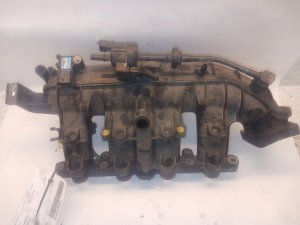
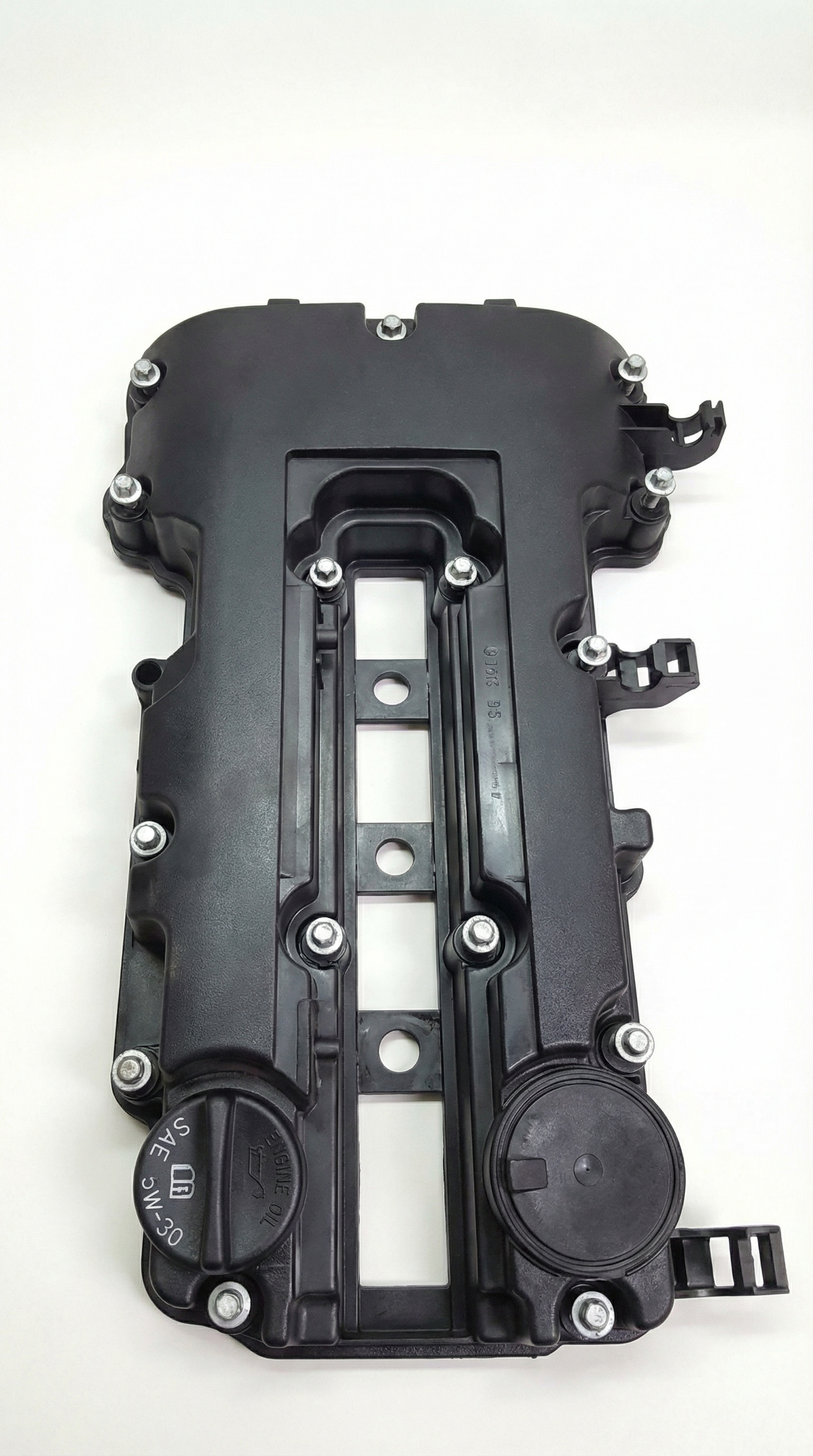
(OEM #25198874)— The integrated PCV diaphragm is a common failure point on the 1.4L engine, causing a massive vacuum leak that can trigger P0236. The entire cover must be replaced. - Intake Manifold — A check valve inside the intake manifold can fail, leading to crankcase pressurization and subsequent failure of the valve cover diaphragm. The entire manifold must be replaced if this valve fails.
Related Codes That Often Appear With This One
- P0299 — Indicates a turbo underboost condition. This often appears with P0236 if the root cause is a significant boost leak, a frozen charge air cooler, or a faulty wastegate.
- P0234 — Indicates a turbo overboost condition. This can be triggered if the wastegate is stuck closed or if a sensor malfunction reports excessively high pressure.
- P0106 — Indicates a problem with the MAP sensor circuit. Since the boost sensor and MAP sensor work together to measure engine load, a fault in one can sometimes trigger a rationality code for the other, especially if a PCV system leak is present. NHTSA ODI #11084536 describes a case where P0236 appeared alongside P0106, P0237, and P1101.
- P2227 — Indicates a Barometric Pressure (BARO) Sensor Performance issue. This code is specifically mentioned alongside P0236 in GM's TSB for cold-weather icing issues.
Technical Service Bulletins (TSBs) & Recalls

- TSB #22-NA-067: Addresses poor engine performance and various DTCs including P0236 in extremely cold weather due to icing in the PCV system and charge air cooler. Recommends cleaning and potential replacement of the intake manifold.
- TSB #17-NA-221: Also addresses charge air cooler icing in cold weather, though for the LE2 engine, the principles are similar.
- TSB #16-NA-405: Precursor to later TSBs, details procedures for dealing with cold-weather icing and DTCs like P0236.
- TSB #21-NA-293: Discusses engine performance issues in extremely cold weather conditions where charge air cooler icing can set DTC P0236.
- TSB #22-NA-007: Notes that extremely cold weather can cause CAC icing, leading to a Malfunction Indicator Lamp with DTCs P0236 and P2227 set.
- Special Coverage N232395330: Extends warranty coverage for turbocharger failure to 10 years/120,000 miles on some 2017-2018 models, which can cause related codes.
Platform-Specific Known Issues

- PCV System Failure: The 1.4L LUV engine is widely known for PCV system issues, where the check valve in the intake manifold or the diaphragm in the valve cover fails. This is a very common cause of boost and vacuum-related codes like P0236.
- Charge Air Cooler Icing: As documented in GM Technical Service Bulletins (TSB) 22-NA-067 and 17-NA-221, these vehicles can accumulate ice in the intake system in extremely cold weather, leading to P0236 and other codes.
- Special Coverage N232395330: GM issued a special coverage program for potential turbocharger failure on some 2017-2018 Trax models, which can present with similar symptoms.
Mechanic-Grade Diagnostic Values
- Boost Sensor vs. MAP vs. BARO Correlation (Live Data) — expected: All three sensors should read within 0.5 PSI (3.5 kPa) of each other.. Failure: If the boost sensor reading is off by more than 0.5 PSI, the sensor is highly suspect.
- Boost Sensor Harness - Reference Voltage — expected: 5.0 Volts DC at the reference wire pin with Key On, Engine Off.. Failure: Significantly lower or no voltage indicates a wiring or ECM issue.
- Boost Sensor Harness - Ground Circuit Resistance — expected: Less than 0.5Ω of resistance between the ground pin and a clean chassis ground.. Failure: Higher resistance indicates a poor ground connection, which can skew sensor readings.
- Boost Sensor Harness - Ground Circuit Voltage — expected: Less than 0.10 Volts (100 millivolts).. Failure: Voltage higher than 100mV on the ground wire points to a bad ground path.
Scan Tool Commands That Help
- GDS2 / Professional Bidirectional Scanner: Turbocharger Wastegate Solenoid Duty Cycle Command — To functionally test the wastegate control solenoid. You can command the solenoid to open and close (e.g., from 0% to 95%) to verify it is not stuck and is responding to ECM commands. This helps rule out a mechanical wastegate issue that could cause the irrational boost readings of P0236.
Wiring & Ground Locations
- G107 — On the lower left rear of the engine block, sometimes specified as being under the starter motor.. This is a primary engine block ground. The ECM and its sensors, including the boost pressure sensor, rely on a solid engine ground path. A loose or corroded G107 can cause erratic sensor readings and trigger range/performance codes like P0236.
- Boost Sensor & O2 Sensor Connectors — On the 1.4L Turbo engine, the boost pressure sensor connector (on the charge pipe) and the upstream O2 sensor connector are located near each other and are physically similar.. During service, these two connectors can be accidentally swapped. This will cause immediate and nonsensical readings for both circuits, triggering P0236 and O2 sensor codes simultaneously. Always verify these connectors are in their correct locations before diagnosing failed parts.
Real Owner Repair Stories
- Adventure Time on YouTube (2017 Chevrolet Trax) — Codes P0236 and P0299 (underboost).
❌ Tried (didn't work) Initial diagnostics showed all sensors and the turbo were functionally good.
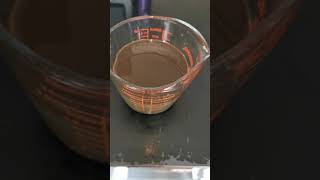
✅ What actually fixed it The technician discovered the entire intake system, including charge pipes and the wastegate actuator vacuum hose, was filled with a large amount of water (nearly 400ml) from condensation freezing and accumulating in cold weather. The fix was to disassemble and thoroughly clean all water and sludge from the intake and intercooler system. - Standard Brand on YouTube (2012 Chevrolet Cruze 1.4L Turbo) — Limp mode, no power, multiple codes including for the boost sensor and upstream O2 sensor.
❌ Tried (didn't work) The vehicle had been to multiple shops without a resolution.
✅ What actually fixed it The technician found that the electrical connectors for the boost pressure sensor and the upstream O2 sensor had been swapped. The connectors are physically similar and can be plugged into the wrong component. Correcting the connector locations was the fix. - NHTSA ODI #11084536 — An owner reported the check engine light came on with a cluster of error codes including P0236, P0106, P0237, and P1101.
"I Checked Everything" — The Actual Cause
- In cases occurring in extreme cold, a smoke test for vacuum leaks may come back clean, but the actual cause can be an internal blockage. On a 2017 Trax, the root cause of P0236 and P0299 was found to be nearly 400ml of water and ice clogging the intercooler, charge pipes, and even the wastegate actuator hose. This condensation buildup created a restriction that mimicked a sensor or leak fault, but would not be found by a smoke test.
OEM Part Supersession History
25198874→25205393— Updated design for the valve cover assembly, which contains the failure-prone PCV diaphragm. The new part is intended to be more durable.
Model Year Variations Within This Range
- 2013-2022: The Chevrolet Trax used the same 1.4L LUV engine throughout its entire first generation in North America (2013-2022). Therefore, the causes, diagnostic procedures, and fixes for code P0236 are consistent across this entire model year range and are not subject to significant variations seen in other GM models that switched to the LE2 engine.
Diagnostic Flowchart
Other Known Issues on This Vehicle
Issues unrelated to this code that are worth knowing about as an owner of this generation:
- PCV System Failure 🔴 High — Very common. The intake manifold check valve and/or valve cover diaphragm can fail, causing oil leaks, high oil consumption, and various engine codes.
- Water Pump and Thermostat Housing Leaks 🔴 High — Extremely common failure item. The water pump is known to fail and leak, and the plastic thermostat housing can crack, leading to coolant loss and potential overheating.
- Oil Cooler / Oil Filter Housing Leaks 🟠 Medium — Common. The seals in the oil cooler/filter housing assembly degrade over time, causing oil to leak onto the exhaust or, in severe cases, mix with the coolant. (Ref: A162043210 (Service Update for 2016 models for a specific O-ring issue))
- Turbocharger Failure 🟠 Medium — Occurs frequently enough that GM issued a special coverage program. Often caused by underlying PCV issues destroying the turbo's seals. (Ref: N232395330 (Special Coverage for 2017-2018 models))
- Timing Chain Issues 🟡 Low — Less common than other issues, but can occur at higher mileage (over 140k miles), leading to rattling noises and potential engine damage if not addressed.
Used vs. New Parts: Buying Guide for This Vehicle
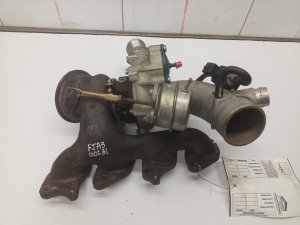
When a used part is the smart pick: Due to the high failure rate of integrated components, using used parts for this repair is generally not recommended. An exception could be a complete low-mileage turbocharger assembly from a reputable salvage yard if the failure is confirmed to be the turbo itself and not a related sensor or leak.
Donor-vehicle mileage cap: roughly under 50000 miles for the part to have meaningful remaining life.
What to inspect on the donor part:
- For a used turbo: check for zero side-to-side or in-and-out shaft play by hand.
- For any used part: ensure it comes from a vehicle with a documented low mileage and no signs of front-end collision or overheating.
OEM-only on this vehicle (don't cheap out):
- Valve Cover: The aftermarket quality can be inconsistent. Given the critical role of the PCV diaphragm inside, OEM or a highly-reputable aftermarket upgrade is strongly advised.
- Intake Manifold: The internal check valve is the failure point. An OEM replacement is the only way to guarantee the updated part is installed correctly.
Aftermarket brands forum-validated for this vehicle:
- CruzeKits.com: Widely recommended in owner forums for their robust, external PCV system upgrade kits that bypass the failure-prone factory design.
- Dorman (264-968): A common aftermarket replacement for the valve cover, though some users report mixed long-term reliability compared to OEM.
Brands owners have reported issues with on this vehicle:
- Unbranded, low-cost boost pressure sensors from online marketplaces are frequently reported to be inaccurate out of the box or fail prematurely.
Real Owner Stories
Aggregated from forums and TSBs cited above. Mileages and costs reflect what owners reported in those sources.
2011-2020 Chevrolet Trax 1.4L Turbo
Symptoms: Check Engine Light with code P0236, sluggish acceleration, and a loud hissing or sucking sound from the engine bay at idle. The oil filler cap was extremely difficult to remove while the engine was running due to strong vacuum.
What fixed it: The entire valve cover assembly was replaced. The root cause was a torn rubber diaphragm inside the original valve cover, which is a common failure point in the PCV system.
Source hint: Common PCV System Failure described in vehicle_specific_issues and cruzetalk.com forum
2011-2020 Chevrolet Trax 1.4L Turbo
Symptoms: Severe loss of engine power and Check Engine Light with P0236, but only during extremely cold weather (below 0°F / -18°C). The vehicle would run fine after being parked in a warm garage for a few hours.
What fixed it: The vehicle was thawed in a warm garage, and a significant amount of milky water/oil sludge was cleaned out of the charge air cooler pipes and throttle body. The issue is caused by ice blocking the intake system.
Source hint: TSB #22-NA-067: Cold-weather icing issue
2011-2020 Chevrolet Trax 1.4L Turbo
Symptoms: Check Engine Light on with P0236 and a significant loss of power. Upon inspection, the boost pressure sensor was found to be covered in oil.
What fixed it: The faulty Turbocharger Boost Pressure Sensor (MAP Sensor) was replaced. The oil contamination from the PCV system had caused the original sensor to fail.
Source hint: Reddit user observation cited in 'Faulty Turbocharger Boost Pressure Sensor' cause
Related OBD-II Codes
Frequently Asked Questions
I'm getting a P0236 code and hearing a loud hissing noise from my Trax's engine. Are these related?
My 2018 Trax has code P0236 and is losing power. Is the turbocharger covered under any special warranty?
This P0236 code only appears on my Chevrolet Trax during extreme winter cold snaps. What's going on?
How difficult is it to replace the Turbocharger Boost Pressure Sensor on my Trax myself?
I've heard the PCV system is a chronic problem. Are there any permanent fixes available for my Trax?
Does my 2015 Buick Encore have the same P0236 problems as the Chevy Trax?
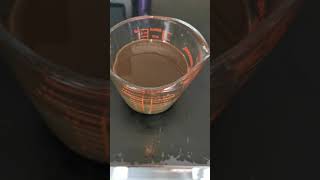
Helpful Videos
We Have This Part in Stock

The information in this article is provided for general reference and educational purposes only. Vehicle specifications, procedures, and part compatibility can vary by production date, trim level, and region. Always consult your vehicle's factory service manual and verify part numbers before purchasing or performing repairs. Safety-critical components such as airbags, seat belts, and braking systems should be installed by a qualified professional.
- Chevrolet Trax:
- 🎬 Helpful Videos
- 🛍️ Shop This Part
- What's Unique About the 2011-2020 Chevrolet Trax
- Symptoms You May Notice
- Most Likely Causes
- Rare But Worth Checking
- Diagnosis Steps
- Parts You'll Likely Need
- Related Codes That Often Appear With This One
- Technical Service Bulletins (TSBs) & Recalls
- Platform-Specific Known Issues
- Mechanic-Grade Diagnostic Values
- Scan Tool Commands That Help
- Wiring & Ground Locations
- Real Owner Repair Stories
- "I Checked Everything" — The Actual Cause
- OEM Part Supersession History
- Model Year Variations Within This Range
- Diagnostic Flowchart
- Other Known Issues on This Vehicle
- Used vs. New Parts: Buying Guide for This Vehicle
- Real Owner Stories
- 2011-2020 Chevrolet Trax 1.4L Turbo
- 2011-2020 Chevrolet Trax 1.4L Turbo
- 2011-2020 Chevrolet Trax 1.4L Turbo
- Related OBD-II Codes
- Frequently Asked Questions
- 🎟️ Get 5% Off