

P0236 on 2009-2020 Audi Q5 2.0T: Turbo Boost Sensor Causes and Fixes
P0236 on an Audi Q5 2.0T most often indicates a faulty boost pressure sensor (G31/MAP), a wiring issue near the sensor, or a boost leak. A faulty sensor is around $40-$100 to replace and is a common DIY fix. Checking the wiring harness for tension and damage at the sensor connector is a critical first step, as this is a known issue covered by an Audi TSB.
- P0236 on your Audi Q5 2.0T is most likely an electrical issue, not a failed turbo.
- Before buying any parts, carefully inspect the wiring and connector at the boost pressure sensor (G31) on the charge pipe for damage, as this is a known Audi issue.
- If the wiring is good, the boost pressure sensor itself is the next most likely culprit and is relatively inexpensive to replace.
- A smoke test is highly recommended to rule out common boost leaks from the PCV or diverter valve before condemning more expensive parts.
What's Unique About the 2009-2020 Audi Q5

On the Audi Q5's 2.0L EA888 engine, P0236 is frequently not a turbocharger failure but rather an issue with the supporting components. Audi has issued a Technical Service Bulletin (TSB 2058976/1) acknowledging that the engine wiring harness to the boost pressure sensor (G31) can be too tight, causing wires to break or pull out of the connector from normal engine vibration. Additionally, failures of the diverter valve and PCV system are common on this engine, which can create boost leaks that may lead to this code.
Generation note: The specified range covers two generations of the Audi Q5. The first generation (Typ 8R, 2009-2017) primarily used the EA888 Gen 2 engine (e.g., CAEB). The second generation (Typ FY/80A, 2018-present) uses the updated EA888 Gen 3 and Gen 3B/4 engines (e.g., DAYB, DPAA). While the causes for P0236 are similar, the location and part numbers for components like the boost pressure sensor and diverter valve may differ. For example, the early Gen 2 engines used a diaphragm-style diverter valve prone to tearing, which was later updated to a more reliable piston-style valve (often referred to as 'Rev D' or 'Rev G'). Gen 3 engines feature an integrated exhaust manifold and an electronic wastegate.
Symptoms You May Notice
- Check Engine Light is on
- "Drive system malfunction" or "EPC" light on the dashboard
- Significant loss of engine power, especially during acceleration
- Sluggishness or hesitation
- Engine jerking or bucking under boost
- Increased fuel consumption
- Irregular or rough idle
- Audible whistling or hissing from the engine bay
- Replacing the turbocharger when the actual fault is a much cheaper and simpler issue like a bad sensor, a wiring problem, or a vacuum leak.
- Replacing the boost pressure sensor (G31) when the root cause is a broken wire at the connector, as highlighted in TSB 2058976/1.
Most Likely Causes

- Wiring or Connector Issue at Boost Pressure Sensor 🔴 High Probability Audi issued a TSB (2058976/1, also referenced as 2037108) for this exact problem. The engine wiring harness can be routed too tightly, causing stress on the wires at the G31 sensor connector. Vibrations can lead to broken wires or pins backing out of the connector. This is a well-documented failure mode across multiple Audi models sharing this engine design.
How to confirm: Visually inspect the wiring harness and connector for the boost pressure sensor (G31), which is typically on the charge pipe near the throttle body. Gently tug on each of the four wires at the back of the connector to see if any are loose, stretched, or broken. Check for corrosion or oil contamination inside the connector. Use a multimeter to check for 5V reference voltage and a good ground at the connector.
Typical fix: Repair the damaged wire(s) or replace the connector pigtail. Ensure the harness has adequate slack after the repair to prevent a repeat failure. The connector is a 4-pin connector, and repair kits are available. 🎬 Watch: How to test and fix the boost sensor wiring.
Est. part cost: $15-$50 - Faulty Boost Pressure Sensor (G31 / MAP) 🔴 High Probability The sensor itself can fail internally over time, providing incorrect voltage signals to the ECM. It is a common failure point across many VW/Audi models with this engine and is often replaced as a primary diagnostic step.
How to confirm: With the ignition on but engine off, use a scan tool (like VCDS) to check the boost pressure reading. It should match the atmospheric pressure (around 1000 mbar or 14.5 PSI at sea level). If it's stuck on a nonsensical value (e.g., 2570 mbar or 0 mbar), the sensor is likely bad. The signal voltage should be between 0.5V and 4.5V; a reading outside this range also indicates failure.
Typical fix: Replace the boost pressure sensor. It is typically located on the charge pipe leading to the intake manifold and is held in by one or two screws.
Est. part cost: $40-$100 - Boost/Vacuum Leak 🟡 Medium Probability The 2.0T engine has several common leak points. The PCV valve diaphragm can tear, creating a large unmetered air leak often heard as a loud whistle at idle. The original diaphragm-style diverter valve is also known to tear, causing a loss of boost pressure when accelerating. Cracked hoses or loose intercooler connections can also be a cause.
How to confirm: A smoke test is the most effective way to find leaks in the intake and charge air system. For the PCV, a quick test is to try removing the oil cap while the engine is idling; extreme vacuum making it difficult to remove indicates a failed diaphragm. The diverter valve can be removed (usually three bolts on the turbo compressor housing) and visually inspected for tears.
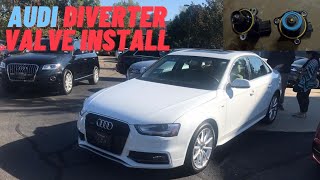
Typical fix: Replace the failed component, such as the PCV valve assembly, diverter valve, or a cracked hose. Upgrading to the later piston-style diverter valve is recommended. 🎬 Watch: Step-by-step guide to installing an updated diverter valve.
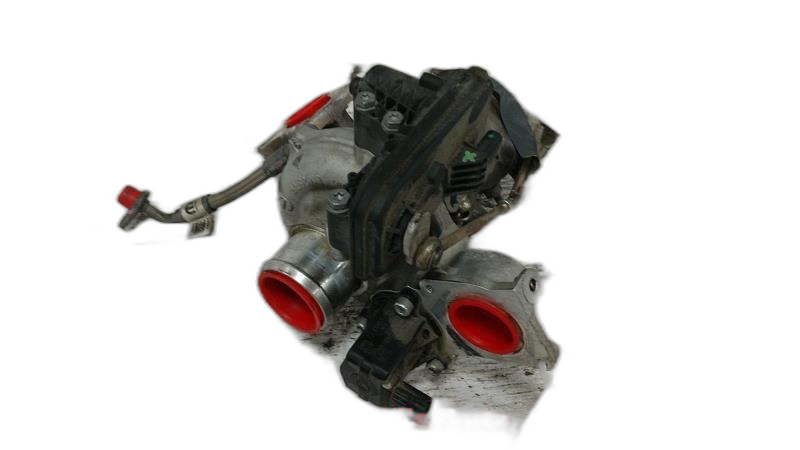
Est. part cost: $35-$150 - Faulty Turbocharger Wastegate Actuator ⚪ Low Probability The wastegate controls turbo speed and boost levels. On EA888 engines, the electronic actuator can fail, or the wastegate linkage arm can seize or develop excessive play, preventing proper boost control. This can cause the turbo to produce too much or too little boost, causing the sensor readings to be out of the expected range.
How to confirm: Use an advanced scan tool to run an output test on the wastegate actuator (also called Turbocharger Boost Control Position Sensor). Check for related fault codes like P2563 (position sensor implausible signal) or P00AF. A visual inspection may reveal a loose or stuck wastegate arm.
Typical fix: In many cases, the actuator is considered part of the turbocharger assembly, and the entire unit is replaced. Some specialists may be able to repair or replace just the actuator or repair the wastegate linkage.
Est. part cost: $1000-$2500+
Rare But Worth Checking
- Clogged Air Filter: A severely clogged air filter can restrict airflow to the turbo, preventing it from building the expected amount of boost, which could lead to an implausible signal if the ECM expects more pressure for a given engine speed. This is a simple and inexpensive item to check first.
- Faulty Engine Control Module (ECM): This is extremely rare, but a failure within the ECM's internal processing or sensor circuits can cause this code. This should only be considered after all other possibilities, especially wiring, have been exhaustively ruled out.
Diagnosis Steps
- Read Fault Codes: Use an OBD-II scanner (VCDS is recommended for VW/Audi) to confirm P0236 and check for any other related codes.
- Inspect Sensor Wiring First: Before replacing parts, carefully inspect the connector and wiring harness at the boost pressure sensor (G31). Per TSB 2058976/1, gently pull on each wire to check for breaks or loose pins. Check for harness tension.
- Check Sensor Live Data: With the ignition on but the engine off, view the live data for the boost pressure sensor. The reading should be close to the barometric pressure (approx. 14.7 PSI or 101 kPa at sea level). If the value is stuck high, low, or reads erratically, the sensor or its wiring is the likely culprit.
- Perform a Smoke Test: If the sensor and wiring appear okay, perform a smoke test on the entire intake and charge air system to check for leaks from hoses, the intercooler, the PCV valve, or the diverter valve.
- Inspect Diverter Valve: Remove the diverter valve (usually three bolts on the turbo compressor housing) and inspect its diaphragm or piston for tears or damage. Check for the latest revision part number.
- Test PCV System: With the engine idling, listen for a loud whistling sound. Try to remove the oil filler cap; if it's held on by strong vacuum, the PCV valve diaphragm has failed and the assembly needs replacement. 🎬 See this walkthrough on diagnosing and replacing a bad PCV.
- Test Wastegate Actuator: If no leaks are found, use an advanced scan tool to command the wastegate actuator and verify its range of motion and that its position sensor is reading correctly.
- Replace the Sensor: If the initial data check pointed to a bad sensor and the wiring is confirmed to be intact, replace the boost pressure sensor.
Parts You'll Likely Need

- Turbocharger Boost Pressure Sensor (MAP Sensor)
(OEM #038906051R (check vehicle-specific catalog, may vary))— This is the most common part to fail or send implausible signals that trigger the P0236 code.
Trusted brands: Bosch, HELLA, Genuine VW/Audi
OEM price range: $70-$120
Aftermarket price range: $40-$80 - Turbocharger Diverter Valve (Recirculation Valve)
(OEM #06H145710D (piston style, supersedes older diaphragm versions))— The original diaphragm-style valve is a known failure point, causing boost leaks. A torn diaphragm can lead to erratic boost readings and trigger P0236 or P0299.
Trusted brands: Pierburg (OEM), GFB (Go Fast Bits, aftermarket upgrade)
OEM price range: $80-$130
Aftermarket price range: $50-$100 - Boost Pressure Sensor Connector Repair Kit (Pigtail)
(OEM #8K0973724 (Verify connector shape))— Needed to fix broken wires or a damaged connector at the G31 sensor, as described in TSB 2058976/1.
Trusted brands: Genuine VW/Audi, Aftermarket repair kits
OEM price range: $30-$60
Aftermarket price range: $15-$30 - PCV Valve / Oil Separator Assembly
(OEM #06H103495AE (or later revision))— The diaphragm inside can tear, causing a massive vacuum leak, which can affect boost pressure plausibility.
Trusted brands: Genuine VW/Audi, Vaico
OEM price range: $120-$180
Aftermarket price range: $40-$90
Related Codes That Often Appear With This One
- P0299 — This code indicates a turbo underboost condition. A torn diverter valve, a significant boost leak from the PCV, or a faulty wastegate can cause both P0236 (implausible signal) and P0299 (not enough boost).
- P0237 / P0238 — These codes indicate the boost sensor signal is specifically too low (P0237) or too high (P0238). They often point directly to a failed sensor or a wiring short/break and can appear alongside P0236.
- P2563 — This code relates to the Turbocharger Boost Control Position Sensor. If the wastegate actuator is failing, it can trigger both this code and P0236 simultaneously as the ECM loses confidence in the entire boost control system.
Technical Service Bulletins (TSBs) & Recalls
- TSB 2058976/1: Addresses broken or loose pins/wires at the G31 boost pressure sensor connector due to a tight wiring harness. It explicitly states that parts replacement (like the turbo) often does not solve this issue and to inspect the wiring first.
- TSB 2031245: (Mentioned in relation to P0299 but relevant) Addresses excessive wastegate linkage play on 2009-2012 CAEB engines, which can cause erratic boost control and related codes.
Platform-Specific Known Issues
- A known issue covered by Audi TSB 2058976/1 involves the engine wiring harness being too tight near the G31 boost pressure sensor, leading to wire damage and intermittent faults like P0236.
Mechanic-Grade Diagnostic Values

- G31 Boost Pressure Sensor Power Supply — expected: 4.5 - 5.0 Volts. Failure: Lack of 5V reference from the ECU points to a wiring or ECU fault, not a sensor failure.
- G31 Boost Pressure Sensor Signal Voltage (Key On, Engine Off) — expected: ~0.5 Volts at sea level (atmospheric pressure). Failure: A value significantly outside the 0.4-2.0V range, or a reading that doesn't change, suggests a faulty sensor or wiring.
- VCDS Requested vs. Actual Boost (Measuring Block 115) — expected: Actual boost should closely track requested boost under load.. Failure: If actual boost is significantly different from requested, it indicates a leak, a wastegate problem, or a sensor error.
- ECM Pressure Difference Threshold — expected: Less than 75.0 mBar between boost, manifold, and barometric sensors at key-on.. Failure: A pressure difference over 75.0 mBar will trigger the fault.
Scan Tool Commands That Help
- VCDS (Ross-Tech): Measuring Value Blocks (MVB) - Group 115 — To log and compare 'Charge Air Pressure: Specified Value' against 'Charge Air Pressure: Actual Value' during a test drive under load. This is critical for determining if the turbo is failing to meet targets (underboost) or if the sensor is reporting incorrectly.
- VCDS (Ross-Tech): Output Test - N75 (Charge Pressure Control Solenoid Valve) — To cycle the wastegate control solenoid and audibly/visually check for wastegate actuator movement. This helps diagnose a stuck wastegate or a faulty N75 valve if no movement occurs.
Wiring & Ground Locations
- G31 Sensor Connector (T4) — A 4-pin connector directly on the boost pressure sensor, located on the charge pipe between the intercooler and the throttle body.. This is the primary location for wiring faults as described in Audi TSB 2058976/1. Wires can break internally or pull out of the connector due to harness tension.
- Ground Connection 12 — In the engine compartment, on the left side.. This is a primary engine ground point. A loose or corroded connection here can cause erratic behavior from multiple engine sensors, including the G31 boost sensor.
- Ground Connection 671 / 672 — Ground connections 1 and 2 on the left front longitudinal member (frame rail).. These are chassis grounds near the front of the engine bay. Poor connections here can affect the sensor ground reference, leading to implausible readings and triggering P0236.
Real Owner Repair Stories
- AudiWorld Forums User (2014 Audi Q5 2.0T, 115k miles) — P0299 (Underboost) and P0236 (Boost Sensor Circuit Performance) codes appeared.
❌ Tried (didn't work) The user first suspected major turbo issues.
✅ What actually fixed it The user created a small electronic amplifier circuit to slightly increase the boost sensor's signal voltage back to the ECU, effectively tricking the computer into seeing slightly higher boost to compensate for what they believed was minor, age-related wastegate wear. While not a conventional repair, it resolved the codes. This points to the ECU's sensitivity to minor performance deviations over time. - Ross-Tech Forums User (2016 Audi A6 2.0T (similar EA888 engine)) — P0236 code, G31 sensor reading stuck at 2.57 mbar.
❌ Tried (didn't work) Checking 5V reference and ohming wires to the ECM showed no faults.
✅ What actually fixed it The user found that unplugging and replugging the sensor would temporarily fix the reading. This strongly indicated a poor connection at the sensor or a fault within the sensor itself that was resolved by a power cycle, rather than a turbo or major wiring loom issue. The final fix was replacing the sensor.
"I Checked Everything" — The Actual Cause
- In some cases, a smoke test will show no leaks, but the intercooler itself can be internally saturated with oil from the PCV system or failing turbo seals. This oil can coat and ruin the boost pressure sensor, causing it to send faulty signals and trigger P0236. The fix is to replace the sensor and clean or replace the oil-contaminated intercooler.
OEM Part Supersession History
06F145710B, 06F145710C, 06F145710G→06H145710D (and later revisions)— The original diverter valves used a rubber diaphragm that was highly prone to tearing. The updated 'D' revision uses a more durable piston-style design to prevent this common boost leak.06H103495A, 06H103495E, 06H103495J→06H103495AC, AE, AH, AJ, AK— The PCV valve assembly (oil separator) has been updated multiple times to improve durability and address issues with the diaphragm tearing, which causes a massive vacuum leak. Later versions like 'AK' are considered the most robust.N/A→06J145220A / 06J145220B— This is not a supersession but an add-on part. This OEM clip is designed to add preload to a worn wastegate actuator rod, helping the wastegate flap seal properly. It's a cheap potential fix for underboost/overboost issues before replacing the entire turbo.
Model Year Variations Within This Range
- 2009-2017 (Gen 2 EA888): These engines are most prone to the diaphragm-style diverter valve tearing and the PCV valve failures. The wastegate is typically vacuum-actuated.
- 2018-2020 (Gen 3 EA888): These engines use an electronic wastegate actuator, which can fail electrically or mechanically. While the diverter valve is more robust, issues can still occur. PCV system design is also different but can still be a source of leaks.
Diagnostic Flowchart
Other Known Issues on This Vehicle
Issues unrelated to this code that are worth knowing about as an owner of this generation:
- Excessive Oil Consumption 🔴 High — Very common on 2009-2014 EA888 Gen 2 engines, typically noticeable after 50,000-60,000 miles. A class-action lawsuit was filed over this issue. (Ref: Class-action lawsuit settlement led to piston/ring replacement for some owners, but no formal recall.)
- Timing Chain Tensioner Failure 🔴 High — Common on pre-2015 EA888 engines. The original tensioner design can fail without warning, allowing the timing chain to jump, causing catastrophic engine damage. An updated tensioner was released. (Ref: A class-action lawsuit addressed this, and many vehicles were updated. It is critical to verify the tensioner has been updated on used vehicles.)
- Water Pump / Thermostat Housing Failure 🟠 Medium — The plastic housing for the water pump and thermostat assembly is prone to cracking and leaking over time due to heat cycles. Failure can occur anywhere from 60,000 to 100,000 miles. (Ref: TSB 19 23 44 2071515/1 acknowledges coolant leaks from the pump on later models.)
- PCV Valve Failure 🟠 Medium — The diaphragm in the PCV / oil separator assembly frequently tears, causing a large vacuum leak, rough idle, high-pitched whistle, and increased oil consumption. Often fails every 60,000-80,000 miles.
- Intake Valve Carbon Buildup 🟠 Medium — As a direct-injection engine, fuel does not wash over the intake valves. This leads to heavy carbon deposits over 60,000-80,000 miles, causing misfires, rough idle, and reduced performance.
Used vs. New Parts: Buying Guide for This Vehicle
When a used part is the smart pick: Used parts are generally not recommended for the common failure items related to P0236 due to their high failure rates and the availability of affordable, updated aftermarket or OEM parts. A used intercooler or charge pipes from a low-mileage, non-crashed vehicle could be a cost-effective option if they are confirmed to be clean and undamaged.
Donor-vehicle mileage cap: roughly under 50000 miles for the part to have meaningful remaining life.
What to inspect on the donor part:
- For intercoolers/pipes: Check for cracks, signs of repair, and heavy internal oil residue.
- For wiring harnesses: Ensure there are no brittle sections, previous repairs, or cut connectors.
OEM-only on this vehicle (don't cheap out):
- Boost Pressure Sensor (G31): While aftermarket is available, the OEM Bosch sensor is reasonably priced and has the highest reliability record. Cheap unbranded sensors are a common cause of repeat failures.
- Turbocharger Assembly: Due to the complexity and precision required, a new OEM or professionally remanufactured turbo is strongly advised over a used unit with unknown history.
Aftermarket brands forum-validated for this vehicle:
- Diverter Valve: Go Fast Bits (GFB) DV+ is a highly-regarded upgrade that replaces failure-prone plastic/rubber parts with metal components for improved reliability and boost holding.
- PCV Valve/System: APR and Integrated Engineering (IE) offer billet aluminum replacement plates and catch can systems that eliminate the failure-prone factory diaphragm. For a stock-style replacement, Pierburg (the OEM supplier) and Vaico are trusted brands.
Brands owners have reported issues with on this vehicle:
- Unbranded/no-name PCV valves and boost sensors from online marketplaces are frequently reported to fail quickly or be dead-on-arrival.
Real Owner Stories
Aggregated from forums and TSBs cited above. Mileages and costs reflect what owners reported in those sources.
2016 Audi A6 2.0T
Symptoms: The boost pressure sensor reading would get stuck at a fixed value.
What fixed it: The issue was identified as a wiring or connector fault, as unplugging and replugging the sensor temporarily restored the correct reading, pointing away from a failed sensor.
Source hint: Ross-Tech Forums: 2016 audi a6 2.0t charge pressure issues p0236
2014 Audi Q5 2.0L — 115000 miles
Symptoms: Owner was experiencing boost codes.
What fixed it: The owner attributed the boost code to minor, age-related turbo efficiency loss caused by wastegate wear over time.
Source hint: Reddit r/Audi: How I understood and "fixed" the P0299 underboost CEL
Related OBD-II Codes
Frequently Asked Questions
I heard there's a service bulletin for code P0236 on my Audi Q5. What is it about?
Where is the boost pressure sensor (G31) located on my 2.0L Q5?
My mechanic mentioned the diverter valve. Is this a common failure on the 2.0T engine causing boost issues?
I hear a loud whistling from the engine at idle. Could this be related to my P0236 code?
How can I test the boost pressure sensor myself before buying a new one?
The dealer wants to replace my turbo for P0236. What should I check first?
Helpful Videos
We Have This Part in Stock




The information in this article is provided for general reference and educational purposes only. Vehicle specifications, procedures, and part compatibility can vary by production date, trim level, and region. Always consult your vehicle's factory service manual and verify part numbers before purchasing or performing repairs. Safety-critical components such as airbags, seat belts, and braking systems should be installed by a qualified professional.
- Audi Q5:
- 🎬 Helpful Videos
- 🛍️ Shop This Part
- What's Unique About the 2009-2020 Audi Q5
- Symptoms You May Notice
- Most Likely Causes
- Rare But Worth Checking
- Diagnosis Steps
- Parts You'll Likely Need
- Related Codes That Often Appear With This One
- Technical Service Bulletins (TSBs) & Recalls
- Platform-Specific Known Issues
- Mechanic-Grade Diagnostic Values
- Scan Tool Commands That Help
- Wiring & Ground Locations
- Real Owner Repair Stories
- "I Checked Everything" — The Actual Cause
- OEM Part Supersession History
- Model Year Variations Within This Range
- Diagnostic Flowchart
- Other Known Issues on This Vehicle
- Used vs. New Parts: Buying Guide for This Vehicle
- Real Owner Stories
- 2016 Audi A6 2.0T
- 2014 Audi Q5 2.0L — 115000 miles
- Related OBD-II Codes
- Frequently Asked Questions
- 🎟️ Get 5% Off