

P0234 on 2015-2019 Ford Transit 3.5L EcoBoost: Turbo Overboost Causes and Fixes
On a 2015-2016 Ford Transit with the 3.5L EcoBoost, code P0234 is most often caused by a faulty wastegate control solenoid (Part No. BL3Z-9K378-A), an inexpensive part costing around $50-$100. For 2017-2019 models with electronic wastegates, the diagnosis is more complex, often pointing to a binding wastegate linkage or a faulty electronic actuator, which may require turbo replacement.
- First, determine if your 2015-2019 Transit has vacuum (pre-2017) or electronic (2017+) wastegates, as this dictates the entire diagnosis.
- For 2015-2016 models, the most likely and cheapest fix is replacing the wastegate control solenoid (Part # BL3Z-9K378-A).
- Do not assume the turbochargers need replacement. Thoroughly test the control system (solenoid, vacuum lines, actuators) first.
- Ignoring this code is risky. The engine enters limp mode to protect itself, and continued driving could lead to expensive engine damage.
What's Unique About the 2015-2019 Ford Transit

The key difference within this year range is the wastegate control system. 2015-2016 models use a vacuum-operated system, where failures often trace back to a simple control solenoid or vacuum lines. In contrast, 2017-2019 models feature the second-generation 3.5L EcoBoost with electronically-actuated wastegates. This design change means a P0234 code on a newer Transit points away from vacuum issues and towards the electronic actuator, its wiring, or the turbocharger assembly itself, which can be a more complex and expensive repair.
Generation note: Yes, this range covers two different wastegate control systems for the 3.5L EcoBoost. - 2015-2016: Uses a vacuum-actuated wastegate system. Common causes include the boost control solenoid, vacuum lines, and the vacuum pump. - 2017-2019: Uses an electronically-actuated wastegate system. Common causes are the electronic actuator, its wiring, or the turbocharger assembly.
Symptoms You May Notice
- Check Engine Light is on
- Drastic loss of engine power (limp mode)
- Erratic or surging acceleration
- Unusual whistling or whooshing sounds from the engine bay
- Harsh or abrupt transmission shifting
- Audible knocking or pinging sounds from the engine under load
- Replacing the turbochargers immediately without diagnosing the control system. On 2015-2016 models, the issue is very often the inexpensive control solenoid, not the turbos themselves.
- Confusing the wastegate control solenoid with the EGR solenoid. While they can look similar, they perform different functions. On some parts diagrams, the wastegate solenoid may be confusingly labeled.
Most Likely Causes

- Faulty Wastegate Control Solenoid (2015-2016 Models) 🔴 High Probability This solenoid is a common failure point on vacuum-controlled Ford EcoBoost engines. It's a small electronic valve that cycles frequently and is exposed to heat in the engine bay, leading to internal failure or shorts.
How to confirm: Test the solenoid's resistance with a multimeter; it should be between 10-40 Ohms. Use a scan tool to command the solenoid while checking for vacuum at the output port with a gauge. A simpler method is to replace it, as the part is inexpensive.
Typical fix: Replace the wastegate control solenoid (also called a boost control valve) and inspect all associated vacuum lines for cracks or leaks.
Est. part cost: $50-$100 - Sticking or Binding Turbocharger Wastegate 🟡 Medium Probability Carbon and rust can build up in the hot exhaust housing of the turbocharger, causing the wastegate arm or internal valve to seize, preventing it from opening to regulate boost. This is a known issue across the EcoBoost platform.
How to confirm: With the engine off and cool, manually try to move the wastegate actuator arm. It should move freely without binding. For 2015-16 models, a vacuum pump can be used to apply vacuum to the actuator to see if the arm moves. Per TSB 16-0013, the rod should start moving at 3-9 PSI and reach full travel by 12-19 PSI.
Typical fix: In some cases, the arm can be freed with penetrating oil and manual manipulation. However, if the wastegate is seized internally, Ford's official procedure per TSB 16-0013 often calls for replacement of the entire turbocharger assembly.
Est. part cost: $800-$2000+ - Faulty Electronic Wastegate Actuator (2017-2019 Models) 🟡 Medium Probability As an electronic component mounted directly to the hot turbocharger, the actuator is subject to extreme heat and vibration, which can lead to internal electronic failure or wear in the linkage.
How to confirm: Use a high-level scan tool like FORScan to run the 'Turbocharger Function Test' and command the actuator to move while observing its desired vs. actual position PIDs. If it doesn't move as commanded or reports an incorrect position, it has likely failed.
Typical fix: Replace the electronic wastegate actuator. In many cases, this actuator is considered integral to the turbocharger and may only be available with a new or remanufactured turbo assembly.
Est. part cost: $300-$2000+ - Leaking or Blocked Wastegate Control Hoses (2015-2016 Models) ⚪ Low Probability Rubber and plastic vacuum lines can become brittle and crack over time due to heat cycles in the engine bay, causing a loss of vacuum needed to open the wastegate.
How to confirm: Visually inspect all vacuum lines running from the vacuum pump to the control solenoid and out to the turbo wastegate actuators. Perform a smoke test to find any leaks that are not visible.
Typical fix: Replace the damaged section of hose or the entire hose assembly.
Est. part cost: $20-$60
Rare But Worth Checking
- Faulty MAP Sensor: A Manifold Absolute Pressure (MAP) sensor that is reading lower than the actual pressure can cause the PCM to command more boost than necessary, leading to an overboost condition.
- Aftermarket Engine Tuning: An aggressive or poorly configured engine tune can request boost levels that exceed the factory safety limits, triggering the P0234 code.
- Restricted Exhaust: A clogged catalytic converter or collapsed exhaust piping can prevent exhaust gases from escaping, which can contribute to the turbocharger spooling excessively and creating an overboost condition. A manufacturer service bulletin, SSM 53328, notes that P0234 can also be accompanied by excessive turbo noise and a lack of power.
Diagnosis Steps

- Identify Your Engine Generation: Determine if you have the vacuum-actuated (2015-2016) or electronic (2017-2019) wastegate system, as the diagnostic path differs significantly.
- Scan for Codes: Use an OBD-II scanner to confirm P0234 is the primary code and check for any other related DTCs, such as P0299 or P0245. Manufacturer TSB #TSB150160 notes that P0234 may also appear alongside P0236 or P259F.
- (2015-2016 Models) Inspect Vacuum System: Visually inspect all vacuum hoses connected to the wastegate control solenoid and turbo actuators for cracks, kinks, or loose connections. A smoke test is highly effective for finding hidden leaks.
- (2015-2016 Models) Test the Wastegate Control Solenoid: This is the most likely culprit. Test its internal resistance (should be 10-40 ohms). If possible, command it with a scan tool and verify it passes vacuum. Given its low cost, replacement is a valid diagnostic step.
- (All Models) Check Wastegate Actuator Movement: With the engine cool, attempt to move the wastegate actuator arm by hand to ensure it is not seized. It should move smoothly against spring pressure.
- (2017-2019 Models) Test Electronic Actuator: Use a bi-directional scan tool (like FORScan) to run the turbo function test and verify the actuator's desired position matches its measured position. 🎬 Watch: How to adjust the electronic wastegate
- Check MAP Sensor Data: Using a scan tool, monitor the Manifold Absolute Pressure (MAP) sensor reading at idle and compare it to the Barometric Pressure (BARO) sensor. They should be very close. If not, the MAP sensor may be faulty.
- Inspect Turbocharger: If all control components are functioning correctly, the issue may be an internal failure of the turbocharger's wastegate, which may require turbo replacement per TSB 16-0013.
Parts You'll Likely Need
- Turbocharger Wastegate Control Solenoid (2015-2016)
(OEM #BL3Z-9K378-A)— This is the most common failure part for the P0234 code on first-generation 3.5L EcoBoost engines with vacuum-operated wastegates.
Trusted brands: Motorcraft, Dorman
OEM price range: $70-$100
Aftermarket price range: $40-$70 - Turbocharger Assembly — Required if the internal wastegate is seized and cannot be freed, or if the electronic actuator (on 2017-2019 models) is faulty and not sold separately.
Trusted brands: Ford/Motorcraft, Garrett
OEM price range: $1200-$2000
Aftermarket price range: $800-$1500
Related Codes That Often Appear With This One
- P0299 — An underboost code (P0299) can sometimes appear alongside an overboost code (P0234) if the wastegate control system is behaving erratically, such as a sticking valve that sometimes stays open and other times stays closed.
- P0245 — This code for 'Wastegate Solenoid 'A' Low' points directly to a problem in the solenoid's electrical circuit, often appearing with P0234 if the solenoid has failed electrically.
- P0420 — NHTSA ODI #11688277 describes a case where P0234 was triggered alongside P0420 (Catalyst System Efficiency Below Threshold), consistent with mechanical failures in the system.
Technical Service Bulletins (TSBs) & Recalls
- TSB 16-0013: Affects 2015 Transit models with the 3.5L GTDI engine. Addresses DTCs P0234 (overboost) and P0299 (underboost) with drivability symptoms. It provides a diagnostic procedure for testing the vacuum-operated wastegate.
- TSB #TSB150160: Notes that vehicles may exhibit an illuminated MIL with DTCs P0234, P0236, and/or P259F stored in the powertrain control module memory.
- SSM 53328: Addresses lack of power and excessive turbo noise during operation with DTC P0234 and other related boost codes.
Platform-Specific Known Issues
- The 3.5L EcoBoost engine platform changed from vacuum-operated wastegates to electronic wastegates starting in the 2017 model year, which fundamentally changes the diagnosis for this code.
- TSB 16-0013 was issued for 2015 Transit models (among other Fords) with the 3.5L GTDI engine for DTC P0234, pointing to faulty wastegate operation and providing specific pressure testing parameters.
Mechanic-Grade Diagnostic Values
- PCM Overboost Trigger Condition — expected: Actual boost pressure (TCBP PID) should not exceed desired boost pressure by more than 4 psi (27.6 kPa) for 5 seconds.. Failure: The PCM will set code P0234 if this threshold is breached.
- Wastegate Control Solenoid Resistance (2015-2016 models) — expected: 10 - 40 Ohms. Failure: A reading of infinity (open circuit) or near zero (short circuit) indicates a failed solenoid.
Scan Tool Commands That Help

- FORScan / Ford IDS: Turbocharger Function Test (or VGT Actuator Sweep Test) — For 2017-2019 models with electronic wastegates. This command cycles the actuator through its full range of motion to verify it is not sticking or failing electronically. Observing the desired vs. actual position PIDs during this test is critical.
- Bi-directional Scan Tool: Wastegate Control Solenoid (WCS) On/Off Command — For 2015-2016 models with vacuum wastegates. A technician can command the solenoid on and off while using a vacuum gauge on the output port to confirm it is correctly opening and closing to pass vacuum to the actuators.
Wiring & Ground Locations
- G104 / G105 — On similar Ford 3.5L EcoBoost platforms, G104 is located on the rear of the right (passenger side) cylinder head, and G105 is on the left (driver's) side of the engine block. They serve as primary engine and PCM ground points.. A loose or corroded ground at these locations can cause incorrect voltage readings from the MAP sensor or erratic operation of the wastegate control solenoid/actuator, leading the PCM to miscalculate boost pressure and trigger a false P0234.
Real Owner Repair Stories
- Commenter on 312Drive YouTube Channel (2015 Ford F-150 3.5L EcoBoost (same engine and vacuum control system as 2015-2016 Transit)) — P0234 code would set anytime the throttle was applied hard.
❌ Tried (didn't work) Replaced the wastegate control solenoid., Cleaned all related sensors.
✅ What actually fixed it Found small holes chewed by a squirrel in the plastic vacuum line running from the boost solenoid to the wastegate. The damage was on the bottom side of the line and was not visible until the line was completely removed during a separate repair. - Ford Transit Forum (Ford Transit Mk7 (European model, but principle applies)) — P0234 overboost code, loss of power.
❌ Tried (didn't work) Clearing the code (it would return).
✅ What actually fixed it The final diagnosis pointed to a faulty/sticking EGR valve. Replacing the EGR valve resolved the overboost code. - NHTSA ODI #11062911 — An owner reported that their vehicle displayed a "See Manual" light and a P0234 code for turbocharger overboosting; however, the dealership only reset the computer and took no further action.
- NHTSA ODI #11427314 — A report describes a vehicle throwing multiple codes including P0234 and P0299, which the owner associated with damage to the cam and bottom end of the motor.
"I Checked Everything" — The Actual Cause
- In one documented case on a similar EcoBoost engine, all standard checks (solenoid replacement, sensor cleaning) failed to fix a P0234. The actual cause was tiny, squirrel-chewed holes on the underside of a plastic vacuum line, which would likely not show up in a standard smoke test unless the line was flexed in a specific way. The issue was only found when the line was removed for another job.
- A sticking EGR valve can cause a P0234 code. A technician focused on the turbo system might perform a smoke test on the charge air system and find no leaks, missing that the pressure anomaly is being caused by the EGR system not functioning as the PCM expects during certain engine load conditions.
When the Usual Fixes Don't Work
- While the wastegate control solenoid is the most common fix for 2015-2016 models, there are numerous owner accounts where replacing it did not solve the problem. In these cases, the root cause was often more subtle, such as a minuscule, hard-to-see leak in a vacuum line or a completely unrelated component like a sticking EGR valve causing the PCM to misinterpret manifold pressure. This highlights the need to diagnose the entire control system rather than just replacing the most common part.
OEM Part Supersession History
AA5Z-9K378-A→BL3Z-9K378-A— Part revision by Ford. The new part number is the current replacement for the wastegate control solenoid on 2015-2016 models.
Model Year Variations Within This Range
- 2015-2016 vs 2017-2019: The entire wastegate control system. 2015-2016 models use a vacuum-operated system controlled by the BL3Z-9K378-A solenoid. 2017-2019 models use the Gen2 EcoBoost engine with electronic wastegate actuators that are integrated with the turbochargers. Diagnostic procedures are completely different between these two groups.
Diagnostic Flowchart
Other Known Issues on This Vehicle
Issues unrelated to this code that are worth knowing about as an owner of this generation:
- Driveshaft Flexible Coupling (Guibo) Failure 🔴 High — Common enough to warrant multiple recalls. Cracks can appear after 30,000 miles, leading to driveline vibration and potential driveshaft separation. (Ref: Recall 19S38 (supersedes 17S15). The final repair involves replacing the flexible coupling with a permanent mechanical U-joint.)
- Timing Chain Rattle on Cold Start 🔴 High — A widely documented problem on both Gen 1 and Gen 2 3.5L EcoBoost engines. Caused by stretched timing chains and/or faulty VCT phasers. (Ref: Multiple TSBs issued, including 18-2305 for 2011-2015 models and 21-2119 for 2017-2020 models, detailing replacement of timing chain and VCT units.)
- Internal Water Pump Failure (Transverse Applications) 🔴 High — While the Transit's RWD (longitudinal) layout has an external water pump, this is a critical issue for transverse 3.5L EcoBoost applications (like Explorer, Flex, Taurus). The internal, timing-chain-driven pump can leak coolant directly into the engine oil, causing catastrophic engine failure. Transit owners should be aware of this distinction.
- Intake Valve Carbon Buildup 🟠 Medium — More prevalent on the Gen 1 (2015-2016) engine due to its direct-injection-only design. The Gen 2 (2017+) added port injection to mitigate this. Can cause rough idle, misfires, and power loss over 60,000-100,000 miles.
Used vs. New Parts: Buying Guide for This Vehicle
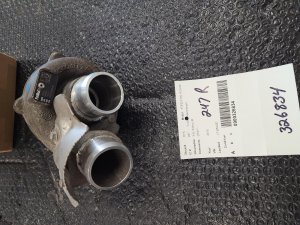
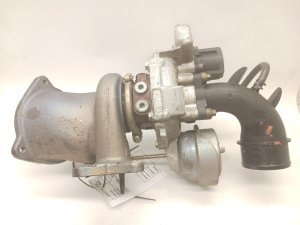
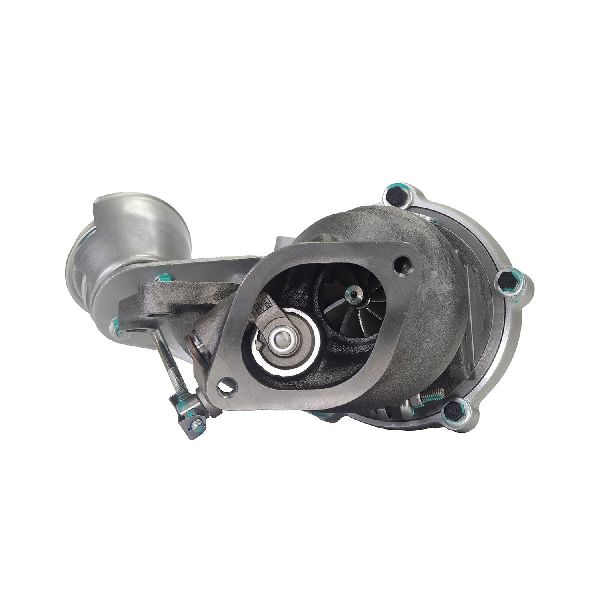
When a used part is the smart pick: A complete, used turbocharger assembly from a reputable salvage yard can be a cost-effective option for an older, higher-mileage Transit, especially if the cost of a new OEM unit is prohibitive. Small structural parts like brackets or undamaged wiring connectors are also excellent candidates for used parts.
Donor-vehicle mileage cap: roughly under 100000 miles for the part to have meaningful remaining life.
What to inspect on the donor part:
- For a turbocharger, check for minimal shaft play (both in-and-out and side-to-side).
- Inspect the compressor and turbine wheels for any signs of blade damage or contact with the housing.
- Ensure the wastegate actuator arm moves freely without binding or excessive stiffness.
- Look for any signs of oil leakage from the center housing rotating assembly (CHRA).
OEM-only on this vehicle (don't cheap out):
- MAP/Boost Pressure Sensors: Aftermarket sensors can sometimes have slightly different voltage scaling, which can confuse the PCM and lead to persistent or new codes. Using OEM/Motorcraft or the original supplier (e.g., Bosch) is highly recommended.
- Electronic Wastegate Actuator (2017-2019): This part is often not sold separately from the turbocharger assembly. If it is found separately, ensure it is a genuine OEM part, as calibration and communication with the PCM are critical.
Aftermarket brands forum-validated for this vehicle:
- Dorman: Offers a replacement for the vacuum control solenoid (BL3Z-9K378-A) that is widely available.
- Garrett: As an OEM supplier for many Ford turbos, their aftermarket replacements are considered high quality.
Brands owners have reported issues with on this vehicle:
- No-name, unbranded turbochargers and electronic actuators from online marketplaces should be avoided. They often suffer from poor quality control, incorrect balancing, and use inferior materials, leading to premature failure.
Real Owner Stories
Aggregated from forums and TSBs cited above. Mileages and costs reflect what owners reported in those sources.
2015 Ford Transit 3.5L EcoBoost
Symptoms: Check engine light on with code P0234, accompanied by a drastic loss of engine power and audible knocking or pinging sounds when the engine was under load.
What fixed it: Following TSB 16-0013, the diagnostic procedure confirmed faulty wastegate operation, which required replacement of the turbocharger assembly because the wastegate was seized internally.
Source hint: TSB 16-0013 and vehicle_specific_issues
2017 Ford Transit 3.5L EcoBoost
Symptoms: The vehicle experienced erratic and surging acceleration. A scan tool showed the wastegate was not reaching the desired position.
What fixed it: Replacement of the electronic wastegate actuator after a 'Turbocharger Function Test' using FORScan showed the actual position did not match the desired position.
Source hint: common_causes: Faulty Electronic Wastegate Actuator (2017-2019 Models)
Related OBD-II Codes
Frequently Asked Questions
Does TSB 16-0013 apply to my 2015 Ford Transit with the 3.5L EcoBoost?
How does the wastegate system differ between a 2016 and a 2017 Ford Transit 3.5L?
Can I just replace the wastegate actuator on my 2018 Transit to fix P0234?
What should the resistance be for the wastegate control solenoid on my 2016 Transit?
My 2015 Transit is making a whistling sound and lost power; is this related to P0234?
Are there specific vacuum pressure targets I should look for when testing my 2015 Transit wastegate?
Helpful Videos
Used OEM Parts in Stock


New Aftermarket Parts Available


The information in this article is provided for general reference and educational purposes only. Vehicle specifications, procedures, and part compatibility can vary by production date, trim level, and region. Always consult your vehicle's factory service manual and verify part numbers before purchasing or performing repairs. Safety-critical components such as airbags, seat belts, and braking systems should be installed by a qualified professional.
- Ford Transit:
- 🎬 Helpful Videos
- 🛍️ Shop This Part
- What's Unique About the 2015-2019 Ford Transit
- Symptoms You May Notice
- Most Likely Causes
- Rare But Worth Checking
- Diagnosis Steps
- Parts You'll Likely Need
- Related Codes That Often Appear With This One
- Technical Service Bulletins (TSBs) & Recalls
- Platform-Specific Known Issues
- Mechanic-Grade Diagnostic Values
- Scan Tool Commands That Help
- Wiring & Ground Locations
- Real Owner Repair Stories
- "I Checked Everything" — The Actual Cause
- When the Usual Fixes Don't Work
- OEM Part Supersession History
- Model Year Variations Within This Range
- Diagnostic Flowchart
- Other Known Issues on This Vehicle
- Used vs. New Parts: Buying Guide for This Vehicle
- Real Owner Stories
- 2015 Ford Transit 3.5L EcoBoost
- 2017 Ford Transit 3.5L EcoBoost
- Related OBD-II Codes
- Frequently Asked Questions
- 🎟️ Get 5% Off