

P0234 on 2010-2019 Ford Taurus 3.5L EcoBoost: Overboost Condition Causes and Fixes
For the 3.5L EcoBoost Taurus, code P0234 is most often caused by a faulty wastegate control solenoid or a disconnected/leaking vacuum hose controlling the wastegate. Check all boost-related hoses for secure connections before replacing parts. A specific hose on the charge pipe is known to slip off due to not having a factory clamp.
- Before suspecting a major failure, thoroughly inspect all small vacuum and boost hoses around the top of the engine and turbochargers. A disconnected hose is a very common and cheap fix.
- The wastegate control solenoid is a frequent point of failure and the next most likely cause after checking hoses.
- Do not immediately assume you need a new turbocharger. This code is most often caused by a failure in the control system, not the turbo itself.
- Driving with an active overboost condition can cause serious engine damage. The vehicle's limp mode is a safety feature that should be heeded.
What's Unique About the 2010-2019 Ford Taurus
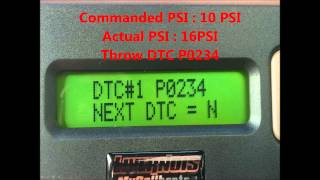
The 3.5L EcoBoost V6 in the Taurus SHO is a twin-turbo engine packed tightly into the engine bay. This high-heat environment can make plastic components and rubber hoses brittle over time. A common, and often overlooked, issue is a simple vacuum hose popping off a nipple because it was not secured with a clamp from the factory, leading directly to a P0234 code. Owners on forums frequently discuss issues with wastegate control solenoids and boost leaks as primary culprits for this code. One owner documented this exact failure on a 2014 SHO, 🎬 Watch this 2014 SHO boost leak repair video where a boost reference hose came loose, causing surging and the P0234 code. Additionally, manufacturer service bulletins for other Ford platforms, such as Bulletin #SSM 53328, note that P0234 can be accompanied by excessive turbo noise and a significant lack of power.
Symptoms You May Notice
- Check Engine Light is on
- Significant loss of engine power (limp mode)
- Vehicle hesitates or surges during acceleration
- Louder or unusual 'whoosh' or blow-off sounds from the engine bay
- Audible whistling or hissing noises from a boost leak
- Engine may knock or ping under boost
- A "See Manual" light or wrench icon may appear on the dashboard display, as noted in NHTSA ODI #11062911
- Replacing the turbocharger immediately. 🎬 Watch: Diagnostic steps for engine overboost codes The issue is very often a much cheaper and simpler component like a hose or solenoid, so a full diagnostic procedure should always be followed first.
Most Likely Causes
- Disconnected or Damaged Wastegate Control Hose 🔴 High Probability Some vacuum/boost hoses on the 3.5L EcoBoost were not fitted with clamps from the factory, allowing them to slip off over time due to heat and pressure. This is a well-documented failure by owners.
How to confirm: Visually inspect all vacuum and boost reference lines between the intake manifold, the wastegate control solenoid, and the turbo wastegate actuators. A specific hose highlighted in owner repair videos connects to the charge pipe and is a known failure point. A smoke test can also reveal hidden leaks.
Typical fix: Reconnect the hose and secure it with a small hose clamp to prevent it from coming off again. Replace any hoses that are cracked, swollen, or brittle.
Est. part cost: $1-$10 - Faulty Wastegate Control Solenoid (Boost Solenoid) 🟡 Medium Probability The solenoid is an electronic component that can fail due to heat and age. It's a common failure point across the Ford EcoBoost engine family, from the 1.6L to the 3.5L. In NHTSA ODI #11561976, an owner reported that even after replacing the turbocharger overboost solenoid, the P0234 and P0299 codes returned, suggesting that wiring or underlying mechanical issues should also be verified.
How to confirm: With the engine running, you can sometimes feel the solenoid clicking. A more definitive test involves using a scan tool to command the solenoid to operate while observing its function. You can also test the solenoid's resistance with a multimeter (check against factory specs) or apply 12V to see if it actuates.
Typical fix: Replace the faulty solenoid. On the 3.5L EcoBoost, it is typically located on top of the engine and is relatively accessible.
Est. part cost: $50-$100 - Sticking Turbocharger Wastegate ⚪ Low Probability The internal wastegate arm or flapper can bind due to carbon buildup or wear, preventing it from opening to regulate boost. Ford TSB 20-2016 addresses a related issue of wastegate linkage rattle on F-150s with the 3.5L EcoBoost, indicating known issues with this hardware.
How to confirm: With the engine off and cool, disconnect the actuator rod from the wastegate arm. Attempt to move the arm by hand; it should move freely with some spring tension. If it is seized or very difficult to move, the wastegate is sticking.
Typical fix: In some cases, the wastegate can be freed up. More often, this requires replacement of the entire turbocharger assembly, as the wastegate is an integral part.
Est. part cost: $800-$1500+ - Faulty Manifold Absolute Pressure (MAP) Sensor ⚪ Low Probability
How to confirm: Use a scan tool to monitor the MAP sensor reading with the key on, engine off. It should read close to atmospheric pressure. Compare the live data reading under boost to the specified values. A sensor that reads artificially low will cause the PCM to command too much boost.
Typical fix: Replace the faulty MAP sensor. There are typically multiple MAP/boost sensors on this engine; one on the intake manifold and others on the charge pipes.
Est. part cost: $50-$120
Rare But Worth Checking
- Aftermarket Engine Tune: If the vehicle has an aftermarket performance tune, it may be commanding too much boost pressure or have overly aggressive wastegate parameters. Reverting to the stock tune can help determine if the tune is the cause.
- Catalytic Converter Efficiency: As noted in NHTSA ODI #11688277, mechanical failures leading to P0234 can sometimes be observed alongside P0420 (Catalyst System Efficiency Below Threshold) codes.
Diagnosis Steps
- Read the freeze frame data to understand the conditions when the code was set (RPM, vehicle speed, engine load).
- Visually inspect all vacuum and boost reference hoses for cracks, loose connections, or blockages. Pay special attention to lines going to the wastegate solenoid and actuators. A specific hose on the charge pipe is known to come loose. Secure all connections with clamps.
- If the vehicle has an aftermarket tune, flash it back to the stock calibration and re-test.
- Using a scan tool, monitor the Manifold Absolute Pressure (MAP) and Turbocharger Boost Pressure (TCBP) PIDs. Compare the desired boost to the actual boost during a controlled test drive to confirm the overboost condition.
- Test the wastegate control solenoid. Check for proper resistance with a multimeter and use a scan tool to command it on and off to verify operation.
- Check the mechanical function of the wastegate. With the engine cool, disconnect the actuator rod and manually move the wastegate arm to ensure it is not seized or binding.
- If all other components check out, the turbocharger itself may have an internal fault and require replacement. Note that NHTSA ODI #11427314 describes a scenario where P0234 appeared alongside internal engine damage to the cam and bottom end, so a thorough mechanical inspection is advised if multiple codes are present.
Parts You'll Likely Need
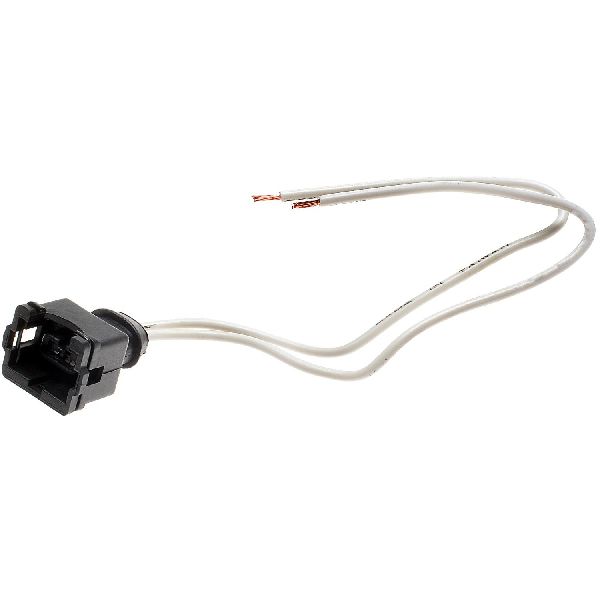
- Turbocharger Wastegate Control Solenoid
(OEM #BL3Z-9K378-A)— This solenoid is a common failure point due to engine heat and is often the root cause of the wastegate failing to open, leading to overboost. This part is shared across many EcoBoost platforms.
Trusted brands: Motorcraft, Dorman (p/n 667-648), Standard Motor Products
OEM price range: $50-$90
Aftermarket price range: $30-$60 - Vacuum Hose Clamps — A simple but critical part. Many P0234 codes on this engine are caused by a boost reference hose popping off because it wasn't clamped from the factory.
OEM price range: $1-$5
Aftermarket price range: $1-$5 - Turbocharger Assembly — This is the fix in a worst-case scenario where the internal wastegate is seized or the turbo has failed mechanically. The 3.5L EcoBoost has two turbos, but P0234 refers to 'A', which is typically Bank 1 (the rear turbo, closer to the firewall).
Trusted brands: BorgWarner, Motorcraft
OEM price range: $900-$1500
Aftermarket price range: $500-$1000
Related Codes That Often Appear With This One
- P0299 — Turbocharger Underboost. Seeing both P0234 (Overboost) and P0299 (Underboost) can indicate an intermittent or erratic problem with the wastegate or its control solenoid, causing boost to be unpredictable. TSBs for other EcoBoost engines often group these codes together.
- P0243, P0245, P0246 — Wastegate Solenoid 'A' Circuit Malfunction/Low/High. These codes point directly to an electrical fault in the wastegate control solenoid circuit, which is a primary cause of the mechanical overboost condition seen in P0234.
- P0046, P2263 — These codes are listed alongside P0234 in Bulletin #SSM 53328 as indicators of turbocharger system performance issues.
Technical Service Bulletins (TSBs) & Recalls
- TSB 15-0162: While written for the 1.6L GTDI engine in the Escape, Fusion, and Fiesta ST, it identifies the wastegate regulating valve solenoid as the cause for P0234, P0299, P0245, and P0246. This shows a pattern of failure for this part across the EcoBoost family.
- TSB 20-2016: For the 2017 F-150 3.5L EcoBoost, this TSB addresses a rattle from excessive play in the turbocharger wastegate linkage. While not directly causing P0234, it indicates known hardware issues with the wastegate system on this engine family that could contribute to poor boost control.
- Bulletin #SSM 53328: Identifies P0234 as a potential code stored in the powertrain control module that may be accompanied by a malfunction indicator lamp (MIL), lack of power, and/or excessive turbo noise.
Mechanic-Grade Diagnostic Values
- Wastegate Control Solenoid (BL3Z-9K378-A) Resistance — expected: 10 - 40 Ohms. Failure: A reading of 0 Ohms (short) or OL/infinite Ohms (open circuit) indicates a failed solenoid coil.
- MAP Sensor Voltage (Key On, Engine Off) — expected: ~4.5 Volts (at sea level, should match BARO sensor reading). Failure: Voltage is stuck high or low, or does not correspond to atmospheric pressure.
- MAP Sensor Voltage (at Idle) — expected: 1.0 - 1.5 Volts. Failure: Voltage is stuck high (near 4.5V) or does not respond to throttle changes.
- Wastegate Control Solenoid Connector Power Pin — expected: ~12 Volts (Battery Voltage) with Key On, Engine Off. Failure: Voltage significantly below battery voltage points to a wiring, fuse, or PCM driver circuit issue.
Scan Tool Commands That Help
- Ford IDS (or capable aftermarket scanner like FORScan, Autel, FOXWELL): Wastegate Solenoid Actuation Test / Output State Control — This bidirectional command allows the technician to manually command the wastegate solenoid on and off. It is used to verify if the solenoid clicks (actuates) and if the command results in a change in vacuum to the wastegate actuators. This can quickly isolate a failed solenoid from a mechanical wastegate or vacuum line problem.
Real Owner Repair Stories
- YouTube - '2014 Taurus SHO Boost Leak DTC P0234 OverBoost' by user 'Tangents Daily' (2014 Ford Taurus SHO 3.5L EcoBoost with an aftermarket tune) — Vehicle would surge heavily under acceleration. A loud, early blow-off sound was heard, followed by the wastegate seeming to stay open. Scan tool showed P0234 Overboost Condition.
❌ Tried (didn't work) Initially suspected the aftermarket tune or a faulty MAP sensor.
✅ What actually fixed it A visual inspection revealed a boost reference hose on the charge pipe had completely disconnected from its nipple. The hose did not have a clamp from the factory. The owner reconnected the hose and secured it with a zip tie (a hose clamp is recommended) which resolved the overboost code and surging. - NHTSA ODI #11062911 — An owner reported that their vehicle displayed a "See Manual" light and presented code P0234. In this instance, the dealership reset the computer but performed no other repairs, which may only be a temporary fix if a mechanical fault exists.
OEM Part Supersession History
AA5Z-9K378-A→BL3Z-9K378-A— Part revision/update by Ford. The BL3Z part is the current recommended replacement.
Model Year Variations Within This Range
- 2013-2019: The Taurus received a facelift for the 2013 model year, including revised styling, electronic power steering, and an optional SHO Performance Package with better brakes, cooling, and a different final drive ratio. However, the core 3.5L EcoBoost engine, turbochargers, and wastegate control system related to code P0234 remained fundamentally the same across the 2010-2019 range.
Diagnostic Flowchart
Other Known Issues on This Vehicle
Issues unrelated to this code that are worth knowing about as an owner of this generation:
- Internal Water Pump Failure 🔴 High — Can occur any time after 60,000 miles. Failure can be catastrophic, leaking coolant directly into the engine oil, leading to complete engine failure.
- Power Transfer Unit (PTU) Overheating/Failure 🔴 High — Common issue due to the unit's proximity to the hot exhaust with no cooling and 'lifetime' fluid that breaks down. Symptoms include a burning gear oil/propane smell, grinding/whining noises, and eventual loss of AWD. (Ref: TSB 19-2017 (for fluid leak))
- Timing Chain Stretch and Phaser Rattle 🟠 Medium — Often presents as a brief rattle on cold starts, typically between 80,000-120,000 miles. Can lead to timing correlation codes (like P0016) and performance issues if ignored. (Ref: Multiple TSBs exist for F-150s, e.g., 14-0194, but the issue is common to the engine family.)
- Turbo Oil Return Line Leak 🟠 Medium — The gaskets on the turbo oil return lines can fail, causing an oil leak that often drips onto the hot exhaust, creating a fire hazard and burning smell.
Used vs. New Parts: Buying Guide for This Vehicle
When a used part is the smart pick: For this repair, using used parts is generally not recommended for the common failure items. The primary cause, the wastegate control solenoid, is an electronic part prone to failure from heat cycles, making a used one a gamble. Simple mechanical items like charge pipes or brackets are acceptable if inspected for cracks.
Donor-vehicle mileage cap: roughly under 80000 miles for the part to have meaningful remaining life.
What to inspect on the donor part:
- For a used turbocharger: check for zero in-and-out (axial) shaft play and minimal side-to-side (radial) play.
- Ensure the wastegate actuator arm on a used turbo moves freely without binding.
- Inspect all used rubber/silicone hoses for hardening, cracking, or swelling, especially at the ends.
OEM-only on this vehicle (don't cheap out):
- Turbocharger Wastegate Control Solenoid: While aftermarket options exist, the Motorcraft (OEM) part is widely recommended for reliability and to avoid repeat failures.
- Turbocharger Assembly: Given the cost of labor, using a new or professionally remanufactured OEM (BorgWarner) turbocharger is strongly advised over a junkyard unit to ensure longevity.
Aftermarket brands forum-validated for this vehicle:
- Dorman and Standard Motor Products (SMP) are commonly available aftermarket brands for the wastegate solenoid, but owner feedback suggests OEM/Motorcraft is preferred.
Brands owners have reported issues with on this vehicle:
- Unbranded, no-name solenoids or turbochargers from online marketplaces are extremely high-risk and often fail quickly.
Real Owner Stories
Aggregated from forums and TSBs cited above. Mileages and costs reflect what owners reported in those sources.
2014 Ford Taurus SHO 3.5L EcoBoost
Symptoms: Vehicle experienced surging during acceleration and a P0234 OverBoost DTC.
What fixed it: Found a disconnected boost reference hose on the charge pipe that lacked a factory clamp. Reconnected the hose and secured it.
Source hint: YouTube - '2014 Taurus SHO Boost Leak DTC P0234 OverBoost' by user 'Tangents Daily'
Ford EcoBoost Platform Owner Report
Symptoms: An owner reported obtaining P0234 and P0299 codes simultaneously. Even after replacing the overboost solenoid, the codes returned.
What fixed it: This case highlights that P0234 can be persistent if the root cause is not just the solenoid itself, but potentially related vacuum or electrical issues.
Source hint: NHTSA ODI #11561976
Documented NHTSA Reports
NHTSA ODI #11688277 describes a situation where P0234 was triggered alongside P0420, consistent with mechanical failures observed in the powertrain. Another report, NHTSA ODI #11427314, notes that P0234 appeared in conjunction with significant internal engine damage, including the cam and bottom end of the motor. These records emphasize that while a solenoid or hose is the most likely culprit, the code can sometimes be a symptom of broader mechanical distress.
Related OBD-II Codes
Frequently Asked Questions
I have a 2014 Taurus SHO with P0234; is there a specific hose I should check?
Does Ford TSB 20-2016 regarding wastegate rattle apply to my Taurus?
Could a performance tune be causing the overboost code on my EcoBoost V6?
Is the wastegate control solenoid a known failure point for other Ford models?
Where is the wastegate control solenoid located on the 3.5L EcoBoost Taurus?
Can I test the wastegate arm myself to see if it is sticking?
What other symptoms might accompany P0234 according to manufacturer bulletins?
Helpful Videos
Used OEM Parts in Stock
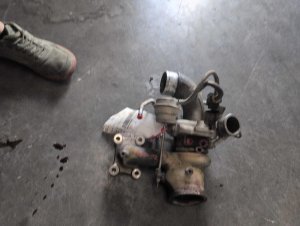


New Aftermarket Parts Available


The information in this article is provided for general reference and educational purposes only. Vehicle specifications, procedures, and part compatibility can vary by production date, trim level, and region. Always consult your vehicle's factory service manual and verify part numbers before purchasing or performing repairs. Safety-critical components such as airbags, seat belts, and braking systems should be installed by a qualified professional.
- Ford Taurus:
- 🎬 Helpful Videos
- 🛍️ Shop This Part
- What's Unique About the 2010-2019 Ford Taurus
- Symptoms You May Notice
- Most Likely Causes
- Rare But Worth Checking
- Diagnosis Steps
- Parts You'll Likely Need
- Related Codes That Often Appear With This One
- Technical Service Bulletins (TSBs) & Recalls
- Mechanic-Grade Diagnostic Values
- Scan Tool Commands That Help
- Real Owner Repair Stories
- OEM Part Supersession History
- Model Year Variations Within This Range
- Diagnostic Flowchart
- Other Known Issues on This Vehicle
- Used vs. New Parts: Buying Guide for This Vehicle
- Real Owner Stories
- 2014 Ford Taurus SHO 3.5L EcoBoost
- Ford EcoBoost Platform Owner Report
- Documented NHTSA Reports
- Related OBD-II Codes
- Frequently Asked Questions
- 🎟️ Get 5% Off