

P0234 on 2013-2020 Ford Fusion 1.5L EcoBoost: Overboost Condition Causes and Fixes
For a 2013-2020 Ford Fusion with the 1.5L EcoBoost engine, code P0234 is most often caused by a faulty turbocharger wastegate regulating solenoid. Replacing this solenoid, which costs around $40-$90 for an aftermarket part, is the most common fix. Before replacing parts, always check the 15A double fuse for positions 11 and 12 in the under-hood fuse box, as this is a known simple fix.
- Code P0234 on your 1.5L Fusion means the engine is experiencing a dangerous turbo overboost condition.
- Before buying any parts, check the fuses in the under-hood fuse box, specifically the double fuse at positions 11/12.
- The most likely cause is a failed turbocharger wastegate regulating solenoid. This is a relatively inexpensive part and is a common DIY repair.
- Thoroughly inspect all vacuum lines connected to the turbo and solenoid for cracks or leaks before replacing more expensive components.
- Do not continue to drive with this code, as it can lead to severe and expensive engine damage.
What's Unique About the 2013-2020 Ford Fusion
The 1.5L EcoBoost engine in the Fusion (introduced in 2014) is very similar to the 1.6L engine it replaced. A well-known Ford Technical Service Bulletin (TSB 15-0162) for the 1.6L engine points directly to a faulty wastegate regulating solenoid as the cause for P0234. This issue is so common on both the 1.5L and 1.6L engines that it has become the go-to starting point for diagnosis. While the turbocharger itself can fail, the control system components, particularly this solenoid, are the most frequent culprits.
Symptoms You May Notice
- Check Engine Light is illuminated
- Significant loss of engine power or acceleration
- Vehicle enters 'limp mode'
- Hesitation or surging during acceleration
- Unusual whistling or whirring sounds from the engine bay
- Replacing the entire turbocharger assembly before thoroughly checking the fuses, vacuum lines, and wastegate control solenoid. The control system components are far more likely to fail and are much cheaper to replace.
Most Likely Causes
- Faulty Turbocharger Wastegate Regulating Valve Solenoid 🔴 High Probability This is a known weak point on EcoBoost engines of this era, as documented in Ford TSB 15-0162 for the nearly identical 1.6L engine found in the Fusion and Escape. The part fails electronically or gets stuck, preventing it from properly controlling the vacuum signal to the wastegate.
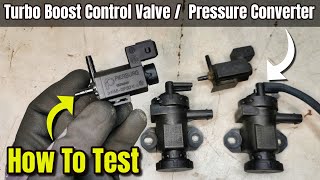
How to confirm: After checking fuses and vacuum lines, this is often replaced based on the high probability of failure. It can be tested for resistance (approx. 12.4 Ω for the similar 1.6L) or with a scan tool that can command it to activate. A DIY-friendly approach is to replace it as a primary diagnostic step due to its high failure rate and relatively low cost.
Typical fix: Replace the wastegate regulating valve solenoid and its associated vacuum lines. The part is often sold as an assembly with the hoses.
Est. part cost: $40-$215 - Sticking or Binding Turbocharger Wastegate Actuator 🟡 Medium Probability The wastegate arm is exposed to intense heat and exhaust gases, which can cause carbon buildup or corrosion, preventing it from moving freely. This prevents the wastegate from opening to relieve excess boost.
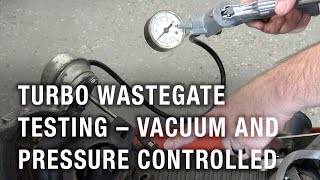
How to confirm: With the engine off and cool, manually try to move the actuator arm to see if it moves smoothly through its range of motion. A handheld vacuum pump can also be used to apply vacuum to the actuator and watch for smooth, full movement; 🎬 See this demonstration of testing the wastegate with a vacuum pump. it should hold a steady vacuum without bleeding down.
Typical fix: In some cases, the arm can be freed up with penetrating oil and manipulation. However, because the wastegate actuator is often an integral part of the turbocharger, a seized wastegate may require a complete turbocharger replacement.
Est. part cost: $1000-$2500 - Damaged or Leaking Vacuum Lines 🟡 Medium Probability The rubber and plastic vacuum lines in the engine bay become brittle over time due to heat cycles and can crack, break, or be chewed by rodents.
How to confirm: Visually inspect all vacuum hoses connected to the wastegate solenoid and the turbocharger for cracks, loose fittings, or breaks. A smoke test is the most effective method for finding small, hard-to-see leaks.
Typical fix: Replace the damaged section of hose or the entire vacuum harness assembly.
Est. part cost: $10-$50 - Blown Fuse ⚪ Low Probability
How to confirm: Check the under-hood fuse box. 🎬 Watch: How to locate and check the wastegate solenoid fuse. A Reddit user specifically identified a blown 15A double fuse that feeds positions 11 and 12 as the cause. The user suggests swapping the double fuse around; if the wastegate error disappears and a new one appears, the fuse is the culprit. Always check fuses with a multimeter, not just by eye.
Typical fix: Replace the blown fuse. If the fuse blows again, there is an electrical short in the circuit that must be diagnosed.
Est. part cost: $1-$5
Rare But Worth Checking
- Faulty Manifold Absolute Pressure (MAP) Sensor: If the MAP sensor incorrectly reports lower-than-actual boost pressure, the PCM won't command the wastegate to open, leading to an overboost condition. This is worth considering if replacing the solenoid doesn't fix the issue.
- Outdated Powertrain Control Module (PCM) Software: While not specific to the 1.5L, Ford TSB 16-0119 addresses P0234 on some 2017 Fusions with the 2.0L engine by reprogramming the PCM. This indicates that software calibration can be a factor in boost control issues and may be a potential fix in rare cases.
Diagnosis Steps
- Scan the PCM for any other trouble codes. Codes like P0245 or P0246 point directly to an electrical fault in the solenoid circuit.
- Inspect the under-hood fuse box. Specifically check the 15A double fuse for slots 11 and 12. Use a multimeter for accuracy.
- Perform a thorough visual inspection of all vacuum lines running to and from the turbocharger wastegate solenoid and actuator. Look for any cracks, breaks, loose connections, or signs of rodent damage.
- With the engine cool, locate the wastegate actuator arm on the turbocharger and manually check if it moves freely. If it is seized, the turbocharger will likely need replacement.
- If fuses and vacuum lines are good and the actuator arm moves, the most likely culprit is the wastegate regulating solenoid. It is often replaced at this stage due to its high failure rate.
- If the problem persists after replacing the solenoid, test the MAP sensor and its wiring for proper operation.
- As a final step, a full diagnostic of the turbocharger itself may be needed, which is best left to a professional.
Parts You'll Likely Need
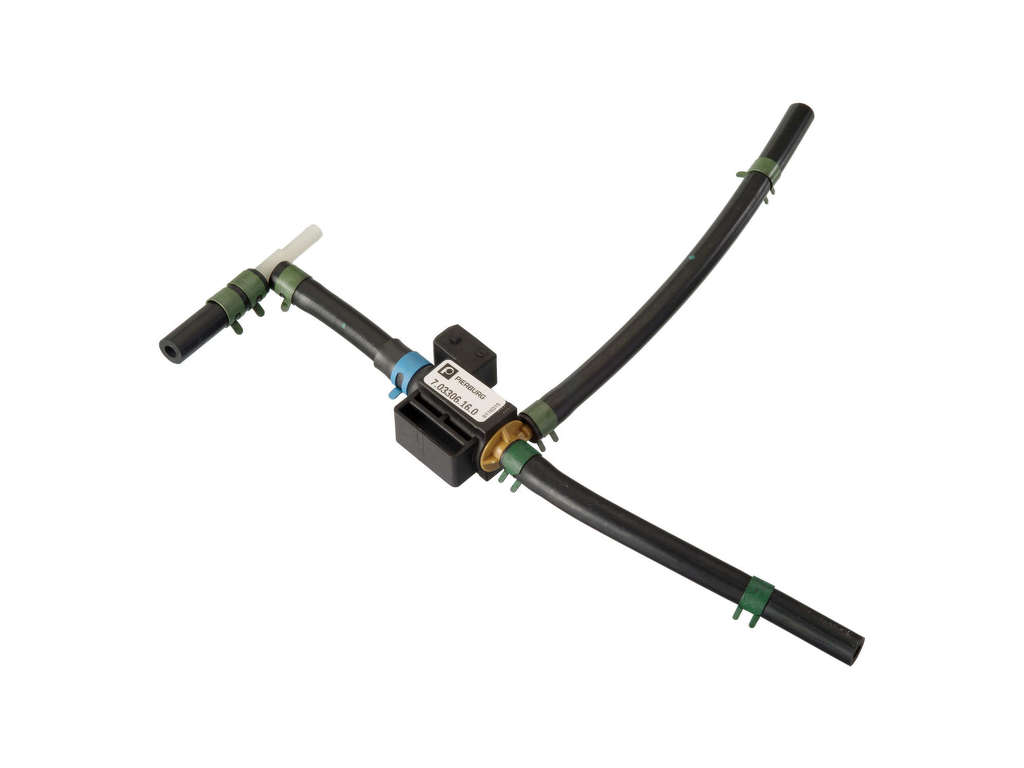
- Turbocharger Wastegate Regulating Valve Solenoid
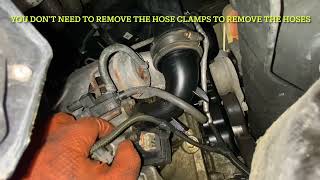
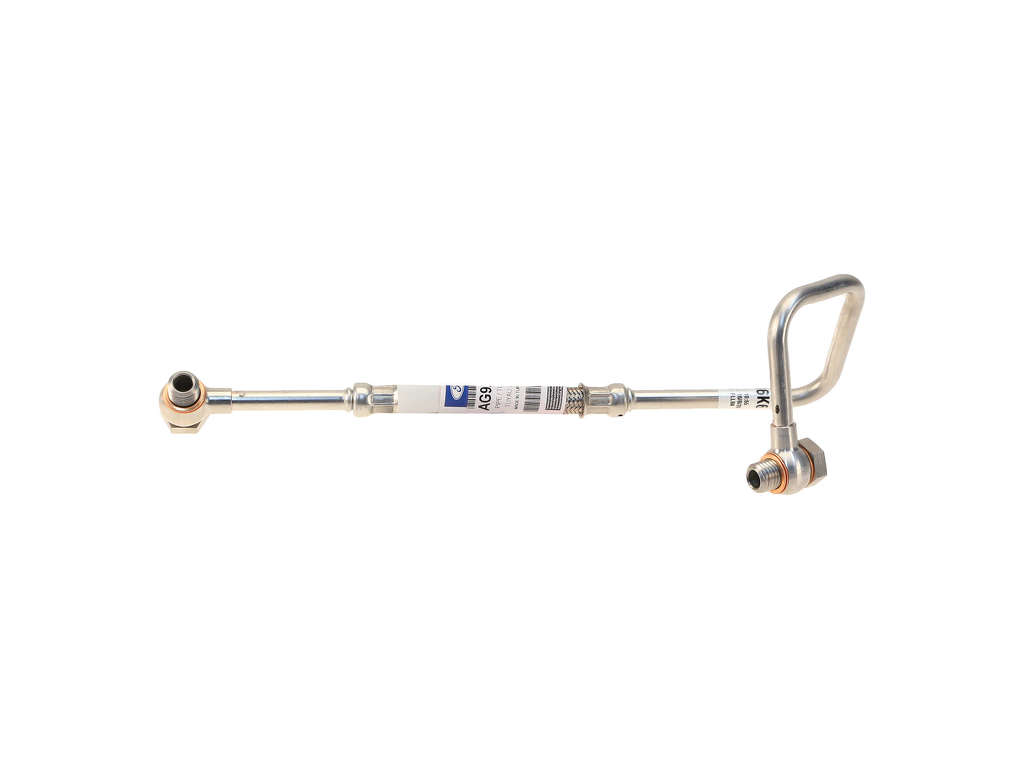
(OEM #F1FZ-9S468-C)— This is the most common failure point for the P0234 code on this platform. Ford sells this part as a hose and solenoid assembly. This part number supersedes the earlier F1FZ-9S468-B. 🎬 Watch: A step-by-step guide to replacing the turbo regulating solenoid.
Trusted brands: Motorcraft, Dorman, Pierburg (7.02901.05.0)
OEM price range: $140-$215
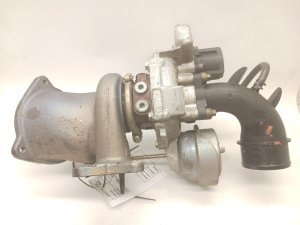
Aftermarket price range: $40-$90 - Turbocharger Assembly — Needed if the internal wastegate actuator is seized and cannot be freed, or if the turbo has failed from the overboost condition.
Trusted brands: Motorcraft, Garrett
OEM price range: $1500-$2500
Aftermarket price range: $800-$1500
Related Codes That Often Appear With This One
- P0299 — This is an 'Underboost Condition' code. Seeing both P0234 and P0299 suggests an erratically failing component, like the wastegate solenoid or actuator, that is sometimes sticking closed (overboost) and sometimes sticking open (underboost).
- P0245 — This code for 'Wastegate Solenoid 'A' Circuit Low' points directly to an electrical fault in the solenoid's circuit and is often seen with P0234, as mentioned in TSB 15-0162.
- P0246 — Similar to P0245, this code for 'Wastegate Solenoid 'A' Circuit High' indicates an electrical fault and is also mentioned in TSB 15-0162 as appearing with P0234.
Technical Service Bulletins (TSBs) & Recalls
- TSB 15-0162: Addresses P0234, P0299, P0245, and P0246 on 2013-2014 Fusions and 2013-2016 Escapes with the 1.6L GTDI engine by replacing the turbocharger wastegate regulating valve solenoid. This is highly relevant due to the engine's similarity to the 1.5L.
- TSB 16-0119: Addresses P0234 on some 2017 Fusion/MKZ models with the 2.0L GTDI engine. The fix is to reprogram the PCM, not replace hardware. Manufacturer records indicate this applies to vehicles built on or before August 31, 2016, that exhibit a lack of power drivability concern.
- Bulletin #TSB150162: Specifically notes that some 2013-2014 Fusion vehicles equipped with a 1.6L Gasoline Turbocharged Direct Injection (GTDI) engine may experience a lack of power with the MIL illuminated and DTCs P0234, P0245, P0246, and/or P0299.
Platform-Specific Known Issues
- The 1.5L EcoBoost engine in 2017-2019 models is subject to Customer Satisfaction Program 21N12 for potential coolant intrusion into the cylinders. While not directly related to P0234, it's a significant known issue with this engine that owners should be aware of.
Mechanic-Grade Diagnostic Values
- Turbocharger Wastegate Regulating Valve Solenoid Resistance — expected: 12.4 Ω ± 0.5 Ω at 25°C (77°F). Failure: A reading significantly outside this range, or an open/short circuit, indicates a faulty solenoid. This value is from the nearly identical 1.6L engine but is a strong reference.
- MAP Sensor Voltage (Key On, Engine Off) — expected: 5V reference on PIN 2 of the harness connector.. Failure: No voltage indicates a wiring or PCM issue.
- MAP Sensor Signal Voltage (Engine at Idle) — expected: 0.8V - 1.0V DC. Failure: Readings outside this range suggest a faulty sensor or vacuum leak.
Scan Tool Commands That Help
- Ford IDS (Integrated Diagnostic System): DataLogger PID Monitoring & Output State Control — Use the DataLogger to monitor actual vs. desired boost pressure (TCBP vs. TCBP_DSD) in real-time to confirm the overboost. Use Output State Control to manually command the wastegate solenoid on and off to verify its mechanical and electrical function without removing it from the vehicle.
Wiring & Ground Locations
- Wastegate Solenoid Connector — On the 1.5L/1.6L, the solenoid is located on the side of the engine, best accessed from the front passenger wheel well.. This is the primary connector for testing solenoid resistance and voltage supply. Damage or corrosion here can directly cause P0234 and related codes.
- Under-hood Fuse Box (Battery Junction Box) — Located in the engine compartment, on the driver's side of the vehicle.. Contains the 15A double fuse (positions 11/12) that powers the wastegate solenoid circuit. A blown fuse here is a known, simple fix for this code.
Real Owner Repair Stories
- Reddit user /u/CharlesBrowski (2015 Ford Escape SE 1.6L 4WD (mechanically similar to 1.5L Fusion)) — Intermittent Check Engine Light with P0234, specifically when accelerating and holding RPMs around 3000 for 5-10 seconds. No noticeable lack of power.
❌ Tried (didn't work) Initial online research pointed to the solenoid.
✅ What actually fixed it Replacing the wastegate solenoid resolved the P0234 code. - Reddit user /u/worrub918 (2014 Ford Fusion Titanium) — Check Engine Light with a wastegate solenoid error code (likely P0245, often seen with P0234).
❌ Tried (didn't work) Initial diagnosis pointed towards replacing the solenoid itself.
✅ What actually fixed it A blown 15A double fuse for positions 11 and 12 in the under-hood fuse box. The user noted the fuse looked fine visually but failed a continuity test. - NHTSA ODI #11062911 — An owner reported that their vehicle displayed a "See Manual" light. A dealership identified code P0234 for turbocharger overboosting, though in this instance, the dealership only reset the computer.
OEM Part Supersession History
F1FZ-9S468-B→F1FZ-9S468-C— Standard part revision by the manufacturer. The new part is a direct replacement.
Model Year Variations Within This Range
- 2017-2019: The 1.5L engine in these model years uses a water-to-air charge air cooler (aka intercooler) integrated into the intake manifold, unlike the air-to-air intercoolers on some other EcoBoost engines. While a failure is less likely to cause P0234, it's a significant design difference in the boost system.
Diagnostic Flowchart
Used vs. New Parts: Buying Guide for This Vehicle
When a used part is the smart pick: A used turbocharger assembly from a low-mileage donor vehicle can be a cost-effective option if the entire unit needs replacement due to a seized wastegate. Other electronic components like sensors or solenoids are best purchased new due to their high failure rate and low cost.
Donor-vehicle mileage cap: roughly under 50000 miles for the part to have meaningful remaining life.
What to inspect on the donor part:
- For a used turbo, check for zero shaft play (in/out or side-to-side) in the turbine.
- Ensure the compressor and turbine wheels spin freely and have no bent or chipped blades.
- Manually actuate the wastegate arm to ensure it moves smoothly with no binding.
- Check the donor vehicle's history for any signs of major engine failure or oil contamination.
Aftermarket brands forum-validated for this vehicle:
- Pierburg: Often the Original Equipment Manufacturer (OEM) for Ford's solenoids; part number 7.02901.05.0 is a known equivalent.
- Dorman: Offers a widely available aftermarket version of the wastegate solenoid (e.g., Dorman 667-213) and other related components.
Brands owners have reported issues with on this vehicle:
- Unbranded, no-name solenoids from online marketplaces can have incorrect coil resistance, leading to immediate or premature failure and potentially new fault codes.
Real Owner Stories
Aggregated from forums and TSBs cited above. Mileages and costs reflect what owners reported in those sources.
Ford Fusion 1.5L (year not specified)
Symptoms: Check Engine Light with a wastegate solenoid error code (P0234).
What fixed it: The problem was a blown 15A double fuse that feeds positions 11 and 12 in the under-hood fuse box.
Source hint: Reddit r/fordfusion thread titled 'p0234_turbochargersupercharger_a_overboost/'
2014 Ford Fusion 1.5L EcoBoost
Symptoms: Check engine light with codes P0245 and P0246, which are related to the Turbo Wastegate Solenoid circuit.
What fixed it: The final solution was replacing a blown fuse that controlled the wastegate solenoid.
Source hint: YouTube comment on '2014 FORD FUSION; PO245 / PO246 CODE TROUBLESHOOTING' video
2014 Ford Escape 1.6L
Symptoms: Check Engine Light with code P0234.
What fixed it: Replacement of the wastegate solenoid, a repair noted as being nearly identical for the Fusion 1.5L.
Source hint: YouTube DIY video 'kR2_p0iG5nE' for Ford Escape 1.6L
Related OBD-II Codes
Frequently Asked Questions
The context mentions TSB 15-0162 for the 1.6L engine. Does this apply to my 1.5L Fusion?
I have a 2017 Fusion with P0234. Is the fix a PCM reprogram like TSB 16-0119 suggests?
What is the most common part that fails and causes a P0234 code on my 1.5L Fusion?
My car is losing coolant and has a P0234 code. Are these issues related on my 2018 Fusion?
What are the cheapest things to check first for a P0234 code before replacing expensive parts?
My mechanic says the wastegate actuator is stuck and I need a whole new turbo. Is this a common repair for this car?
Helpful Videos

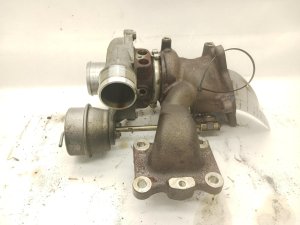
Used OEM Parts in Stock
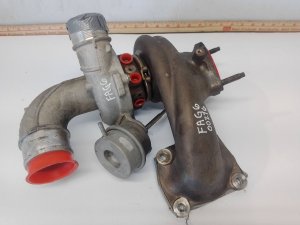


New Aftermarket Parts Available


The information in this article is provided for general reference and educational purposes only. Vehicle specifications, procedures, and part compatibility can vary by production date, trim level, and region. Always consult your vehicle's factory service manual and verify part numbers before purchasing or performing repairs. Safety-critical components such as airbags, seat belts, and braking systems should be installed by a qualified professional.
- Ford Fusion:
- 🎬 Helpful Videos
- 🛍️ Shop This Part
- What's Unique About the 2013-2020 Ford Fusion
- Symptoms You May Notice
- Most Likely Causes
- Rare But Worth Checking
- Diagnosis Steps
- Parts You'll Likely Need
- Related Codes That Often Appear With This One
- Technical Service Bulletins (TSBs) & Recalls
- Platform-Specific Known Issues
- Mechanic-Grade Diagnostic Values
- Scan Tool Commands That Help
- Wiring & Ground Locations
- Real Owner Repair Stories
- OEM Part Supersession History
- Model Year Variations Within This Range
- Diagnostic Flowchart
- Used vs. New Parts: Buying Guide for This Vehicle
- Real Owner Stories
- Ford Fusion 1.5L (year not specified)
- 2014 Ford Fusion 1.5L EcoBoost
- 2014 Ford Escape 1.6L
- Related OBD-II Codes
- Frequently Asked Questions
- 🎟️ Get 5% Off