

P0234 on 2017-2019 Ford Escape 1.5L: Turbo Overboost Causes and Fixes
On a 2017-2019 Escape with the 1.5L EcoBoost, code P0234 is most often caused by a faulty turbocharger wastegate regulating solenoid (Part #CJ5Z-9K378-B). This is a common failure item on this engine family, and replacing the inexpensive solenoid is a well-documented DIY fix, typically accessed through the passenger side wheel well.
- P0234 on your 1.5L Escape means the turbo is creating excessive, potentially damaging pressure.
- Do not immediately assume you need a new turbo. The most likely cause is a much cheaper part: the wastegate regulating solenoid.
- Before buying parts, inspect the vacuum hoses connected to the turbo system for any cracks or leaks, as this is another common and simple fix.
- If you also have codes P0245 or P0246, it's almost certain the wastegate solenoid is bad.
- Avoid heavy acceleration until the code is resolved to prevent serious engine damage.
What's Unique About the 2017-2019 Ford Escape
The 1.5L EcoBoost engine in the 2017-2019 Escape is part of a family of Ford engines (including the nearly identical 1.6L it replaced) known for issues with the turbocharger's boost control system. A Technical Service Bulletin (TSB 15-0162) was issued for the 1.6L engine in the Escape, Fusion, and Fiesta ST, pointing directly to the wastegate regulating solenoid as the primary cause for P0234. This known weakness carries over to the 1.5L engine, making the solenoid the most likely culprit and the first part to investigate, which simplifies diagnosis compared to other vehicles where the cause might be less obvious. Additionally, manufacturer Bulletin #TSB 16-0116 notes that engines built on or before August 20, 2016, may exhibit a lack of power and drivability concerns specifically associated with DTC P0234.
Symptoms You May Notice
- Check Engine Light is on
- Noticeable loss of engine power, sometimes described as 'sluggish' or 'limp mode'.
- Poor or hesitant acceleration.
- Symptoms may be intermittent, appearing only under heavy load or when trying to accelerate quickly, often around 3,000 RPM.
- Whirring or knocking sounds from the turbo area.
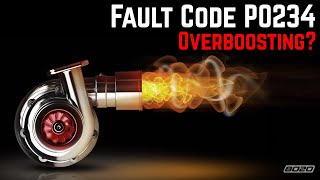
- Replacing the entire turbocharger assembly when only the inexpensive wastegate solenoid is faulty. Always diagnose the control system components (solenoid, hoses, actuator) before condemning the turbo itself. 🎬 Watch: Understanding why your turbo boost is out of control.
Most Likely Causes
- Faulty Turbocharger Wastegate Regulating Solenoid 🔴 High Probability This is a well-documented failure point on this engine family, prone to electronic failure or sticking due to heat and vibration. A Ford TSB (15-0162) for the similar 1.6L engine identifies this part as the primary fix.
How to confirm: Check for related codes like P0245 or P0246 (solenoid circuit faults). The solenoid can be tested with a multimeter for resistance; the specification for the similar 1.6L engine is 12.4 Ω ± 0.5 Ω. Due to its high failure rate and relatively low cost, replacement is a common and effective diagnostic step.
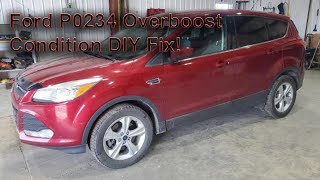
Typical fix: Replace the wastegate regulating solenoid (OEM Part #CJ5Z-9K378-B) and its associated vacuum hoses if they are brittle or cracked. The part is located on the passenger side of the engine bay and is accessible by removing the front passenger wheel and wheel well liner. The repair is documented in several DIY videos. 🎬 Watch this DIY walkthrough to fix the overboost condition yourself.
Est. part cost: $50-$150 - Leaking, Kinked, or Cracked Vacuum Hoses 🟡 Medium Probability The rubber and plastic hoses that control the wastegate are exposed to significant heat and can become brittle and crack over time, leading to a loss of control over the wastegate.
How to confirm: Visually inspect all vacuum lines running from the solenoid to the wastegate actuator and the intake manifold. Listen for hissing sounds. A smoke test can definitively identify leaks that are not visible.
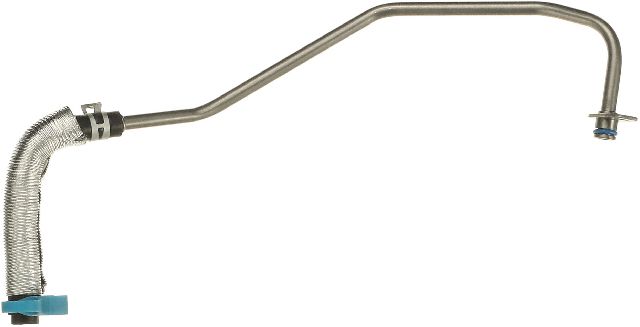
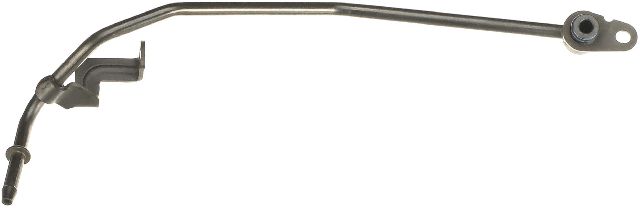
Typical fix: Replace the damaged section of hose or the complete hose assembly.
Est. part cost: $10-$40 - Sticking Turbocharger Wastegate Actuator/Arm ⚪ Low Probability
How to confirm: With the engine off and cool, attempt to move the wastegate actuator arm by hand or with a vacuum pump. It should move smoothly without binding. If it is stuck, the wastegate is not opening to relieve pressure.
Typical fix: Sometimes the linkage can be lubricated and freed up. If the actuator diaphragm is ruptured or the arm is seized, the actuator may need to be replaced. On many EcoBoost turbos, this is integral to the turbocharger assembly, requiring a full turbo replacement.
Est. part cost: $100-$400 for an actuator, $800+ for a turbo
Rare But Worth Checking
- Faulty Boost Pressure Sensor (MAP Sensor): A faulty sensor can send incorrect low-pressure readings to the PCM, causing it to command more boost than necessary. This will usually, but not always, be accompanied by other sensor-specific codes.
- Restricted Exhaust System: A clogged catalytic converter or crushed exhaust pipe can prevent exhaust gases from escaping, leading to a buildup of pressure that drives the turbo too hard. NHTSA ODI #11688277 describes a case where P0234 was triggered alongside P0420 (Catalyst System Efficiency Below Threshold), consistent with mechanical failures in the exhaust or turbo system.
Diagnosis Steps
- Read Codes: Use an OBD-II scanner to confirm P0234 and check for any other related codes (e.g., P0299, P0245, P0246). Document the freeze frame data to see the conditions when the code was set.
- Inspect Vacuum Hoses: Thoroughly inspect all vacuum lines connected to the wastegate solenoid, wastegate actuator, and intake system for any signs of cracks, kinks, loose connections, or brittleness.
- Inspect the Wastegate Solenoid: Locate the solenoid. On the 1.5L/1.6L engine, this requires removing the passenger front wheel and wheel well liner to access it. Check its electrical connector for corrosion or damage. Given its high failure rate, this is the primary suspect.
- Test the Wastegate Actuator: With the engine off, use a hand-held vacuum pump to apply vacuum to the actuator. Watch to see if the actuator arm moves smoothly and holds vacuum. If it doesn't move or leaks down, the actuator is faulty.
- Check Boost Pressure Sensor Data: Using a scan tool with live data capability, monitor the Manifold Absolute Pressure (MAP) sensor reading with the key on and engine off. It should be close to the Barometric pressure reading. If the reading is skewed, the sensor may be faulty.
- Replace the Wastegate Solenoid: If the hoses and actuator check out, the most likely cause is the solenoid. Replace it with OEM part #CJ5Z-9K378-B.
Parts You'll Likely Need
- Turbocharger Wastegate Regulating Solenoid
(OEM #CJ5Z-9K378-B (supersedes CJ5Z-9K378-A))— This is the most common failure point for code P0234 on this specific engine, as confirmed by owner experiences and TSB 15-0162 for the similar 1.6L engine.
Trusted brands: Motorcraft (OEM), Dorman, Pierburg
OEM price range: $70-$120
Aftermarket price range: $50-$80
Related Codes That Often Appear With This One
- P0299 — Turbo/Supercharger Underboost. A failing wastegate solenoid can get stuck in either the open or closed position, causing either an underboost (P0299) or overboost (P0234) condition. TSB 15-0162 explicitly lists both codes as symptoms of a failed solenoid.
- P0245 — Turbo/Supercharger Wastegate Solenoid 'A' Circuit Low. This code points directly to an electrical fault within the solenoid circuit, strongly indicating the solenoid itself is the problem. It is also listed in TSB 15-0162.
- P0246 — Turbo/Supercharger Wastegate Solenoid 'A' Circuit High. Similar to P0245, this indicates an electrical fault in the solenoid circuit and is a clear sign the solenoid needs to be replaced. It is also listed in TSB 15-0162.
Technical Service Bulletins (TSBs) & Recalls
- TSB 15-0162: For 2013-2016 Escape, 2014-2016 Fiesta ST, and 2013-2014 Fusion with the 1.6L engine. Addresses codes P0234, P0299, P0245, and P0246 by replacing the turbocharger wastegate regulating solenoid. The issue is highly relevant to the 2017-2019 1.5L engine due to its similar design and shared part numbers.
- Bulletin #TSB 16-0116: Specifically addresses 2017 models with GTDI engines built on or before August 20, 2016, which may exhibit a lack of power and an illuminated MIL with DTC P0234 stored in the PCM.
- Bulletin #TSB150162: Notes that some Escape and Fusion vehicles equipped with a 1.6L GTDI engine may experience a lack of power with MIL illuminated and codes P0234, P0245, P0246, and/or P0299.
Platform-Specific Known Issues
- The 1.5L EcoBoost engine is known for having the wastegate regulating solenoid fail, causing either overboost (P0234) or underboost (P0299) conditions.
- There is a known TSB (15-0162) for the nearly identical 1.6L engine that directly addresses this code by replacing the wastegate solenoid, indicating a known design or component weakness.
- The Ford Fusion with the 1.5L/1.6L engine suffers from the exact same P0234 cause and is also referenced in TSB 15-0162.
Mechanic-Grade Diagnostic Values
- Turbocharger Wastegate Regulating Valve Solenoid Resistance — expected: 12.4 Ω ± 0.5 Ω at 25°C (77°F). Failure: A reading significantly outside this range, or an open/short circuit (infinite or zero ohms), indicates a faulty solenoid.
- Wastegate Solenoid Power Pin Voltage (Key On, Engine Off) — expected: 12 V ± 0.5 V. Failure: A reading below 11V suggests a problem in the power supply circuit, such as a corroded wire or a failing fuse connection.
Scan Tool Commands That Help
- Ford IDS, FORScan, or other high-end bidirectional scanner: Wastegate Solenoid Test / Output State Control (OSC) / Turbocharger Test — This command allows a technician to manually activate and deactivate the wastegate solenoid. It is used to verify if the solenoid is mechanically functioning (clicking) and if the PCM can control it, helping to distinguish between a faulty solenoid, wiring issue, or PCM problem.
Wiring & Ground Locations
- Wastegate Solenoid Connector (WPT-1370) — On the side of the 1.5L engine, best accessed by removing the front passenger side wheel and wheel well liner.. This is the primary connector for testing solenoid resistance and voltage supply. Damage, corrosion, or a loose connection here can directly cause P0234 and related electrical fault codes (P0245/P0246).
- Under-hood Fuse Box (Battery Junction Box) - Fuse F34 — Located in the engine compartment on the driver's side of the vehicle.. This fuse powers the wastegate solenoid circuit. On 2017-2019 models, this is a 10A fuse. While less common than solenoid failure for P0234, a blown fuse will cause a complete loss of control. It's a more common cause for related code P0245 due to harness chafing issues.
Real Owner Repair Stories
- Reddit user on r/fordescape (2015 Ford Escape SE 1.6L 4WD) — Intermittent Check Engine Light, specifically when accelerating and RPMs were around 3000 for 5-10 seconds. No noticeable lack of power or change in fuel economy.
✅ What actually fixed it The user replaced the wastegate solenoid, which resolved the P0234 code. - NHTSA ODI #11427314 — An owner reported a vehicle throwing a massive array of codes including P0234, P0299, and P0012, eventually leading to severe mechanical damage to the cam and bottom end of the motor.
- NHTSA ODI #11281712 — An owner noted that after a transmission inspection found no transmission-specific codes, the vehicle was found to have P1116 and P0234 present, leaving the car undrivable until the engine light was resolved.
OEM Part Supersession History
CJ5Z-9K378-A→CJ5Z-9K378-B— Not officially documented, but part revisions are typically made to improve reliability or address a known weakness in the original design.
Heads up: None. The new part number (CJ5Z-9K378-B) is the correct service replacement for the original.
Model Year Variations Within This Range
- 2017-2019: The fuse powering the wastegate solenoid circuit (F34 in the under-hood fuse box) is rated at 10A for the 2017-2019 models. This is a change from the 15A fuse used in some earlier 2013-2016 models.
Diagnostic Flowchart
Other Known Issues on This Vehicle
Issues unrelated to this code that are worth knowing about as an owner of this generation:
- Coolant Intrusion into Cylinders 🔴 High — A widely documented design flaw in the 1.5L EcoBoost engine block can cause coolant to leak into the cylinders, leading to misfires, white smoke, and eventual engine failure. Onset can be sudden. (Ref: TSB 19-2375, TSB 20-2100, Customer Satisfaction Program 21N12.)
- Transmission Failure / Shifting Problems 🟠 Medium — This generation of Escape is known for various transmission issues, from harsh shifting to complete failure, sometimes requiring a full transmission replacement.
- Faulty Crankcase Pressure Sensor 🟡 Low — Some 2017 models may experience an illuminated check engine light with code P04DB due to a faulty crankcase pressure sensor or tube. (Ref: TSB mentioned in NHTSA records for the 2017 Escape.)
Used vs. New Parts: Buying Guide for This Vehicle
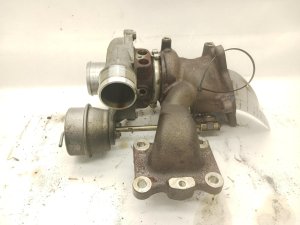
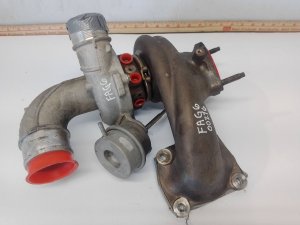
When a used part is the smart pick: For this specific repair, buying a used wastegate solenoid is NOT recommended. It is a known high-failure-rate electronic part exposed to significant heat and vibration. The cost savings are minimal compared to the risk of the used part failing quickly. A used turbocharger assembly might be considered if the entire unit needs replacement, but only from a low-mileage donor.
Donor-vehicle mileage cap: roughly under 50000 miles for the part to have meaningful remaining life.
What to inspect on the donor part:
- For a full turbo assembly, look for a donor vehicle with no signs of front-end collision.
- Check for excessive oil residue around the turbo compressor inlet/outlet, which could indicate failing seals.
- If possible, check the turbine shaft for excessive side-to-side or in-and-out play.
OEM-only on this vehicle (don't cheap out):
- Turbocharger Wastegate Regulating Solenoid
Aftermarket brands forum-validated for this vehicle:
- Motorcraft (OEM)
- Pierburg (Often an OEM supplier)
Brands owners have reported issues with on this vehicle:
- Unnamed, no-brand parts from online marketplaces should be avoided due to inconsistent quality control and high failure rates reported by users for electronic components.
Real Owner Stories
Aggregated from forums and TSBs cited above. Mileages and costs reflect what owners reported in those sources.
2015 Ford Escape 1.6L EcoBoost
Symptoms: Intermittent check engine light appearing under acceleration, specifically around 3000 RPM.
What fixed it: Replaced the wastegate solenoid.
Source hint: Reddit (r/fordescape) - Thread 'Help! Code: P0234...'
2015 Ford Fusion 1.5L EcoBoost
Symptoms: P0234 'Turbocharger/Supercharger A Overboost Condition' code triggered.
What fixed it: Discussion identified the wastegate solenoid as the common cause, with a mention of checking a double fuse in the under-hood fuse box.
Source hint: Reddit (r/fordfusion) - Thread 'P0234 "Turbocharger/Supercharger A Overboost Condition"'
Related OBD-II Codes
Frequently Asked Questions
Does TSB 15-0162 apply to my 2017-2019 Ford Escape 1.5L EcoBoost?
Where is the wastegate regulating solenoid located on the 1.5L EcoBoost?
What is the specific part number I need to fix the P0234 overboost condition?
Can I test the solenoid with a multimeter before buying a new one?
My Escape is sluggish and feels like it's in 'limp mode' around 3,000 RPM. Is this P0234?
Are there other major engine issues I should watch for on my 2017-2019 1.5L Escape?
Helpful Videos
Used OEM Parts in Stock
New Aftermarket Parts Available

The information in this article is provided for general reference and educational purposes only. Vehicle specifications, procedures, and part compatibility can vary by production date, trim level, and region. Always consult your vehicle's factory service manual and verify part numbers before purchasing or performing repairs. Safety-critical components such as airbags, seat belts, and braking systems should be installed by a qualified professional.
- Ford Escape:
- 🎬 Helpful Videos
- 🛍️ Shop This Part
- What's Unique About the 2017-2019 Ford Escape
- Symptoms You May Notice
- Most Likely Causes
- Rare But Worth Checking
- Diagnosis Steps
- Parts You'll Likely Need
- Related Codes That Often Appear With This One
- Technical Service Bulletins (TSBs) & Recalls
- Platform-Specific Known Issues
- Mechanic-Grade Diagnostic Values
- Scan Tool Commands That Help
- Wiring & Ground Locations
- Real Owner Repair Stories
- OEM Part Supersession History
- Model Year Variations Within This Range
- Diagnostic Flowchart
- Other Known Issues on This Vehicle
- Used vs. New Parts: Buying Guide for This Vehicle
- Real Owner Stories
- 2015 Ford Escape 1.6L EcoBoost
- 2015 Ford Fusion 1.5L EcoBoost
- Related OBD-II Codes
- Frequently Asked Questions
- 🎟️ Get 5% Off